Monthly Archives: July 2025

Norway (for Beginners) – Part Five – History & Huskies

After beautifully clear weather Tromsø was grey with intermittent drizzle. It’s the largest Norwegian town above the Artic Circle and looks business like.
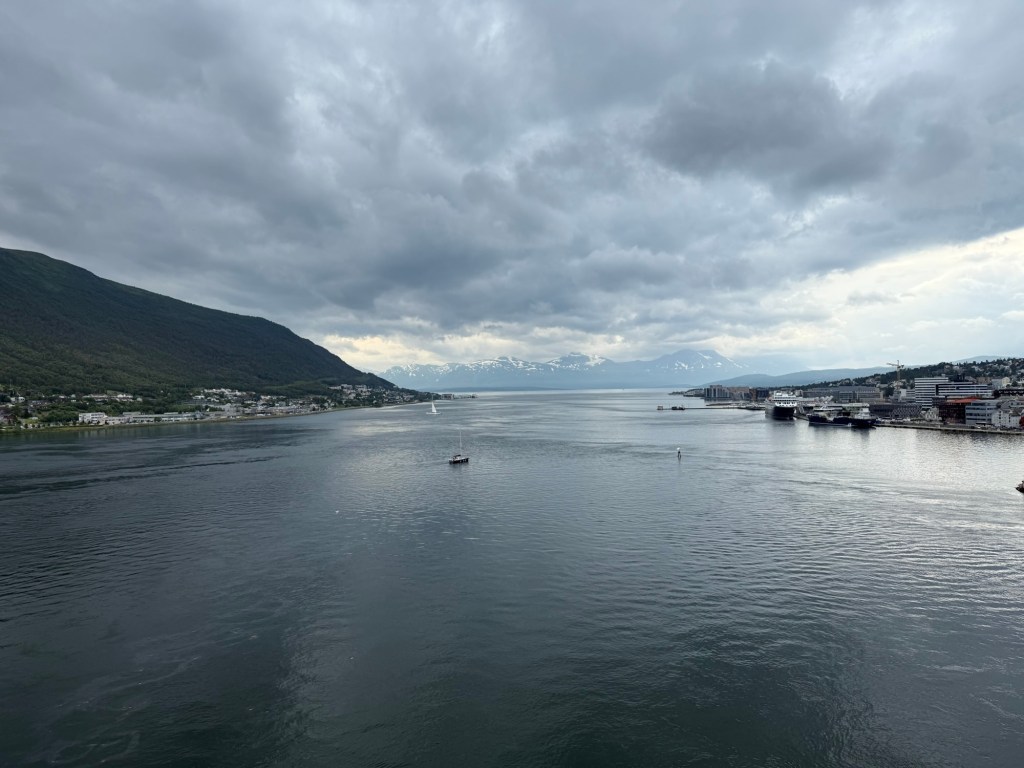
Tromsø skies and our little boat on the right

However the centre had the port and it’s here we disembarked. Around the port, catered for tourism in that I have never seen so many tourist gift shops in my life. 

Swag Central

It’s in these shops that I found out what was Norway’s third biggest export after oil and fish. It was key fobs and fridge magnets. There are tons of them retailed up the coast and sadly all of this tat is made in China.
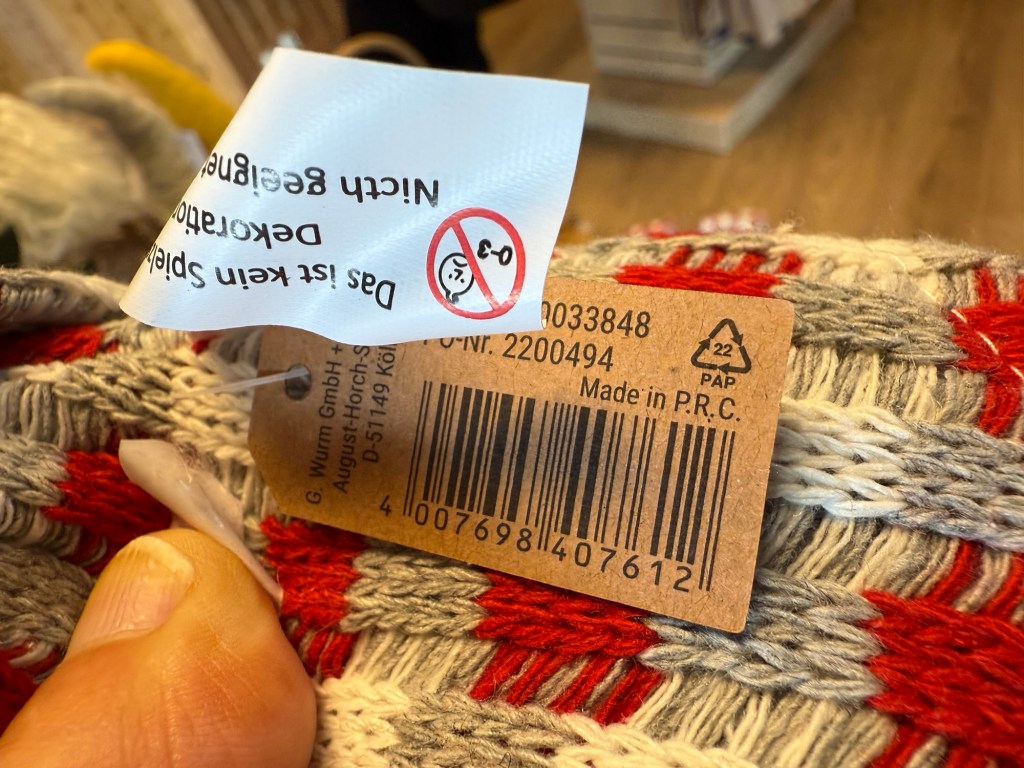
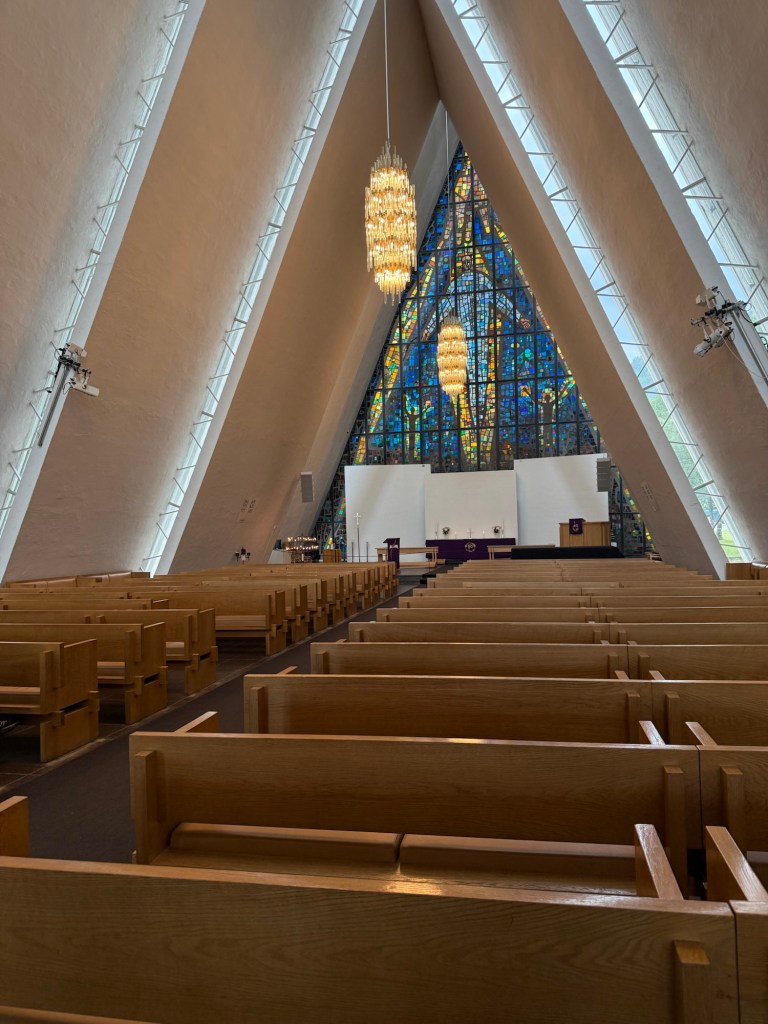
However despite this depressing vista we did find our way to the Artic Cathedral and had a look. After the sumptuous surroundings of Trondheim Cathedral this was classically Norwegian: unfussy, modest and light.

Always interested in a unique fact we walked past the most northerly located McDonalds in the world. 
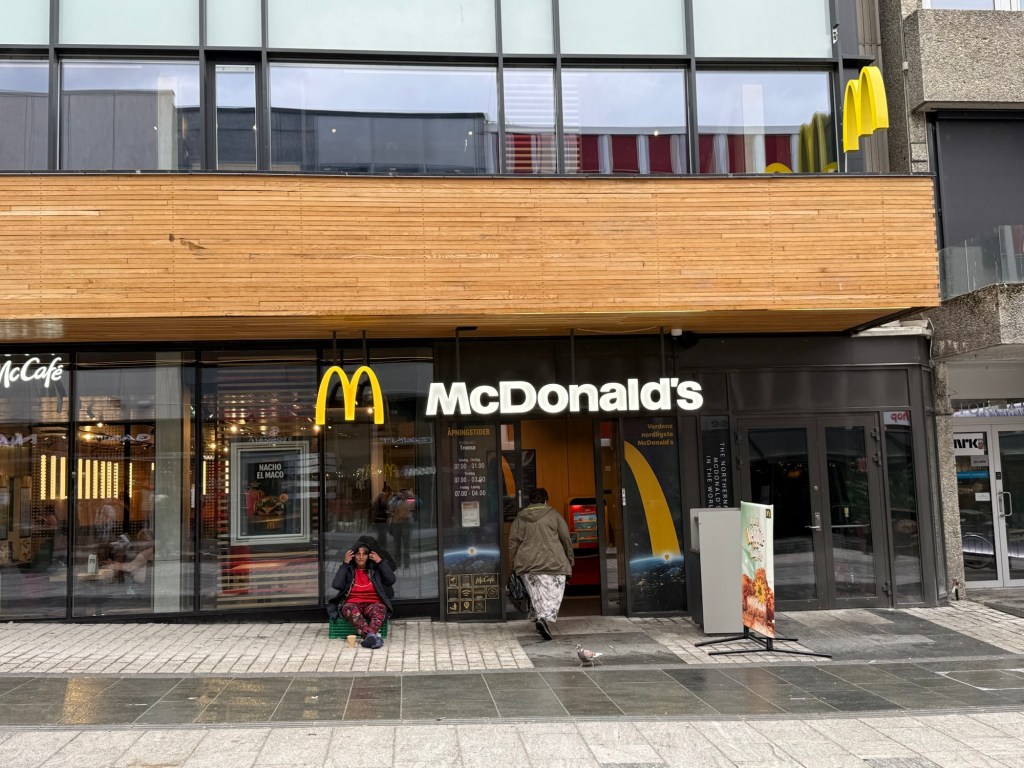
Original image
Image after our Chinese dinner companion ‘cleaned up’ the beggar!

We found the other local cafes, we tried, didn’t have decaffeinated coffee and so after a cup of tea there was nothing else to detain us and we stepped back onto the ship.

The delightful strolls on the deck were now less attractive as a heavy mist or rain fell on the shore and we slowly sailed up the coast toward the top and arrived at Honningsvåg. Most of the ship disembarked to get a bus to the Northern Cape. This is the most northerly point in Europe, that isn’t. It’s actually somewhere else but this is the most visited and seems to be happily accepted by all and sundry as the place to go. We didn’t but looked around the town instead. 

Misty monument at North Cape. Kindly WhatsApp’d to me.
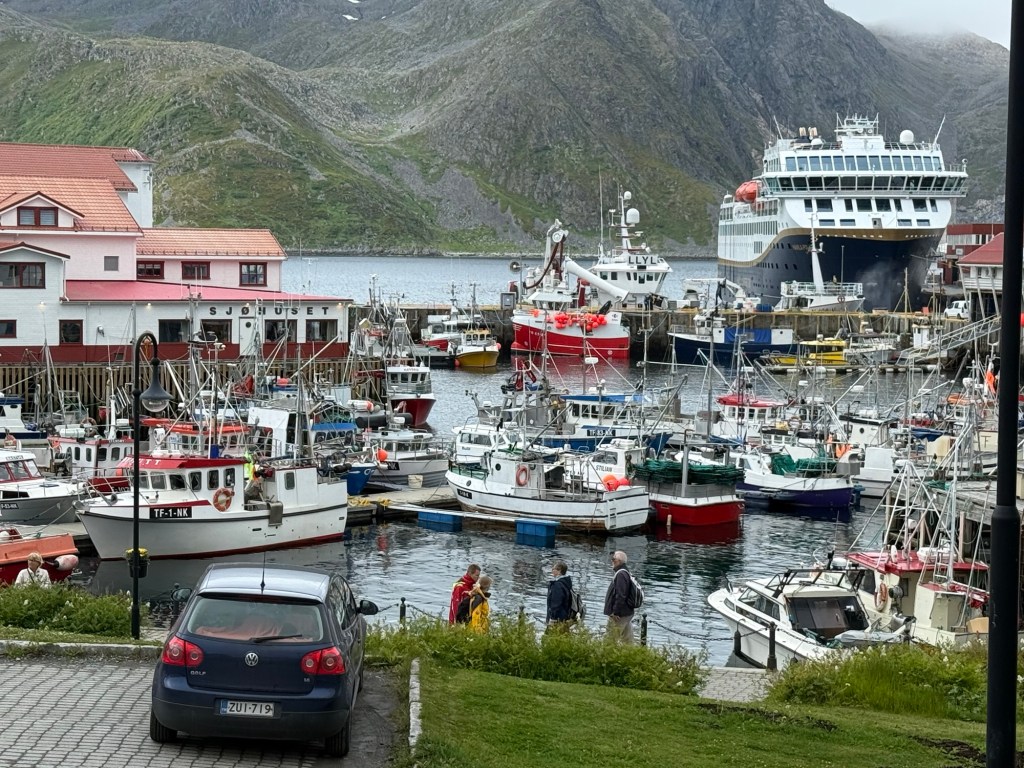
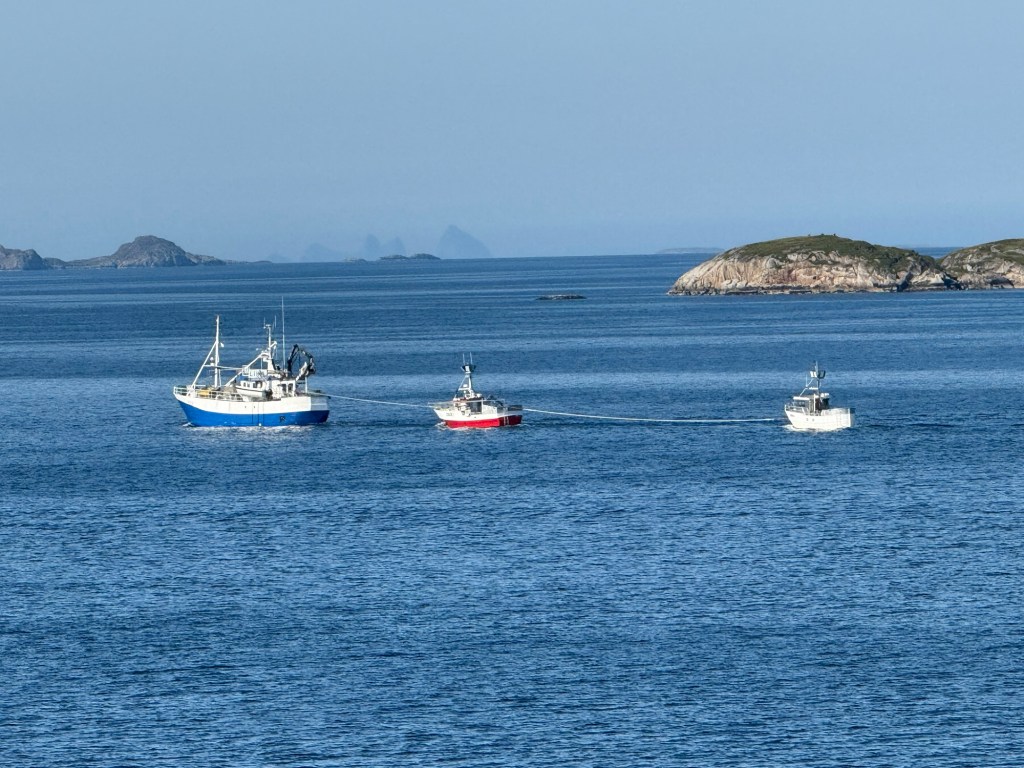
Honningsvåg harbour. Fishing and tourism are the economic life lines

What becomes clear is that the destruction of towns and infrastructure of WW2 by the Germans is something that is still remembered and recorded. This part of Norway is called Finnmark and the role this part of the world played in the war was considerable due to it’s location. When the Germans started to lose the war, and retreated south, they implemented a scorched earth policy. Locals were displaced and their communities wrecked.

Listening to live cricket commentary at the top of Europe

I know I write a lot about WW2 but you don’t have to dig deep to understand occupation and destruction, have left a deep gratitude to the Allies and determination to stop other peoples experiencing this hell in the future.

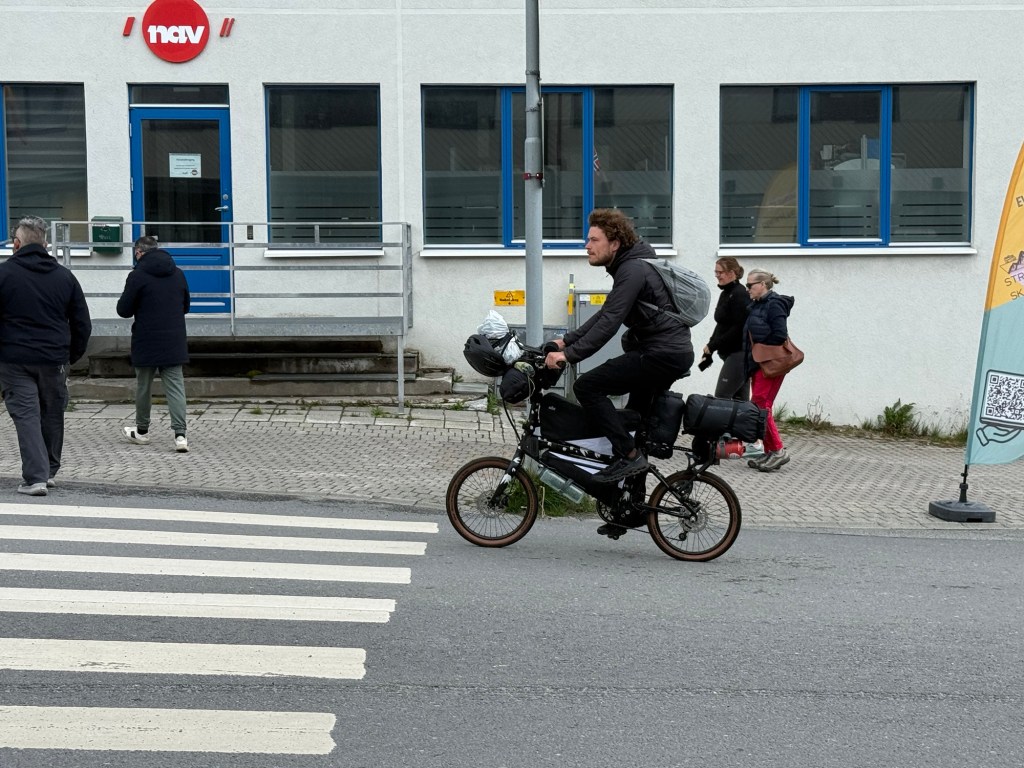
Cycling to the Cape and then south. They’d been on the ship. Guess what I fancied doing?

The European Norwegians were not the first here and the Sami people were. They are herdsmen by vocation and they breed, manage and live off reindeers, whether subsisting off the animal itself or selling its meat. The culture and independence of the Sami people has been attacked by the Europeans over the centuries as they attempted to pursue assimilation.

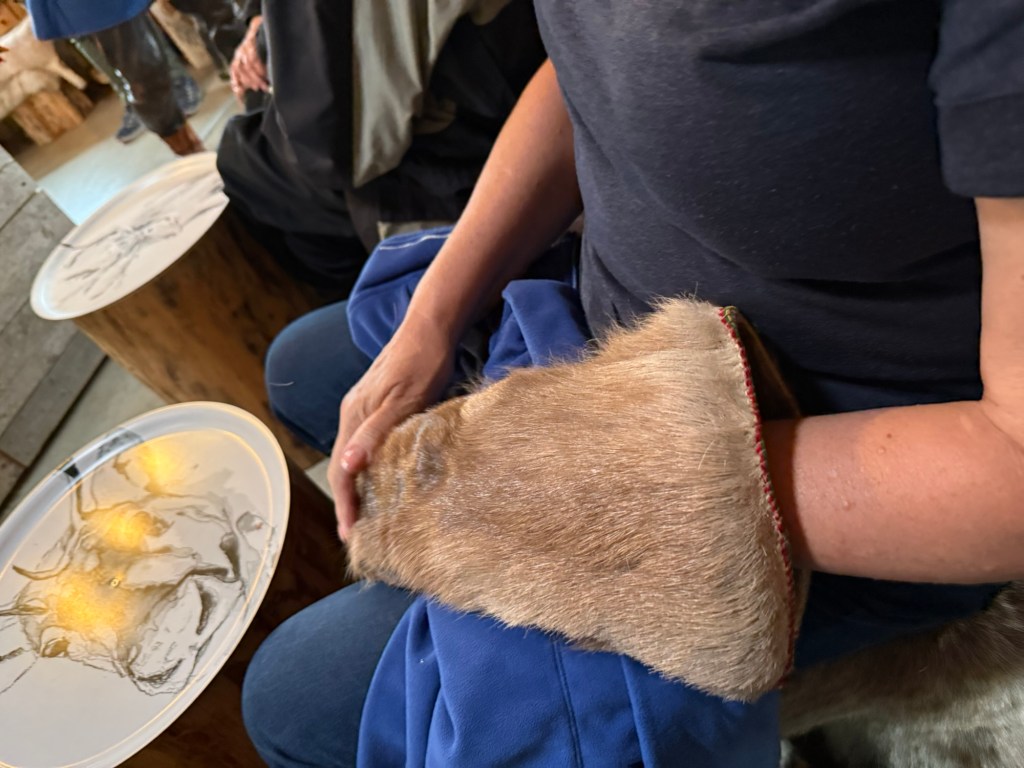
We went on an excursion to meet a Sami couple who told us about their life and traditions. It was interesting and they were passionate about holding onto their way of life and traditions. Memorably we were asked how many words in the Sami language existed for snow? That’s correct, 300. These two were serious people and mixed the cultural with the political.
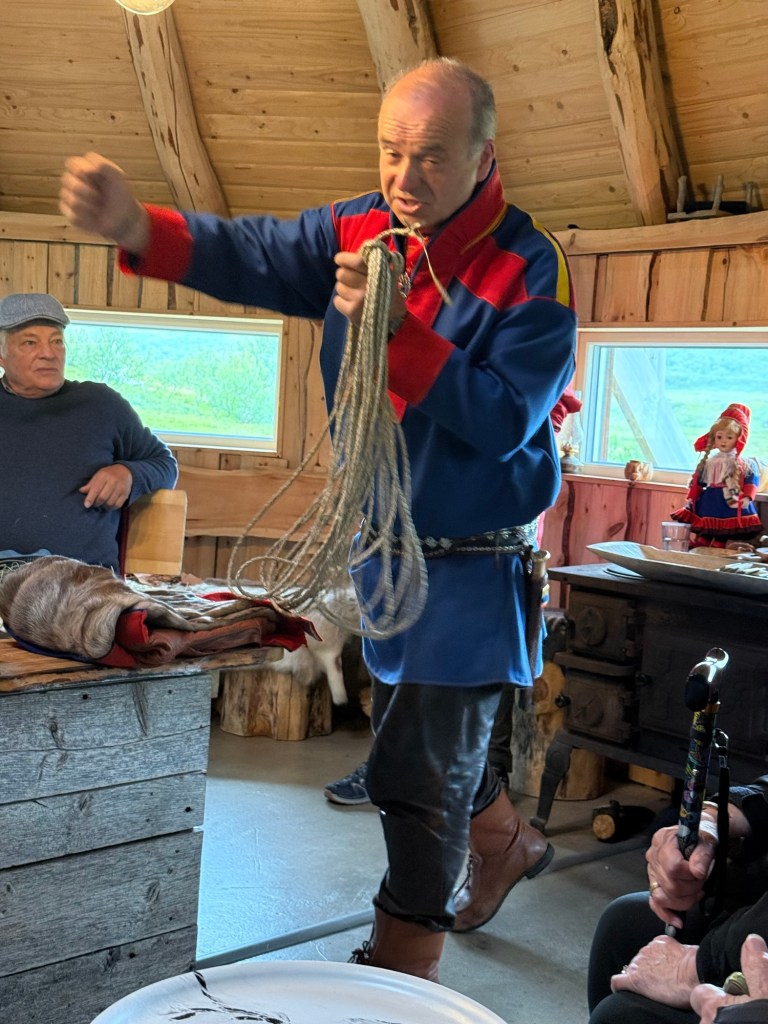
It’s now in the last few decades that the rights and resources of these people have been respected and partly restored. (This is the story of several indigenous peoples around the globe, isn’t it.)
Before this as we disembarked a number cowboys got on board. At Kjøllefjord about 150 locals swapped with this us to sail around the peninsula to Mehamn where they got off ‘more oiled than a diesel train’ to borrow a phrase from Bernie Taupin. This festival of cowboys, cowgirls (and cowgrannies) do this annually and drink themselves near stupid in the two hours on board. Our guide (for the Sami meet and greet) told us that their record for expenditure whilst on board is 250,000 Kroner (£18,500). The main activity on the peninsula is fishing. Clearly there is money in the seas!

Apparently they were noisy on the ship!
Yi-ha!

This was our last night on the ship but when we left we still had more sightseeing to do. We loved the ship, staff, route and fellow passengers. Compared to a major cruise company it was relatively low key but perfect.
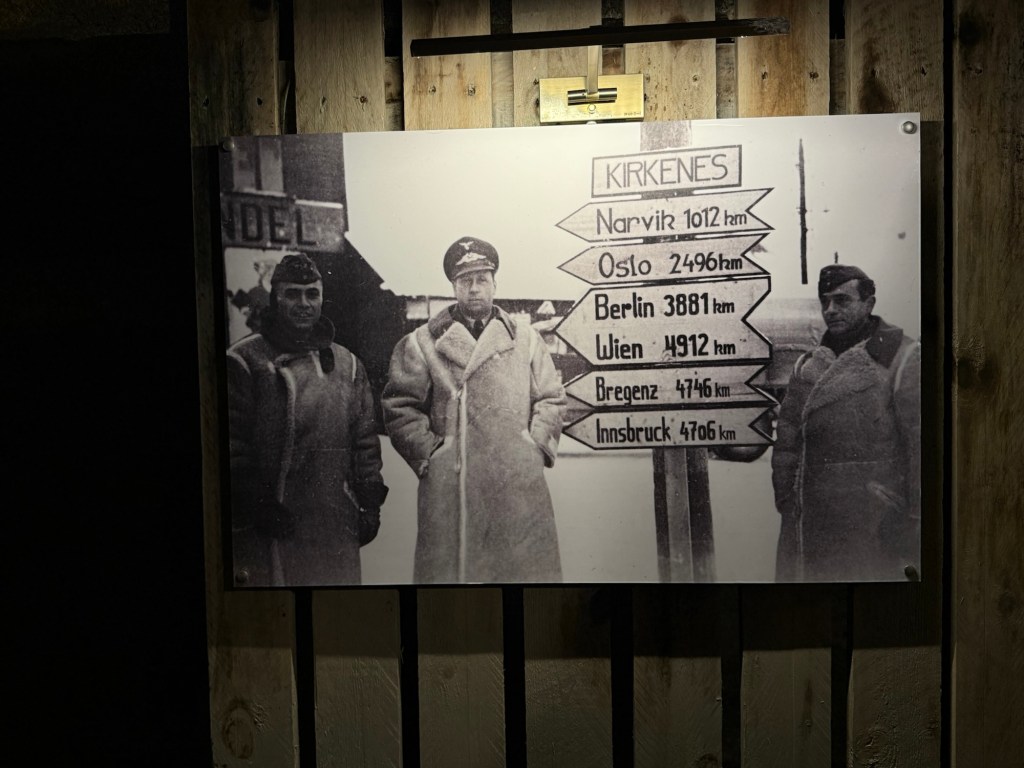
After leaving our first tour was a history lesson and a trip to the Russian border. The history lesson was that the town was the second most bombed city in WW2 (after Valletta). At its height there were 100,000 Germans posted here. The Nazis’ focus was extracting iron ore and nickel from the local mines for the war effort and then, secondly, to stop the Allies reaching the USSR’s only open port, Murmansk. It was from here that supplies from the Allies were sent down to Moscow by rail to fight the Nazis.

Video in an air raid shelter

The Germans failed in their attempt to take Murmansk and stop the supply line: they simply underestimated the impassible nature of the route between Norway and Murmansk expecting better roads and less mud. Their progress was pitifully slow. The Red Army repelled the expedition and bombed the hell out of Kirkenes. The guide said that had Murmansk been taken it would have prolonged the war. In the end 12,000 Germans died and 70,000 Soviets. The guide also added that this is the Russian way to advance by expending their own soldiers with little regard and he suggested also in Ukraine this was a Russian tactic. 
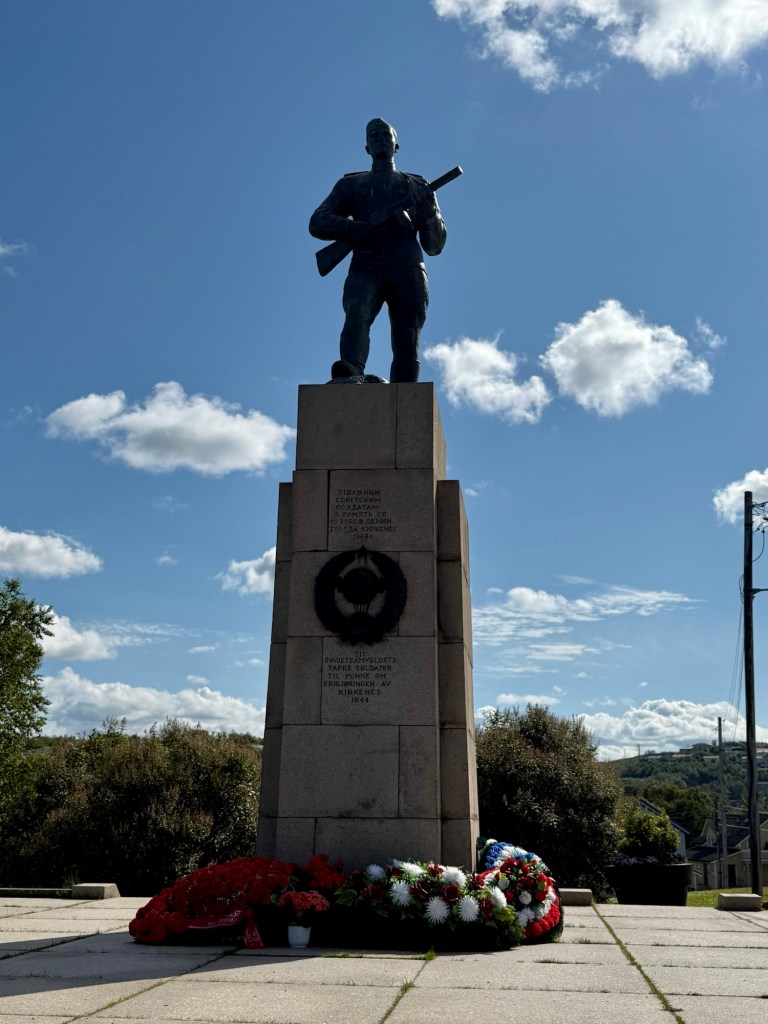
Monument to a Soviet soldier

The sacrifice of the Red Army cannot be understated throughout WW2. I’m slow to praise after their advancement to Berlin seemed to be a long campaign of rape and looting but the casualty figures were horrendous and their sacrifice brought an end to Hitler with the Allies. Many Soviet families lost so many sons you can imagine their devastation. Their monuments should be respected and honoured. Clearly some of the locals find it hard to overlook Putin’s current brutal colonial ambitions.
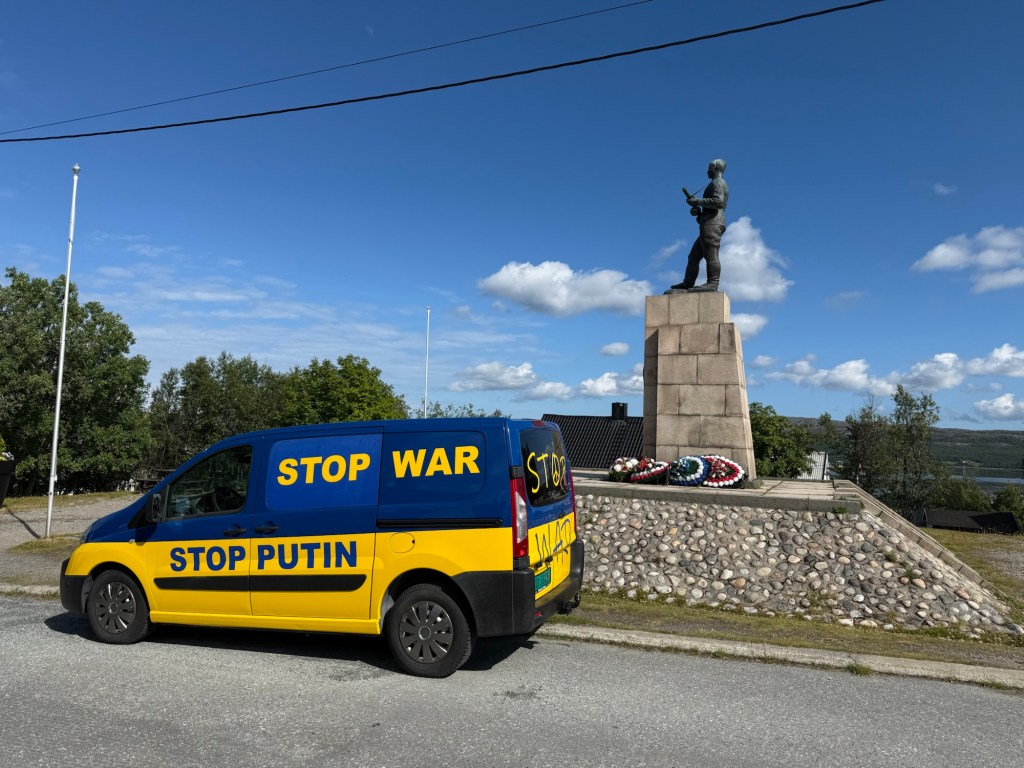
Which brought us on to the present day. Kirkenes had a flourishing tourist trade with the Russians over the border up until the Ukrainian War. Up to 1,000 visitors came every week to buy at the Norwegian shops and stay or eat at the hotels and restaurants. The Russians bought electronics, food, nappies (!) and chocolate. Norwegians would go east for cheap petrol! Norway stopped the issue of visas. The economic implications for the town are profound.
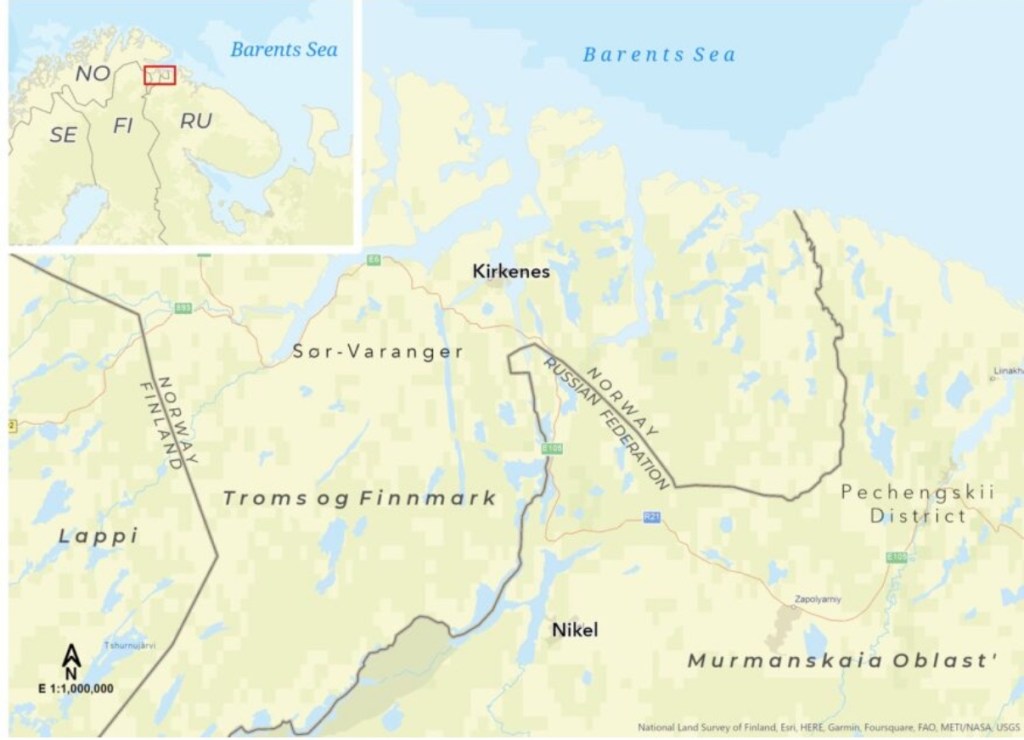
Nicely wedged between Finland and Russia with Sweden nearby

This has killed a very lucrative trade. Similarly as troublesome was when the Russians passed through 5,500 migrants from the Middle East over the border. For a town with a population of 3,000 you can imagine the problems. This flow has now stopped but this was another Putin tactic, with human life, to cause havoc.
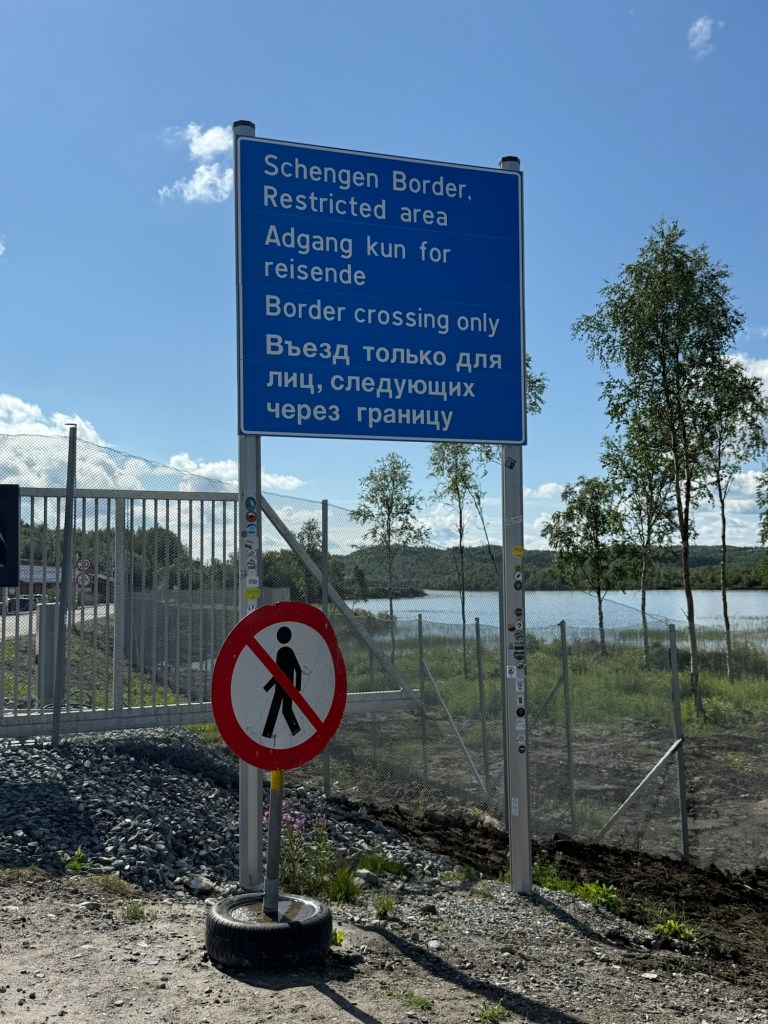
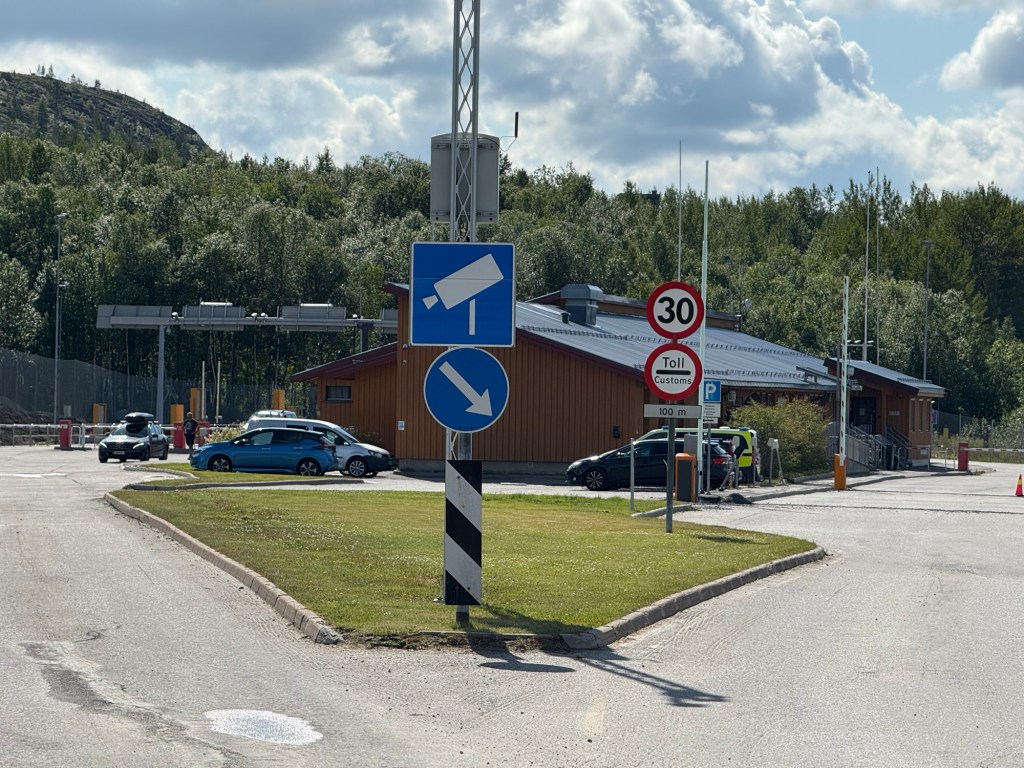
The border with Russia
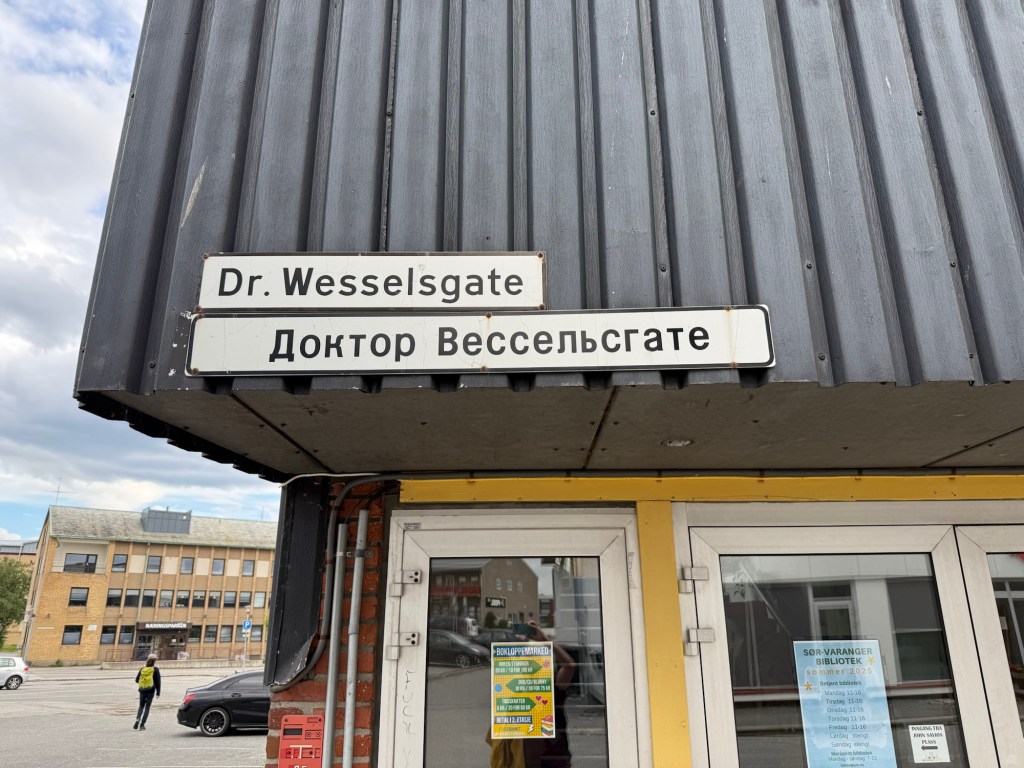
Many signs in Kirkenes are in Russian to help the, now departed, tourists

Later that day we met some reindeers, husky dogs and entered an ice hotel. The reindeers were friendly and interesting and the dogs were hardy and in residence for the winter to pull sledges for the tourists.
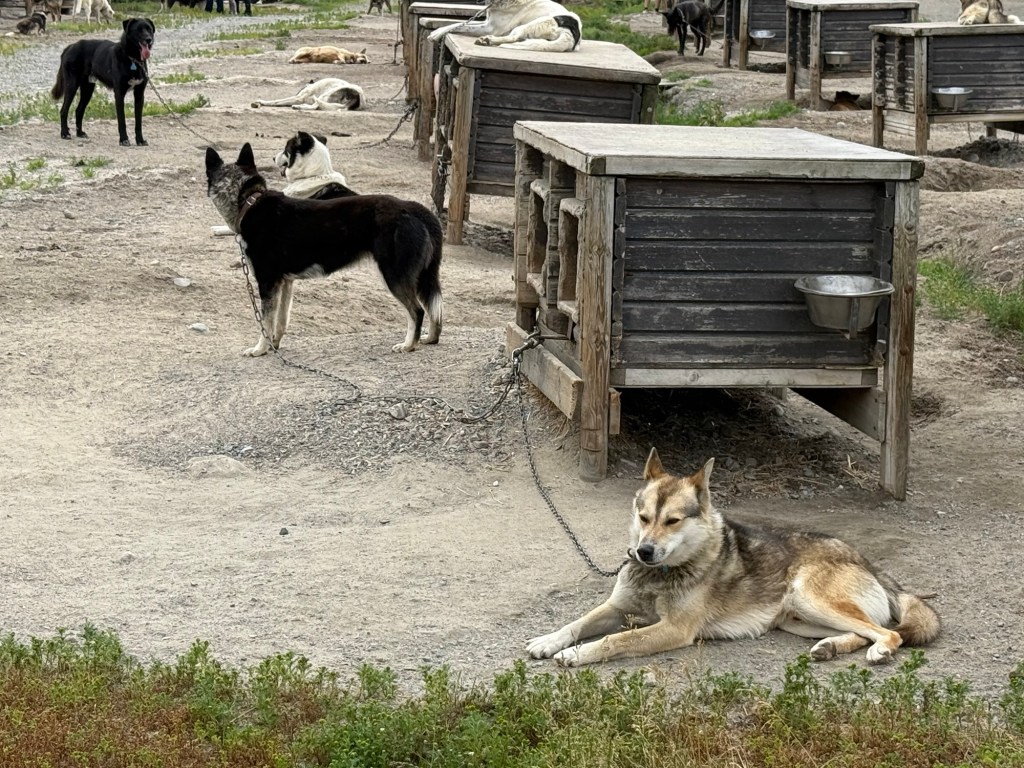
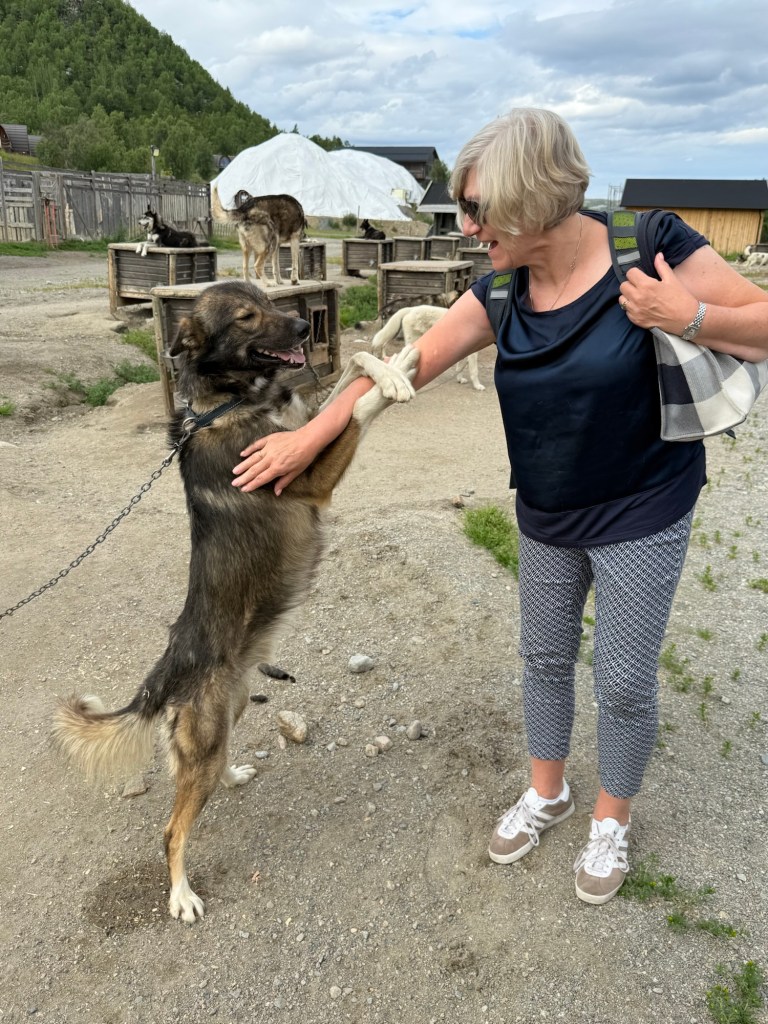
New friend. Note the ice hotel in the background: white mound
Rudolph, Prancer, Donner & Blitzen
Cupid

The ice hotel was part of a larger complex of cabins. It was unique but had no appeal to Anna and myself, unsurprisingly. We had an excellent guide who amongst much information asked us not to lick the ice. You can imagine my disappointment. The temperature, outside, had got up to 22°C in the afternoon. The summer average here should be between 10° and 15°C. The game’s over for global warming. It seems we just have to learn how to live with it?
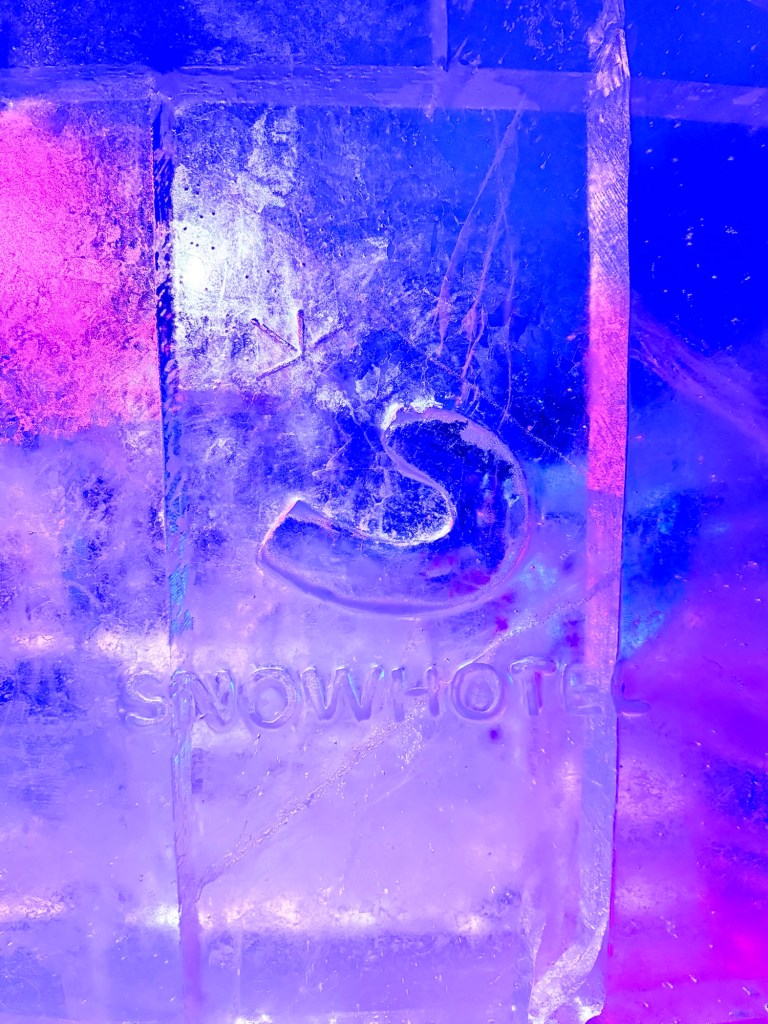
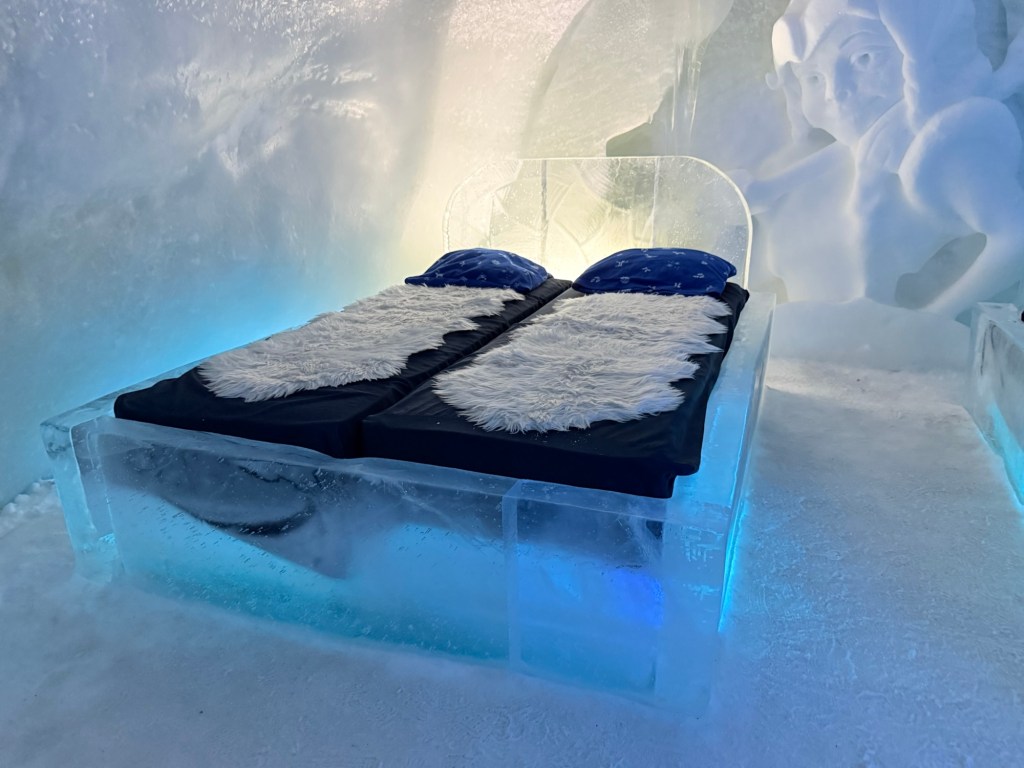
The only time I got to wear a coat and hat!

The guide commented that the threat of Russia didn’t worry the town now. A local military college in Murmansk used to have 2,000 trainees in it. That’s now empty as no doubt the soldiers are deployed in Ukraine. On this border the Russians have around 500 soldiers in residence and the Norwegians have 200. Much of the monitoring is done remotely by electronic surveillance.

Back in Kirkenes wandering round this empty town we found a pizza in the late afternoon. Then we flew out of Kirkenes, to Oslo, on a late flight. Waiting in Departures enabled the travellers to watch the Women’s Euro Football Final. Well done girls!
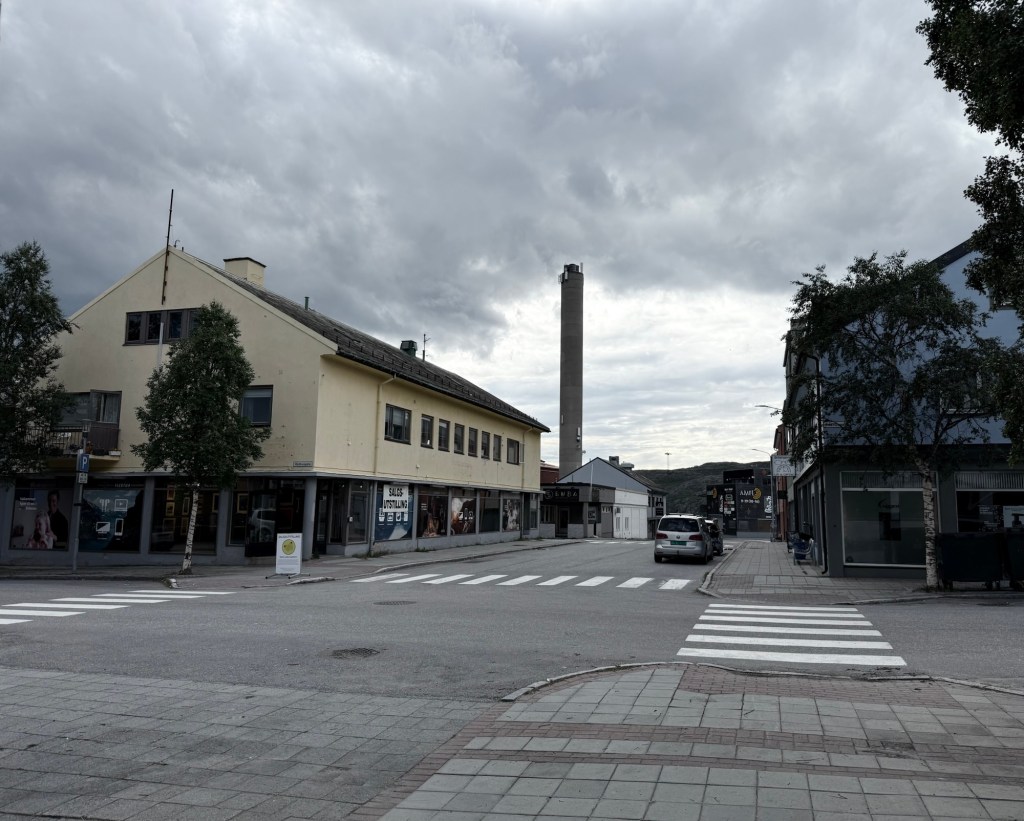
Quiet Sunday night at the end of the world

Lastly, I’m grateful that the world has chosen to learn English, to make my life easier, but there comes a time when the umpteenth incorrect pronunciation of salmon leads me to have violent thoughts. The Norwegians cannot say it properly. It’s not ‘sallmon’ it’s ‘sammon’. Pick up your game Norway.

PS.   Just to confirm the good news that the Guinness World Record organisation has acknowledged Bob Sanders’ ride across the USA as the oldest male and it’s now confirmed. Take a look below. Fantastic.

https://www.guinnessworldrecords.com/world-records/93719-oldest-person-to-cross-america-on-bicycle
 

Norway (for Beginners) – Part Four – Fellow Passengers

On a smaller cruise you inevitably get to know your fellow passengers better and as everyone is usually over 50 or 60 they like to chat. On our first night we were paired up with young honeymooners. She was six month pregnant and given her condition they picked this cruise as something she could easily cope with. Imagine in all those years to come when they’re reminiscing about their first night away and the time they spent talking with me…

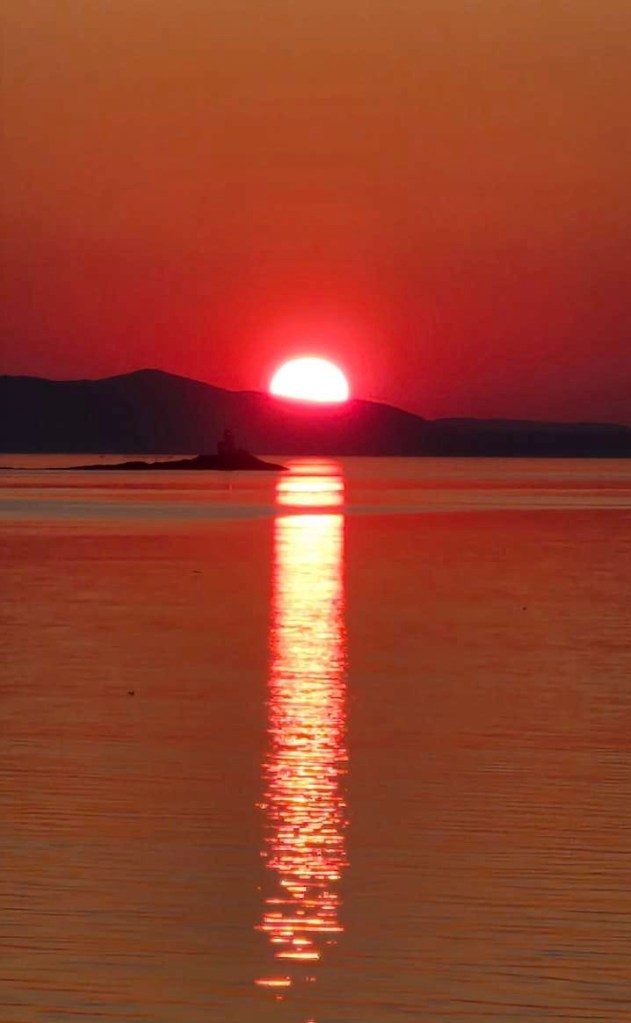
Sunrise

They were English. She was an English Rose, with a bump, who spoke like someone from the Home Counties but was part Norwegian and conversed with the waitress like a native. Hubby was more Essex estuary but had married in a kilt. We saw the photos. Further questioning revealed he had heritage north of the border hence the McLean tartan.

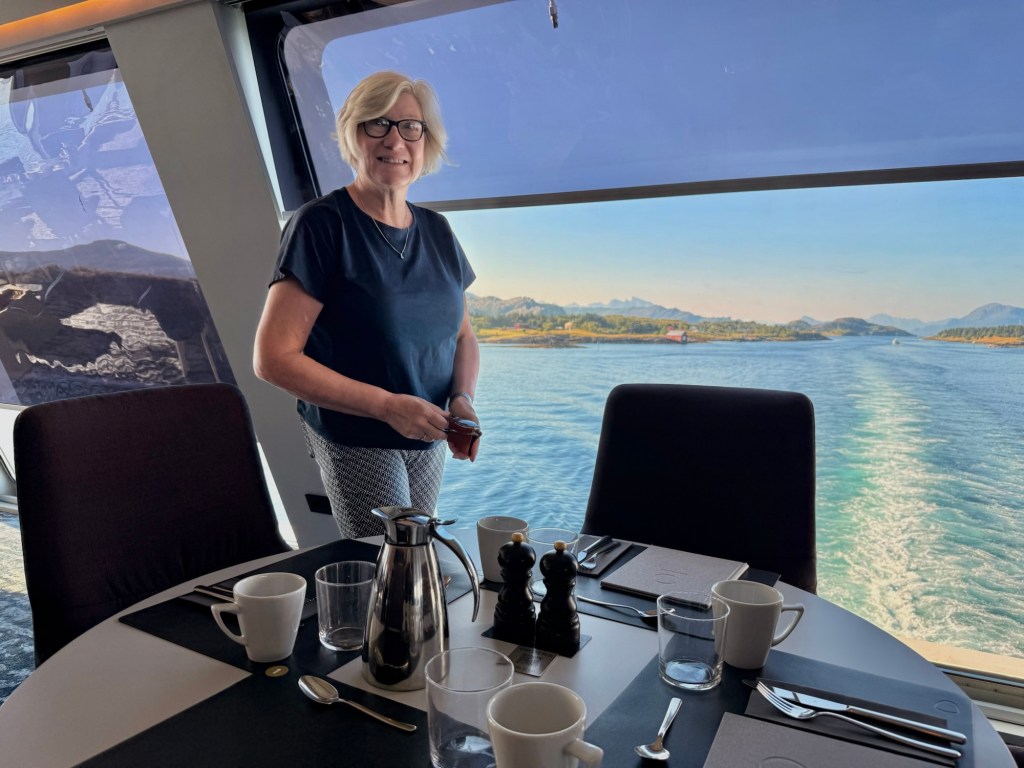
The backdrop at breakfast

As she told us about the wedding in Oslo it transpired they lived in Zurich as income tax was c11%. They’d abandoned London. He was in biotech (no, me neither) and she in shipping insurance. On the Scottish connection she chirped that she’d “flown in a piper from Copenhagen” to play at the Reception. After all this I started to feel very poor in comparison.

They only enjoyed us for one night only before we were paired at dinner with a Belgium couple. They were only on for two nights and he was, I extracted, going through a late middle age crisis. He was an editor of a Sub-Saharan agricultural journal. (I know, you think I make this up.) Quite an intense chap redeemed for me by his love of Frank Zappa and Rochdale (his grandfather had worked there.). His forbearing wife was a teacher of young children. Both spoke Arabic, as you do.

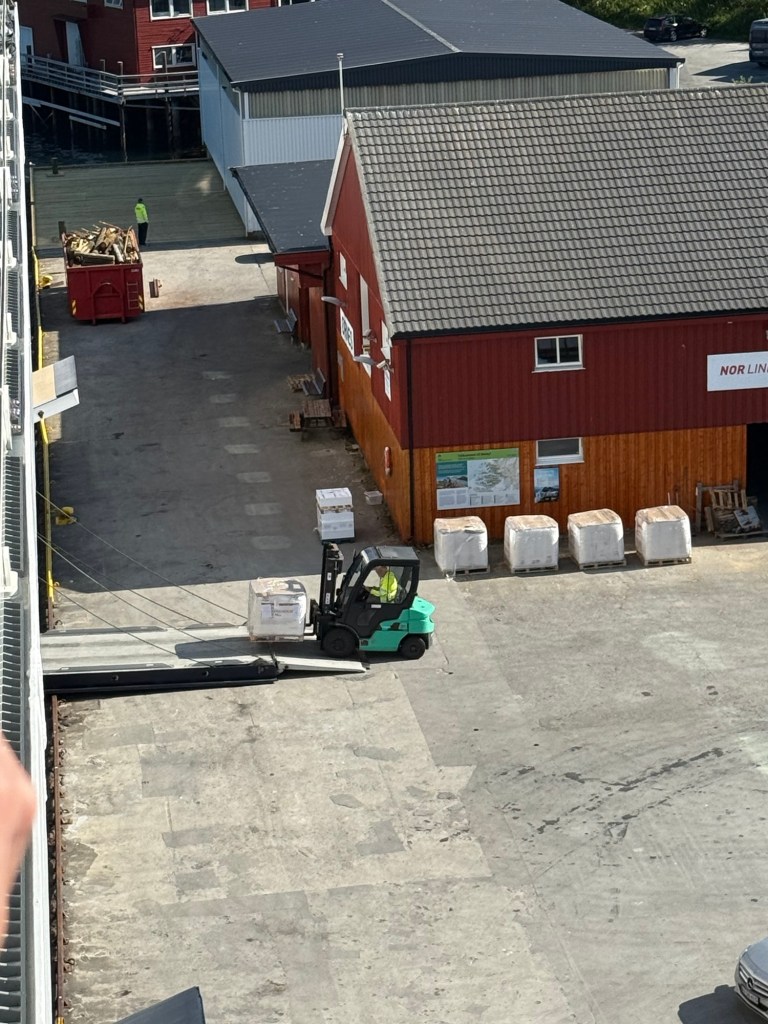
As mentioned earlier – handling freight

Next came our more permanent dining companions. One was an initially quiet German lady, in her late 50s, who also had good English and was also a teacher. As our dialogue developed it transpired she was an angry Remainer. Oh good I thought as I waded into my tiramisu thinking it was 2016 again. She explained to me that because of this the end of world was, yet again, nigh. Her outrage centred on freedom of movement and the necessity for members of the EU to now shell out £16 to alight on our blessed isle. After her diatribe I felt it should be at least tripled.

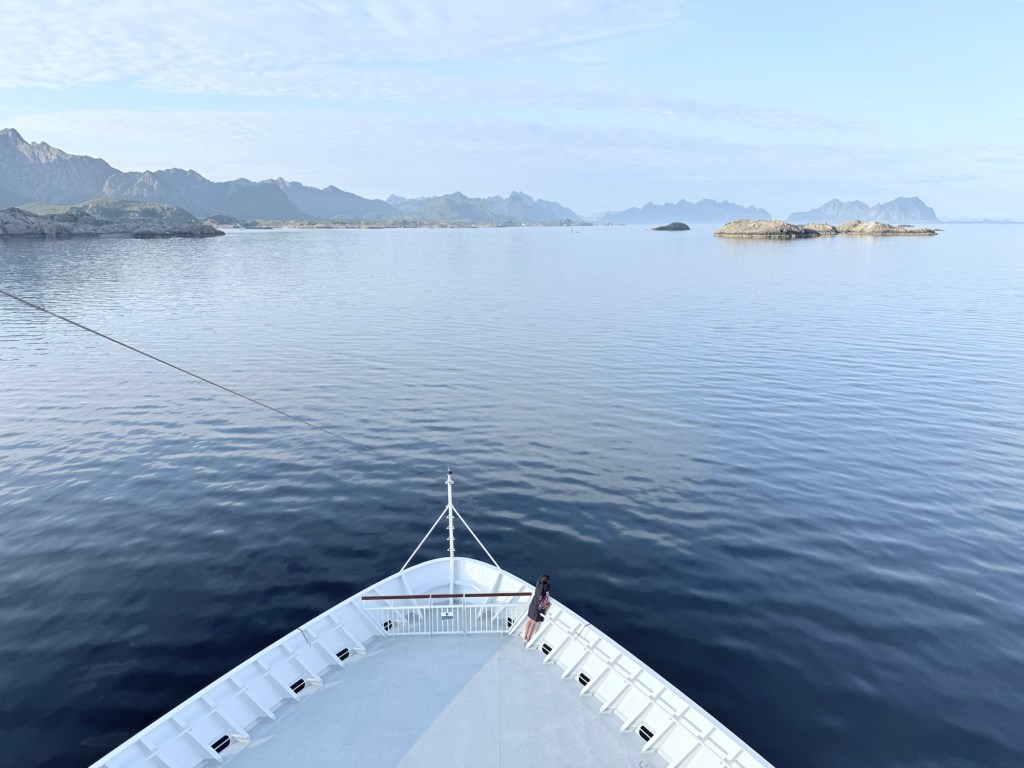
The sea was often calm as a mill pond

Then came a Chinese couple from Shanghai, with British passports, who also lived in Switzerland. She was a teacher and his last declared profession was as an acupuncturist. (I do think he did something else before doing this.) They were truly delightful and echoed my thoughts exactly as regards modern day China, which suggests they’re not moving back any time soon. They volunteered this without any of my prompting although I was very interested but hadn’t wanted to ask. Less agreeable was his donning an Arsenal away shirt in the dining room: I expressed disappointment and volunteered that a quick audit of his wardrobe, by myself, might avoid any future unpleasantness (from me.) He never came back to me on this.

I know it’ll come as no shock to find that we were sought out. Sat in a cafe in Tromsø an Irish couple asked me to shuffle up as they wanted to sit on the same bench. Anna had met the wife on the ship and bonded. I enquired, as a conversation starter, “Have you visited the Cathedral and the Polar Museum?” “No, we’ve been for a swim?” “What!?” The husband had, prior to leaving the Emerald Isle, worked out the nearest bus stop in Tromsø, to the ship when it docked, to take them to a suitable local beach for a dip in the sea.

Presents for Isabella and Katrina & Matt’s imminent arrival

To set the scene, it was 17°C, grey with intermittent drizzle, there’s snow on the top of local mountains, the sea may be a tad nippy and we’re close to a city centre. Not an obvious pursuit. My first thought was they must know I write a blog! However, lovely people with lots of joie de vivre and a terrific sense of fun, but mad.

Other conversations with had with all sorts of folk usually from Scandinavia or North America. Most seem well travelled and easy to engage. There is also a transitory population who might hop on for one stop only. This included cycle tourers. Now there’s an idea?

Chilling. (I’ll get a reprimand for using this photo. Please note she was eating.)

Still the scenery is amazing and the other day the Captain slowed to let us watch some Minke whales (who I note also made an appearance in Tromsø on a restaurant menu.) The other excitement is when we passed another Havila ship heading in the opposite direction. This led to much flag waving, hosing the the other ship with water and long blasts on the ship’s horn. This assault on the senses is a deep long bellow that’s virtually bowel emptying in it’s volume and vibration if you happened to be on the open top deck when they tooted.

Sister ship near the Lofoten Islands

Norway (for Beginners) – Part Three – A Life on the Ocean Waves

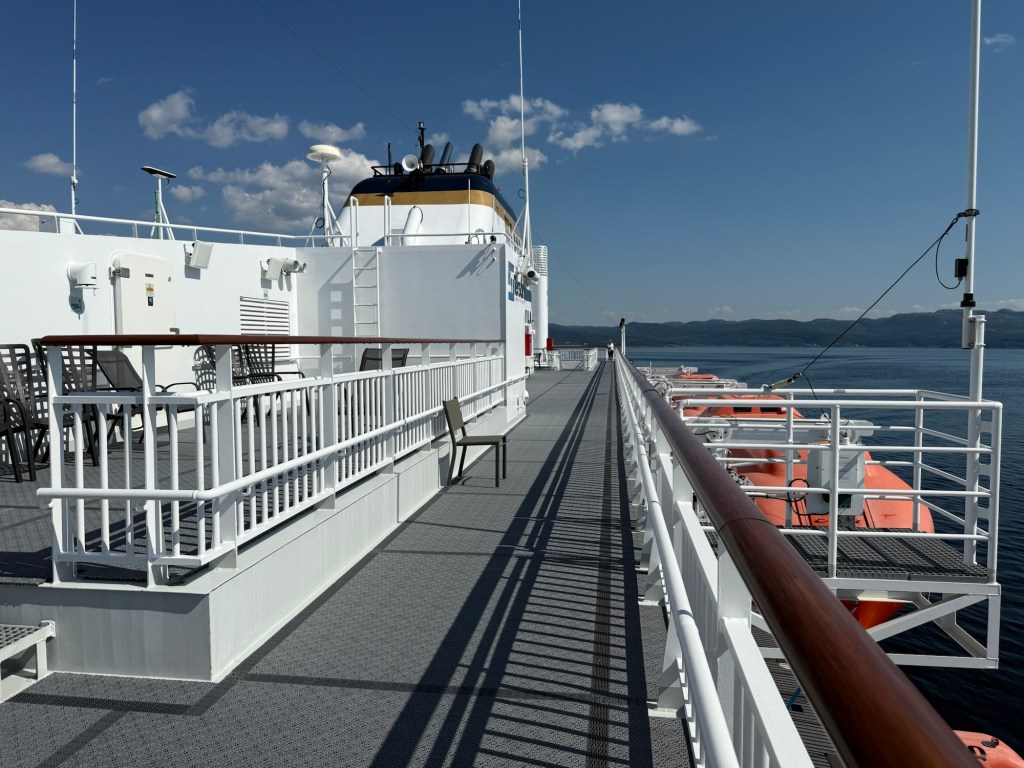
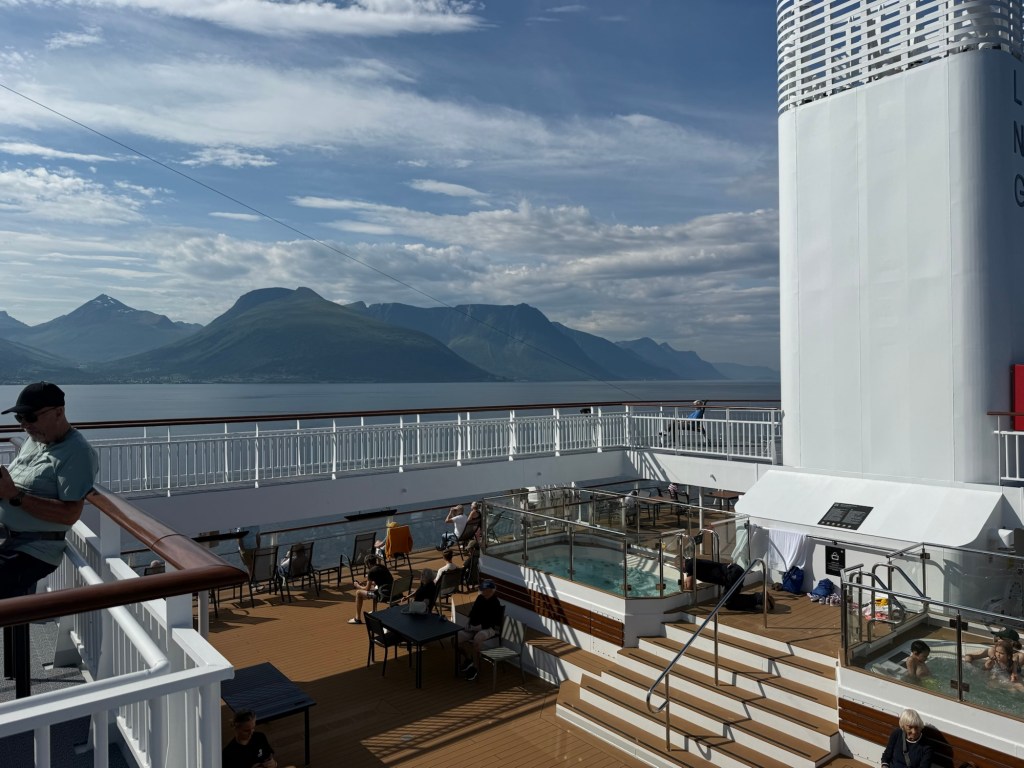
Escaping the heat of Bergen was a ‘win’ as we boarded the ship with over 300 guests. Eleven ships (seven with the Hurtigruten line and four with Havila) ply the coastline operating as something between a cruise and ferry. So some freight is carried and you can get on or off the ship permanently depending on where it stops. The ships have destinations where the passengers can disembark for sightseeing and excursions and there are other stops that may occur in the night for freight purposes. Our ship was modern and beautifully appointed. Not too big yet not too small. The staffing was high, well trained and the food was fabulous. The main draw is of course to look at the dramatic Norwegian coast line with its rocky profile, waterfalls and quaint mountain side farms.

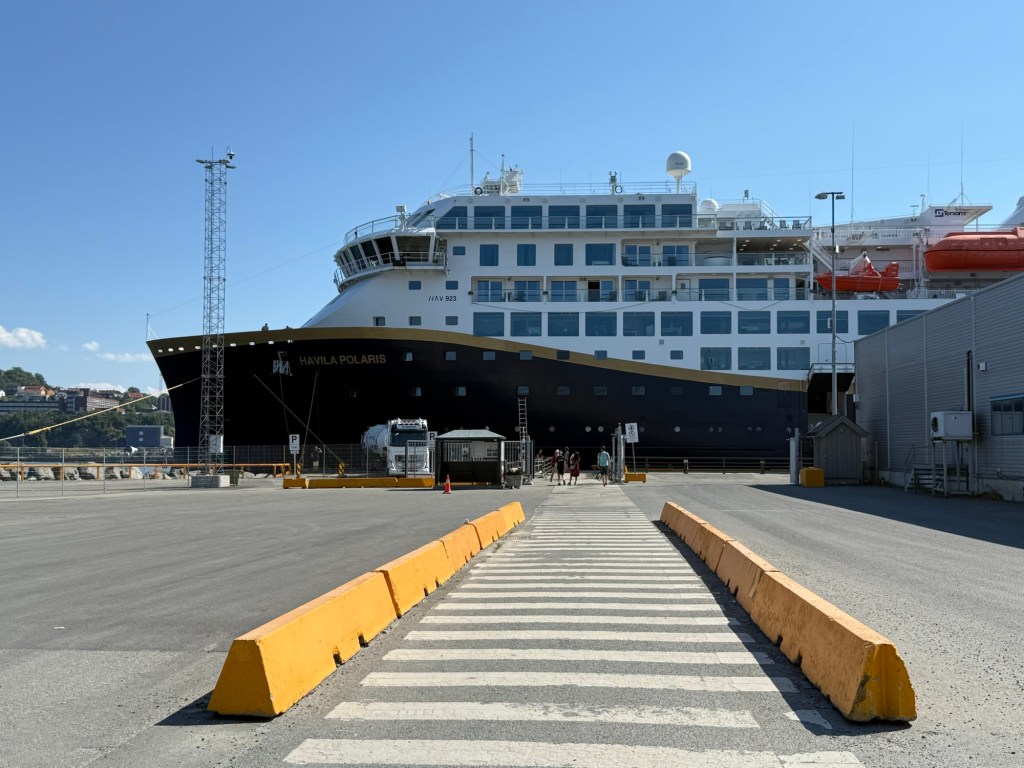
Polaris

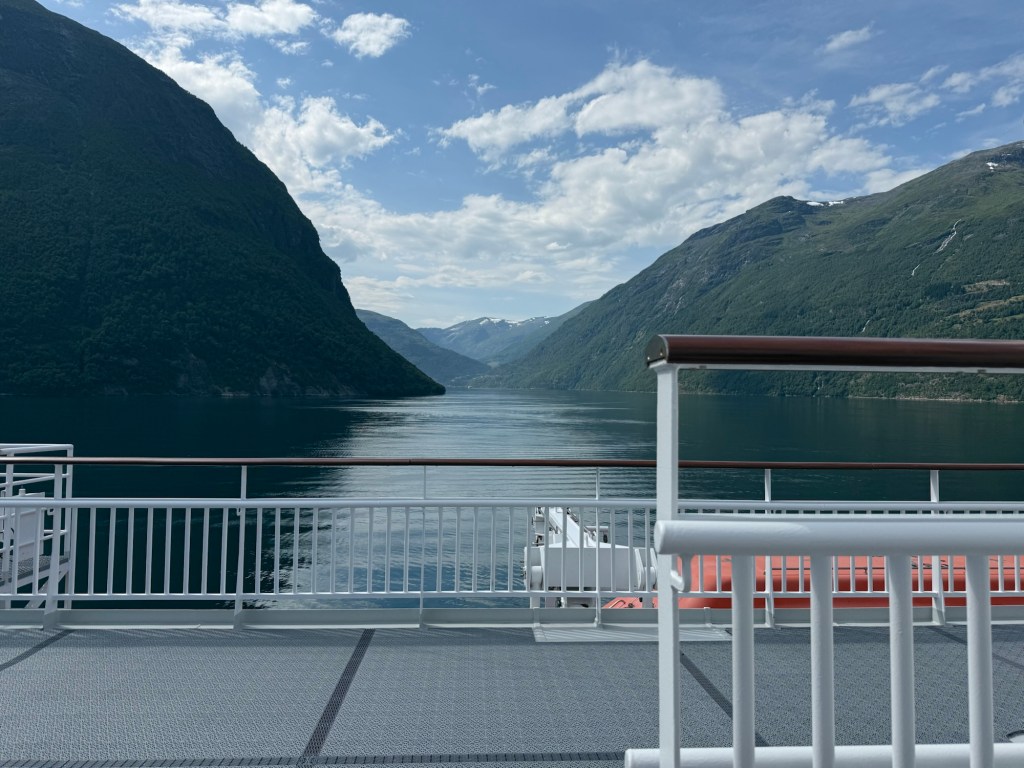
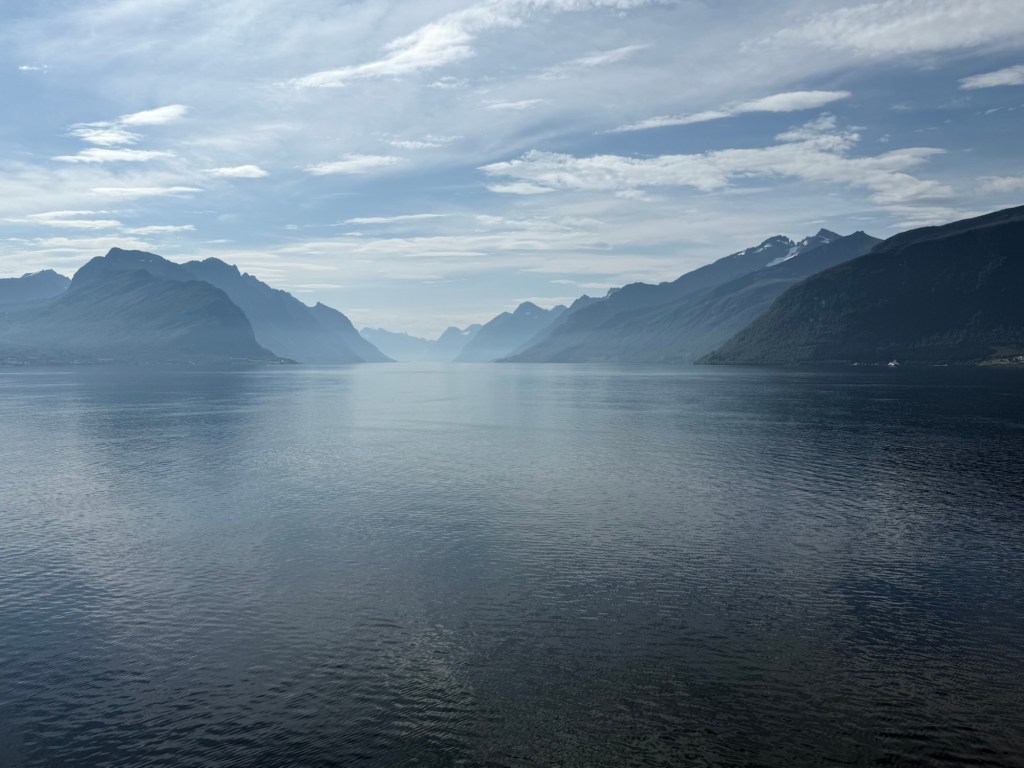
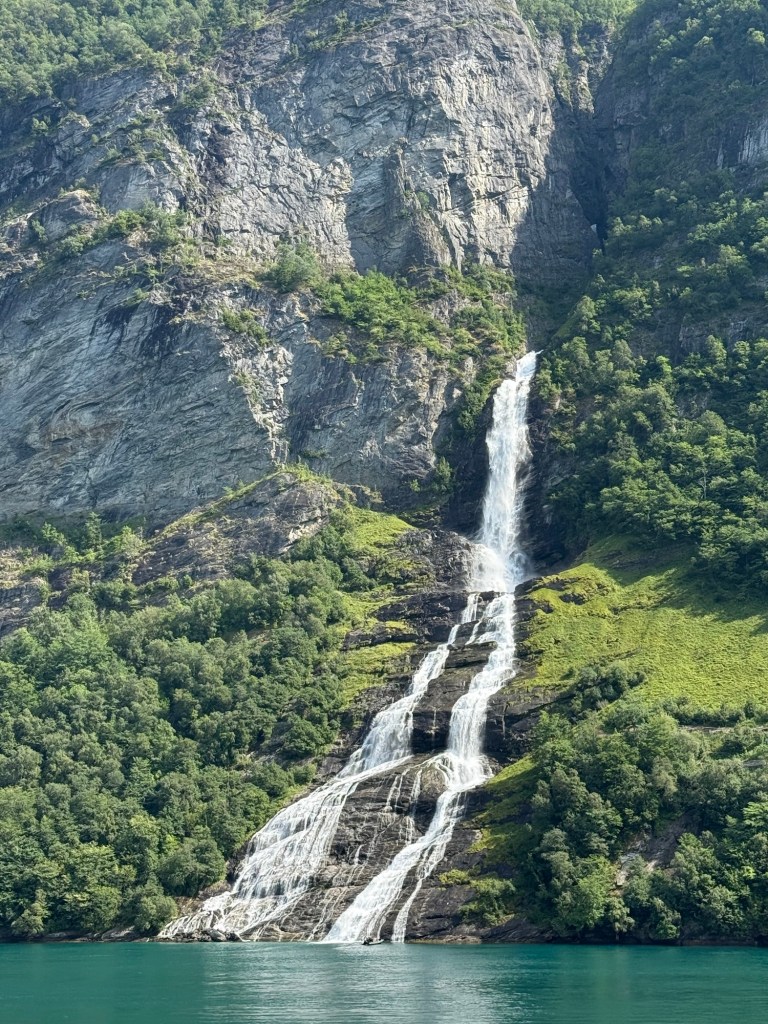
The progress up north is slow and on the second day we went a considerable distance up a fjord to view some waterfalls.

The beauty and serenity is complete as you quietly sail. The weather has remained unseasonably hot and if you subscribe to global warming then the Norwegians have a lot to answer for. Over half of their exports are oil and gas and 24% of GDP is based on this drilling. The Norwegian government is a part owner of the sector and enjoys returns from the industry as well as tax. Rather impressively much of this money, over the last 25 years, has gone into a Sovereign Wealth Fund that stands at $1.5 trillion. Norwegians, per capita, are the second wealthiest people on the planet. There is some angst, politically and socially here, about continuing to extract fossil fuels but I rather prefer their model of coping with a guilty conscience rather than penury. Whilst major industrialised nations, outside Europe, continue to copiously burn fossil fuels our dash for net zero will have no measurable improvement in containing temperature levels.

There are several excursions on each stop. They’re fabulously expensive at between £100 to £170/person per trip. The one we booked got cancelled due to a low subscription! We have others planned, fingers crossed. There is always the alternative of getting off the ship and doing your own thing.

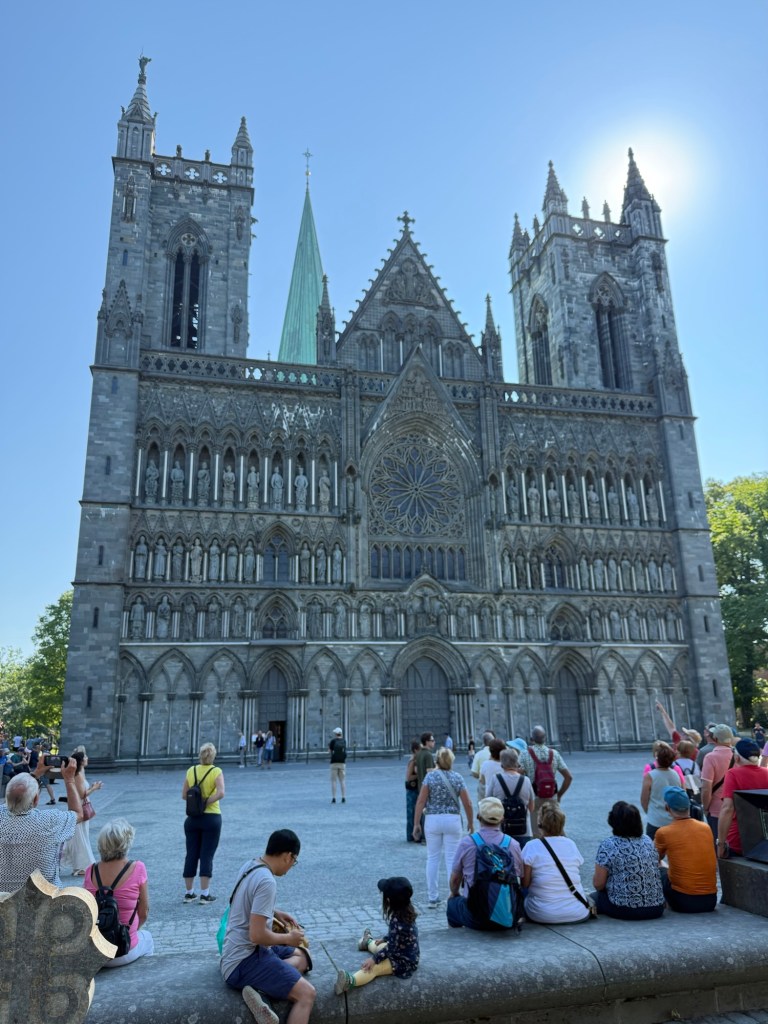
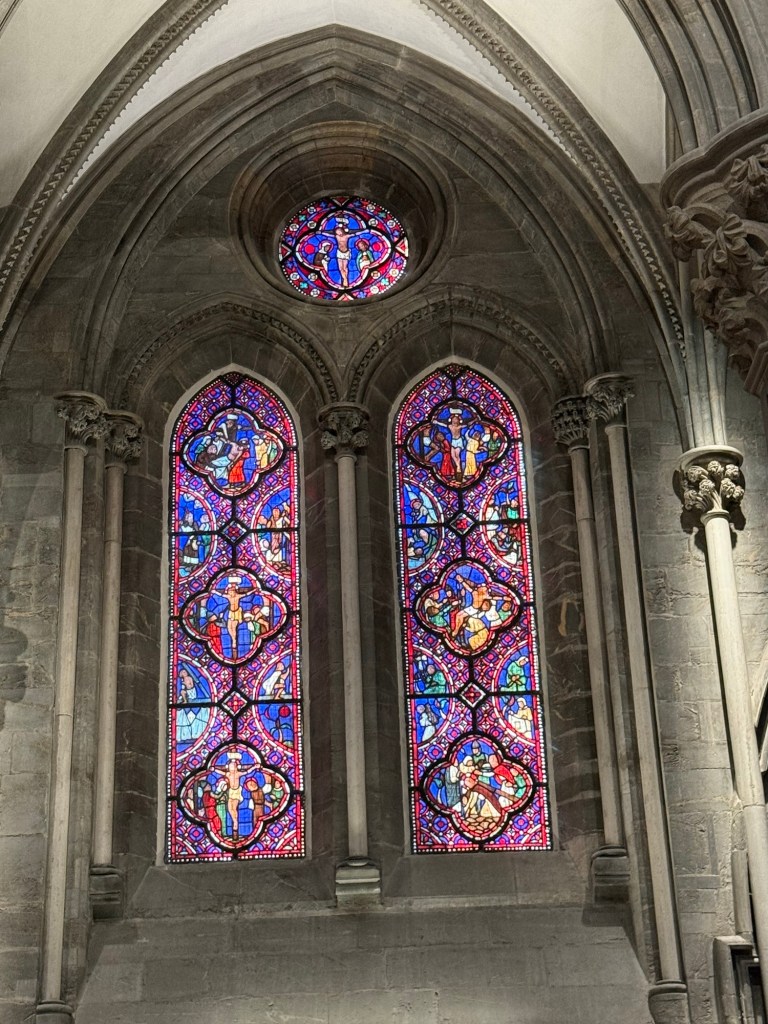
This we did at Trondheim and looked around the city centre and stunning Lutheran cathedral.

Here is where they coronate their Kings. I asked one of the Cathedral guides if there was much affection for the monarchy and she said there was ambivalence. She went on to outline that the Crown Princess’ son was under investigation for several rapes and assault. This man is the Crown Prince’s step son.

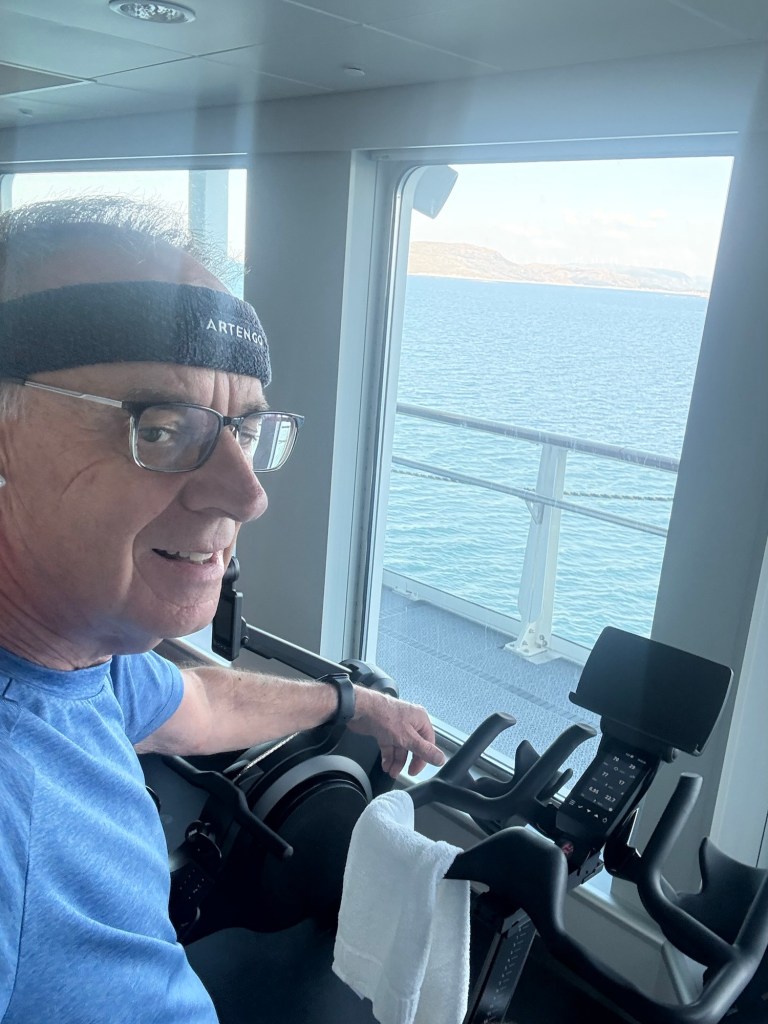
All in all it was an interesting stop and enabled some walking steps to be done. The food is regular and delicious on the ship and exercise is needed to cope with the calorie flow.

Lookie here! Tony found a bike with a view

Norway (for Beginners) – Part Two – Bergen

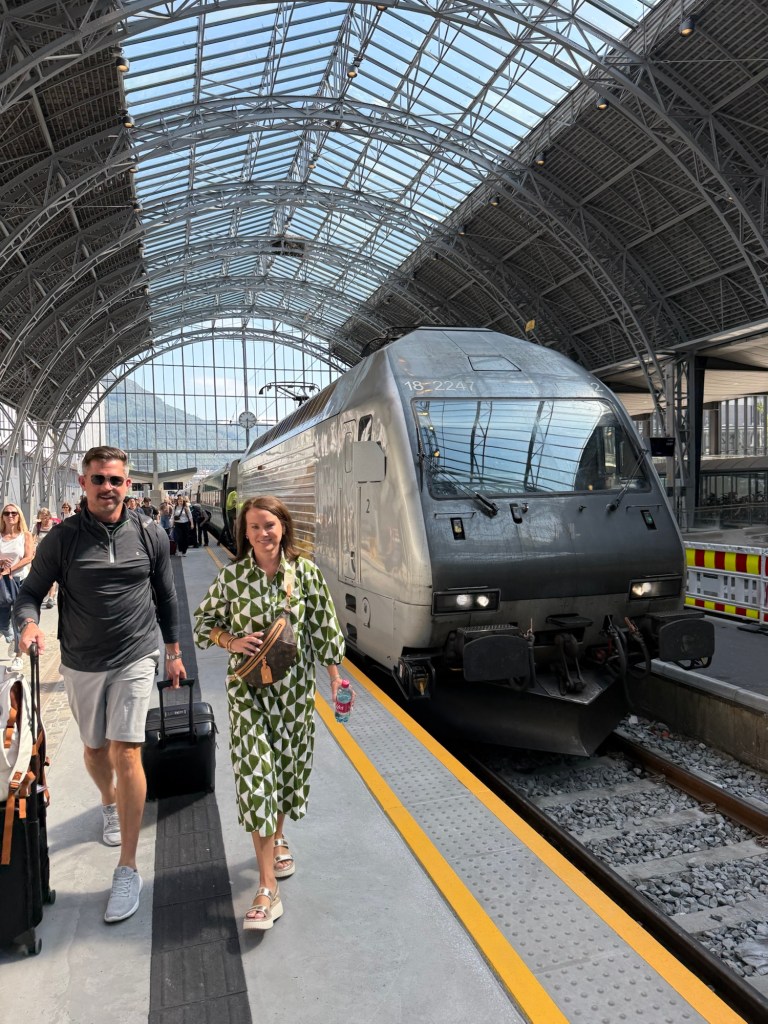
After our long but scenic train ride from Oslo we pulled into Bergen, the second largest city in Norway with a population of around 500,000. Our friend Google Maps suggested we could easily tow our suitcases to the nearby harbour and our hotel. Its assessment was correct but failed to advise that a lot of Bergen is cobbled, which is not a wheelie case’s friend.

Choo choo puffa from Oslo

Check in at the hotel was routine enough but in the Reception we queued with American and Chinese guests. Clearly jostling with these two superpowers did make me reflect on their potential hostilities. In this case the Americans were older but bigger and may have seemed favourites in a skirmish but the smaller Chinese had bigger suitcases (containing who knows what?) and may be better prepared? After all Chinese tourists always come on group tours with a Chinese guide and they may have been drilled, like in the film Zulu, to fall quickly into a formation to see off the Americans. I need not have worried as the buffet breakfast reaffirmed American superiority. After all who could stop a 17 stone Senior (from Des Moines) armed with a plate groaning with everything cooked in one outstretched hand and in the other hand a plate loaded with fruit and pastries advancing toward you at 15 mph with no desire (or ability) to stop even if he wanted to.

On entry our room’s thermometer advised we were enjoying 26.5°C! I fiddled with the device on the wall that seemed like an air conditioning control. Nothing happened. At Reception I reported the issue for the assistant to confirm that it was in fact a heating unit only and there was no air con. “We are experiencing a heat wave. Our hotel doesn’t usually need air con.” Further discussion helpfully (not) suggested opening the windows in the room. That would let in more heat we thought! Sadly our two nights were terribly hot and uncomfortable.

However, in the meanwhile Bergen, despite high heat and sunshine, was a delight. We found sanctuary in another Irish bar for refreshment, one of four Irish bars in the harbour area!

Cadillac Eldorado

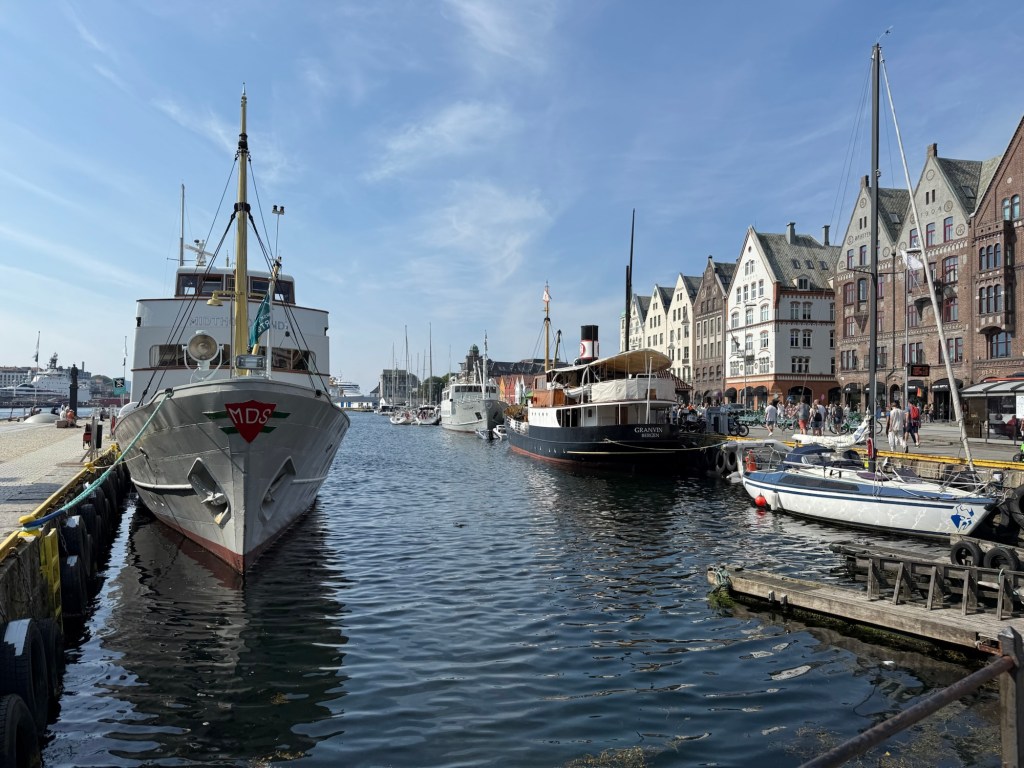
The harbour area was very attractive with shops, bars and restaurants all in an easy walking distance from our accommodation. We investigated the surrounding streets and they were also vibrant and attractive.

After an evening of orientation the next day we eventually took in the funicular rail ride up the mountain overlooking the harbour. It gave a spectacular sight overlooking the fjords and surrounding parts of the city.

Anna, at long last, finding someone/thing to have a sensible conversation with

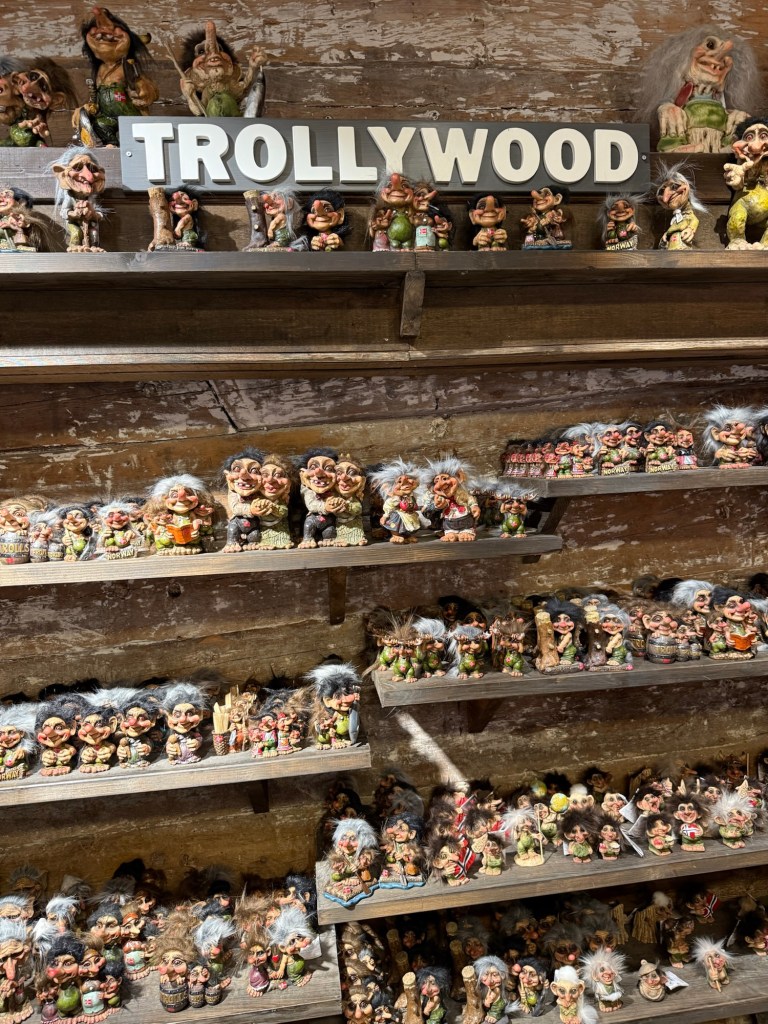
The gift shops were numerous and eventually we succumbed to a couple of purchases although we gave the trolls a miss.

Norwegian towns are laid out on a grid system and easy to navigate. We were here in peak season and many overseas nationalities were evident. I found a couple of record shops to visit and was also able to sneak back to our inferno (hotel) to get live coverage of the Tour de France.

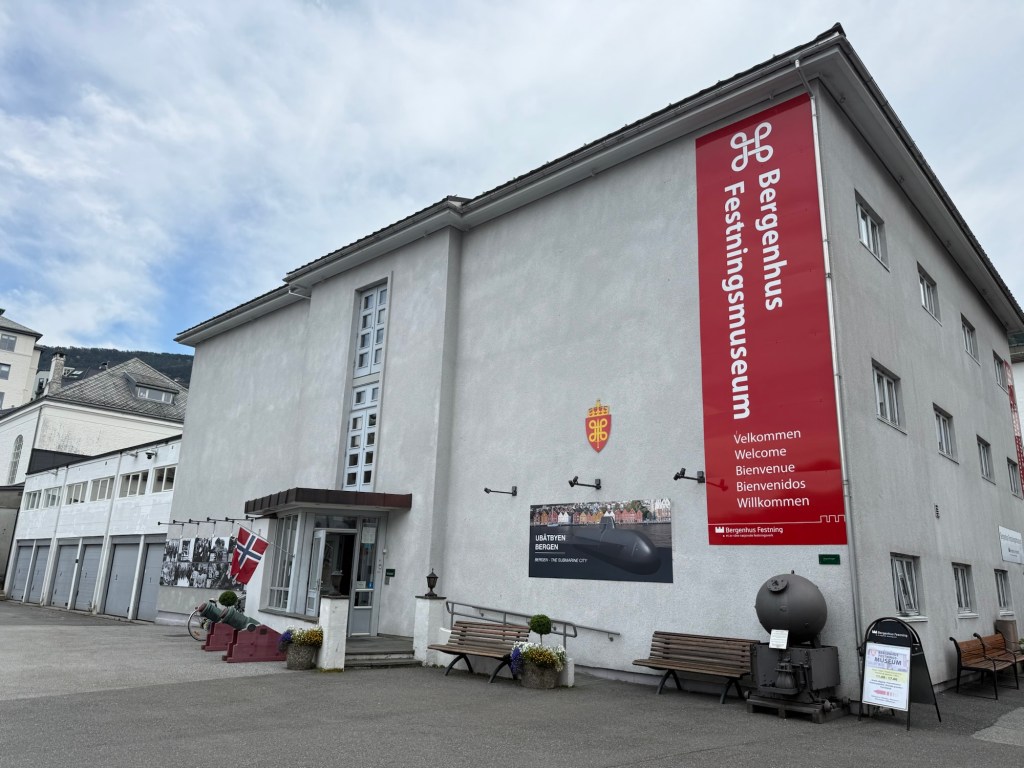
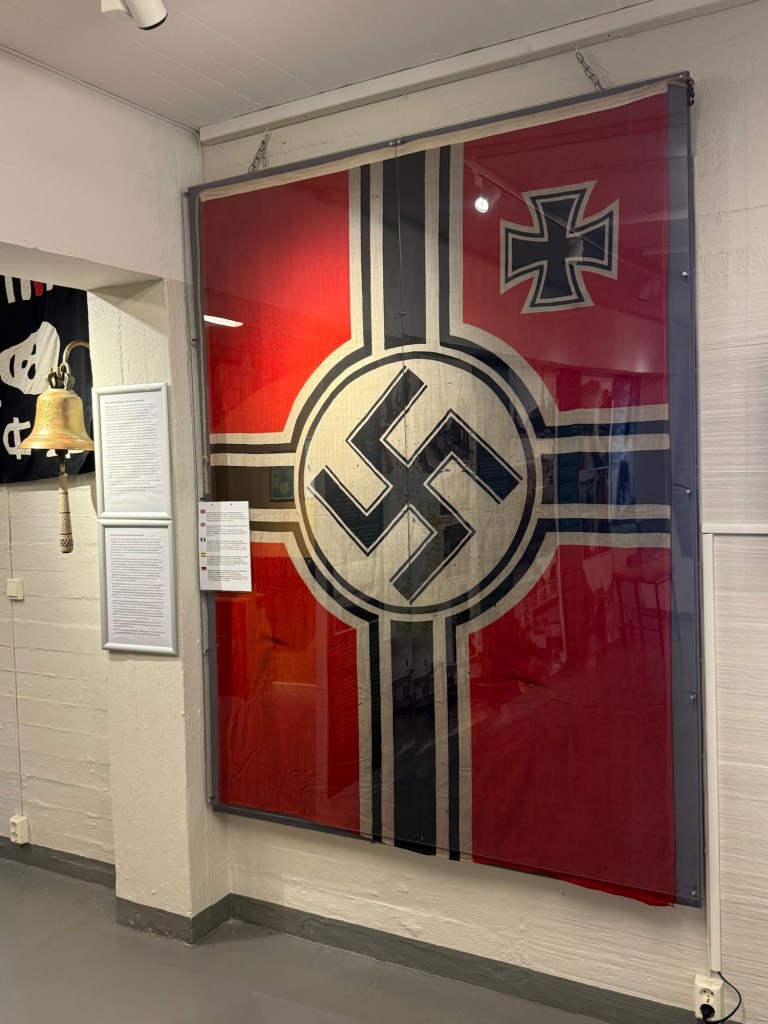
The local Fortress Museum was interesting in covering the Nazi occupation and Bergen’s military history as a settlement. Norway was part of Sweden, but autonomous, until 1905 and was neutral in both world wars. Clearly Hitler overlooked that it 1940.

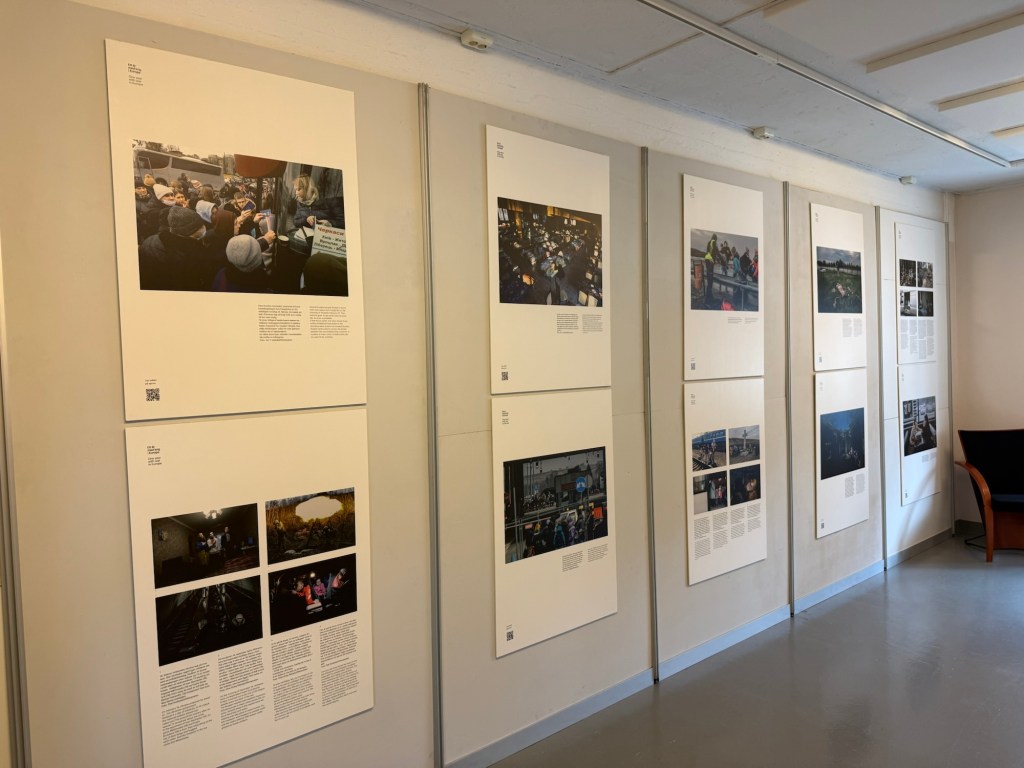
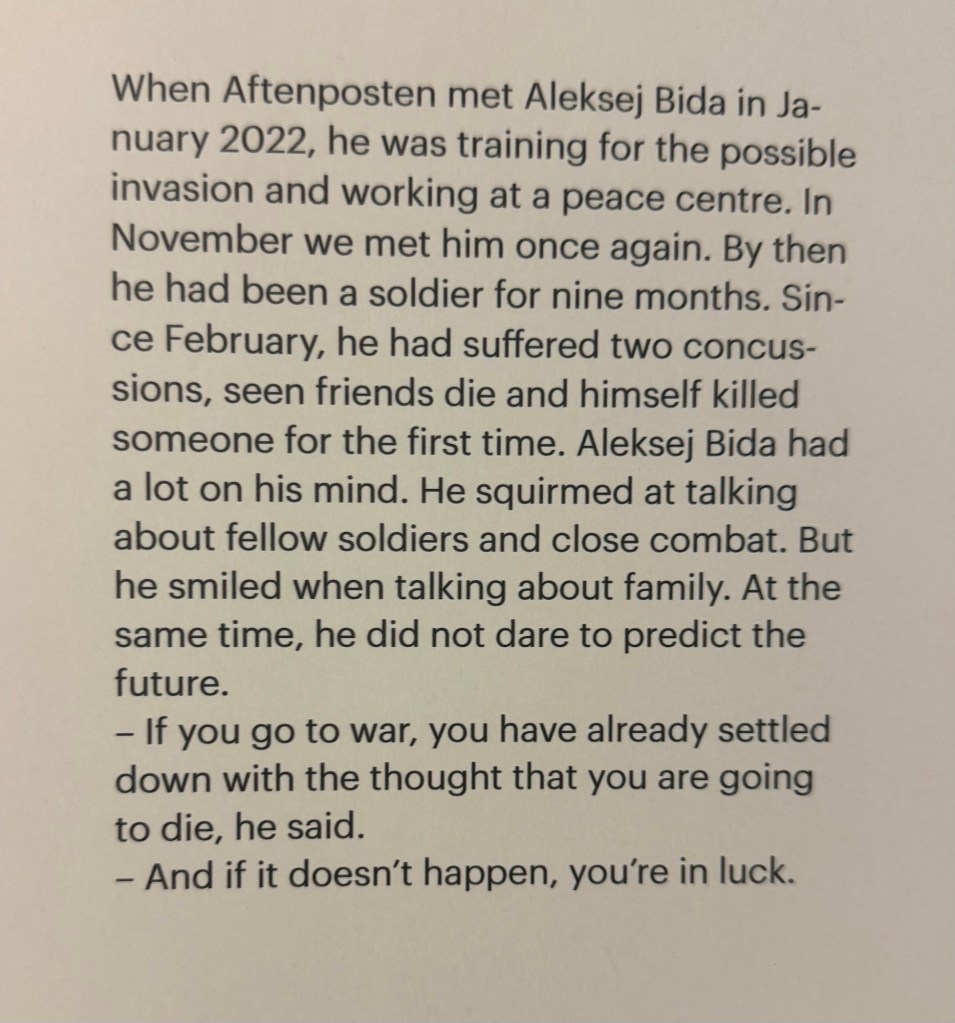
This museum had an exhibition dedicated to Ukraine. Norway’s worry is evident.

Photos of Ukrainian suffering
A caption from one of the images

It made me reflect on the surprisingly strong commitment to Ukraine by the EU countries and their neighbours. After Europe’s decades of scant interest in anything warlike or an effective military deterrent there now seems to be a resilience and inclination to spend on their militaries. I’m sceptical that this expenditure will result in a cohesive and effective military force but it may be the only way to go. The threat of Russia must seem very real if part of your country currently borders with it or has been occupied by it (or the USSR) in the last 80 years. Of course your awakening is accelerated if the USA indicates Europe’s defence isn’t a priority and after decades of free loading you can sort it out yourselves.

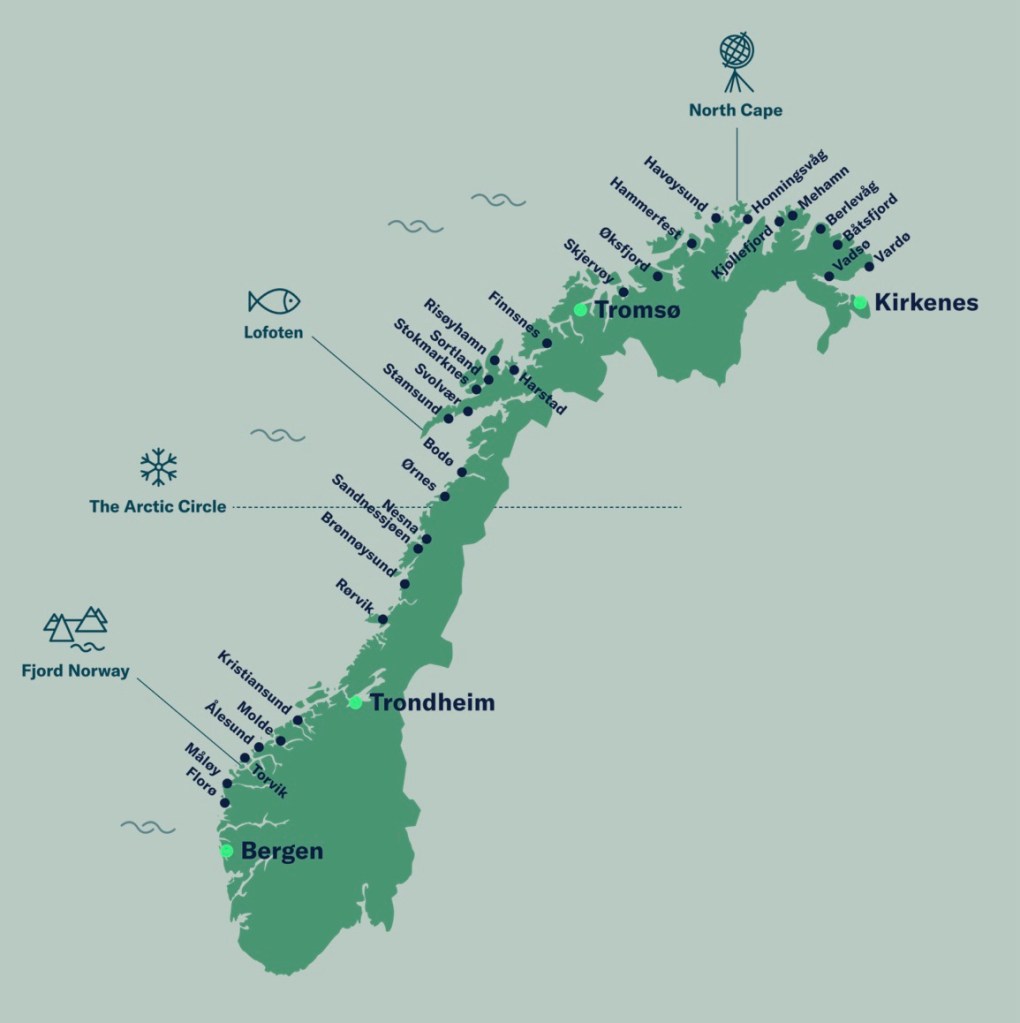
Braving the cobbles again we wheeled our cases to the docks to board the Polaris, part of the Havila line. Ambling up the coast we’d go north eventually beyond the Artic Circle.

…..please behave like Norway and be cold. After all I have a suitcase full of hats, gloves, coats and pullovers.

Norway (for Beginners) – Part One

Now if I’m being frank when I last visited Norway, over 20 years ago, I thought it was nice, but not for a whole weekend. The weather had been grey and plodding around Oslo hadn’t thrown up anything very memorable apart from the eye watering prices. We’d visited with our in-laws who had great affection for the ‘old’ country. My father-in-law’s parents were Norwegian and my father-in-law, Eric, had grown up speaking Norwegian and immersed in its traditions and cuisine during the time his parents had temporarily settled in Kingston-upon-Hull before returning home. Needless to say my first wife feels a great affinity for this part of her heritage (and no doubt our children will too.)

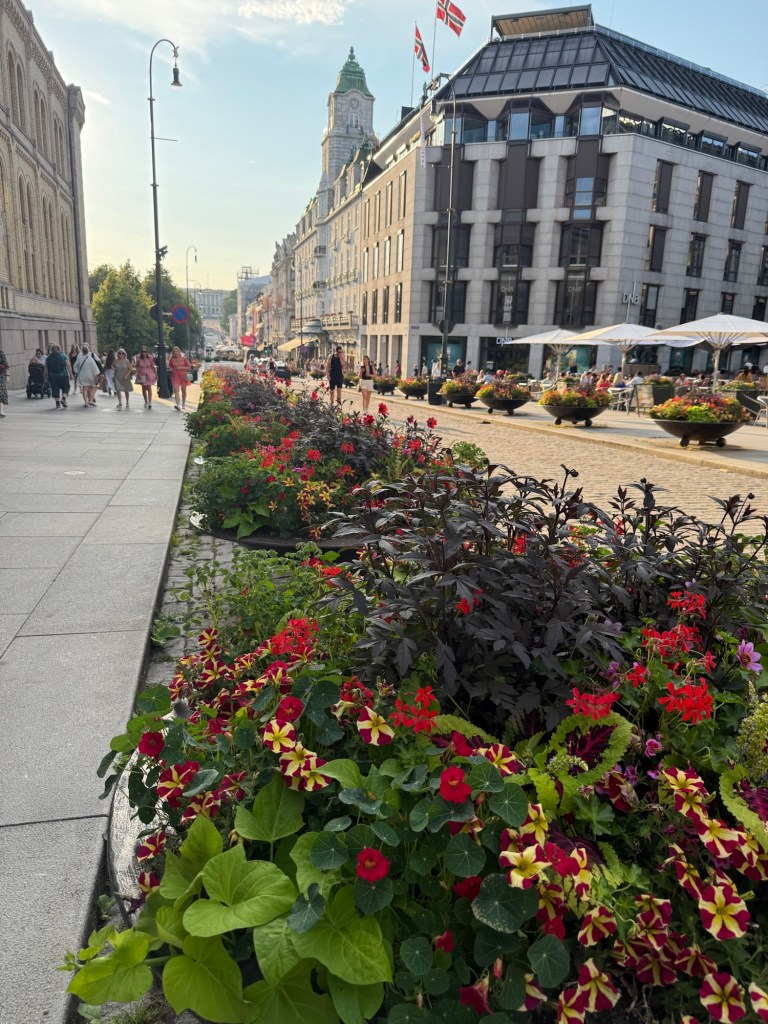
My bucket list didn’t have an entry for The Kingdom of Norway again but the fjords and the north of the country still did appeal. Anna, keen to return, curated a complete tour of what the country had to offer and we flew into a seriously sweltering Oslo to start the expedition. This is the capital of said Kingdom i.e. has a monarchy. Out of a total population of c5.5 million here contained 1 million people. If the last trip had been grey with drizzle then 28° C and sunny was our greeting as we navigated the streets in the centre in pursuit of our hotel. If this was a surprise then so were the people. Of course, as in all large European cities, the indigenous white population is in the vast majority but as is becoming increasingly the case multiculturalism and diversity was clear to see here. People of African, Indian sub continent and Middle Eastern descent were significant in number as were the high number of Muslim women in headscarves and flowing robes as we lugged our wheelie cases to Reception. I can imagine the surprise of this to my in-laws and Eric’s forebears if they’d been strolling around with us.

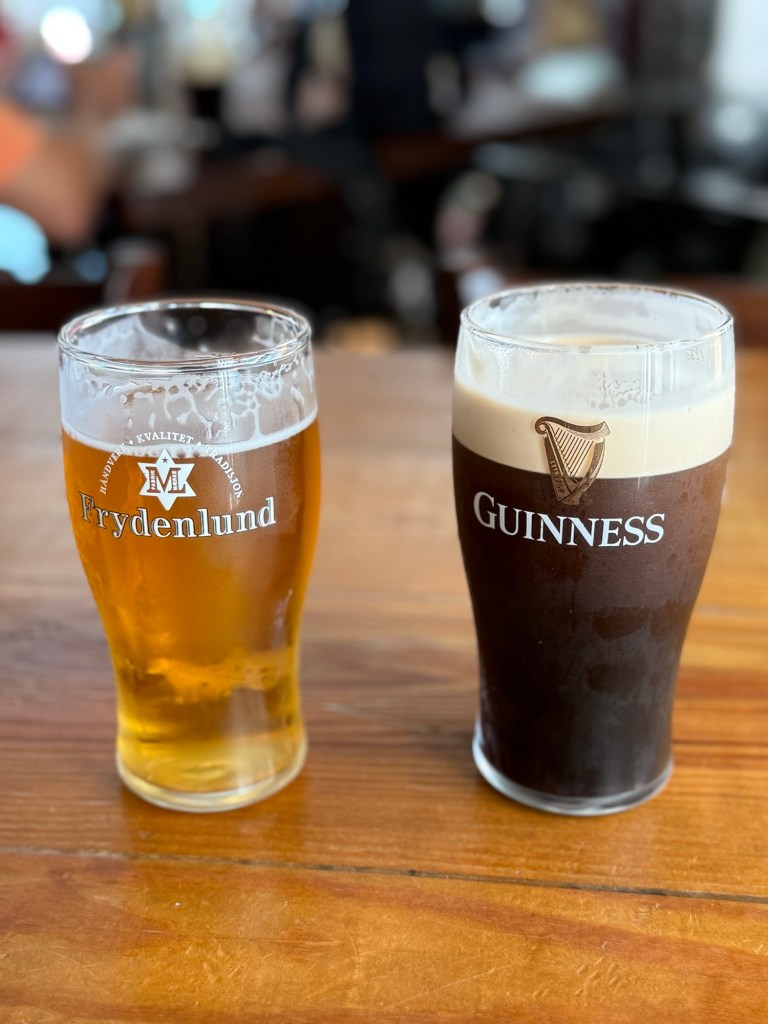
After a bag drop we took in the sights and found another import, an Irish bar and partook of a foreign beverage. Less foreign was the £22 it cost although in London it’d probably cost £15.

The city, bathed in warm sunshine was a joy to stroll around. We walked up to the relatively new opera house:

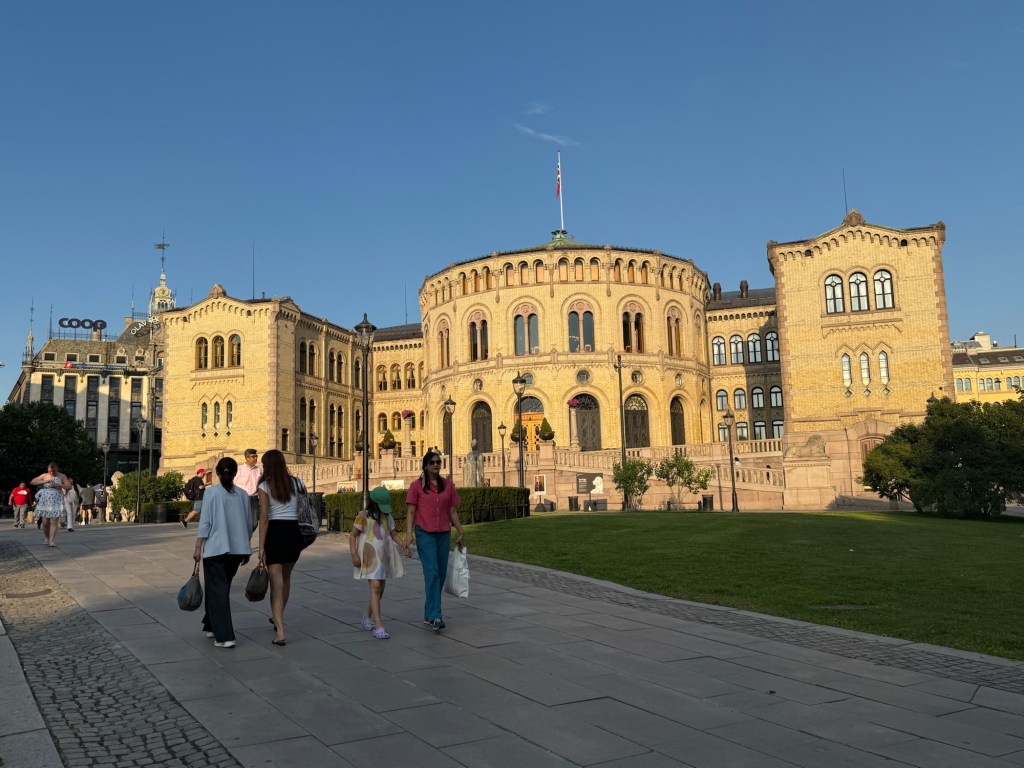
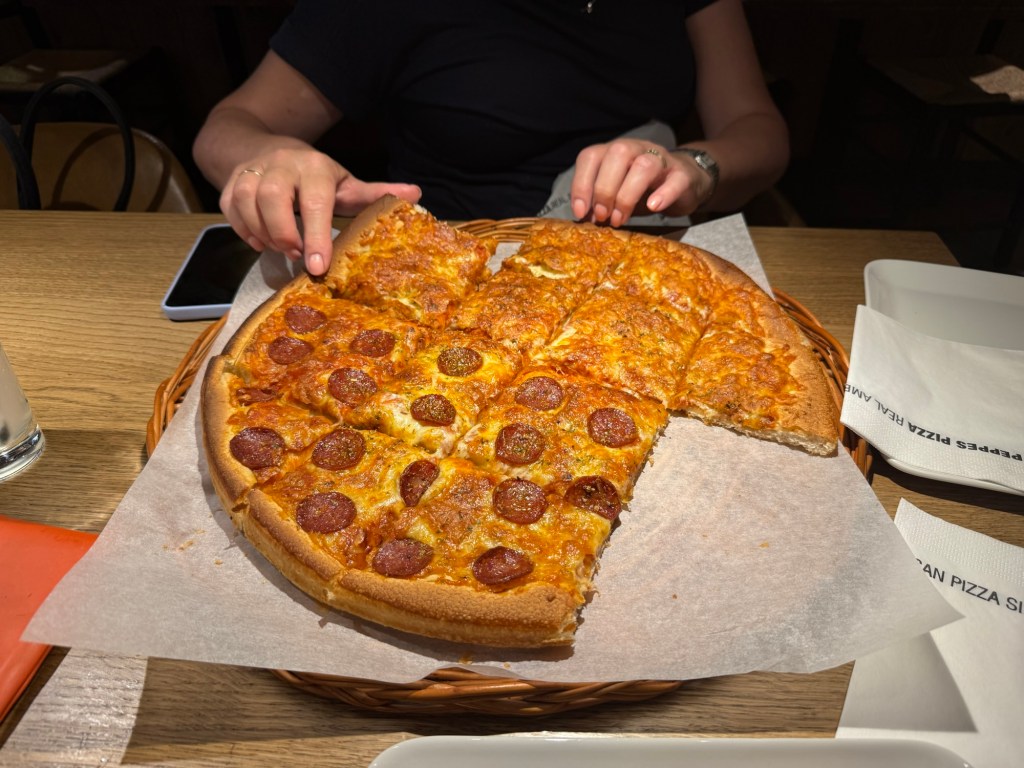
When we return later in the trip we may get inside. The marble roof and surround is sumptuous. As a building, whilst dominating the harbour front, it is ultimately a large chunk of rock with glass awkwardly, yet deliberately, plonked in a vista grabbing location. A further preamble toward the Parliament building and its attendant park was delightful and I rewarded my bride with some shared pizza with no expense spared (£29 + tip). Both of us couldn’t demolish all of this and so some of it accompanied us west on our train ride to Bergen. That was our destination the following day. After a day or two there we’d sail up the coast to the very top, Kirkenes, and fly back to Oslo. Here we’d have a proper look before heading back to Blighty.

Parliament

The train departed at 8:12am (or as my body clock on UK time would have it, 7:12am.) As breakfast on the Saturday didn’t start at the hotel until 7:30am we were tight for time. You’ll be heartened to know that I still managed to demolish a little fruit, scrambled eggs and bacon and make two sandwiches before making it to Platform 10 of Oslo Central Station along with tourists from every nation to take the train. This is a much travelled route, and mode, for international visitors.

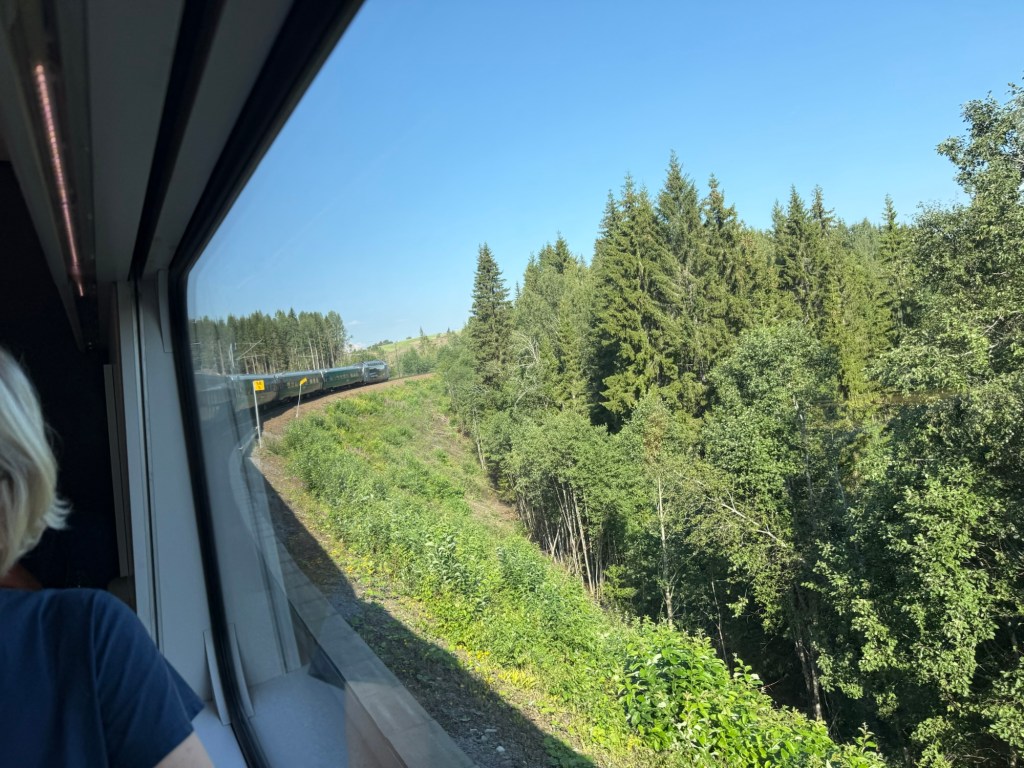
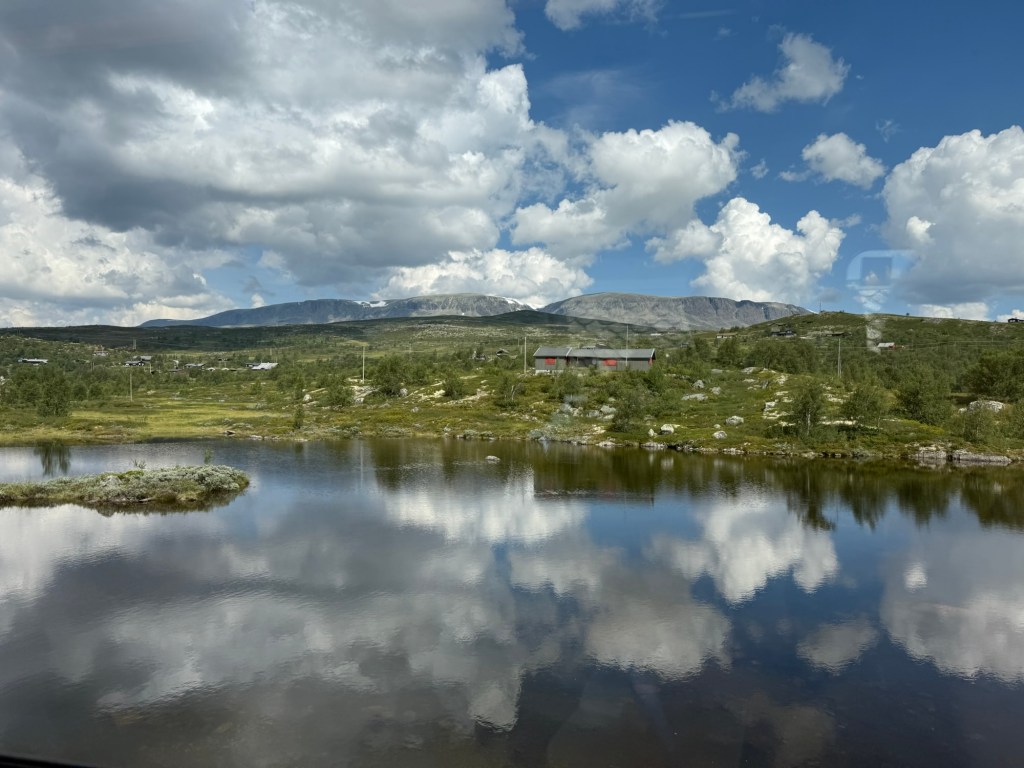
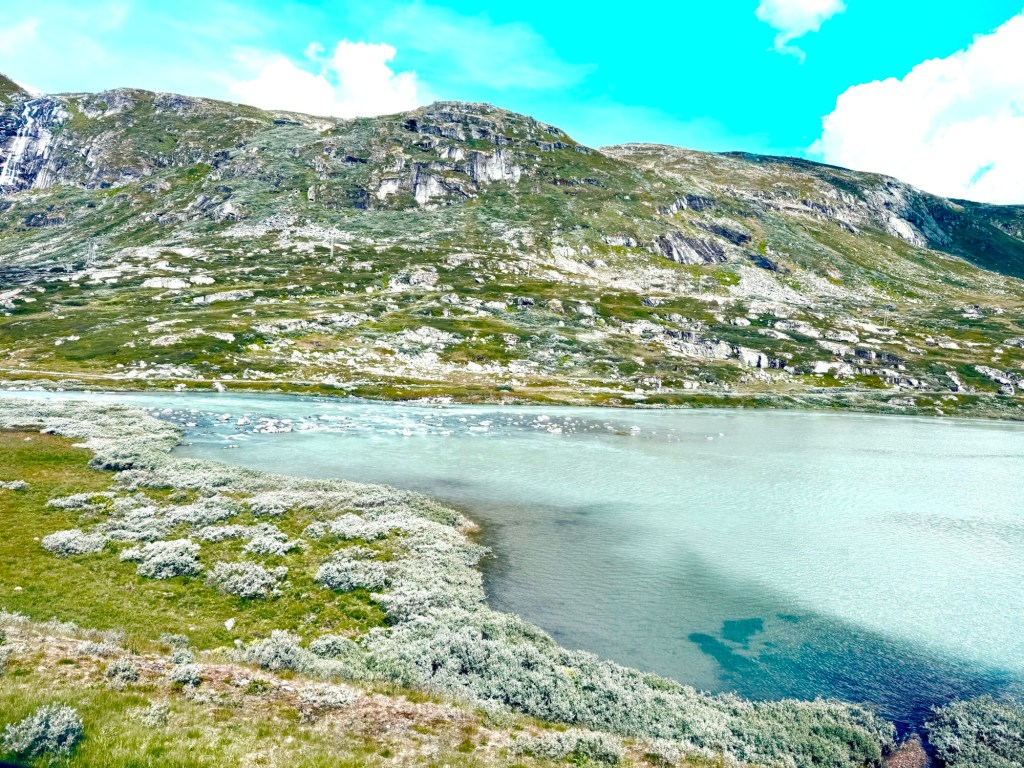
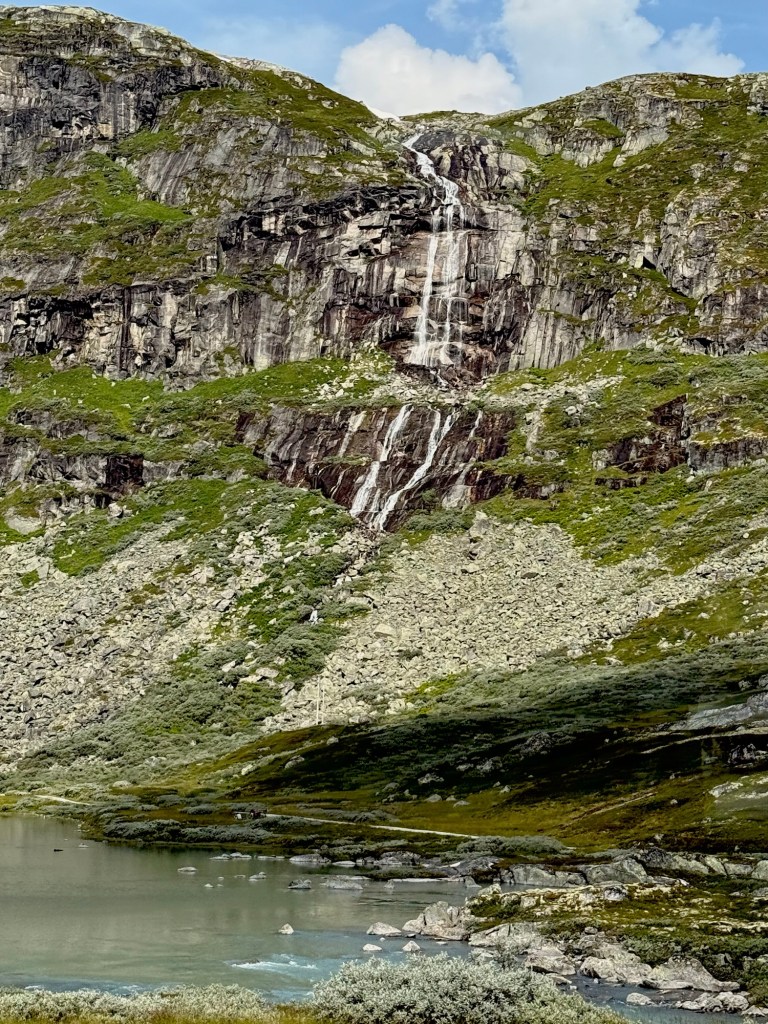
The ride lasts seven hours! However, that isn’t too long as the scenery can be jaw dropping. Woods, lakes, rivers, precipitous rock faces and millions of coniferous trees.

On the voluminous tree cover my wife commented “you could hide a body out there”. Clearly too many Scandi-Noir nights in front of the TV? Aside from thoughts of murder I thought it was ravishing.

Bergen awaited and I looked out of the window and listened variously to music or the BBC Sounds App. I was hoping Bergen might be cooler.