Fred Davies passed away in early August at the age of 84 after a long battle with illness. Fred led Moores for the majority of my time at the company.
I was recruited in 1985 and reported to him for the next 16 years until, in a surprising turn of events, in 2001, he called the directors to the boardroom to advise he was leaving immediately. He said it was always his plan and the two senior Masco staff, who flanked him, nodded sagely. Masco were the American holding company who’d bought Moores in 1996. Up until that point the company had been a 1987 management buy out from George Moore. (George had pocketed about £87m from this disposal.)
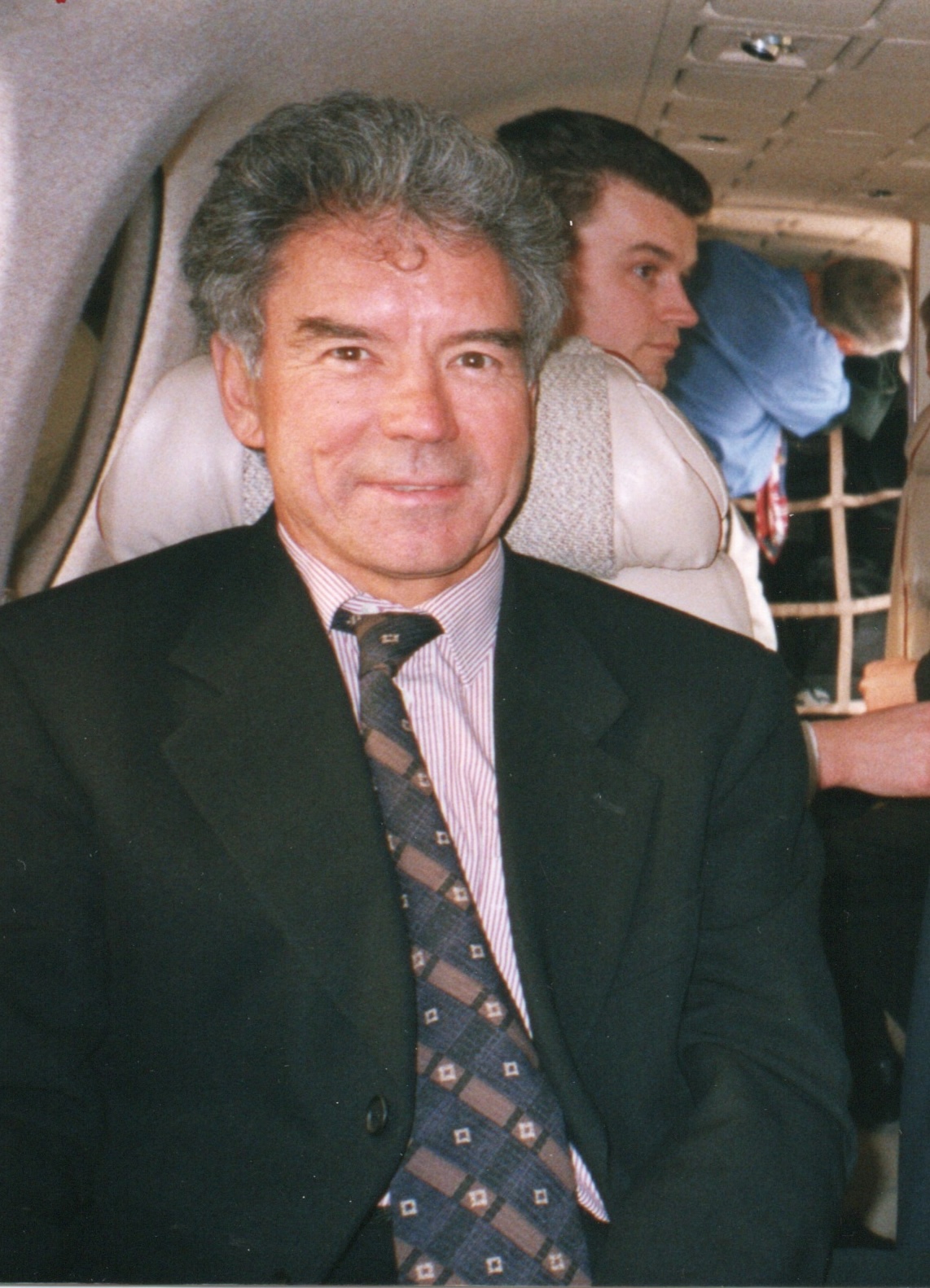
Frankly, Fred was as shocked as the rest of us at his departure. Masco had decided to replace him well in advance and his replacement had had time to buy a house in Harrogate and move in. The new man turned up the next day fully briefed and ingratiating himself with the shocked directors. Fred’s brutal axing was not a complete surprise, if you analysed his relationship with Masco. However, it was very much the beginning of the end of the company as an industry leader and benchmark for UK furniture manufacturing and distribution profitability.
The company I joined was formal and a little eccentric to the point of extremes. In internal meetings staff addressed each other as ‘Mr’ so and so. You never addressed directors by their first names and initials became the norm for each of us. Secretaries took minutes of the most senior meetings, there was an exclusive director’s dining room with a Cordon bleu cook and Saturday morning attendance and working was expected by senior employees. The corridor that accommodated Mr Moore, until he departed, had radios playing at low volume outside each office to prevent any eavesdropping. What you may have learned that needed such secrecy I can’t imagine. Secretaries luxuriated in the status of their director and seemed gatekeepers who maintained the mysticism of their bosses.
Not all this was Fred’s creation but it persisted for some years and was quite restrictive. Fred himself maintained his distance and authority. In work he was serious and spent no time on social niceties. I know outside of Moores a different personality was evident. One former employee recounted his first encounter as a new recruit in the office of his boss when Fred walked in and declared “I didn’t pick you” and walked out again. I also recollect asking Fred after a few weeks, after my joining, if I was doing alright? I was quite an insecure yet ambitious new manager. Fred put me at ease (not) by reflecting on the question and affirming that my performance was ‘broadly acceptable’!
The background needs to be set but his talent and gift was a sharp commercial mind, a quite indomitable personality, complete authority and a good judge of people if not sensitive to their feelings! His directors were industry leading and happy to be left to get on with the job with minimal coaching or oversight. The structure of the company was also clear sighted: he shut the retail division factory up in Newton Aycliffe not long after it became his responsibility. Its competitors were larger, had more volume and had better customers. Insuperable advantages. There would be no retrieval so he shut the business and we pursued retail from Wetherby. Commercially he made his mark in the company with a clear and unemotional understanding of the customers and market place.
For example, the customer often wasn’t the company who bought the furniture. It was, in the case of Local Authorities, the architect. Moores was a strict adherent to British Standards and our furniture was the best design for any social housing application. However, the order and payment was with a contractor who wanted the product for a low price, delivered on short lead times and discounts for paying promptly. They spent literally £millions with Moores, however, the actual specifier was an architect who simply wanted our product and wouldn’t brook the contractor buying an alternative despite their energetic trying. Hence in many instances the contractor had to accept high prices, fixed delivery timescales and if he wanted a payment settlement discount we’d add 5% to the quotation so he could have it back when he paid his bill! Most of our competition coveted contractors and danced to their tune. To maintain our discipline through a large sales force who interfaced with the contractors required, on occasion, an iron will. Fred was unbending, as were his anointed disciples such as myself.
Over his years as the Managing Director and then Chief Executive Officer the profits and gross margin were exemplary. Of course his team delivered the targets and worked hard but ultimately he oversaw this financial performance. Talking of team the fact that Moores developed so many people who went elsewhere in the industry to attain riches or success was a function of what a good academy Moores was with its structure and professional management. I personally had the ride of my life. In 1987 I became a ‘founder’ as I joined the management buy out team; one of two non-directors.

I then was invited to join the board a couple of years later. I was nicely on the path to a Jaguar XJ6! All corporations have their stresses and I can think of some politics and inter personal problems that were part of the 16 years where Fred was viewed badly by some of his senior reports. It’s indisputable though that the money they earned was exceptional and ultimately set them up for life after their exit. Which brings us back to Fred’s departure.
Masco bought Moores with the improbable declaration that they’d be hands off. After all why buy an industry leading company to interfere with it? However, we were a wholly owned subsidiary and some senior European Masco management wanted to leverage what they saw as ‘synergies’ across the group or have us inter trade etc. Fred was less than enthusiastic, on occasion, about these supernumeraries to the point of rudeness and certainly didn’t feel he was a subordinate to this band of European Masco employees even if they did. It maybe didn’t help that Fred had many outside interests/projects that considerably reduced his time in the office. We’d grown used to his absences but Masco must have noticed his time away.
For all this disdain he did ‘dip in’ to other Masco company ideas and the whole move from assembling our private housing cabinets with screws to glue and dowel started life with a visit to a Masco factory in Spain that inspired him. Not only this he was still taking dramatic operational decisions such as changing leadership of the manufacturing function allowing the whole activity of many departments and hundreds of employees to be reorganised and a new culture implemented. The improvement was stunning when it bedded in. However, one day the axe fell and Fred was gone. No doubt they thought a new more open and Masco friendly leader would be the way forward.
Moores from here continued to grow and for a few years made good profits and there remained talent in the top team with new members. However, an overly complicated business that grew too fast, completely out of control in certain areas, led to operational crises. Better leadership at Wetherby or from Masco USA and Europe wouldn’t have led us into this chaos. The upshot ultimately, not too many years down the line, was a halved turnover, halved workforce, growing year on year losses, customers enthusiastically shed(!) and, predictably at Moores’ expense, flourishing competitors. Today the company seems ‘right sized’ and has a plan but it comes from a difficult place to make the progress we all desire.
Moores today is under different ownership. Masco disposed of Moores elegantly and generously as they completely withdrew from the cabinet business in Europe and the USA. Their stewardship at Moores was ultimately unsuccessful bordering on disastrous and fearfully expensive as they had to latterly continually pump £millions into an unprofitable business. For what it’s worth many of the directors, who didn’t voluntarily leave, perished through their iterations and strategies.
Fred grew a great business. I think his departure, which would have happened sooner rather than later as he approached retirement in 2001, would have been less damaging to the business had he not left overnight and enabled Masco to accelerate their interference and mismanagement. I also think we also would have been more cautious about the growth that eventually undid the company.
Fred, after leaving, hosted a dinner for his directors but then had no contact with the organisation or colleagues. I only know one former director he occasionally met or corresponded with. He spent his time between Yorkshire and South Africa and no doubt improved his golf handicap before ill health struck.
He will remain one of the most influential people in my life.

 Tony Ives’ Blog