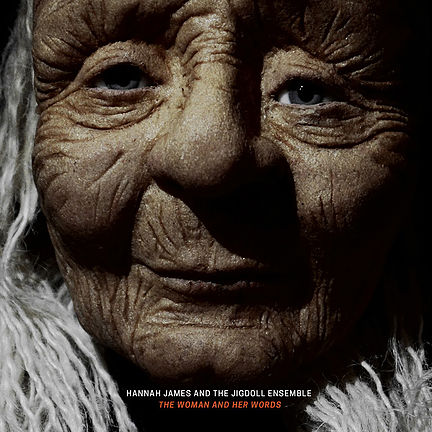
Hannah James and the JigDoll Ensemble – The Woman And Her Words
I hadn’t realised how much I’d missed folk music until this delight came my way. Fêted as one of the best accordionists of the British Folk scene, Hannah James has created an album of great beauty.
The music, with its stripped back grace, creates swells of captivating sound on a large yet calm sea of traditional folk strings. Her ensemble wasrecorded in Budapest and it is an international group gathered from Hungary, Estonia, Scotland and France – Kate Young (fiddle and vocals), Marti Tärn (bass and production), Andras Dés (percussion) and Toby Kuhn (cello).
Texas, America’s biggest state, is the main theme in either the montage of tales he compiles and the origin of his collaborators. Crowell, a Texan, had the idea for several years of pulling together a Texas concept album; now he’s delivered.
I approach elderly icons’ modern releases with low expectations as I usually discover the music is weary or sub-optimal compared to the dizzying heights they once scaled. However, Crowell’s creativity and relevance is still peaking judging by his last three releases. It helps to be an exceptional lyricist who can paint a vivid picture with few words. Add a selection of contemporary sounds that drip with new melodies, diverse arrangements and you are approaching legendary status.
Crowell wrote most of the songs and the other artists’ contributions are more of an invitation to enjoy a splendid outing rather than bringing significant influences. This is especially true of “Flatland Hillbillies” where Country fixtures Lee Ann Womack and Randy Rogers join this easy rolling mid tempo song to paint a picture of the lifestyle of blue collar folk. ZZ Top’s Billy Gibbons brings his unmistakable chugging rhythm, guitar licks and gruff vocals to a couple of tracks. One of these is “56 Fury” and it is a homage to a chromium-drenched Detroit gas guzzler. Crowell enjoys himself and it’s nice to see him step away from some of his more earnest compositions.
Johnny Marr, who wrote the music for The Smiths (whilst Stephen Morrissey wrote the words), was across the media this summer either talking about his new album or playing Glastonbury. The importance of The Smiths still endures. They split in 1987. For all Marr’s dazzling arrangements and tunes, that accompanied Morrissey’s lyrics, then he is only revered as an historic figure. I doubt his commercial success since adds up to much.
Morrissey still has a large and enthusiastic following and each release is eagerly awaited. However, his latest album received some bemused and ignorant reviews. The ‘youfs’ who were instructed to write about his latest release of covers were irritated about being instructed to write about a 60 year old man’s record. Not least all the covers were a mystery to them; no doubt had them scrabbling around on Spotify to hear the originals. These songs mainly originate from the 1960s and 70s. They also had disdain for Morrissey’s politics. Having politics is not a handicap for today’s musicians providing it is to the Left and sneering.
Morrissey is still coveted by the record industry with a recording contract with BMG and a large worldwide fan base who adore this irascible, complicated, self obsessed one off. His regular recorded output is always important. He’s found good collaborators to work with and his lyrical content still has touches of genius.
For me The Smiths without Morrissey’s image and lyrics would be nothing: sorry Johnny.
Morrissey’s literary and readable but completely unreliable autobiography, Morrissey, spends some time dwelling on his escape into popular music and his conflicting emotions with his awakening homosexuality. I knew many of the records he grew up obsessing about. The imagery that inspired him meant a lot less to me but I can well remember the impact and excitement of much of it.
It’s an obscure artist called Jobriath, the first openly gay artist signed to a major record label, where he starts. It is a bright pop tune called “Morning Starship”. I liked this but his foray into the world of Joni Mitchell had me anxious. He was potentially dabbling with alchemy. However “Don’t Interrupt The Sorrow” is a magnificent version. He captures the dynamics of the song which are little to do with the lyric or tune. It’s more to do with Joni’s jazz sensibilities and arrangement.
Having despatched that with aplomb he turns his attention to Dylan and renders a striking and marching take on “Only A Pawn In Their Game”. This was written about the assassination of a Black American Civil Rights Activist. Whether Morrissey is acknowledging his thoughts on this, his own marginalisation as a gay man or simply genuflecting to the most important American popular music artist of his age you can only speculate.
Further songs are by several 70s female singer songwriters – Carly Simon, Melanie, Laura Nyro and Buffy Saint-Marie. You can well imagine a teenage boy sat in his Manchester bedroom absorbing the open and honest heartfelt emotions of these ladies.
However, he does pick some former ‘singles’ and Roy Orbison’s “It’s Over” and Gary Puckett’s “Lady Willpower” require a good voice to carry off. In that department he has everything you need.
The production remains crisp, pacy and somehow has an attractive hard brittle surface that makes it more contemporary and compelling. This is important in order to elevate a covers album from being a weary muse or a cop out by an established but uninspired artist.
Whatever your thoughts then you can’t ignore him (and neither should you).
Shinyribs (a.k.a Kevin Russell) is back with his inimitable slinky rock, soul and funk. Imagine KC & The Sunshine Band colliding with Dr John and Al Green. Picking up on the vibe of 2016’s epic I Got Your Medicine Russell has penned ten songs and put together an accomplished band including backing singers and brass.
The result is a varied album of tracks that make you wish you could see the band live. Russell is currently touring the record and on his ever-entertaining Twitter feed he writes that “Hoods Of Cars” is getting the best live reaction. I can see why: a horn intro à la Average White Band gives way to Russell’s vocals. This funky riff supported by some cool guitar and backing vocals is easy to imagine as a crowd favourite. In fact Russell’s Twitter feed is a thing of considerable entertainment with his original take on many things: he can switch between some erudite musing of 280 characters on human behaviour to thoughts on plastic pollution, Walter Cronkite, sport, weed killer or green chilli stew.
“Highway Of Diamonds” settles into a West Coast groove with a loping beat and some clear electric guitar picking. A delicious melody with lashings of backing vocals enthrals. This of all the tracks illustrates the competence of the band to either let rip or scale back to let the beauty of a melody shine through. The diversity of sounds is down to the arrangements and ability of the band. This more than anything else tells you are listening to a crafted and memorable release. In all this revelry, and allied to his pithy thoughts, he can pen a mean lyric:
“Laughed at and left out, sold into self doubt
Wallflowers grow wild with time
Now nights filled with jewels, city glow & vines
We’re gone forever and they’ll never find
Highway of diamonds-no one will ever notice we’re gone
Highway of diamonds here’s to the shy ones
Under the stars like rivers we run”
“Crazy Lonely” is a reflection on the human condition masked by our cell phones. Maybe this is his best vocal on the album bursting with personality; either straining or soaring to a beautiful falsetto. Less complicated Shinyribs move on from life’s trials to sing about “Savannah Chanelle” – a girl he’s set his heart on. Courtesy of the Tijuana Trainwreck Horns the trumpets toot, a saxophone blows bass notes and the organ grumbles as he and the his troupe implore her to call. She should.
Each track has a signature beat and your trying to remaining stationary is futile. This is one of the most engaging Americana Soul releases of the year.
Dayton started his career playing covers and absorbing his sister’s record collection. It can come as no surprise that he’s garnered considerable affection for some of the icons and great tunes of that time. His own 11 studio albums are always beautifully played and burst with personality thanks to his expressive baritone.
This collection includes some exceptional cuts from Dr Feelgood to Bruce Springsteen. Thankfully there are no dreary B sides by long dead singer songwriters you’ve never heard of. The era spanned on these 10 tracks is the 1970s and 80s. His guitar skills come to the fore and so do his catchy country rock interpretations. They never interfere with the pace or arrangements of the originals yet they are unmistakably Dayton’s, often drenched in pedal steel with his touches of honky tonk and rockabilly.
I can see the attraction of bowling up to the studio and trawling through your record collection to find your faves and then recording them. As he’s said “I’d done almost five years on tour doing two original records back-to-back. I played on a lotta other people’s records. I just needed to take the pressure off, just have some fun.”
I enjoyed the whole album. They all work but maybe his ZZ Top cover of “She’s a Heartbreaker” is the only disappointing orange cream in this box of chocolates. He’s included a revisit to a personally much loved “Just What I Needed”. He put The Cars’ cover on his 2004 Country Soul Brother. Gordon Lightfoot’s “If You Could Read My Mind” is faithfully rendered; given the melody and fabulous words then why tamper with genius? The Elton John/Bernie Taupin 1970 “Country Comfort” feels very easy in the hands of a proper country artist. Yet he can switch to a very different genre such as The Clash’s “Bankrobber”. Dayton’s rockabilly adds to rather than sucks the life out of it thanks to a tincture of punk being added by the drums.
This is a delightful easy listen (and sometimes you need just that).
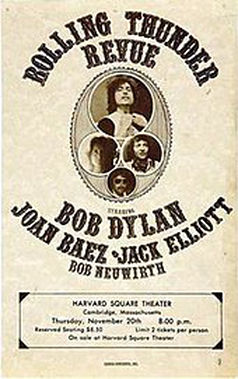
What an absolute treat! Netflix commissioned Martin Scorsese to direct a movie/documentary of Bob Dylan’s 1975 Rolling Thunder Revue. Film footage and sound recordings were available and Scorsese gathered it all up, added talking heads and released a movie of this odyssey. It is fabulous.
It’s exceptional due to the quality of the music. It catches Dylan just after recording Desire and not long after Blood On The Tracks. Here we hear tracks from both albums along with Dylan dipping into his seminal catalogue from the beginning of his recording career. The passion and voice are magnificent to behold. This was Dylan at his most majestic.
The whole 2 hours and 22 minutes are engrossing. It starts with Dylan collecting and rehearsing a band (mostly the musicians from the Desire sessions); listening to his entourage discuss the concept of this tour of a 4 hour show which included other performers including poet, Alan Ginsberg and watching the mercurial coming and goings of the man.
However, I must break here and add that Scorsese has added fiction. This adds rather than distracts from the proposition. The 78 year old Dylan tries to fill in some of the gaps on events or fellow musicians – he does quip “it happened so long ago I wasn’t even born”. Characters such as Sharon Stone are added to the plot by way of an interview. Here she tells us that she met Bob as a teenager whilst he was on this tour and was invited to join the entourage. Apparently her Kiss sweat shirt and good looks were the attraction. This is hokum.
As is the creation of a Svengali like figure, Stefan Van Dorp, who films the music and back stage action with the intent of eventually releasing his own movie. He never existed, except as Bette Midler’s husband (!) yet his commentary does amplify the tensions and camaraderieof players we see before us. These ‘players’ are musicians, managers, poets, hand bill distributors or record company employees. Continually emphasised are Dylan’s mystic qualities. Those around him seem to offer up little less than awe; they are following the pied piper. It seems the direction and composition of the whole performance each night is fluid and bordering on unstructured. None of this seems to matter as Bob steers his camper van to the next town.
These children of the 60s are performing during interesting times. Scorsese inserts clips of significant events such as Nixon’s resignation and Ford’s installation. The future President Carter is shown in the company of Dylan as well quoting his lyrics. The film also has clips from the immediate the period before the Bicentennial: a time of celebration yet also taking stock of some of the inequalities of 20th Century America. One such is the racially charged incarceration of the boxer, Rubin ‘The Hurricane’ Carter, for the murder that he didn’t commit.
His plight became the main track, “Hurricane”, off 1975’s Desire and here Dylan’s delivery (in his white face paint and hat) is spellbinding as he narrates the story of his abuse. Similarly “The Lonesome Death of Hattie Caroll” from his 1964 The Times They Are A-Changin’ tells a story of the then landed gentry getting away nearly free after the killing of a black maid and mother.This is delivered with vigour, contempt and resignation. Dylan with energy, voice and focus is a sight to behold as he brings my record collection to life. I could list the songs he played but be assured it is all weapon grade.
Guests abound and duets with Joan Baez are notable for their chemistry and intimacy. Roger McGuinn is happy and honoured to be included and abandons other engagements. Joni Mitchell also changes her all plans and signs up to join the tour. According to McGuinn in his Rolling Stone podcast interview she’d decided to only play new songs and the crowd reaction was muted. She wouldn’t relent. Listening to her practise “Coyote” with Dylan and McGuinn (also on acoustic guitars) is a highlight (although, for me, never as electric as her Scorsese captured appearance at The Band’s 1976 Last Waltz concert).
The violinist Scarlet Rivera is at best a Gothic figure of enormous talent, darkness and poise. Her violin infuses all here with such colour and sentiment that is truly memorable and vital. Surprising to see in the line up is the Yorkshireman Mick Ronson. He plays electric lead guitar in the background. Remarkably two years earlier he was embedded in David Bowie’s Spiders From Mars band clad from head to toe in glitter and make up. His then piercing rock guitar licks bear no relationship to this tasteful and complementary accompaniment.
The footage floats around to various locations including hand bills being distributed about the gigs prior to the revue rolling into towns. Unsurprisingly $8.50 per ticket was no problem. However due to the size of the entourage and the small size of the venues the tour makes a loss despite CBS having their arms twisted to find $100,000 as working capital.
If you’re a Dylanologist then you’ve seen this. If your knowledge of Dylan is that of a much revered elderly icon shuffling around with the voice like a crosscut saw then you must see this is. This vibrant, mysterious, supra creative and unique genius is fully on display in his pomp. I’m nearly tempted to buy the 14 disc boxset: Bob Dylan – The Rolling Thunder Revue: The 1975 Live Recordings.
Lukas Nelson & Promise Of The Real – Turn Off The Radio (Build A Garden)
I remember thinking, when writing about his 2017 blistering release, that I hoped he could shake off being a Country legend’s son and get the recognition he deserved. Two years on I think we can safely say he’s emerged from that shadow: he’s co-written or produced much of the Number 1 soundtrack album A Star Is Born, continued to tour, often headlining, and then moving into 2019 he’s appeared at the UK’s major annual country music event C2C and later this month he treads the boards at the world’s largest music festival – Glastonbury.
Nelson’s talents include being a consummate tunesmith, often across several genres, and guitar playing that can switch between incendiary riffs to complicated improvisations. Also having the complement of a band that hangs together with agility and polish adds to his sound. (Whether it matters nowadays in our genre fluid world) I have to say Turn Off The News (Build A Garden) is not Country but it’s just about Americana-lite.
“Bad Case” is pure hook laden pop rock with an infectious chorus; a seductive start to affairs. “Mystery” is my album highlight as slide guitar gives a distinct flavour along with reverb bass. The words tells his intended of his enigmatic behaviour. I defy Abba fans at the start of “Something Real” not to sing “My, my. At Waterloo Napoleon did surrender”. When the intro is over we get some routine yet energetic rock n’ roll. “Where Does Love Go” is redolent of the Traveling Wilburys. After the Jeff Lynne intro we have Nelson trying to be Roy Orbison. In fact this type of pop rock presented by heavyweight and credible musicians seems to be a benchmark for comparison.
There are several guest appearances that seem to add little. One such is Sheryl Crow on the title track’s background vocals. This is probably the strongest tune here and its message is clear. In fairness it’s not too preachy other than telling you “I believe that every heart is kind”. I can imagine a lot of folk loving the sentiment (as I did). Elsewhere with the predictability that it will be 12 O’Clock at least twice a day Willie turns up on a couple of tracks and apparently so does Margo Price, Kesha, Neil Young and Shooter Jennings: I suggest you’ll not detect them without the liner notes.
We sign off with “Stars Made Of You”. An upbeat romantic love song but this time with 60s pop strings and a drum beat that slopes along with flat hollow slaps. An organ plays in the background before some deft guitar licks compete with this sensational drum rhythm.
If he planned to be positive then the album oozes a laid back unhurried and stress free vibe. It truly is a windows down Summer record as Kacey Musgraves’ Golden Hour was. One of the unique things about his previous release was his mastery of several genres and styles such that each track was simply exceptional. Additionally the lyrics seemed to have more to say. This is a less diverse collection of sounds with some less memorable tracks. With that some of my wonderment has been lost. However this is still an accomplished album that you’ll have on repeat. I for one won’t complain when it clutters up the end of year lists. The boy is unstoppable now.
(Unusually with all the music around me then this band enjoys it’s second appearance on my site as a Record Of The Week).
The Hollering Pines rely on Marie Bradshaw’s song writing; it’s a fine gift. Possessing a sweet and mellifluous voice she delivers Americana Country made perfect when coupled to her sister’s voice (Kiki Jane Sieger) in memorable harmonies. Throughout the album the stories and lyrics have a reflective and perceptive woman’s touch. They seem personal and peppered variously with heartfelt regret, gratitude and occasional relief at escape.
“He Don’t Understand” kicks things off with a thundering bass line, said siren vocals and an atmospheric pedal steel adding a little darkness. Bradshaw has said about the song: “when love is completely one-sided, it’s usually an all-in, stand-by-your-man, sort of love song” (despite his indifference). The lyrics tell of hopeless devotion (and even seeking Divine intervention). “American Dream” is about the everyday routine of survival with its Amanda Anne Platt vibe of tune, vocal delivery and words: “I’m still looking for the bootstraps I’m supposed to use to pull myself up, And the bottom falls out every time I try to fill my cup, The doctor says I’m gonna drop if I don’t stop and take a break, But I just won’t go back, Cause I don’t have the money to pay, Anyway at this point running ragged is my natural state.” This rolling rhythm eventually allows Dylan Schorer to take this home with a brief solo.
“Somebody” is a reflective love song. A mesmerising melody with Bradshaw’s vocals soaring over a gentle backing. “She Don’t Want To Be Found” channels their inner Tom Petty with an arrangement incorporating some slapped snares that kicks this along. “Blow Away “dwells on insecurities and barely coping. Again we get harmonies this time over a marching drum sound. Greg Leisz’ pedal steel cascades in the background before electric guitar, with reverb, provides fills.
“Out Of Dodge”is pure Country with Bradshaw escaping a failed marriage and those wasted years. Somehow I think there’s less of her own life in the lyrics as the heroine steals cars and throws mobile phones into lakes.
Bradshaw has an accomplished set of musicians around her who burnish her exceptional compositions. An undoubted strength of the album are the crafted arrangements and production. However she has a real talent as a songwriter that lights this up. This is their third and strongest album and I hope it gets the recognition it deserves.
On a hot day I might enter a bar and accept any of the several lagers on offer. All the beer would be at a prescribed temperature, straw like in colour and probably have a foamy white head. My trying to identify the brand would be nigh on impossible. Welcome to bluegrass. I knew one day I’d have to admit to this and probably upset a lot of men in beards located in mountain hideaways brandishing stringed instruments.
Despite issues with my taste Buds (geddit?) Blue Moon Rising’s 7th album is my cup of tea (yes, I know this could get tedious). With a typical six piece line up of banjo, guitar, dobro, fiddle, mandolin, bass and drums the band demonstrate expert proficiency. In fact bluegrass doesn’t work unless the musicians are top drawer and hone their interplay and solos. You might expect this as Blue Moon Rising have been playing together since 2000 with a core of Tim Tipton (bass), Keith Garrett (mandolin) and Chris West (occasional lead vocals and guitar). Hailing from East Tennessee they still travel the length and breadth of North America bringing their sweet sound to eager audiences. It’s easy to understand their longevity.
“Louisville Rambler” preceded the album as a single release. West’s vocals relate the story of a departing love fueled by her allegiance to the bottle and an enthusiasm for his best friend (!) A single banjo starts this as mandolin and fiddle eventually join the mix. The chorus vocals involve harmonies that gives this a real pop sensibility. Out of the 13 tracks there are three original compositions. The curation of such a diverse selection of other songwriters is attractive and does broaden the sound palette. These covers tap into a rich seam and includes Townes Van Zandt’s “Dollar Bill Blues”. Here the said currency would be swapped for the demon drink should the singer get his way. Jimmy Driftwood has written some classics such as “Tennessee Stud” and “Battle of New Orleans”; here the band tackles “Long Chain On”. This haunting story shares the vocals around with the band driving the song behind with an insistent rhythm. If accessibility to the non-believers is difficult then Buddy Holly’s “It Doesn’t Matter Anymore” opens the door.
Canadian Fred Eaglesmith’s “The Rocket” will continue to refresh the parts that other bluegrass bands cannot reach for a long time to come. A slow beautiful melody sung by West tells the story of an elderly veteran watching the trains. He’s reflecting on the one that took his son to war from which he never returned. That exquisite dollop of Country sentimentality coupled to a fine piece of music with terrific mandolin and soaring and swooping violin (Justin Moses) probably makes it onto my end of year playlist; it’ll make it onto yours.
So if you’d like some premium bluegrass slake your thirst with this.
In between songs Popović said that she hadn’t played the UK for a decade and that maybe it’d been too long? The crowd roared back that it certainly was. This sublime guitarist had by this stage whipped up a storm with her five piece band.
With obligatory drums, bass and keys she’s supplemented the line up with sax and trumpet; the sound was full, loud and kicking. Currently completing a nine date UK tour she’s hopping between Europe and the USA for what appears most of 2019. Born in Serbia but the West Coast is now her home.
Growing up in Belgrade and discovering the blues was down to her father’s record collection. Coupled to her phenomenal talent you had quite a combination. When Yugoslavia disintegrated she found herself in Holland studying at the Utrecht Conservatory. However bored with the structure of the learning she changed courses and concentrated on learning jazz and was encouraged to tour. The upshot was that she never finished her studies.
Now much lauded and a recipient of many Blues awards she has complete mastery of her Stratocaster. When not touring with her own band she can be found as part of the ‘Experience Hendrix Tour’ playing with luminaries such as Billy Cox, Joe Satriani, Taj Mahal, Dweezil Zappa and Jonny Lang.
On this leg of a European tour she’s playing a selection of tracks from her albums as well as covers. There were only two numbers off her recent release Like It On Top. This smooth blues funk album was recorded last year with Keb’ Mo. For me it’s too polished and drifts worryingly toward something you’d hear (or not hear, if you know what I mean) on very late night radio.
We started with indistinct acoustics but things cleared up and we were treated to her own compositions including “Unconditional”, “Show You How Strong You Are” and “If Tomorrow Was Today”. Throughout the band got their chances to shine and the rhythm section of drums (Cedric Goodman) and bass (Buthel Burns) were exceptional whilst Michele Papadia on organ played a full supporting role when Popović stepped away from her solos.
Throughout Popović played so effortlessly that it seemed as if the guitar was an extension of her limbs (even if the limb occasionally had a bottle neck slide attached to it). This wasn’t predictable 12 bar blues with meandering solos. Hers was a tight yet fluid style that could effortlessly switch from an arresting riff into something quite jazzy and structured. Over and above her own compositions the covers flowed including “Night By Night” by Steely Dan, Tom Waits’ “New Coat Of Paint” and Albert King’s “Can’t You See What You’re Doing To Me”. However, her tribute to Stevie Ray Vaughan was simply jaw dropping.
Immediately finding Stevie’s delicate and jazzy tone she picked her way effortlessly through an instrumental: light, note perfect and catching the essence of SRV’s playing. As we came down from this high she exploded into a medley of Don Nix’s “Goin’ Down” and Hendrix’s “Crosstown Traffic”. After she’d squeezed everything she could from the song (allowing some band solos) she left the stage to cheering and clapping as the band played on. After this she was back for an encore of “Lasting Kind Of Love”.
She tours continually and is easy to catch. She lit up Yorkshire and let’s hope we’ll see her back soon.
Hitchcock wended his way to a fearfully rainy wet York to enthral an audience of devotees of the bard’s canon. He’s currently touring some lesser venues in the UK between a selection of gigs in the land of his domicile, the USA. The assembled were not disappointed as he plundered twelve albums released between 1982 and 2017. The spellbinding 90 minutes included 18 songs.
There was much to enjoy: a selection of tunes that have a pop sensibility and lyrics that are unique with their surrealism, comedic couplets that often expose England nakedly with not least a melancholy that predates Morrissey. If you doubt my assessment then he started with “My Wife and My Dead Wife” from 1985’s Fegmania!
“A Man With A Woman’s Shadow”, “Saturday Groovers”, “The Lizard”, “52 Stations”, “I Pray When I’m Drunk” and “Sally Was a Legend” darted around his catalogue of nearly forty years. The consistent quality of the writing over all these years shows a creativity and muse that is still as essential and unique.
Standing alone in a spotlight he sang and played an acoustic guitar. His playing skills comfortably encompassed energetic strummed rhythms through to elegant, literal Flamenco, picking with a complexity and delicacy that drew applause as he solo’d. His voice could reach a sweet falsetto and then fall to a sonorous baritone. His poetical words are enunciated with the clarity of that other vintage English troubadour – Al Stewart. All this meant that the whole evening had a memorable diversity of sounds and emotions.
With occasional sips from a cup he continued sharing his career resumé of great songs and I especially liked “Television” with his tender delivery. “Sunday Never Comes” is a 2018 composition that’s been sung on the film Juliet, Naked by Ethan Hawke. This is a belter tune and lyric.
If the music was sublime then the banter between songs was hilarious. A dialogue with the sound engineer continued throughout as the guitar sound was adjusted with treatments along with the vocals. Whilst probably known in advance he might ask “Can you give me a rhythm section sound like John McVie and Mick Fleetwood but not sound like Stevie Nicks, but feel like Stevie Nicks? Difficult I know because she’s a Gemini”. Even the promotion of the merchandise was fabulous. A list of ways were described as to how you might lay hands on this treasure on the night or at other times. One distribution channel involved a cat called Tubby. He’d deliver the desired item personally by flying over your abode and dropping the package. Fear that this may not prove reliable was allayed when he advised “Tubby only has one eye but his aim is true”.
The last two songs were sung after a shirt change (?) and we got “Dismal City” from a 2011 Norwegian releaseTromsø Kaptein. This was a memorable Kinks-esque tribute that he described as his English National Anthem. Finishing with the epic “Queen Elvis” he took a bow and joined his sister at the ‘merch desk’.
On August 15 2105 I cycled 80 miles from Memphis, TN to Clarksdale, MS. The route was hot but flat and there was a Dylanesque thrill trundling along Highway 61. Less pleasing were the dogs that chased me as I pedalled along. Entering the Citadel of Dreams was a lifelong ambition. I was here at last.
Today, nostalgia is Clarksdale’s main draw. Hitched to a few Mississippi Blues Trail Signs and some places of sacred interest such as Bessie Smith’s hospital where she died (now a hotel), the Ground Zero Blues Club and the Delta Blues Museum. Other than this there is little that would tell you that this is the epicentre of what spawned a $bn industry and provided the reason why a pale Englishmen would make a pilgrimage to pitch his one man tent at the Showground (whilst local penitentiary inmates, painting lines on the car park, would sidle up to him to bum a light for their smokes now the supervisor had left the site).
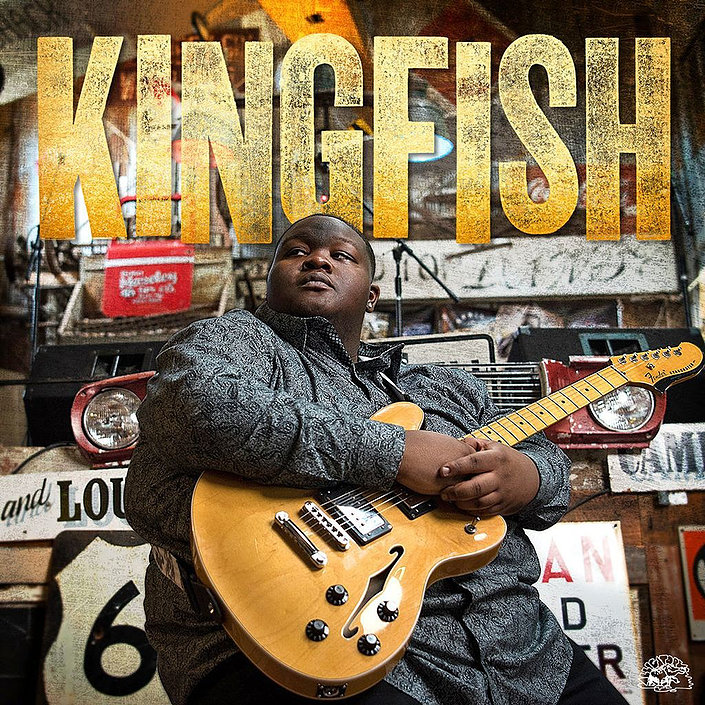
Putting to one side the promotion of Christone “Kingfish” Ingram hailing from Clarksdale then his love of the Blues and the nurturing of his divine fretboard skills in this town is something of a surprise. When there if I’d asked a resident about the Blues I’m certain that I’d have drawn a blank other than their recognition that it drew tourists.
Ingram has an enormous talent on electric guitar. Migrating through other instruments he was by his mid teens a proficient axeman. Any video will show him fingering the fret in the vertical against his ample bulk and squeezing out notes with facial expressions redolent of BB King. However his debut release is more Buddy Guy. In fact Ingram has been on stage with this last member of Blues Royalty and Guy also helps out on one track.
Ingram’s release on Alligator provides a dedicated Blues record platform but probably just as telling is their hiring of Tom Hambridge to produce and co-write 11 of the 12 tracks. Hambridge is the current doyen of Blues Rock producers. Not only are his own albums fabulous but everything he touches ends up interesting, loud, consistent and, dare I say it, a little bit commercial.
Ingram, a whippersnapper at 20 years old, still co wrote 8 tracks and says “A lot of folks know me for my covers, that’s why it’s important for me to release original music.” In fairness, playing covers is less of a crime in this genre than any other. The lyrics to the tracks may be his but there are familiar blues themes of infidelity, penury and strife. The songs all hit the spot with bright energetic and authentic arrangements that showcase his fleeting fingers on some spell blinding solos. Buddy Guy takes the vocal and solo on “Fresh Out” but Ingram’s dynamic contribution is exciting. Following on “It Ain’t Right” drives along propelled by Hambridge (drums) and Tommy Macdonald (bass), the latter having played with Guy on 5 albums. This is classic Blues Rock with piercing and incendiary licks.
Ingram can take it down; with a Guy pastiche on “Been Here Before” he plays chords on acoustic guitar and he lets his vocal tell you why he’s doubly blessed. An expressive and weary Blues vocal places you at the heart of his misfortune in a couple of stanzas. To cover all sounds in the genre we need some harmonica driven Blues. Step forward Chicago Blues legend, Billy Branch, to play harp on “If You Love Me”. Coupled to some fluid passages by Ingram you have a mighty potent confection.
My favourite track is where Ingram steps forward with something sounding more like BB on “Love Ain’t My Favorite Word”. Never pretending to have the Master’s tone he does however insert the solos and pathos at the appropriate moments on a slow completely captivating 12 bar blues. This track, above all, confirms his maturity and education; not least why I will be in his audience when I get an opportunity.
Hambridge and Alligator have pushed out the boat with several luminaries and Keb’ Mo also sits in on 5 tracks. He shares the vocal on “Listen”. Mo didn’t write this but it is his usual Blue-lite sound (that may attract a few more radio stations). If that sounds cynical then Ingram is shortly to tour appearing on the Summer festival circuit but also with a couple of appearances with Buddy Guy and then supporting Vampire Weekend (wtf?) on 12 gigs – clearly the pursuit of a larger and hopefully younger audience is the ambition.
There are few young African American Bluesmen getting much publicity or garnering a large following. Maybe the excitement about Ingram is that someone so young is a wonderful find and a worthy bearer of the mantle of the legends before him. There is a world of magnificent Blues guitar players (mainly white) but Ingram seems to have the greats in his lineage. Maybe I should be less begrudging about Clarksdale and it’s indifference to modern day Blues. If the pheonix were to rise then there can be no better place for it to happen.
(Oh yes, and the next day, after visiting the Delta Blues Museum, I cycled to Indianola to the BB King Museum).
Taylor Alexander sent me a message about his influences on the ‘sound’ of this brilliant release: “I remember me and the producer Brendan St. Gelais sitting down and listening to albums like a Portrait of Merle Haggard, Grievous Angelby Gram Parsons, and Flyin’ Shoesby Townes Van Zandt when we were thinking through the arrangement side of things, those are some of my favorite albums”. The sound, I think, is more contemporary but these references tell you where the boy’s heart is and it shows in this ten-track self penned country music triumph.
After serving an internship in another band Alexander left Atlanta and found his way to Nashville. Here he honed his song writing skills and hooked up with some excellent musicians for his first full-length release. Along the way he participated on The Voice, which means by the very nature of the show that he has a voice. His tubes lend a touch of class to every song with its range, expressive emotion and tone.
The title track opens with a wailing electric guitar and seamlessly becomes a country bluesy ballad as an organ and female backing vocals add to the feel recounting the reassuring sensation of pain as you wrestle with life’s tribulations. Throughout the songs and arrangements are faithful to the best tradition of the genre: memorable hooks, lashings of harmonies and pedal steel but never pedestrian or less than crafted. The melodies reinforce the themes and moods conveyed by the lyrics.
“I Never Asked For Nothin’“ tells us:
“There’s just two kinds of people,
The haves and the have not’s,
I Never Ask For Nothin’,
So nothin’s what I got”.
A splendid wistful yet resigned story of the working man.
“Real Good At Saying Goodbye”is every classic Country story in a wonderful 3½ minutes of deprecating reflection. With a change of pace “It Don’t Matter To The Rain” is a sweet melody lit up with pedal steel and a 60s acoustic feel similar to Glen Campbell. “Break My Heart Tonight” could be early Merle with a pace and arrangement that shoehorns in some honky tonk piano, pedal steel and references to Hank Williams and jukeboxes. Yet this is no pale imitation, you’re just in the presence of a true believer at worship.
We sign off with “Sorry For Growing Up” my album highlight. A slow ballad with a tinkling piano redolent of, say, Bruce Hornsby as company. What about this for a lyric:
“Grown men go on diets,
Go easy on the cheap beer,
Grown men take vacation only every other year,
They got all kinds of money but got no time to spend it,
And when a grown man dies,
They talk about how much he lived”.
Wonderful observational irony, from an artist who’s starting rather reflecting on a long life and career.
Alexander is one of the reasons we listen to all these albums: to find something wonderfulthat we can hopefully give a leg up into the glare of the public’s view. If I’ve done one thing worthwhile this month then this is it. Buy.
The 15th studio album of Cincinnati based duo Linford Detweiler and Karin Bergquist is an accomplished and crafted affair of 11 self penned songs. This unusual band name stems from their location in the town. Back in the day German immigrants lived across the Ohio River and this community was referred to as being ‘over the Rhine’.
As you might imagine with such a long career they’re well set in Ohio and surrounded by a fine selection of musicians who make this an easy Americana Folk listen with their sympathetic contributions. Despite their career longevity they’re new to me and a number of things immediately grab you: the quality of the songwriting and the beautiful, intimate and dreamy vocals of Bergquist. She did the “heavy lifting” on song composition, according to Detweiler, and her lead vocals with thoughtful stories bring to mind recent records by Mary Chapin Carpenter, Gretchen Peters, Kim Richey or Rosanne Cash.
We open with “Los Lunas”, a song of lovers parting and the reflection on this trauma whilst on the road in New Mexico. Slow, atmospheric and layered with Greg Leisz’s lap steel guitar, this is an arresting start. It’s also a wonderful introduction to Bergquist’s expressive voice with a memorable melody delivered with pathos. “Let You Down” is a gentle ballad with exquisite vocal harmonies. Tasteful occasional flourishes from Bradley Meinerding on slide add to the beauty. “Broken Angels” showcases that voice again with some tender yet searing introspection: “I want to take a break from heartache, drive away from all the tears I’ve cried. I’m a wasteland down inside”. Piano and strings heighten the emotion. “Making Pictures” conflates her personal mental images with those taken by a camera. Detweiler’s piano provides a sparkling counterpoint to the vocal. “Rocking Chair” hits a 70s James Taylor groove with tasteful electric guitar over a shuffling beat. Images of kicking back are painted with this stout, yet unstable, piece of furniture.
“May God Love You (Like You’ve Never Been Loved)” is the duo’s take on today’s political realities. The poetic lyric explores their personal ruptured sensibilities. Hope apparently lies in faith. For all the sentiment this is a lilting and light affair that belies, maybe, their point.
You are in the company of a talented team. Everything about this record has a touch of class.
Colin Blunstone’s (and The Zombies) popularity came home to me when I was walking through downtown Las Vegas in 2017. On the street tannoy I heard ‘She’s Not There’. (I always absorb background music around me and process the oddity of the selection in surprising locations). This hit climbed to No. 2 in the US charts in 1964. I missed out on The Zombies, even I was young in 1964, but I had adored and seen the two separate acts that came out of their disbandment.
The keyboard player formed Prog rockers Argent. Rod Argent wrote ‘She’s Not There’ and had several hits after. I saw them a couple of times and bought the albums. Colin Blunstone, The Zombies unmistakable lead vocalist, didn’t follow Rod Argent into his band: he pursued a solo career and released some fabulous albums. These would have been filed under Singer Songwriter back in the day. Blunstone’s voice had a sweeping range from mellow to falsetto but also had a seductive depth as soft as cashmere and smooth as honey.
Blunstone never seemed to get a lot of commercial success and whilst he’s been releasing albums over the years then our collective desire for nostalgia and the power of the ‘grey pound/dollar’ seems to have reignited the septuagenarian’s bank account. I’m so delighted about his success. Maybe about a decade ago I saw him in York in a small band with Rod Argent playing some of his catalogue but mainly Argent’s. His show at Pocklington Art Centre, North Yorkshire saw him fronting a five piece band and giving full rein to his catalogue and blissful voice.
In a 90 minute set over 23 songs he brought the sold out show to their feet with album tracks, singles and those Zombies’ hits. I’ve referenced the mellifluous voice but behind him was an accomplished band. Manolo Polidario was nothing short of staggering on acoustic and electric guitars. His dexterity and speed were eye catching. Pete Billington, band leader, on keyboards got several opportunities to step up whether on piano or organ and often these solos were a highlight.
Not all the seats were occupied by devotees (my wife!) but his canon included a couple of covers that helped those less familiar get comfortable with his work. Tracks from 1971’s One Year and 1972’s Ennismore came back to back – “Misty Roses”, “Caroline Goodbye”, “Though You Are Far Away”, “Let Me Come Closer To You”, “Say You Don’t Mind”, “I Don’t Believe In Miracles’ and “Andorra”. The singles “Wonderful”, “Time Of The Season” and “She’s Not There” eventually appeared as the audience sat enrapt.
The banter between songs emphasised what a charming man he is. He acknowledged an old school friend in the audience which set him on a long deprecating speech about his own academic mediocrity! He covered his recent appearance in Cleveland, OH playing to 30,000 at The Zombies induction into ‘The Rock n’ Roll Hall Of Fame’, buying a new outfit for the appearance that needed a second mortgage to pay for it and what the flight there and back inflicted on his throat through the dryness of the air.
Much to everyone’s disappointment the band ripped into the last song of the night – The Zombies “Just Out Of Reach” and he was gone leaving the crowd wanting more.
Postscript:
Blunstone had a support act. This wasn’t a good thing as far as I was concerned. Onto the stage crept a fit looking tall older bloke with an acoustic guitar, baseball hat (we were inside and this is England) and a white beard complaining of a voice strain through a heavy cold. Not propitious and I wondered how many people I’d disturb by shuffling out in the dark to the bar! However his songs were fine and he did light up the auditorium. This was when he declared he’d been married to Donna Summer for 32 years until her untimely death. This illumination came as everyone looked at Wikipedia on their smart phones thinking is this guy for real? He was and his name is Bruce Sudano.