Category Archives: Travel

Norway (for Beginners) – Part Five – History & Huskies

After beautifully clear weather Tromsø was grey with intermittent drizzle. It’s the largest Norwegian town above the Artic Circle and looks business like.

Tromsø skies and our little boat on the right

However the centre had the port and it’s here we disembarked. Around the port, catered for tourism in that I have never seen so many tourist gift shops in my life. 

Swag Central

It’s in these shops that I found out what was Norway’s third biggest export after oil and fish. It was key fobs and fridge magnets. There are tons of them retailed up the coast and sadly all of this tat is made in China.

However despite this depressing vista we did find our way to the Artic Cathedral and had a look. After the sumptuous surroundings of Trondheim Cathedral this was classically Norwegian: unfussy, modest and light.

Always interested in a unique fact we walked past the most northerly located McDonalds in the world. 

Original image
Image after our Chinese dinner companion ‘cleaned up’ the beggar!

We found the other local cafes, we tried, didn’t have decaffeinated coffee and so after a cup of tea there was nothing else to detain us and we stepped back onto the ship.

The delightful strolls on the deck were now less attractive as a heavy mist or rain fell on the shore and we slowly sailed up the coast toward the top and arrived at Honningsvåg. Most of the ship disembarked to get a bus to the Northern Cape. This is the most northerly point in Europe, that isn’t. It’s actually somewhere else but this is the most visited and seems to be happily accepted by all and sundry as the place to go. We didn’t but looked around the town instead. 

Misty monument at North Cape. Kindly WhatsApp’d to me.
Honningsvåg harbour. Fishing and tourism are the economic life lines

What becomes clear is that the destruction of towns and infrastructure of WW2 by the Germans is something that is still remembered and recorded. This part of Norway is called Finnmark and the role this part of the world played in the war was considerable due to it’s location. When the Germans started to lose the war, and retreated south, they implemented a scorched earth policy. Locals were displaced and their communities wrecked.

Listening to live cricket commentary at the top of Europe

I know I write a lot about WW2 but you don’t have to dig deep to understand occupation and destruction, have left a deep gratitude to the Allies and determination to stop other peoples experiencing this hell in the future.

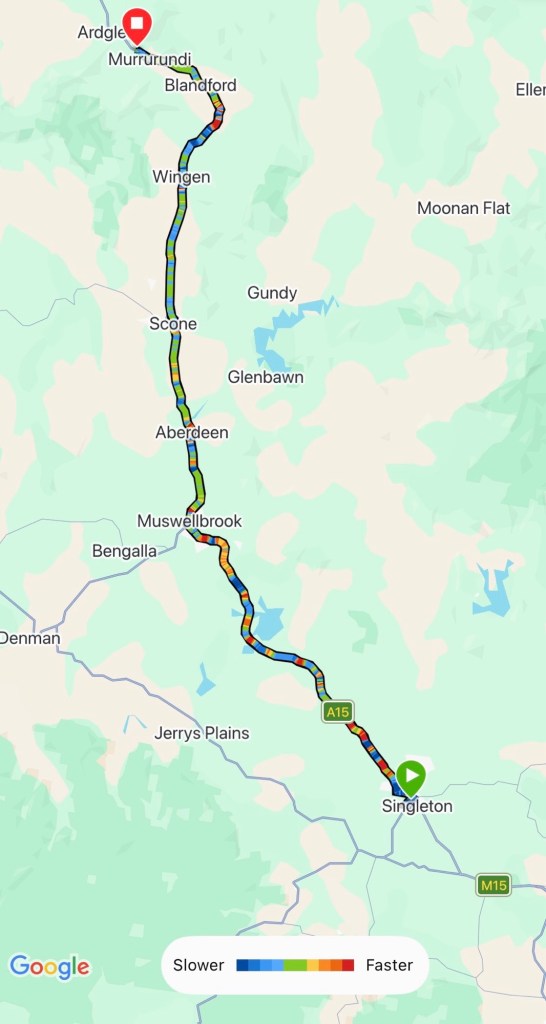
Cycling to the Cape and then south. They’d been on the ship. Guess what I fancied doing?

The European Norwegians were not the first here and the Sami people were. They are herdsmen by vocation and they breed, manage and live off reindeers, whether subsisting off the animal itself or selling its meat. The culture and independence of the Sami people has been attacked by the Europeans over the centuries as they attempted to pursue assimilation.

We went on an excursion to meet a Sami couple who told us about their life and traditions. It was interesting and they were passionate about holding onto their way of life and traditions. Memorably we were asked how many words in the Sami language existed for snow? That’s correct, 300. These two were serious people and mixed the cultural with the political.

It’s now in the last few decades that the rights and resources of these people have been respected and partly restored. (This is the story of several indigenous peoples around the globe, isn’t it.)

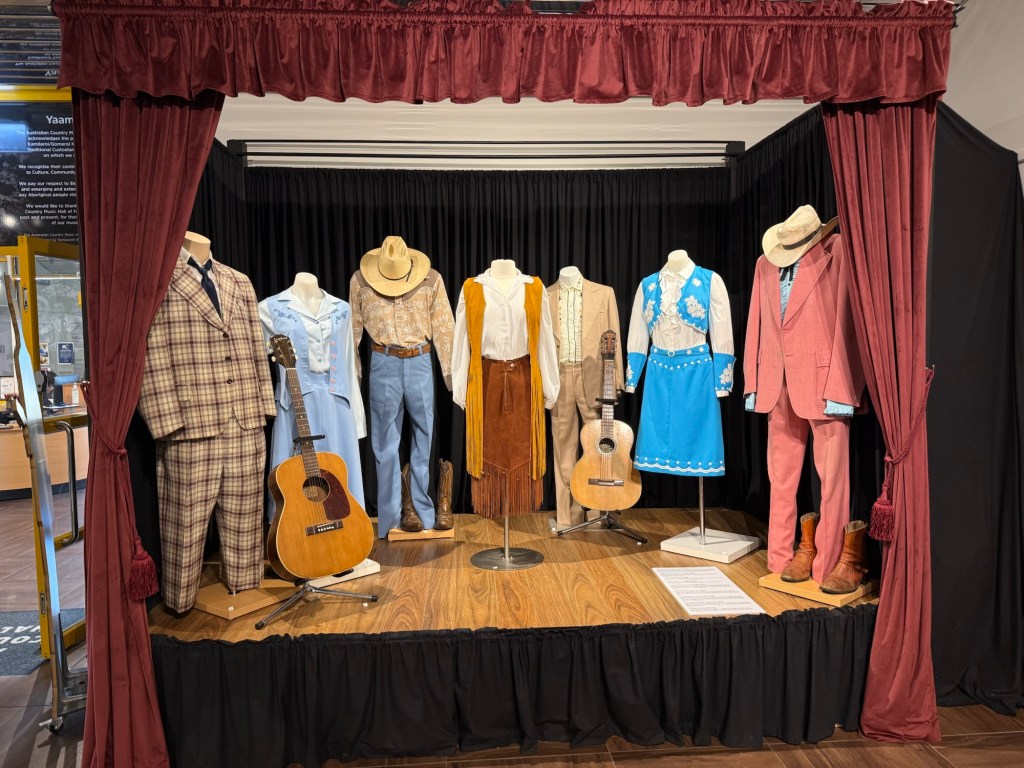
Before this as we disembarked a number cowboys got on board. At Kjøllefjord about 150 locals swapped with this us to sail around the peninsula to Mehamn where they got off ‘more oiled than a diesel train’ to borrow a phrase from Bernie Taupin. This festival of cowboys, cowgirls (and cowgrannies) do this annually and drink themselves near stupid in the two hours on board. Our guide (for the Sami meet and greet) told us that their record for expenditure whilst on board is 250,000 Kroner (£18,500). The main activity on the peninsula is fishing. Clearly there is money in the seas!

Apparently they were noisy on the ship!
Yi-ha!

This was our last night on the ship but when we left we still had more sightseeing to do. We loved the ship, staff, route and fellow passengers. Compared to a major cruise company it was relatively low key but perfect.

After leaving our first tour was a history lesson and a trip to the Russian border. The history lesson was that the town was the second most bombed city in WW2 (after Valletta). At its height there were 100,000 Germans posted here. The Nazis’ focus was extracting iron ore and nickel from the local mines for the war effort and then, secondly, to stop the Allies reaching the USSR’s only open port, Murmansk. It was from here that supplies from the Allies were sent down to Moscow by rail to fight the Nazis.

Video in an air raid shelter

The Germans failed in their attempt to take Murmansk and stop the supply line: they simply underestimated the impassible nature of the route between Norway and Murmansk expecting better roads and less mud. Their progress was pitifully slow. The Red Army repelled the expedition and bombed the hell out of Kirkenes. The guide said that had Murmansk been taken it would have prolonged the war. In the end 12,000 Germans died and 70,000 Soviets. The guide also added that this is the Russian way to advance by expending their own soldiers with little regard and he suggested also in Ukraine this was a Russian tactic. 

Monument to a Soviet soldier

The sacrifice of the Red Army cannot be understated throughout WW2. I’m slow to praise after their advancement to Berlin seemed to be a long campaign of rape and looting but the casualty figures were horrendous and their sacrifice brought an end to Hitler with the Allies. Many Soviet families lost so many sons you can imagine their devastation. Their monuments should be respected and honoured. Clearly some of the locals find it hard to overlook Putin’s current brutal colonial ambitions.

Which brought us on to the present day. Kirkenes had a flourishing tourist trade with the Russians over the border up until the Ukrainian War. Up to 1,000 visitors came every week to buy at the Norwegian shops and stay or eat at the hotels and restaurants. The Russians bought electronics, food, nappies (!) and chocolate. Norwegians would go east for cheap petrol! Norway stopped the issue of visas. The economic implications for the town are profound.

Nicely wedged between Finland and Russia with Sweden nearby

This has killed a very lucrative trade. Similarly as troublesome was when the Russians passed through 5,500 migrants from the Middle East over the border. For a town with a population of 3,000 you can imagine the problems. This flow has now stopped but this was another Putin tactic, with human life, to cause havoc.

The border with Russia
Many signs in Kirkenes are in Russian to help the, now departed, tourists

Later that day we met some reindeers, husky dogs and entered an ice hotel. The reindeers were friendly and interesting and the dogs were hardy and in residence for the winter to pull sledges for the tourists.

New friend. Note the ice hotel in the background: white mound
Rudolph, Prancer, Donner & Blitzen
Cupid

The ice hotel was part of a larger complex of cabins. It was unique but had no appeal to Anna and myself, unsurprisingly. We had an excellent guide who amongst much information asked us not to lick the ice. You can imagine my disappointment. The temperature, outside, had got up to 22°C in the afternoon. The summer average here should be between 10° and 15°C. The game’s over for global warming. It seems we just have to learn how to live with it?

The only time I got to wear a coat and hat!

The guide commented that the threat of Russia didn’t worry the town now. A local military college in Murmansk used to have 2,000 trainees in it. That’s now empty as no doubt the soldiers are deployed in Ukraine. On this border the Russians have around 500 soldiers in residence and the Norwegians have 200. Much of the monitoring is done remotely by electronic surveillance.

Back in Kirkenes wandering round this empty town we found a pizza in the late afternoon. Then we flew out of Kirkenes, to Oslo, on a late flight. Waiting in Departures enabled the travellers to watch the Women’s Euro Football Final. Well done girls!

Quiet Sunday night at the end of the world

Lastly, I’m grateful that the world has chosen to learn English, to make my life easier, but there comes a time when the umpteenth incorrect pronunciation of salmon leads me to have violent thoughts. The Norwegians cannot say it properly. It’s not ‘sallmon’ it’s ‘sammon’. Pick up your game Norway.

PS.   Just to confirm the good news that the Guinness World Record organisation has acknowledged Bob Sanders’ ride across the USA as the oldest male and it’s now confirmed. Take a look below. Fantastic.

https://www.guinnessworldrecords.com/world-records/93719-oldest-person-to-cross-america-on-bicycle


Norway (for Beginners) – Part Four – Fellow Passengers

On a smaller cruise you inevitably get to know your fellow passengers better and as everyone is usually over 50 or 60 they like to chat. On our first night we were paired up with young honeymooners. She was six month pregnant and given her condition they picked this cruise as something she could easily cope with. Imagine in all those years to come when they’re reminiscing about their first night away and the time they spent talking with me…

Sunrise

They were English. She was an English Rose, with a bump, who spoke like someone from the Home Counties but was part Norwegian and conversed with the waitress like a native. Hubby was more Essex estuary but had married in a kilt. We saw the photos. Further questioning revealed he had heritage north of the border hence the McLean tartan.

The backdrop at breakfast

As she told us about the wedding in Oslo it transpired they lived in Zurich as income tax was c11%. They’d abandoned London. He was in biotech (no, me neither) and she in shipping insurance. On the Scottish connection she chirped that she’d “flown in a piper from Copenhagen” to play at the Reception. After all this I started to feel very poor in comparison.

They only enjoyed us for one night only before we were paired at dinner with a Belgium couple. They were only on for two nights and he was, I extracted, going through a late middle age crisis. He was an editor of a Sub-Saharan agricultural journal. (I know, you think I make this up.) Quite an intense chap redeemed for me by his love of Frank Zappa and Rochdale (his grandfather had worked there.). His forbearing wife was a teacher of young children. Both spoke Arabic, as you do.

As mentioned earlier – handling freight

Next came our more permanent dining companions. One was an initially quiet German lady, in her late 50s, who also had good English and was also a teacher. As our dialogue developed it transpired she was an angry Remainer. Oh good I thought as I waded into my tiramisu thinking it was 2016 again. She explained to me that because of this the end of world was, yet again, nigh. Her outrage centred on freedom of movement and the necessity for members of the EU to now shell out £16 to alight on our blessed isle. After her diatribe I felt it should be at least tripled.

The sea was often calm as a mill pond

Then came a Chinese couple from Shanghai, with British passports, who also lived in Switzerland. She was a teacher and his last declared profession was as an acupuncturist. (I do think he did something else before doing this.) They were truly delightful and echoed my thoughts exactly as regards modern day China, which suggests they’re not moving back any time soon. They volunteered this without any of my prompting although I was very interested but hadn’t wanted to ask. Less agreeable was his donning an Arsenal away shirt in the dining room: I expressed disappointment and volunteered that a quick audit of his wardrobe, by myself, might avoid any future unpleasantness (from me.) He never came back to me on this.

I know it’ll come as no shock to find that we were sought out. Sat in a cafe in Tromsø an Irish couple asked me to shuffle up as they wanted to sit on the same bench. Anna had met the wife on the ship and bonded. I enquired, as a conversation starter, “Have you visited the Cathedral and the Polar Museum?” “No, we’ve been for a swim?” “What!?” The husband had, prior to leaving the Emerald Isle, worked out the nearest bus stop in Tromsø, to the ship when it docked, to take them to a suitable local beach for a dip in the sea.

Presents for Isabella and Katrina & Matt’s imminent arrival

To set the scene, it was 17°C, grey with intermittent drizzle, there’s snow on the top of local mountains, the sea may be a tad nippy and we’re close to a city centre. Not an obvious pursuit. My first thought was they must know I write a blog! However, lovely people with lots of joie de vivre and a terrific sense of fun, but mad.

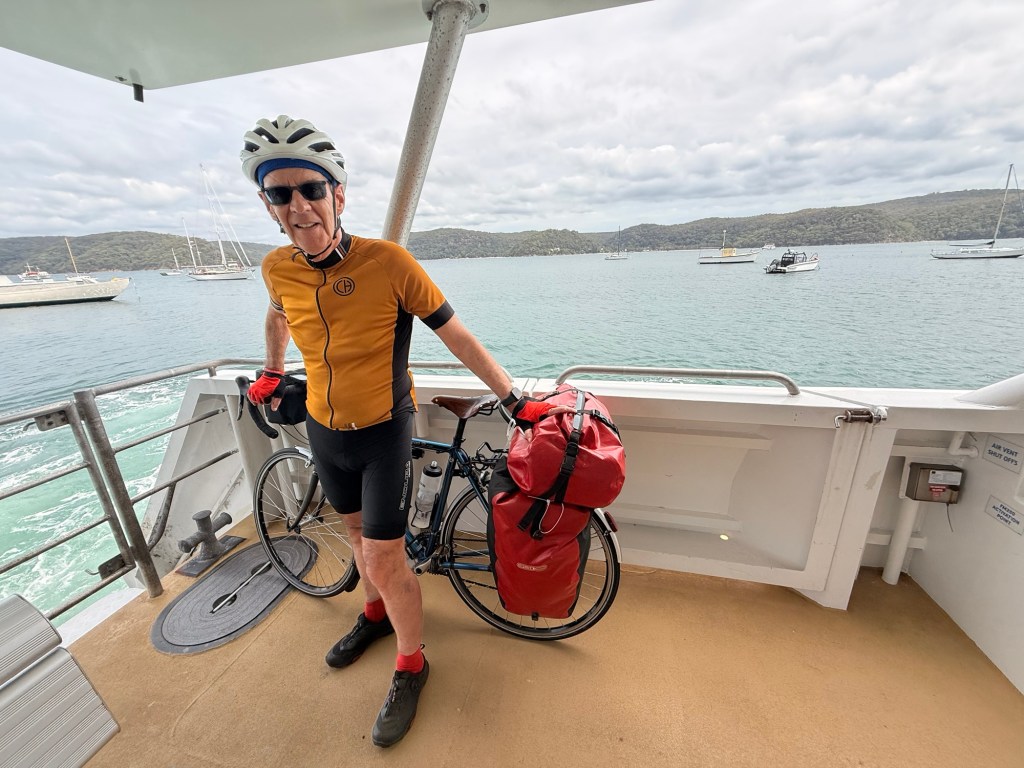
Other conversations with had with all sorts of folk usually from Scandinavia or North America. Most seem well travelled and easy to engage. There is also a transitory population who might hop on for one stop only. This included cycle tourers. Now there’s an idea?

Chilling. (I’ll get a reprimand for using this photo. Please note she was eating.)

Still the scenery is amazing and the other day the Captain slowed to let us watch some Minke whales (who I note also made an appearance in Tromsø on a restaurant menu.) The other excitement is when we passed another Havila ship heading in the opposite direction. This led to much flag waving, hosing the the other ship with water and long blasts on the ship’s horn. This assault on the senses is a deep long bellow that’s virtually bowel emptying in it’s volume and vibration if you happened to be on the open top deck when they tooted.

Sister ship near the Lofoten Islands

Norway (for Beginners) – Part Three – A Life on the Ocean Waves

Escaping the heat of Bergen was a ‘win’ as we boarded the ship with over 300 guests. Eleven ships (seven with the Hurtigruten line and four with Havila) ply the coastline operating as something between a cruise and ferry. So some freight is carried and you can get on or off the ship permanently depending on where it stops. The ships have destinations where the passengers can disembark for sightseeing and excursions and there are other stops that may occur in the night for freight purposes. Our ship was modern and beautifully appointed. Not too big yet not too small. The staffing was high, well trained and the food was fabulous. The main draw is of course to look at the dramatic Norwegian coast line with its rocky profile, waterfalls and quaint mountain side farms.

Polaris

The progress up north is slow and on the second day we went a considerable distance up a fjord to view some waterfalls.

The beauty and serenity is complete as you quietly sail. The weather has remained unseasonably hot and if you subscribe to global warming then the Norwegians have a lot to answer for. Over half of their exports are oil and gas and 24% of GDP is based on this drilling. The Norwegian government is a part owner of the sector and enjoys returns from the industry as well as tax. Rather impressively much of this money, over the last 25 years, has gone into a Sovereign Wealth Fund that stands at $1.5 trillion. Norwegians, per capita, are the second wealthiest people on the planet. There is some angst, politically and socially here, about continuing to extract fossil fuels but I rather prefer their model of coping with a guilty conscience rather than penury. Whilst major industrialised nations, outside Europe, continue to copiously burn fossil fuels our dash for net zero will have no measurable improvement in containing temperature levels.

There are several excursions on each stop. They’re fabulously expensive at between £100 to £170/person per trip. The one we booked got cancelled due to a low subscription! We have others planned, fingers crossed. There is always the alternative of getting off the ship and doing your own thing.

This we did at Trondheim and looked around the city centre and stunning Lutheran cathedral.

Here is where they coronate their Kings. I asked one of the Cathedral guides if there was much affection for the monarchy and she said there was ambivalence. She went on to outline that the Crown Princess’ son was under investigation for several rapes and assault. This man is the Crown Prince’s step son.

All in all it was an interesting stop and enabled some walking steps to be done. The food is regular and delicious on the ship and exercise is needed to cope with the calorie flow.

Lookie here! Tony found a bike with a view

Norway (for Beginners) – Part Two – Bergen

After our long but scenic train ride from Oslo we pulled into Bergen, the second largest city in Norway with a population of around 500,000. Our friend Google Maps suggested we could easily tow our suitcases to the nearby harbour and our hotel. Its assessment was correct but failed to advise that a lot of Bergen is cobbled, which is not a wheelie case’s friend.

Choo choo puffa from Oslo

Check in at the hotel was routine enough but in the Reception we queued with American and Chinese guests. Clearly jostling with these two superpowers did make me reflect on their potential hostilities. In this case the Americans were older but bigger and may have seemed favourites in a skirmish but the smaller Chinese had bigger suitcases (containing who knows what?) and may be better prepared? After all Chinese tourists always come on group tours with a Chinese guide and they may have been drilled, like in the film Zulu, to fall quickly into a formation to see off the Americans. I need not have worried as the buffet breakfast reaffirmed American superiority. After all who could stop a 17 stone Senior (from Des Moines) armed with a plate groaning with everything cooked in one outstretched hand and in the other hand a plate loaded with fruit and pastries advancing toward you at 15 mph with no desire (or ability) to stop even if he wanted to.

On entry our room’s thermometer advised we were enjoying 26.5°C! I fiddled with the device on the wall that seemed like an air conditioning control. Nothing happened. At Reception I reported the issue for the assistant to confirm that it was in fact a heating unit only and there was no air con. “We are experiencing a heat wave. Our hotel doesn’t usually need air con.” Further discussion helpfully (not) suggested opening the windows in the room. That would let in more heat we thought! Sadly our two nights were terribly hot and uncomfortable.

However, in the meanwhile Bergen, despite high heat and sunshine, was a delight. We found sanctuary in another Irish bar for refreshment, one of four Irish bars in the harbour area!

Cadillac Eldorado

The harbour area was very attractive with shops, bars and restaurants all in an easy walking distance from our accommodation. We investigated the surrounding streets and they were also vibrant and attractive.

After an evening of orientation the next day we eventually took in the funicular rail ride up the mountain overlooking the harbour. It gave a spectacular sight overlooking the fjords and surrounding parts of the city.

Anna, at long last, finding someone/thing to have a sensible conversation with

The gift shops were numerous and eventually we succumbed to a couple of purchases although we gave the trolls a miss.

Norwegian towns are laid out on a grid system and easy to navigate. We were here in peak season and many overseas nationalities were evident. I found a couple of record shops to visit and was also able to sneak back to our inferno (hotel) to get live coverage of the Tour de France.

The local Fortress Museum was interesting in covering the Nazi occupation and Bergen’s military history as a settlement. Norway was part of Sweden, but autonomous, until 1905 and was neutral in both world wars. Clearly Hitler overlooked that it 1940.

This museum had an exhibition dedicated to Ukraine. Norway’s worry is evident.

Photos of Ukrainian suffering
A caption from one of the images

It made me reflect on the surprisingly strong commitment to Ukraine by the EU countries and their neighbours. After Europe’s decades of scant interest in anything warlike or an effective military deterrent there now seems to be a resilience and inclination to spend on their militaries. I’m sceptical that this expenditure will result in a cohesive and effective military force but it may be the only way to go. The threat of Russia must seem very real if part of your country currently borders with it or has been occupied by it (or the USSR) in the last 80 years. Of course your awakening is accelerated if the USA indicates Europe’s defence isn’t a priority and after decades of free loading you can sort it out yourselves.

Braving the cobbles again we wheeled our cases to the docks to board the Polaris, part of the Havila line. Ambling up the coast we’d go north eventually beyond the Artic Circle.

…..please behave like Norway and be cold. After all I have a suitcase full of hats, gloves, coats and pullovers.

Norway (for Beginners) – Part One

Now if I’m being frank when I last visited Norway, over 20 years ago, I thought it was nice, but not for a whole weekend. The weather had been grey and plodding around Oslo hadn’t thrown up anything very memorable apart from the eye watering prices. We’d visited with our in-laws who had great affection for the ‘old’ country. My father-in-law’s parents were Norwegian and my father-in-law, Eric, had grown up speaking Norwegian and immersed in its traditions and cuisine during the time his parents had temporarily settled in Kingston-upon-Hull before returning home. Needless to say my first wife feels a great affinity for this part of her heritage (and no doubt our children will too.)

My bucket list didn’t have an entry for The Kingdom of Norway again but the fjords and the north of the country still did appeal. Anna, keen to return, curated a complete tour of what the country had to offer and we flew into a seriously sweltering Oslo to start the expedition. This is the capital of said Kingdom i.e. has a monarchy. Out of a total population of c5.5 million here contained 1 million people. If the last trip had been grey with drizzle then 28° C and sunny was our greeting as we navigated the streets in the centre in pursuit of our hotel. If this was a surprise then so were the people. Of course, as in all large European cities, the indigenous white population is in the vast majority but as is becoming increasingly the case multiculturalism and diversity was clear to see here. People of African, Indian sub continent and Middle Eastern descent were significant in number as were the high number of Muslim women in headscarves and flowing robes as we lugged our wheelie cases to Reception. I can imagine the surprise of this to my in-laws and Eric’s forebears if they’d been strolling around with us.

After a bag drop we took in the sights and found another import, an Irish bar and partook of a foreign beverage. Less foreign was the £22 it cost although in London it’d probably cost £15.

The city, bathed in warm sunshine was a joy to stroll around. We walked up to the relatively new opera house:

When we return later in the trip we may get inside. The marble roof and surround is sumptuous. As a building, whilst dominating the harbour front, it is ultimately a large chunk of rock with glass awkwardly, yet deliberately, plonked in a vista grabbing location. A further preamble toward the Parliament building and its attendant park was delightful and I rewarded my bride with some shared pizza with no expense spared (£29 + tip). Both of us couldn’t demolish all of this and so some of it accompanied us west on our train ride to Bergen. That was our destination the following day. After a day or two there we’d sail up the coast to the very top, Kirkenes, and fly back to Oslo. Here we’d have a proper look before heading back to Blighty.

Parliament

The train departed at 8:12am (or as my body clock on UK time would have it, 7:12am.) As breakfast on the Saturday didn’t start at the hotel until 7:30am we were tight for time. You’ll be heartened to know that I still managed to demolish a little fruit, scrambled eggs and bacon and make two sandwiches before making it to Platform 10 of Oslo Central Station along with tourists from every nation to take the train. This is a much travelled route, and mode, for international visitors.

The ride lasts seven hours! However, that isn’t too long as the scenery can be jaw dropping. Woods, lakes, rivers, precipitous rock faces and millions of coniferous trees.

On the voluminous tree cover my wife commented “you could hide a body out there”. Clearly too many Scandi-Noir nights in front of the TV? Aside from thoughts of murder I thought it was ravishing.

Bergen awaited and I looked out of the window and listened variously to music or the BBC Sounds App. I was hoping Bergen might be cooler.

Samantha, Me, Rain & Home – Le Fin!

I’ve visited the Musée National d’Automobile before but was pleased to note they’ve shuffled much of the collection. I love all these European cars that are well presented in these well lit and easy to amble around Halls. It is the best car museum I’ve been to and I’ve been to tens.

From here it was overnight in Bar-le-Duc. The first time I stayed here, 2018, I was unlucky to be pitched in an empty field bar one caravan. This was occupied by two French lads who into the early hours were playing music (French!) and having a barbecue. At about 2am I ambled across to express a contrary point of view to their anti-social behaviour. Needless to say after little sleep I was less than sparkling the next day. I always suspected they were taking drugs and were away with the fairies (and saucisses.) In 2020 I was here when Huddersfield Town beat West Bromwich Albion and ensured that Leeds United were promoted to the Premier league after 16 years in the lower leagues. This time was less euphoric or sleep deprived.

The praise for the car continued with passers by, outside the camp, leaning across the railings to express their admiration
I always try and operate within Anna’s budgetary constraints

The next day was a country lane amble up the Meus to an overnight stop in Givet before my final drive to Europoort (Rotterdam) to catch the overnight ferry across the North sea home. After all the driving it was a bonus to get home from the ferry in just over an hour. By the time I pulled into the drive in York I’d driven 1,600 miles.

Overnight thunder and lightning came with a major dunk. Quite a contrast to the eartler heatwave!
Nelly after her departure from the circus..
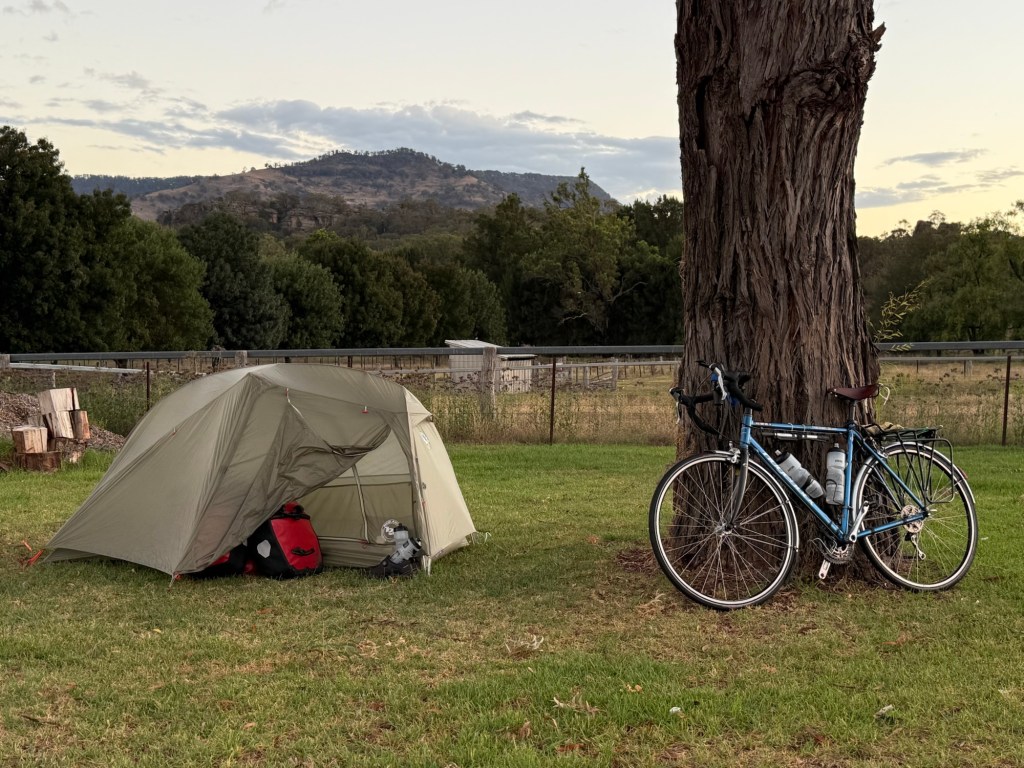
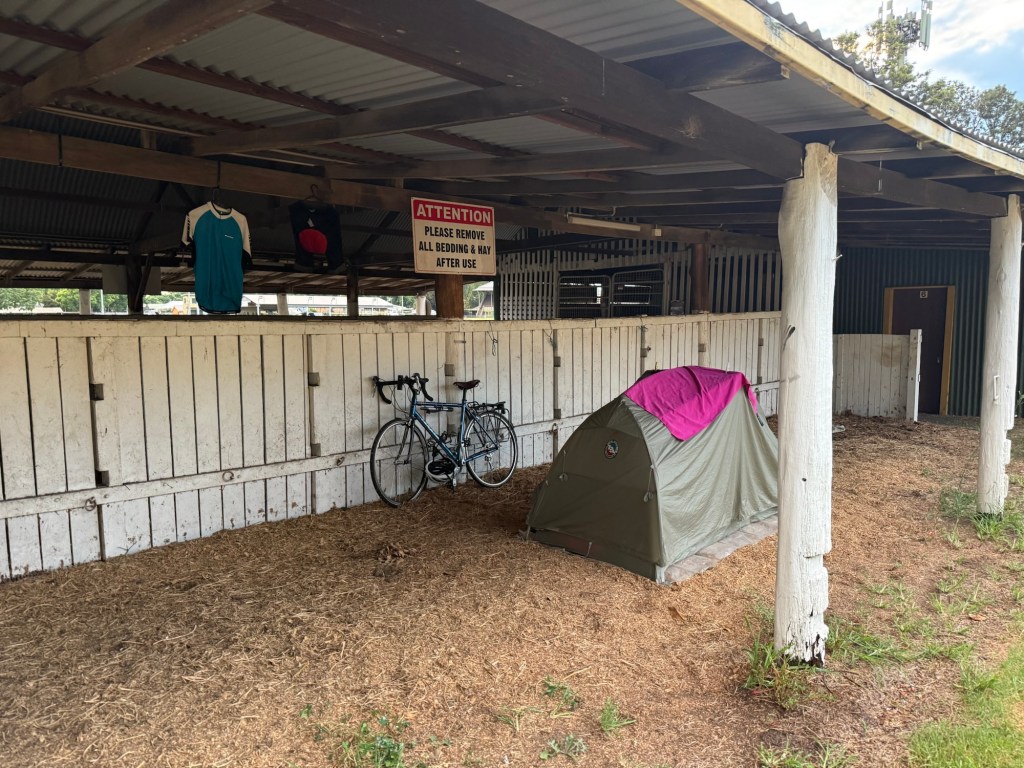
It’s not much, but I called it home for the night

Thank you for reading. Till next time.

Samantha, Me, Anna (partly) with Art, Vinyl & Classic Cars

Thoughts were turning toward home for Anna as she was scheduled to fly out of Luxembourg in mid afternoon. Before that a visit to the Pompidou Centre in Metz was slated. I’ve visited a few places with modern art such as the Guggenheim in Bilbao and the our own Tate Modern and always felt I was being duped or impressed. This fell into the same pattern. There were the usual piles of bricks or bananas stuck to walls.

Sponsored by Jewson
Wonder if it’ll eventually peel off the wall?

Yet there were interesting things such as the table football or the lady in the fridge. Weird but thought provoking. I thought I wrote some tosh in my record reviews but some of the explanations of the art were as creative as the exhibits! It’s worth a visit if you’re going this way.

Picasso, during his ‘welding years’

Afterwards we leapt into Samantha and headed north. Anna was dropped at the airport and subsequently experienced delays. (Frankly, Ryanair offer such low fares that folk just suck it up.)

Dinner rather than an exhibit. (Made the school boy error of declining the chilli sauce.)
Pforzheim

I’d hoped post-Anna to camp and chill beside the Moselle but with these high temperatures it was very uncomfortable. So as opposed to chilling I decided to head over to Stuttgart to buy some vinyl? The motorway link was easy if hot and long but I’d decided to stay just short of Stuttgart at Pforzheim. A strange sight are all the trucks parked up at Service Stations: German law requires large trucks to be off the road on the sabbath (until 22:00 hours). Frankly the Germans can roll as they please but if one objective was to help save the planet then thousands of trucks sat with diesel engines idling whilst drivers sit in their air conditioned cabs for several hours in 33°C heat isn’t a great idea. 

I’d not planned to come into Germany this far and had not obtained an emission sticker for my windscreen. All vehicles need these of various hues. Samantha’s being yellow for a Euro 4 emission level engine. Getting one at short notice wasn’t possible and so I hoped for the best and drove on. If the ‘check’ is by registration plate camera recognition then Fritz may be in touch I fear. Going back to saving the planet again then how does buying a €5 car windscreen sticker help?

I got to Stuttgart and Second Hand Records and bought 14 LP’s. The selection is nearly as good as the condition and an hour flicking through the racks is a happy place to be. I had a few things on a list and some were there and others not. I’ve listed the records I bought below with an apology to Mark Sutcliffe.

That done I was back on the motorway heading for Mulhouse, France. The location of another Tony Ives ‘Happy Place’. I was still fretting over the fuel levels and reflected that the problem may be the gauge itself. Now that is expensive to sort! Anyway the hood release fitting also had a failure. However there was a Plan B that meant removing the spare wheel to access the release cable. Deep joy in the heat. I’ve camped in Mulhouse before but again the heat made this impossible. A fairly sweaty Yorkshireman checked in and headed for the shower. (The Ibis hotels I stayed in were £58 + parking. Clearly tough times being a hotelier?)

Plan B. I think the 33°C heat didn’t help as cables stretched/expanded etc.

I chose Mulhouse because of the fabulous French National car museum. It would be my third visit. It has amongst many gems the largest collection of Bugattis in the world.

The French government bought the original collection off the administrator of the Schlumpf Brothers failed textile business. As the textile business failed it seemed one of the brothers, Fritz, had been buying up old cars and restoring them in part of the mill. He had hundreds of cars. The textile workers were deeply unhappy at losing their jobs and discovering where a lot of the money had gone. However, the car collection was too impressive, historic and valuable to let it be neglected or broken up. Today it sits in a beautiful bespoke building. Photos to follow.

Records…

Mark, this list probably includes German pressings and mostly re-releases. Catalogue numbers can be supplied but I will require shelter under the Geneva Convention. I’m aware there’s not a lot of value here but I can’t wait to play them all. Message ends.

Bob Dylan – Self Portrait

Family – Burlesque

Nazareth – Greatest Hits

Spooky Tooth – Best of

Pendragon – Last Rites

Earth, Wind & Fire – Gratitude

Ernie Isley – High Wire

Marillion – Misplaced Childhood

Marillion – Fugazi

Latin Quarter – Modern Times

The Tubes – The Completion Backwards Principle

The Tubes – Live

The Nice – Five Bridges

Donovan – The Best of

Samantha, Me, Anna and Metz

Our Booking.com apartment was, frankly, fairly mediocre for the money with amongst other things an air conditioning machine that didn’t work and where you’d have beaten the brains out of a cat with the first swing in the bathroom. However the landlady, Ingrid seemed to do it because she was lonely. At 85 she’d lost her husband 8 years ago missed some company. It wasn’t surprising that she preferred cash to credit cards. This came as a shock to us but we rummaged around and handed her €100. She counted this and thought it came to €85! Anyway rather than argue we took it back and agreed we’d pay her in the morning after a trip to a cash point. Handing her the same money again this time it added up!

Ingrid had some English she’d learned abroad. She’d spent two stints here, one in Garstang (near Preston) in 1959 and then she returned to work in Newquay. Given the era this was quite an adventure we thought. 

The drive to Metz, on the country lanes, was delightful. The banks of the Moselle were steep but densely planted with vines all nicely ripening in the heat. Those narrow specialist tractors were trundling along the roads. As is the way then bystanders were taking photos of the car as we passed by. It never failed to delight. Anna had booked a hotel in the centre of Metz. However, the approaching street to the hotel garage was shut. The very reliable Google Maps had failed to notice this. So round and round we drove in the burning heat attempting to get to their underground garage. Tempers were frayed on arrival.

Comfy berth

However, enough of that as there was the town to investigate.

The Moselle (again)

Around we strolled to learn that later there was to be a city centre music festival. Amateur groups or DJ’s would be occupying street corners bashing out various sounds. Before adjourning to the cool of our room we investigated the magnificent Cathedral.

The internals were less awesome but I did note there were five confessionals: clearly the locals had a lot to own up to. In addition there were some helpful graphics relating the bible’s inclusion of various beasts. I suppose you all know that there are 15 separate mentions of frogs in the book.

Poor little chaps. Still popular here for their legs…

When we later went out the streets were heaving. As was a very discreet but heavy police presence: recent car crash atrocities were on their mind and access was strictly on foot. Unlike our own police the French are heavily armed.

Enjoyed their blues rock
Jazz
‘Except for bicycles’

The music was surprising and entertaining. One of the great pleasures was the absolute joy of all the teenagers milling about. It really does help to have temperatures in the late 20s.

On returning to the hotel we sat outside with a glass of chilled rosé listening to some reggae. It was fab until some parked cars sought to join the rumbling bass lines with their car horns. Time for bed we thought.

The next morning there was more culture to come.

Samantha, Me, Anna & Some Moselle Highlights

After a night beside the Moselle and fortified with the gasthaus breakfast we made the short drive to Trier. Now a bit like my last trip to Bastogne and Trier in 2019  I had overlooked or not sought out the important history that defined each town. First, obviously was Bastogne’s WW2 history and the second was Trier’s Roman history. 

Morgan mit Moselle

The city had been an important Roman settlement and boasted quite an important rôle in this part of the empire for the wandering Italians. Like other countries then it wasn’t until the 19th Century that the locals took a forensic interest in their Roman history and started to dig it out. Trier has an enormous bath complex typical of Roman settlements. The waters were heated and there were several pools of differing temperatures. In Britain and here the natives didn’t maintain this interest in ablutions and hygiene after the Romans left for another near millennium, why? 

One small part of the bath complex with excavators!

In addition it has, remaining, a spectacular gate (Porta Nigra).

Porta Nigra

The city had other delights including a bright and different Cathedral and Basilica. As you might imagine Allied bombing damaged the structures and significant rebuilding took place after the war. Amongst the graphics was a contrite piece saying the Protestant Church in this region had kept quiet when the Nazis shut the synagogues in 1938 and also never chose to articulate any anti-Nazi positions throughout Hitler’s rise.

Frankly, most Germans might have felt that an end to rampant hyper inflation, the suppression of regime changing revolutionary (God-less) communism, the creation of full employment and the restoration of some national pride after the WW1 surrender was a good thing? Also to say anything hostile might have meant a visit from some violent thugs although if my children were being brain washed in school or the Hitler Youth I might have developed some strong views? In the end the whole country paid a devastating price for the Nazis’ vile ideology with their attempted genocides and the hell they’d wrought on their neighbours.

Cathedral
The organ pipes inside the Cathedral
Basilica. Fully rebuilt post war

If National Socialism was terrible then the murder wreaked on the peoples of the USSR and China in the mid 20th century by their leadership through ideologically driven starvation or pogroms was horrifying. The system they purported to implement was based on a few books called ‘Das Kapital’ written a century or so before Mao and Stalin did their worst. Which brings us to a statue of a son of the city, Karl Marx.

The commemorative statue near the Roman Gate was donated by the Chinese on his 200th birthday. Given the current British predilection for defacing Queen Victoria or Winston Churchill statues for British colonisation or the tearing down of slavers statues then I can only assume that should the Germans also be revisiting history then the Trier city fathers were courting favour with Beijing to allow this. Maybe one for Groucho, Harpo or Chico instead?

Well if you’re in Germany then you’ve got to.

So with 13,000 steps bagged we returned to the krankenhaus (my favourite German word after schnitzel) multi storey car park to find Samantha and hit the road to Bernkastel-Kraus. I’d programmed our good friend Google Maps to avoid motorways and tolls and we skirted the Moselle as we meandered north.

Feeling brave enough to drive 259 miles without refilling the car I eventually found a petrol station and filled her up. It took a while with ever increasing ‘kick backs’. Next, in the searing heat, was to find our gasthaus. This was Ingrid’s house, a sprightly yet mature lady who turned out to be quite an Anglophile. After chilling with a beer in our attic accommodation we felt restored and drove the short distance into the town itself. What a treat!

Chocolate box pretty in the evening sun and heat we strolled around; likewise the Germans. Surprisingly, apart from ourselves, there seemed to be no foreign tourists. Sustenance was achieved with another schnitzel. Not being a predictable boy I swapped turkey for pork.

Samantha, Me & Anna

By 7.30am it was hot in the tent, which along with a moron next to the campsite with a noisy chainsaw added up to be reasons to be up and about. Drifting into the town centre I found a spot for a cafe au lait and a jambon and fromage croissant.

Looking at my fellow diners there were British and American tourist pensioners. They were here for the three war museums. This was the epicentre of The Battle of the Bulge. Two elderly Brits in front of me in the queue were ordering coffee and pastries. It included lots of franglais and pointing. Didn’t they pay any attention in school? I hope what they got resembled what they hoped for!

This grey crew were in the town to visit museums covering the 1944 battle. This was one of Hitler’s last hurrahs to defeat the Allies and he was doing well having surrounded the Americans (101st Airborne Division) until the mist/fog cleared and supplies could be dropped into the town to help the besieged Americans. After this and the successful defence against the German siege the proverbial US cavalry arrived and beat back the Germans. As always you marvel at the bravery and sacrifice of young soldiers thousands of miles from home in a country they had little affinity with giving up their lives. For too long Europe, since WW2, has not spent enough on defence. Trump may be the main complainant but it’s old news and other US Administrations have identified the shortfall, complacency and dependence on the USA. Hopefully, this will change as the new belligerent threat of Russia seeks to recreate the USSR.

I chose to visit one museum mainly to look at the kit rather than the graphics. Here I came across some Americans doing an 11 day tour of the ‘USA in Europe’ during WW2. The tour started on the Normandy beaches and ends at the Eagle’s Next in Bavaria. They all looked shattered by the schedule and distances as they trooped on and off the bus on their way to the next museum.

After this I decided to drive through the north of Luxembourg before finding my favourite restaurant, from six years ago on the my bike ride. I had my turkey schnitzel. It didn’t disappoint. From here I headed to Germany to check into my gasthaus.

The afternoon heat was impossible in the open top car. It was like being grilled! I rested up at the gasthaus before the 10 mile drive to Luxembourg Airport to collect Anna. She’d got the train from York to Stansted. (This journey would equate to a Michael Portillo epic train journey in its own right.) After this slog the lovely Ryanair had managed to limit their flight delay to only 40 minutes and landed at 21:45. By the time the border officials had stamped every passport Anna appeared at around 22:25. I seldom, if ever, drive the Morgan in the dark. The headlights have the candle power/lumens of a glow worm. Anyway we got back to the gasthaus beside the Moselle and both fell into a deep sleep.

Samantha & Me – Off We Go!

The ferry beckoned – ‘The Pride of Rotterdam’, built in Venice in 2001. Quite a comfortable vessel but once onboard there’s nothing to do other than eat and drink. Neither of which appeal. A three course evening meal or gargantuan ‘Full English’ are fair enough if you’re burning calories, on say a bike tour, but I’d spend the next day steering and changing gear whilst sat on my derrière. I retired early with a magazine and a salad and was soon looking at the inside of my eye lids. 

Checking in

The plan was to drive to Luxembourg to collect Anna from the airport and then we’d trundle around locally in Germany and France before I’d deposit her back at the airport, she’d fly home and move I’d continue in France. We’d be in a hotel whilst she was here and I was alone I’d camp.

Put to bed

We didn’t disembark until past 9.15am. I walked down to the car deck whilst all the motorcyclists waddled, with difficulty, down to their motorcycles. Is being over weight mandatory to ride these powerful machines? From here it was the pointless queue for the customs chap to stamp my passport. Clearly the EU’s revenge for Brexit is characteristically bureaucratic although the official asked about my car but forgot to enquire as to whether the chassis was made of wood. The road system around the port of Rotterdam is modern but with a spaghetti of parallel roads beside or above you. I think I made two errors as I relied on Google Maps. Unfortunately (or fortunately) I was missing my ‘Little Helper’. This passenger bonus was always ready, I’d found, to offer such pearls of wisdom as ‘you’re in the wrong lane’ or ‘shouldn’t you be indicating now?’ and ‘are you thinking of turning your lights on as we go into the tunnel?’. Her real crowd pleaser is ‘the lights have turned green’. A way to deactivate this guidance is to utter the words ‘Would you like to f’ing drive?’ This guarantees silence for a little whilst while I show no contrition for continuing to take the wrong turnings!

Holland contains some lovely folk but it’s a dreary place and soon I crossed the border to Belgium. Frankly, this part of Belgium is painfully flat as well. I had plenty of time to drive toward the Luxembourg border and so I avoided motorways. This meant I followed a series of bin wagons, tractors and learner drivers through small but busy towns. This sedate progress allowed me to reflect on the two official Belgian languages: Flemish and French. I noted that all the road signs in the Flemish speaking part were in Flemish and then French in the French speaking. It seems both languages don’t need to be duplicated everywhere to satisfy the sensitivities of either party. Obviously if the language everyone speaks is English but you’re Canadian, Welsh, Irish and even some Scots then multiple gratuitous language signs are mandatory.

Chateau d’Hélécine

Having the hood down was lovely but it was hot. 30°C soon racked up and an investment in another hat seemed unavoidable or I’d become a ‘Guernsey Tom’. 

I’d cycled this route in 2019, on my way to Vienna. So I knew that as I headed south east that the hills would appear in the Ardennes. It took 150 miles before a gradient appeared. I know this because I was watching my tripometer. I was also watching my fuel gauge, however, this wasn’t revealing as it permanently read the following. 

After about 200 miles I thought I’d top Samantha up and pulled into a petrol station with automatic pumps with the instructions in French. ‘Quelle surprise’ I hear you say. Anyway a very attractive young girl was at the pump next to mine and I enquired ‘Do you speak English?’ Of course she did and set me off on the long laborious task of putting petrol into the car. It is laborious because it kicks back after every 5 seconds and it can take 10 minutes to put a decent quantity of fuel in.

I reflected later about my lady assistant being all smiley and helpful and wondered if I’d been 40 years younger would she have been as relaxed? Sadly, yet, usefully, at my age you look helpless and harmless and no threat! Eventually the campsite I’d also used in 2019 came into view and Reception was shut. Not a problem as you paid a machine (€18) and a ticket popped out with all the details including the wi-fi code. Less easy was using the password to raise the site barrier. In a right hand drive Morgan you’re on the wrong side for the barrier key pad and a 18 inches beneath it. So get out and do it that way Tony! I did and when I had got back into the car it’d shut again. I eventually gained access asking a passing bloke to punch the numbers it.
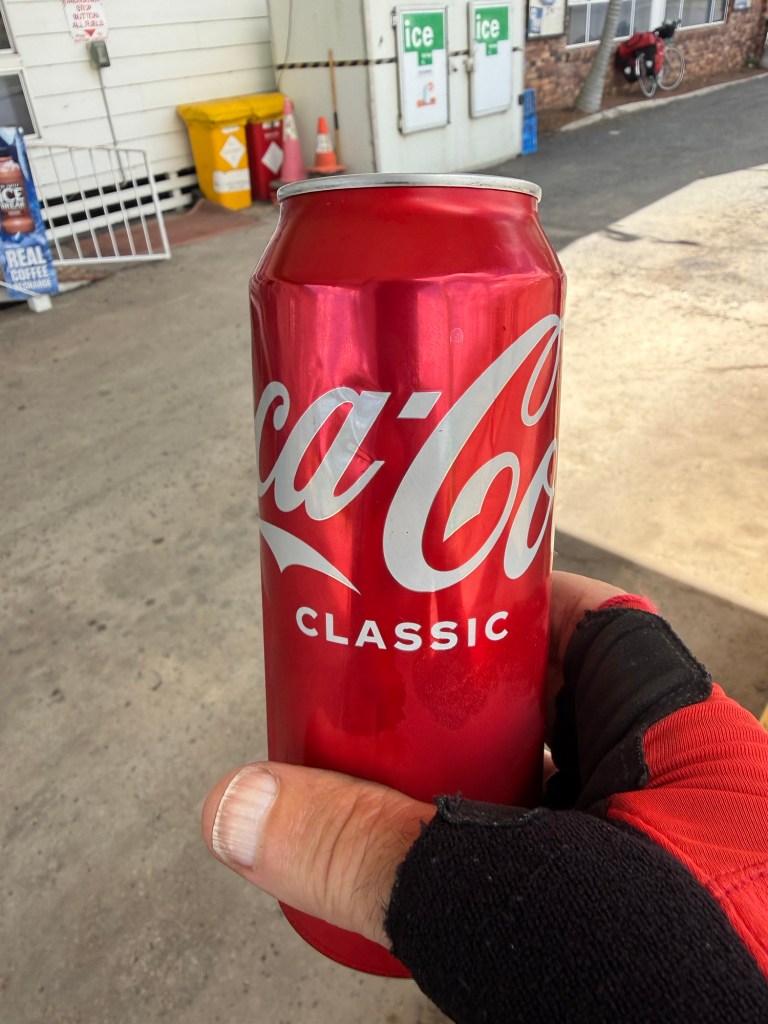
Dinner and a beer followed. Not least so I could get some change to buy a token for the shower. By 7pm it was nearly cool enough to take a shower and to stay dry afterwards. Hopefully it’s history and chicken schnitzel tomorrow. 

Me & Samantha – Week 25 : 2025

In the 1970s or 80s you used to be planning to sell a car when it’d done 40,000 miles. Corrosion had started to appear, reliability was becoming suspect and the risk of some significant expenditure was looming. In many ways this part explains the demise of the once massive British car industry along with our parlous industrial relations and emerging global competition.

My Morgan, or ‘Samantha’ as I know her, is now creaking into its 16th year. She’s exhibiting some of the above reliability maladies along with paintwork or trim problems. In fairness a lot of its original design was done in the 1950s and 60s; durability wasn’t on their minds. The suspension is jarring on the wrong road and such a rigid ride rattles every component. The joke goes that if you run over a coin in a Morgan you can tell whether it’s head or tails! I say the wrong road because 16 years ago the road surface was not pock marked with botched repairs or providing a slalom challenge of avoiding potholes. Neither were there the speed bumps that can reduce me to gibbering wreck where the low hung car has to scrape over one with distressing metallic noises.

However, the looks of the car remain sublime and an open country lane in sunshine with the hood down is one of the most fun activities you can have with your clothes on. The admiring looks are myriad and I’ve lost count of the middle aged or older blokes who’ve cornered me in York, supermarket car parks or European campsites to ask about the car. I recollect once in Sweden that I had to flee into my tent to escape the inane questions of “I believe the car has a wooden frame; is the chassis ash as well?” (No, in case you’re not certain.) One car lifetime highlight was taking my Favourite Youngest Daughter to her wedding and the car appearing in the wedding photos.

Transporting the future Sophie Fuoco

This event spawned another memorable event where as we’re all sat awaiting the entry of the bride and groom in the room, to be joined by the registrar for the marriage ceremony and I was heard to utter, by my other son-in-law, the immortal words of “bloody hell, there’s someone sat in my car!”. Through the window I could see the car and in it was sat a complete stranger. Storming out I confronted my new passenger who rather than being contrite asked if I could take his photo? After his eviction I returned to the small matter of my daughter’s betrothal with one of the venues staff standing guard over the car.

When I took car abroad in 2016 I was less concerned about its reliability but as I plan a tour through Holland, Belgium and Southern Germany before France in a day or two’s time I’m nervous. You worry what could go wrong a long way from home. It won’t be the radiator. That’s been replaced after the plastic header tank cracked. The new radiator is aluminium. New Morgans now have aluminium ones fitted and the depth of the radiator necessitated, in my opinion, the fitting of a mesh guard to stop possible stone damage. Fortunately the wonder crew at Copmanthorpe MOT garage are now the custodians of the car and can fit or sort anything.

Leon, part of the wonder crew

In fact as regards dealers for the car there are 17 in the UK and the nearest to me is across the Humber Bridge close to Scunthorpe where any visit required it to be left overnight. As with all main dealers their prices became eye watering and you’ll find most Morgan owners have a beloved local garage they lean on. Some owners are engineers who actually perform many of the jobs on the car. I fall into the category of ‘polisher’ but with some accumulated knowledge from years of ownership.

A year or two ago I had a terrible smell of petrol in the cabin. The problem was a frayed hose that was routed next to a part of the engine that vibrated. Fortunately my sleuths at Copmanthorpe MOT identified the problem and after I ordered the new hose they fitted it and tied it down in such a way to stop movement. Fortunately the Ford Duratec engine and Mazda gearbox are mass produced and reliable; they worry me less. However, with an average mileage of 3,000 per year (I cycle further on my bikes every year!) you can forget to replace stuff such as spark plugs or change the oil in the gearbox or differential. On the latter then you’d not think about this type of maintenance but who keeps a car for 16 years? The body work polishes up nicely but in may places it’s tatty and a respray seems unavoidable on certain panels. Quotes suggest that I’ll be well into four figures and I’ve delayed this years, unsurprisingly.
This is the luggage space I have for any expedition. Just a little more than my touring bike!
Other tribulation came when I cracked the windscreen. This meant replacing the frame around the screen as well as the glass. Needless to say due to the fairly bespoke nature of the car the first frame assembly that came didn’t fit. This was inconvenient as I was going on holiday during the ordering process and I had to leave the car at Auto Windcreens for a couple of weeks hoping for the best. In the end they did a fine job. This incident brought home the necessity to have specialist insurance. I have such a policy and it’s very competitive. If the car ever needs repairing through an accident I feel an appropriate body shop will be selected.
The latest concern is that the fuel gauge never indicates when it’s full and tends to wander around when driving! The wonder crew (Leon and Mark) at Copmanthorpe MOT have ruled out other maladies to conclude it’s a dodgy sender unit. (A float sits on the fuel and translate into a level on a gauge.) You may well be thinking maybe the car should be a ‘return to sender’!

Anyway the Hull to Rotterdam ferry beckons. Wish me (and Samantha) luck!

Hadrian’s Wall 2025 – Last Day (4)

I suspect it may be plain if you’ve followed this trip that I’d spoilt John and now it was time to bring him back down to earth. In summary, the sumptuous countryside, the antiquities, the museums, my scintillating company/guide skills and lastly the up market hotel in Hexham, The Beaumont. The latter cost £158 per night, which isn’t the way I usually roll but when divided by two it becomes more like it. However, you can take the boy out of Yorkshire but not Yorkshire out of the boy and the £17 breakfast option was a sausage too far. Anyway John absorbed the blow well and got his face around his Egg McMuffin.
Again another chilly morning (and as it turned out chilly day) and we left the Hexham rush hour for Corbridge and a route that generally followed the River Tyne as the river progressed to the estuary and then the North Sea.

The road itself was straightforward to navigate and eventually gave way to a cycle path that actually took us all the way to the end of the Wall.

A former rail bridge now a path

Along the path we came across many walkers who were either starting out on the Hadrian’s Wall trek or finishing it. As we cycled we came across George Stephenson’s childhood home.

The home of George Stephenson the ‘Father of the Railways’ and the inventor of the steam locomotive

I have to say the walk through Newcastle is straightforward but involved a selection of Zebra, Puffin, Pelican and Toucan Crossings. (We both know you have no idea about the difference between these various ‘bird’ crossings yet the Highway Code would expect you to know. Shame on you). It might take a day or two at the start but for these hikers but the change to rugged paths and splendid views was going to be a tonic when it came.

Stops along the way were few and far between but we eventually came to rest at a Sicilian café a couple of miles from the centre. John liked the coffee so much he bought some to make back in Hampshire.

Soon we were in the heart of the city and passed under the various bridges before finding the continuing Route 72 signs toward Tynemouth.

Overall Day 4 was an easy ride with little climbing. In discussing the route beforehand John had been surprised that our local map had identified so many Morrisons. Me too. On closer examination John had misidentified the signs for the Newcastle Metro!

These ’72’ paths were not the actually route of the Wall: the wall was a little further north in a more urban part of the city.

At Wallsend we came to rest at Segedunum (‘Strong Fort’) Fort. This location was the site of the first fort along the Wall in the east. Up until the last few decades it was a large housing estate. They cleared it and exposed the foundations. A villa that housed some exhibits was closed as was part of the main building. In fact this whole site is run by an amalgamation of five local councils and was shabby in places and a little unloved. The Vindolanda Trust museums were frankly on another level of presentation and care.

The Fort was sited here by the Romans rather than along the estuary at Tynemouth because the fort could ‘police’ the countryside to the east with its view of the land. Also on the south bank there was another fort (Arbeia) should the pesky Scots/Picts fancy a swim. A reconstruction of what the original Wall looked like had been built. It must be added that a vallum and other impediments would have made it a completely daunting task to overcome. It’s also here that the Wall ends.

The site of the Fort
A reconstruction of the Wall and the end of the Wall

With photos taken we retraced our route back to the centre. Near the bridges we had the slightly daunting challenge of finding a route up the hill to where the station was located. A combination of bridge construction works and a road surface that was shamefully potholed made the ascent memorable. At the Station we booked the earliest train we could get for the hour’s journey south to York and until it arrived we ate chocolate and John listened to me moan about how cold I was.

In summary it’s got to be one of the best short rides in Europe with so much to see, so many important and unique places to stop and stay or eat and terrific rail links south to either end. We had a great time and John has passed Module 1 of cycle touring.

Hadrian’s Wall Ride 2025 – Day 3

We rolled out of Haltwhistle noting a distinct fall in temperature! As a man with drawers, in York, full of cycling kit for all the seasons I was rueful that I had believed the weather forecast. It advised that the week would get warmer rather than cooler and so hadn’t packed some leggings, a heavier cycling jacket, a long sleeve jersey and a buff. However, the granny wheel action got some blood pumping as our route abandoned the lower part of the valley near the Tyne and an ascent began up to Vindolanda. It was just before 9:30am when we got close to the museum with lots of time to spare and so I suggested Plan B – ‘let’s go up to the actual Wall’.

Cycling up the B6318, the former Roman military road below the Wall, we headed east to Housesteads Fort. On this roller coaster of a road we endured the chilly easterly headwind. On arrival at the Fort car park it was busy with a large group of walkers who sounded like they were either Dutch, Belgian Flemish or Welsh (with heavy colds). Climbing up to the Wall we set foot on the path and took some photos.

Practising to be a fierce guard on the Wall (fail)
On the Wall

I regaled John about my last visit here where leading some walkers I had the responsibility for a very elderly but determined lady who despite my request that she forsook the walk in the heavy rain and slippery conditions added to my concern by telling me that she’d had a replacement knee and shoulder. I let her walk this brief section before slipping down to the lower path yet I still wondered how long the Air Ambulance would take to get from Newcastle or Carlisle. After this we visited The Sill. This is a youth hostel with a very nice café. Fortified we headed up to Vindolanda.

This is ‘one I took earlier’ of a model of the fort layout. Now mysteriously not there now as you enter the site

This Fort and its subsequent small settlement had predated the Wall. The settlement was outside the Fort Walls and this is where the British lived and provided services, food etc for the Romans. Over the centuries Vindolanda had had nine separate forts. Four had been timber and the other five stone. When a Roman cohort left they broke down the fort. The next set of Romans built a new fort. It is this destruction that led to several foundations being compacted in wet ground. This wet ground preserved the artifacts that tell the story of the Fort over the 450 years of its occupation. The current custodians are very concerned that climate warming as it’s drying out the ground and probably destroying/damaging anything that is currently preserved in the ground.
Paddy gave a chilly tour of the site before we dived inside for something hot to eat. The museum itself is equally as fascinating and shows many of the artefacts.

Paddy, a retired accountant from Carlisle, in full flight

The weather had slightly warmed and we remounted for the cycle into Hexham. Most of this was delightful and the path took us beside the railway and Tyne before we ended up in the centre and our hotel.

To celebrate the Roman connection we had a pizza and then took a stroll around the town.

John waiting for a Stradivarius
Evening bowls

On a bright and clear evening this was delightful as we were invited to take up bowls! We declined and continued through the park before ending up at a violin repair shop. Here a lady told us all about the surprising skill set of the owner of the shop strangely located here in the sticks. Our next stop was for a beer that turned out to only be a half as the fire alarm went off!

Hadrian’s Wall Ride – Day 2

If there are any pleasures to be found in a Carlisle city centre hotel then breakfast was one. Normally it crosses your mind that having the equivalent of a ‘heart attack on a plate’ is bad despite your saintly consumption of cereal with skimmed milk as a starter.  However on a cycling ride you can console yourself that you’ll probably burn it all off later. On seeing the selection of cereals John and I reminisced on our school days. The cereals we got always came in these little Kellogg boxes and I can well remember that it was a ‘red letter day’ if you managed to get Coco Pops. (If you think about products that don’t change over decades then many foodstuffs are in this category.)

We emerged into the Carlisle rush hour from our hotel. but soon dived off the main road onto cycle paths. This is usually a traffic free experience but the path doubled up as a pedestrian path knee deep in school children ambling along, with their heads buried in their mobiles, to school. Despite the temptation to lay waste these barely sentient obstacles I dinged away on my bell to warn of our presence. As we nearly cleared the throngs of shuffling teenagers one bright specimen piped up to our backs that “bikes aren’t allowed on these paths!” Clearly the painting of large white bicycles on the path might have provided a clue I thought.

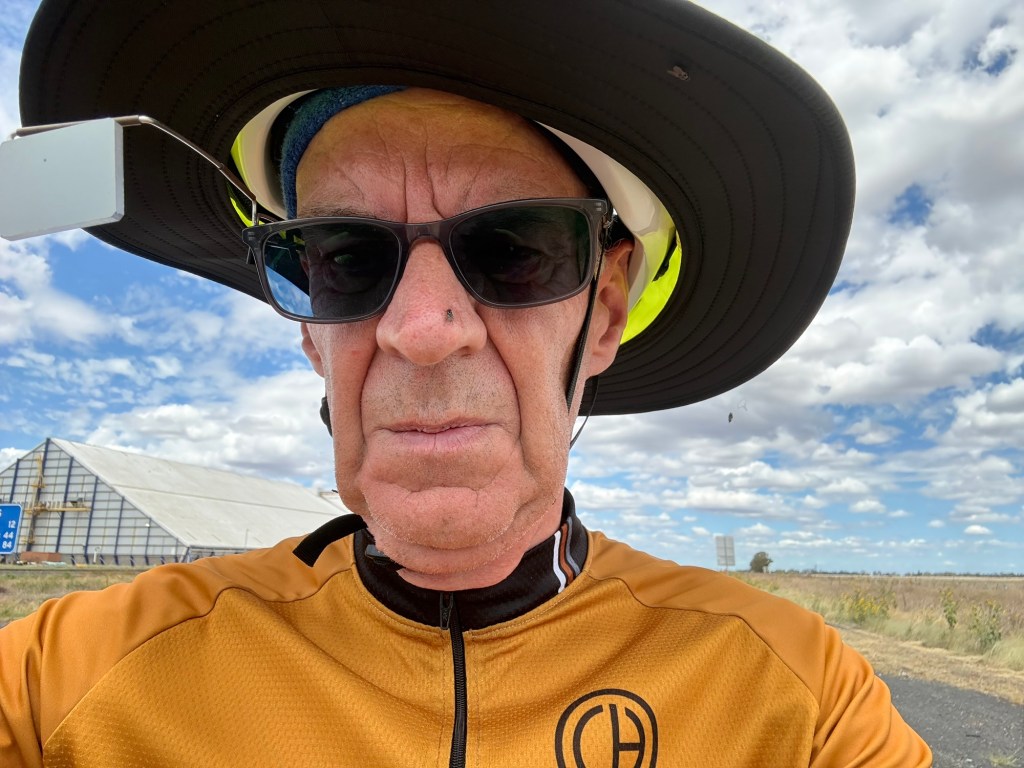
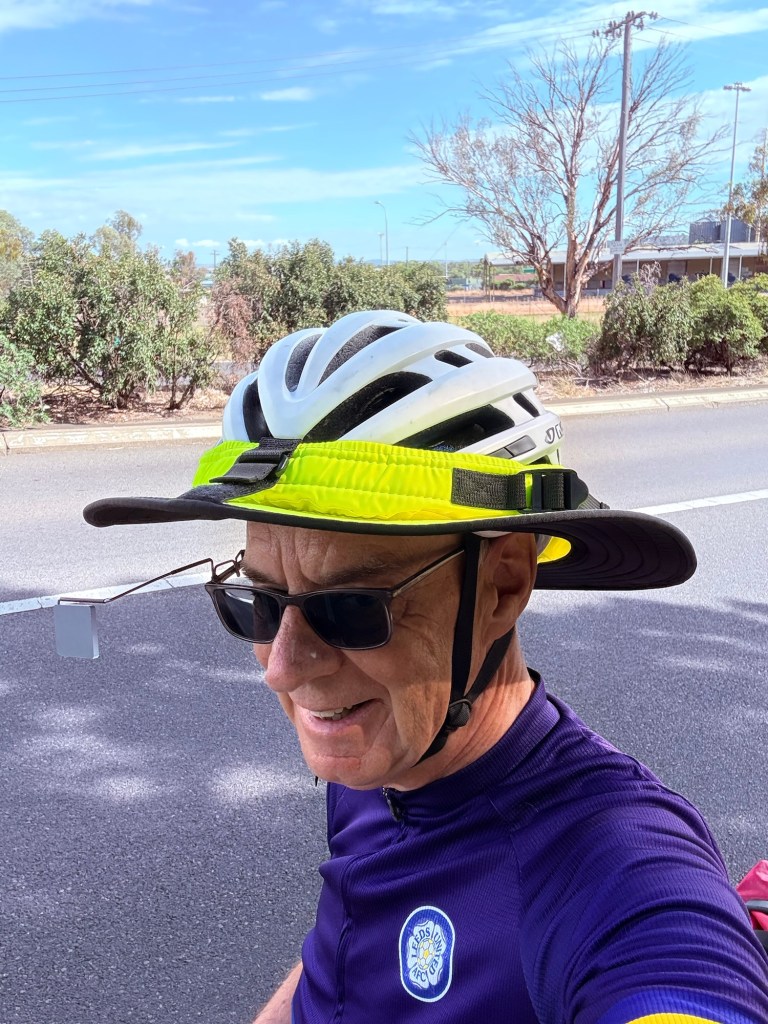
(The white square on my sunglasses is a rear view mirror)

As we cleared the city we were into the countryside. The traffic was light but the roads had started to go up and we climbed up several country lanes to arrive in Brampton. This market town seemed to be teeming. A coffee break ensued along with the surreptitious consumption of the remaining chocolate covered custard creams after the coffee had been delivered to our table. John was delegated with the procurement of sandwiches and I with crisps. John sadly failed as my cheese and tomato sandwich turned out to be the saddest abuse of sliced white bread, tomato and cheese I had experienced in many years. I absorbed the blow. Unluckily, for them, two American tourists from Portland, Oregon sat next to us at the cafe and establishing their home I felt compelled to tell them about the legendary Bob Sanders pedalling across the USA. Weirdly this conversation took place as a passing dog vomited in front of them. How they’ll treasure these encounters…

Anyway, refreshed we pedalled on into the real wilds and found that the road did start to climb seriously upwards. However as we started to live on the granny gears we stopped at Lanercost Priory. This is a delightful site with a Priory ruin and church. Inevitably Henry VIII shut the priory and sold off the building to a rich pal. What remains is still interesting.

Lanercost Priory (English Heritage)

Shortly after leaving we came across the Wall: our first actual sighting of the remnants. The first 30 miles was always earth, turf and timber.

The stone Walll starts at Banks

Sadly, It seems that it is only the last 150 years or so that the Wall has been properly respected and preserved. Over the centuries the stone in the Wall was taken for many local uses and I imagine there will be most farms that have a building or wall that was built from this Roman largesse. The Wall took six years to build and at one time 15,000 men worked on it. The stone mainly came from local quarries. The Wall was 3 metres thick and 4.2 metres high. Along the Wall were 80 milecastles that housed soldiers and gateways for the movement of people and livestock. (A Roman mile was slightly less than the mile we know.)

The ditch in front was called a vallum. Needless to say the structure must have appeared impenetrable

After the climb out of Banks we plateaued and came to rest at Birdoswald Fort. This was the most westerly Fort. To be frank the most impressive feature was the set of graphics and models inside the Visitor Centre. The other interesting thing about the remains was the high location and its imperious views of the surrounding countryside. On asking the staff why it was called Birdoswald they admitted they or no one else knew? A strong suspicion is that this name was latterly given to the Fort and it was called Banna before this. 

Some serious climbing was necessary to get to the Roman Army Museum. The last hill before we got there was steep enough to be a ski jump slope and before my heart leapt out of my chest I dismounted and pushed before resuming the ascent. This museum goes into the life of Emperor Hadrian and covers the life of the troops who were deployed on the Wall and how they went about their training and responsibilities.

After all this culture it was time to descend into Haltwhistle where we were billeted in a pub on the main drag. In discussing dinner options with the Receptionist she said that Tuesday was tapas night across the road at a hotel. That sounded brilliant and after a shower and a pint in the fading sunshine at a nearby pub we further toasted our day with a glass of vino over our patatas bravas, chorizo and other plates.

They were inordinately proud of this award!
The day’s ride. 30 miles and 2,074 feet climbing