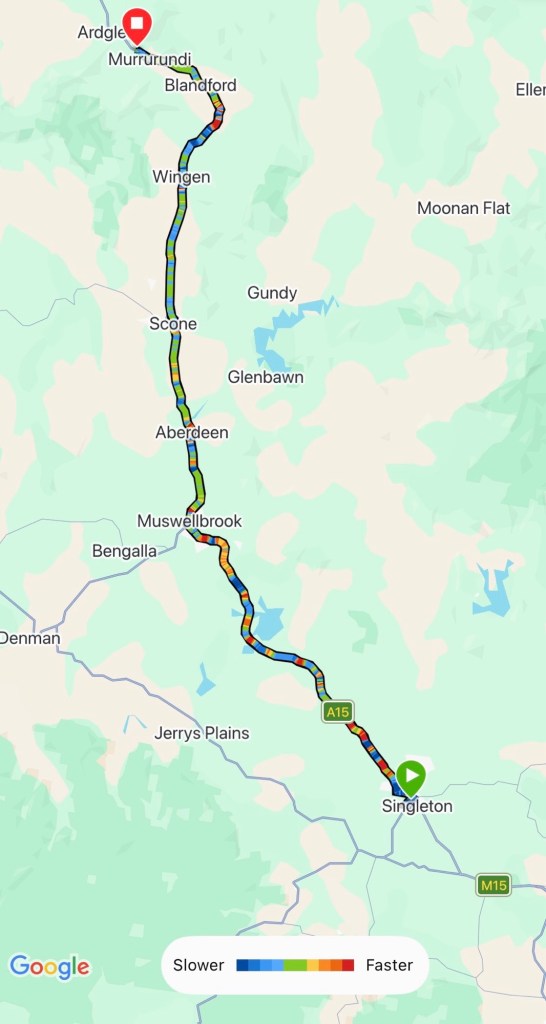
Singleton to Murrurundi – 72 miles
I’m usually asleep by 8pm and awake some time after 4am. As I’ve written earlier then with a head torch I start packing to go but as dawn doesn’t arrive until past 6.40am I have a lot of time to kill. I would seldom set off in the dark: drivers aren’t looking for cyclists even if I’m using lights.
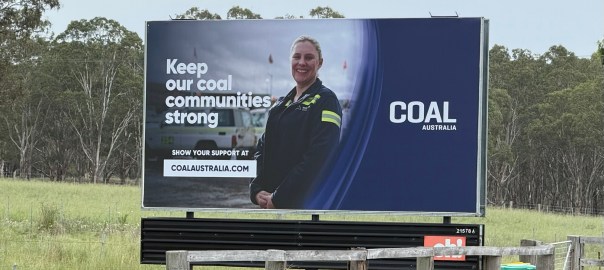
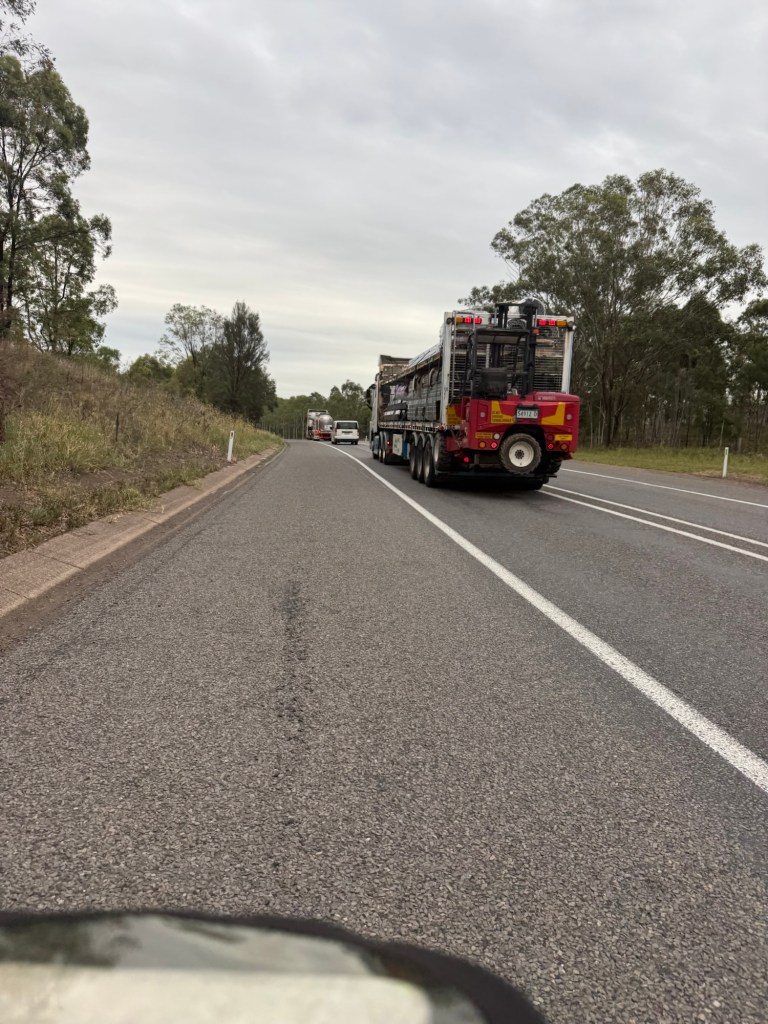
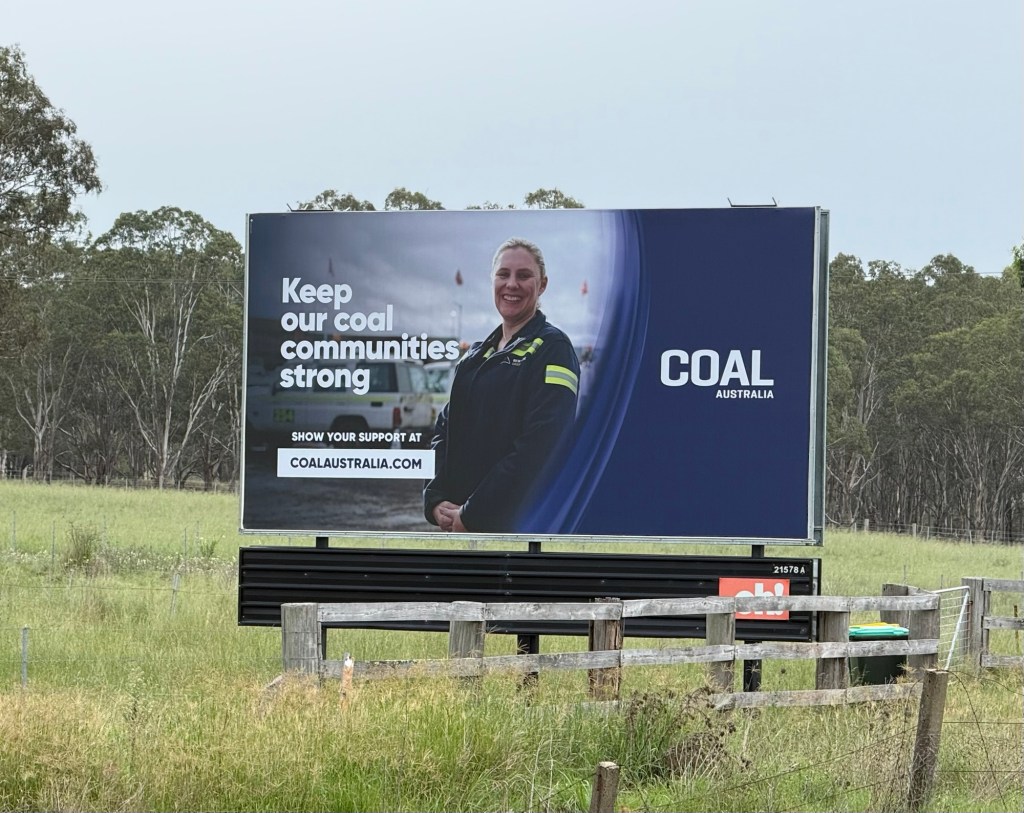
The streets were alive with utes/pick up trucks. Mining is important to Singleton and there are 17 open cast mines in the area and the scale is enormous. No doubt Australia is keeping the lights on in Shanghai. At 7am the traffic is like rush hour and the number of people in hi-viz, usually clutching a coffee from a cafe, is enormous. For me on my bike I had to be careful as workers were focussing on getting to their sites. As always with my luck the day starts with a long hill climb and they’re steep enough for large American trucks with their trailers to have to crawl past me.
I read a fabulous book about the origins of Australia before I came out, I was interested in the European immigrant. It’s called ‘The Fatal Shore’ by Robert Hughes. A summary is:
The First Fleet of 11 ships, bringing 736 convicts left Portsmouth, England in May 1787 and 8 months later they dropped anchor in Botany Bay, that’s Sydney to you and me. Out of the passengers 48 had died on the voyage. Most were transported for theft and there were no, say, murderers or rapists. James Cook had landed in 1770 at this same spot. I avoid the word discovered as the were many indigenous natives already here. Over the next 200 years the aborigines would experience murder, theft and rape at the hands of the Europeans. Any British or Irish convicts escaping from the existing settlements might perish at the hands of the climate or aborigines. They were in a prison without bars and walls.
Eventually over the next 80 years a total of 165,000 convicts were transported. The origin of shipping convicts had started with America before Australia but after the British lost the American colony another location had to be found. Why transport convicts? Well, the British prisons were full and a place had to found for them. During the 80 years many other emigrants arrived from Britain and the convicts provided vital labour. Convicts usually had 7 or 14 year sentences and on the completion of their time had the rather tricky task of getting back to England. Obviously just about all stayed. If during your sentence you could get a ‘ticket of leave’ for good behaviour that allowed them many liberties such as marrying or working for themselves.
Eventually there was considerable agitation to end transportation in Britain and Australia. The British thought it cruel and had started to build prisons. The new Australian settlers in New South Wales and Queensland felt this history was a stain and wanted to move on. The number of free settlers massively outnumbered the convict numbers by then. Toward the end Tasmania and Norfolk Island became the repositories for repeat offending criminals. The regime was brutal and often inhumane. Tasmania was originally known as Van Diemen’s Land and changed its name latterly to remove the stain. The importation of convicts wasn’t originally rejected by many of the settlers who desperately needed labour as they farmed increasing large areas of the country.
A key reason for the demise of transportation was the fact that conditions in England compared unfavourably to the open spaces, warmth and opportunity in Australia that came the way of convicts and then there was the discovery of gold! Transportation could be viewed as free travel to the opportunity to make a fortune. And so it ended.
I couldn’t listen to live Premier League football live as it played out back in Blighty and so Tim and Anna kept me posted on WhatsApp but I kept looking at the BBC website. Since I’ve been away Leeds have played three games and picked up one point. My absence has sent the club into a tail spin.

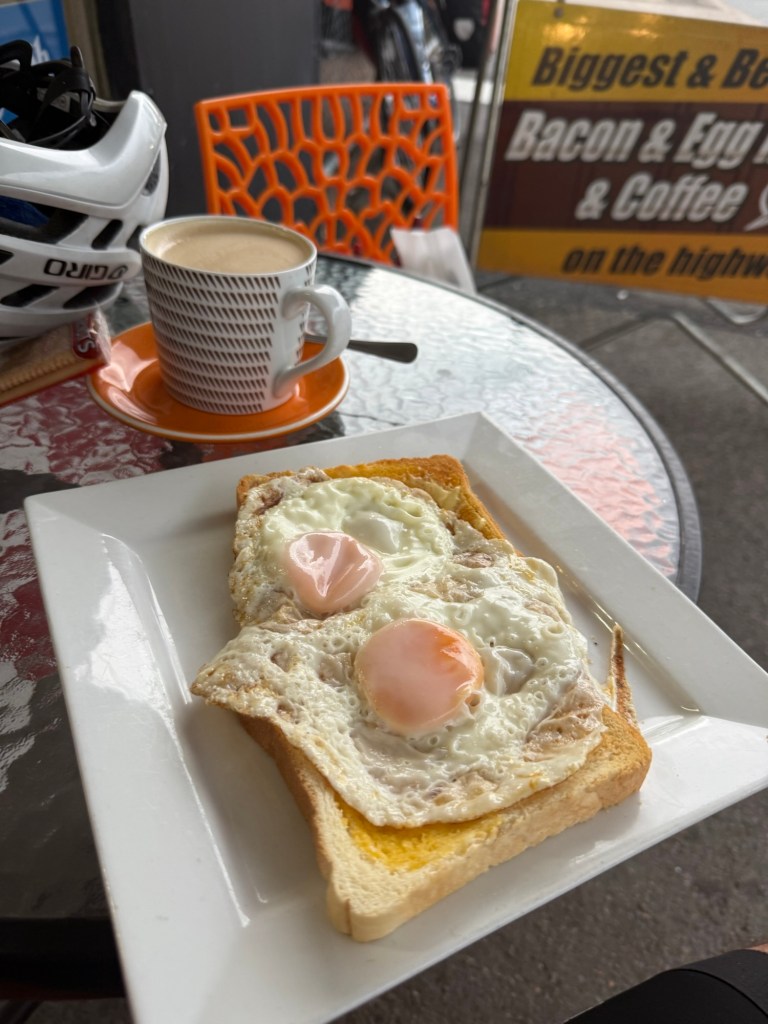
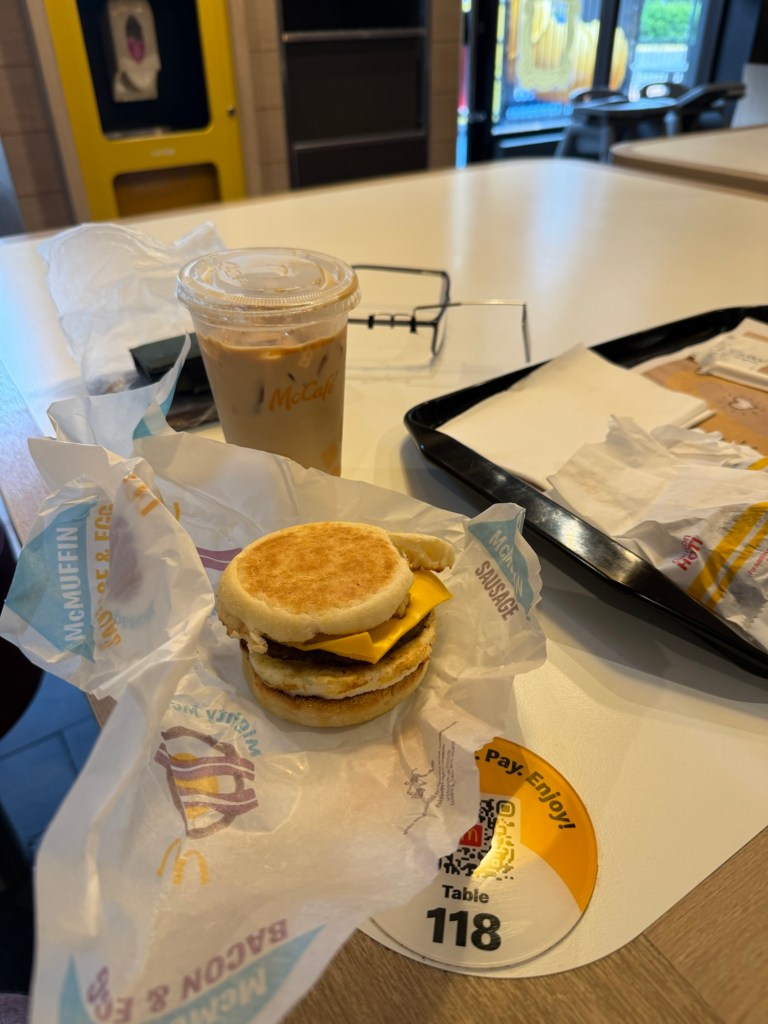
My first major town, Muswellbrook, came into view and a sausage egg muffin called me.
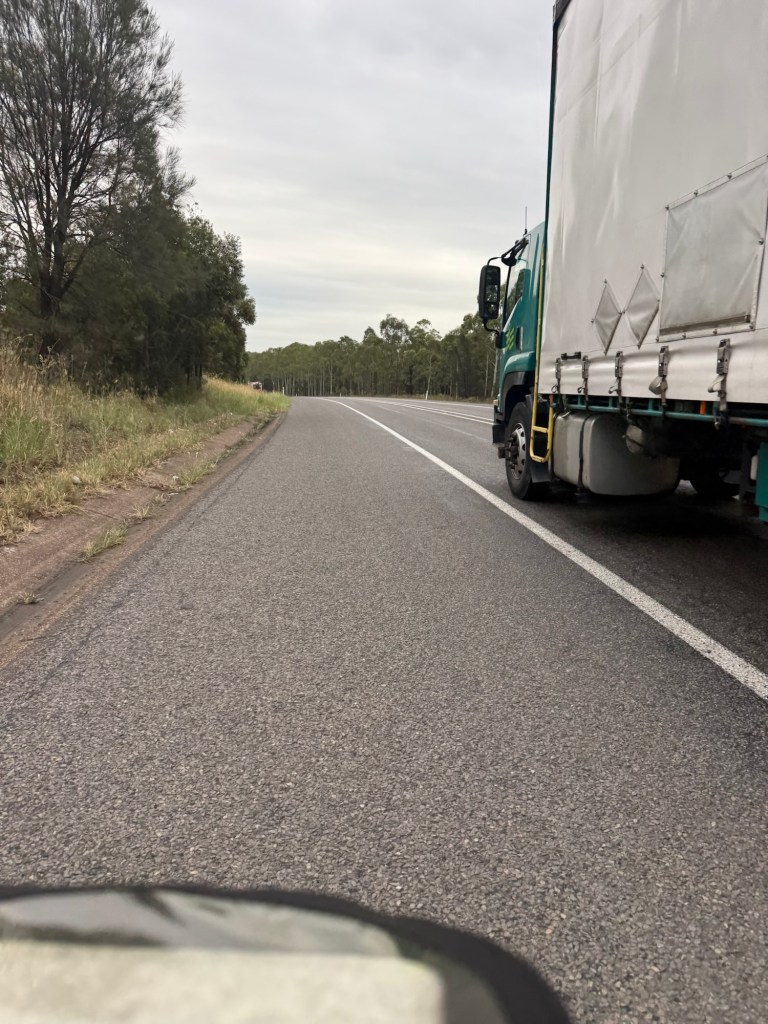
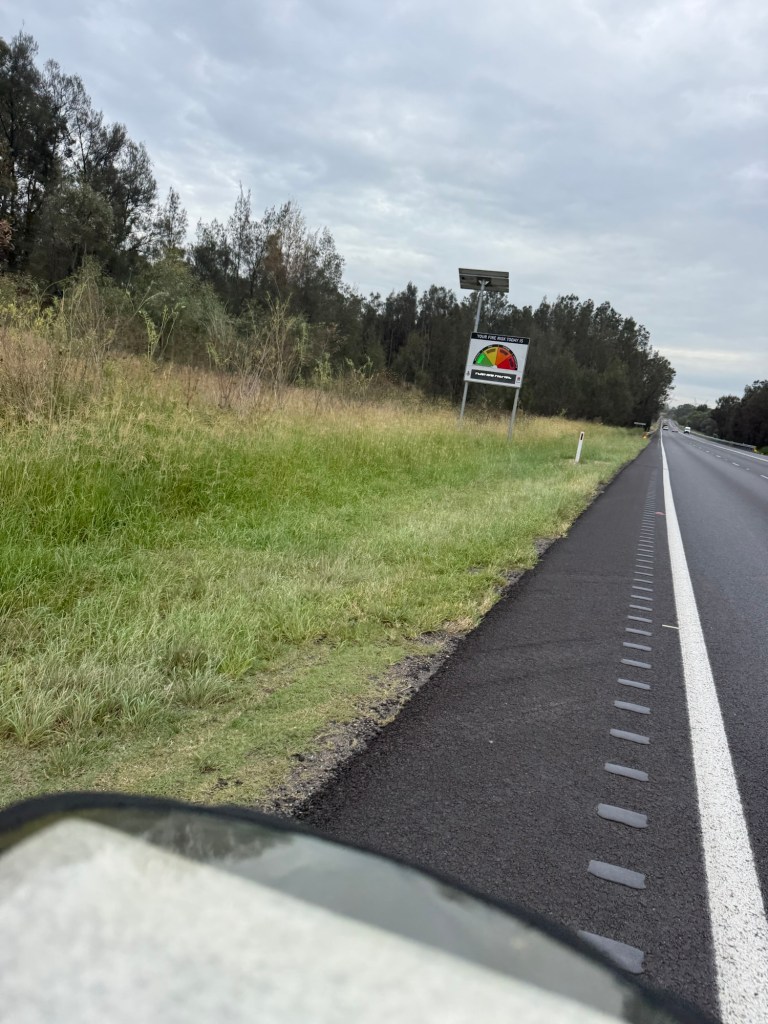
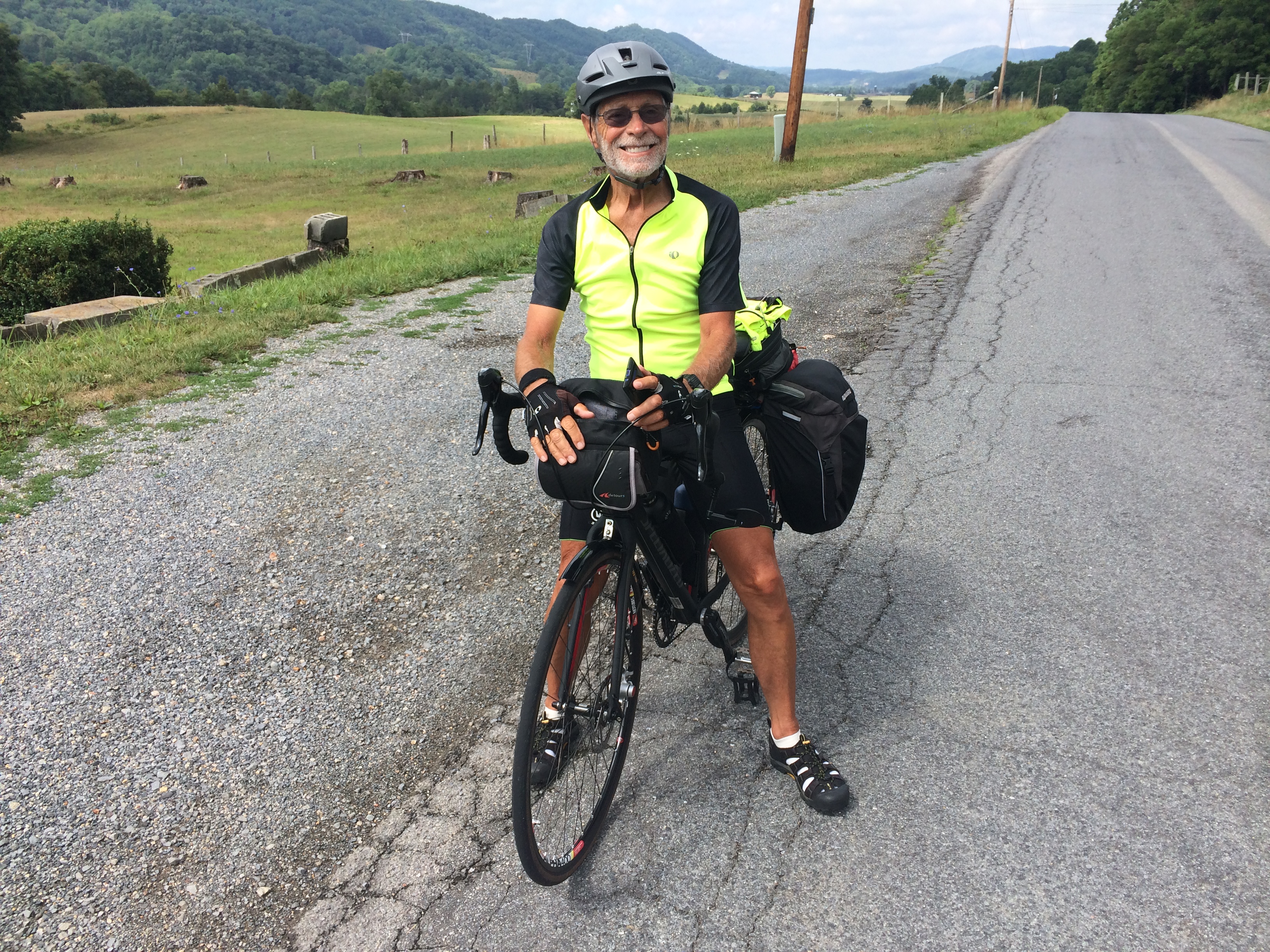
Note the rumble strip on the right of the hard shoulder. In fairness this is a wide hard shoulder with a good surface.
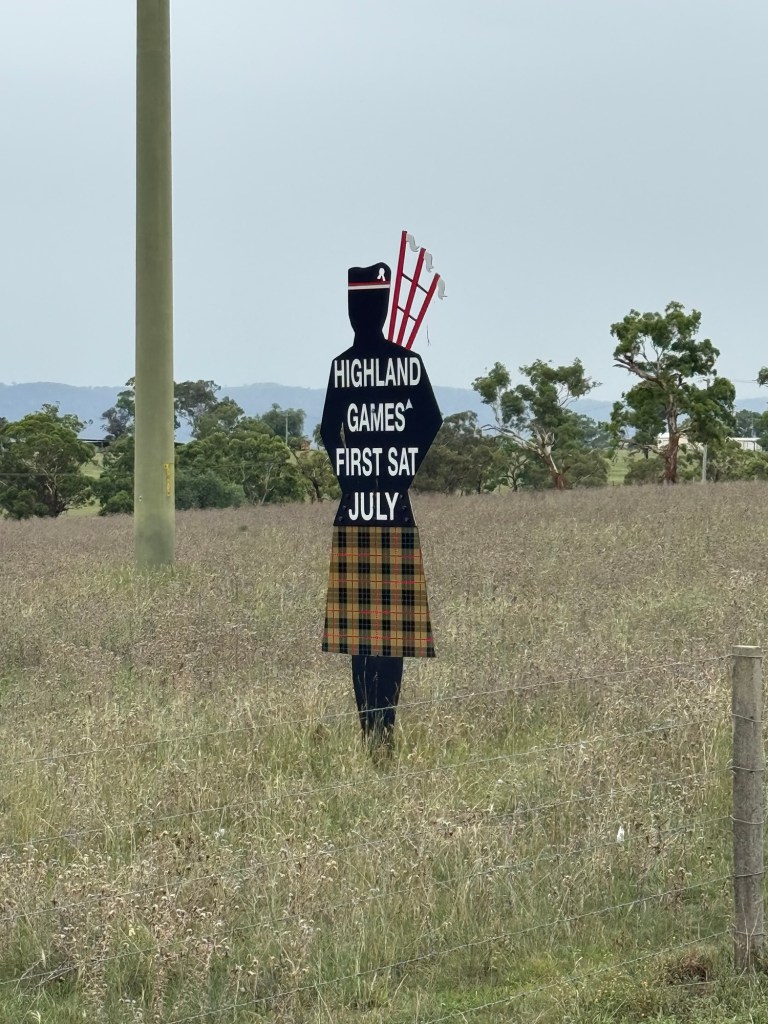
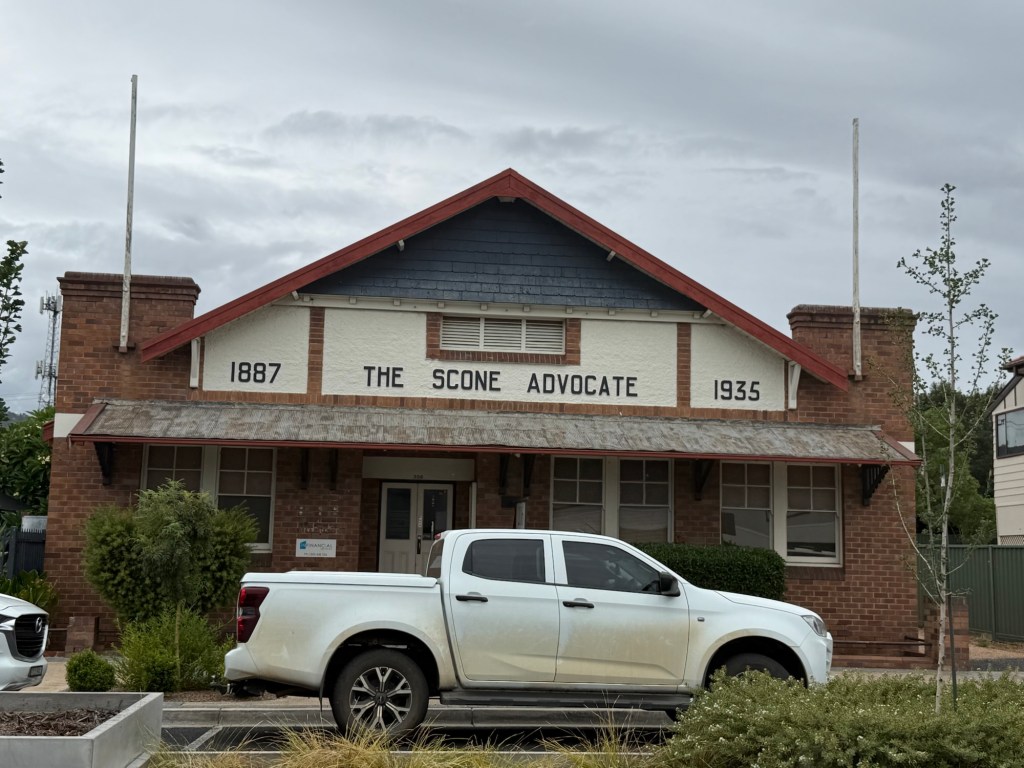
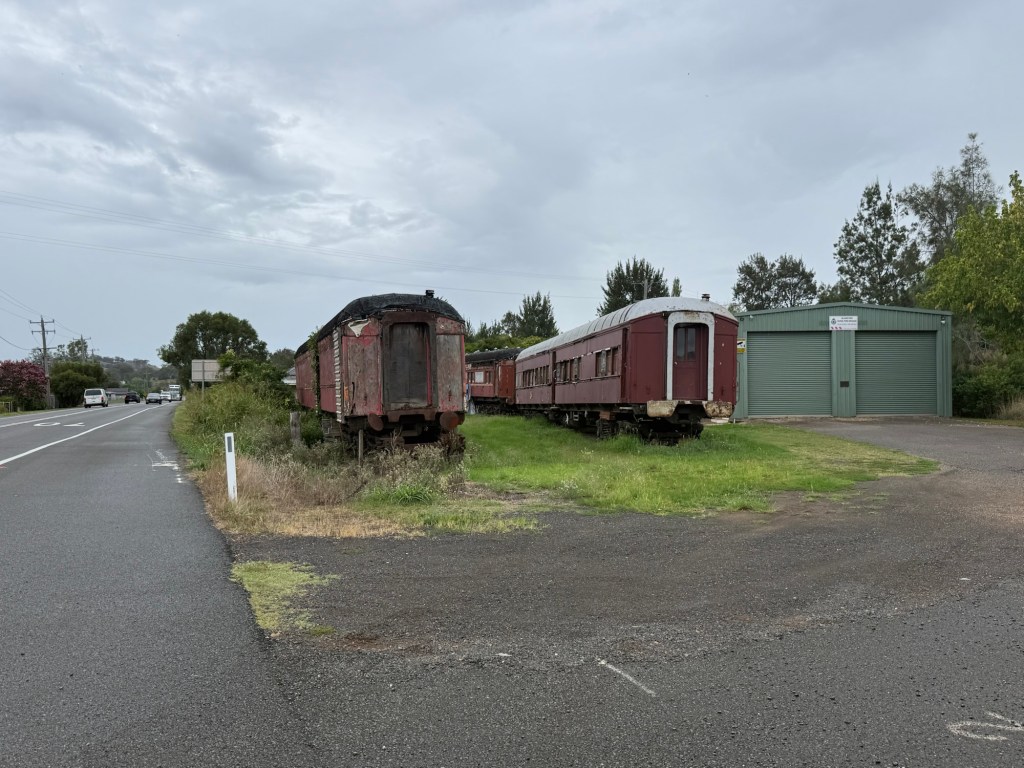
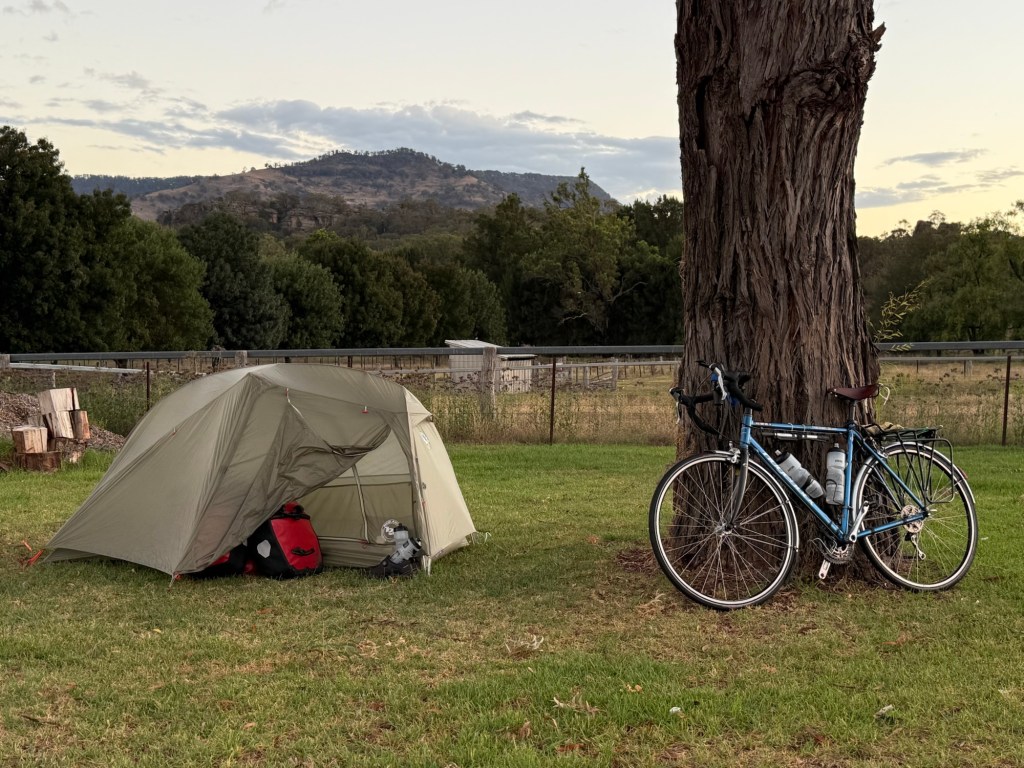
I cycled through an enormous deluge of rain. I got drowned! Eventually I rolled into Murrurundi, a small town at the bottom of an enormous hill… I had to climb the next day. After getting wet through I thought I’d stay in a hotel. The one I found had no rooms and so I camped (!) at a nice little site. Despite the scenic setting there was a main road on one side with 24/7 trucks and a rail line on the other side that ran through the night moving coal. It was noisy. Fortunately I can sleep through most things.
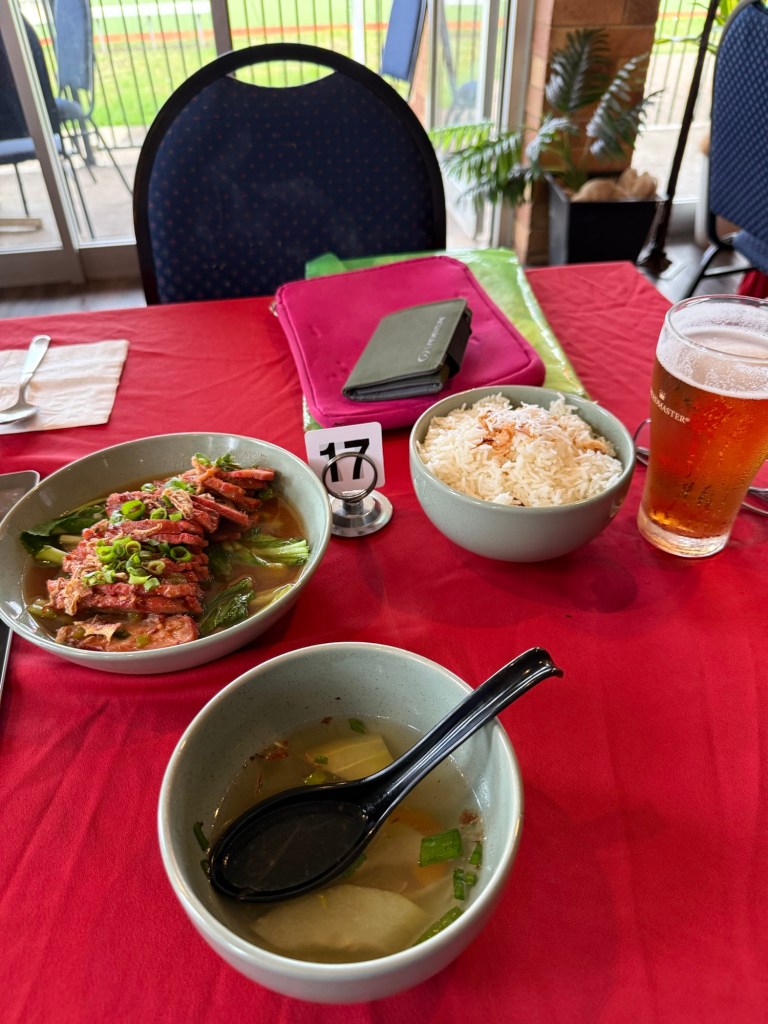
I found some Vietnamese food at the Bowling Club. Delicious if not a little expensive! Before I dined I sat in the main bar writing up my blog. The service and smiles were delightful from all and I got asked questions. I seldom do. Gary, one of the gents having an early evening beer asked about my trip, its distance and my camping. He looked genuinely concerned and asked if I had enough money? Of course I’m fine but I was so touched by the question. It last happened in 2014 in the USA when a stranger, Ed, following my blogs, asked the same question. The lady behind the bar noted how touched I was and I said I’d find the club’s Facebook page and mention Gary.

 Tony Ives’ Blog