We rolled out of Haltwhistle noting a distinct fall in temperature! As a man with drawers, in York, full of cycling kit for all the seasons I was rueful that I had believed the weather forecast. It advised that the week would get warmer rather than cooler and so hadn’t packed some leggings, a heavier cycling jacket, a long sleeve jersey and a buff. However, the granny wheel action got some blood pumping as our route abandoned the lower part of the valley near the Tyne and an ascent began up to Vindolanda. It was just before 9:30am when we got close to the museum with lots of time to spare and so I suggested Plan B – ‘let’s go up to the actual Wall’.
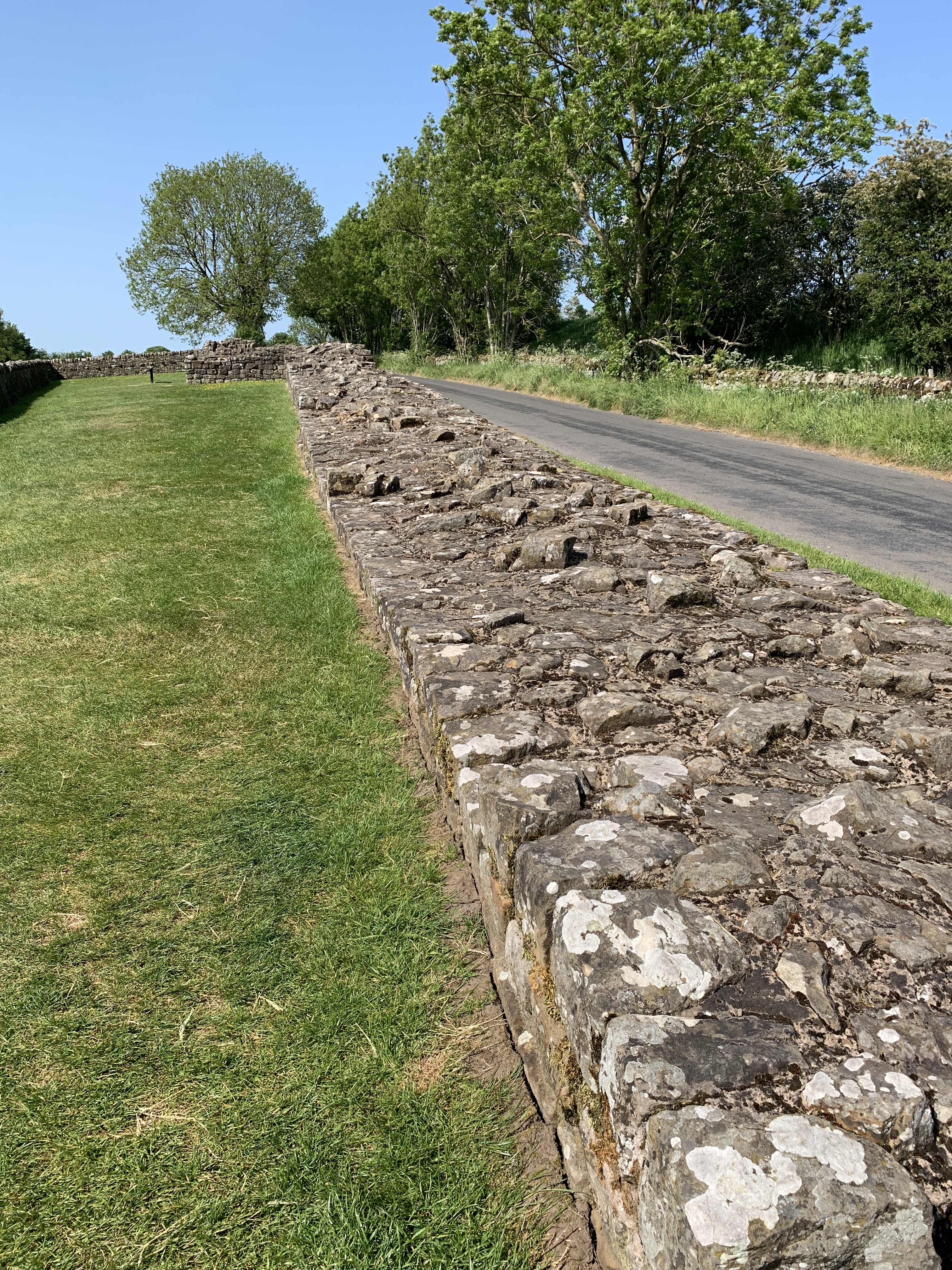
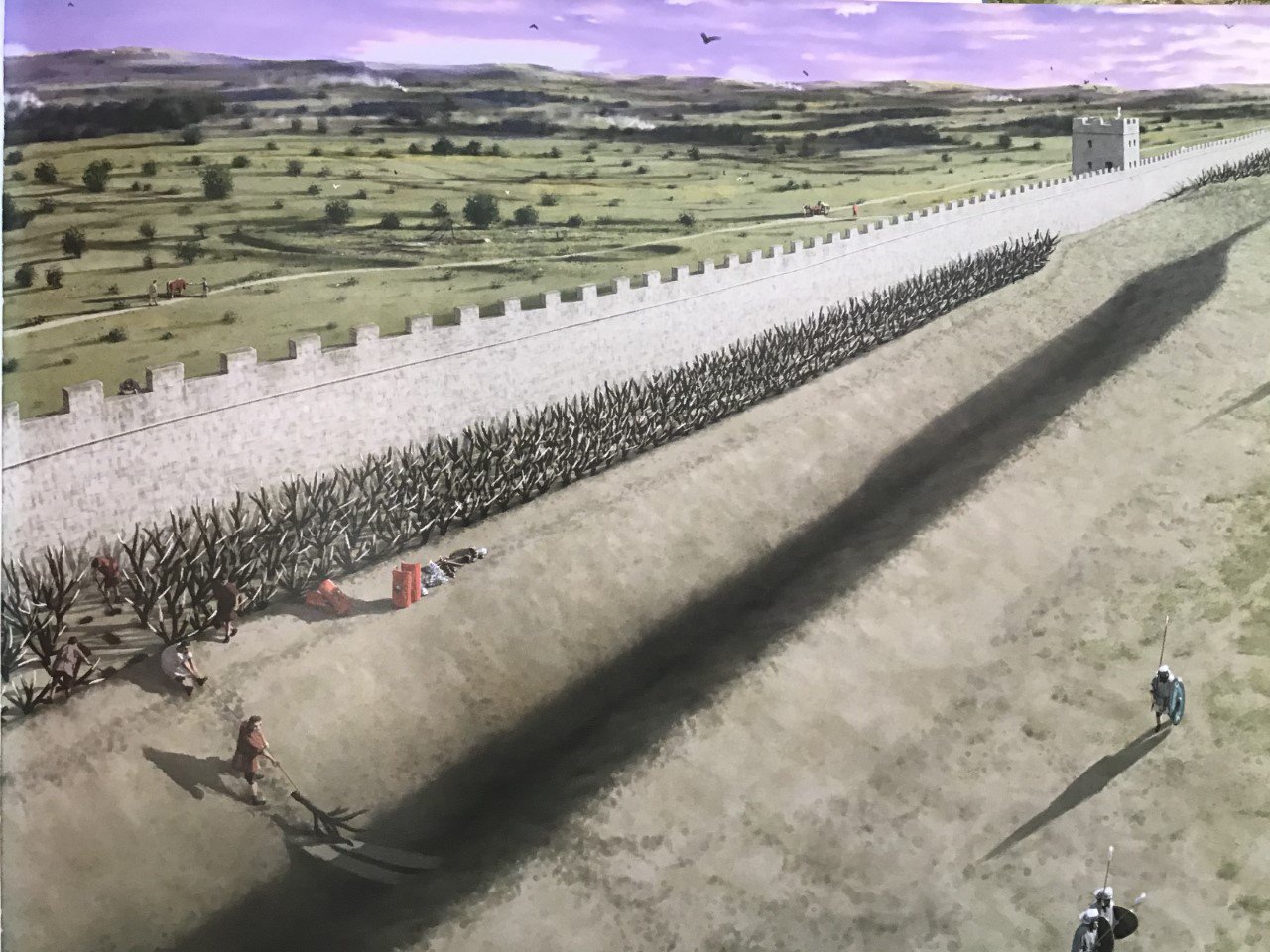
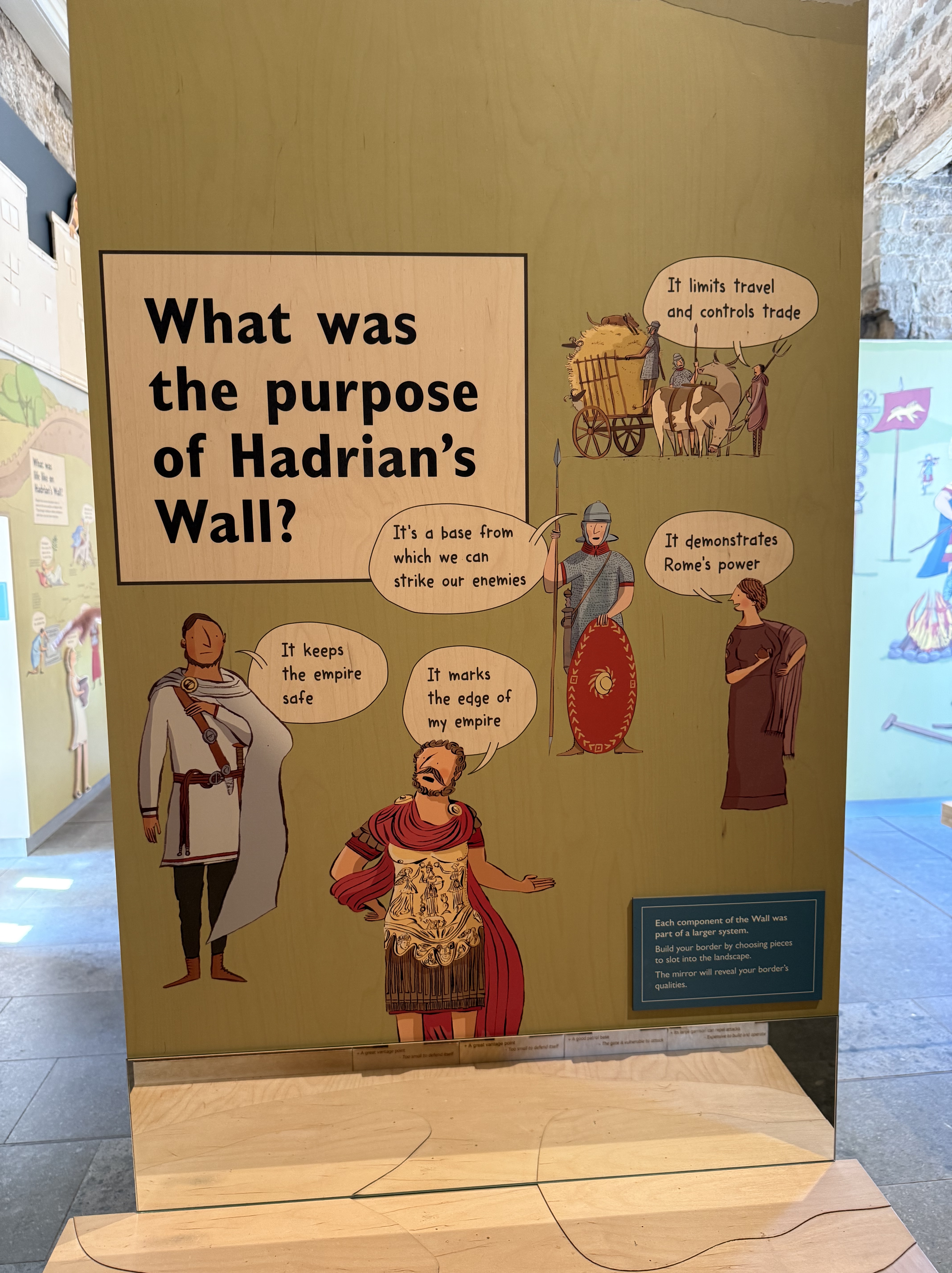
Cycling up the B6318, the former Roman military road below the Wall, we headed east to Housesteads Fort. On this roller coaster of a road we endured the chilly easterly headwind. On arrival at the Fort car park it was busy with a large group of walkers who sounded like they were either Dutch, Belgian Flemish or Welsh (with heavy colds). Climbing up to the Wall we set foot on the path and took some photos.
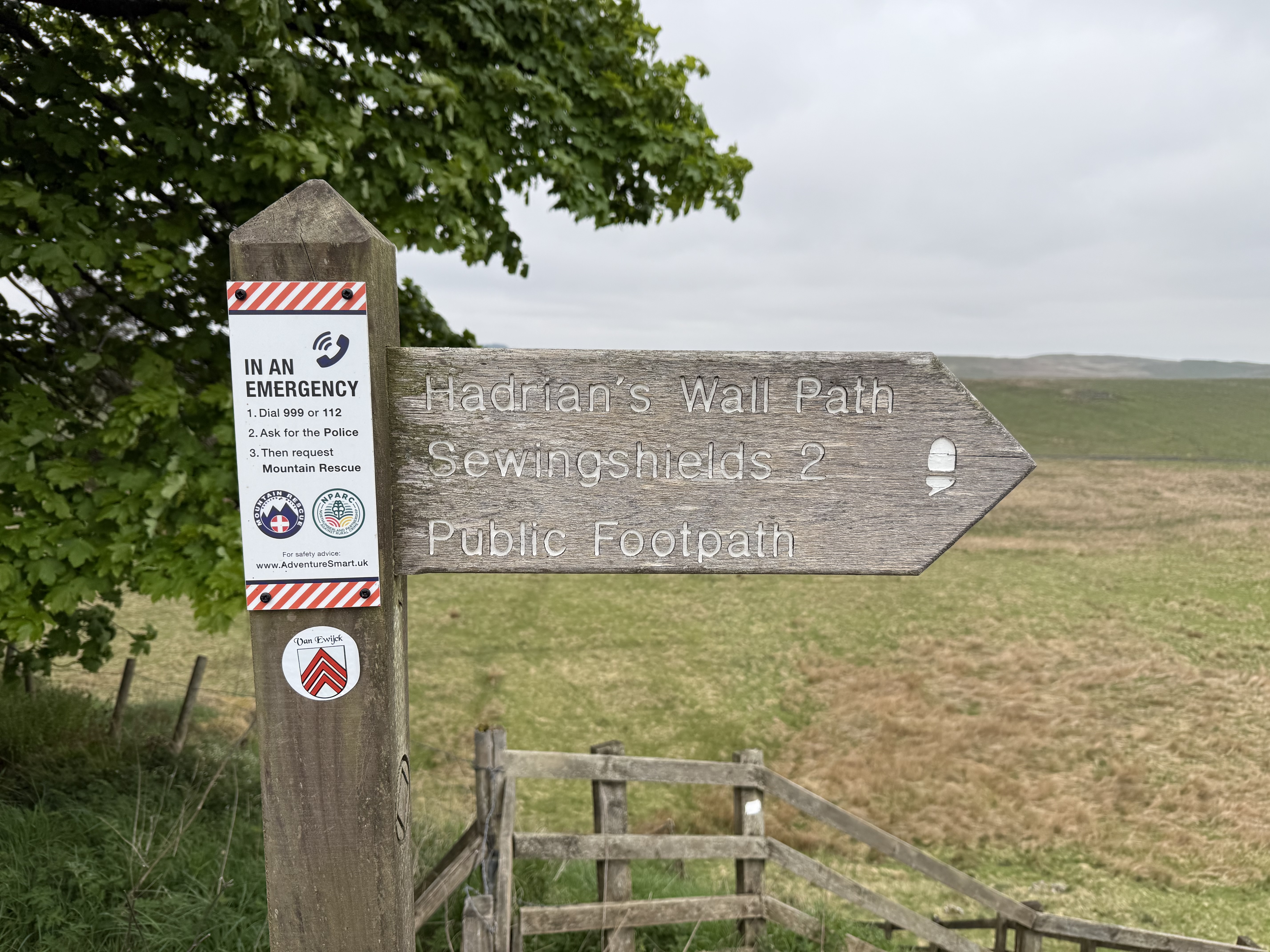
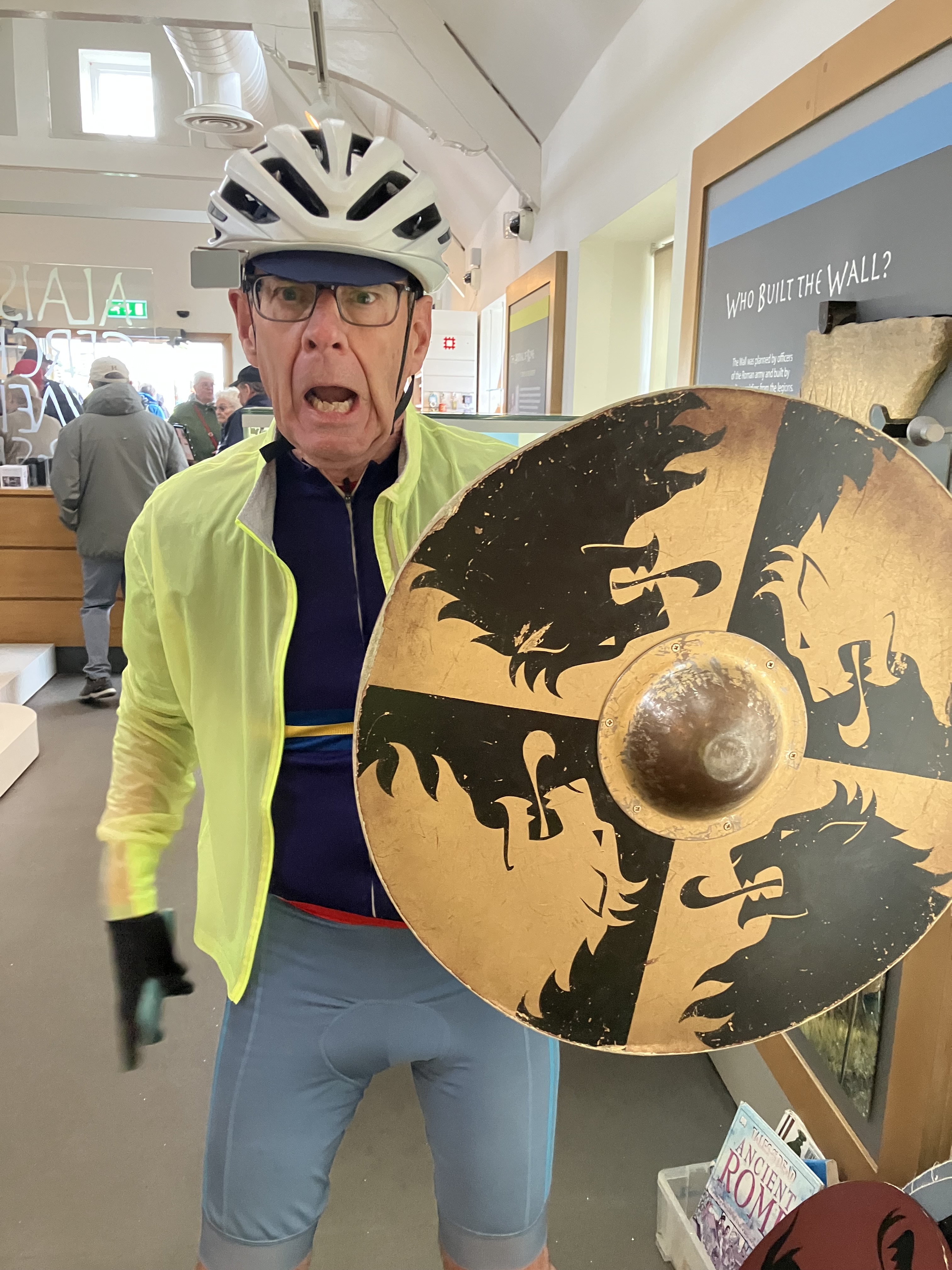
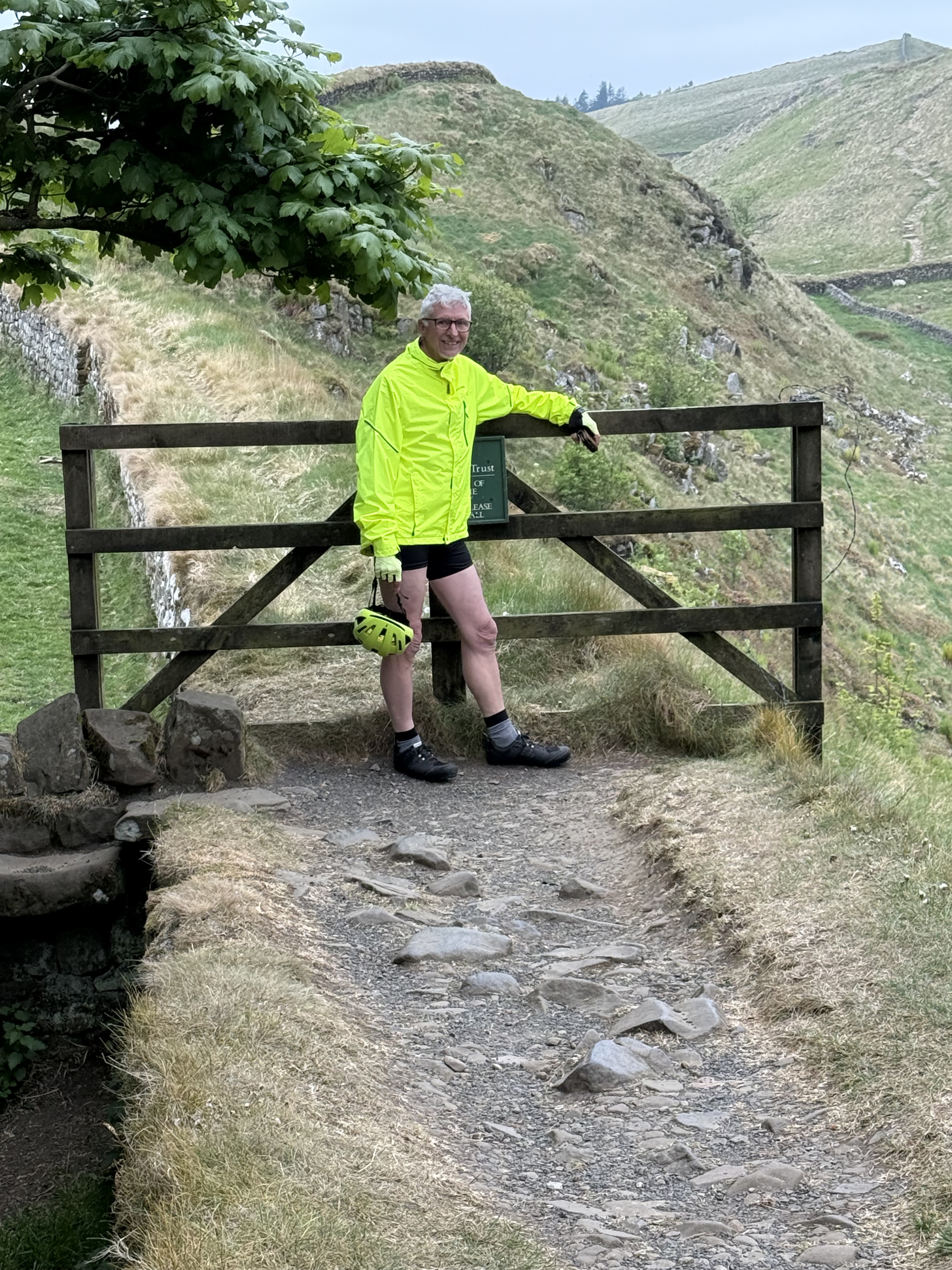
I regaled John about my last visit here where leading some walkers I had the responsibility for a very elderly but determined lady who despite my request that she forsook the walk in the heavy rain and slippery conditions added to my concern by telling me that she’d had a replacement knee and shoulder. I let her walk this brief section before slipping down to the lower path yet I still wondered how long the Air Ambulance would take to get from Newcastle or Carlisle. After this we visited The Sill. This is a youth hostel with a very nice café. Fortified we headed up to Vindolanda.
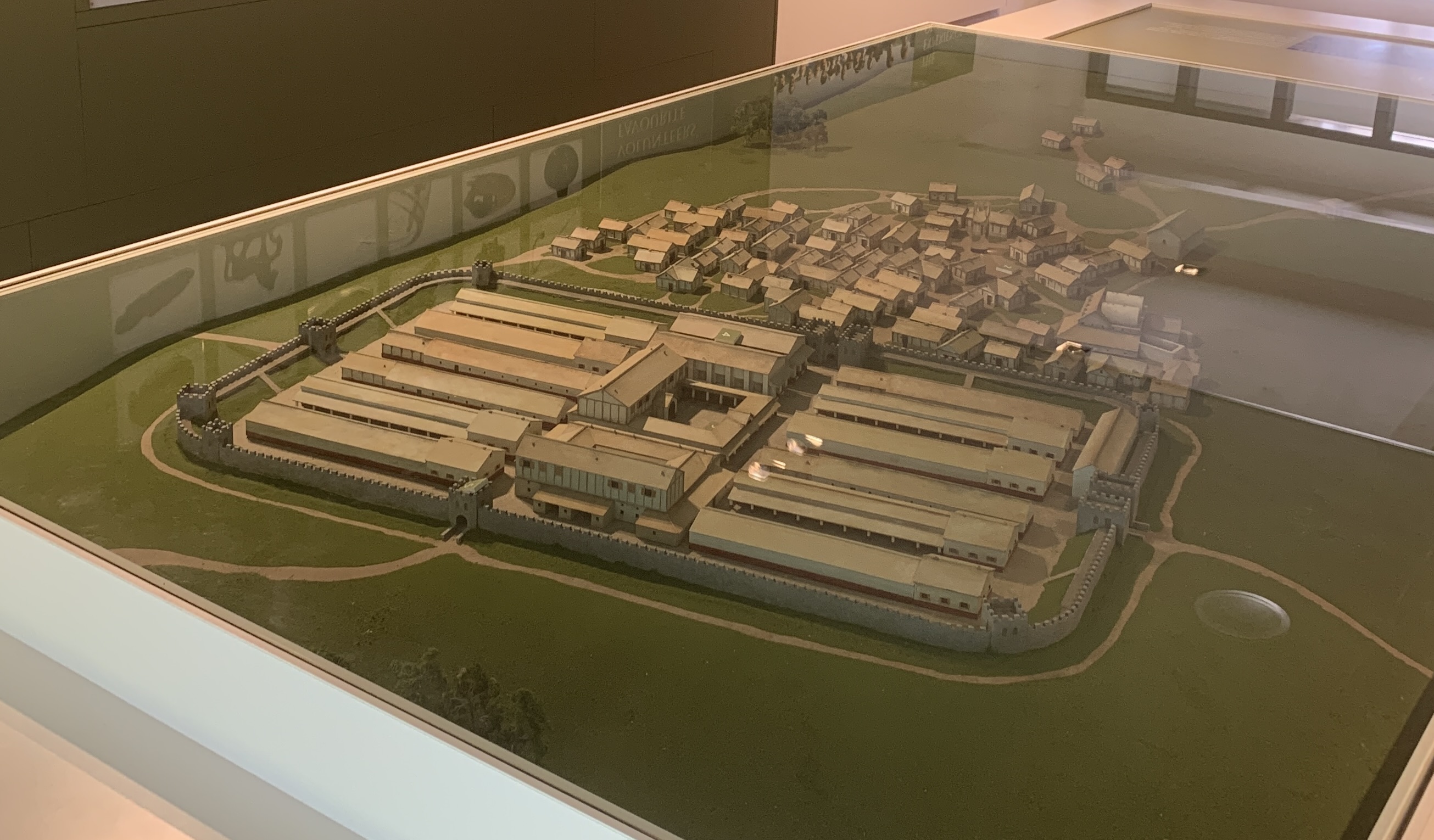
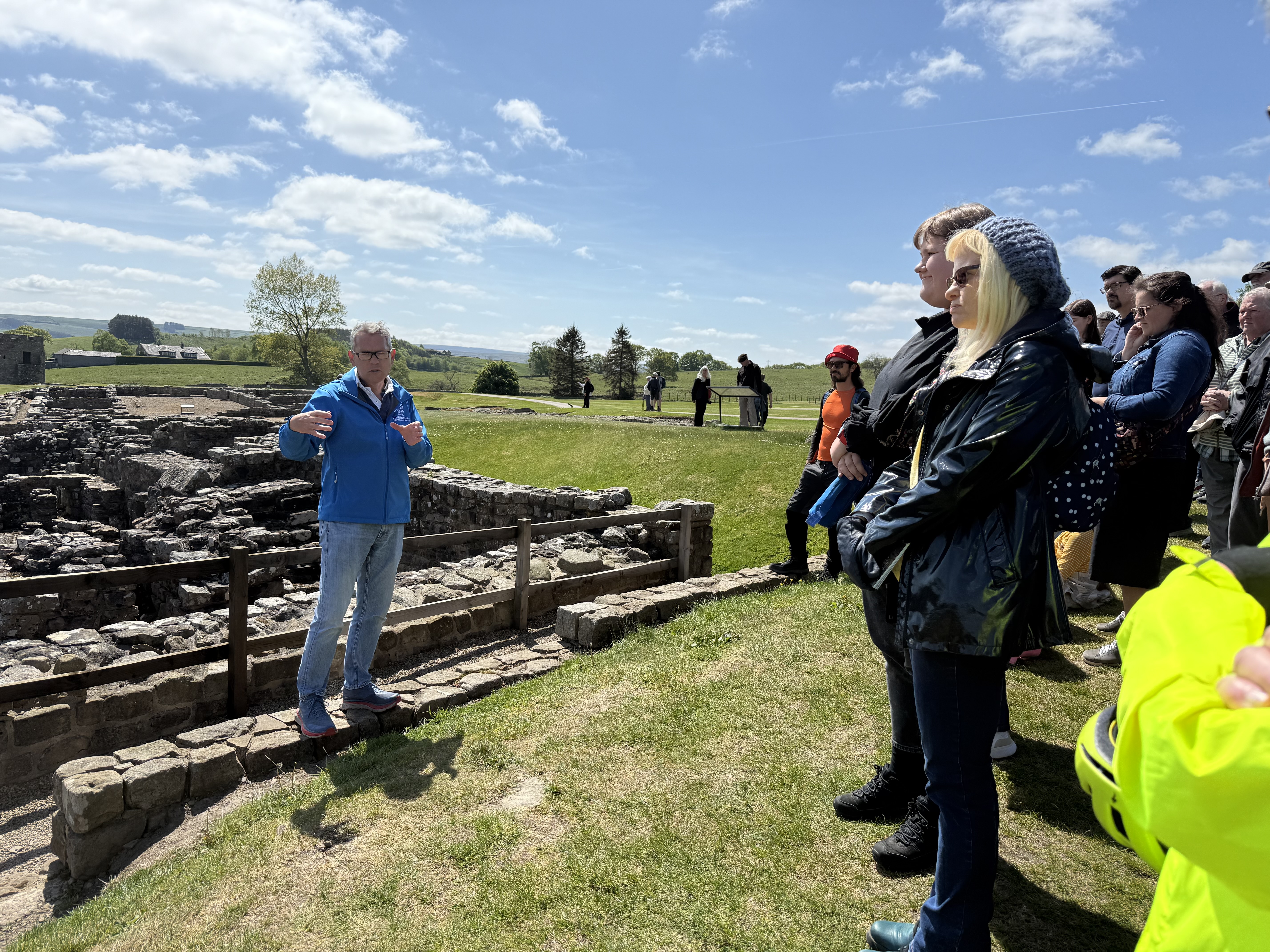
This Fort and its subsequent small settlement had predated the Wall. The settlement was outside the Fort Walls and this is where the British lived and provided services, food etc for the Romans. Over the centuries Vindolanda had had nine separate forts. Four had been timber and the other five stone. When a Roman cohort left they broke down the fort. The next set of Romans built a new fort. It is this destruction that led to several foundations being compacted in wet ground. This wet ground preserved the artifacts that tell the story of the Fort over the 450 years of its occupation. The current custodians are very concerned that climate warming as it’s drying out the ground and probably destroying/damaging anything that is currently preserved in the ground.
Paddy gave a chilly tour of the site before we dived inside for something hot to eat. The museum itself is equally as fascinating and shows many of the artefacts.


The weather had slightly warmed and we remounted for the cycle into Hexham. Most of this was delightful and the path took us beside the railway and Tyne before we ended up in the centre and our hotel.

To celebrate the Roman connection we had a pizza and then took a stroll around the town.
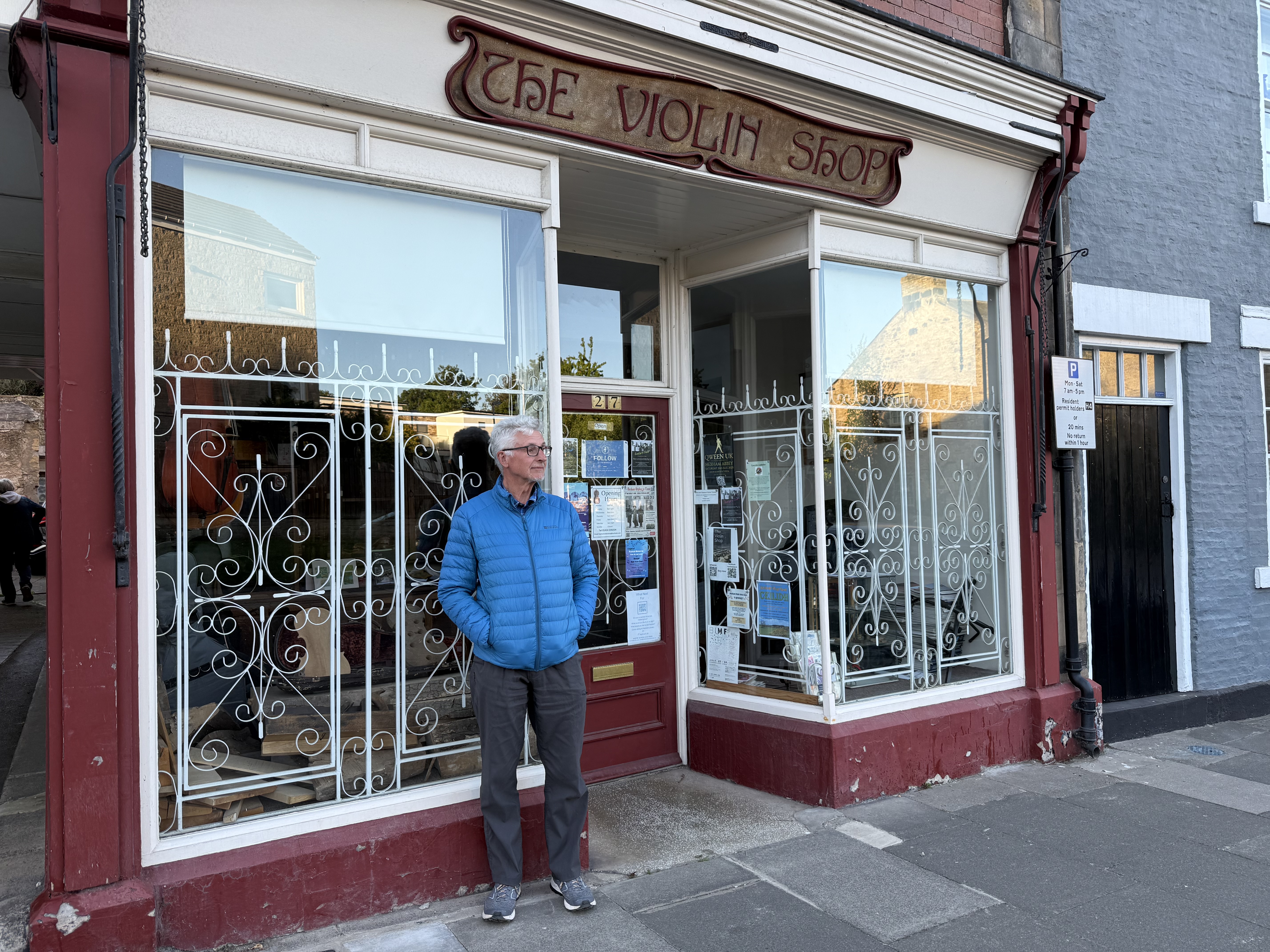
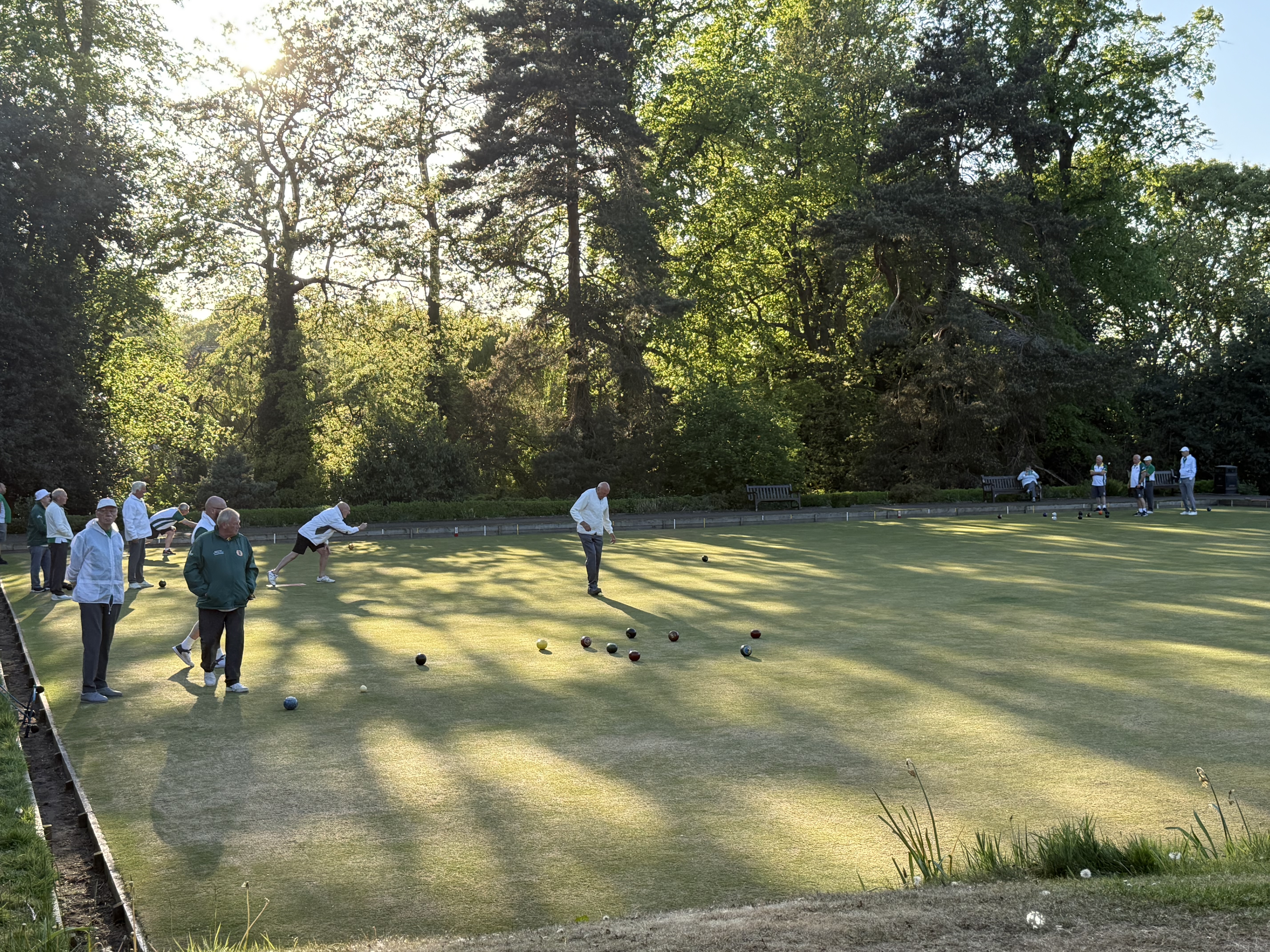
On a bright and clear evening this was delightful as we were invited to take up bowls! We declined and continued through the park before ending up at a violin repair shop. Here a lady told us all about the surprising skill set of the owner of the shop strangely located here in the sticks. Our next stop was for a beer that turned out to only be a half as the fire alarm went off!






 Tony Ives’ Blog