A Yorkshireman of a certain age who likes most genres of music and most makes of old car. Travel is a joy, not least to escape the British winter. Travel by bicycle is bliss and if I’m not lost in music then I’m lost in a daydream about a hot day, tens of miles to cover and the promise of a great campsite and a beer. I like to think I’m always learning and becoming wiser. However, on the latter point evidence is in short supply.
View all posts by tonyives →
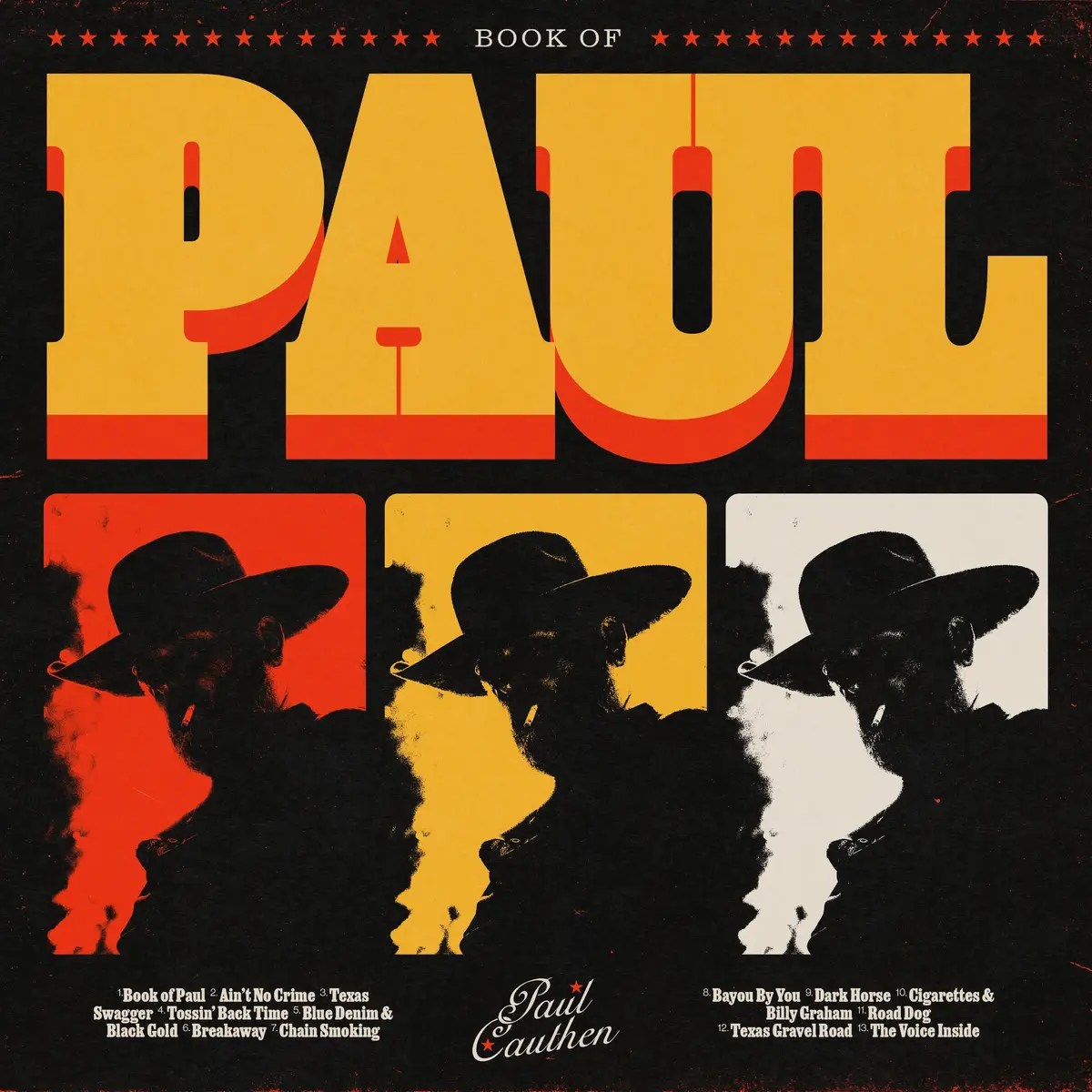
After going solo in 2013 Cauthen’s barreled his way through four earlier releases that nestle in the Outlaw slot, lyrically varied but often a little out there with a lot of braggadocio and the sensitivity of a bulldozer. His personal buzz seems to come from playing live and with his gravelly after burner pipes it’s easy to imagine an audience that also loves the energy, sound and vibe of Nathanial Rateliff or Shiny Ribs flocking to pay homage. As Cauthen says his mojo is driven by ‘taking it to the people’. He also adds it’s about being yourself, which might explain the title of his latest release. With many of the songs here, of which he co-wrote 12, it’s easy to see him as the protagonist.
The biographical title track, The Book of Paul, may say it all as regards Cauthen’s journey to this release – “I’ve cussed, I’ve drank, I’ve kicked the lights out / I’ve toked, I’ve coked, I blew the house down” and the sturdy stomping single, Texas Swagger,draws on that feral Lonestar State confidence as he relays what the pending night has planned with his reverberating deep tones over a girly chorus repeating “yee haw”. If Cauthen isn’t prowling then he can be reflective and the duet with Delaney Ramsdell, Chain Smoking, is a lovely tune dwelling on how they cope with a broken heart. Songs such as this highlight what a pleasing voice Cauthen has. It can roar like thunder, sentimentally croon or hold a pop tune with its mellifluous tones and deliver a hook of a chorus. There’s a heap of melodies here that render this album an important release because away from his historical ‘shock and awe’ approach (“Country as Fuck” anyone?) this release drips with earworms such as Bayou By You, Cigarettes & Billy Graham and Tossin’ Back Time (with Jake Worthington.) Throughout there’s a clear impression that you’re in the presence of an independent minded uncompromising bad ass.
This album is a tonic and begs to be played loud. Apart from the important question of when is he coming to the UK the other is whether Nashville is prepared to elevate this release for some award when the annual awards roll around? It should.
There’s a lot that’s fragile in a tour. A way to add to the resilience of challenges that the route, distance, equipment, weather, people and singularity can throw up is to plan, have support at home and carry contingency solutions that at least make dealing with a change or a problem easier. It has to be added that on a tour that you also juggle time constraints and weariness. Neither of these latter things add to your comfort or pleasure.
Flights to Australia have always been a challenge. In 2020 I was told to evacuate in a couple of days due to Covid closing down the airways. I was 150 miles from an airport, on a bike, and needing a bike box from a city that was closing down. In 2023 I had no challenges other than explaining to fellow passengers that I was travelling with my wife but, of course, she was upstairs in Business and here was I down with the poor people. 2024 saw the lovely Qatar Airways stop me boarding a flight due to a passport they said Australian immigration would reject due to its condition. That was absolute bs and put my trip back a week and added the cost of a new flight. However, 2026 trumped all that, literally, when the USA attacked Iran. My return flight was due to layover in the war zone: Dubai. In the ‘agony’ of the flight crisis unfolding I had to wait near weeks until Emirates cancelled my flight. Everyday you wondered what would happen. When they did cancel Anna procured another flight for over £1,800. Not a particular issue other than this cost was greater than the cost of the original travel arrangements that included flying in and out of New Zealand (to Australia) and then flying back to the UK. Obviously the nature of the event, force majeure, meant there was no recourse to travel insurance. Additional costs were then added to the new flight for luggage and for coping with a long layover in Los Angeles by booking into an airport lounge.
When Anna resolved my return with booking a flight through Air France one of my carefully planned arrangements came under pressure. Namely, getting a bike back to the UK and working within the luggage allowances. You may be surprised to learn the airlines all have different allowances and costs. Emirates allowed me to put 30kg in the hold. Air France only 23kg and if it included a bicycle you must contact them 48 hours in advance and also pay a fee for the privilege.
So on reaching Brisbane I went on line to do this. The Air France help line correspondent said they could do this but wanted some booking references. I had the main one but not a ticket number(?). I was told to recontact them when I had this information. I obtained it and tried to contact Air France again. The help line had gone from the App! After searching on the App and website I found another contact line. I opened this and was told they were busy and ‘it would take some time’ to respond. This turned out to be over 12 hours. Clearly long French lunches and a ‘work to rule’ was probably impacting on dealing with desperate paying customers in far away lands.
I asked Anna to help. She went into York to ask the Travel Agent to help, they may have other ways to contact the airline? (Anna heroically got in the car to drive into York and got a puncture on the way there. Cue more of her time being spent on this project.) The Travel Agent couldn’t make contact with Air France. Anna, on the same contact line came up against ‘it would take some time’. Neither could she get through on a telephone number from the Air France site in London. With our respective topsy turvy time zones I went to sleep.
At 3.30am the lovely millennials/Gen X men from Ireland, in the adjoining apartment came back. This was later than the 1am the night before. They proceeded to shout and stomp for 30 minutes. I was now awake and decided that the only way to remotely make any progress on this, and to book the bike onto the flight, required me to actually go to the airport in advance. Air France didn’t have a presence there but a partner airline, Delta, did and they were flying me to Los Angeles on an Air France ticket. Delta had a morning flight that day and would have open Check-In desks and so I could talk to someone.
Grumpy at my early morning airport excursion
I got up, had some breakfast, and got the train to the airport. I went up to the Check-In desks and a member of staff directed me to the wonderful Diane, who was a supervisor. A haggard, elderly bloke badly dressed and a little over wrought explained the Emirates cancellation, the booking with Air France and his challenge of taking his trusty steed back to Blighty. The upshot was that Diane saw my anxiety and soothed away all problems. Firstly, as the first leg of my flight home (to Los Angeles) was with Delta then Delta rules applied. The bike could go and no premium fee was necessary. Just make sure it met the baggage allowance of 23kg. Any excess luggage could also go but there would be a fee. I could take up to another 23kg. I had nothing like that weight but it was a fix. Diane then actually checked me in, gave me an aisle seat and said ‘go back to Brisbane and enjoy your last couple of days’.
(On a different matter Anna had some issues with an American Express card. From my hotel room in Brisbane I went onto their help line, explained the issue and got an immediate resolution. All done in minutes. Obviously not French Express.)
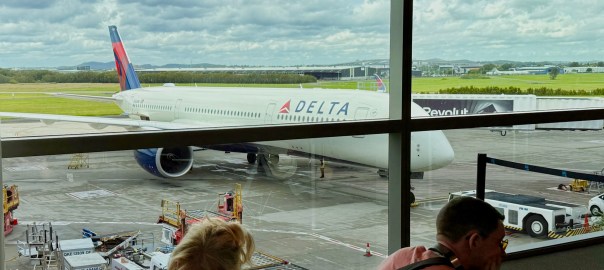
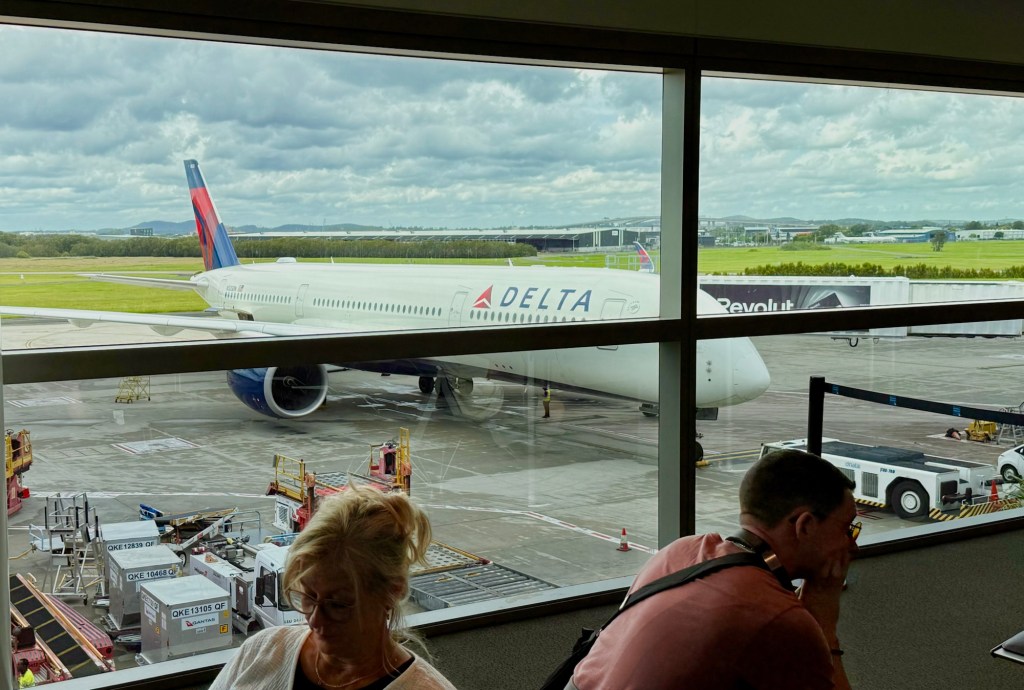
My Airbus
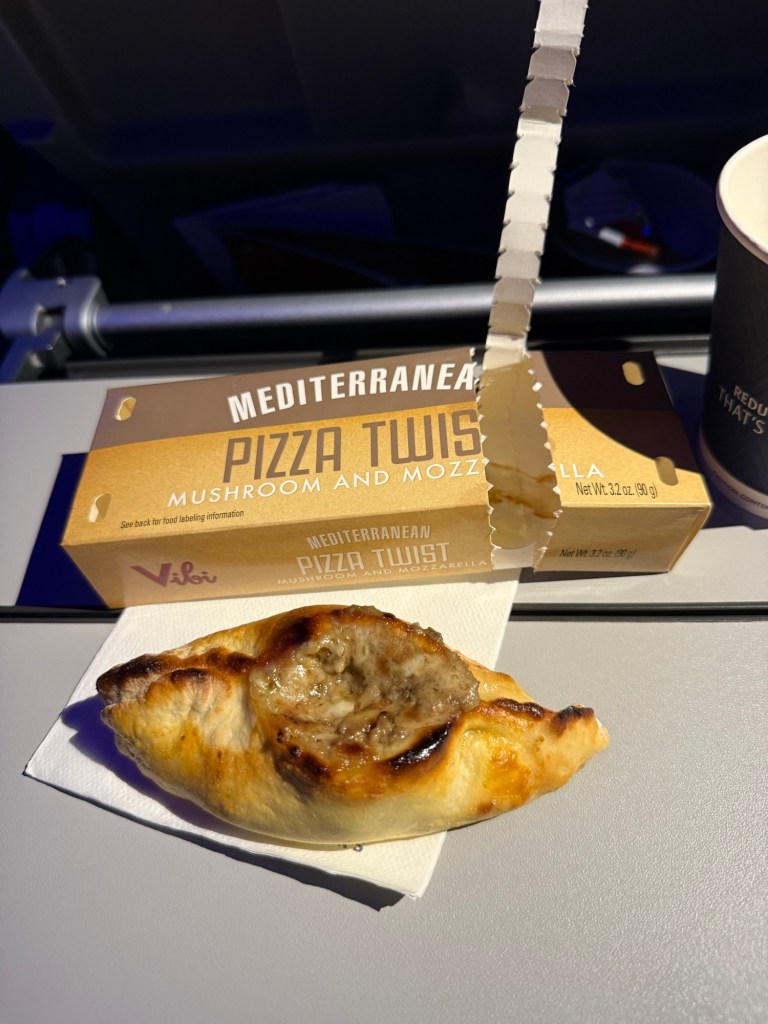
The Delta flight eventually went a little late but was quite comfortable due to not being full. The food in ‘Main Cabin’ was awful though – tasteless, small in volume and served in cardboard trays that were the same specification and colour as hospital disposable commodes. It gave the impression that ‘as you’ve selected Economy then we’re going to make the point you’re a cheap skate and serve you this miserly fayre’. I absorbed the blow for the 14 hour flight.
Tasted as awful as it looked
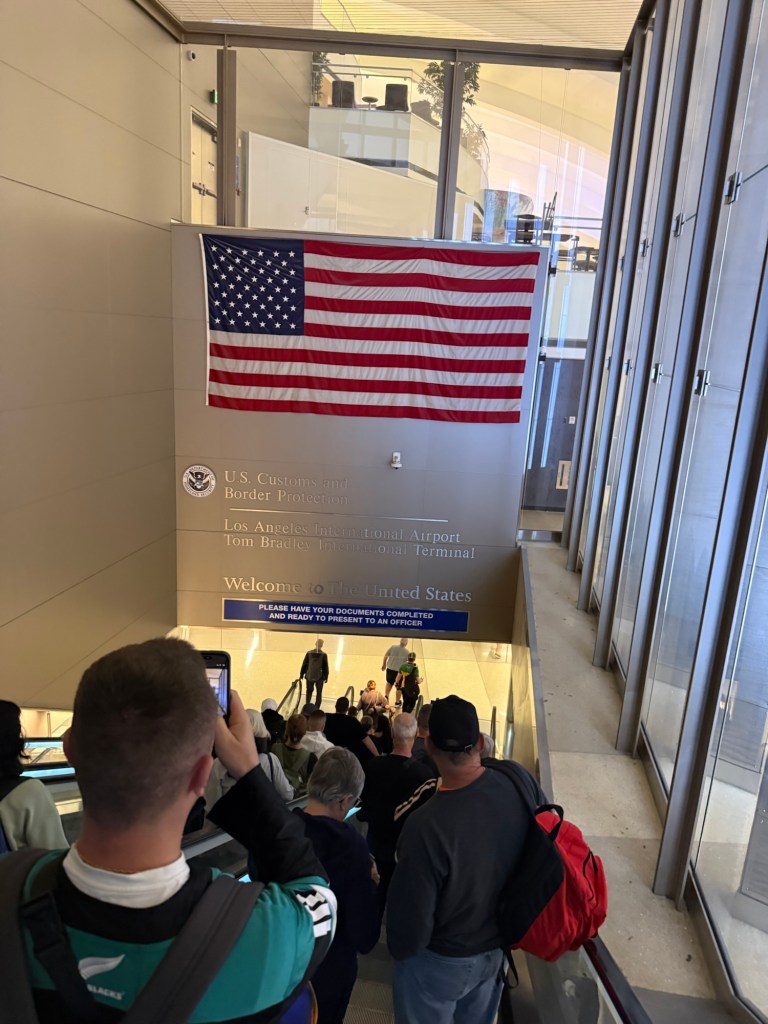
Landing in a US airport, even on an international layover, is a drag. You have to go through passport control, collect your luggage and then go through security before handing it back to be checked in again. I must Google why this procedure is in place. I had no desire to see my large bike box before Manchester, let alone lug it around a US airport. I did as I was told and started this process by visiting Border Control. ‘Have you brought to the United States any fruit?’ I had a peach in my rucksack. At this point the regular Tony Ives thought ‘say no’, they won’t check, if you do it’ll activate some weary US bureaucratic activity. However, reflecting on Paul’s previous advice for NZ I declared it.
‘Please step to one side and follow this Officer’. Oh, for crying out loud. It’s a bloody peach, here you can have it, leave me alone (I was tired, my body clock told me it was after midnight Oz time.) So I was led to a waiting area and told to wait. I joined a man from Mexico with a bag of roasted chicken! Eventually another Officer appeared and advised we should collect my other luggage from Baggage Reclaim. This is never easy as baggage handling often deposit the bike box late at a different place to the carousel. We found the Oversize Luggage area and then I asked the Officer to help me load the bike box onto the trolley. I suspect the look she gave me suggested that this wasn’t in her job spec.
Welcome
So off I wheel all my worldly goods another 100 metres to a special investigative area. These officials look at the bike box and you can see they’re not interested to open that. Too much like hard work. They establish that I’m on a layover and unlikely to escape the Airport to decimate California’s fruit industry with pestilence and disease from my one sad supermarket small peach in a see through bag and give me my passport back and tell me I can go. Make America Great Again.
I had a 10 hour layover and desperately wanted to sleep. LAX is a spacious airport with lots of seating but I’m unlikely to get comfortable to get any sleep as the seats aren’t conducive to sleep and understandably there’s a continual tide of folk coming and going. So I pass a sign pointing to where the Air France lounge is. I return when they open at 10am. Now I’m not on a Business ticket and if they do let me in I’d have to pay $95. However, I could sleep and it’d be a haven for the next 5 plus hours before I board. I return when it opens and the Receptionist says I could only stay, in any case a maximum of three hours and she’d have to speak to her boss in any case. I’m discouraged but around me are similar long layover passengers on the wrong tickets. Now as a respectful Brit I withdraw feeling all is a lost cause even if I get in (then over $30/hour for some scrambled eggs and a comfy seat is not worth it.) However, the other waiting French passengers with their scant interest in Air France rules just ‘camp’ in the Reception area until the Receptionist capitulates and agreed they can come in and stay longer.
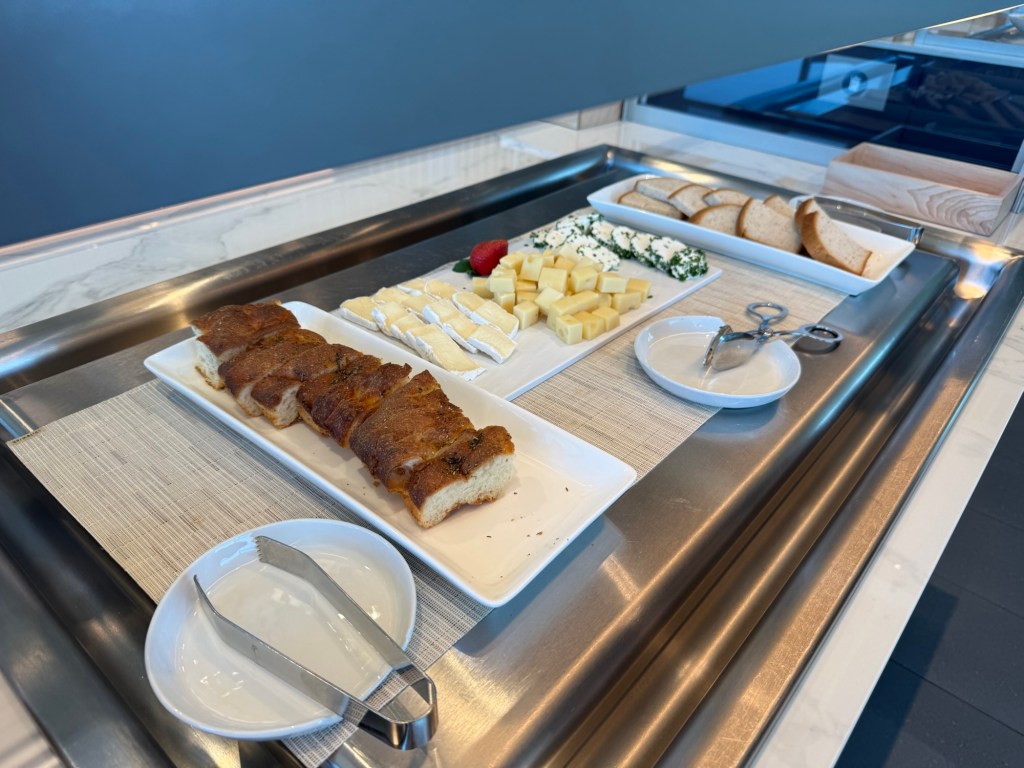
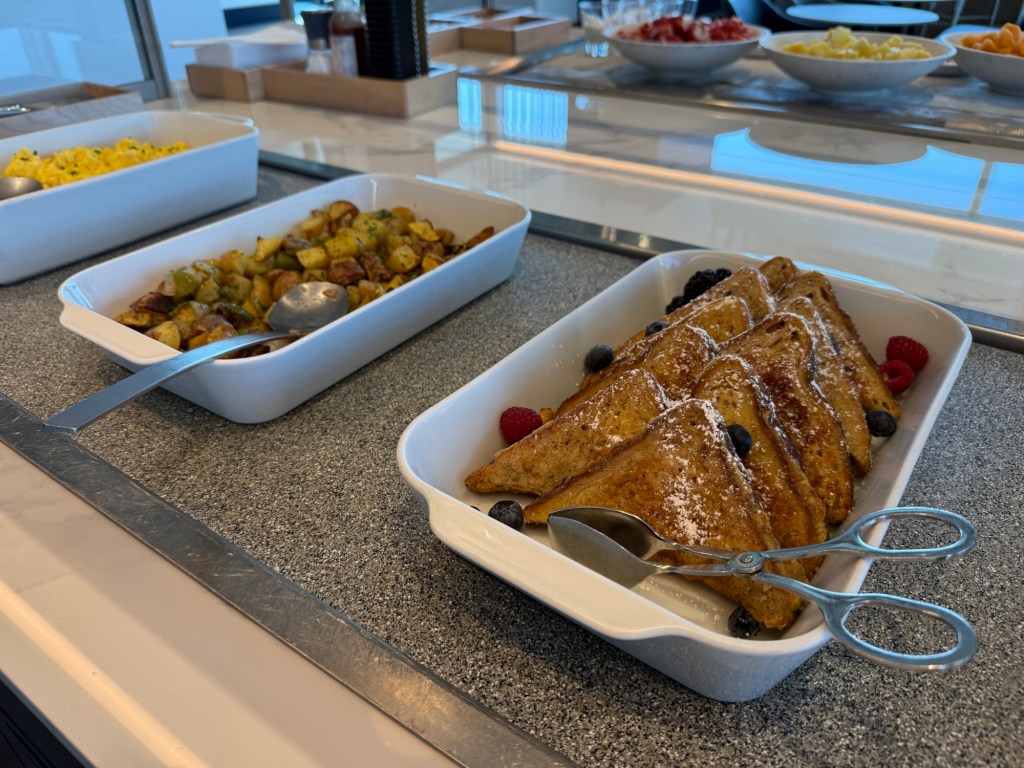
Bonjour!Endless food. Terrific
I observe and follow and get the same concession. It was a fabulous lounge – food, booze, showers, comfortable seating areas, a Clarins face massage area and, not least, calm and spacious. I sleep briefly, have something to eat and shower. I board the flight to Paris and it’s a complete sardine arrangement in Economy. I am the sandwich between two American ladies. They’re both lovely but the lady in aisle seat is a large person; not much surplus space!
As I’m reconciling myself to 10 hours of this small hutch the man in front seems to go into a sort of frenzy and vomits. He’s drunk. At this point I wonder why on Earth would you ever want to be a flight attendant. The drunk gets up and lurches toward the toilet, the neighbouring passenger in the aisle seat who seems to have narrowly avoided being covered abandons the seat to another location and the Flight attendant cleans up. When the drunk returns his wife has to endure him collapsing onto her as he sleeps off his excess for several hours. Later, on waking, she launches into a 15 minutes scolding that includes how the attendant suggested they may need to make an emergency landing to unload him/them (nonsense, it never was suggested by the steward), how humiliated she personally was and how he must never get in this state again. For good measure he gets the same dressing down a couple of hours later. I’d give the marriage months not years.
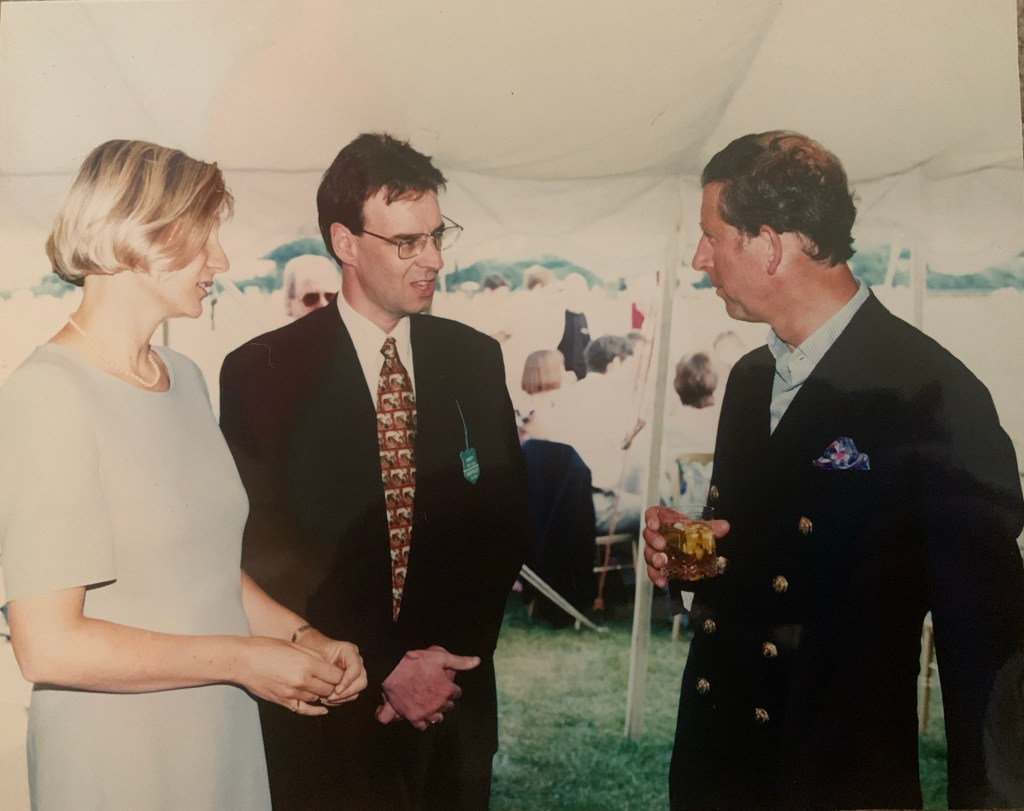
Meanwhile one of my neighbours, Nel, tells me about her son who is a major and works on the staff at The White House, her upcoming holiday in Algeria, how she’s been to 79 countries (and many twice) with Africa a favourite destination and that annually she goes up to Alaska fishing. All this is accompanied with photographs or videos of smart young men in uniform, brilliantly decorated Christmas trees inside The White House, dancing Sierra Leone school children, cod, halibut and salmon. Apparently you catch it and after preparing it they post it home for you, judging by the size of the cuts she must have several freezers. Sadly struggling for similar impressive boasts I have to play the Prince Charles card. Pathetic, I know.
So young!
Thanks to Nel and a paperback I’m reading, Earth to Moon, by Frank Zappa’s daughter, Moon about her life not least with the genius. The time passes and soon we’re touching down at Charles de Gaulle. This time my luggage is being forwarded. Only another three hours to kill before the connection to Manchester. Here I witness a stressful scene as a couple lose a small child in the area around the Departure Gates. The child, around 3 years old, had disappeared and the parents supervising other offspring had failed to note his scurrying off. As they’re searching their panic and anxiety is palpable to all around. Fortunately someone saw a barefoot child and the mother pursues to capture the child.
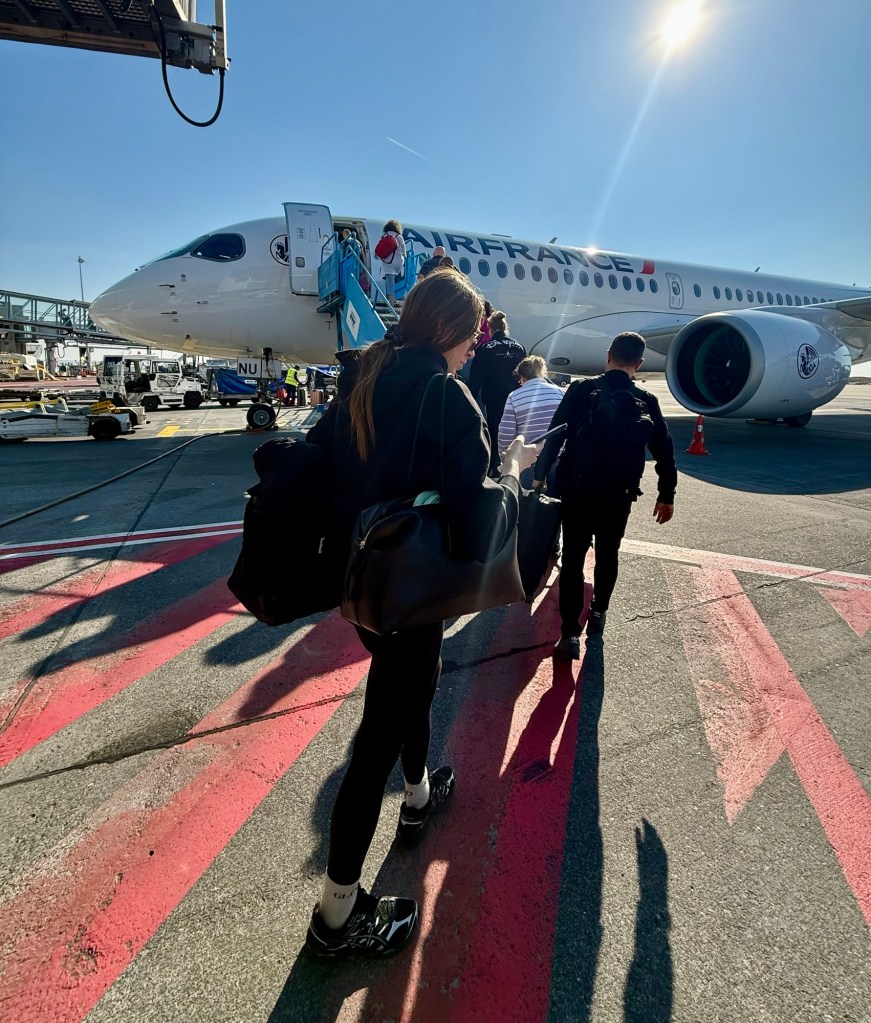
Last chariot
A new feature on airlines now is inflight wi-fi. It’s free. Inevitably it’s unreliable and predictably Air France require you to complete all sorts and sign up for newsletters etc. before you can connect. I don’t, I’m happy for a trial separation after they get me home. Another thing I’ll not miss is the dual language announcements over the aeroplane tannoy. The first edition in French drones on for seemingly hours and then the English version is so heavily accented you’re about 30 seconds into the briefing before you work out it’s English. So eventually after about 3 hours sleep in the 40 travelling I emerge into daylight and find Anna at a Pick Up point. I am looking forward to that bed.
Thank you to everyone for reading and sorry for some of the time gaps. As I looked back on some of the photos there were some marvellous moments including scenery and the people met. It’s maybe a downer that hides the fabulous times to finish with my challenges but it’s a story that completes my adventure.
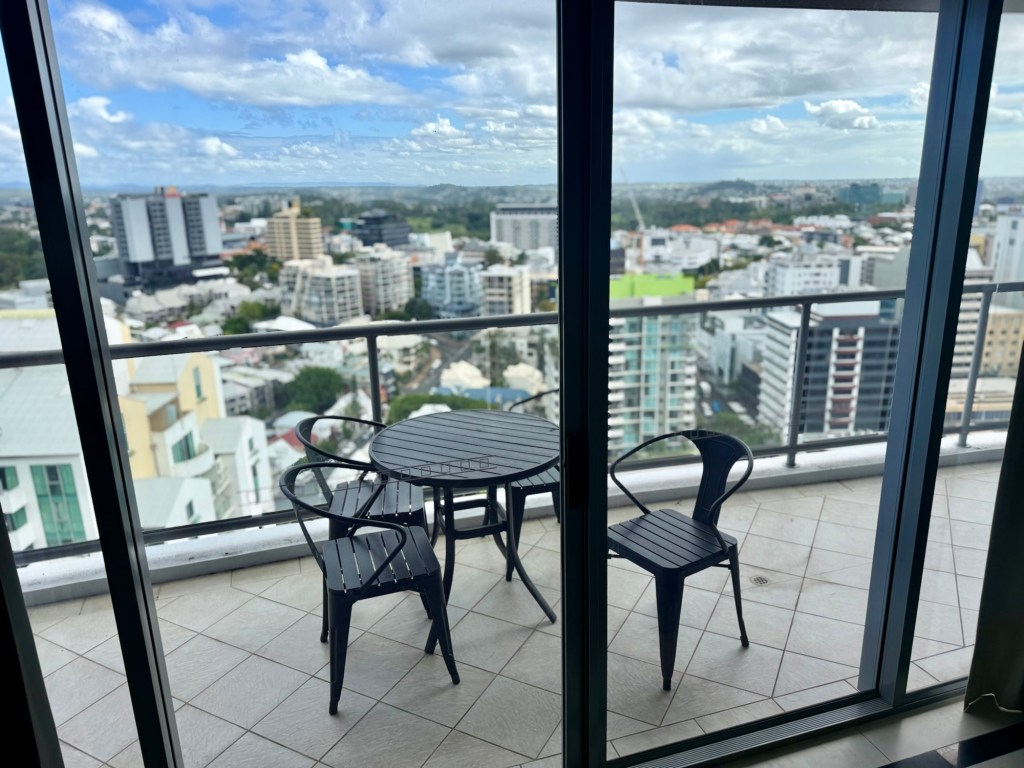
Brisbane was a five night stay. This was due to getting here early and leaving later. Anna had found an apartment about half a mile from the centre of Brisbane. It accommodated four people, quite some space after the tent! Sadly it was up a very steep hill, however, I’d got used to steep hills by now! Everyday was usually a 15,000 step affair, hardly a rest.
Room or suite with a view
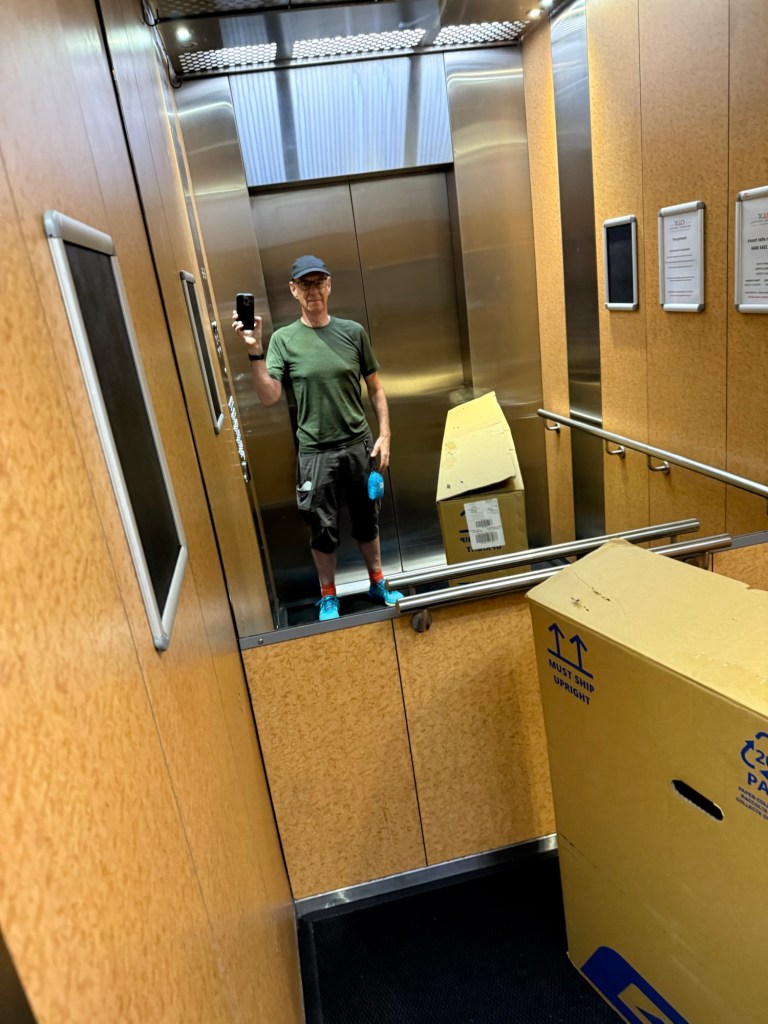
The first task was to get a bike box. On the face of it this might appear a challenge but all bike shops that sell new bikes have to dispose of the boxes they come in and as they have to pay to have them taken away they’re usually happy to give you one for free. In fairness they’re often cyclists in the store and are happy to help fellow cyclists. The bike shop wasn’t far away but carrying a 1.5 x 1.0 metre box in a bit of a breeze can be similar to sailing! I got a Uber back to the apartment.
Box man
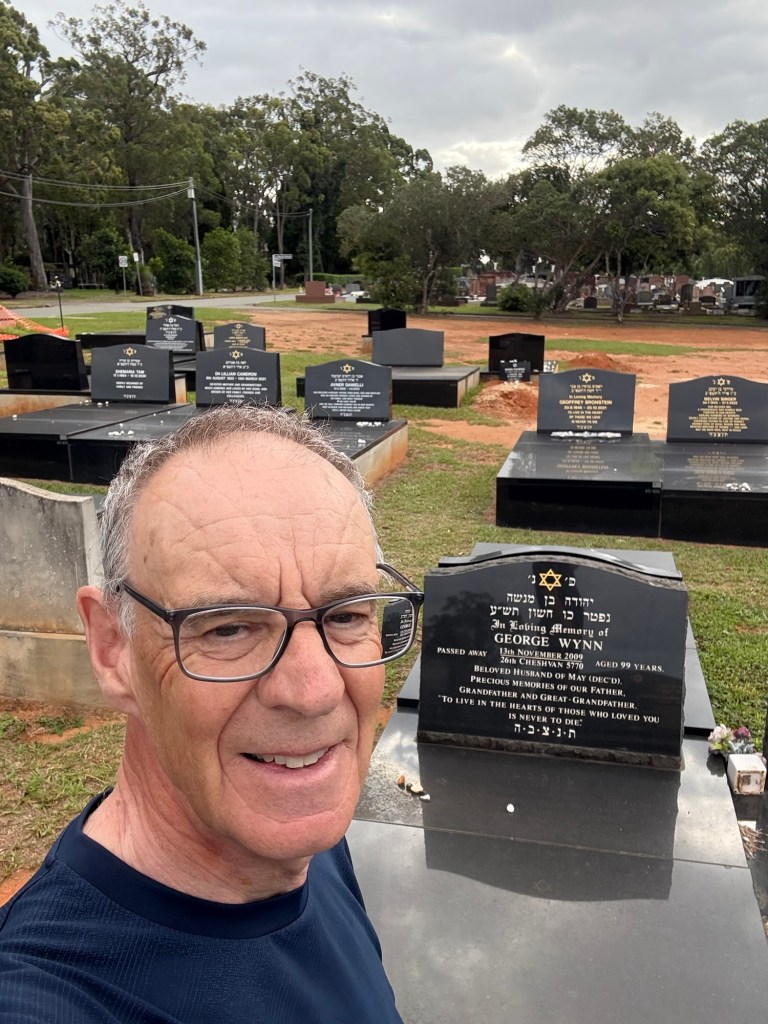
In Auckland I’d found my aunt’s grave as well as met Carole, my cousin, and in Brisbane by a catching a couple of buses south out of the city and then employing Shank’s pony I found George’s gravestone. He had a long life and checked out when he was 99 years old.
I was pleased with my discovery. I promise you that if you have to track down a specific grave in a large cemetery despite references etc. it is not a quick or easy job. However, my main job whilst in Brisbane was to look up my eldest cousin, George’s son, Malcolm. This was my third visit to Brisbane but the first to meet Malcolm. We’d only just discovered he lived here! Anna had tracked him down through an email address given to her on Ancestry.com by Malcolm and Diana’s daughter’s former husband’s father. He’d created a family tree and her mention enabled us to pick up a trail. Fortunately folk of a certain vintage keep their email addresses and phone numbers for decades and when my hopeful and speculative email went out to her mother she answered.
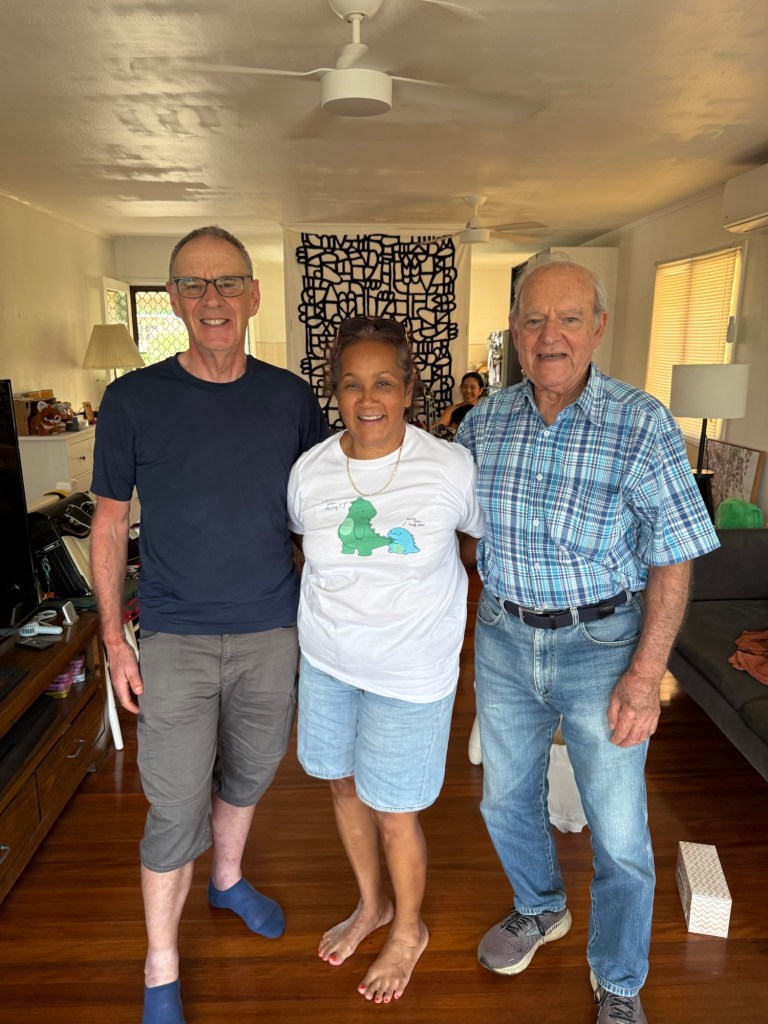
Me, Diana and Malcolm
Malcolm and Diana had been residents in Brisbane for a long time but had variously lived in England and Ireland in the past. It’s in the 1980s, in Yorkshire, that I last met Malcolm. Clearly there was a lot of history to catch up on. So we met in central Brisbane for a coffee and then adjourned to the suburbs to meet his son, daughter-in-law and children along with Diana. I originally thought we were meeting on the Monday and then Malcolm moved it to Sunday. I really wasn’t over my cycling weariness when we met also, as I’ll cover in another blog, I’d been awake since 3.30am thanks to some inconsiderate Irish neighbours. Malcolm is an unbelievably fit 89 years old. Truly inspirational in his continuing energy and faculties. I really hope some of those genes have come my way. I learned a lot including that his relationship with NZ and Australia started in 1953 when he first came out here.
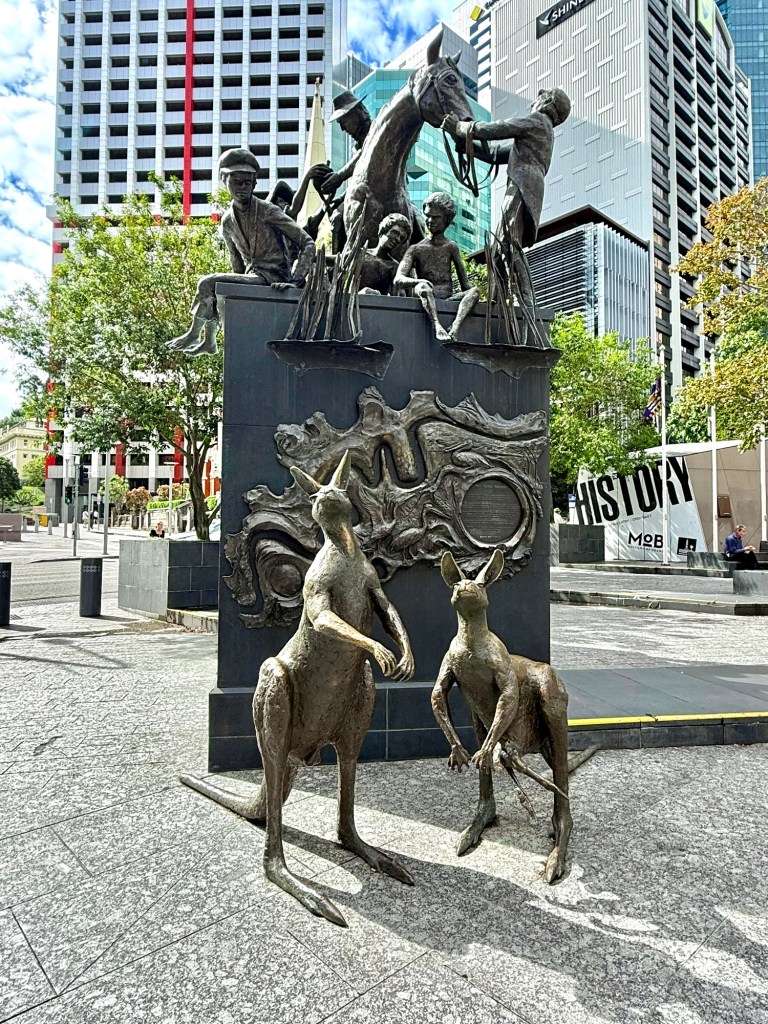
An impressive monument in the centre. Sadly not live kangaroos
I had a number of chores to do on my stay including buying food, buying some luggage and also buying a few more clothes. My wardrobe was limited and I was tired of wearing the same clothes over 5 weeks. My outfitter of choice is Uniqlo.
The walking tour or general sightseeing had been done on earlier visits and I mainly spent time in the centre.
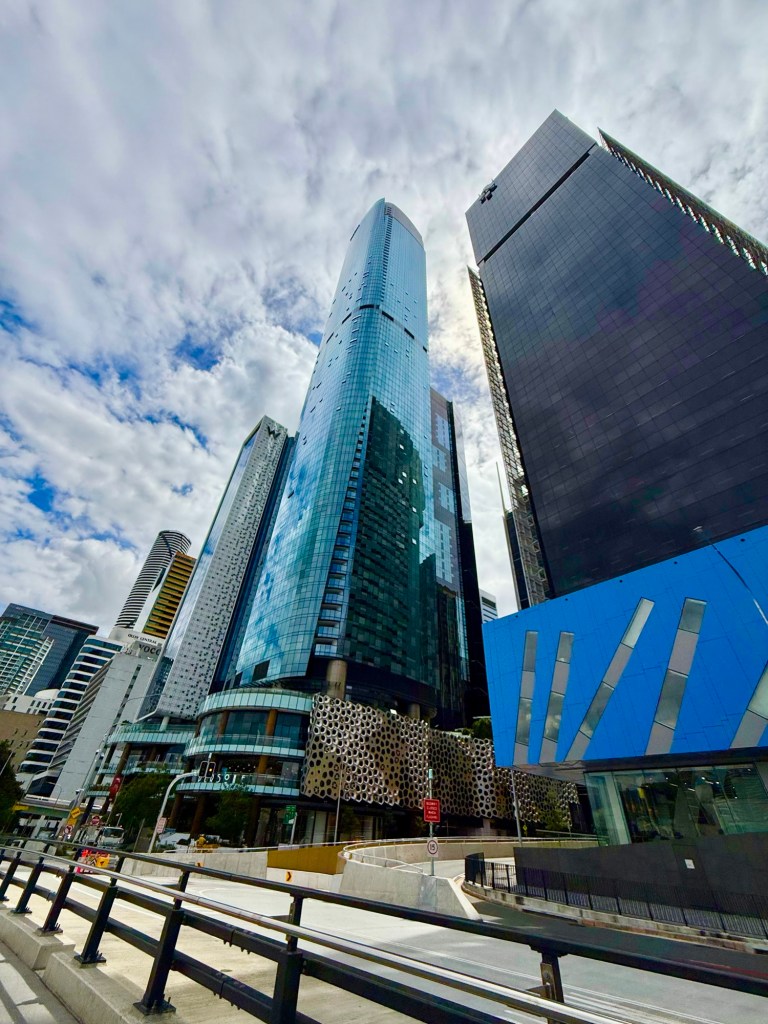
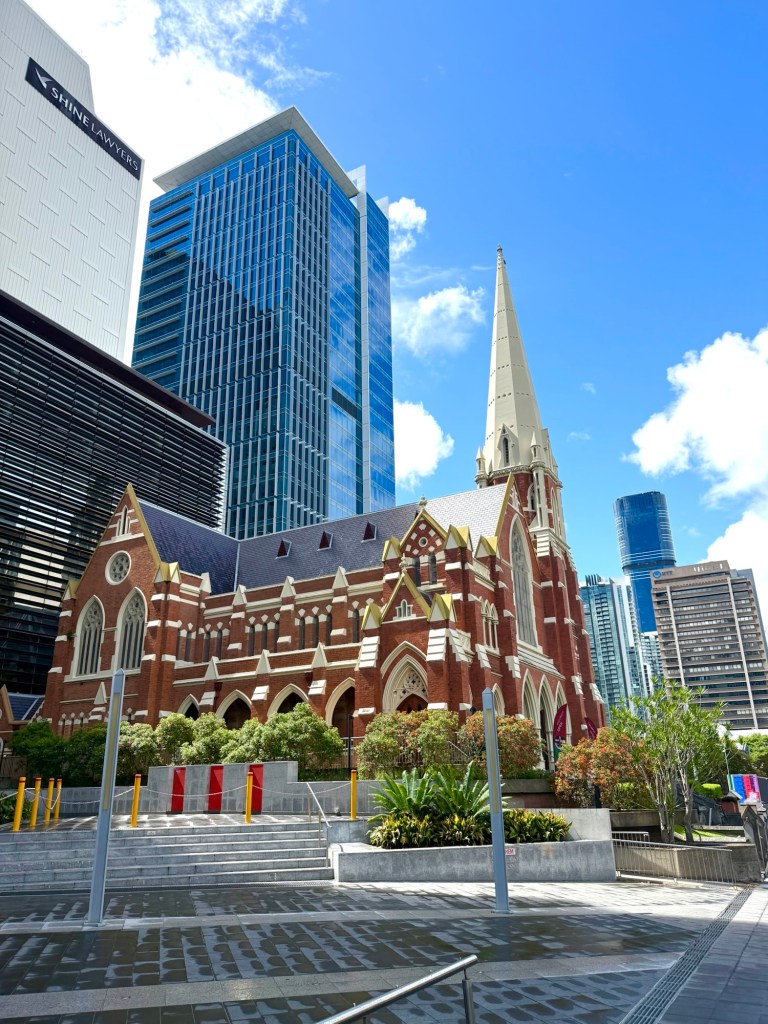
It has some stellar office blocks.
The major cities, Sydney, Melbourne, Brisbane, Adelaide and Perth are the major population centres and such a contrast to the rural settlements. You can see that it’s here that Australia has its commercial centres.
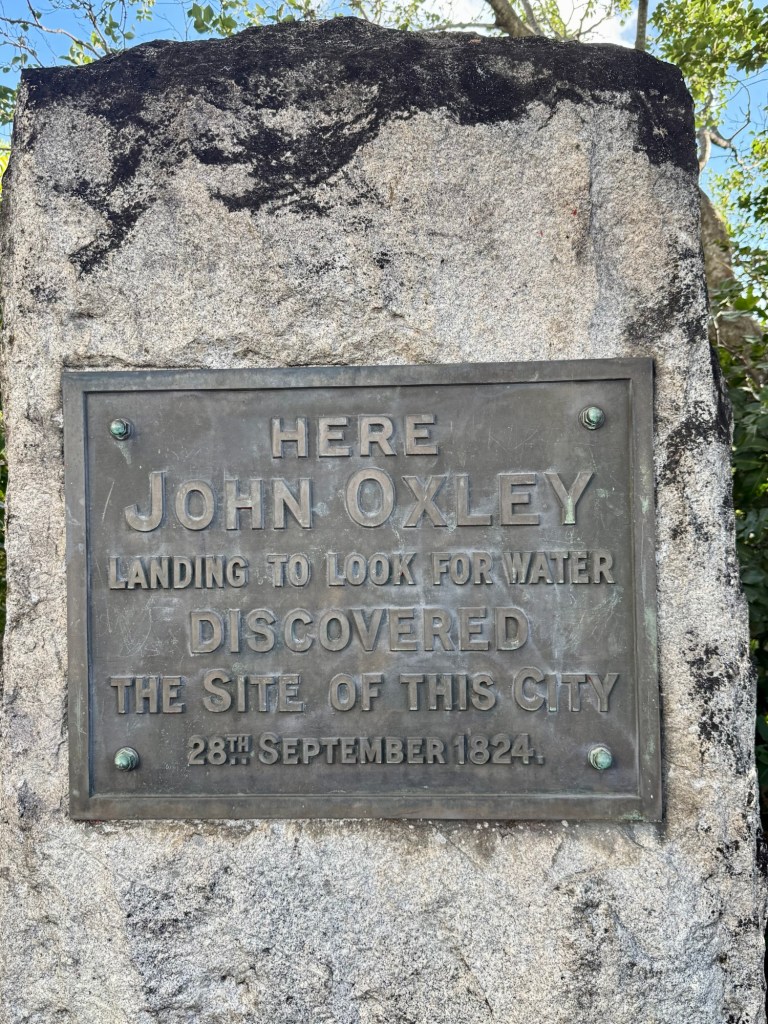
Not long ago is it. The river that Brisbane is sat on is also called the Brisbane.
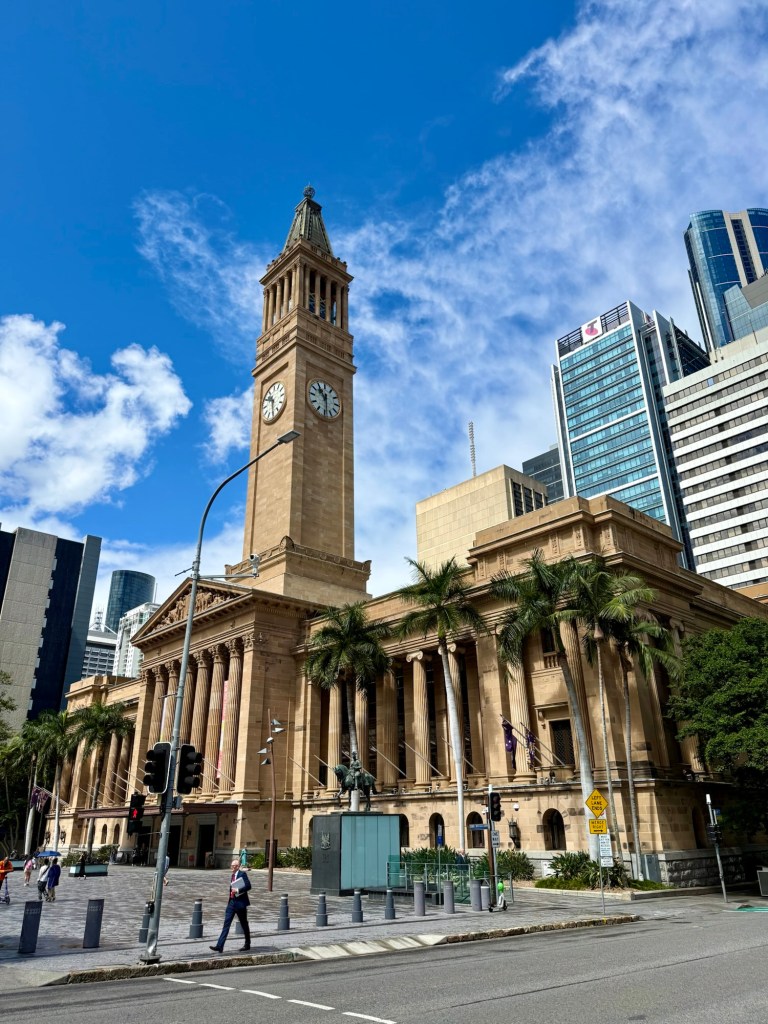
At the very centre of the city these historic buildings are landmarks. Brisbane will be a fine place for the future Summer Olympics to take place.
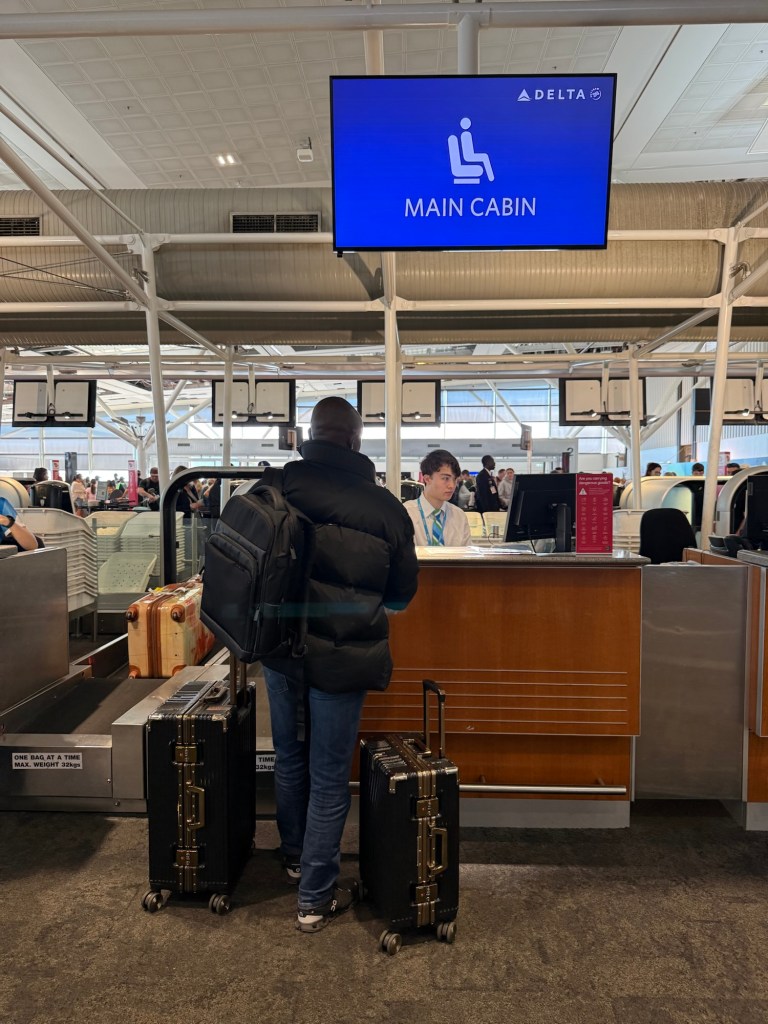
Eventually it was time to go. Discussing Premier League football with another Somali Uber driver as we made our way to my destination (Liverpool fan…) I started the long journey home at the Delta check-in. The Delta marketing department has christened ‘Economy’ as ‘Main Cabin’. Bless them.
Fortunately the flight was not very full and I had space beside me on the first leg to Los Angeles. Some of the help I got from Delta with queries and arrangements was customer service at the highest level. I will elaborate on that in my next blog. It’ll cover off how contacting Air France was impossible, the exhausting detour to get home of 40 hours, how a peach got me in to trouble with US Border Control…’follow me this way sir”, the joys despite the cost of the Airport lounge, fishing for halibut in Alaska and a troublesome, drunk passenger in the row in front.
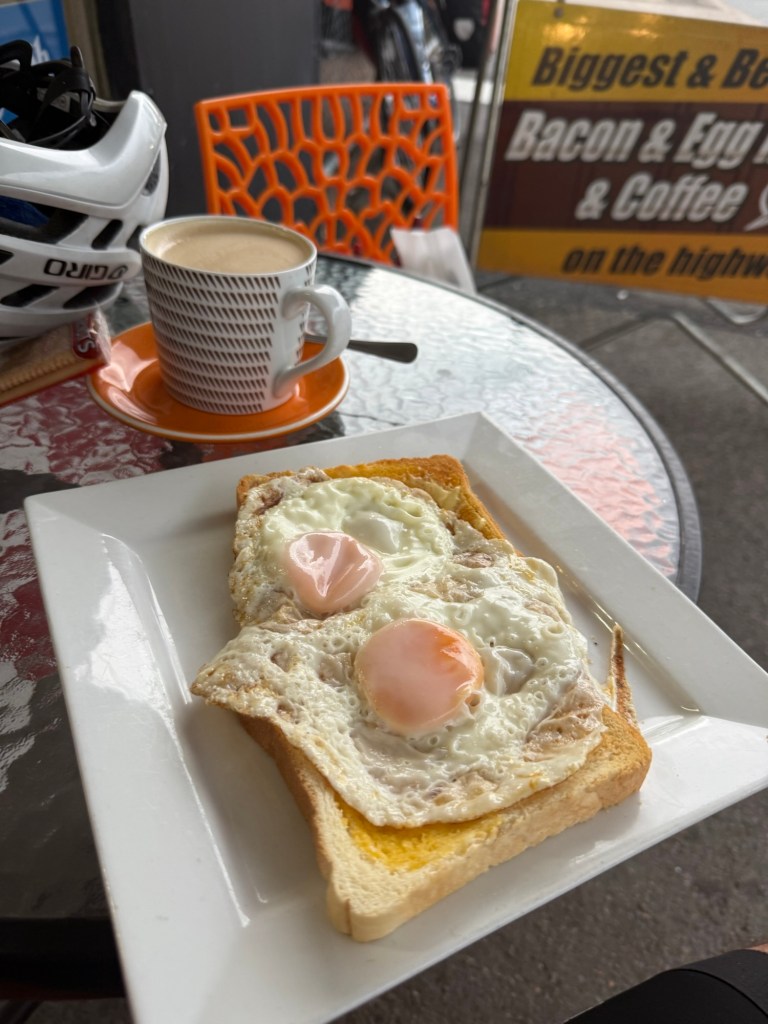
I must admit it does seem unreal that a 53 mile bike ride with lots of climbing at the end feels like an easy day. I suspect as it was my last day morale was up. Along with the boys in hi-viz and the utes I was soon downing my last bacon & egg muffin and flat white and heading north into a gentle headwind on a very skinny hard shoulder.
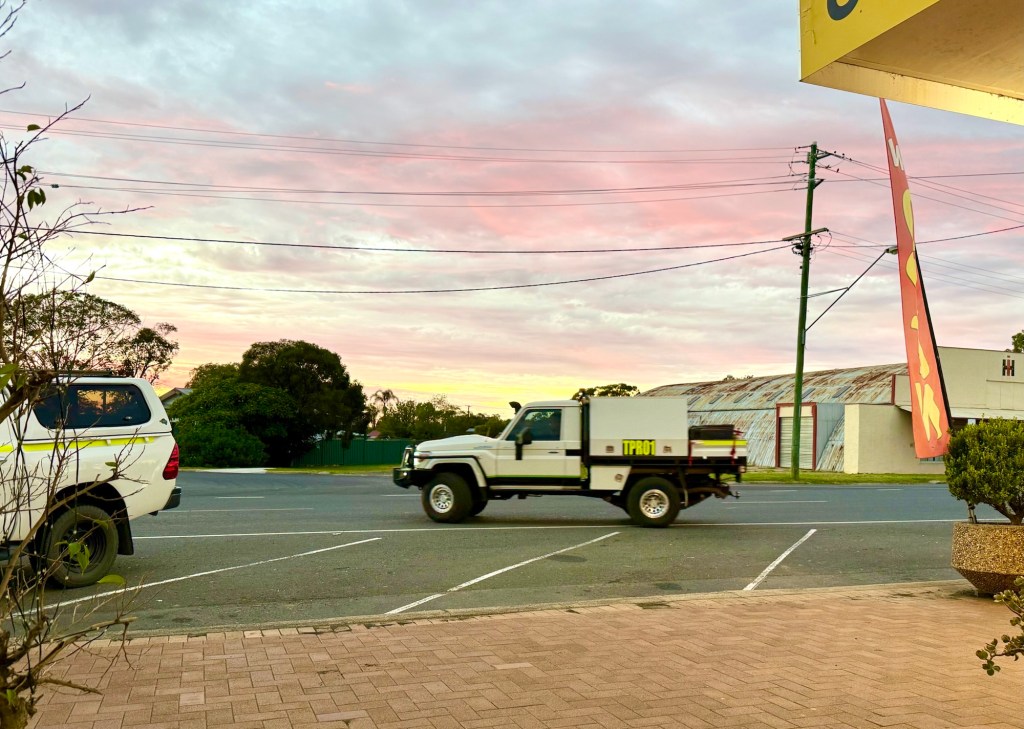
Ute! There are thousands that are identicalNot sorry to find a new diet shortly
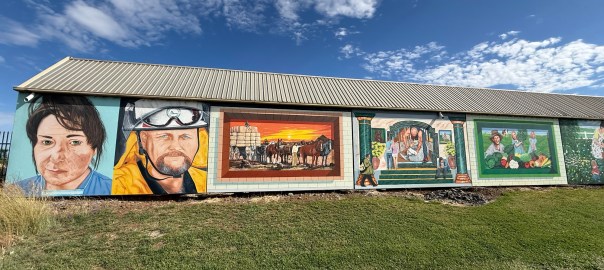
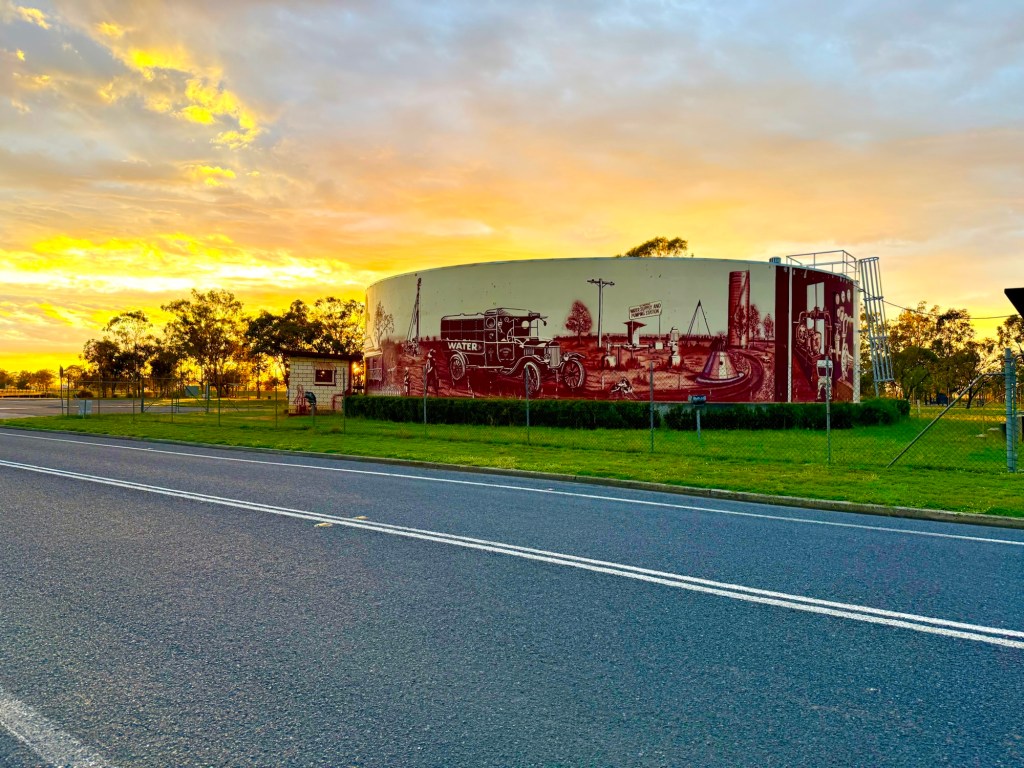
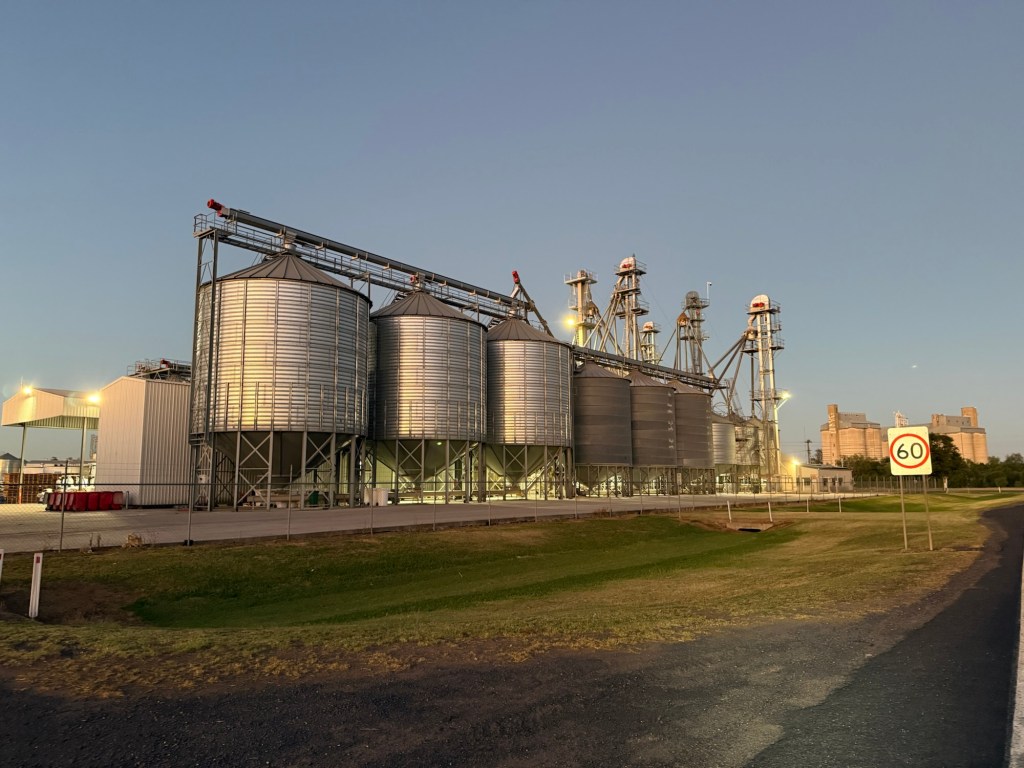
Silo art is a popular thing in Oz but I hadn’t seen any although this large structure had some interesting graphics.
Sorghum and Cotton for literally miles A little more art on the side of the road
The initial part of the ride was flat but eventually the gradients started to appear and with the appearance of a petrol station I had to procure sustenance. All the fuel stations out this way seem to be owned or run by Sikhs. Many a man in a turban has completed the transaction also as you approach the building you can sometimes smell curry from their private kitchen. Now a proper ‘Indian’ meal is something I’m looking forward to back in York.
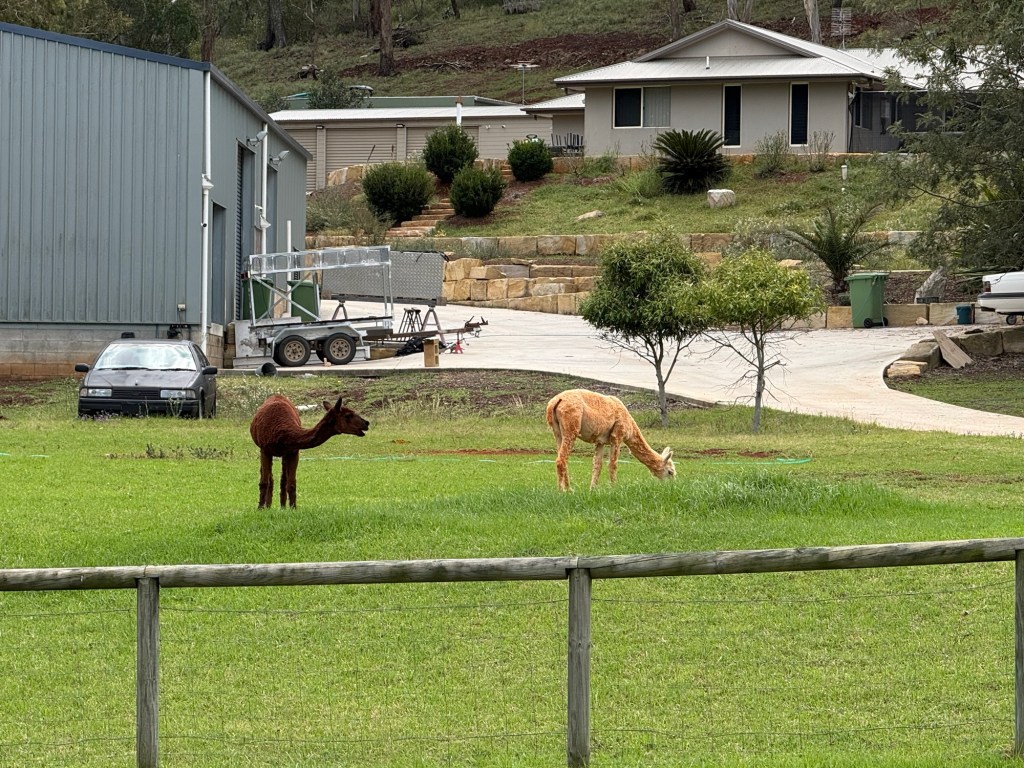
Yaks
After my dismal failure at finding a live kangaroo I found these chaps. Scant consolation, I know.
So with a series of climbs I slowly got to Toowoomba. It’s quite a large town 80 miles west of Brisbane. It was here I was going to end the tour. I could get a train or bus eastwards from here. It was as northerly as Brisbane and so I’d done the distance but it was, after thinking this through after battling my way out of Sydney, never my intention to endure the traffic lights, heavy traffic, pavements, cycle paths etc that make up the misery of urban cycling and cycle up to my Brisbane accommodation. For what it’s worth I’d cycled into Brisbane in 2020. I had the medal.
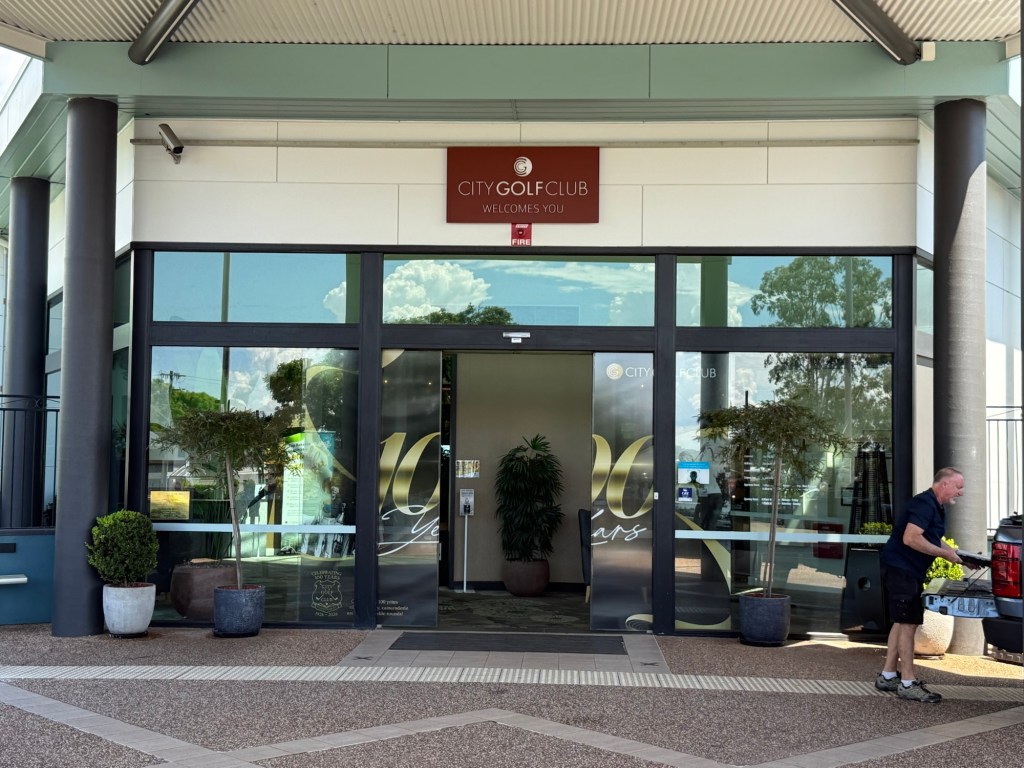
So the last stretch was going to be by coach. This meant possibly being sat next to a millennial reeking like a polecat after my 53 miles cycling. Not nice. So as I’m cycling I spotted a large golf club and made my way to Reception where, explaining my predicament, asked if I could take a shower? ‘That’s an usual request.’ Came the reply.
Anyway it was granted and I cleaned up.
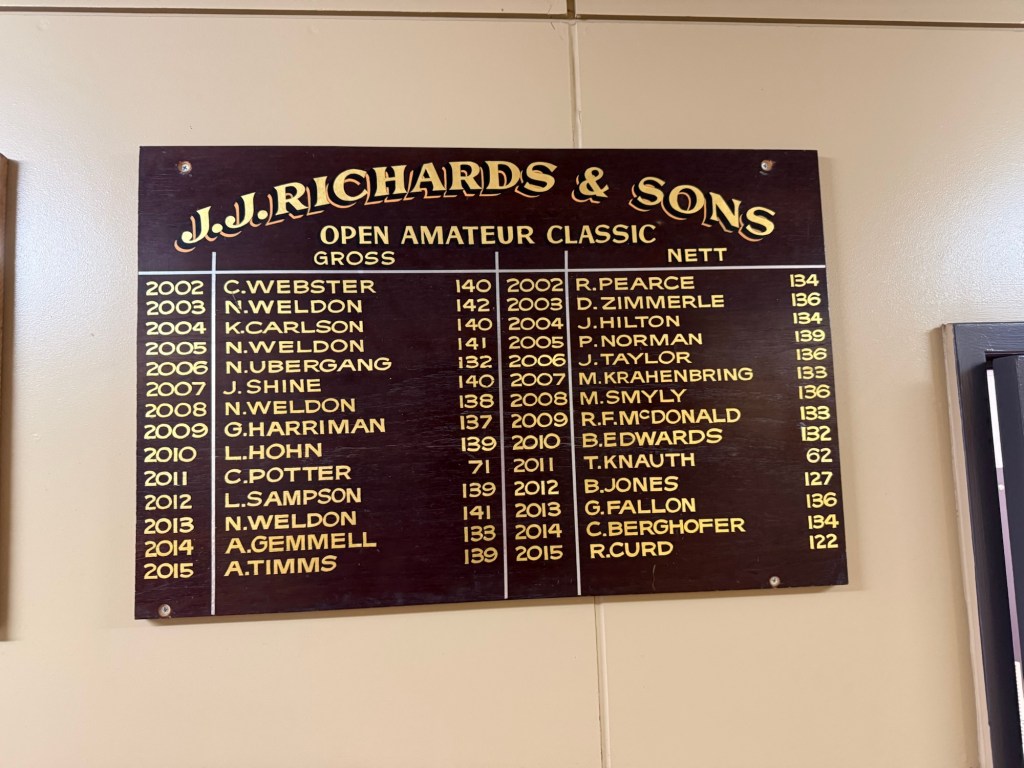
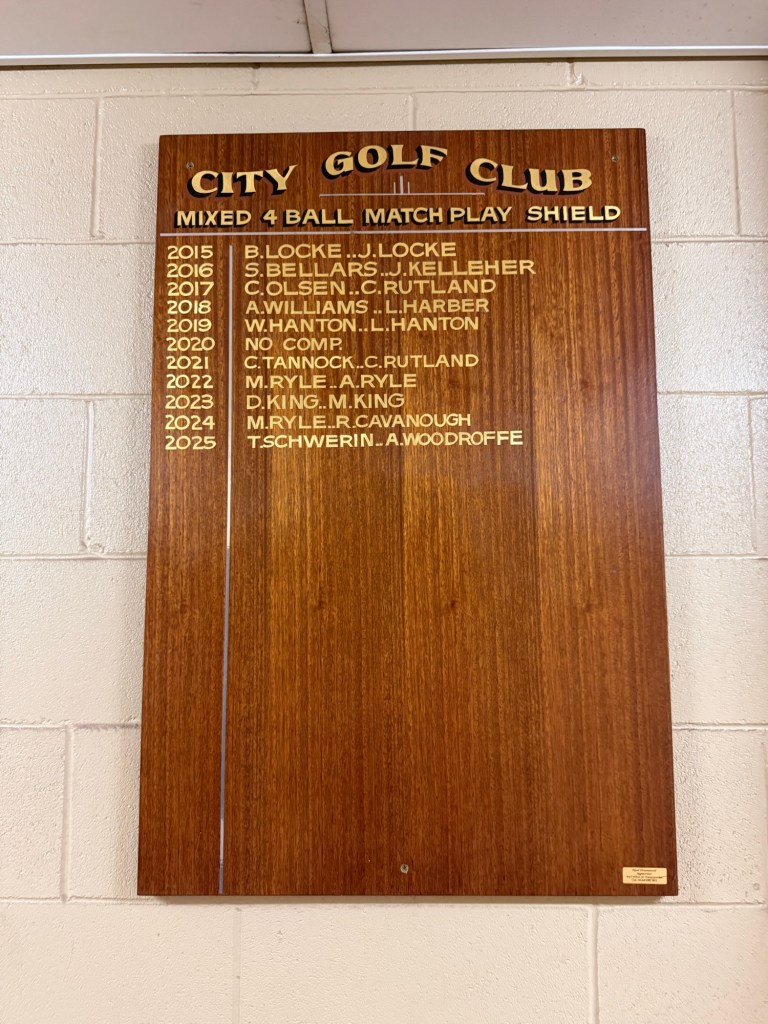
Loads of boards around the shower area
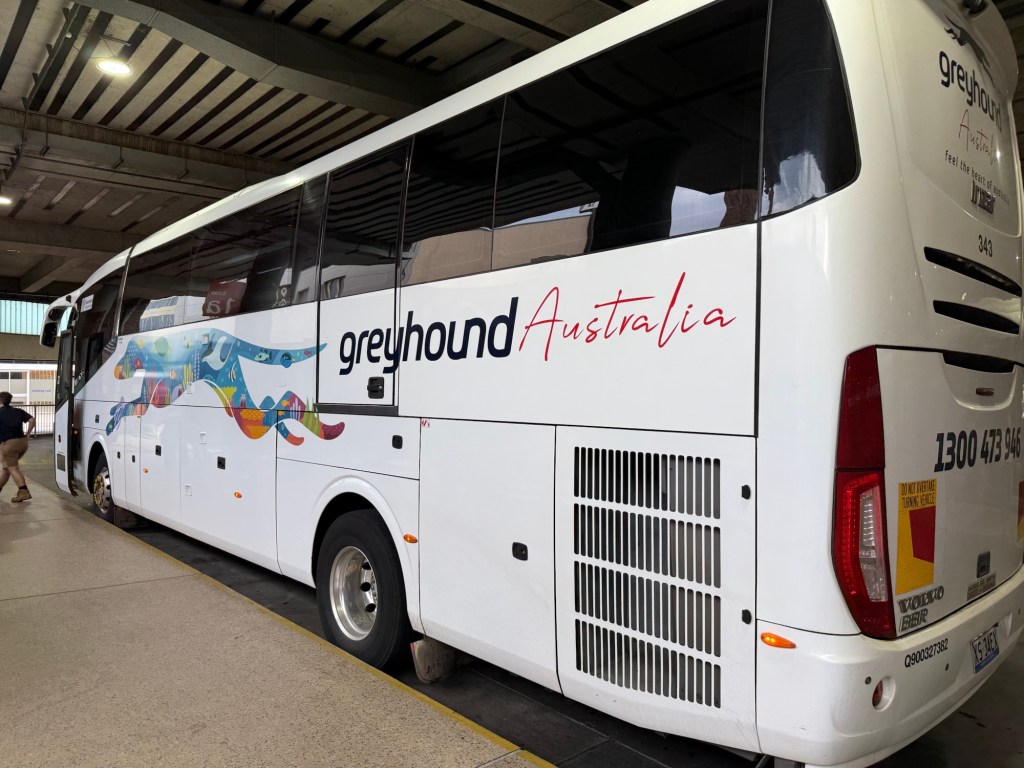
I continued by cycle paths to the centre where I had some lunch, looked around and waited for my bus. The bike cost extra as baggage but fitted comfortably in the hold.
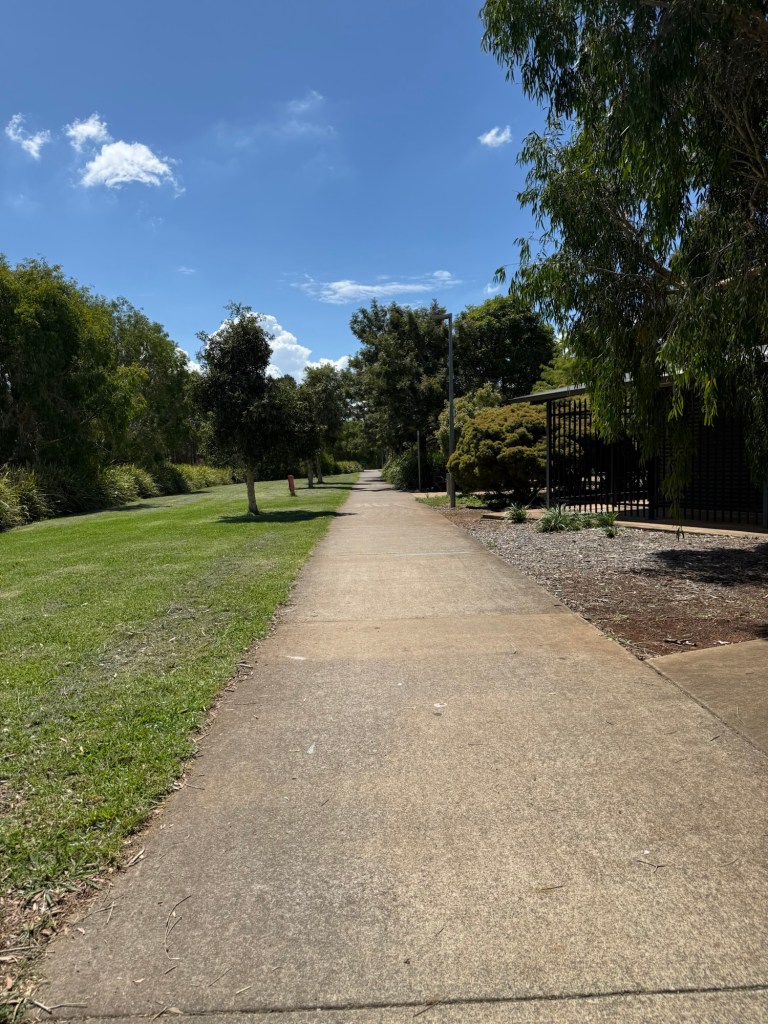
Park cycle path
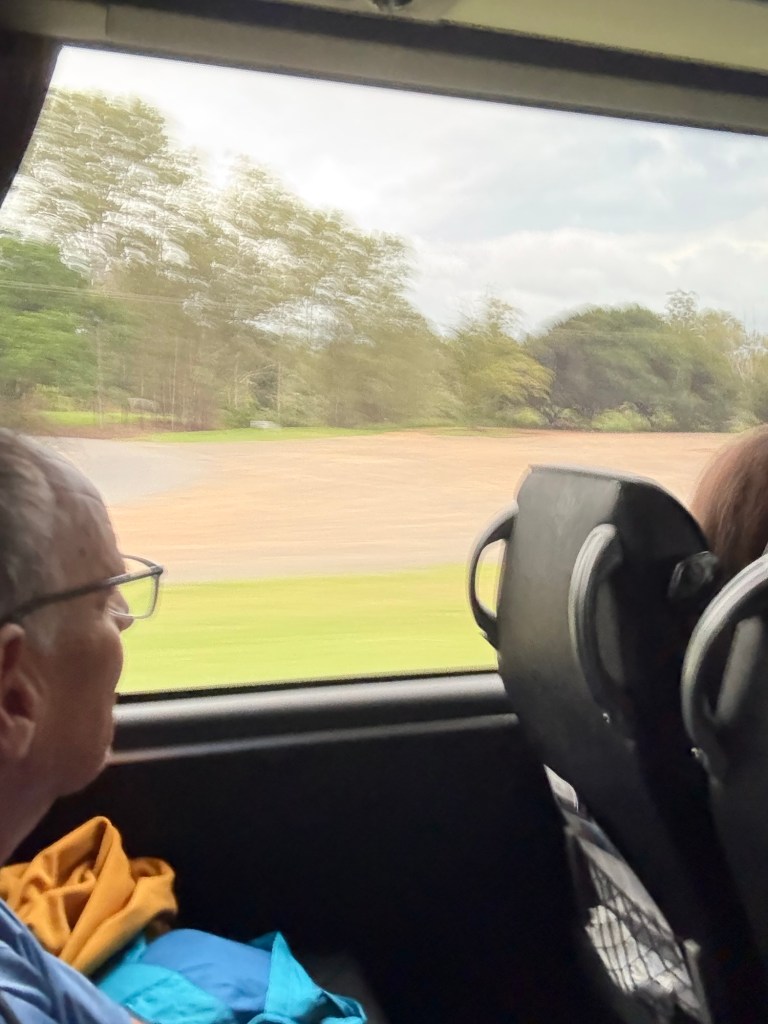
Comfortable affairs with lots of space, reclining seats, charging points, loo etc
It was dark by the time we got to the centre of Brisbane. From here I cycled about a mile to the apartment Anna had booked.
So Australia had been a 653 mile bike ride. I’d climbed 5,664 metres. For the combined countries I’d totalled 1,171 miles or 1,885 km. Climbed 13,591 metres or 44,590 feet.
These are unique projects as I didn’t come across another cycling tourist in Australia!
So Australia this time? After Murrurundi it was a slog until Goondiwindi. When I cycled from Sydney to Adelaide it was only the last section that equated to some of this slog. After Goondiwindi it was back into large hot empty spaces until Toowoomba. Not the best route in places and I was a little unlucky with the heat. I suppose that makes it an adventure?
One more blog about Brisbane and meeting my remarkable cousin to follow.
The first part of the route had some trees near to the road. As the sun rose in the east it meant that this foliage kept me shaded for longer, however, eventually we were back to open fields.
Early startOn the outskirts of Goondiwindi there were signs of the agricultural businesses that funded the area
So I pedalled on thinking about the long ride as a series of 10 mile segments with each one being achieved as a meaningful step toward my destination.
Hello darkness my old friend…
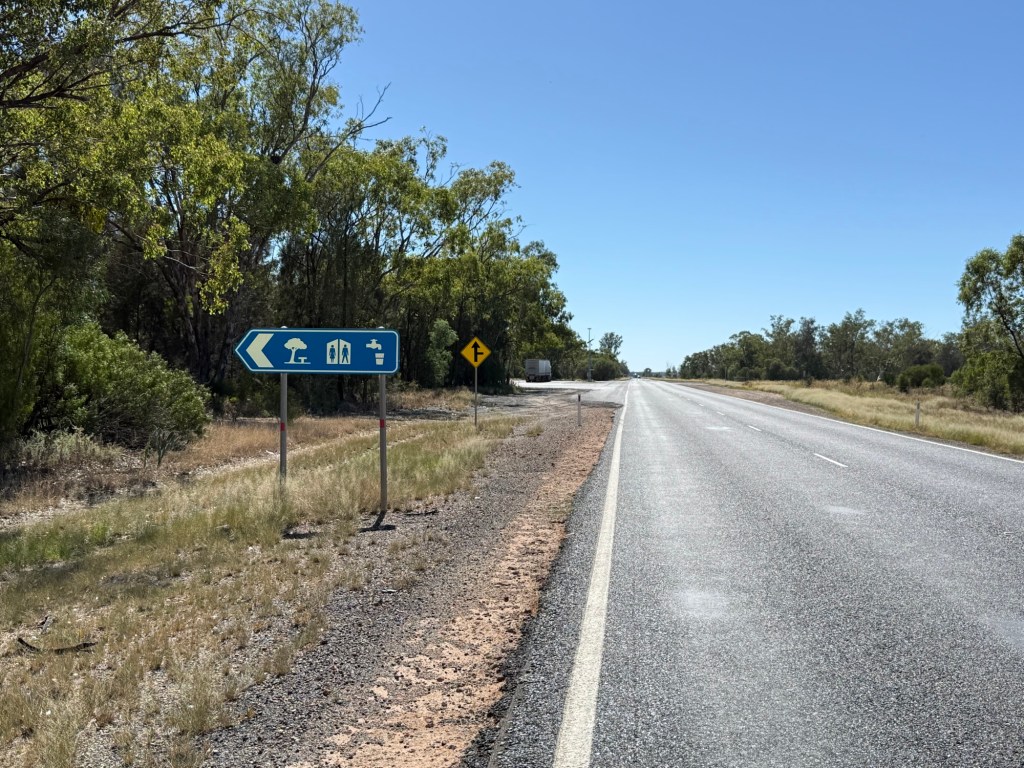
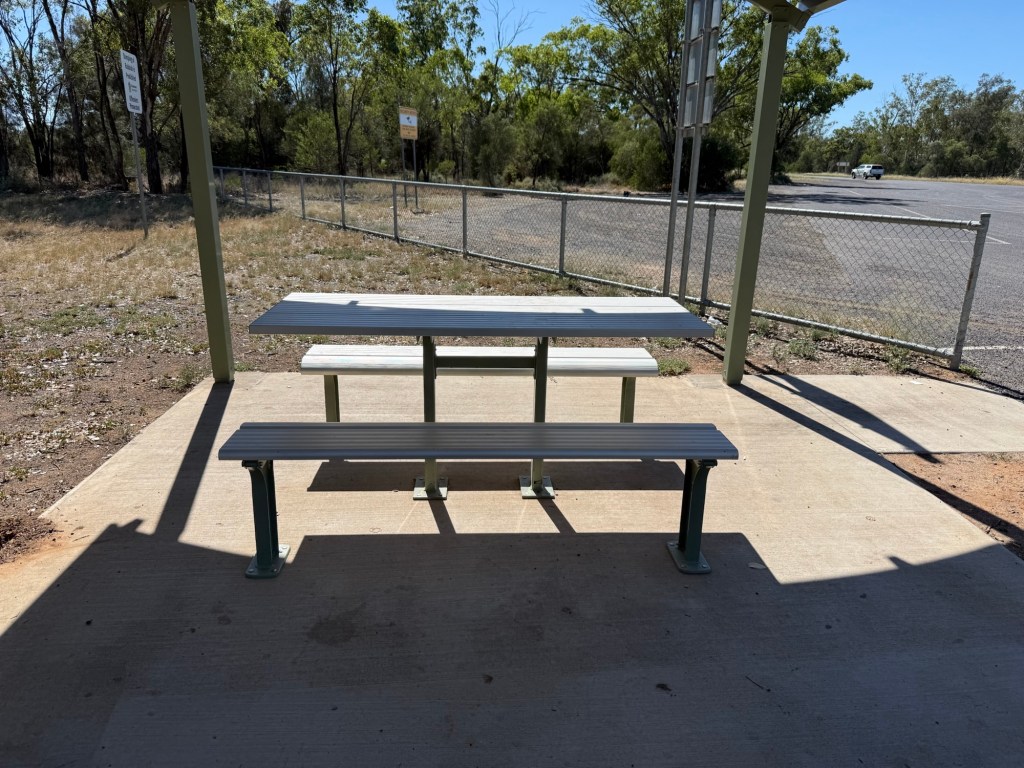
Even though the wonderful Google Maps didn’t show them there were a few pull-ins en route. Usually there was a toilet that was just a deep pit and if there was a tap it ran dry. All I sought was shade and a place to sit down.
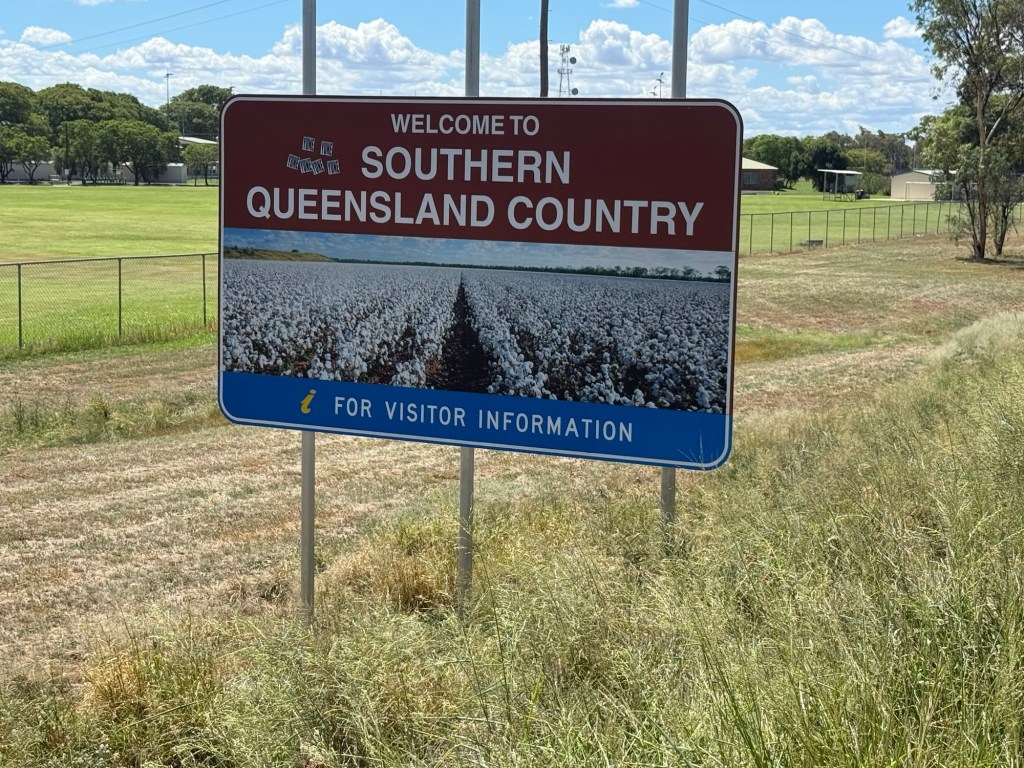
A welcome sign
That looked terrific to me. One thing that bemused me was that as I’m sat there, in the middle of nowhere, drivers would stop to use the facility but wouldn’t acknowledge or talk to me. How can a nation be so incurious about something as anomalous as an old bloke on a heavy bicycle in 38°C miles resting up before he continues up the road where the nearest settlement is over 50 miles away?
Heaven to me
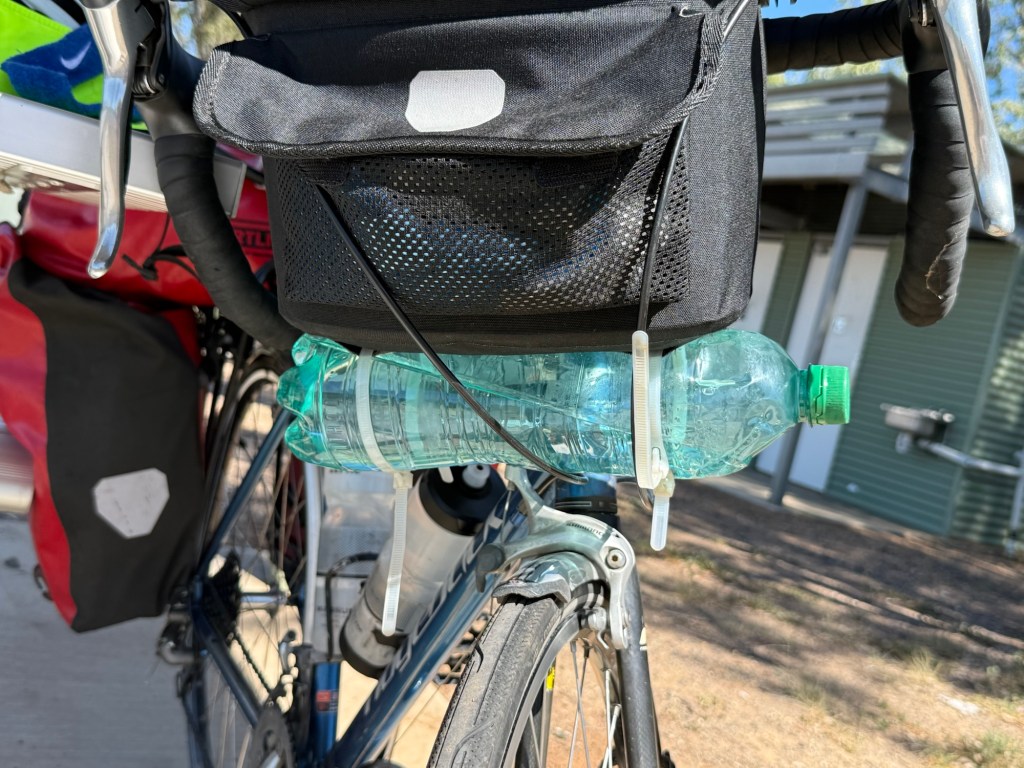
I knew on the longer sections I need to carry extra water. I’d planned for this requirement back in York. On this ride I did work my way through my standard 2.6 litres of water and have to use this extra litre. Hydration is an obvious priority and even if the body doesn’t ‘tell you’ you need to keep drinking. One side effect of poor hydration is cramp; I had avoided it.
Life saver
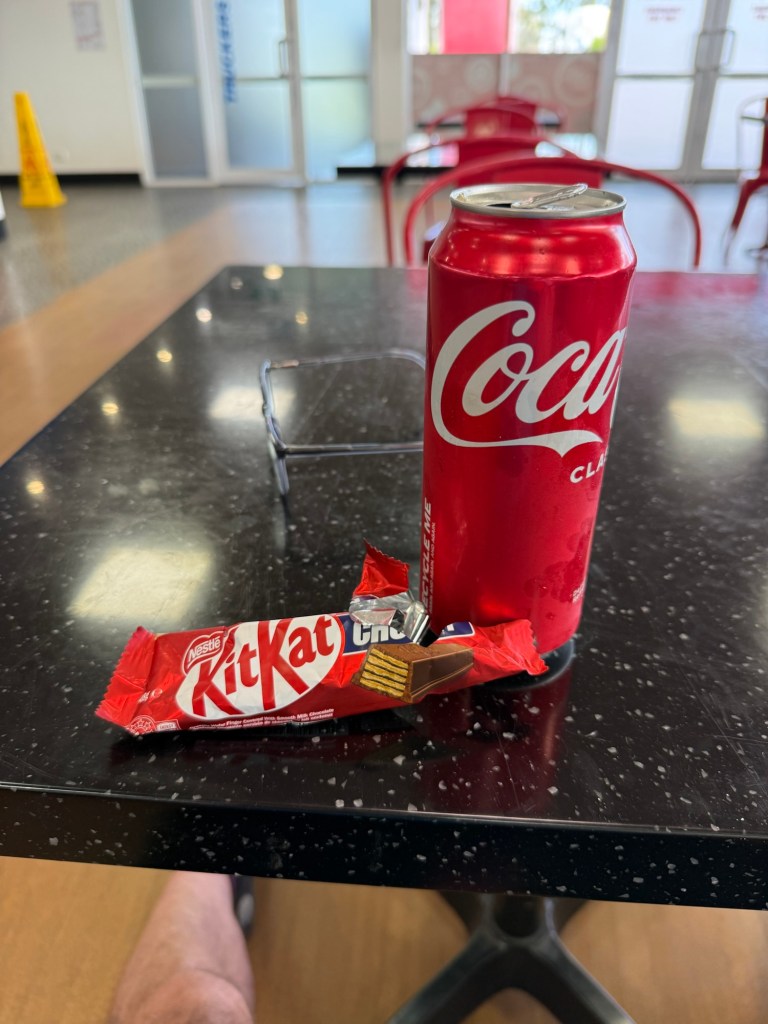
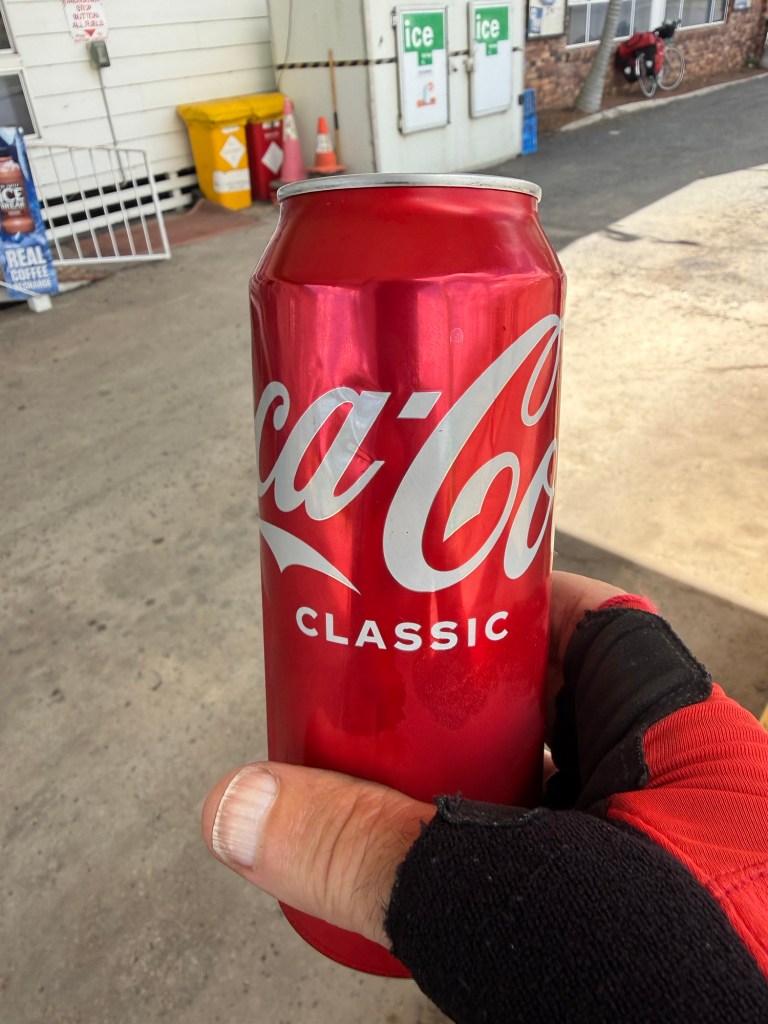
Eventually I got within 7 miles of Millmerran and a petrol station came into view, my first ‘oasis’ in over 80 miles. An ice cold Coke has no peers. It also came with a ‘where have you come from?’ and after the answer, a ‘No way!!’
My favourite cold drink
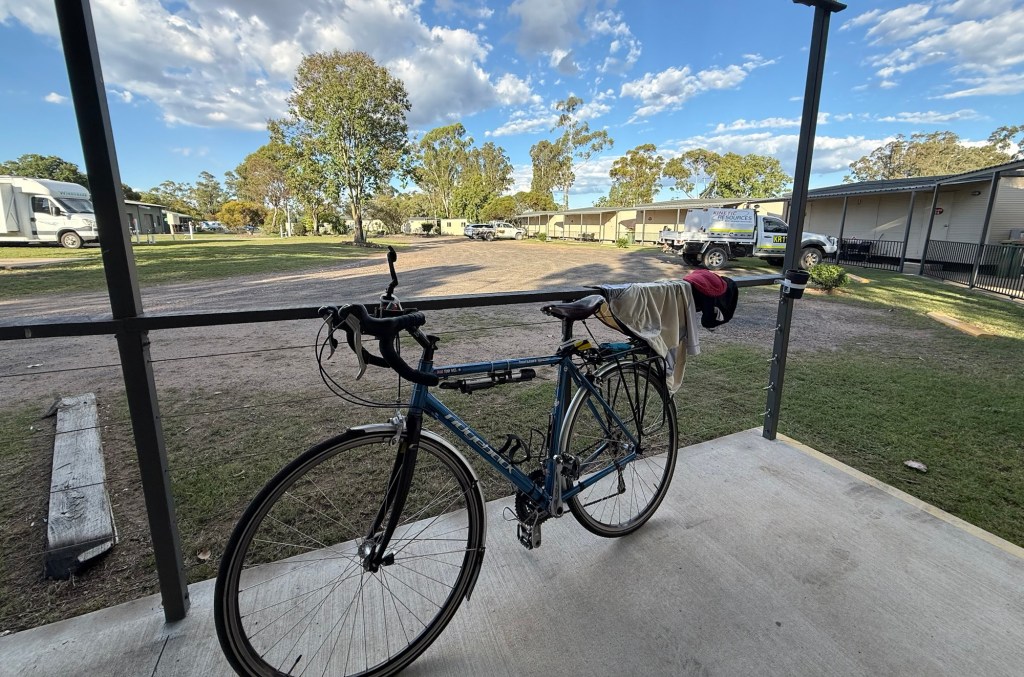
I was staying in a cabin at a campsite. The internal dimensions of my hutch would have fractured the skull of Tiddles should I have engaged in animal cruelty and swung him round by his tail. It reminded me of the cabin you got on a sailing from Hull to Rotterdam.
The main campsite residents were the workers who spent the week locally at the power station or in coal mining. They’d be back a little after 3 or 4pm and away at around 5am next morning. What struck me was the similarity with the US Mid West. A hard working baked landscape where unfancy folk went about their work with few complaints and, in one way or another, kept the national economies ticking over. As a people they seemed politically disenfranchised, for example, how many in Brisbane, Sydney or Melbourne supported mining coal? Also the multitudes, many of whom looked different and originated from different parts of the world lived in these cities, had other political priorities and, more importantly, were a greater body of voters to excite and engage the politicians.
Inevitably these out of the way communities were more conservative yet more self sufficient, less aspirational, forbearing, older and certainly great contributors to the country rather than takers. Respect was due.
So I dined at the local pub and then Anna sent a WhatsApp asking if I’d seen my email? (She could read it all on my iMac in York.) I checked and my travel agent advised that Emirates had cancelled my homeward bound flights. Emirates also soon followed with a ‘Dear John’ billet doux.
I was regularly going to bed at 7.30 to 8pm. When this news came through I was just about ‘out of it’ and completely shattered despite being the kind of information that would wake you! An application for a refund was necessary and then the challenge of finding another flight route home was urgent and needed pursuing.
I couldn’t help, the brain had gone into ‘screen saver’ mode and I needed to sleep. Anna, as I crashed, found another flight, with Air France, via the USA, and booked it. This needed her to physically visit another travel agent in York, with cash (lots of it) to pay. For some reason this couldn’t be done digitally? Extracting a meaningful four figure some out of Lloyds Bank in York in readies immediately was another hurdle. She stoically chucked aside her day plans and delivered. Heroine. I’m a lucky man.
I woke to find all this was in place. However, Air France, my new airline, was to provide Gallic hurdles that I’d need to address in Brisbane.
Goondiwindi has parallels with ‘Hotel California’: you can check out any time you like but you can never leave. After the long ride up on the sun scorched and featureless A39 I thought I’d use the rest day to get further north and closer to Brisbane. This meant getting to the next big town 150 miles away, Toowoomba. This could be done by train, bus or even car hire. This would be a change to my schedule but I wanted to get past this section of the country.
This proved impossible, despite having a train line it’s exclusively for freight. This is a place where the motor car is king and so the 1990s had seen the last passenger train. So take the bus? Usually in response to a problem I’ve caught a couple of long distance coaches. They’re certainly a solution for the younger Australian. Via Goondiwindi Visitor Information and a lady at a tobacconist (!) I confirmed there were coaches out of the town but not on the days I was going to be here!Lastly in exasperation I attempted to hire a car. Hertz, located in my destination town, but supporting a sub office in Goondiwindi, had no vehicles available. A taxi would have a 300 mile round trip and an enormous cost assuming I could find one. The only way out after my rest day was on my two wheels. To head toward Toowoomba would take me to Millmerran. A mere 90 miles on the same kind of barren road. After that it was a hilly 50 miles to Toowoomba. I was starting to think someone didn’t like me.
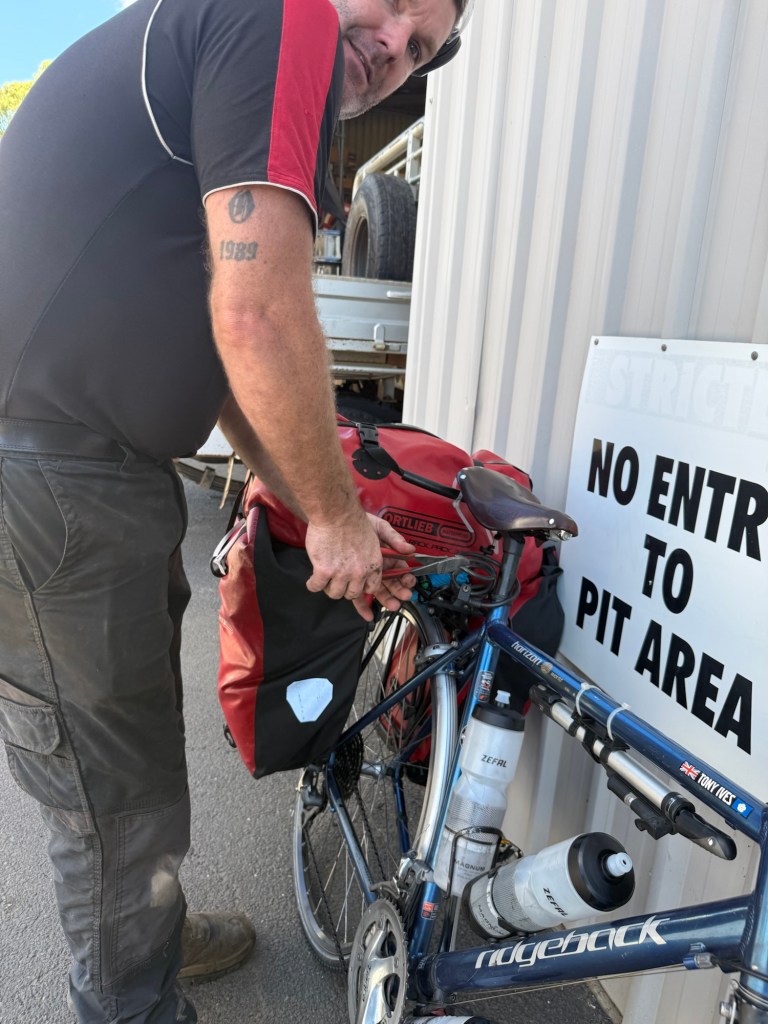
So beaten I checked into a motel and over the remainder of that day, and the next, did some laundry, got the bike lock cut off my rack (for which I’d lost the key!)
Bought another bike lock, drank coffee, wrote up my blog and bought provisions to see me through the next day after another very early start. I also looked around the small and attractive typical rural town.
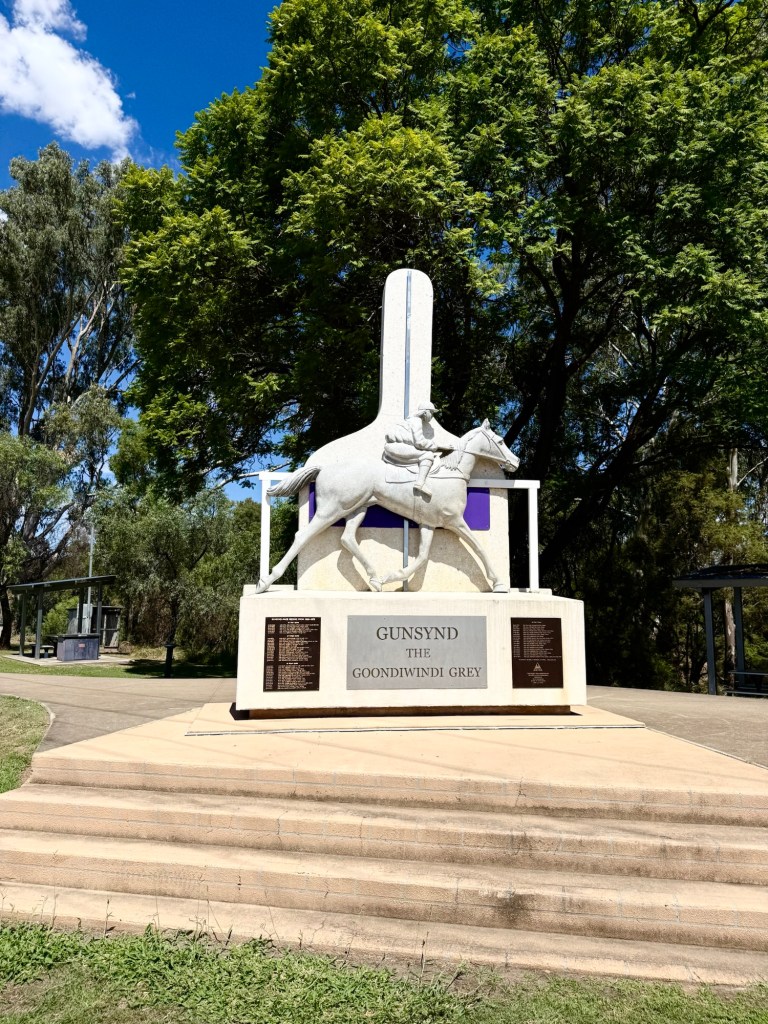
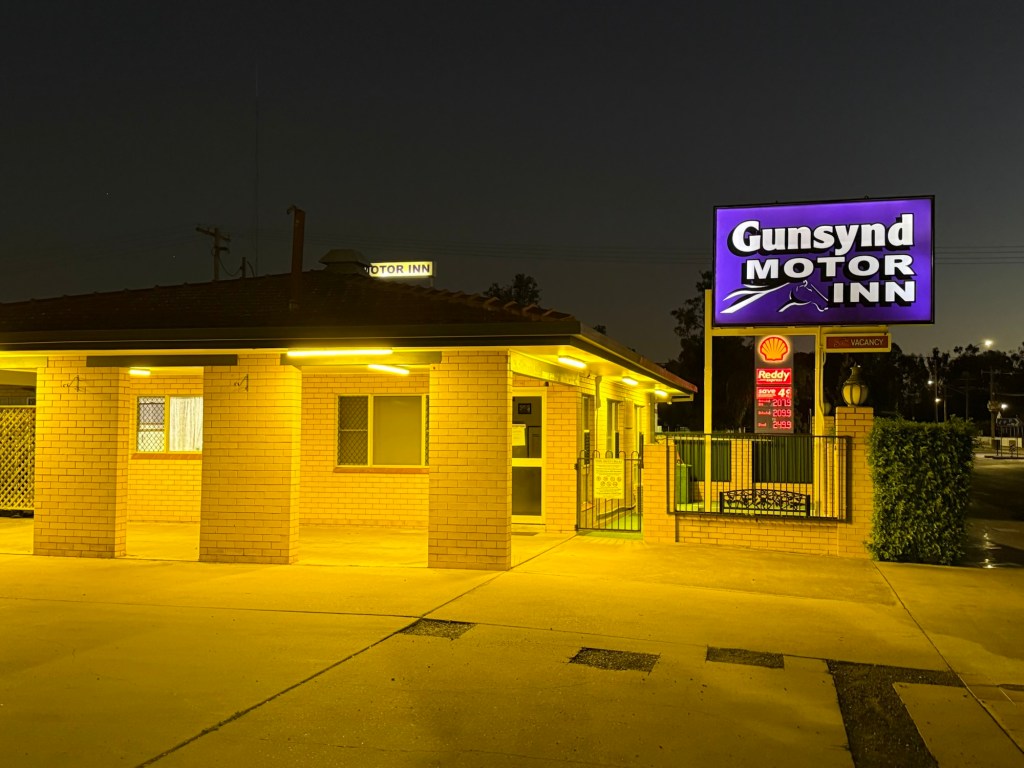
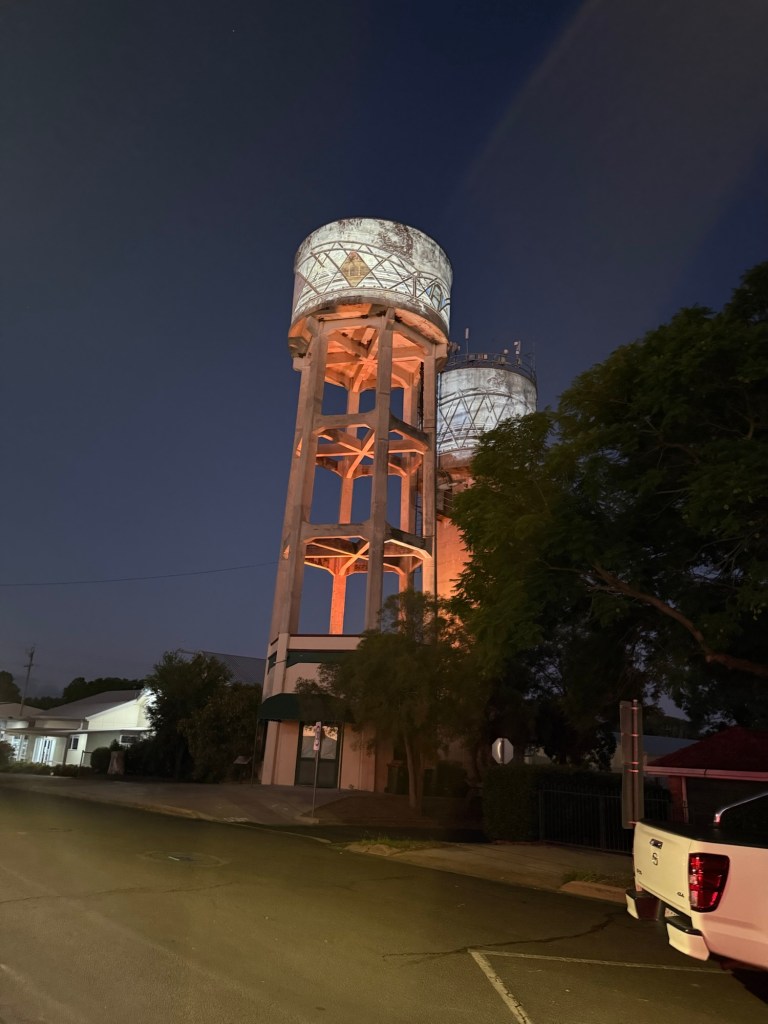
A very famous racehorse, apparentlyMy motelSomething for the roadMain StreetI’d love a Road Train sign for my wall but I’m not carrying it to Brisbane!Ubiquitous water towers
It was a lazy time and not my usual cock up of where I walk 16,000 steps instead of pedal.
I went to bed with a little dread, tomorrow meant a very long next day. All the preceding days’ terrain had been flat but hard going. It was flat tomorrow but that was little consolation. Anyway, it had to be done.
(Note contains a video. Download on the website or in ‘Reader’)
In line with the crime concerns I reported earlier the security in Moree involved the motel locking a gate to stop any vehicle or person entering or leaving the property and its surroundings! I’m stood there at just before 6am waiting for the owner to unlock! I’d wanted to get off as early as possible. In the end he didn’t appear at 6am and five minutes after I’m calling him on his phone. Dishevelled and obviously just out of his bed he hurried toward the padlock on the gate to release me.
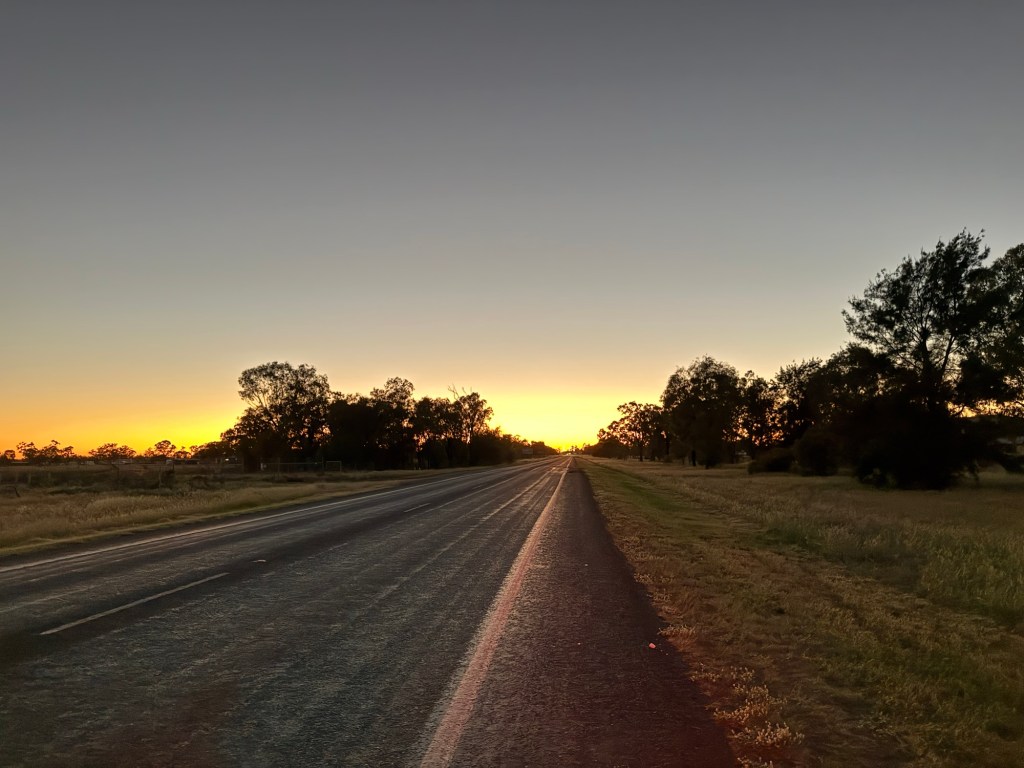
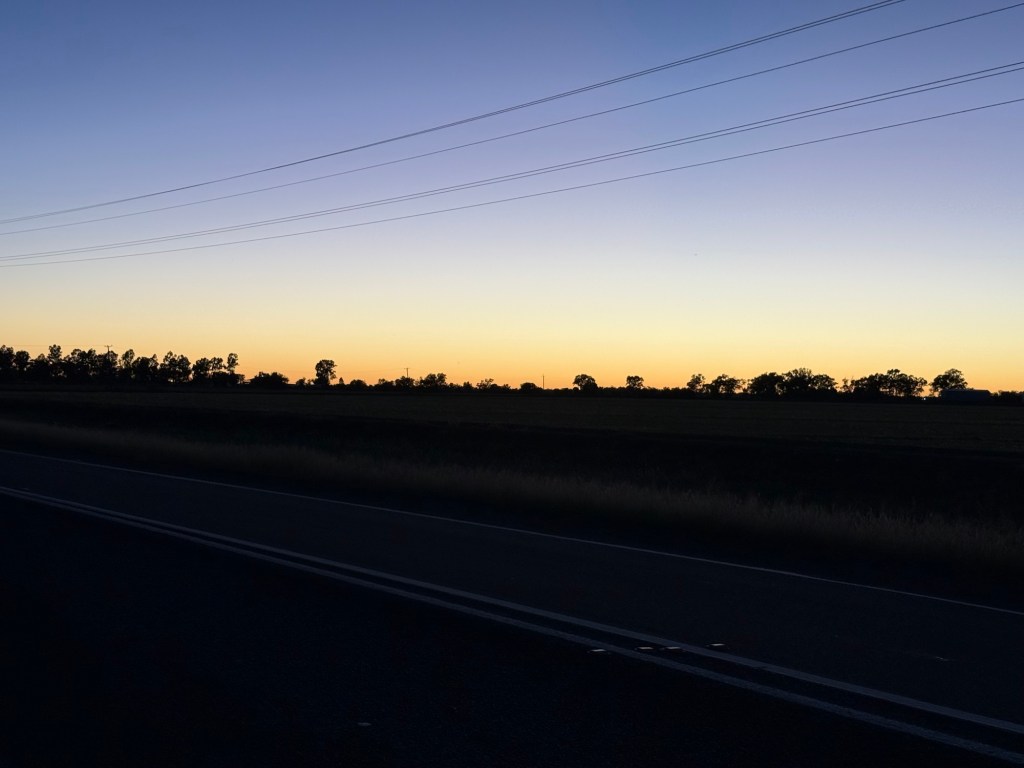
The sun beneath the horizon
The temperature was a sublime 18°C (65°F) first thing and after stopping to buy a sandwich I was straight onto the highway heading north. At 5am many cafes and kiosks open in all these towns. Your average tradesman disappearing up the road to start work wants a coffee, that is, there’s business to be done in the hospitality sector. Given the hour of day they start I’m always impressed that they’ll stand around for 10 minutes waiting for their beverage. Clearly proper coffee or no coffee is the call.
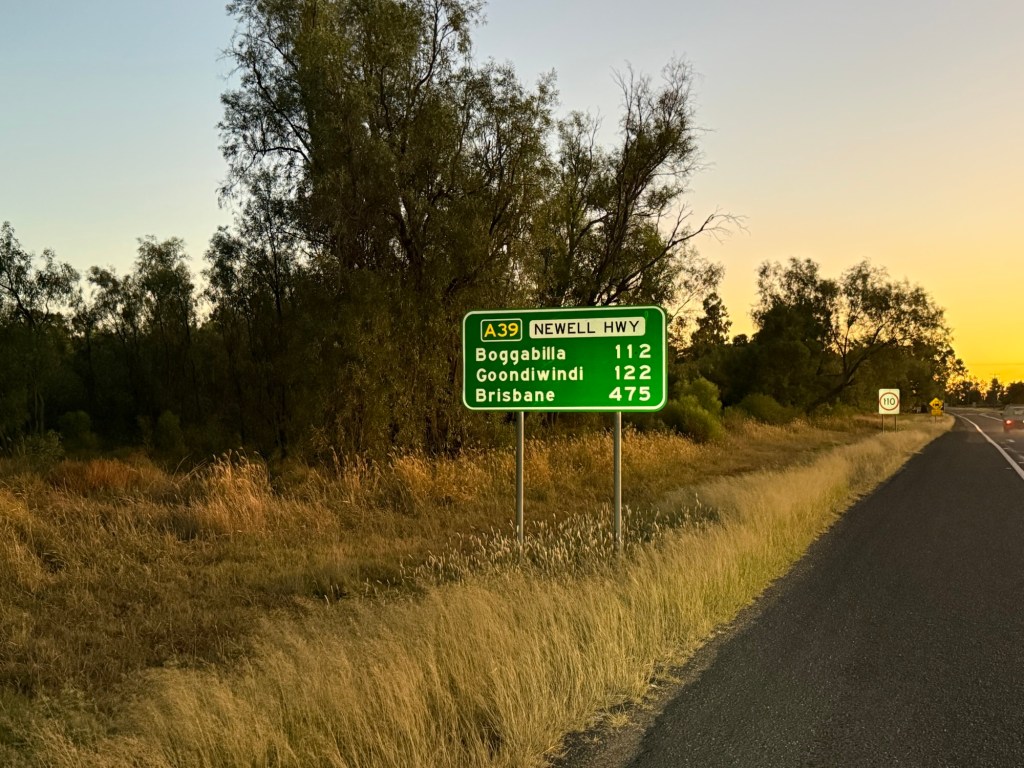
A sign of things to come
I was headed to Goondiwindi but just before that was my first and only stop, Boggabilla. That turned out to be a very long way away. In the meanwhile there was no shade and nowhere to lean my bike up if I stopped and sat down before that settlement. I say shade because by 9am the sun’s well and truly out and hitting mid 30s. Later the temperature crept into the 40s. I was carrying lots of water, I was covered by a big hat and other exposed flesh was underneath sunscreen. The only thing I couldn’t stop was the complete enervation of being out on the bike for seven hours straight.
Shadow play
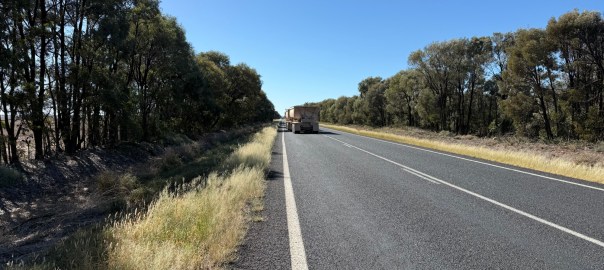
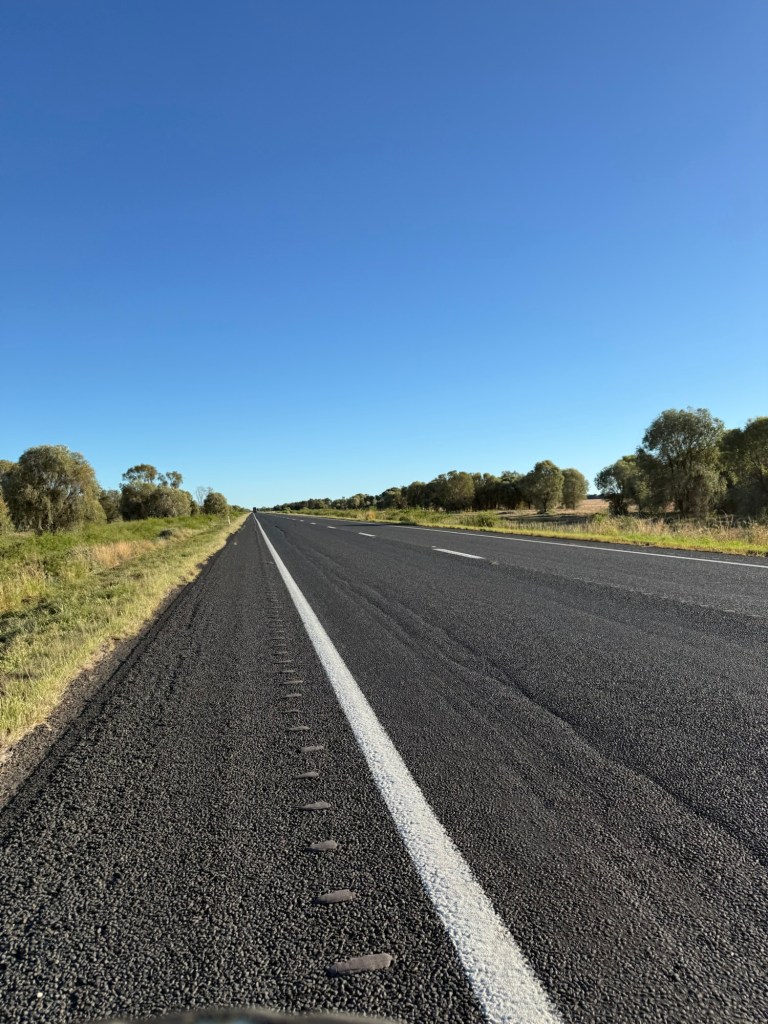
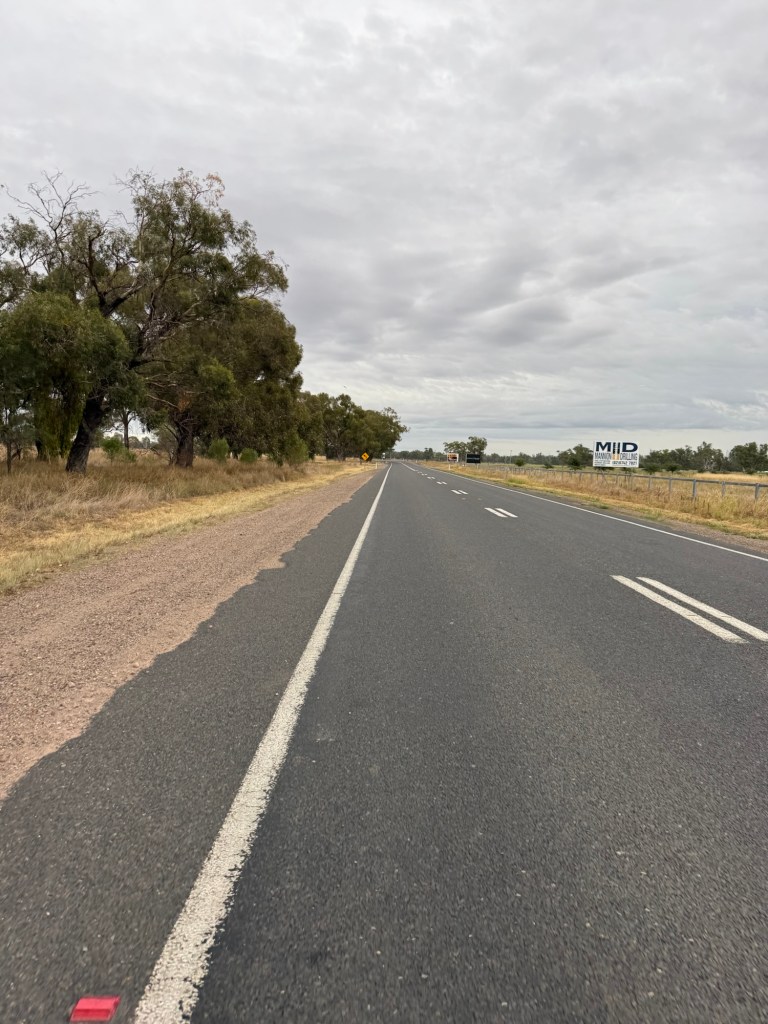
The road stretched before me. This was a good shoulder but note how rough the surface looked. Recent work on the highway had all been to degrade the quality of the surfacing to this roughness. The distance from the road of the trees meant no shade. Were there optional routes? Well sort of. I could have got north by following the suggestion of Google or Garmin for bicycles on very minor road but they would have been less direct, still approximate to this route and no less exposed. I’d have just had less trucks and a longer ride. No point.
Chunky gravel in the road surface
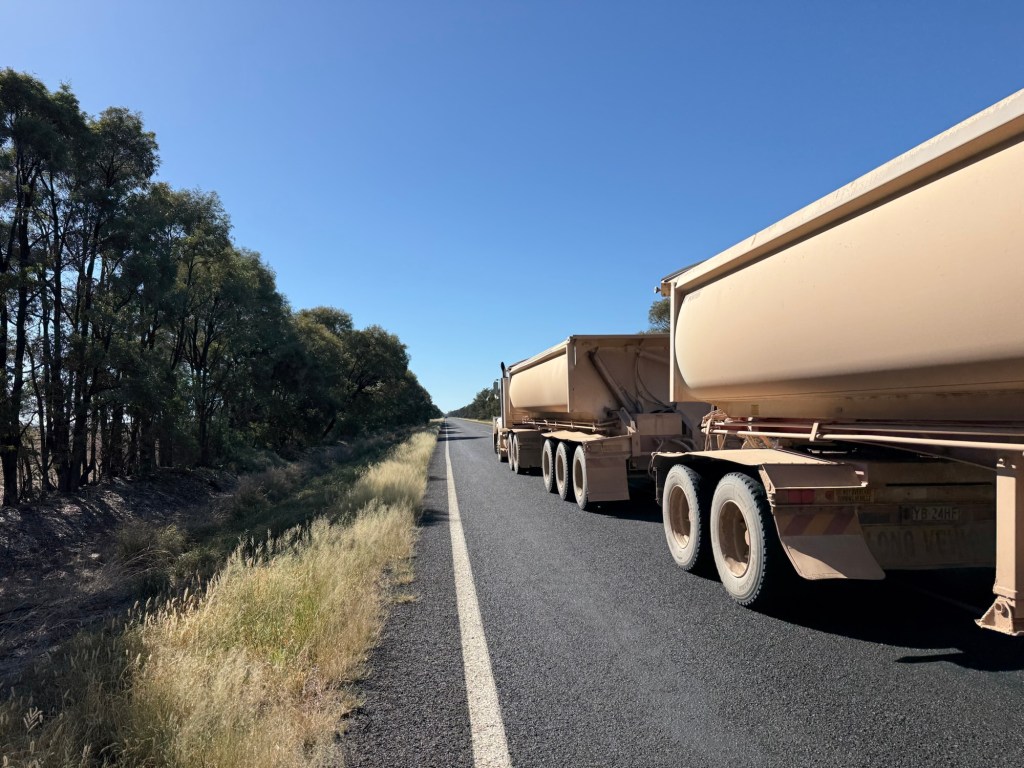
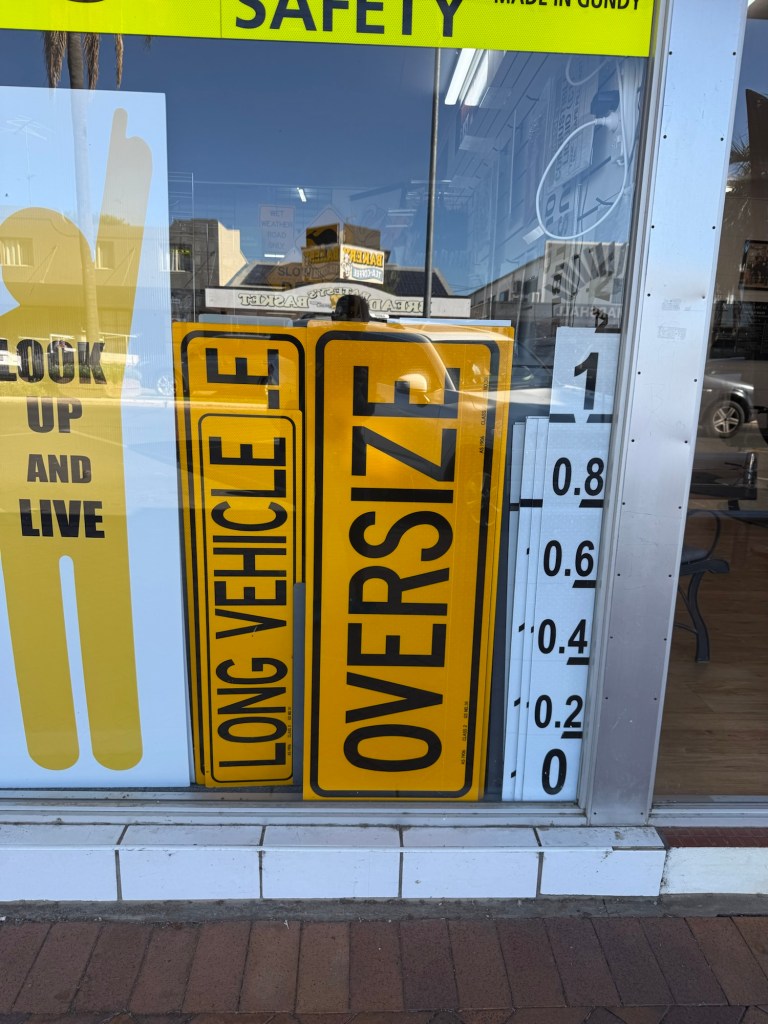
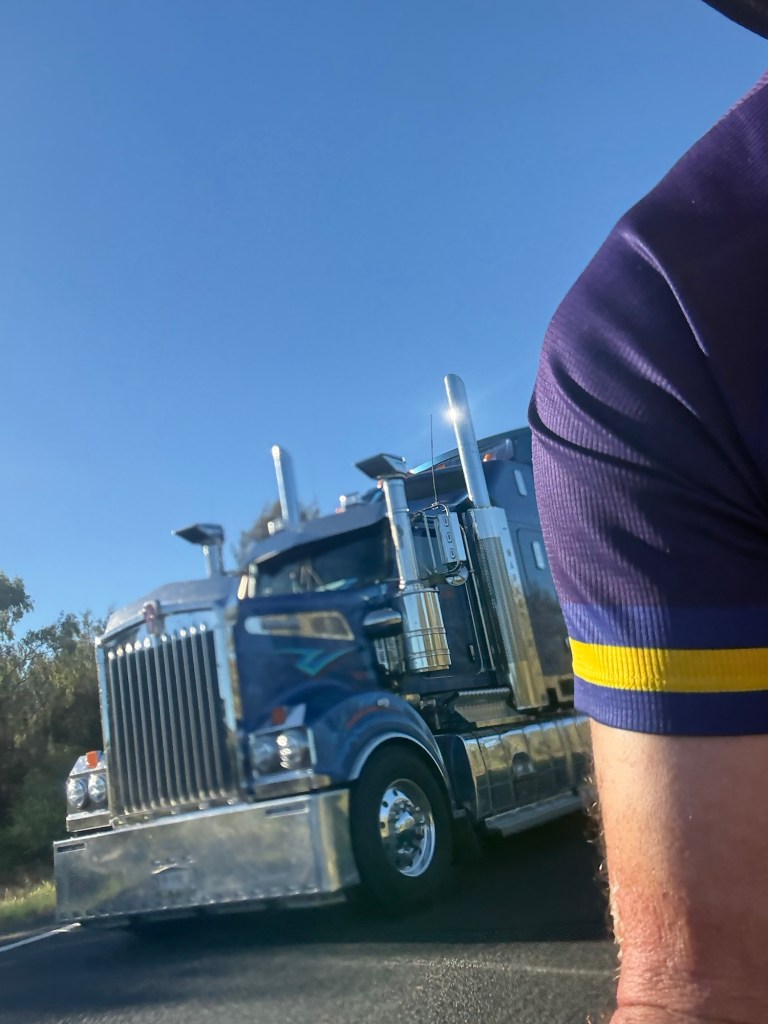
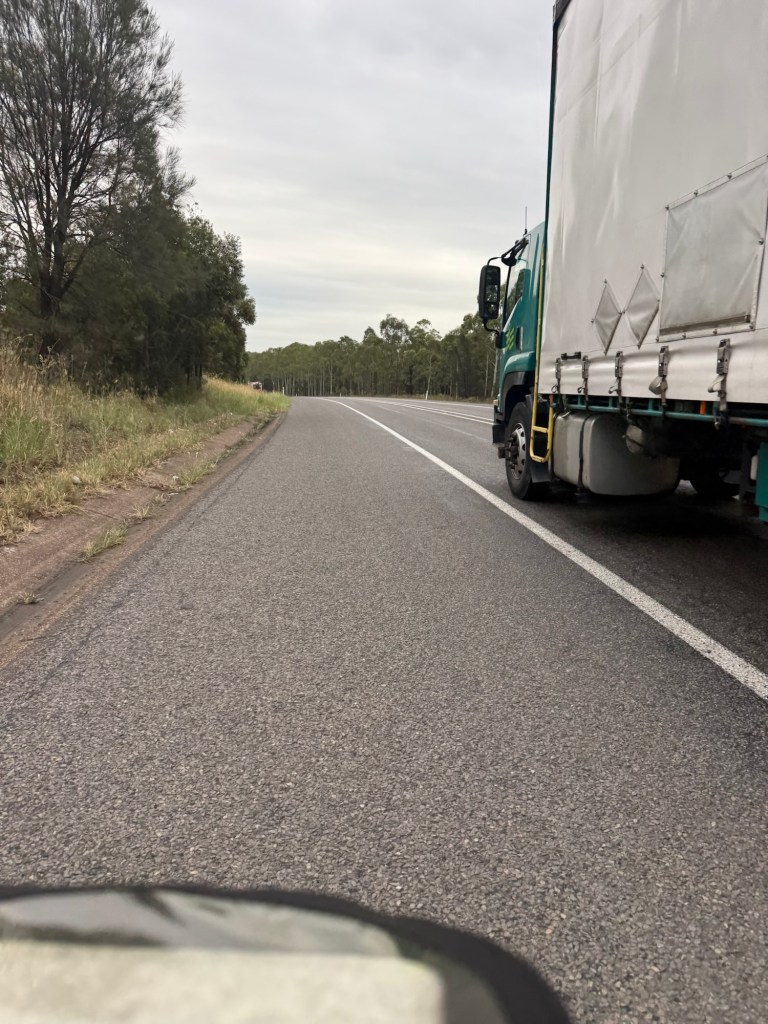
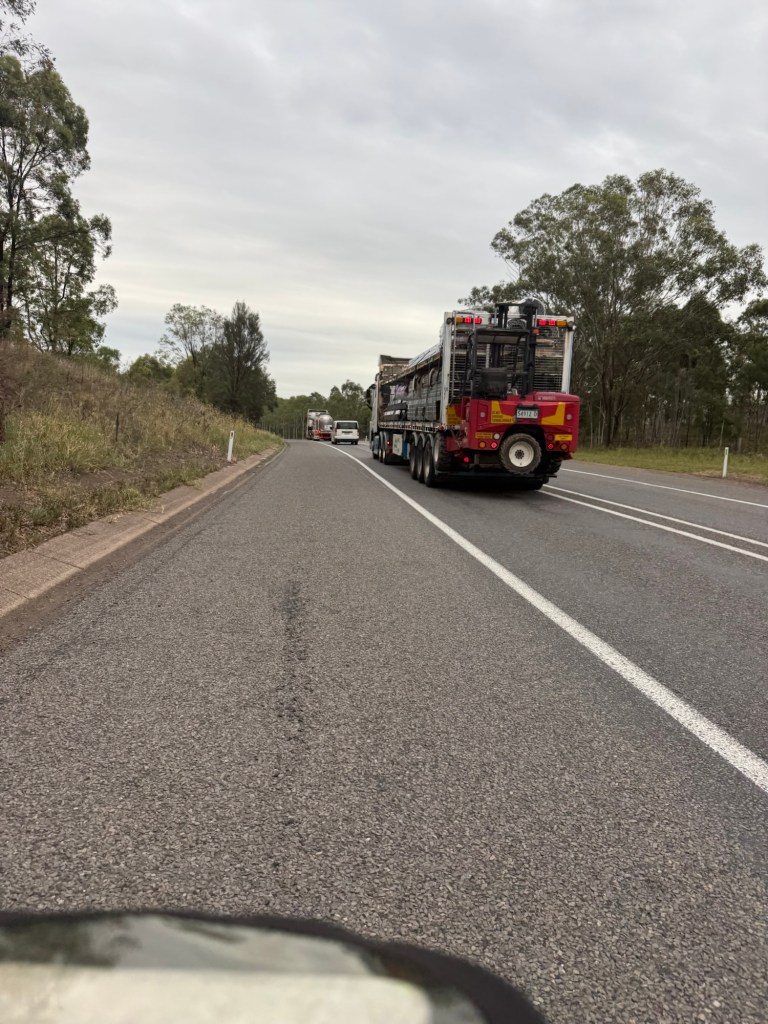
Most trucks moved over onto the other carriageway as they passed at 60 or 70mph. I never knew exactly when the truck would actually get past me, Would it be a truck alone, a truck with one trailer (‘Long Vehicle’) or with two trailers (‘Road Train’). Professional drivers are good and aware of the impact of their vehicles. They will give you space if they can. On more narrow roads where the truck couldn’t move over the draft created by one going past you, six feet away, at 60mph could be sold as an exciting fairground experience!
Chrome delight
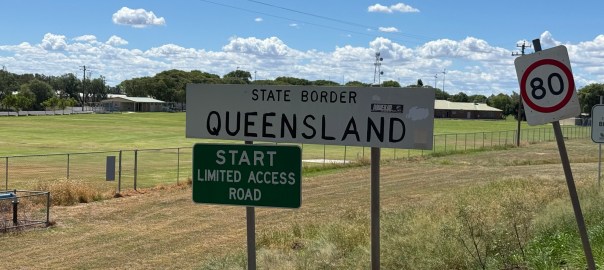
So some time later I got to cross into Queensland and into Goondwindi. The clocks went back an hour. I’ve little to tell you about my day. The concentration on keeping the bike going forward straight and not wandering into the carriageway whilst dealing with variable shoulder quality was itself tiring. However, I was never in danger and just kept pedalling. My legs or butt didn’t hurt and I was fine but getting more drained. The option to camp was disappearing. My early starts were essential but getting to a campsite early afternoon was hopeless. What would I do until about 8pm when the heat started to fall.
My last stateHow far I’d come. Brisbane, I can see you!
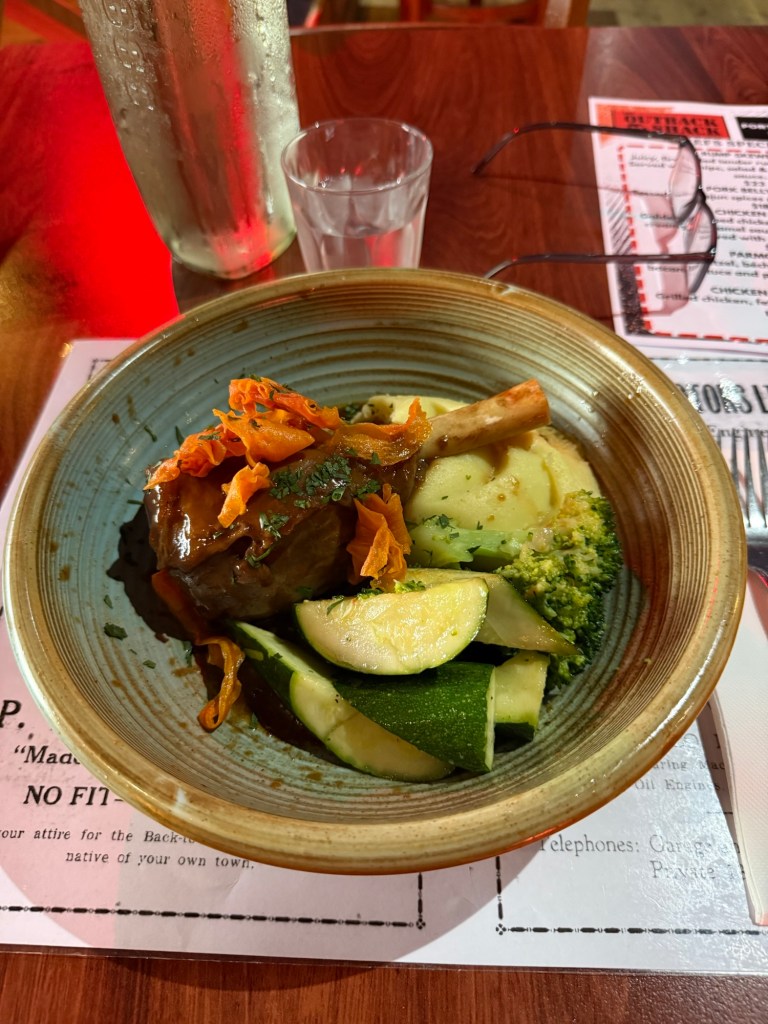
I must start with last night’s dinner at the RSL. Lamb shank with proper vegetables! Most restaurant menus I see are generic for rural Australia (and the USA.) Lots of fried food and sugary drinks. I must admit in the pursuit of sustenance and calories I’ve indulged but proper food was a welcome change.
Proper food – look vegetables!
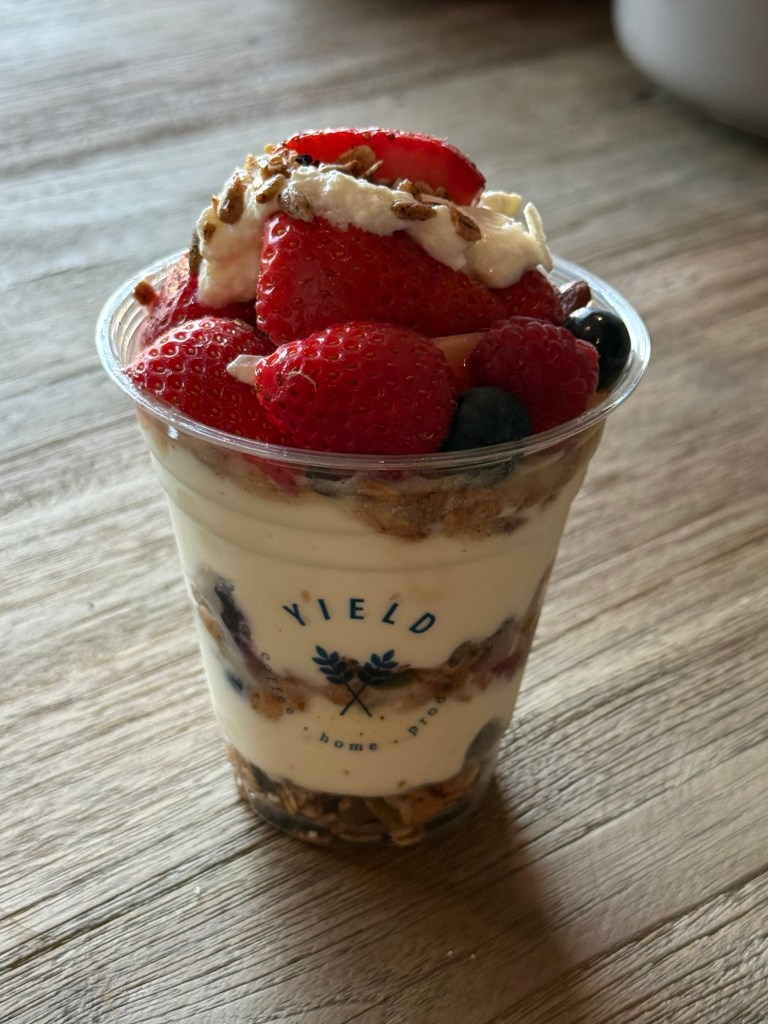
Breakfast the next morning included fruit!
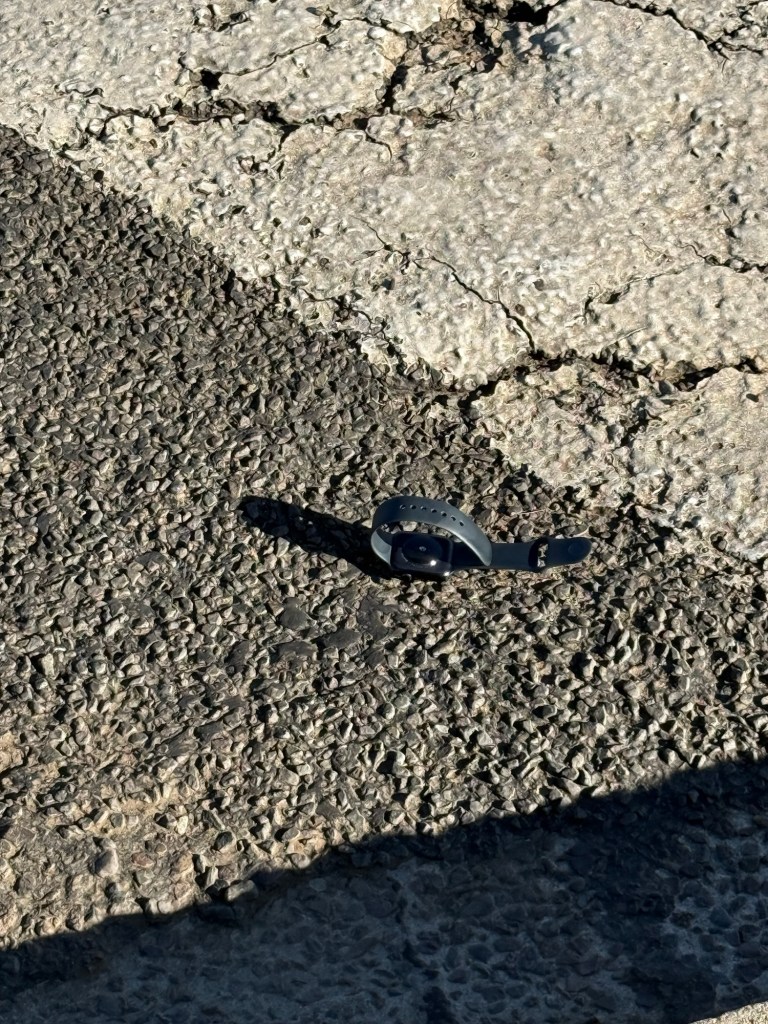
Outside of the cafe I applied sunscreen. That meant removing various things to get to my arms. I temporarily rested my Apple Watch on my rear panniers, finished applying the lotion and then cycled off a mile up the busy road with morning rush hour traffic before I looked at my bare left wrist and thought bad thoughts!
Retracing my steps I found it lying on the road near a high kerb I bumped over. I was very happy
Mine!
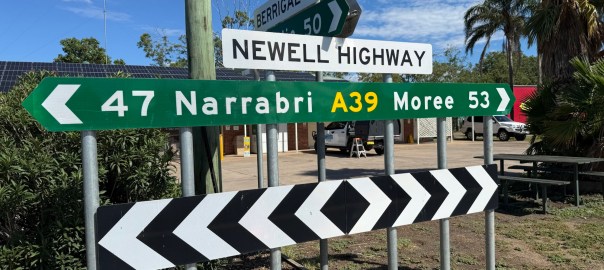
The A39 is the main artery heading north or south between the few larger settlements. It is a direct and fast route which does a passable impression of being completely flat. The shoulder fluctuates all the time: wide, narrow, rumble strip, no rumble strip, beautiful flat asphalt or that gloopy stuff they drop small bits of rock into (like Scotland.) The latter road surface was the main reality and whilst you could make progress it was not the preferred surface. The traffic was reasonable with trucks moving over, if they could, to reduce the ‘draft’ and a few even tooted. It was safe. I listened to music and podcasts.
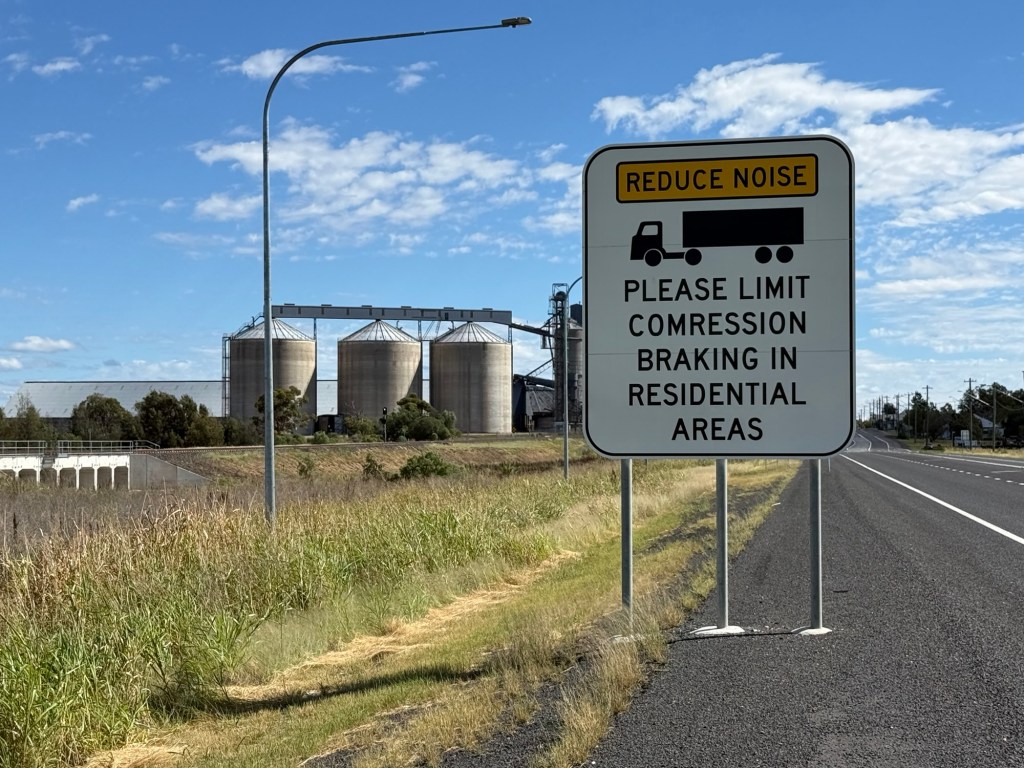
Compression brakes are fitted to US trucks. Australia uses US trucks. It is a feature where the truck can be slowed by suppressing the performance of the engine and obviating the need to touch the regular brakes that, by friction, stop the wheels turning so fast. Apparently this adds longevity to the regular truck brakes and prevents fade. These trucks are seldom without one or two trailers and the weight of the load is only matched by the high speed they roll along. If you use compression braking it can affect the exhaust and make a considerable racket. They are banned in Europe as they contravene noise laws.
Never camp at the bottom of a long hill that’s a main highway is my advice! Most built up areas request truck drivers desist, hence the sign.
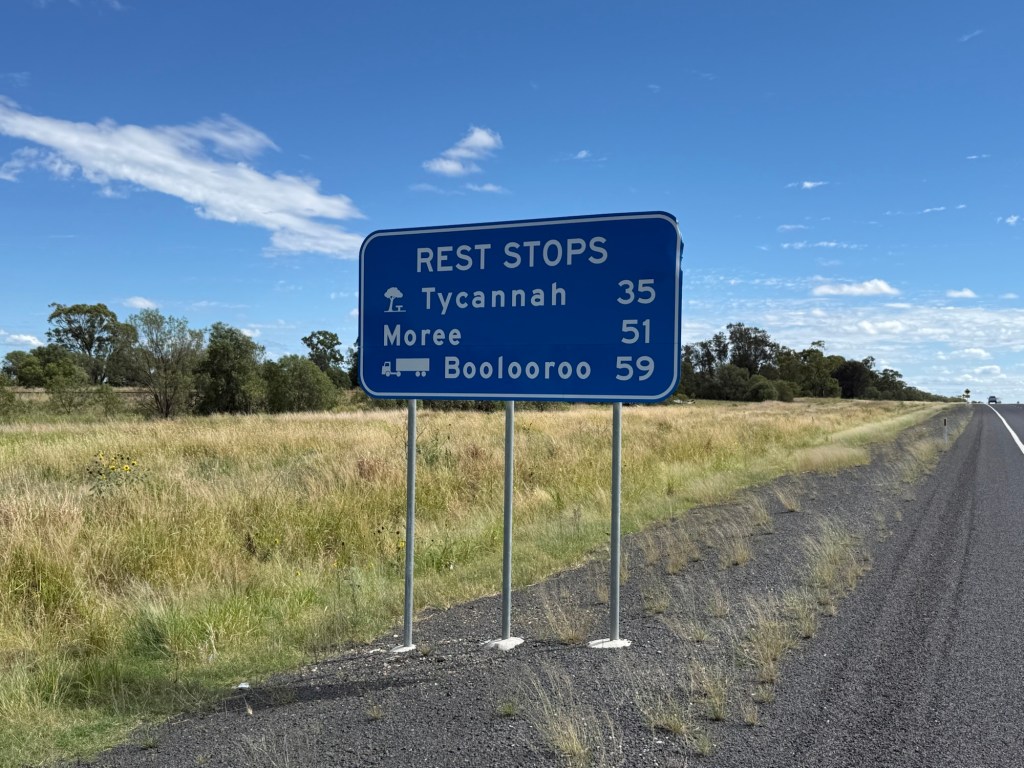
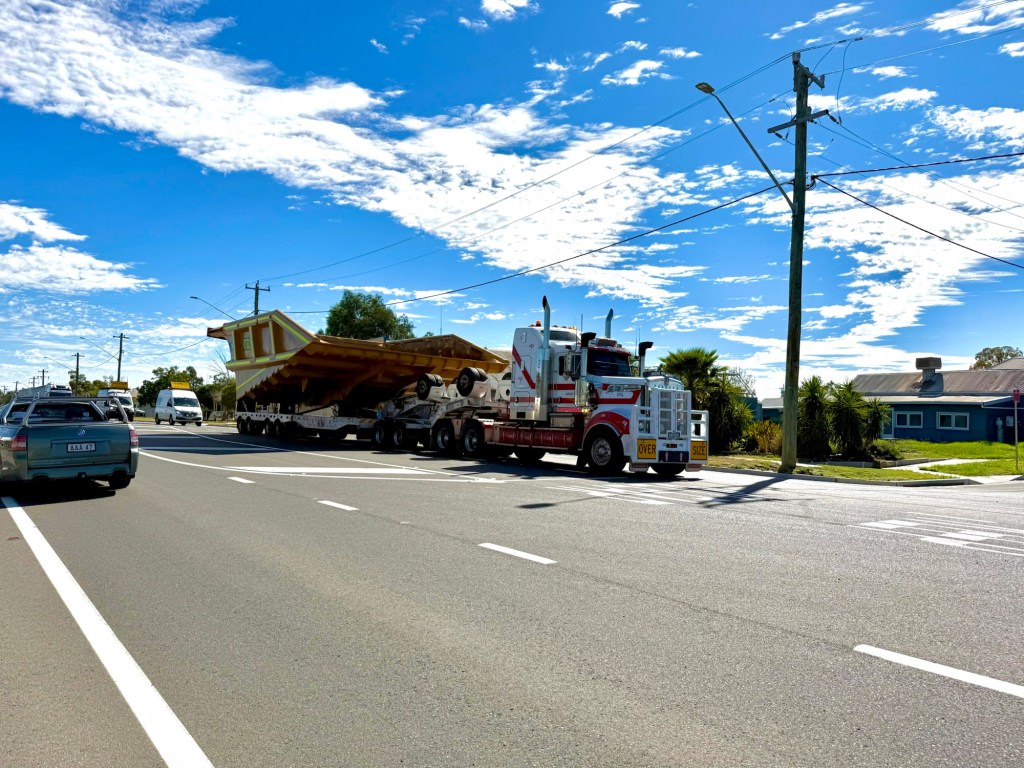
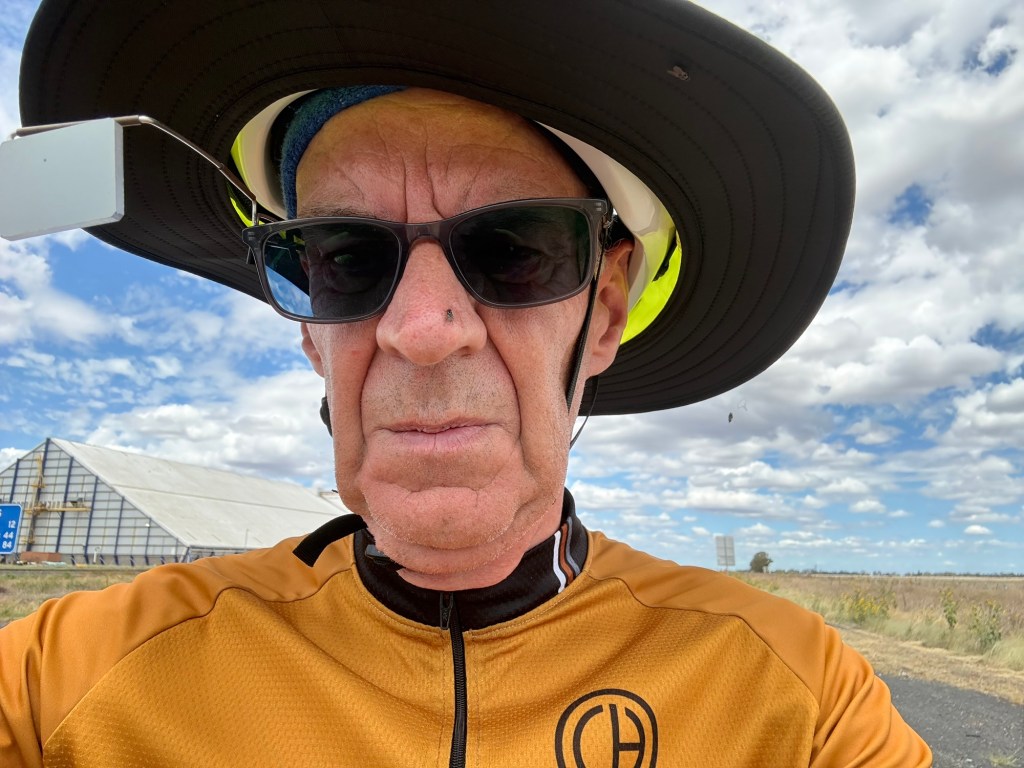
Boolooroo! My kind of townOccasionally a wide load would demand other road users pull over. I know, I was that soldier…Note the pesky fly on nose!
On the long dreary ride I often had company. They descend in numbers and land on your sweaty face. I felt like one of those poor beasts you see in the corner of a field in summer spending their time swishing away with their tails at the plague of flies.l
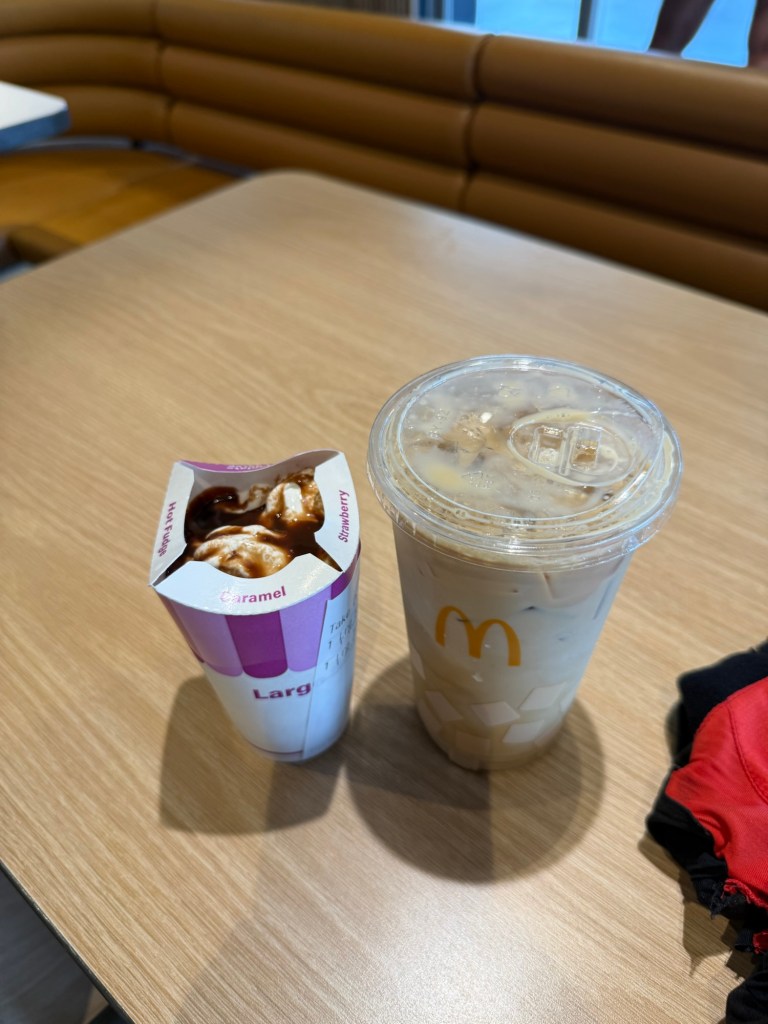
I started with a tailwind and had it for most of the ride but ground into Moree in a headwind? I hadn’t booked any accommodation but I was starting to come to the conclusion that camping was too uncomfortable with high temperatures until late in the night and maybe motels would be the way forward. I darted into a McDonalds to research options where my only thoughts were an ice cold drink and ice cream. It seems McDonalds is my social hub. Vicky asked me if I needed advice. She was another farmer popping into get some lunch whilst a tyre was being changed. She had concerns about my safety. I put her mind at rest.
So cold I got horrible brain freeze!
The temperature was 38°C (100°F) and I simply felt I needed 30 minutes to cool down. Remember I’m cycling for 6 hours solid, despite the sunscreen, big hat and a lot of water on board I start to fry.
Data:
I once, as a young manager, went to the Manager’s Canteen at work for lunch. I sat down at a communal setting with my plate and declared, expecting hero status, that I had run 11 miles last night and was quite weary today. A colleague called Graham Salmon looked up from his pie and gravy and with a profundity that still affects me today asked ‘why didn’t you get a bus?’ With that reality check that this was my choice to embark on this tour I have listed some New Zealand statistics for the various followers. Especially the Strava Anchors. I must point out there were no buses on any of my routes.
I actually cycled for 10 days between Carole and Paul. That (shamefully) included a rest day in the very nice town of New Plymouth. I cycled a total of 518 miles but more tellingly I climbed 7,927 metres (26,000 feet.) Given the bike had about 25kg (55 lbs) of luggage and another 2 kg in water on it to have averaged 790 metres climbing per day is quite an ask. Only on one day did I hit an average speed of 11.5mph (18.5kph). Given the challenges of gravel roads and climbing then sadly one day saw me post an average speed of 7.3mph (12kph), that is slow even by any measure but reflects the severity. My maximum distance on a day was 82 miles along with 1,579 metres of climbing: Raglan will always be my special place. Weather wise NZ was very variable during the day. If the sun came out it was like standing under a tanning lamp, however, that wasn’t often or long in duration. At the start of the day it could be cold, especially in the tent, but usually warmed up to around 20°C (around 68 to 70°F) but would fluctuate up or mainly down. Perfect cycling temperatures frankly.
I checked out of the Red Chief Motel and went to McDonalds for breakfast. I know you’ll be disappointed with me but it was Sunday morning, choice was not available, and wait till you see where I bought a sandwich!
(I had a McMuffin that replaced the bun with a waffle. Whoever made this recipe up should be shot after being made to eat 5 of them consecutively. It was disgusting.)
Dining partners
Jenny and her mum were at the next table and had been for a walk. It was my usual 7am routine and, no doubt, they were avoiding the anticipated heat and now restoring the calories, and more, they’d lost. Jenny first introduced me to an Australian government app for weather and then went on to tell me about her day. Yesterday she’d been mowing the stalks of some sorghum they’d harvested and today she still had 50 acres to complete. Sorghum is a bushy plant that the Chinese like for making alcohol and also adding to chicken feed. It makes the yokes darker. I worry Australia with its mining and agriculture is very dependent on them (Chinese not chickens.)
On the way out there were a great number of young people up at this ungodly hour on a Sunday and I enquired why? This character told me they were going to launch a rocket. About 20 other students all fell about laughing at this. They’re from a Sydney University working on rockets and they were planning on launching one today. He went on to tell me that the large team involved students looking at the propulsion, trajectory, duration of flight, monitoring etc. etc. Good for them. I’m glad he’s clutching a hash brown and not my waffle abomination.
Rocket boy
I needed a sandwich and found one with tuna in it.
Forgive me
After some of the difficult days this was bliss. Flat, 24°C and no real traffic and certainly no trucks.
Flat
There are 17 million kangaroos on this continent but finding some who have avoided becoming road kill is uncommon. Apparently they graze at dawn and dusk but sightings by me are few and far between. I will start collecting the signs as I will see many more than the animals before Brisbane.
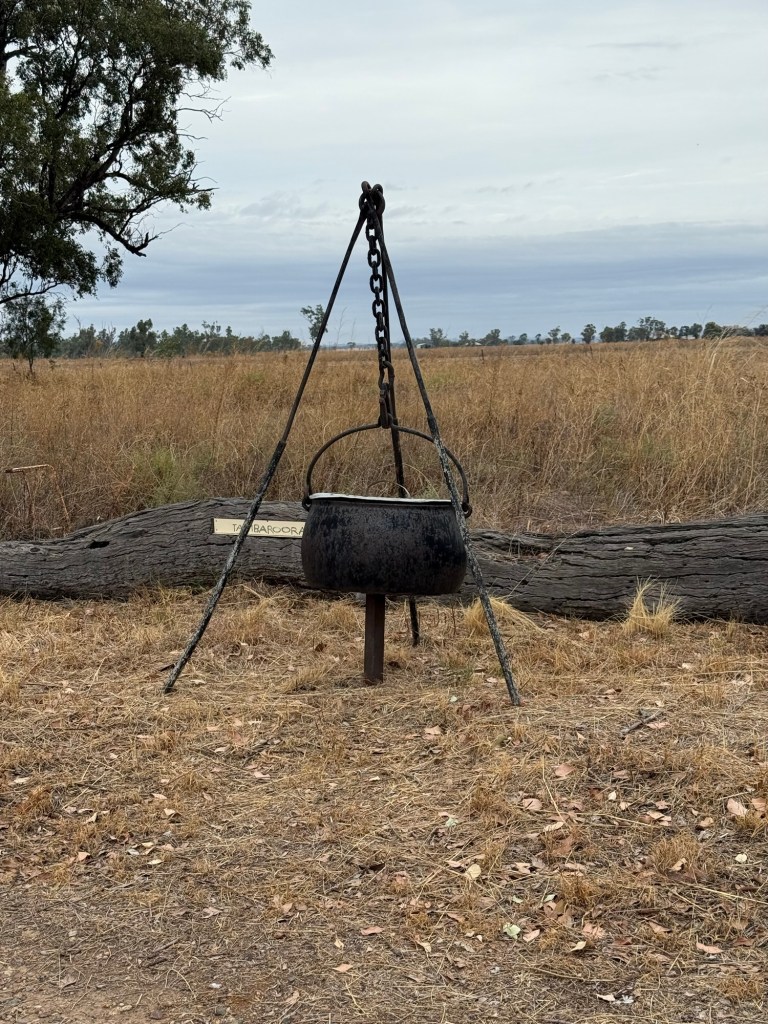
Mysterious and illusive Random cook pot in a lay-by
I was very surprised to discover that they grow cotton around here. It’s a very thirsty plant and you’d think that other lower cost countries would grow it instead. I was told the commodity price at the moment for it isn’t high.
CottonCotton
Oddly you’ll see dead trees painted blue throughout NSW. It’s to do with a mental health charity. Their random appearance is meant to generate conversations.
Mental health initiative
I haven’t found a car museum but I do love these Holdens. They look so sleek and sporty.
Holden Ute (Pick Up) – Stopped production in 2017. Beautiful
I got to Narrabri, not a town that will live long in my affections, and pitched my tent and then locked up my bike beside it. As I did this a member of staff appeared and suggested I didn’t due to a high incidence of bicycle theft and that I should use a special shed on the campsite. Obviously I complied. He went on to describe the thieves very inappropriately suggesting it was the indigenous youth. Theft, generally, and some violence is now are putting the town on edge and is quite a blight.
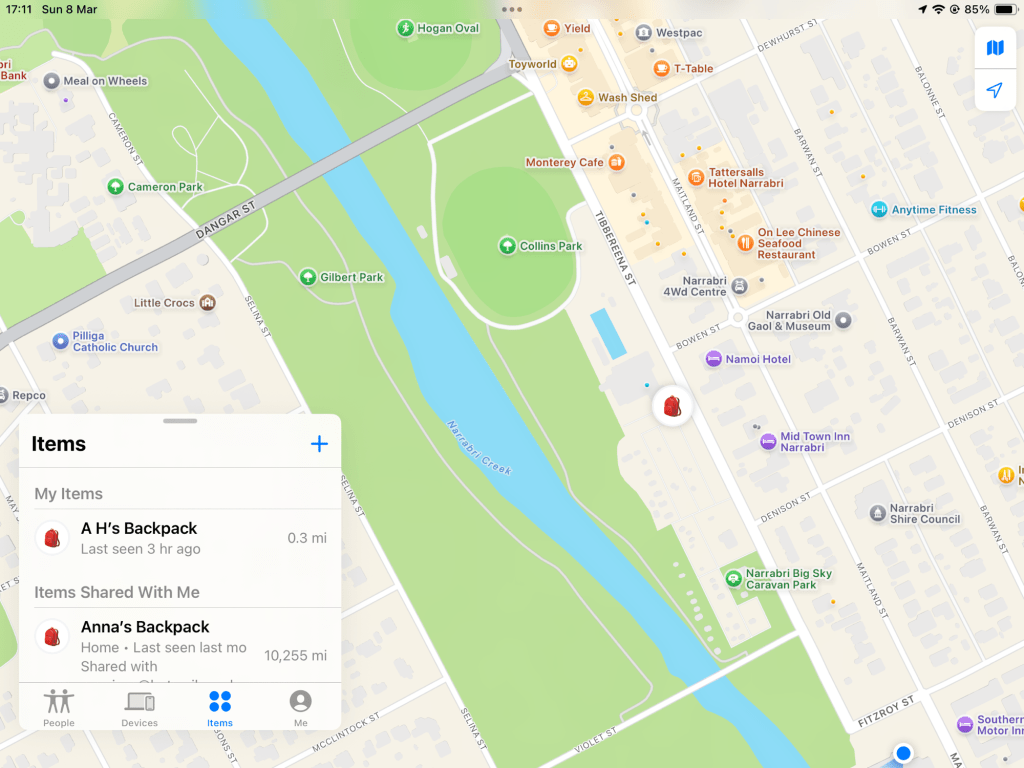
The rucksack shows where my bike is 🤞
I attach an Air Tag to the bike and the little rucksack shows it’s snug in the shed.
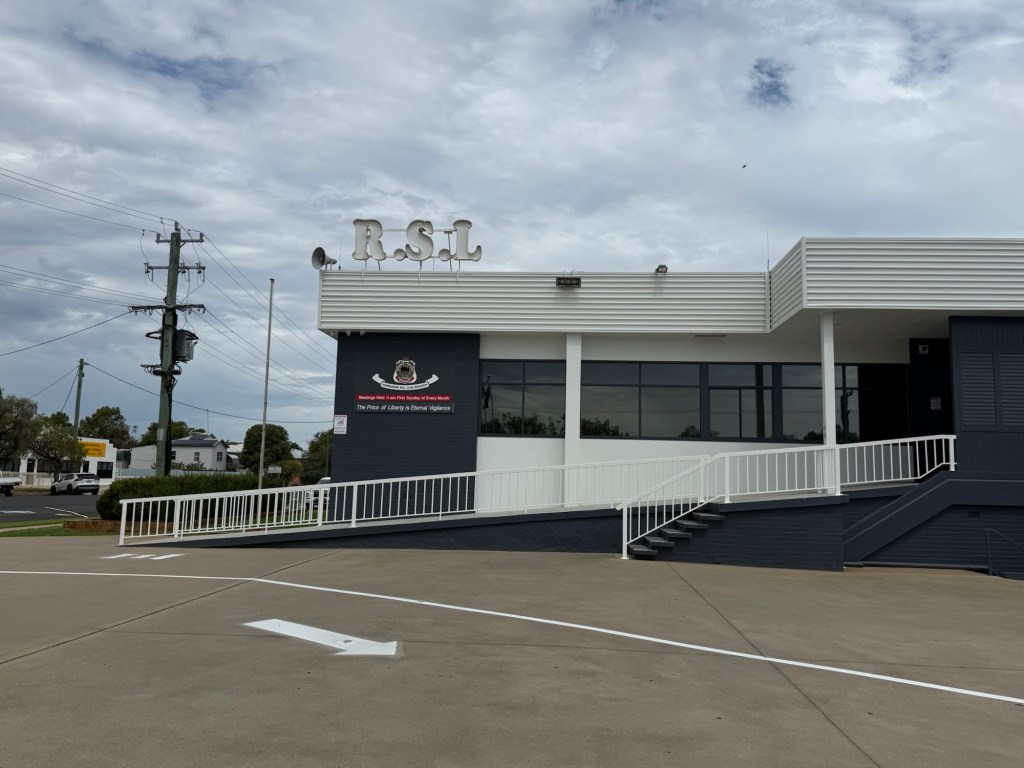
I couldn’t spend the afternoon in my tent and so I retired to the local equivalent of the British Legion. Here I drank, dined and used the internet. Several members were playing pokies. This refers to brightly lit neon machines that you feed cash into until you’ve lost sufficient to decide to stop.
Returned & Services League clubShould count as a rest day! 60 miles at an average speed of 13.6mph
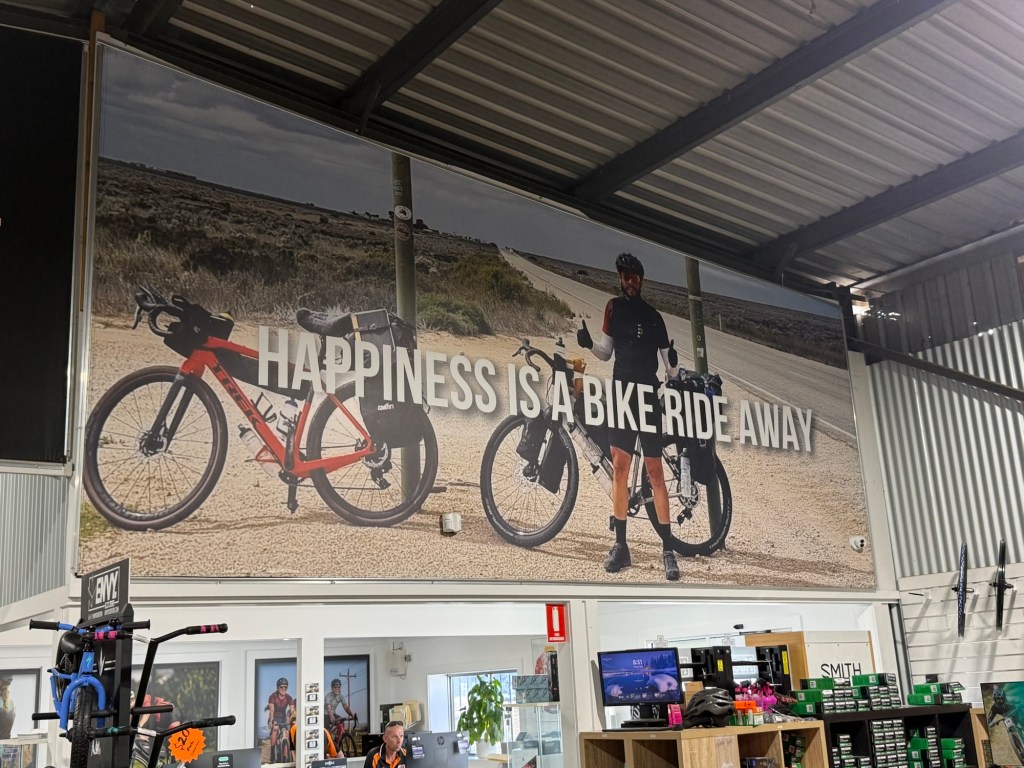
I would have liked to have been on the road by 7am but given the broken spoke I waited until the bike shop, Spoke and Throttle opened at 9am. The owner arrived at about 8.45am (on his push bike) and said it was no problem to replace my spoke immediately. Tony became a very happy boy. Phew. I was back on the road at about 9.30am. The owner apologised twice for the delay! I was certainly not unhappy but after he opened the store there were a deluge of punters around him he had to handle.
Occasionally!
For the bicyclists reading this I had already taken the back wheel off the bike and so when repaired he just handed back a wheel. I enquired as to what psi he’d blown the tyre up to? He said he didn’t need to remove the tyre off the rim but had managed to use the existing nipple through the rim. Having studied YouTube videos the night before, as I contemplated doing this myself, this approach wasn’t mentioned.
Restored and flying
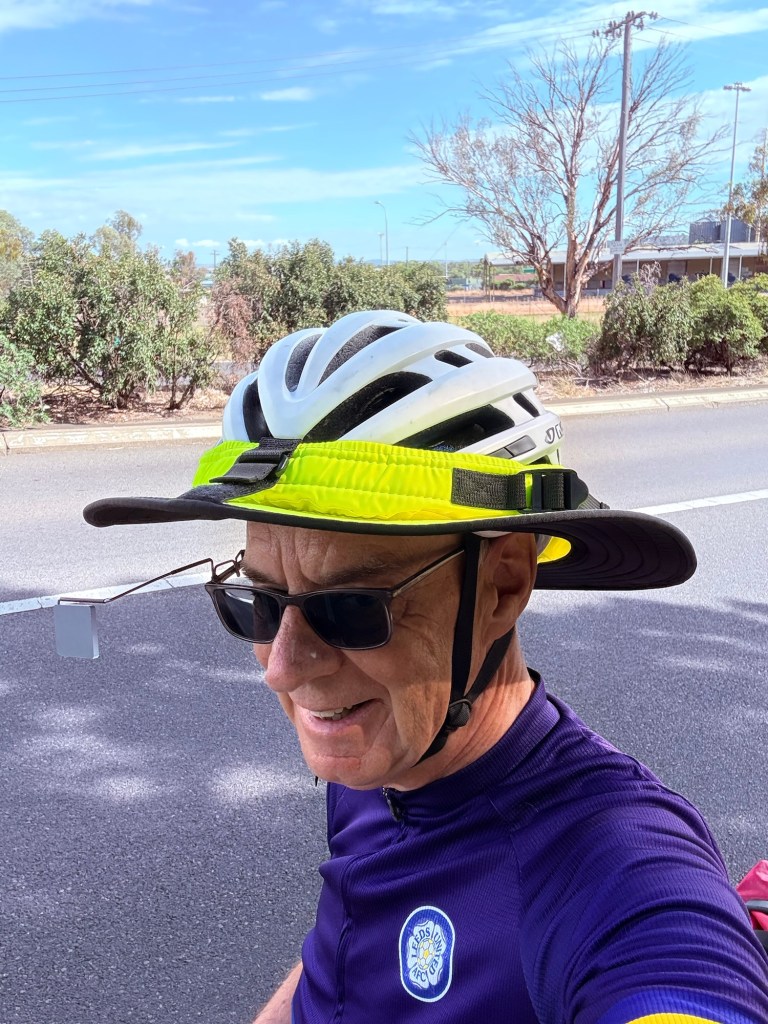
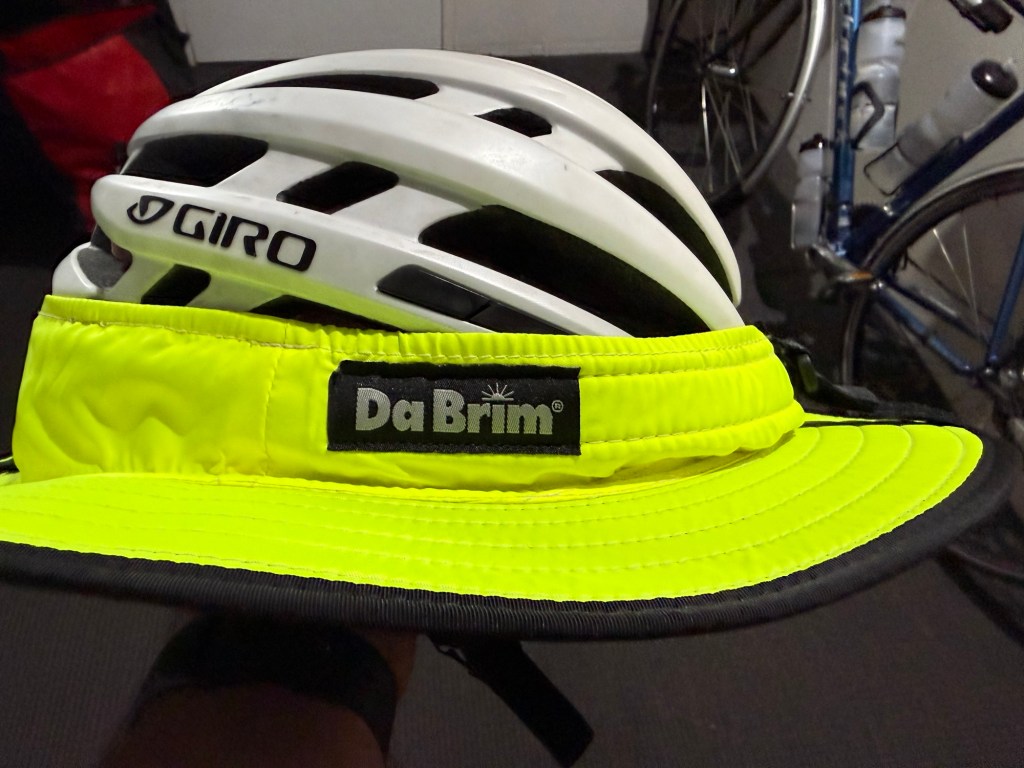
Quietly thrilled I set off. I had been carrying my extra hat/rim that fitted to my helmet that would preclude my having to apply sunscreen except to my bald patch through the top of the helmet!
Australian manufacturer, hence the dumb name! – cost over £60 but hoping it does a good job.
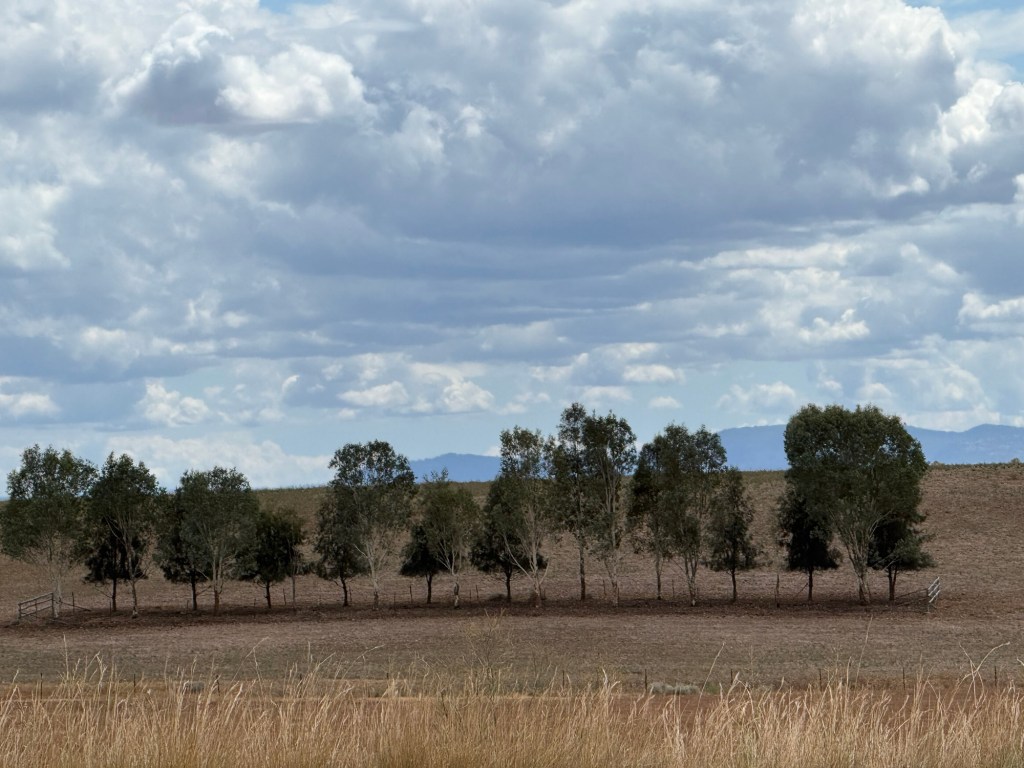
The route was broadly flat with a few gentle gradients up and downs. About time I found some easy going.
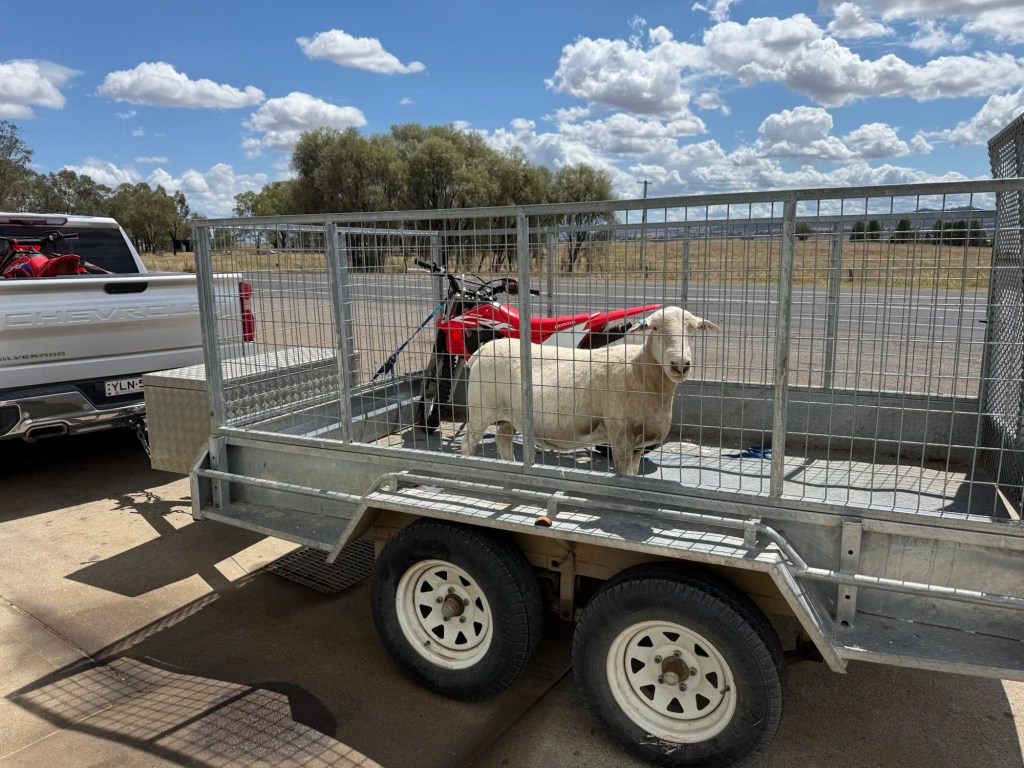
Sheep without helmet for the motorbike. Surely an oversight?
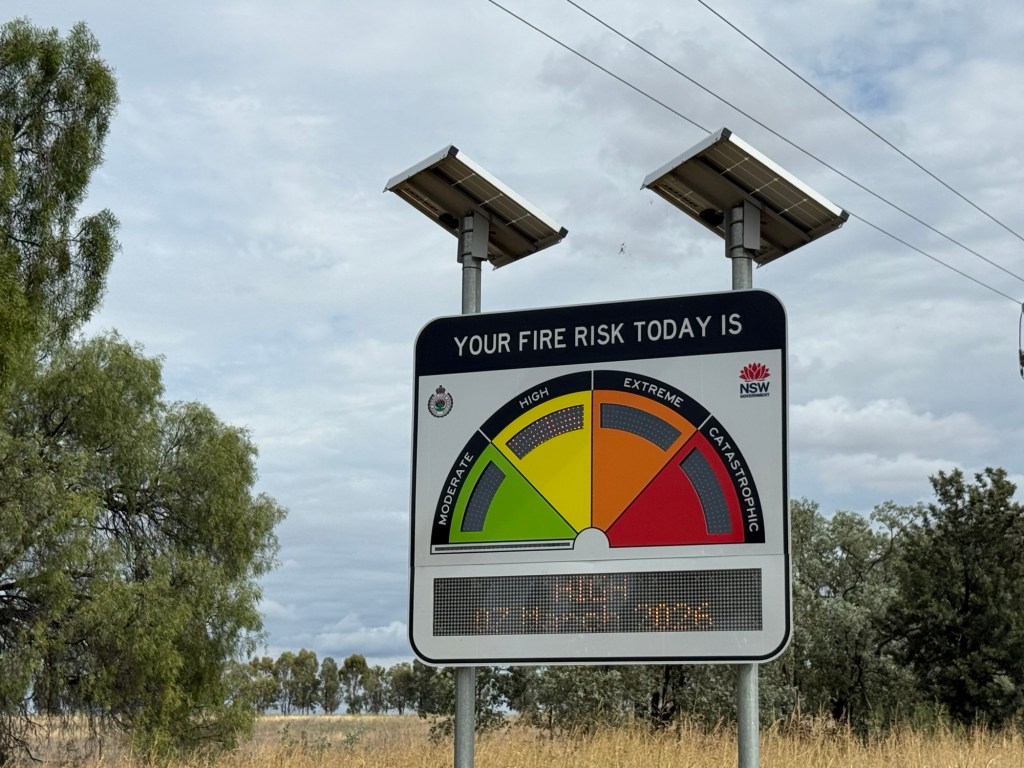
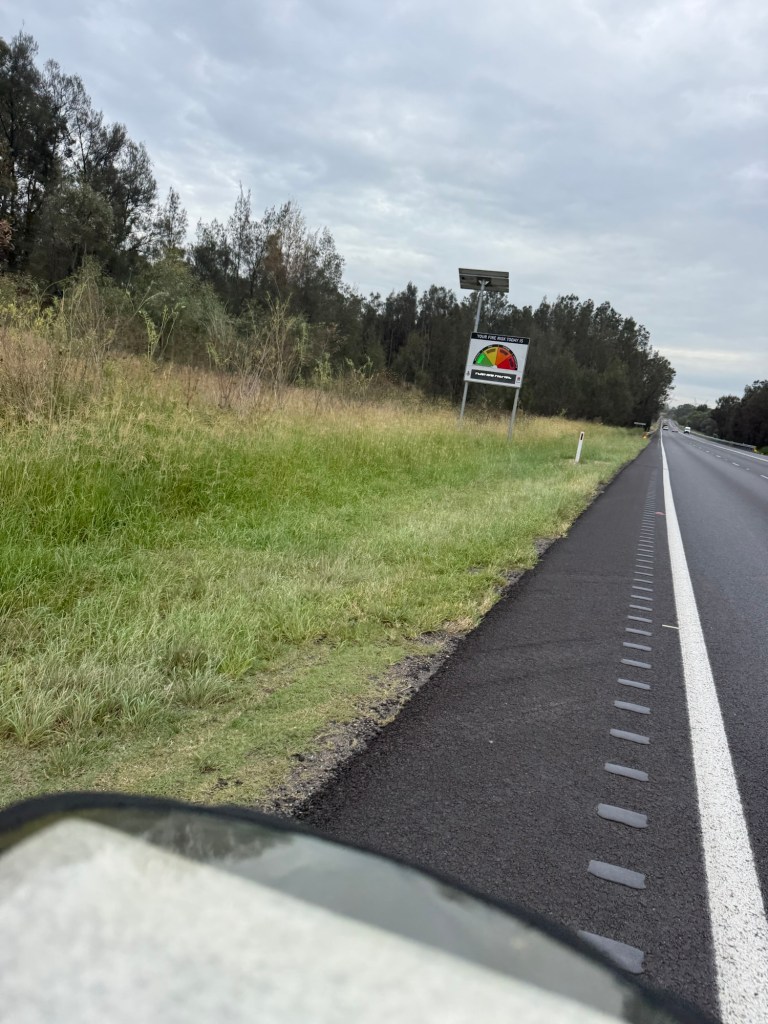
Just note that ‘High’ is only the third of four levels of concern on this board! Call a spade a spade with ‘Catastrophic’.
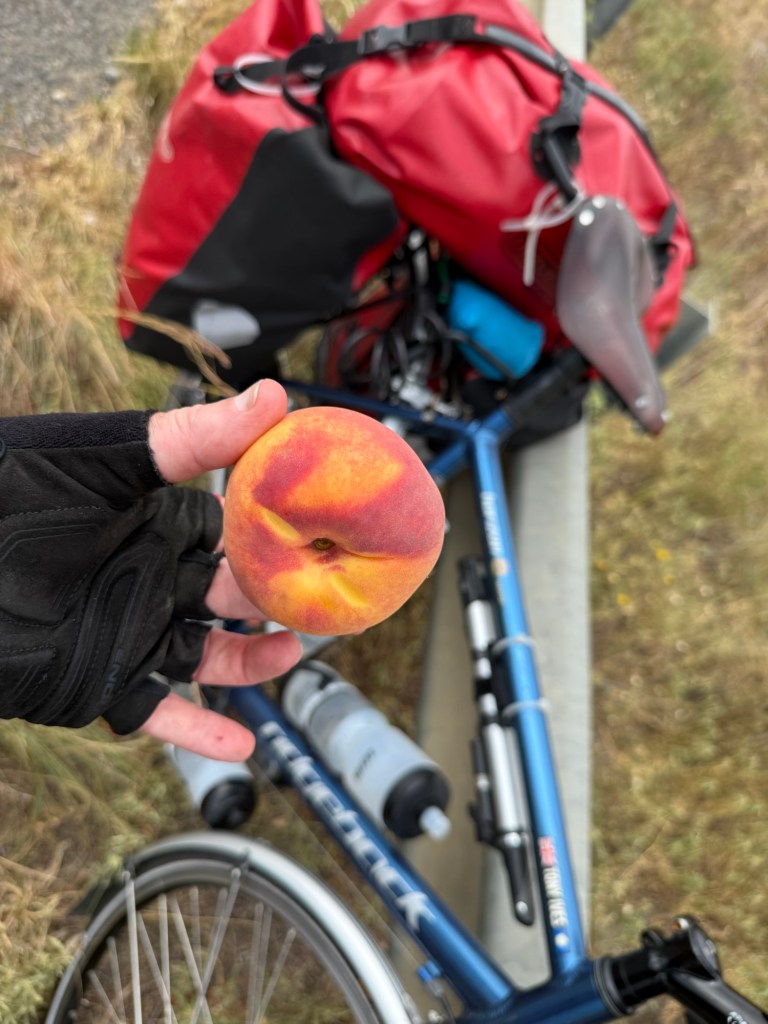
The ride despite being easy was dreary but the temperature was up to 40°C or 104°F and I had lots of water on the bike but I longed for some taste to cut through and I then remembered a peach I had bought.
Pure joy
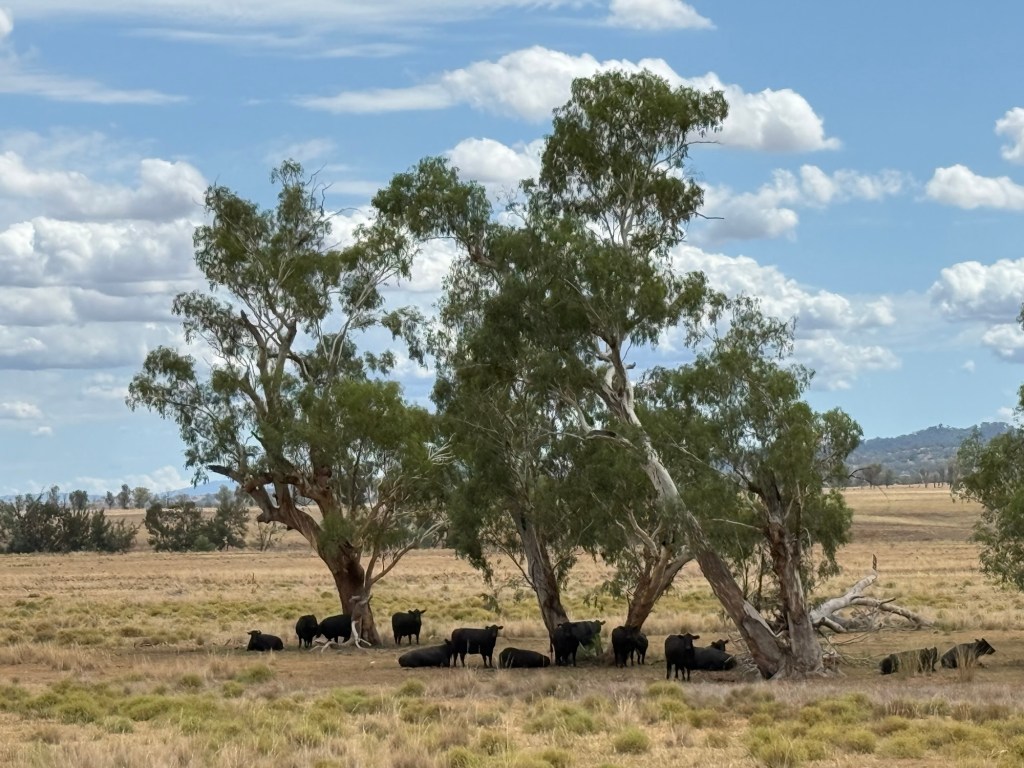
The ‘girls’ found a little shade to hang out. We put our cows, in the UK, in byres or barns during our winter ie. during temperature extremes. Here the cattle stay out in temperatures that are quite amazing considering they’re all wearing a leather coat.
Cooler cattleHills in the background
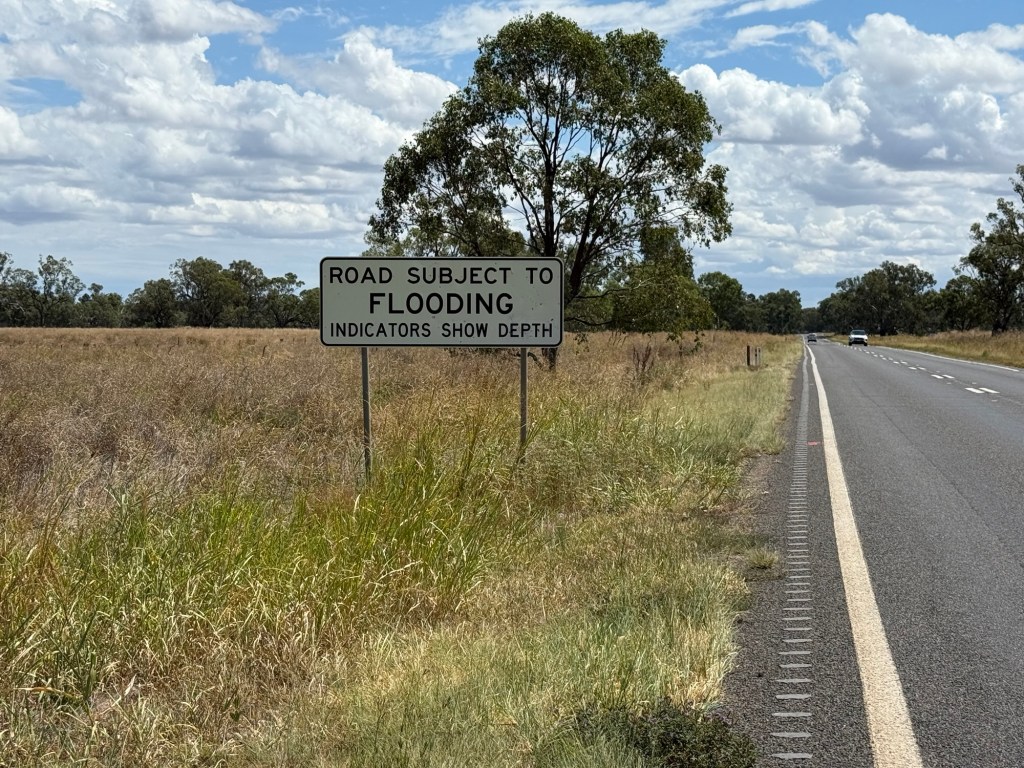
I’m always perplexed by these signs about flooding. These signs aren’t in valleys or areas where the water might be contained. They can be found in places where there are wide open spaces warning of a flood at 2 metres high! At the moment the locals all want rain as things are a bit parched. As I cycled I saw cattle but also there were a few fields that had been harvested and now with stubble were getting baked. Clearly arable is important.
Really?
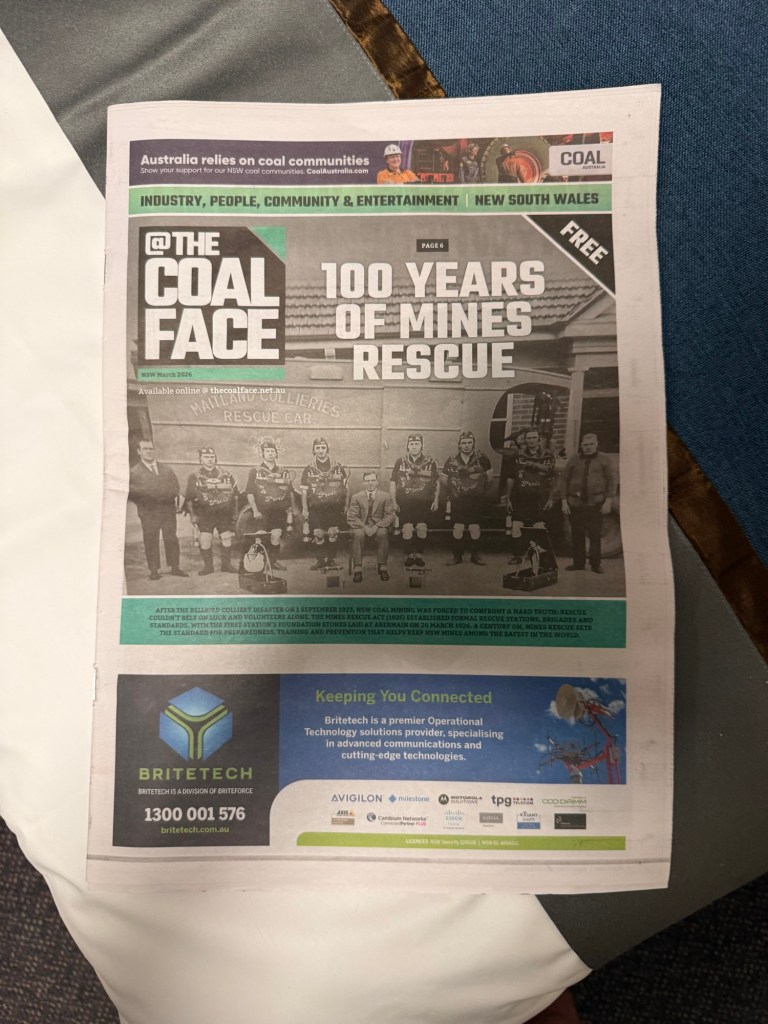
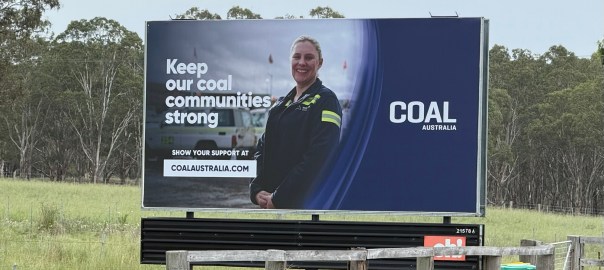
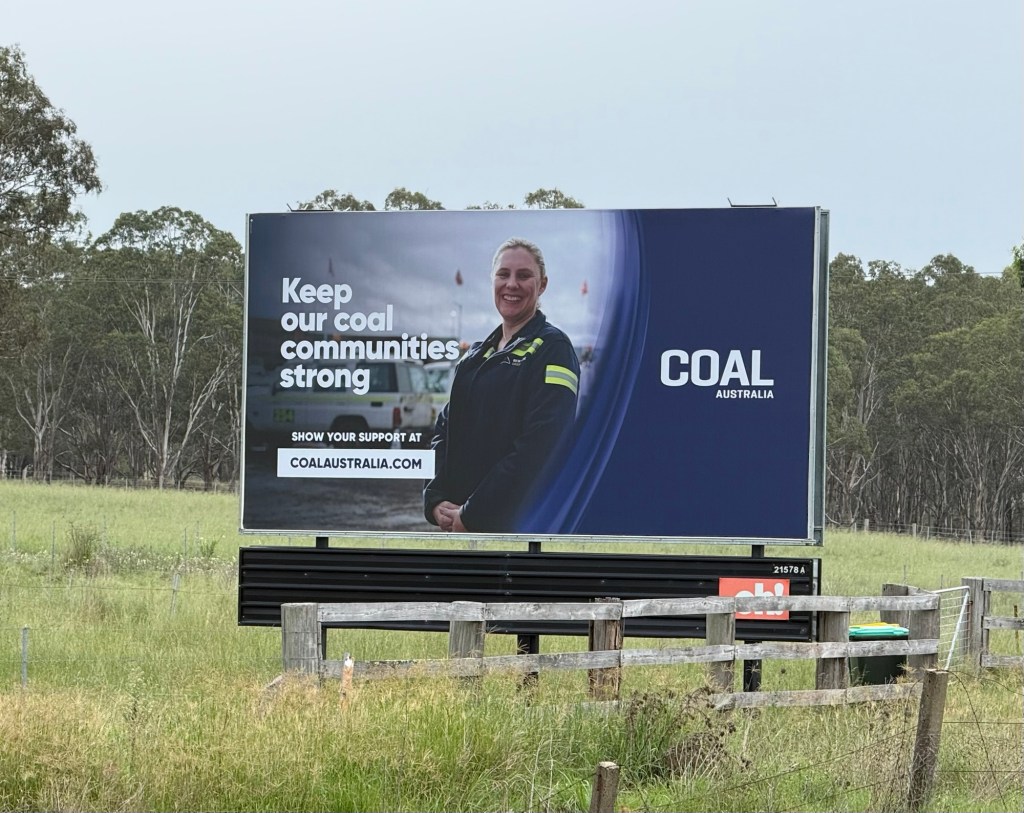
In NSW coal mining provides 35,000 jobs. I well recollect the blizzard of young folk in hi-viz in Singleton. In addition the industry calculates that it puts about £5 billion into the community and an extra £1 billion to the Australian government in taxes and licences. However, it has its opponents and the industry has its own persistent campaign with billboards and newspapers reinforcing its contribution.
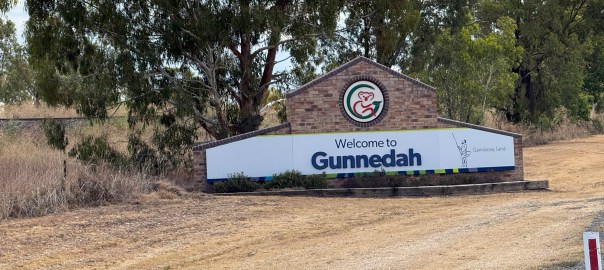
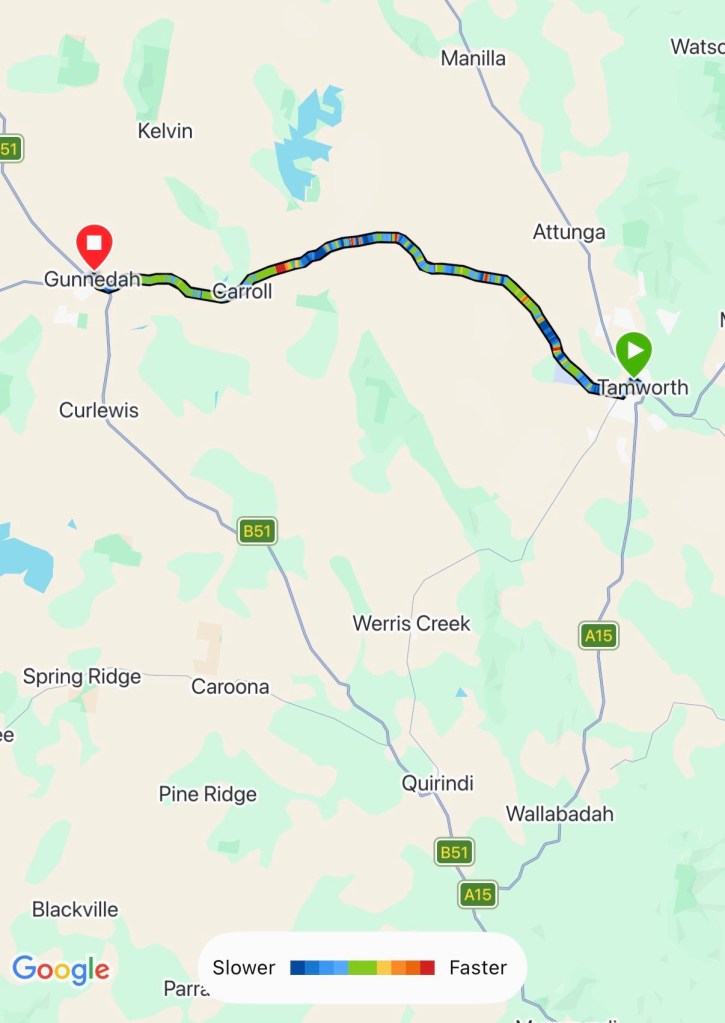
I weakened in Gunnedah and took a hotel. It was too hot to camp. I could get the tent up etc. but it was early afternoon and was I to lurk outside getting toasted until the heat fell off? For this project I looked at Booking.com and Google and found a cheap but reasonably rated motel. As the motel will give the agents around 18% commission (?) then I may get it cheaper going direct? So with the best internet price of AUD 120 I bowled up to Reception. ‘Do you have a room and what’s the price?’ ‘Yes, $130’. I was tempted to use the line that my friend Peter had once used in Carcassonne when faced with such a situation. He asked if the Receptionist would wait whilst he went outside and booked the room over the internet on his phone at the lower price! Anyway my Receptionist relented and matched the $120 but didn’t win me over as a friend.
Sorry Bob, only a paltry 50 miles but I didn’t place these settlements!
So a good day on the bike and a comfy bed in prospect. All good here.
(The blog contains a video please open on website or through ‘Reader’ – see heading on email.)
Warning: contains me singing
Another birthday. As my favourite youngest daughter would say… I am now 80 years old minus 9.
So to grip a preoccupation about flying back to the UK from Brisbane and being unable to speak to anyone at my travel agent or my airline I visited a local travel agent. They’d been dealing with the cancellation of flights and knew the likely solutions, which were a refund, offer of a (much) later flight date or…. it was over and I could fly. Whichever way it went I had to wait. My flight was too far out for them to be thinking about little old me. Paul, still tenaciously holding onto his responsibility of being my ‘angel of the blacktop’, using his vast flying experience sent similar soothing messages about it being ultimately alright.
Clearly, we’re all wondering what’s going on in the US President’s head as regard the immediate future. However, if anyone can work that out they could run a several day psychology conference.
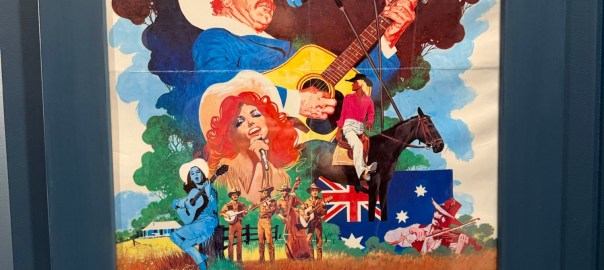
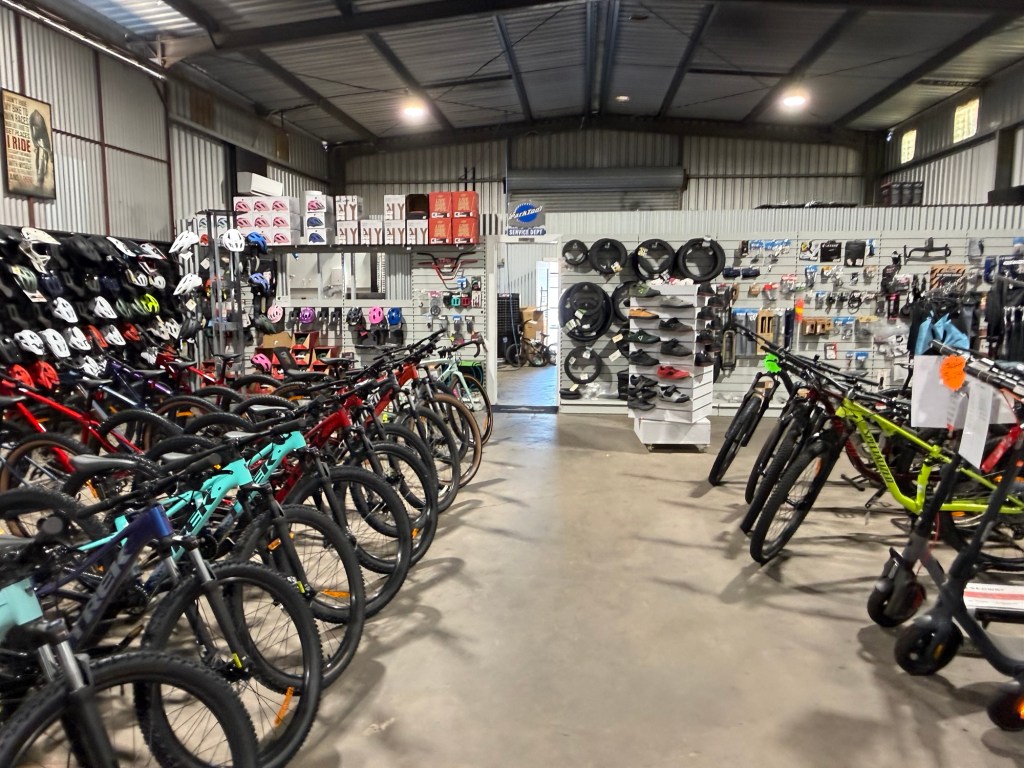
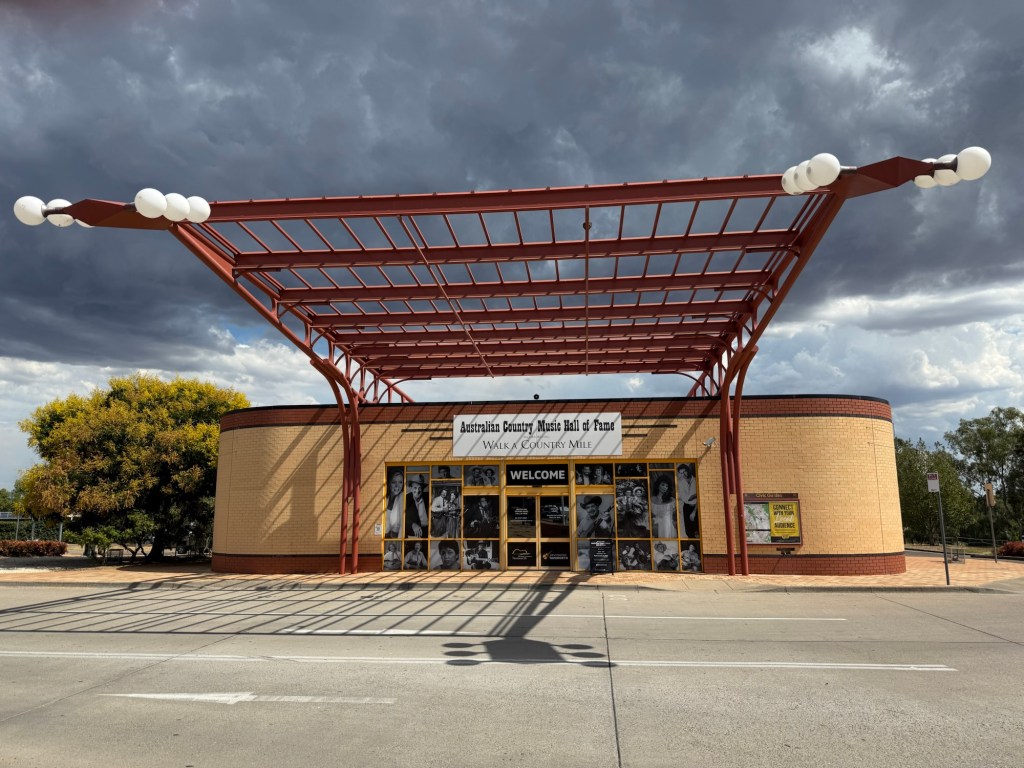
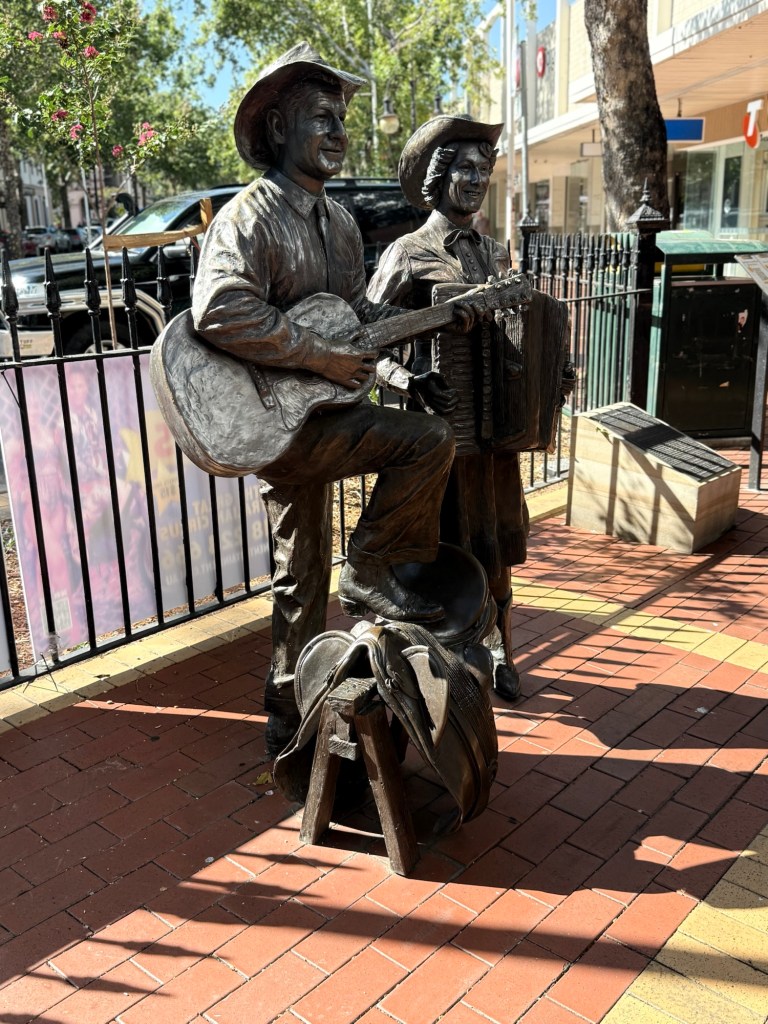
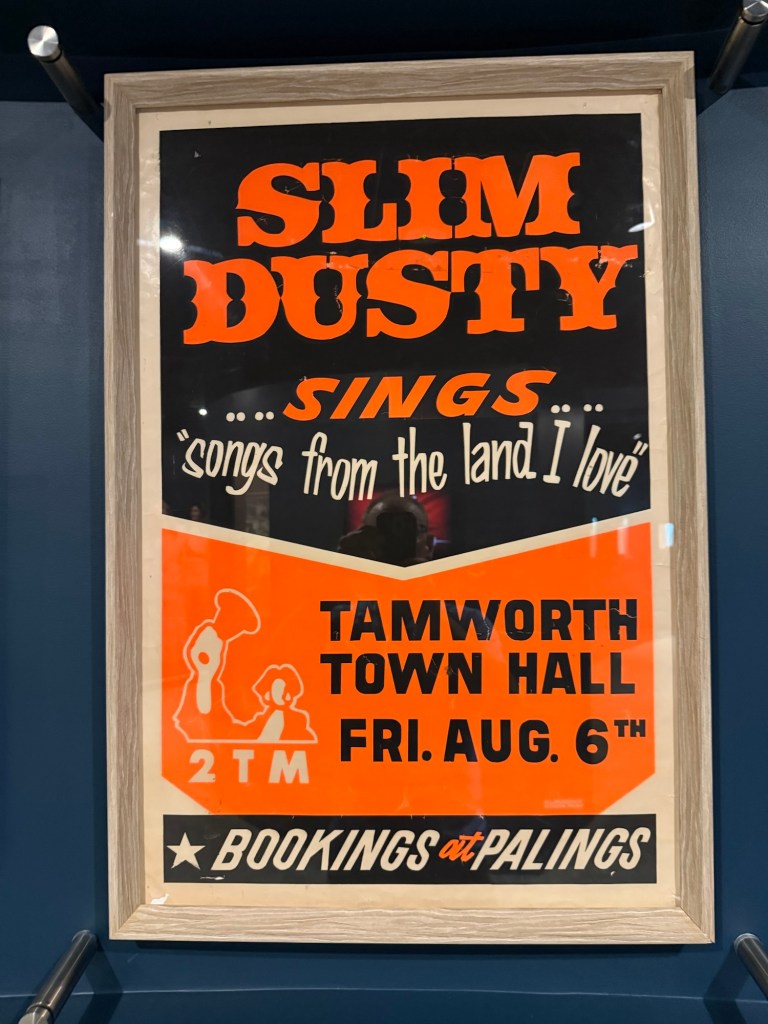
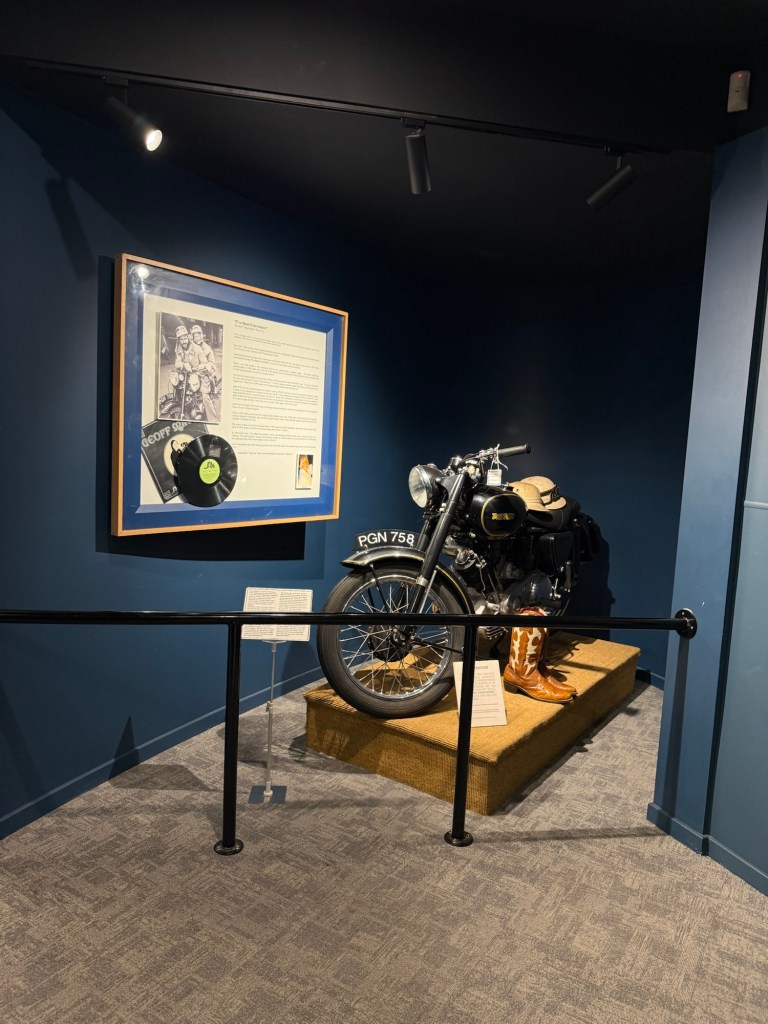
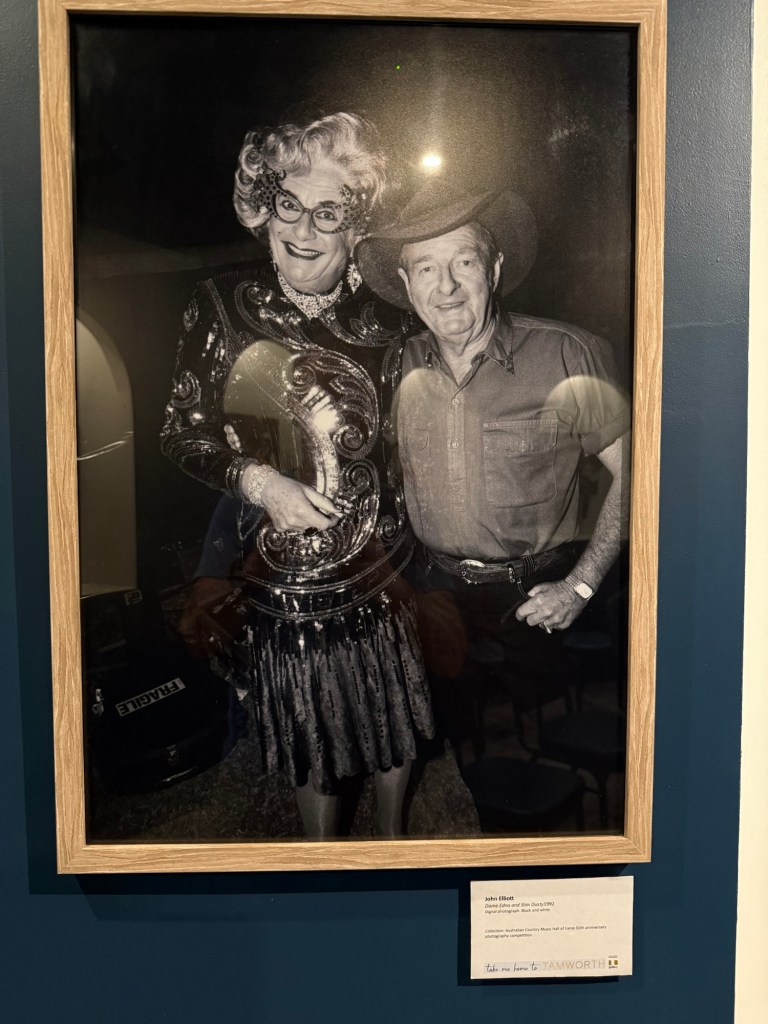
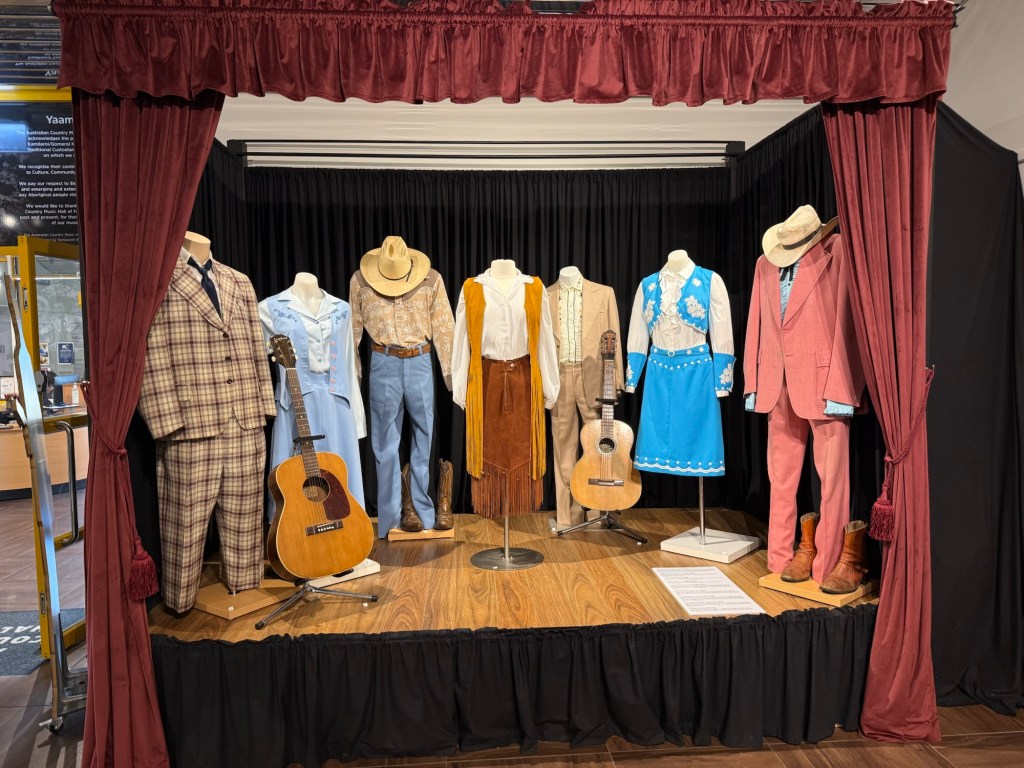
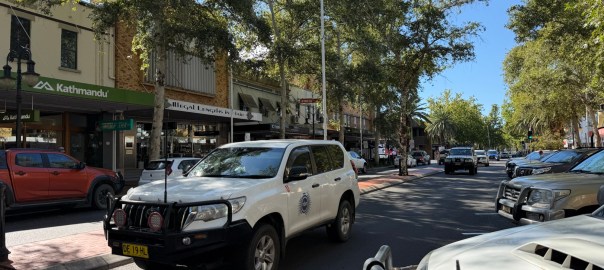
The bike shop I visited twice! Doh…Tamworth main dragThe Peel River runs through the town and near the banks are some fine spacesBreeding horses for the military was a key activity. Apparently up until 1913 they supplied 500,000 horses to the Indian Army. (I presume that was a British force.) Only one came home.Australian Music Hall of FameSlim and wife, JeanSlim Dusty was probably the most famous Australian country artist of all time. He even sang at the Sydney Olympics. Keith Urban is the current megastar, also a bright light in the Nashville firmament although not a personal favourite.Slim and one of my favourite characters of all time, Dame Edna
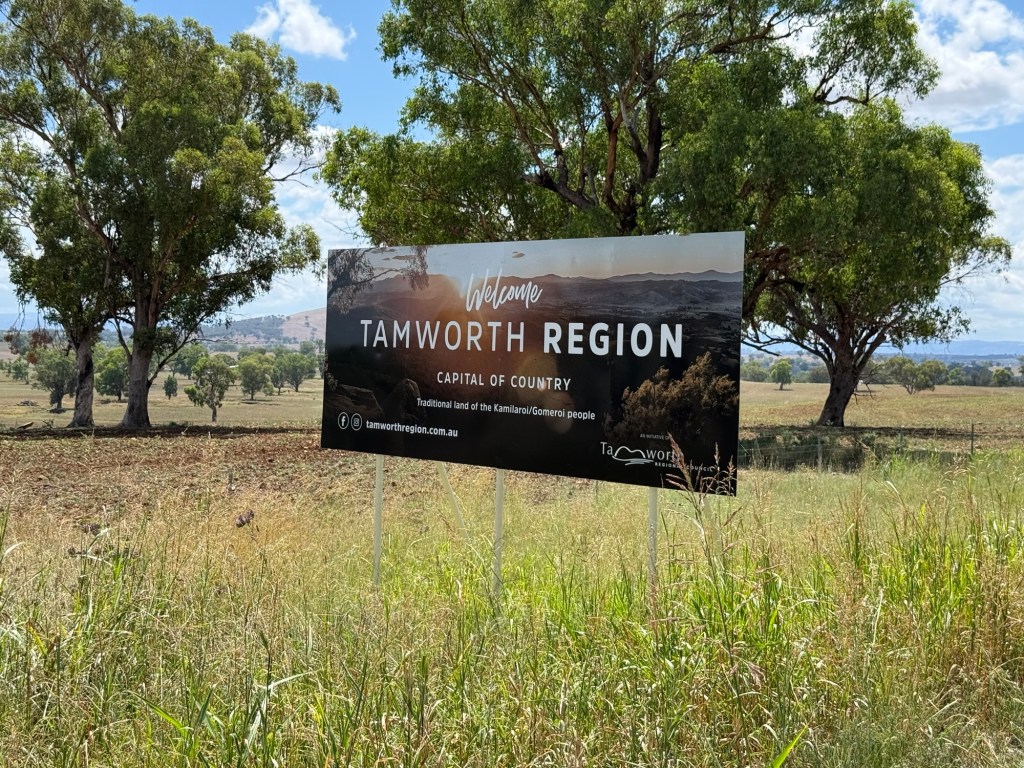
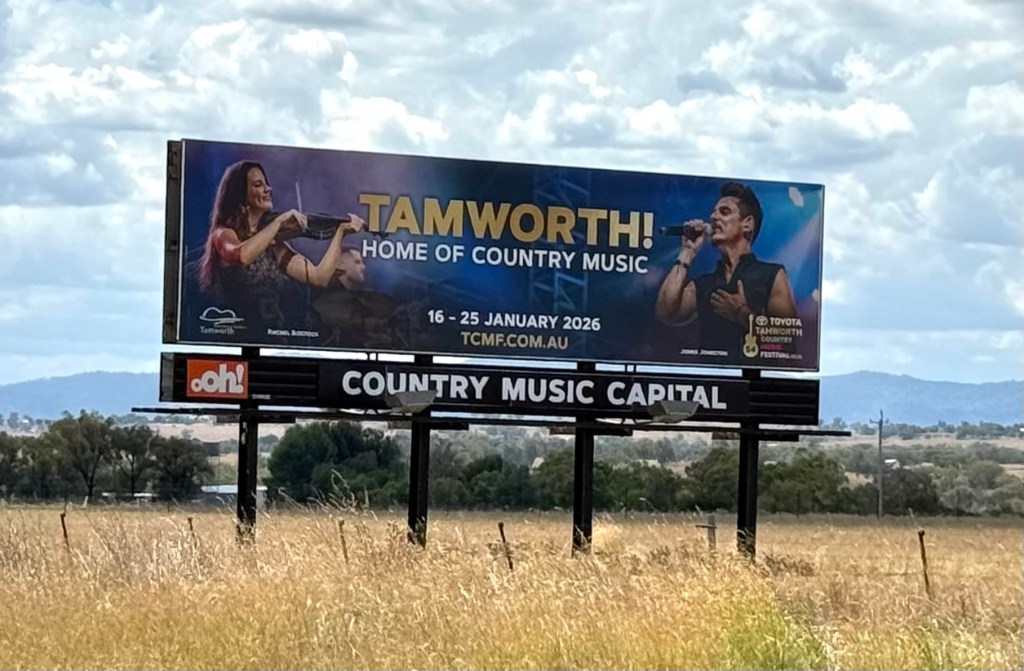
Tamworth promotes itself aggressively as the Australian capital of the genre. (I had in my mind it was an interesting destination but it was on my route to Brisbane not a detour to visit the town.) The history is that a radio station became pre-eminent out of Tamworth playing early country music, that progressed to having an award event and then the town became the venue for a large annual January festival. There are lots of statues snd plaques around the town plus the museum but little else, outside of January, to remotely suggest it’s a vibrant hub of banjos and fiddles! Like Aussie Rules football, utes and Holden cars it is a peculiarly Australian phenomenon yet its evolution bears a lot of similarities to American country music such as English, Scottish and Irish folk music influences, large rural populations who played their own music for entertainment, the spread of its popularity through radio then on to TV.
Even with my knowledge of the genre I had little or no recognition of the artists bar a few: Keith Urban, Kasey Chambers, Tommy Emmanuel and Frank Ifield. We could debate how ‘country’ these four are in any case. I suspect readers haven’t heard of any of them! My memorable take away from the museum was the Receptionist. She was Iranian and had come, with her husband three years ago to Tamworth. We talked about the war (and not my relatively trivial problems) and her family back in the country and where it all might go at the end with the murderous Iranian Revolutionary Guard still embedded. She was hopeful. I dearly hope she’s right.
No and never
So contemplating my departure I thought I’d wipe down the bike. I’d got filthy putting the lock cable on the wheel and thought I should address this. To my horror I found a broken spoke on the rear wheel. I needed to get this fixed before I left the relative metropolis of Tamworth for smaller towns over the next 250 miles. It was going to be Saturday tomorrow when the only opportunity presented itself, all bike shops shut on a Sunday, and I needed to beg immediate attention at the shop I turned up at earlier today. Anna absorbed my misery and, as usual after feeling sorry for myself, I got on with trying to sort out the immediate problem in front of me.
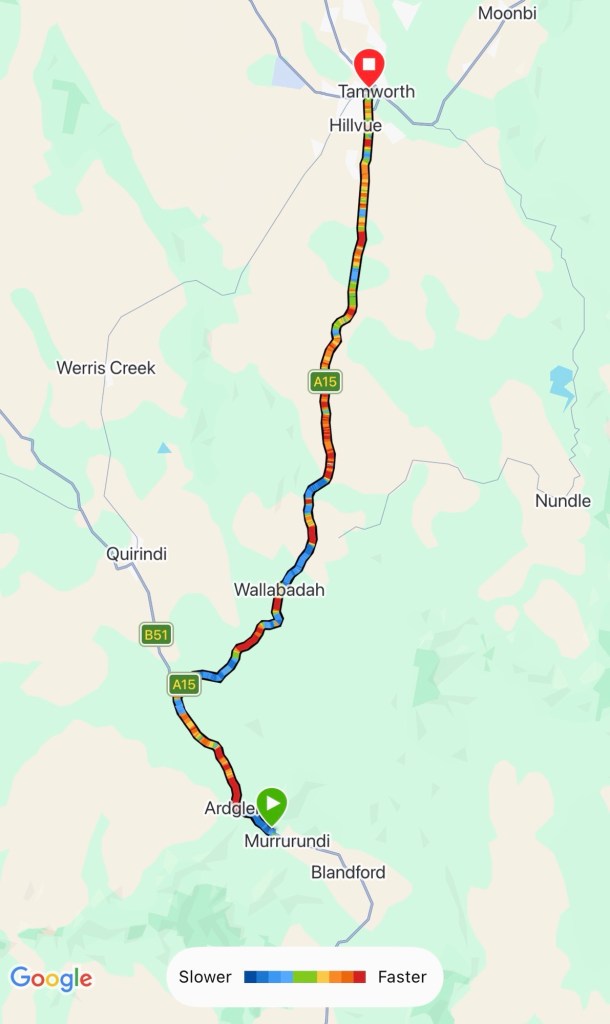
I liked the Murrurundi campsite: nice owner, neat and clean layout, great food recommendations and a quiet pitch. One ‘uncontrollable’ are the birds. If you camp in Australia then your whole journey has a soundtrack of squawks, shrieks and something that reminds me of a 56k modem connecting. It’s unique about the country. After dark they shut up. Next day in the darkness I did my contortions and packed the tent and made breakfast in the kitchen.
Camp kitchen
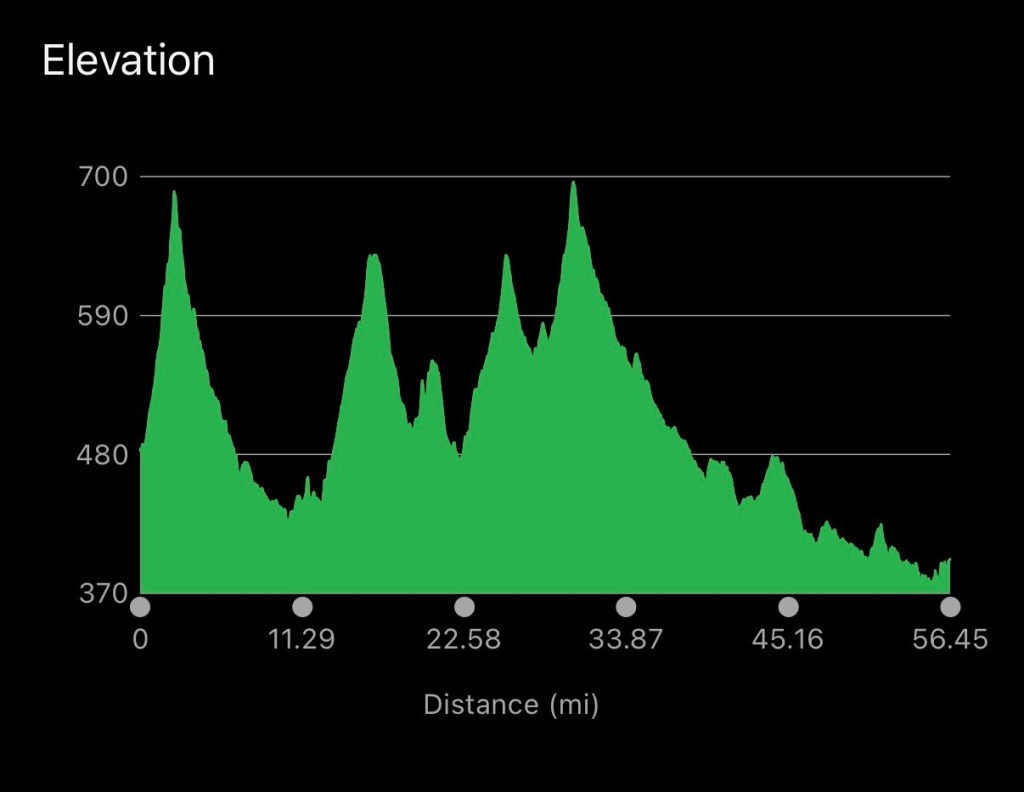
Some porridge and a coffee before the off. The ride started with a steep climb. As you can see by this elevation profile it wasn’t going to be an easy day up until the delightful long descent.
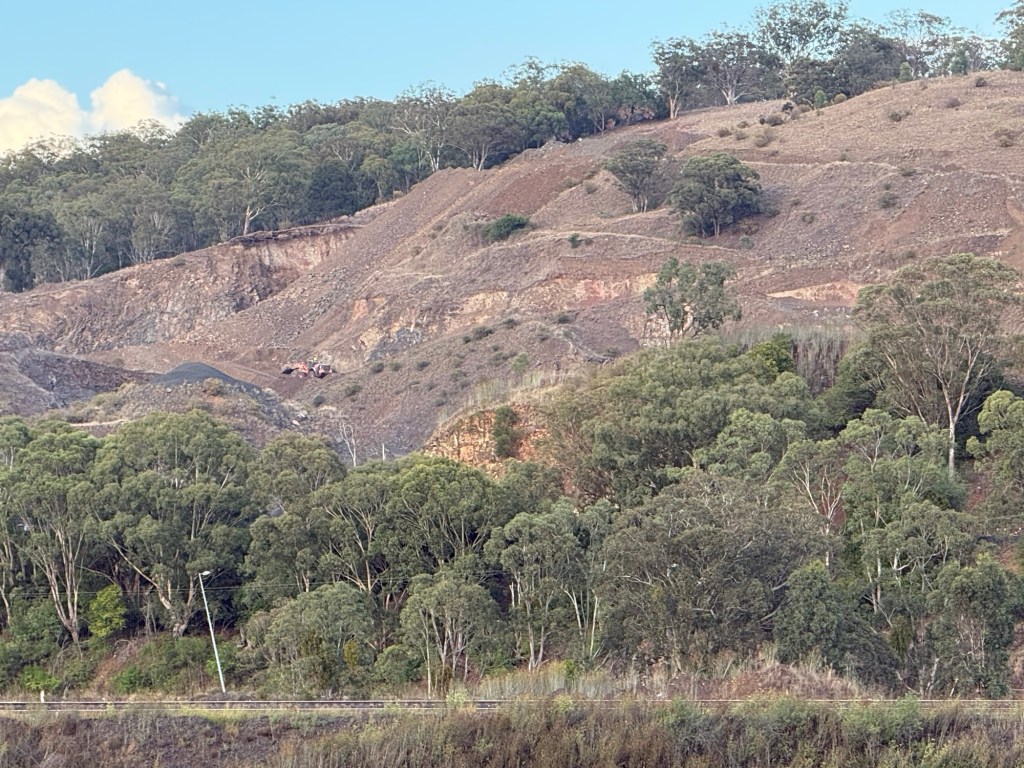
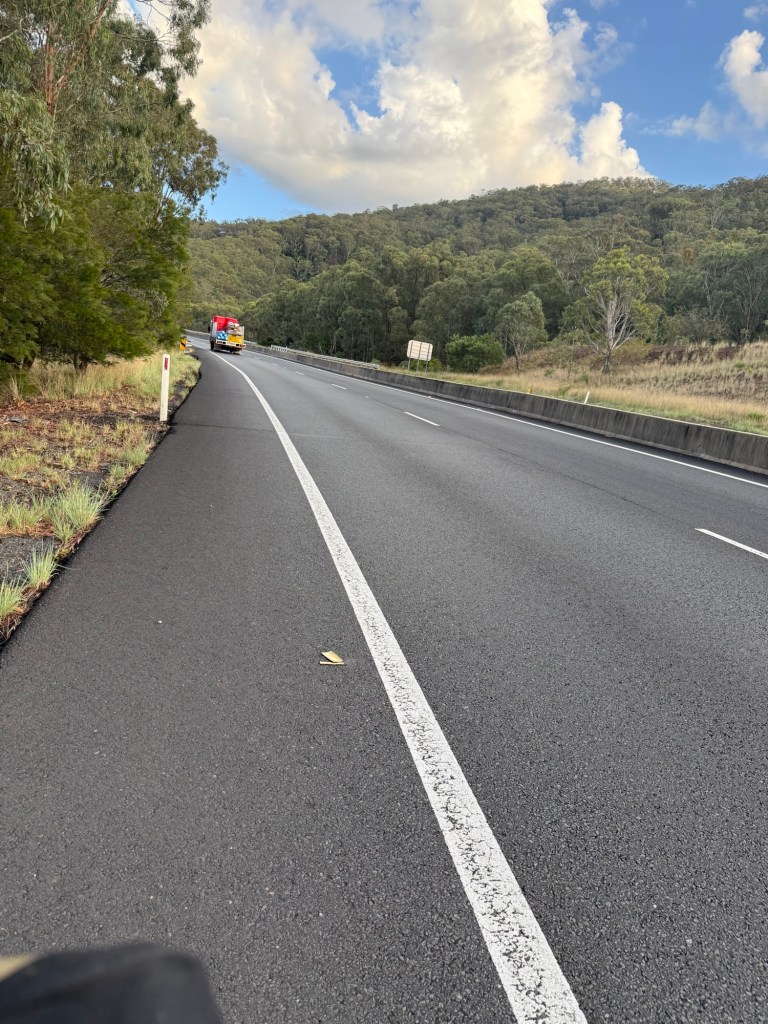
The elevation profileOpen cast miningNice hard shoulder but not to last for long
Sadly up this long hill, it took me 35 minutes to climb, I started to discuss the considerable ‘elephant in the room’ on this trip: how would I get home if Middle East airspace was closed due to Iranian ordnance? My return flight from Brisbane stopped over in Dubai. Of course, there is no one at your travel agent or airline you can speak to, it’s all chat bots. If there were contact numbers they’re busy with a message to go online. How very 20th Century to expect a human voice. The Emirates website still have the flights listed although advice that you could obtain a refund or delay your flight for free. I would work through my travel agent because I didn’t book direct. My travel agent, Trip.com, said if the flights are cancelled they will offer ‘appropriate follow up solutions’. Desperate to speak to a human, other than Anna, I will speak to a travel agent in Tamworth.
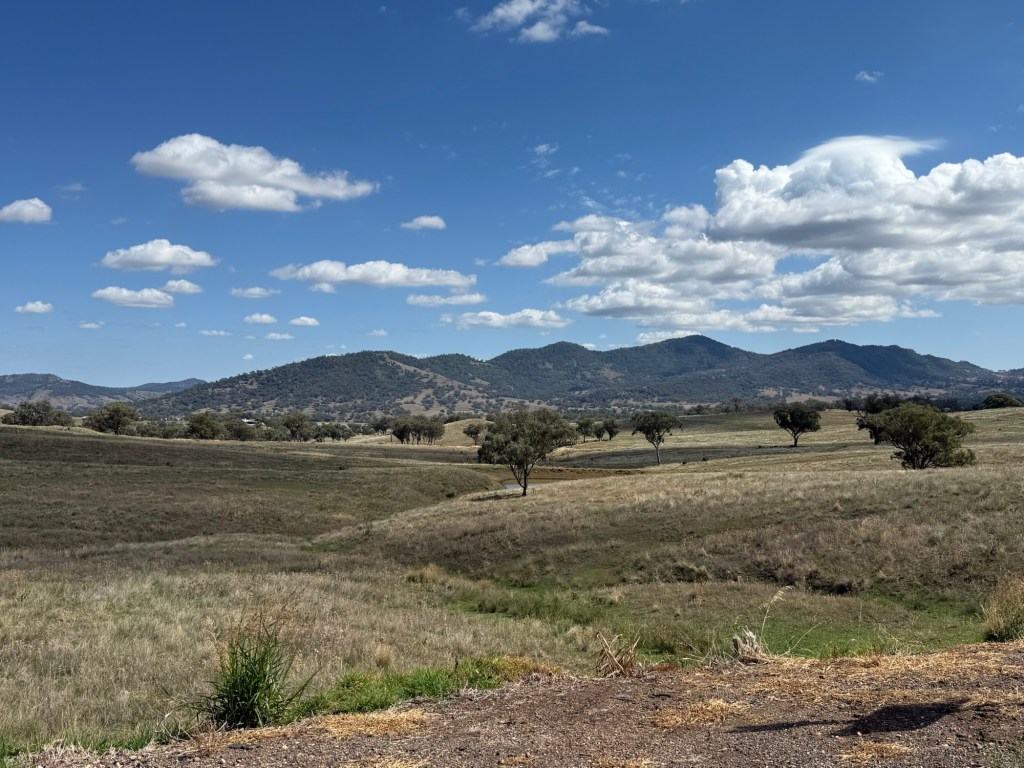
Great scenery
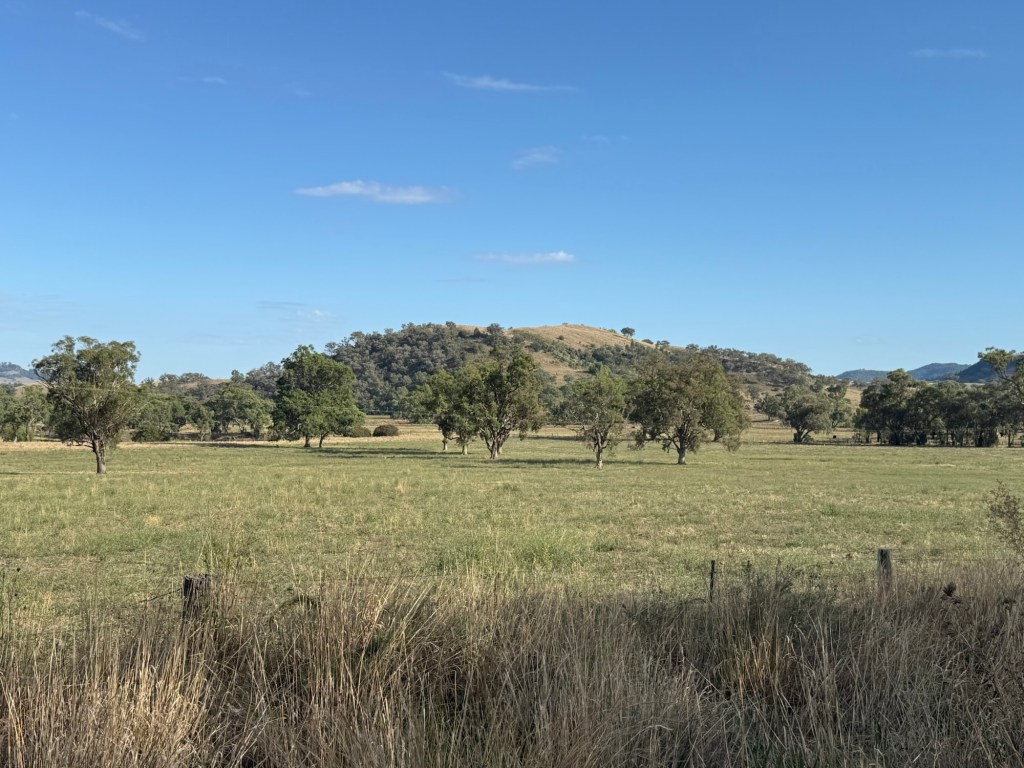
It’s an attractive landscape and hard to equate how it makes a living as mining isn’t a pretty affair but passing through you’d not really know about the activity.
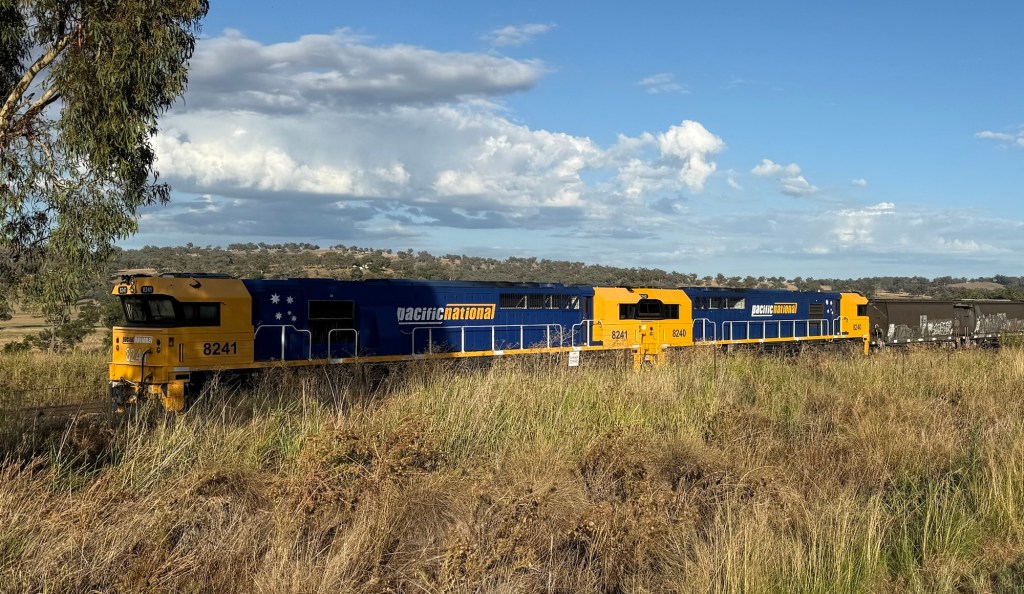
My midnight nemesis below! Clearly a lot of clattering and clonking as they passed by.
Coal train. The wagons extended over 600 metres
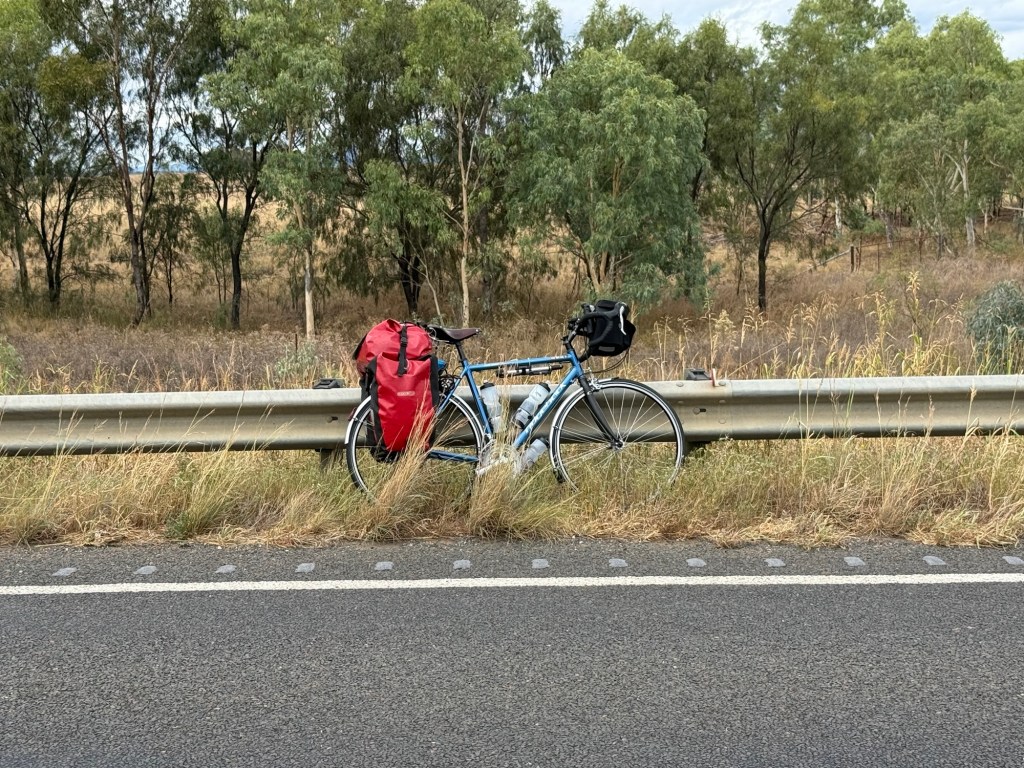
In my blogs I will tell you about the hills but you’d be sensible to think ‘you knew what the profile was and you still went ahead with the trip, shut up’. Of course this is right but the solo traveller, a weary one can stop seeing the wood from the trees as the next hill appears, the temperature is starting to soar and you’re wondering what day you’ll get to fly out of Australia, will it have to involve 10 hour lay overs as you take the only flights available and you can’t resolve this because the airline is understandably dealing with immediate flights and it’ll be a few days before they worry about you. Just past Wallabadah I stopped, sat on some armco barrier at the bottom of a half mile climb scoffed a few Haribos and contemplated the meaning of life before pulling myself together and found the granny gear and trundled up the hill.
At 700 metres. The only way from here was down
On the descent the town of Tamworth generated a few billboards.
Well lookee here. I’m partial to a little country music.
My time in Australia had been hot/warm but this heat was ridiculous. As soon as I hit the edge of the town I pulled into a petrol station, found the chill cabinet and demolished a tin of Coca-Cola.
Anna had booked me a room for a couple of nights with air conditioning. Now that would be lovely. As the Receptionist remarked when he passed across the key the ‘good news, its that it’s already been paid for’.
I’m usually asleep by 8pm and awake some time after 4am. As I’ve written earlier then with a head torch I start packing to go but as dawn doesn’t arrive until past 6.40am I have a lot of time to kill. I would seldom set off in the dark: drivers aren’t looking for cyclists even if I’m using lights.
First breakfast
The streets were alive with utes/pick up trucks. Mining is important to Singleton and there are 17 open cast mines in the area and the scale is enormous. No doubt Australia is keeping the lights on in Shanghai. At 7am the traffic is like rush hour and the number of people in hi-viz, usually clutching a coffee from a cafe, is enormous. For me on my bike I had to be careful as workers were focussing on getting to their sites. As always with my luck the day starts with a long hill climb and they’re steep enough for large American trucks with their trailers to have to crawl past me.
My friends
I read a fabulous book about the origins of Australia before I came out, I was interested in the European immigrant. It’s called ‘The Fatal Shore’ by Robert Hughes. A summary is:
The First Fleet of 11 ships, bringing 736 convicts left Portsmouth, England in May 1787 and 8 months later they dropped anchor in Botany Bay, that’s Sydney to you and me. Out of the passengers 48 had died on the voyage. Most were transported for theft and there were no, say, murderers or rapists. James Cook had landed in 1770 at this same spot. I avoid the word discovered as the were many indigenous natives already here. Over the next 200 years the aborigines would experience murder, theft and rape at the hands of the Europeans. Any British or Irish convicts escaping from the existing settlements might perish at the hands of the climate or aborigines. They were in a prison without bars and walls.
Eventually over the next 80 years a total of 165,000 convicts were transported. The origin of shipping convicts had started with America before Australia but after the British lost the American colony another location had to be found. Why transport convicts? Well, the British prisons were full and a place had to found for them. During the 80 years many other emigrants arrived from Britain and the convicts provided vital labour. Convicts usually had 7 or 14 year sentences and on the completion of their time had the rather tricky task of getting back to England. Obviously just about all stayed. If during your sentence you could get a ‘ticket of leave’ for good behaviour that allowed them many liberties such as marrying or working for themselves.
Eventually there was considerable agitation to end transportation in Britain and Australia. The British thought it cruel and had started to build prisons. The new Australian settlers in New South Wales and Queensland felt this history was a stain and wanted to move on. The number of free settlers massively outnumbered the convict numbers by then. Toward the end Tasmania and Norfolk Island became the repositories for repeat offending criminals. The regime was brutal and often inhumane. Tasmania was originally known as Van Diemen’s Land and changed its name latterly to remove the stain. The importation of convicts wasn’t originally rejected by many of the settlers who desperately needed labour as they farmed increasing large areas of the country.
A key reason for the demise of transportation was the fact that conditions in England compared unfavourably to the open spaces, warmth and opportunity in Australia that came the way of convicts and then there was the discovery of gold! Transportation could be viewed as free travel to the opportunity to make a fortune. And so it ended.
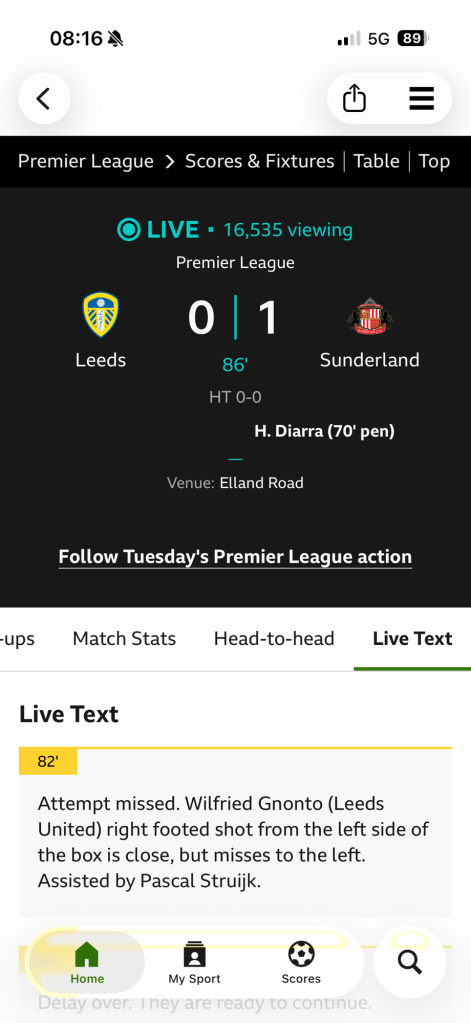
I couldn’t listen to live Premier League football live as it played out back in Blighty and so Tim and Anna kept me posted on WhatsApp but I kept looking at the BBC website. Since I’ve been away Leeds have played three games and picked up one point. My absence has sent the club into a tail spin.
BBC App
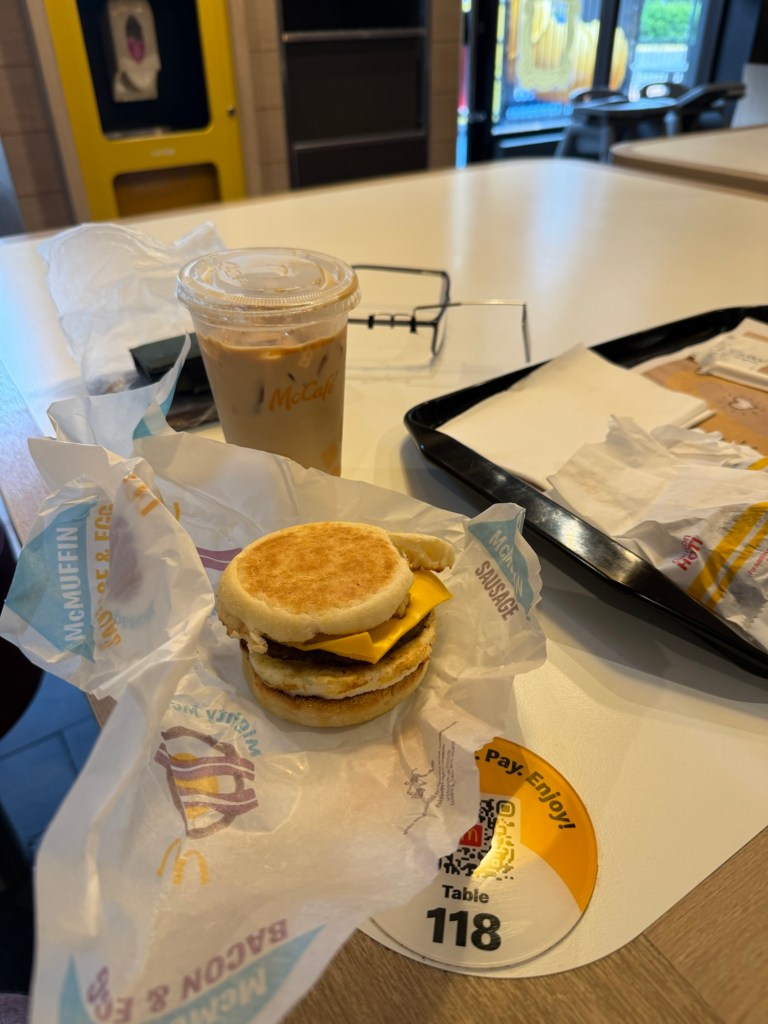
My first major town, Muswellbrook, came into view and a sausage egg muffin called me.
Note the rumble strip on the right of the hard shoulder. In fairness this is a wide hard shoulder with a good surface.
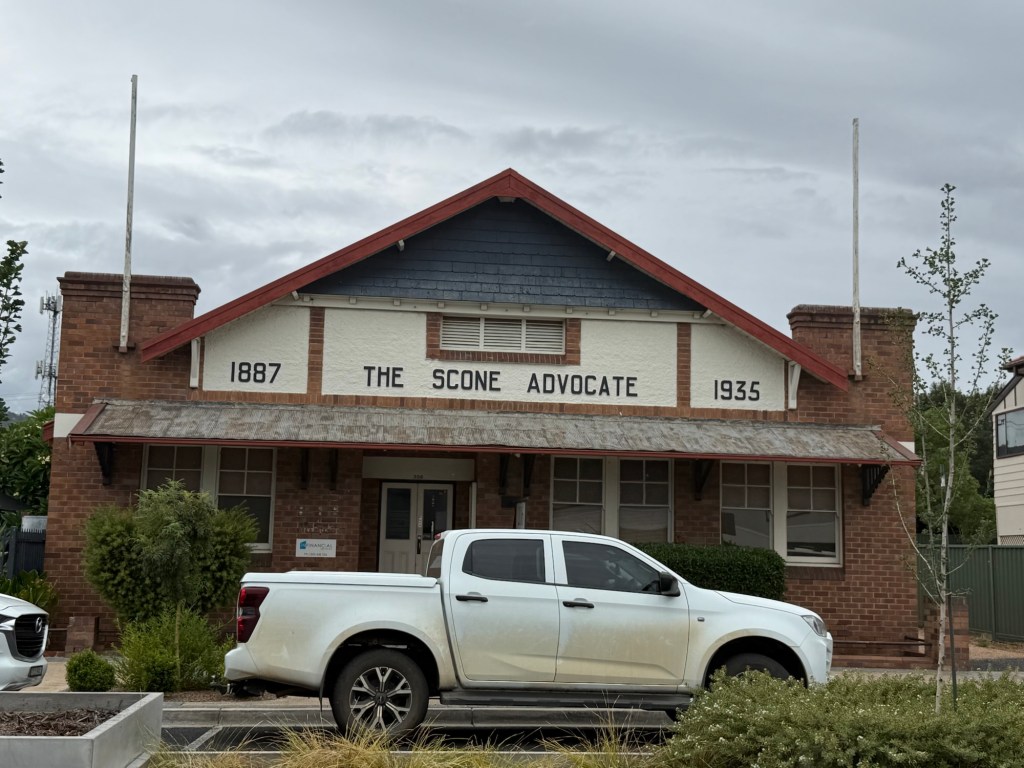
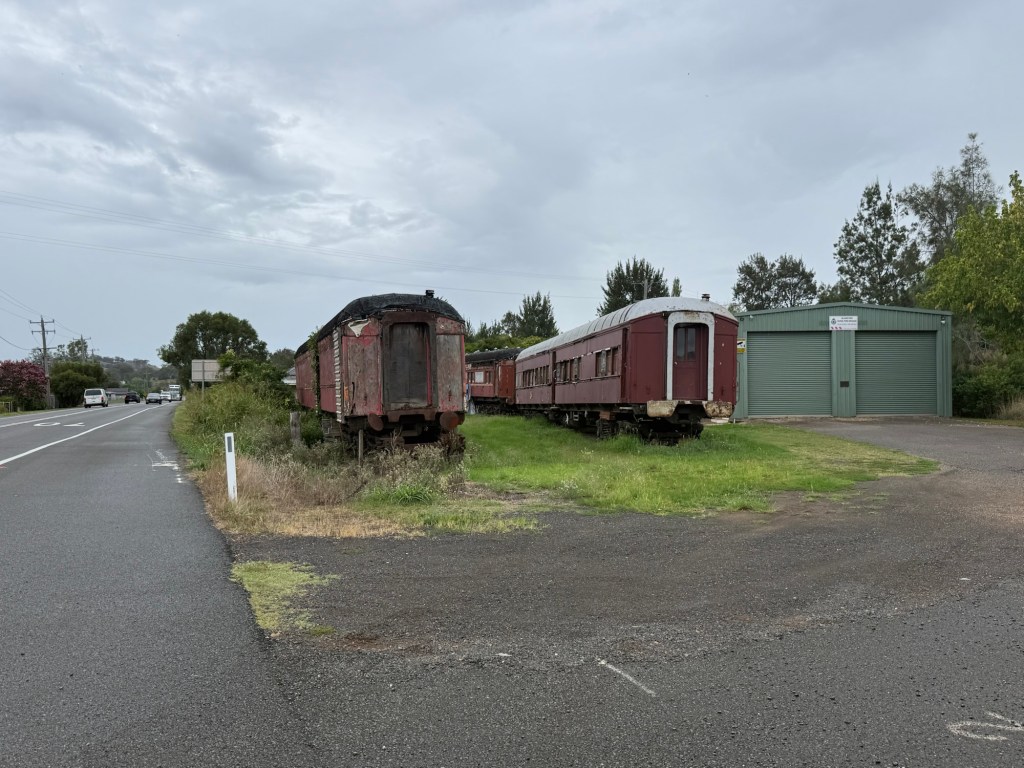
The USA and Australia like their rumble stripsObviously coal has its opponents. Fossil fuels must eventually go but the pace it is being abandoned has a major implication on jobs and manufacturing. Singleton looked vibrant with many young people in work.Aberdeen!A town called Scone. Many horse studs in the areaSad old carriages
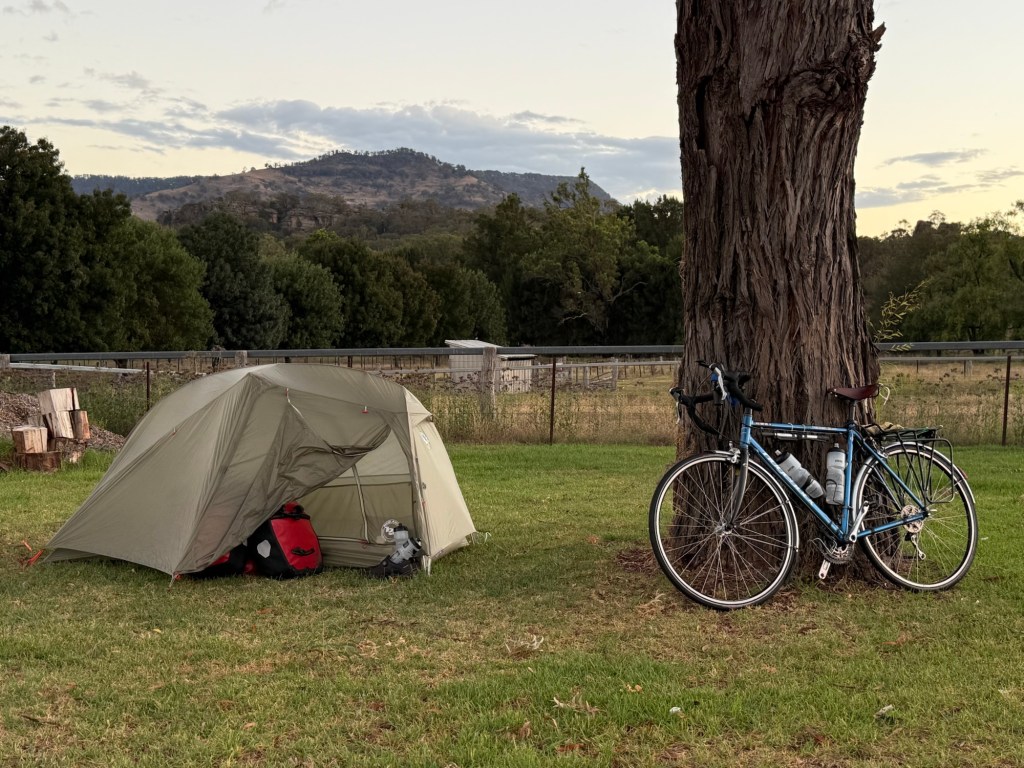
I cycled through an enormous deluge of rain. I got drowned! Eventually I rolled into Murrurundi, a small town at the bottom of an enormous hill… I had to climb the next day. After getting wet through I thought I’d stay in a hotel. The one I found had no rooms and so I camped (!) at a nice little site. Despite the scenic setting there was a main road on one side with 24/7 trucks and a rail line on the other side that ran through the night moving coal. It was noisy. Fortunately I can sleep through most things.
Home for the night
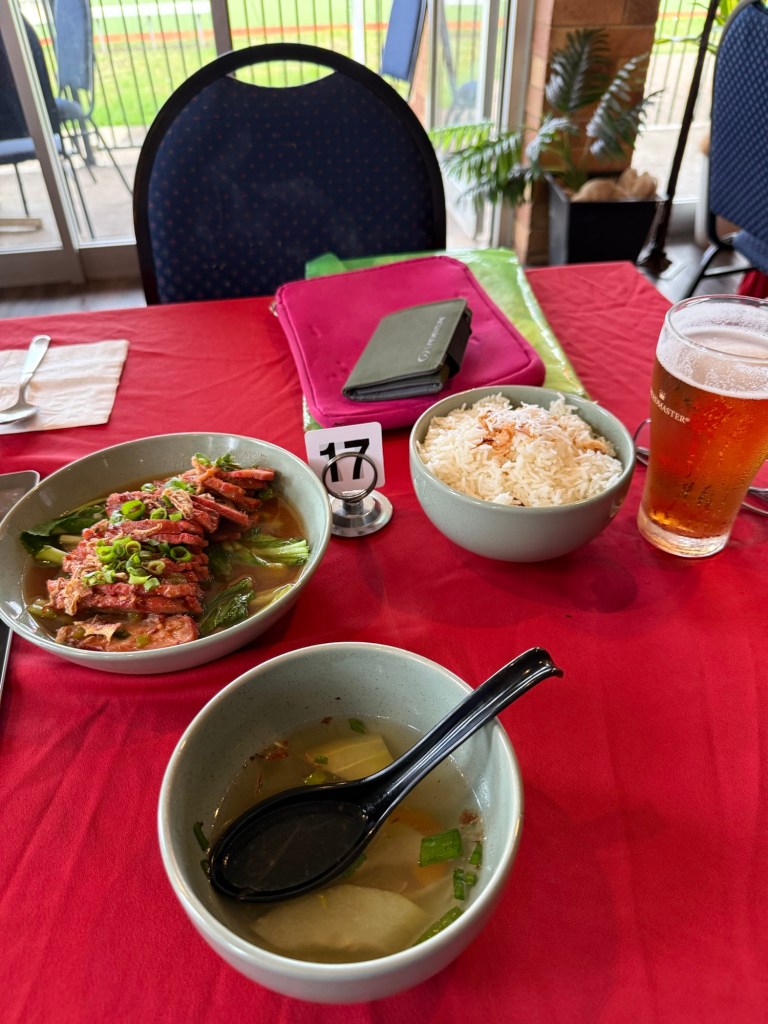
I found some Vietnamese food at the Bowling Club. Delicious if not a little expensive! Before I dined I sat in the main bar writing up my blog. The service and smiles were delightful from all and I got asked questions. I seldom do. Gary, one of the gents having an early evening beer asked about my trip, its distance and my camping. He looked genuinely concerned and asked if I had enough money? Of course I’m fine but I was so touched by the question. It last happened in 2014 in the USA when a stranger, Ed, following my blogs, asked the same question. The lady behind the bar noted how touched I was and I said I’d find the club’s Facebook page and mention Gary.
It rained overnight and so I awoke to a wet tent. Also the ground around was wet and I still had to pack. Frankly years of Pilates has provided me with the capability to operate in small spaces in positions best described as contorted. So I put on my head torch and rolled up my sleeping bag and liner and put that in the dry bag and then deflated my air mattress and stuffed that into its bag. Then I widened the tent by opening the inner tent up to the fly tent and stuffed, semi neatly, other nightwear and the like into my panniers.
With my panniers sorted I took down the tent but separated the wet parts from the dry parts by using a bin liner. (When I erect this later in the day it will dry in minutes.) I was ready to go. The man sat on the verandah of his nearby cabin who was gorping at my activity didn’t acknowledge me as I cycled off (before 7am.) Some Australians blank you, yet some are friendly. I can’t work them out.
Hat and coat, ready for the rain. 18°C (65°F)
I’d noted, from the night before, a cafe that was open early and did breakfast last night and so devoured a bacon and (very runny) fried egg roll with a flat white and embarked on the ride.
First, some guilty pleasureJust didn’t have the time to pop in
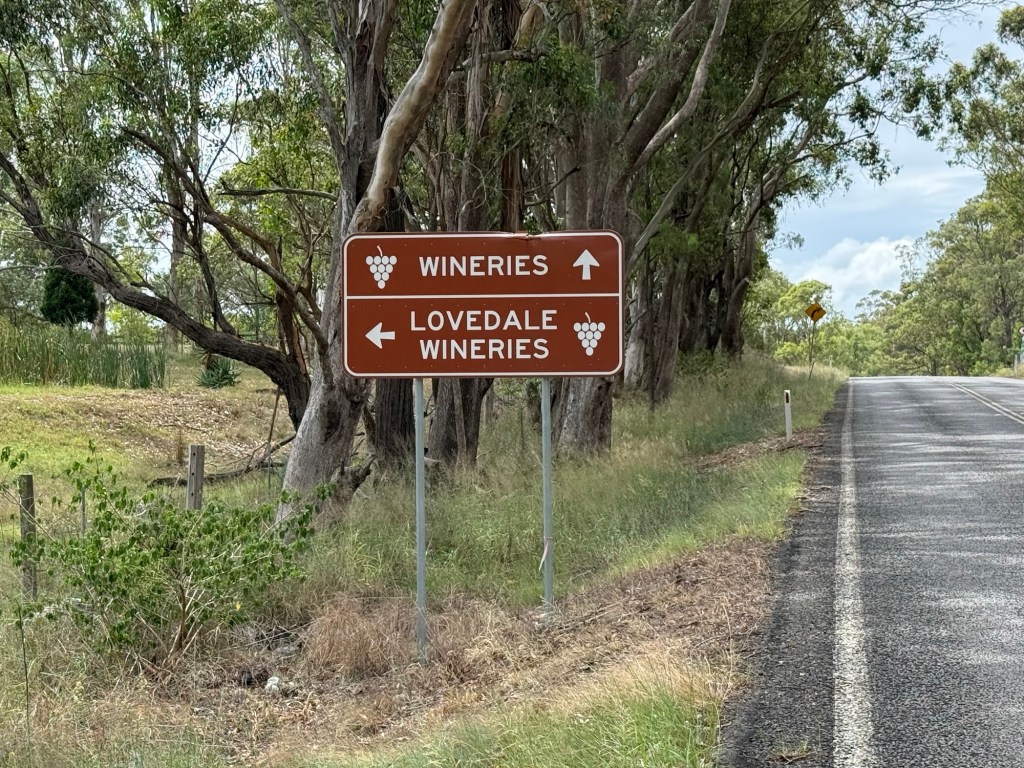
The ride was through residential areas, quite well heeled, until I emerged into countryside, in fact wine growing areas. The hills kept coming but after some consolidated sleep I was feeling more like it.
Gathering my strength for the day’s longest climb
One continual piece of pressure is keeping the bike moving ahead in a straight line on the narrow hard shoulders. The bike is so heavy that both hands are needed on the handlebars. Added to the challenge are rumble strips and later in the trip flies that you can’t waft away. All this at 4.5mph!
Quiet roads at lastWhat they do in Hunters Valley
I enjoyed my ride high up in the hills and it seemed a little French by comparison.
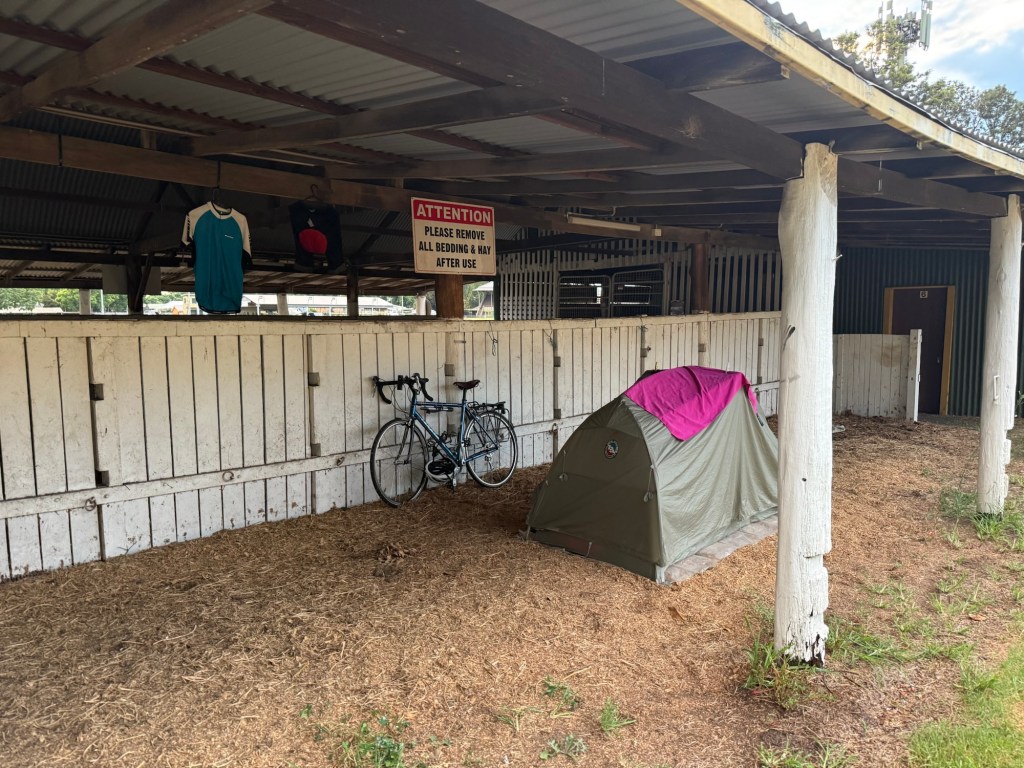
The regular caravan site in Singleton got desperate reviews. An alternative was a show ground that had a sort of small camp area and some ablutions or ‘amenities’ as the natives call a basin, WC and shower. I wavered but rang the number on the entrance board and spoke to Daryl who seemed very welcoming. ‘Can you ride and talk?’ I could and Dazza directed me to a sheltered cow byre where under a roof I could pitch my tent.
The most bite fest site ever… oww!
He then appeared in person, a sort of dishevelled David Bellamy dressed as if he’d been underneath a tractor fixing the gearbox. I was less enthusiastic about the shelter but then it started to rain! I relented.
The error was that whatever my tent was sat on was insect heaven and when dusk came all sorts came out of this straw. I got bitten badly. This is elementary schoolboy planning for a camper. ‘But Tony surely you carry repellent and bite relief?’ Well absolutely, in fact three types of repellent. I just need to remember to use it. The next day when I put up the tent I found dead mozzies in the tent. Oww…
Before the insect’s meal I’d found a local Returned & Services League (RSL) club and had gone there for a mountain of pasta and a beer.
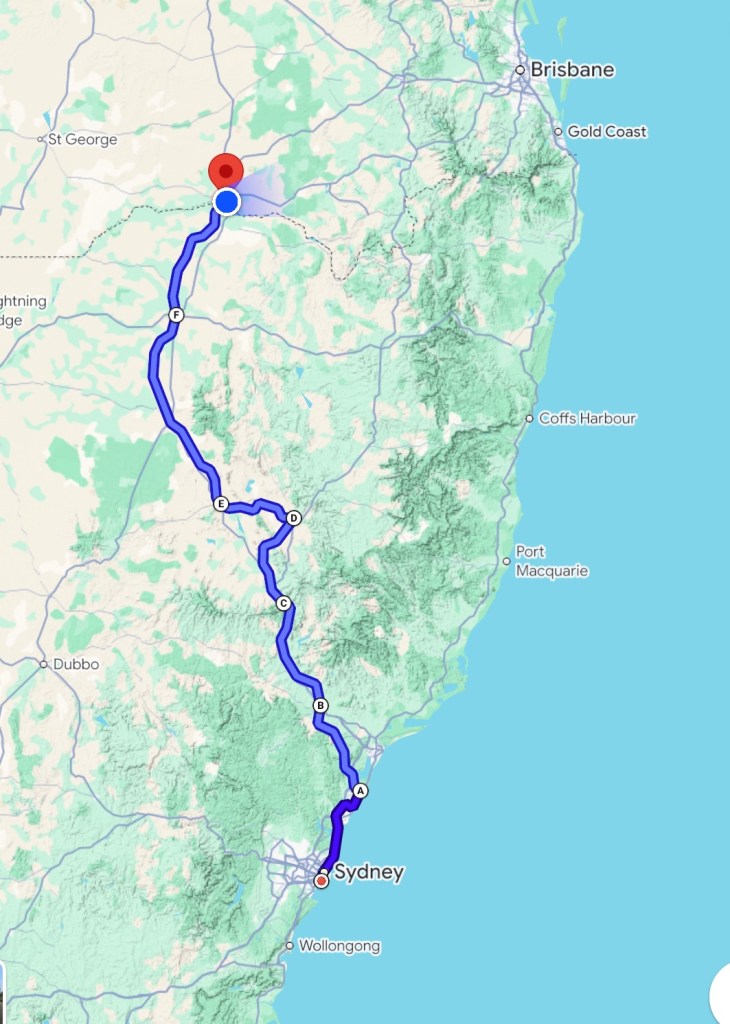
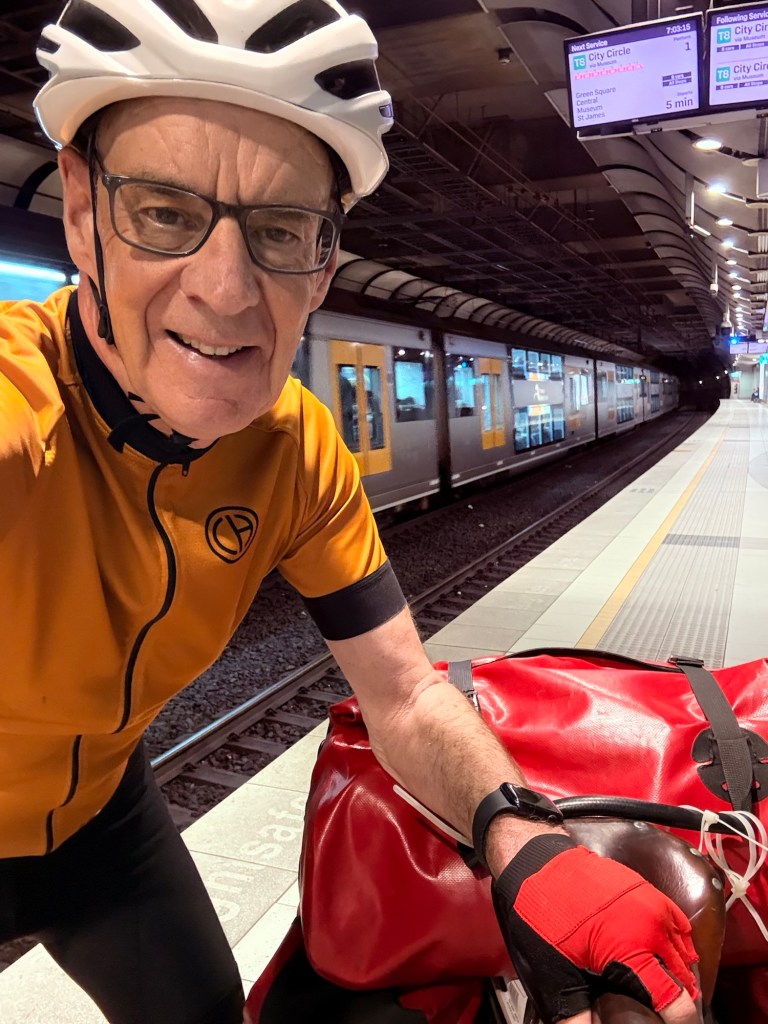
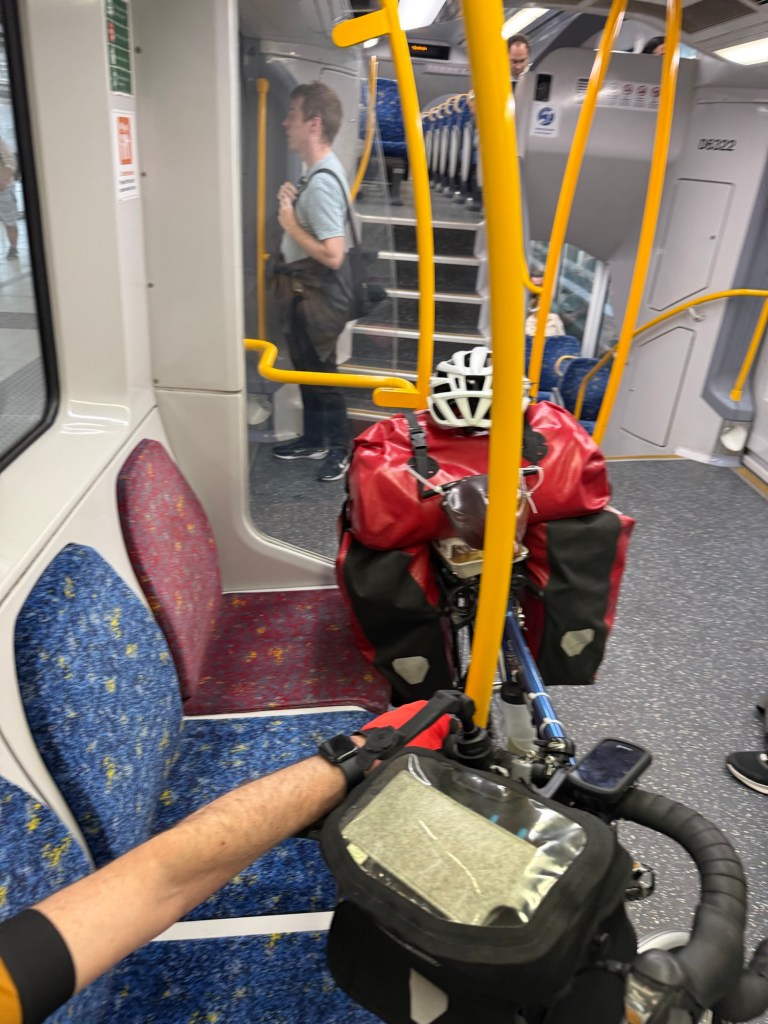
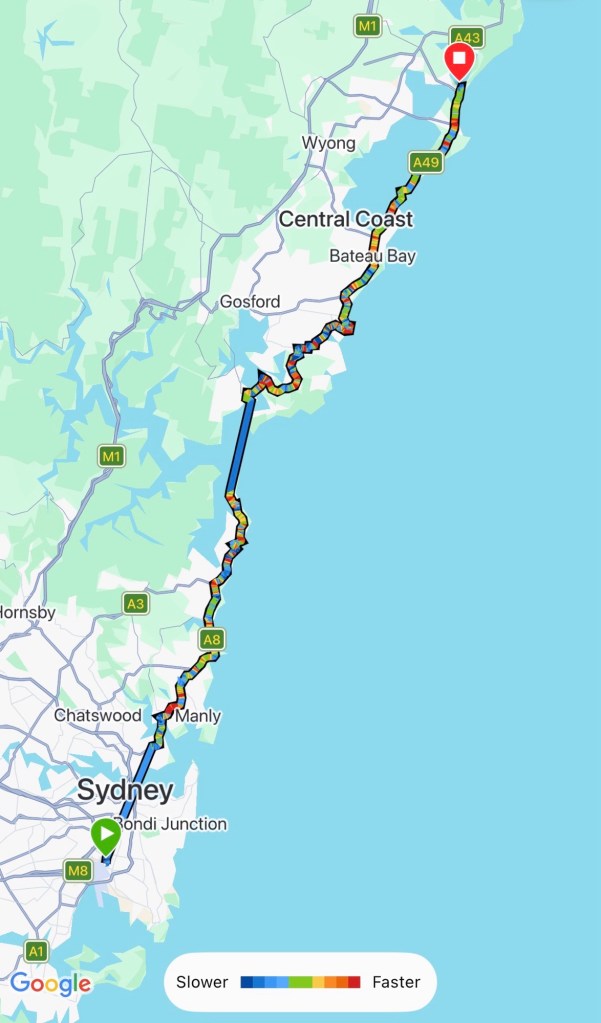
In some ways Sydney was a pit stop after Wellington with a day built into my schedule in case I needed to sort out the bike. With no problems I loaded up the bike and headed for the Metro. Paul had volunteered that maybe I could escape Sydney’s traffic and cycle paths by getting to the north of the city. I’d cycled out of the city twice before and they were slow and frustrating, so why not Plan B? Taking the bike on the Metro was straight forward and I was off.
Morning traffic in Mascot
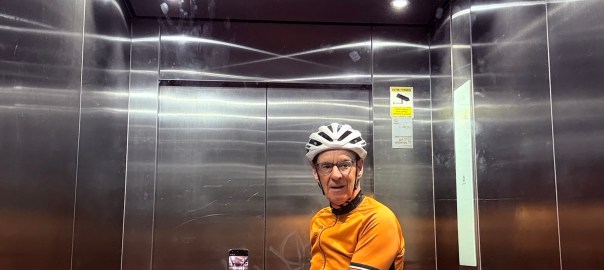
Using the lifts I was soon on the platform and heading for Central where I changed. For a train heading north.
Comfortably set
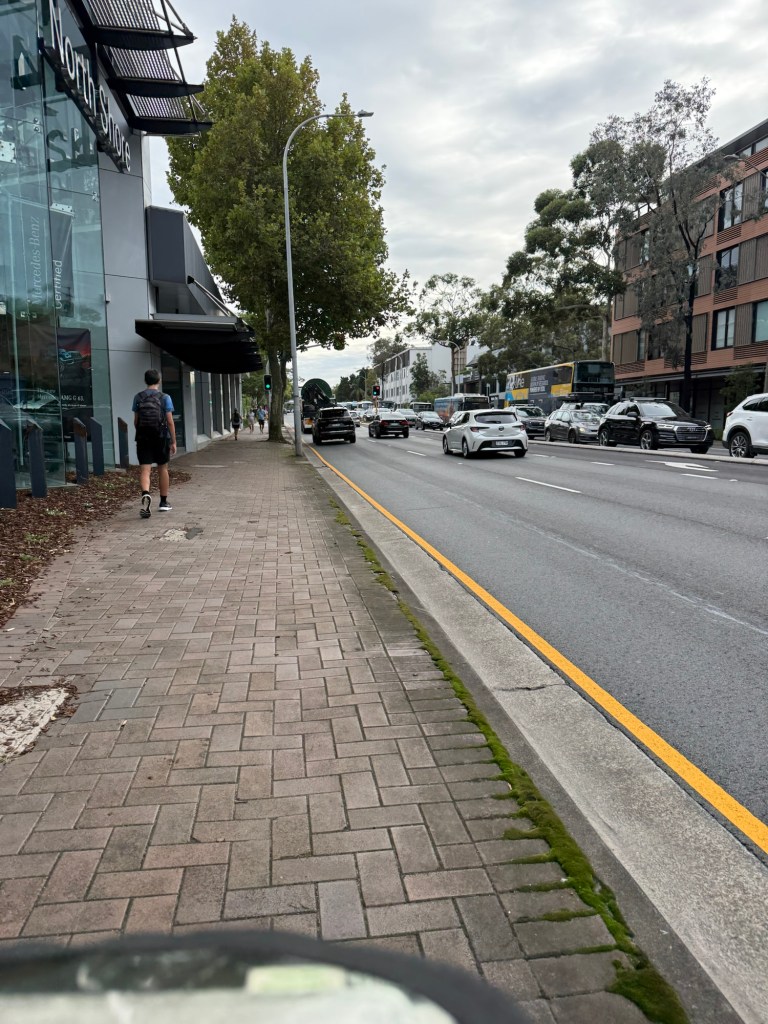
I alighted at St Leonard’s and discovered the lift was out of order. Moving my luggage and bike up three flights of stairs was disappointing but I was soon on the pavement facing early morning workers all looking at their phones rather than me! It was busy and my route to the planned original cycle route was difficult. I muddled along.
Pavement
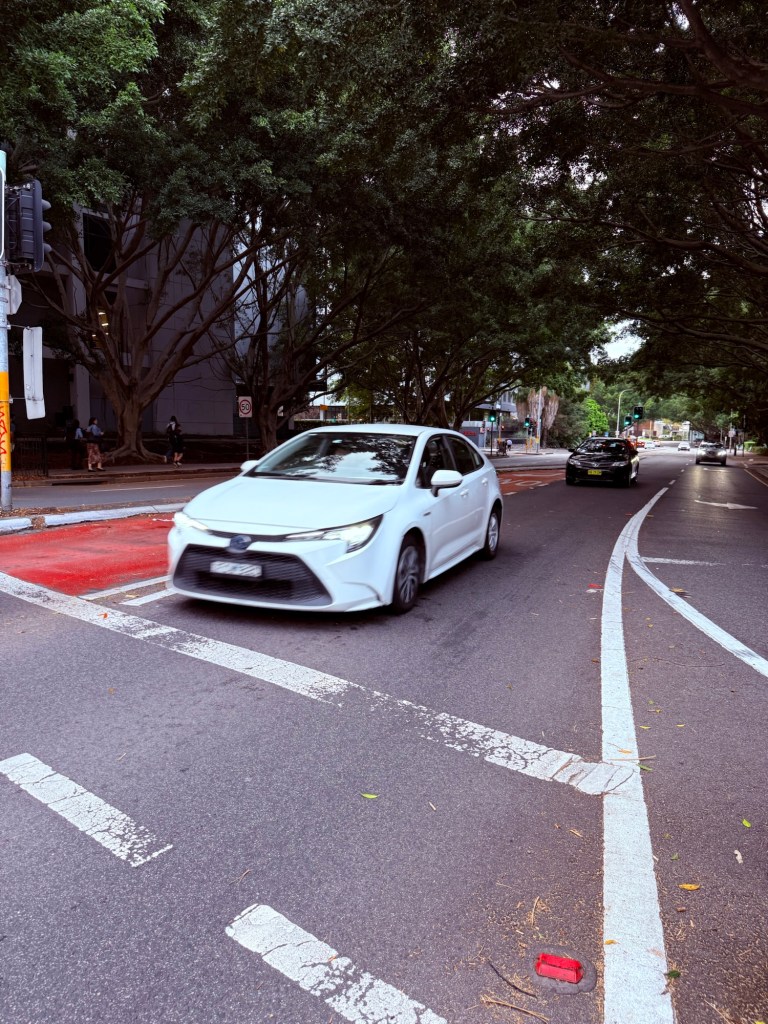
Like a lot of Councils Sydney’s solution is to put white paint on existing pavements and roads and leave the cyclists to hope for the best.
Harbour. You cannot imagine the traffic jam behind me!
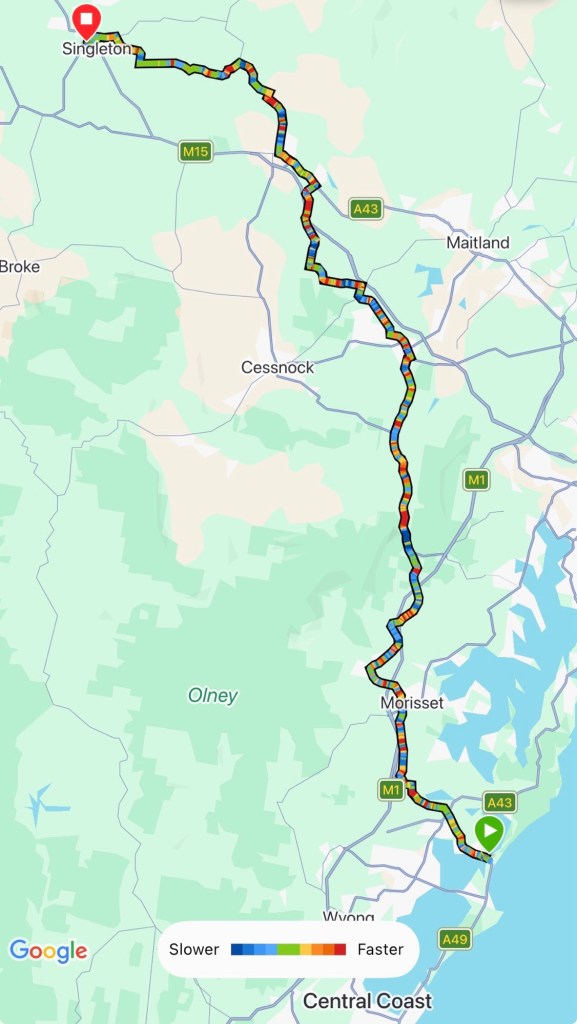
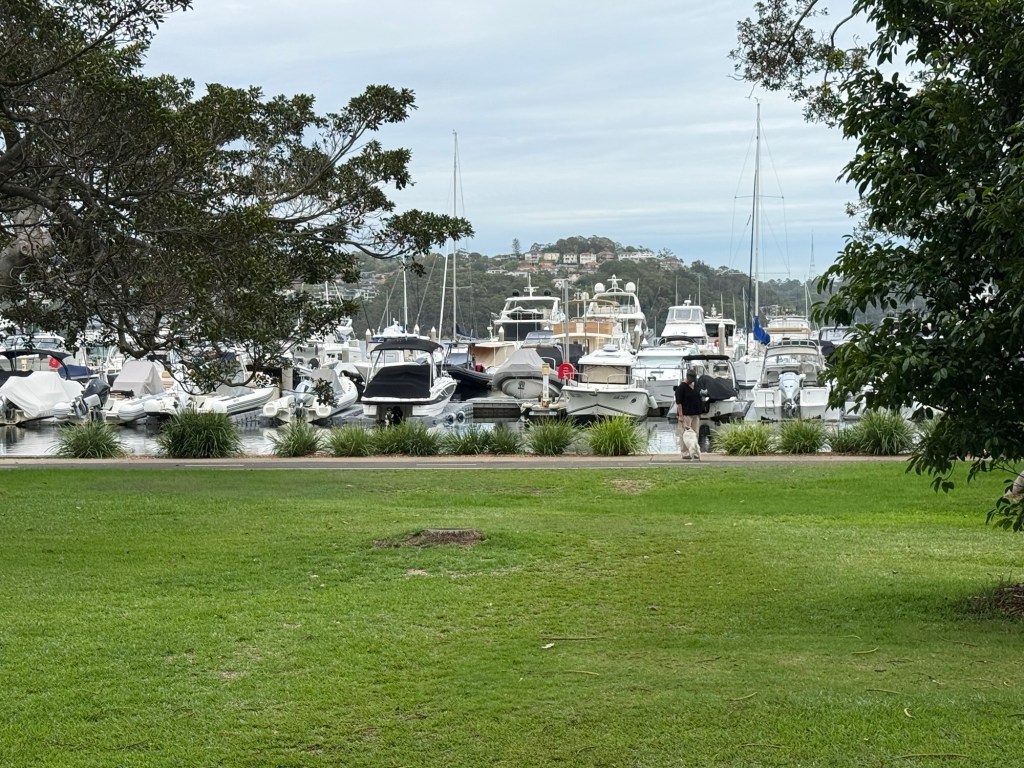
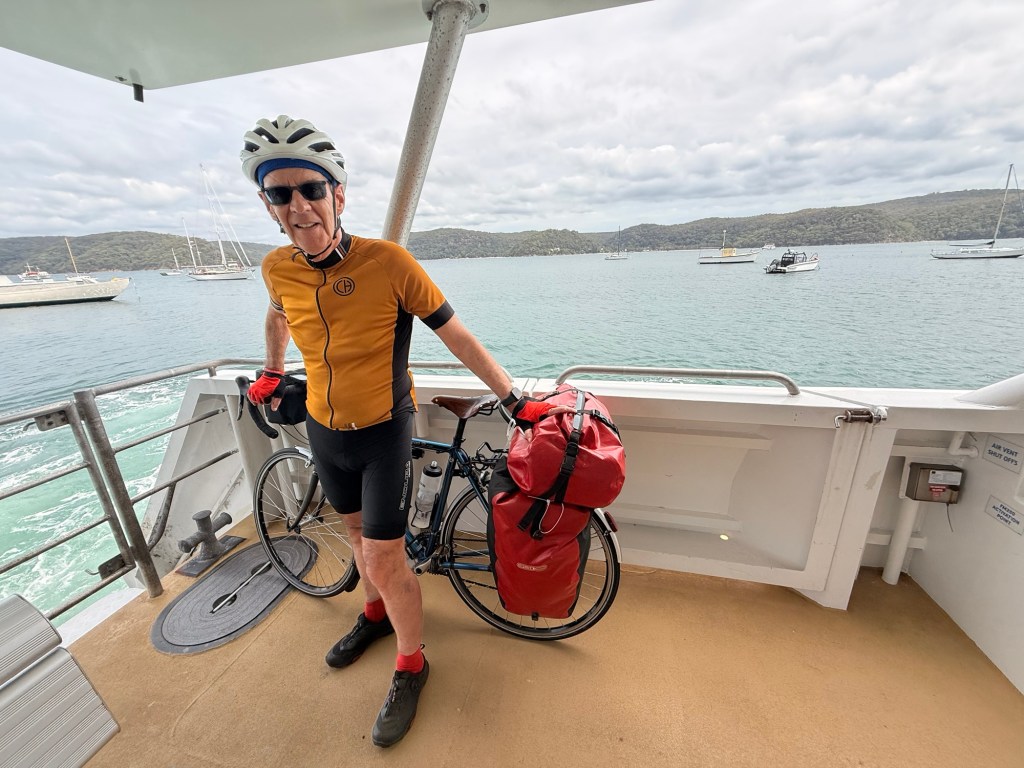
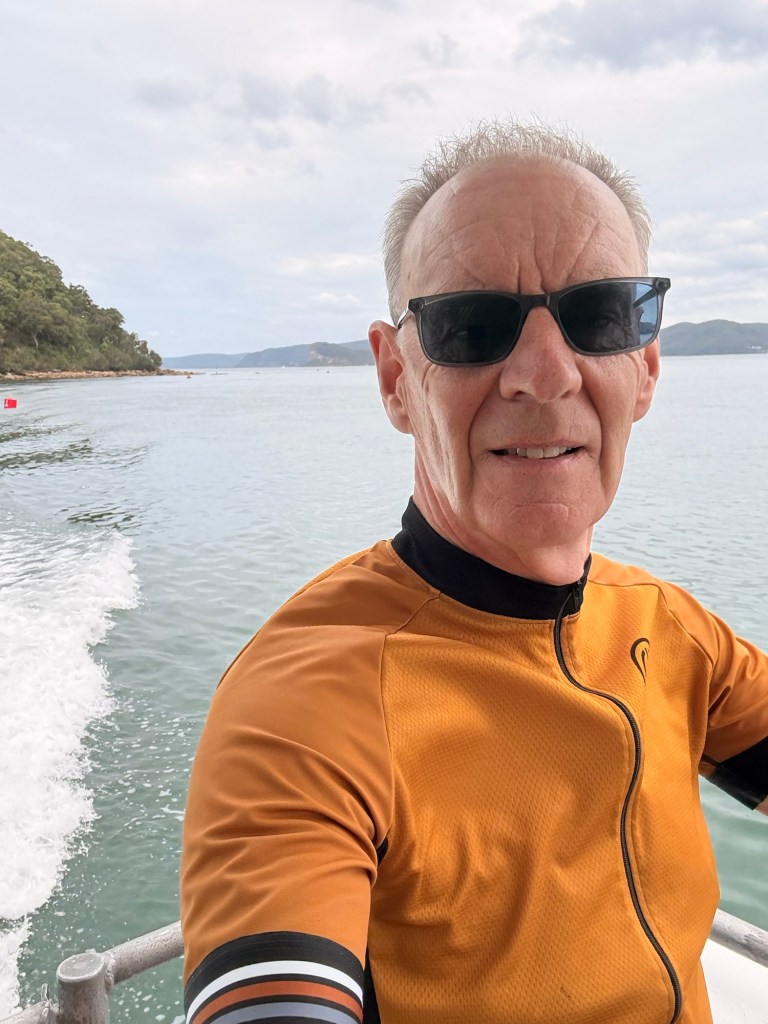
Eventually I got free of the city and I have to be honest that I didn’t recognise any of the route I took in 2020. The climbing was NZ’esque and I eventually rolled into Palm Beach and found the ferry. In fact it was about to leave as I embarked.
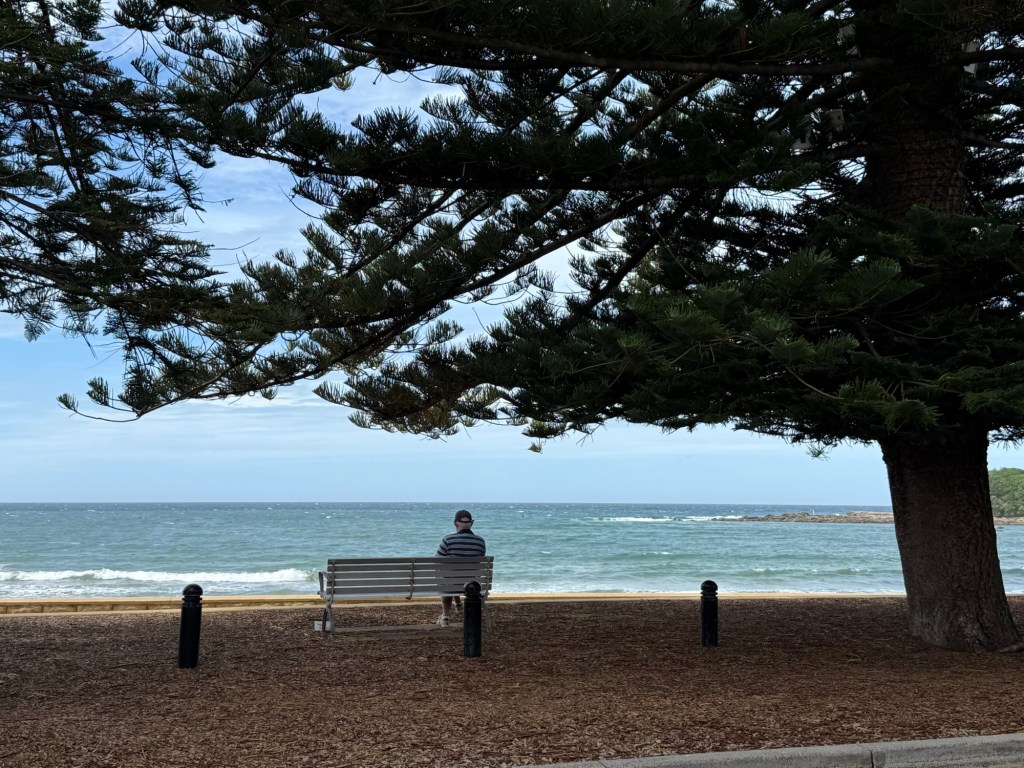
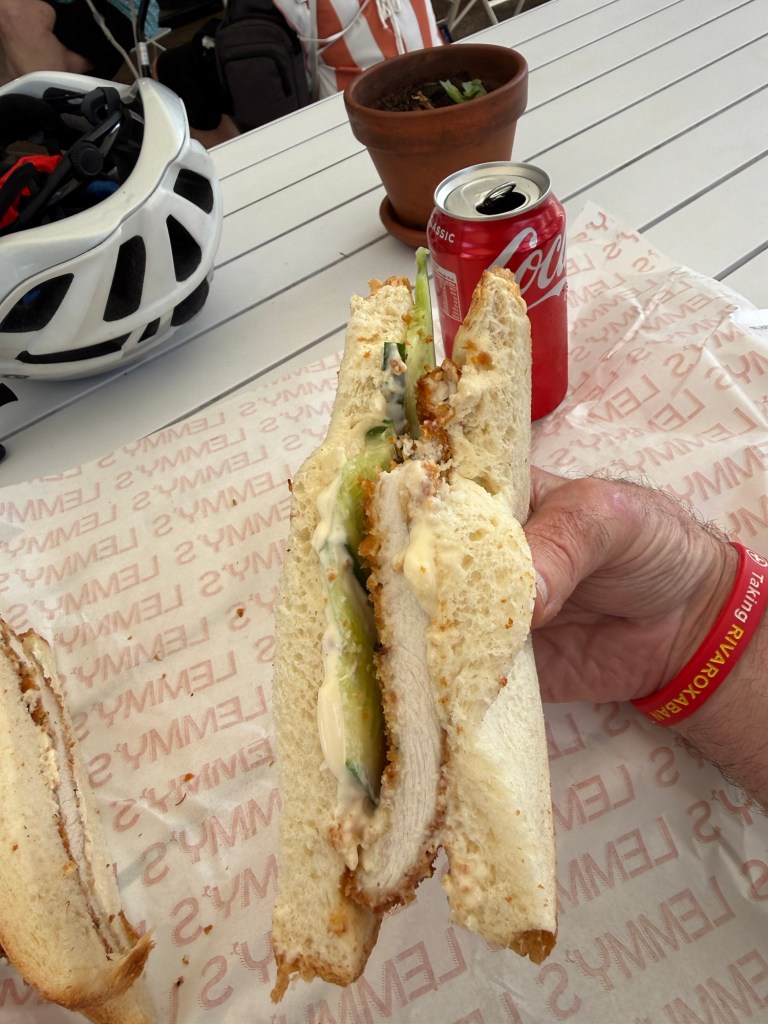
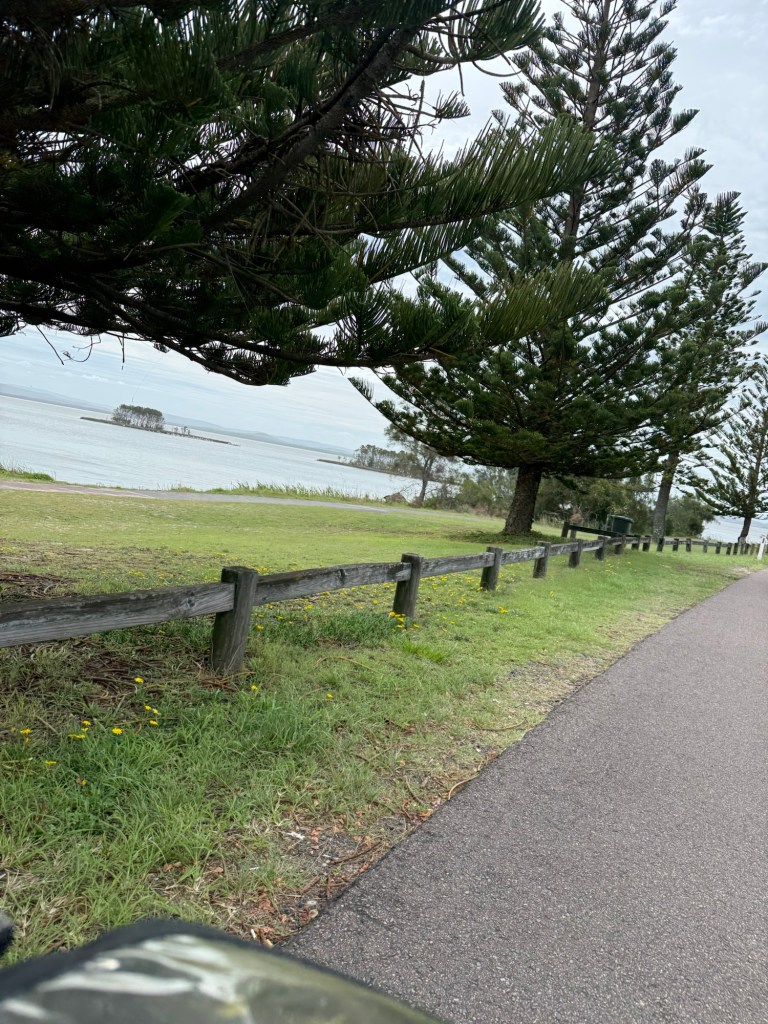
The portrait of the cyclist as a sailorStopped for a sandwich. Not a bad viewChicken schnitzel. To die forThe run to Budgewoi
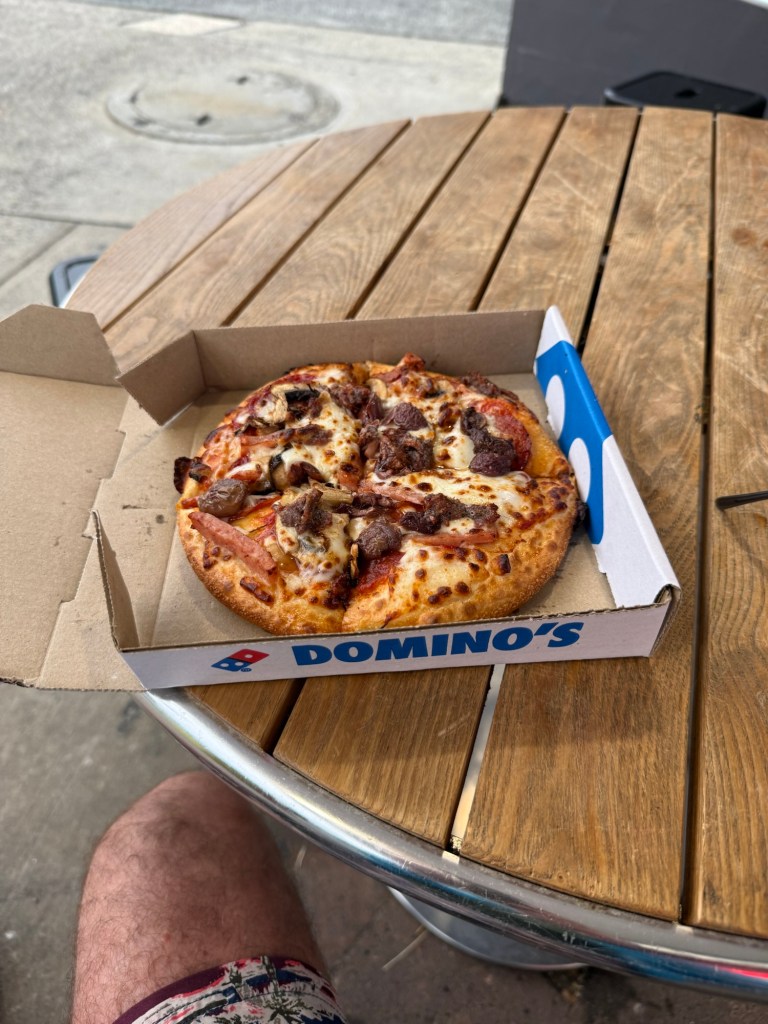
The ride was tough. I was still tired after my revelry in Wellington and the 16,000 steps I took in Sydney. The campsite I was aiming for I’d stayed at before in 2020 and memorably lost my passport overnight. You never forget that. I did struggle in and remembered from 2020 that there were some restaurants near the campsite. I fancied a pizza and found Domino. I was in bed at around 7.30pm. I am usually spark out in minutes and this proved no exception.








 Tony Ives’ Blog