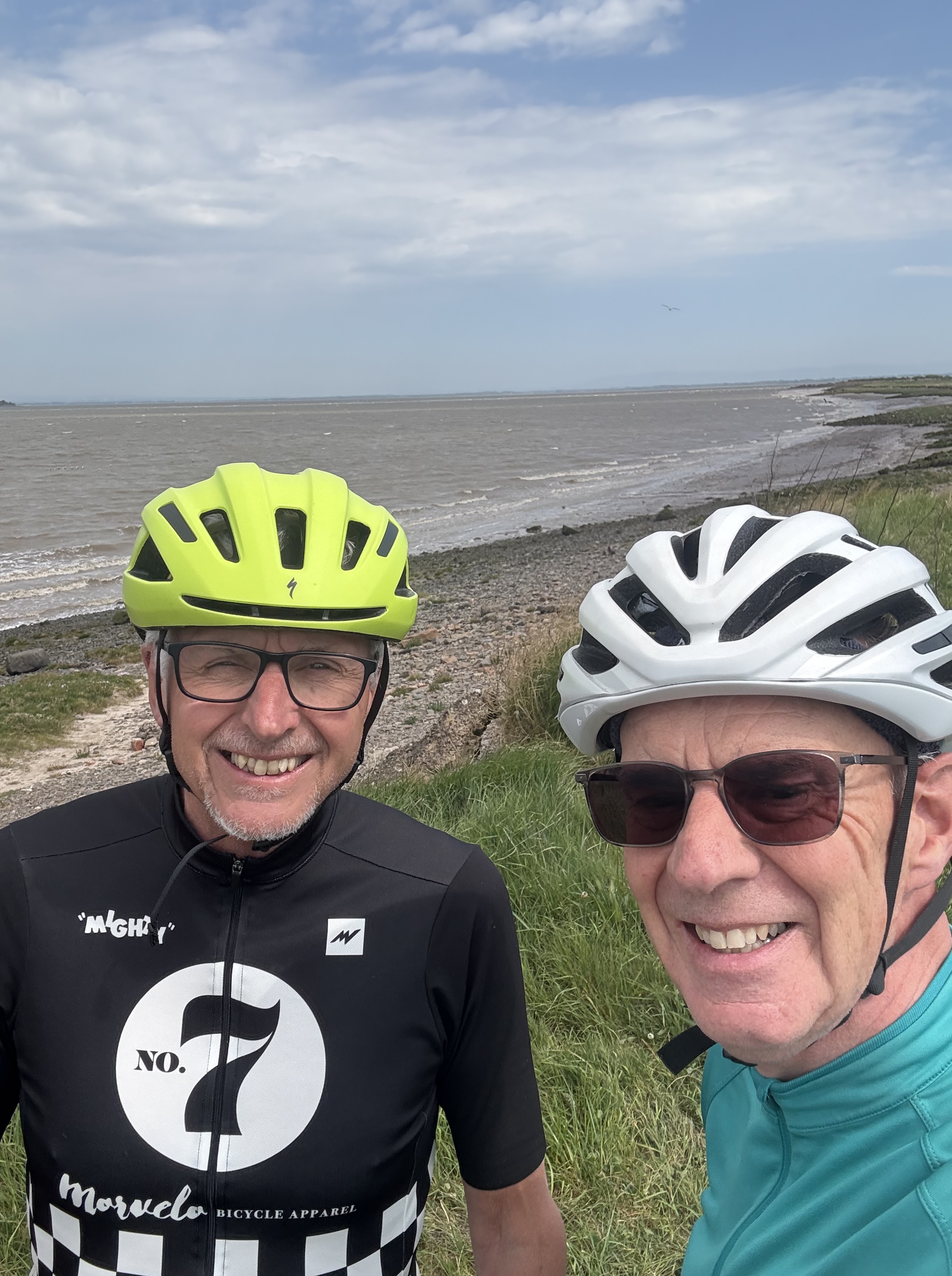
Well it’s been a couple of months since I’ve ridden my bike abroad (!) and with John (of Hadrian’s Wall fame) we plan to ride again but this time the rubber will hit the road in France. On this blog, last year, I recorded a lovely, historic but occasionally chilly May ride across the north of England where John and I followed the Roman Wall.
This time there will be a different culture in Gaul although the scenery should be as interesting but the food will be a lot better! It also promises to be hot… bring it on.
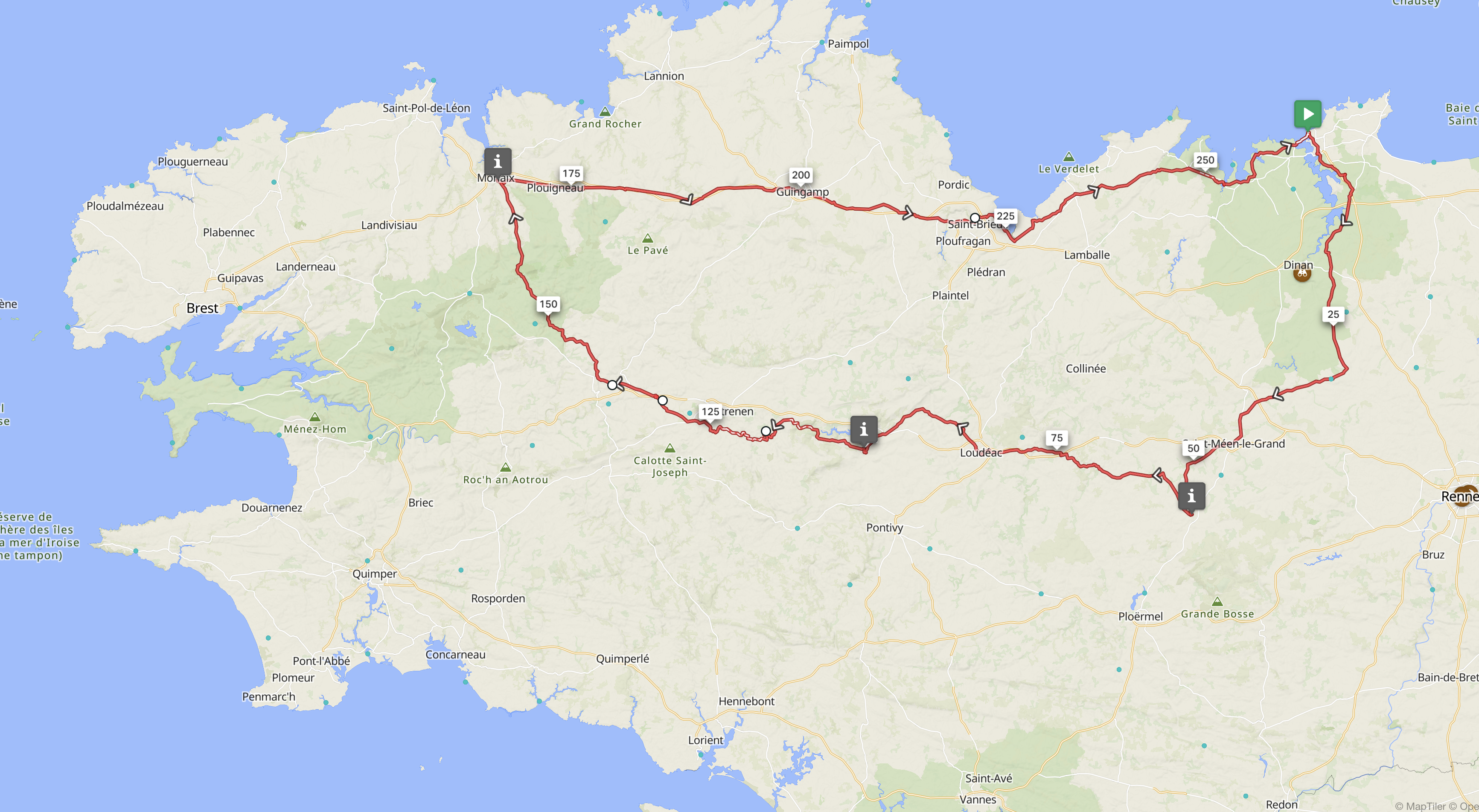
The route cycling right to left
It’s called the ‘Class of ’66’ as this is the year, in fact September, that John and I met at Ashville College in Harrogate at their preparatory school, New College, on Leadhall Lane. I won’t be blogging as it’s only a trip for a week but I hope to post a number of posts on Instagram. Here’s link that takes you to Instagram below should you want to join and follow:
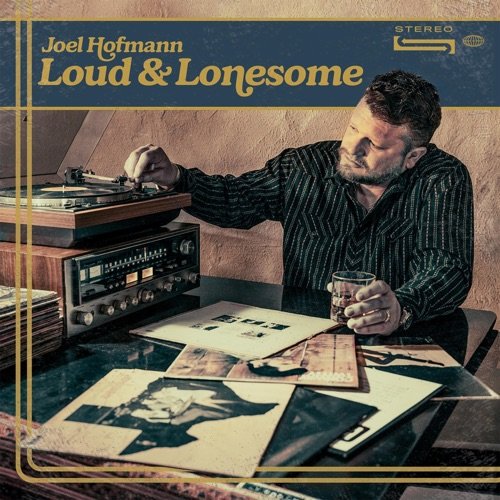
Hofmann’s Facebook page tells customers that he and his father have sold their hardware and welding supplies business in San Marcos, TX. Needless to say, in doing my research I was hoping to get to the ‘nuts and bolts’ of his career but never literally! However, there’s a lot of artists in Texas playing traditional country music for love whilst no doubt paying the rent in daylight hours with something less exciting. This may go some way to explaining how Hofmann’s been able to make music since the start of the millennium. His record releases are few and far between as playing live is the way to go and so when he does commit to wax it’s a red letter day: this release is no exception.
Texas has remained true to traditional honky-tonk music. It’s a vibrant scene where there’s often a hardwood floor to pound with your partner in front of the musicians. This collection of 11 songs showcases Hofmann’s resonant baritone and brought to mind Dale Watson. Burning the Midnight Oil starts at a galloping pace with Hofmann telling us he’s also moving at speed in the wee hours as guitars joust, a great opener. The Billy Dee Donahue cover of Blackjack Attack refers to a potent bourbon that helps you with matters of the heart. Frankly, the clip set by the drums sounds like an impending heart attack! It’s not all fast and Sign in the Kitchen puts on show his lovely voice where a slide guitar and some B3 organ gently serenade in the background. He shares Landmark Tavern with Linda Gail Lewis and some fabulous honky-tonk piano. This is all the real thing.
Play Me the Waltz of the Angels is an interesting cover. The band, in the story, strikes up a request from an elderly widower. This was his wife’s favourite song. The lachrymose sentimental saturation here had me scrabbling to research the composer and discover it was Rory Feek. Feek’s 2021 Gentle Man album is full of songs as poignant as this and his duet with Dolly Parton on One Angel can genuinely stop me in my tracks to wipe away a tear.
This selection never misses a beat and this is what you’d hear clutching a beer sat in a dancehall watching the two-steppers. Look no further if you haven’t got to Texas yet but want a taste of the live music scene.
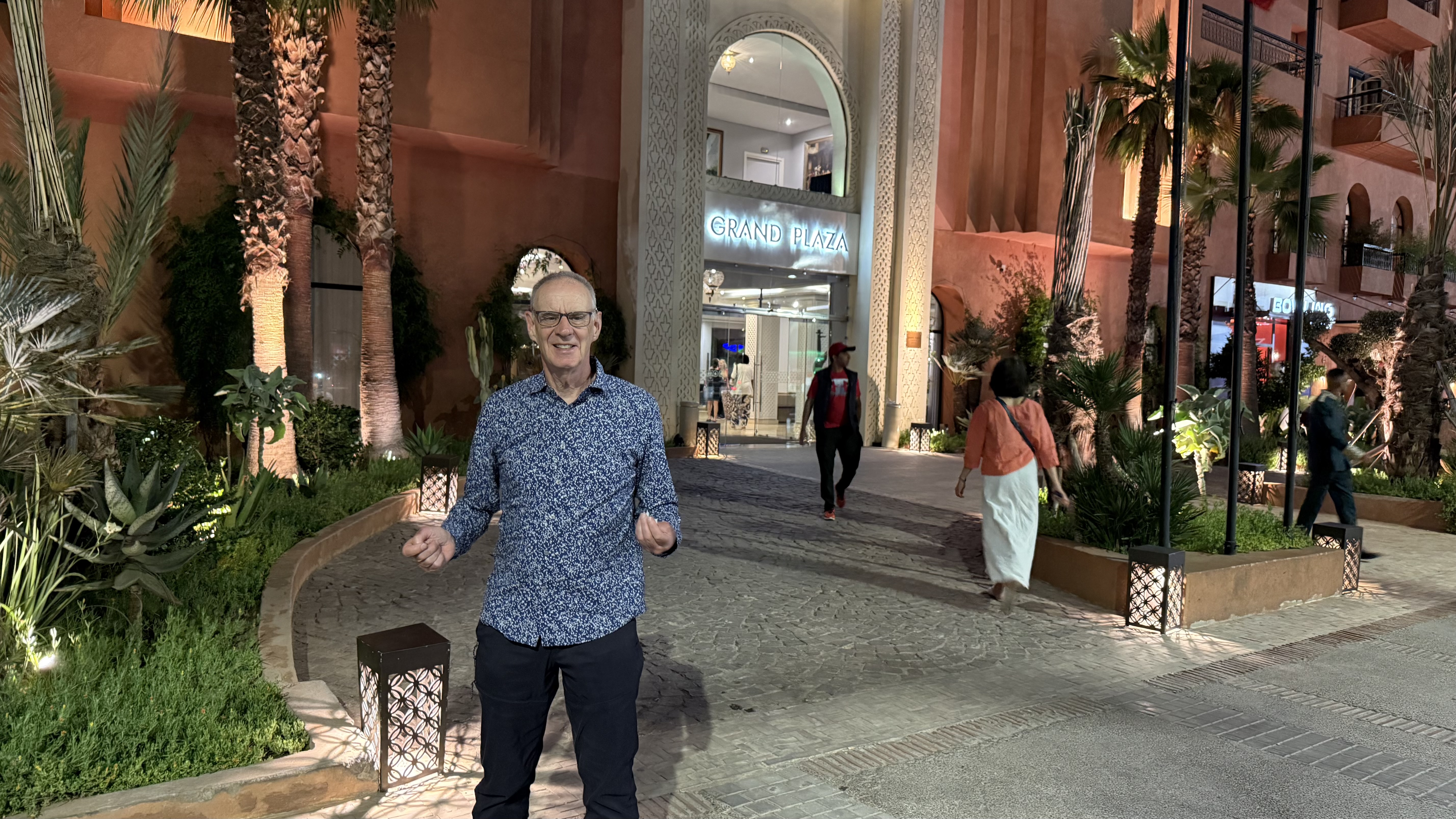
Marrakech is probably the most well known and visited city in Morocco by British tourists, it’s certainly a well developed city with an air of prosperity and complete traffic chaos. Our stay at the Grand Plaza was on Mohammed VI Boulevard, a dual carriageway that accommodated trucks, cars, motorbikes, cars, bicycles and, my favourite, roller skaters holding onto cars. All moving at any maximum speed they could achieve with little lane discipline. It was anarchy and crossing any of the roads that turned off the Boulevard was, again, Russian roulette.
As we approached the hotel the guide who’d spent the tour giving us chapter and verse on industry, monarchy, religion, history, geography and culture said by way of a joke “we are now crossing the largest roundabout in the world”. To everyone on the bus it was a joke as he finished his guiding with our last drive in the bus. To one lady she, in a flash, asked yet another of her asinine questions, that we’d sat through for nearly 2,000 kilometres, “How many turnings off does it have?” Frankly, how would her life have been richer whether it was four of 16? She’d kept up a stream of nonsense throughout the tour including my favourite of identifying goats, sheep or donkeys through the bus window so that we could take photos. Rest assured there are many. She was Canadian but it does call to mind something I once heard in the USA when on a business trip that “there’s no such thing as a stupid question”. Let me be crystal clear, there certainly is. For what it’s worth the entry level tours do usually scoop up one guest (female) who is a quasi burden to the rest of the party. Anna and I have a game where we try and identify the person shortly after joining. I know this is a mean comment but on every tour it occurs!
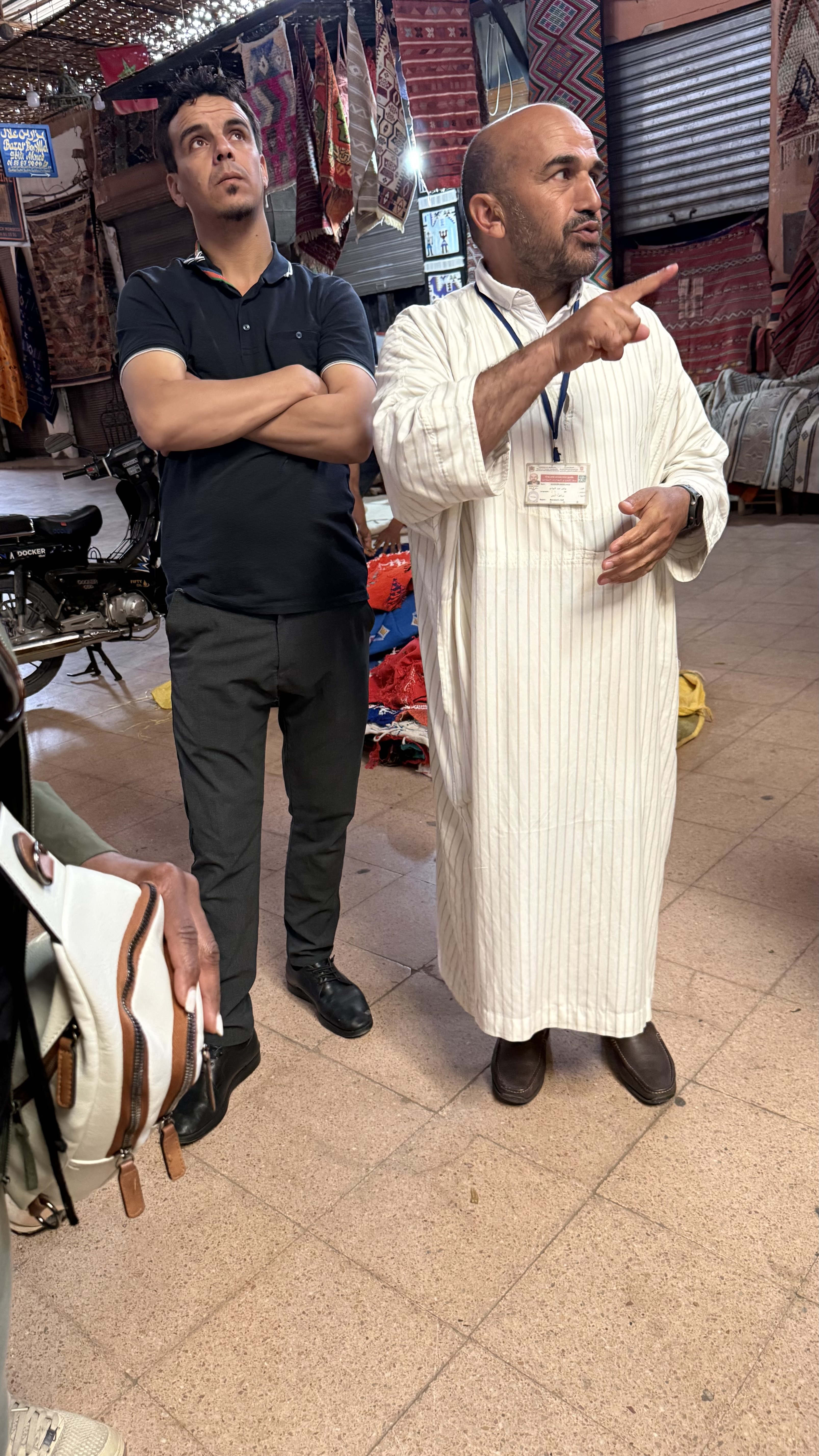
We stayed three nights, two as part of the tour and then one extra night by ourselves. We dined alone on two of these nights and forgive me but I had burger and chips twice. The remaining tour activity was a guided tour of Jemaa el-Fnaa. This is the name of the area that houses the main square and the market. We had another excellent guide, Abdul, who was thoughtful and intellectual. He explained the three sided nature of Moroccan Squares and the small windy nature of the souk passages led to better ventilation and cooling. He also explained the Muslim diet and for those who think Islam prohibits shellfish, in fact, they don’t that’s Judaism. On one theological question he did accuse me of using logic that didn’t apply to the matter in hand!
The Mighty Abdul
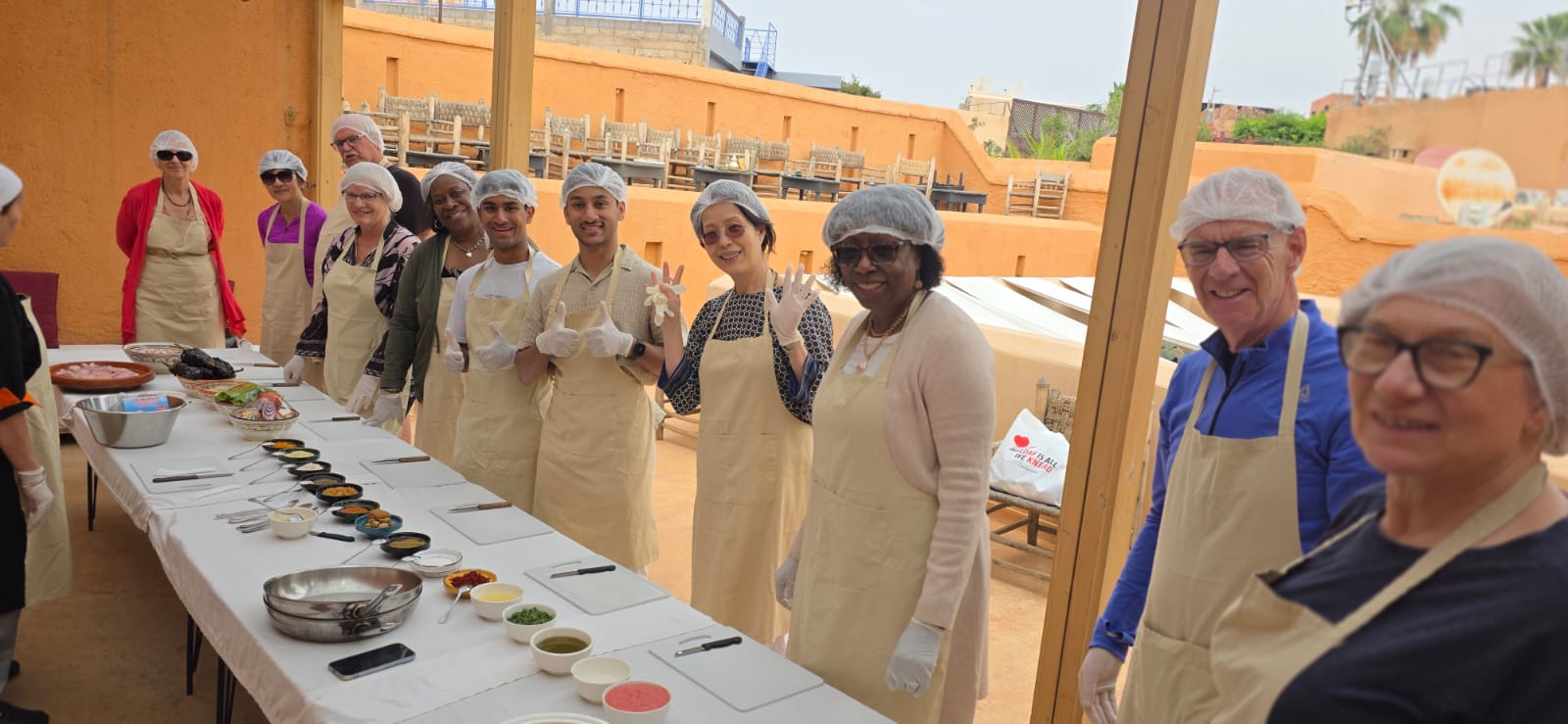
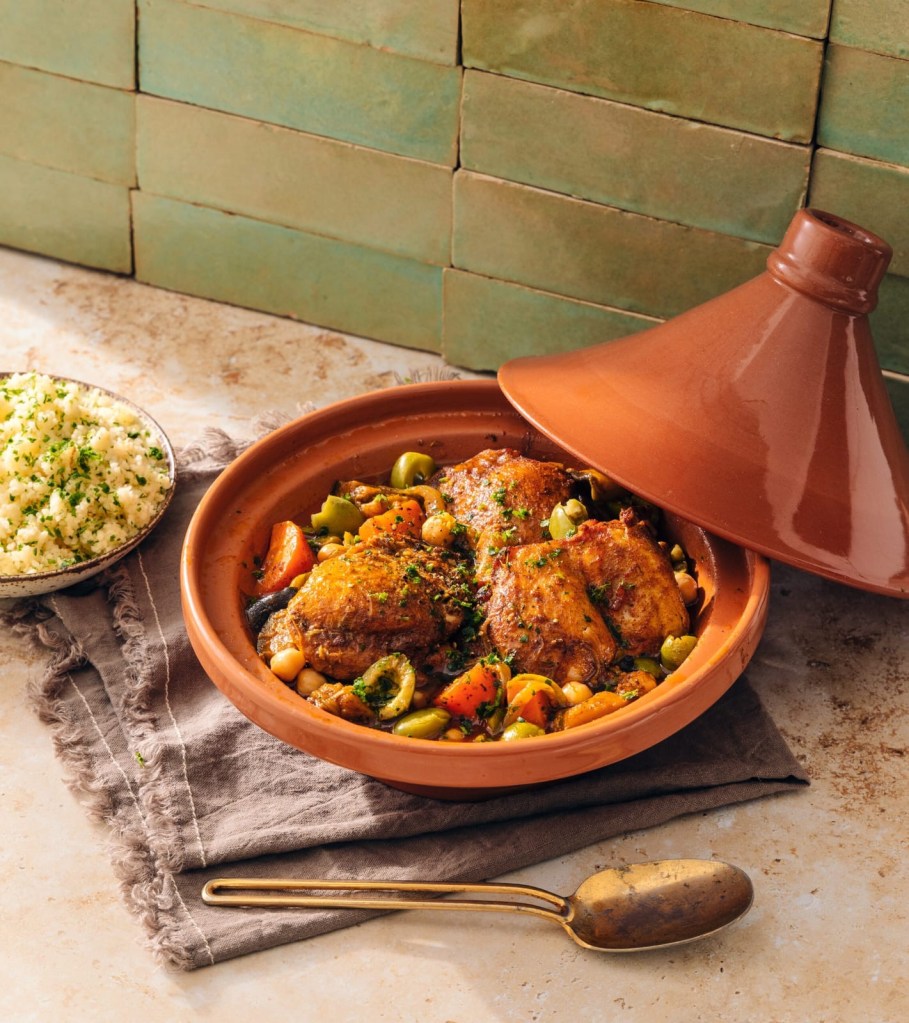
In the middle of the guided walk we participated in a cooking class. It was Lemon Chicken Tagine, a dish I will probably never ever eat again. The preparation of the ingredients was fun and we were all given jobs, fortunately I missed out on mixing the raw chicken, vegetables and numerous spices with my hands. After our creation it then turned up for lunch along with a warm salad we’d also magic’d up.
In fairness I had no hair to keep out of the meal!
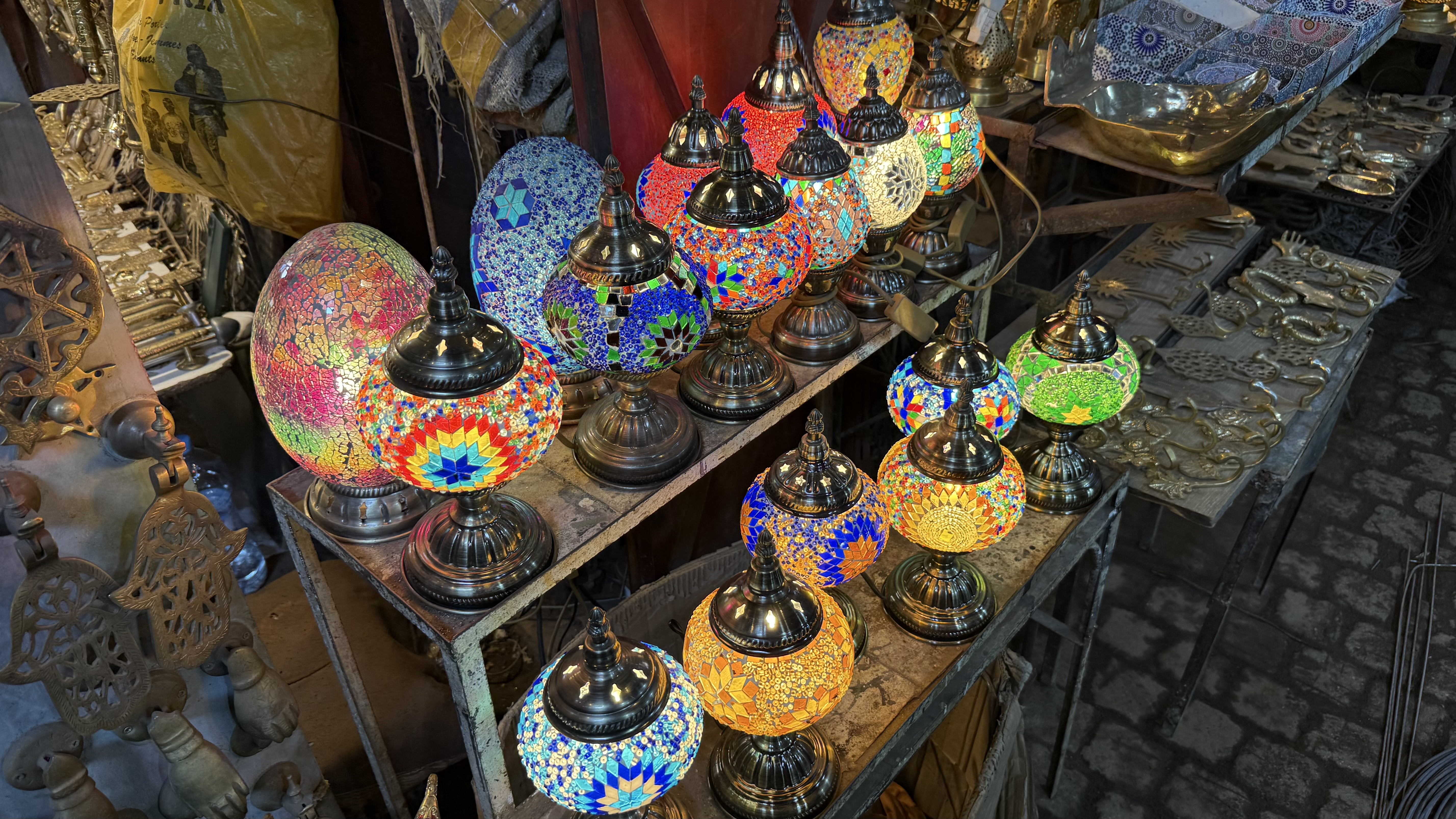
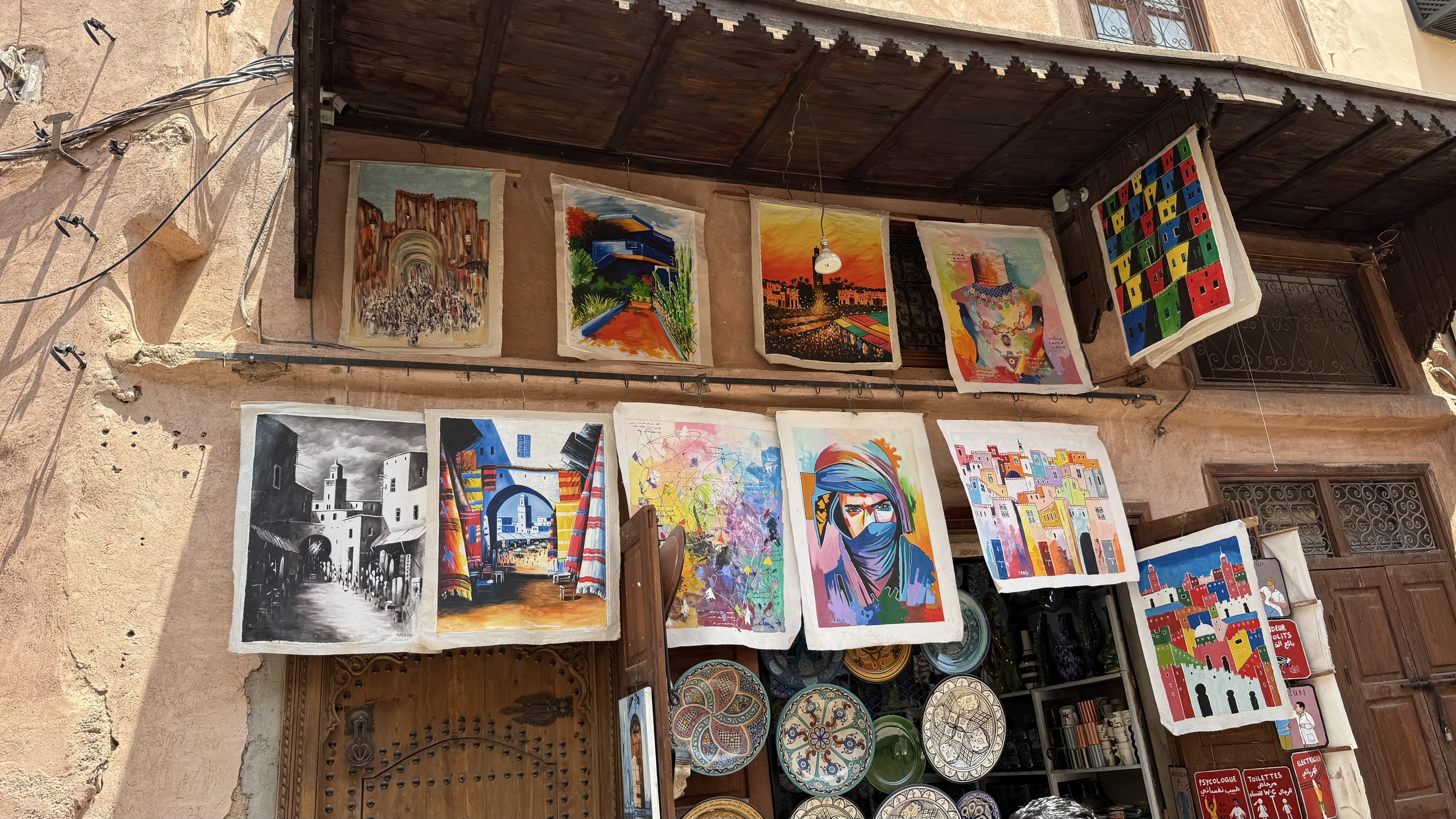
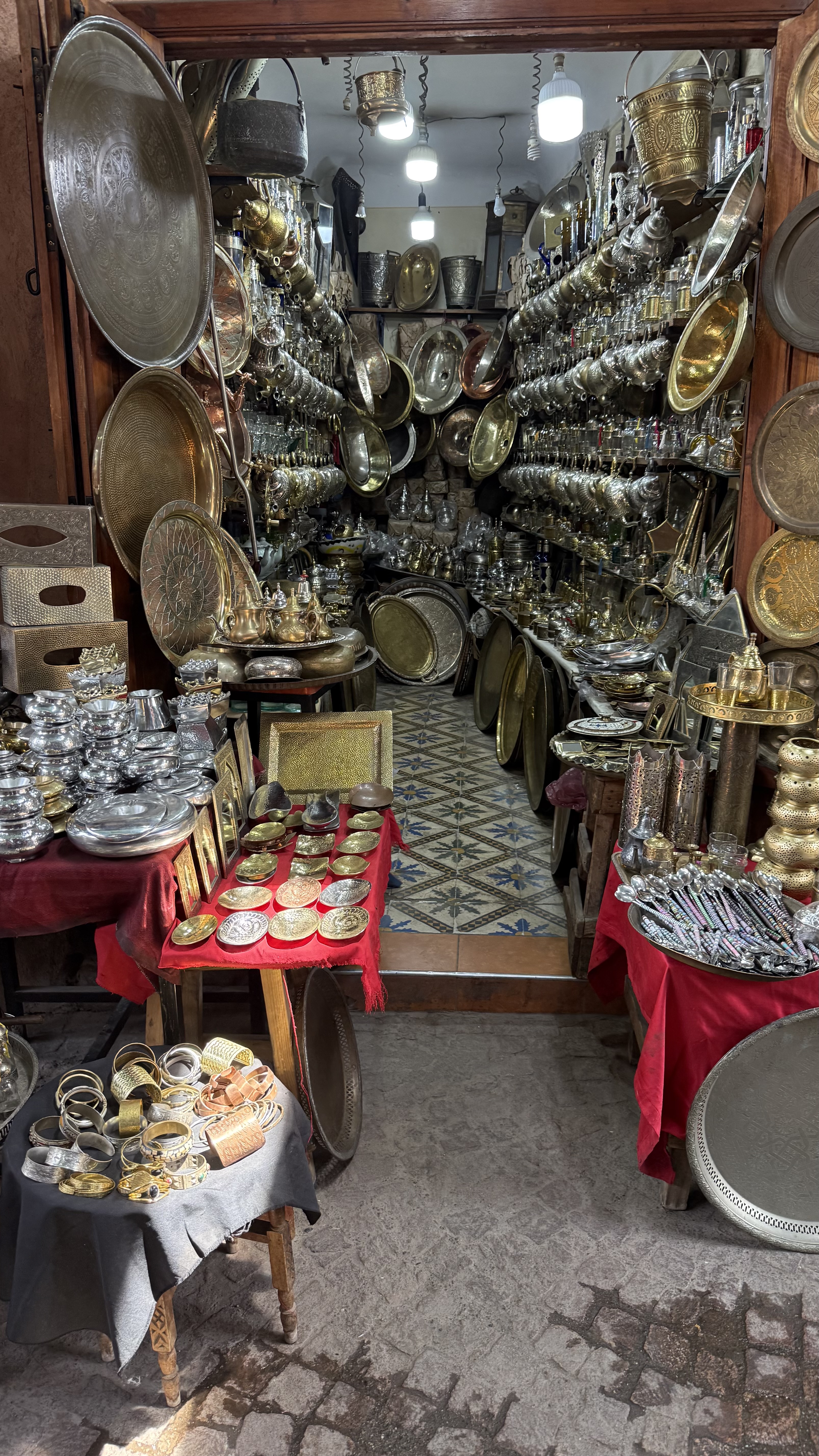
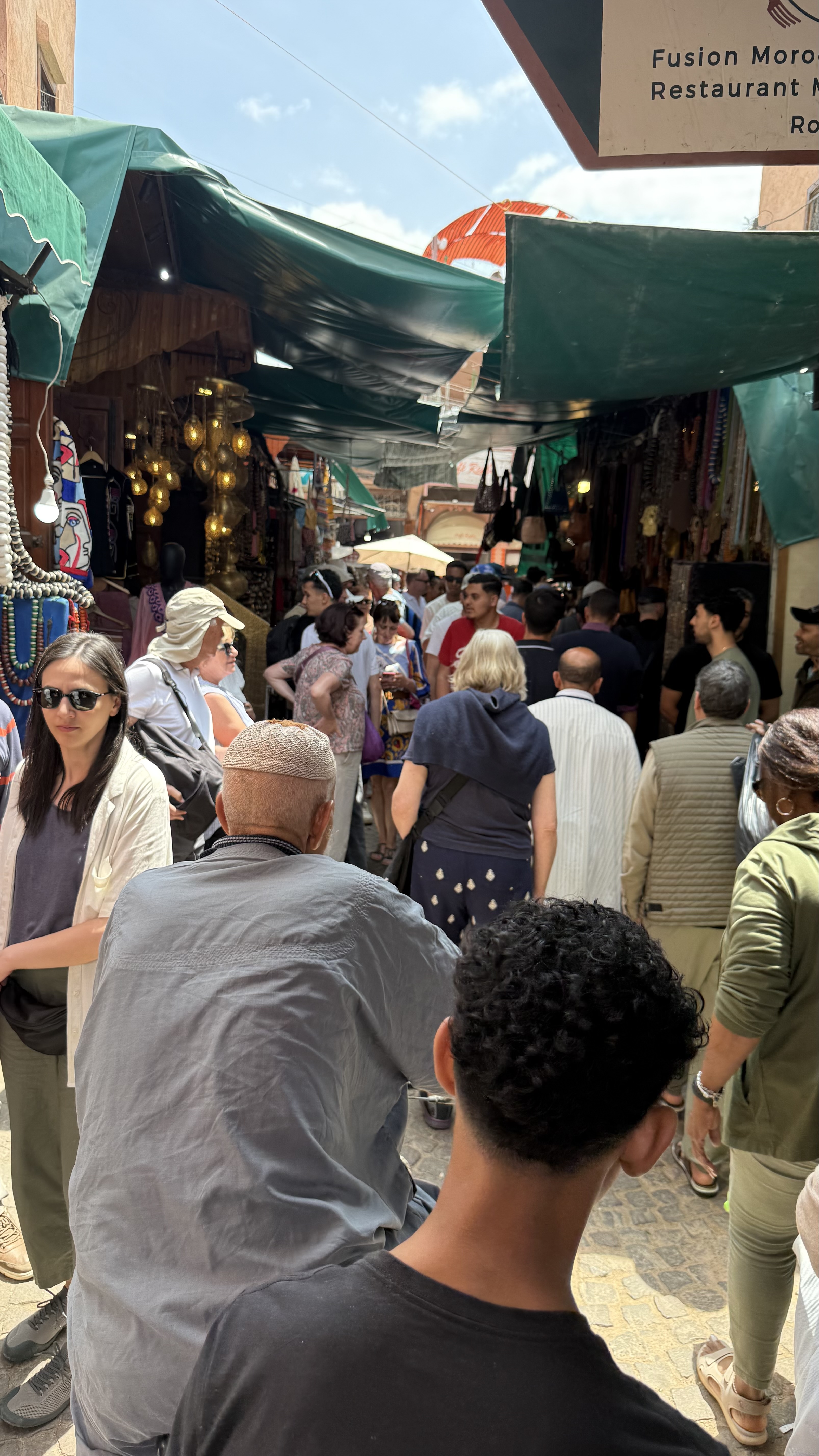
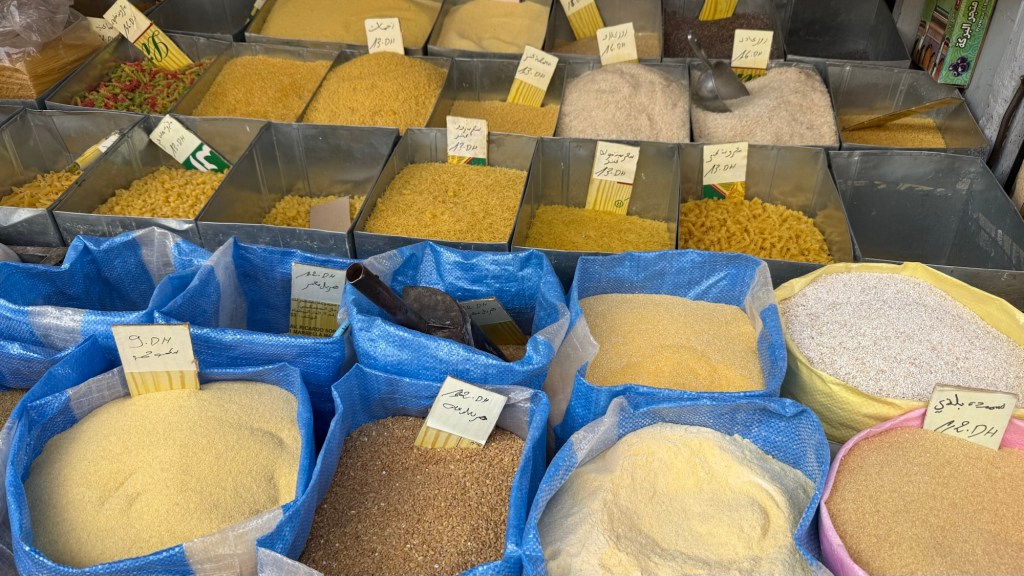
Back into the busy souk we dogged the other shoppers and regular motorbikes that weaved their way through the passages. The stalls in the souk never sell the same product next to each other. Clearly, having a competitor next to you was a bad move. The advice was that the haggle started at 50% of the initial asking price. You’ll be unsurprised that I felt no temptation to see if this was the correct approach. I would say that many of the goods look well made and interesting should you be in the market. After the tour we walked back to the hotel whilst some of the guests took advantage of last minute shopping (!)
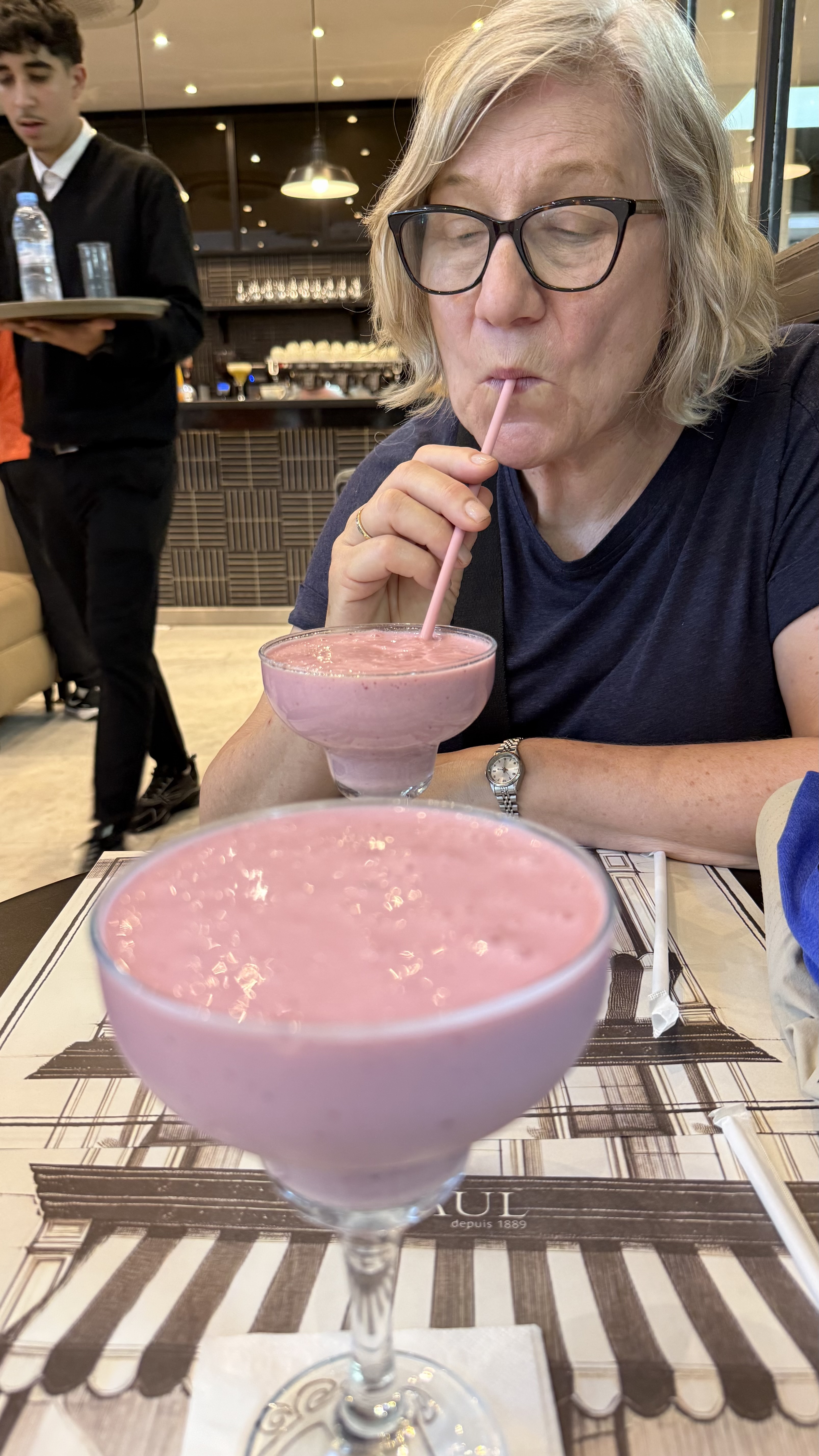
Yummy Strawberry drink
So that was a busy and wonderful tour with so much to see and learn. We’ll be looking for our next G Adventures tour.
Lastly, as a former guide I couldn’t, or want, to fault Redouane, he was attentive, always managing our safety, efficient, interesting, fun and the tour ran perfectly. We tipped in line with the guidance of $10/day each and then chucked in a little more. I did wonder if everyone else stepped up, I hope so. The money isn’t just a little bonus as I suspect he’s keeping other family members with it. However, where he did outstay a welcome was his pursuit of ensuring that we all completed the post tour survey and advising what mark to give! We were asked to insert no negatives but if we felt there were problems to email G Adventures separately. However receiving from him WhatsApp messages days after the tour giving the number of outstanding respondents with a request to hurry up and complete was a misstep to me. On reflection it’s a competitive market to get work and guides with the best marks get the work. The useless management above him blame the guide for any negative comments about food, hotels and visits?
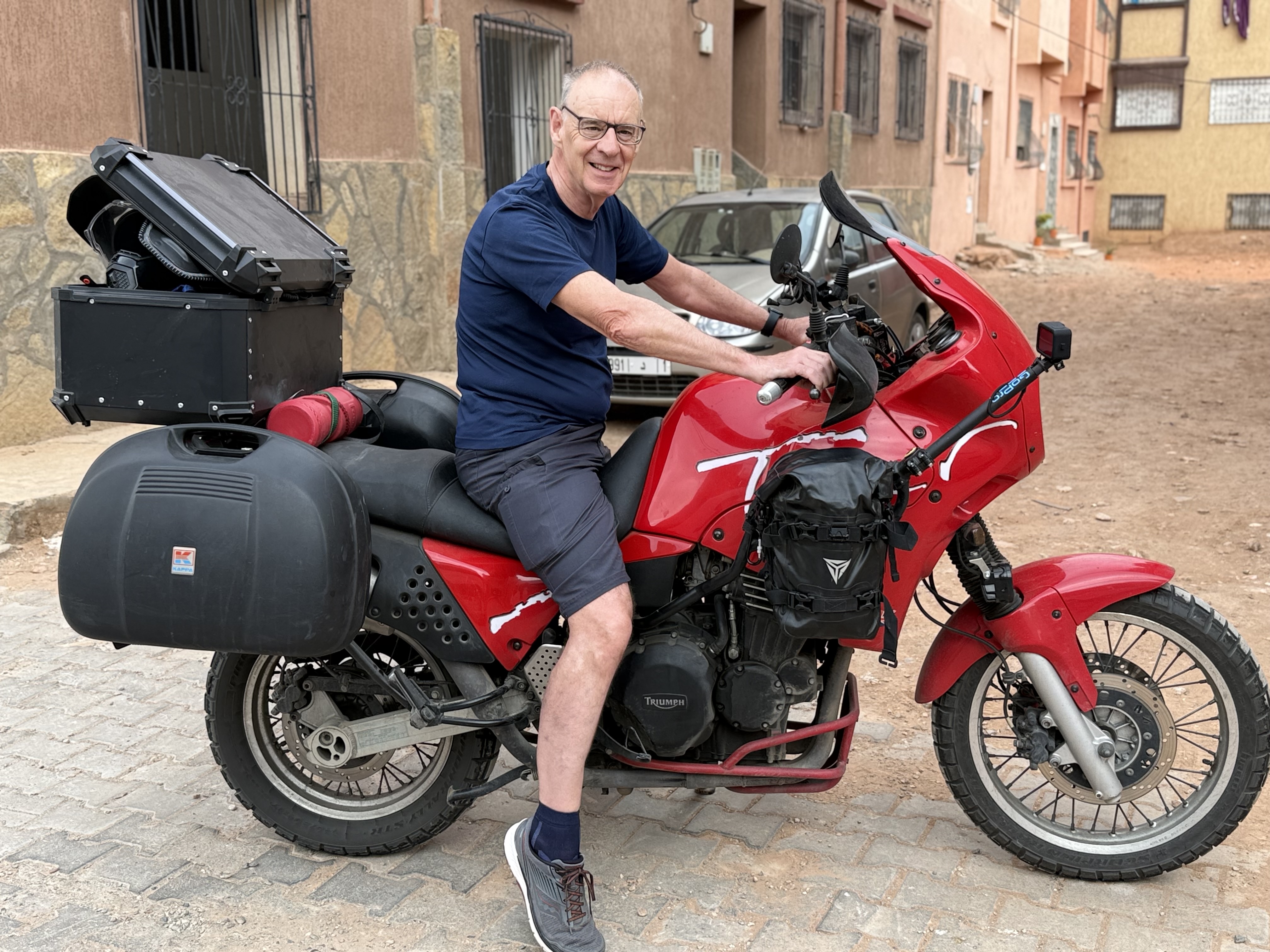
I was tempted to ask if the owner of the Triumph motorbike had a helmet as travelling by two wheels is always my preference, however, duty called and I trooped back on to the bus.
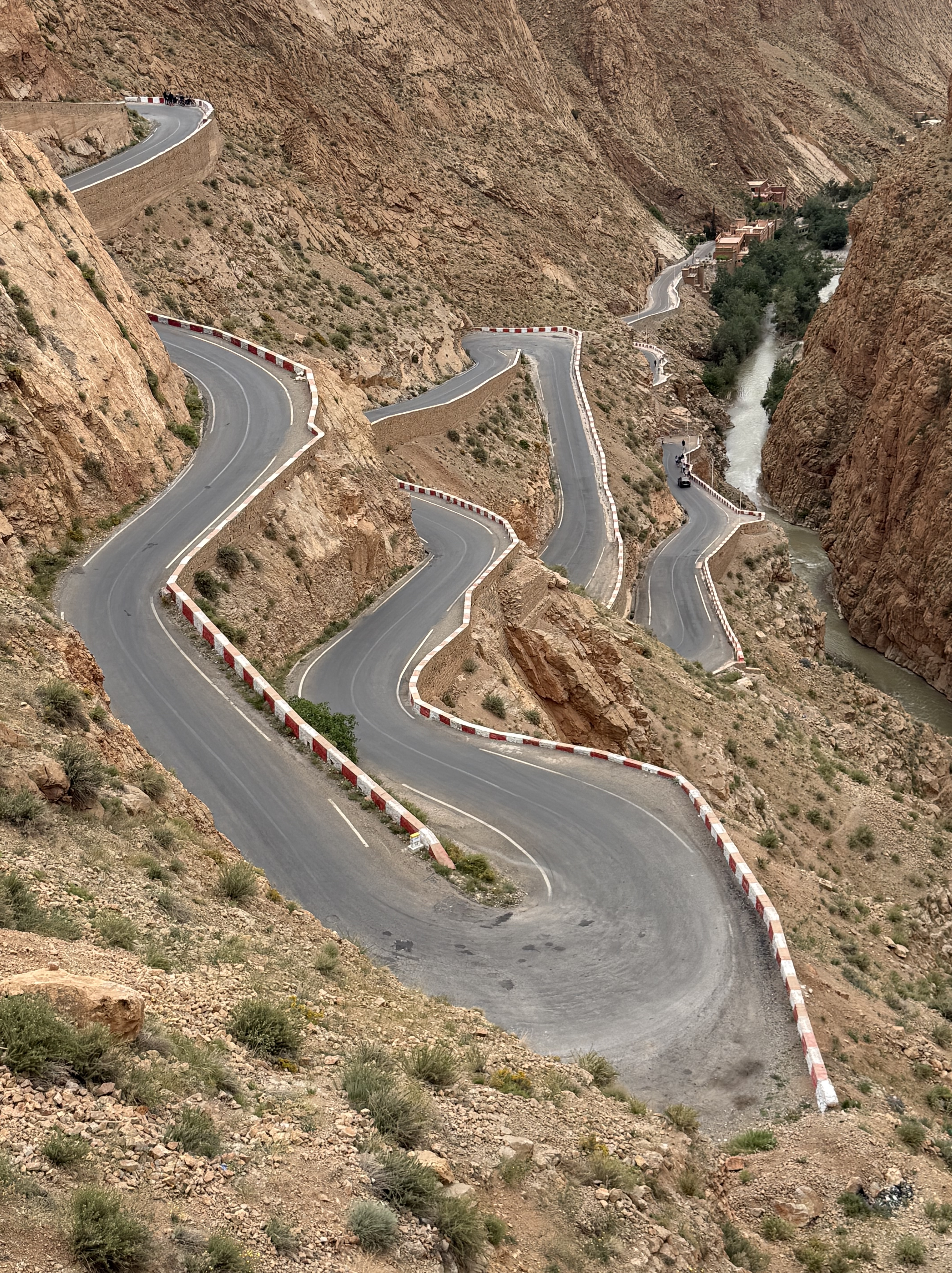
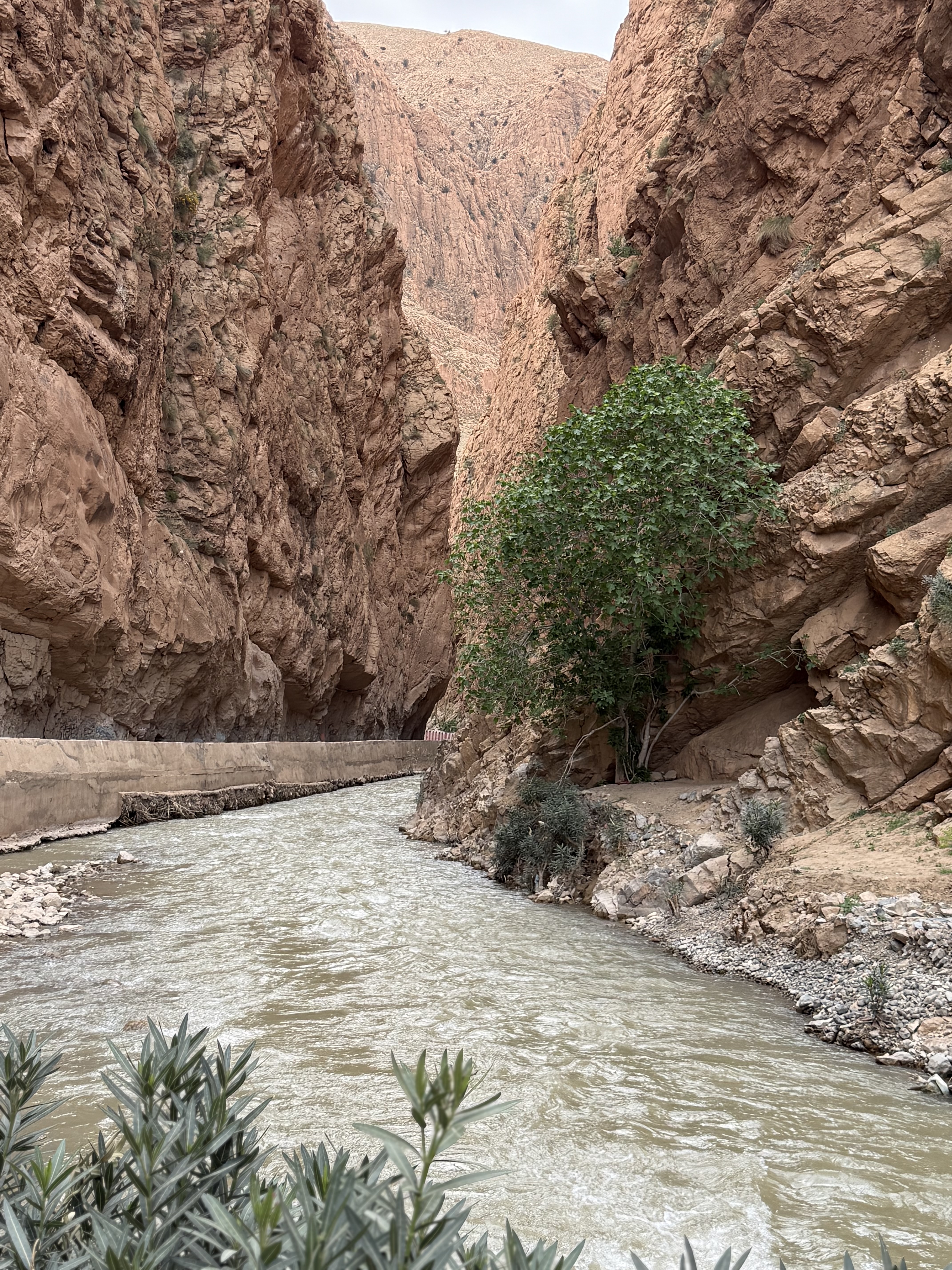
The first stop was the Dedes river Gorge that was magnificent and you can see why the motorcyclists would want to visit.
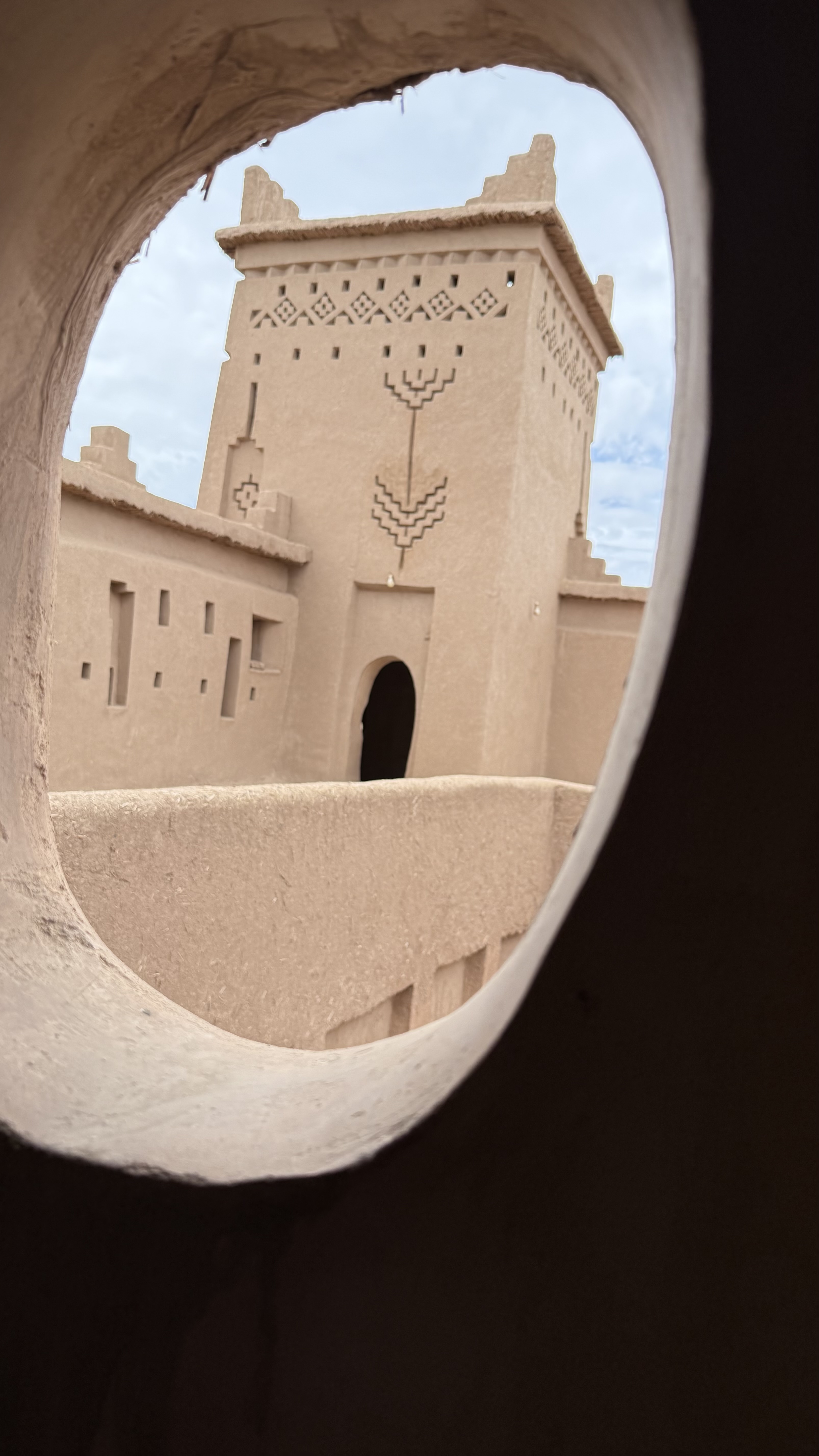
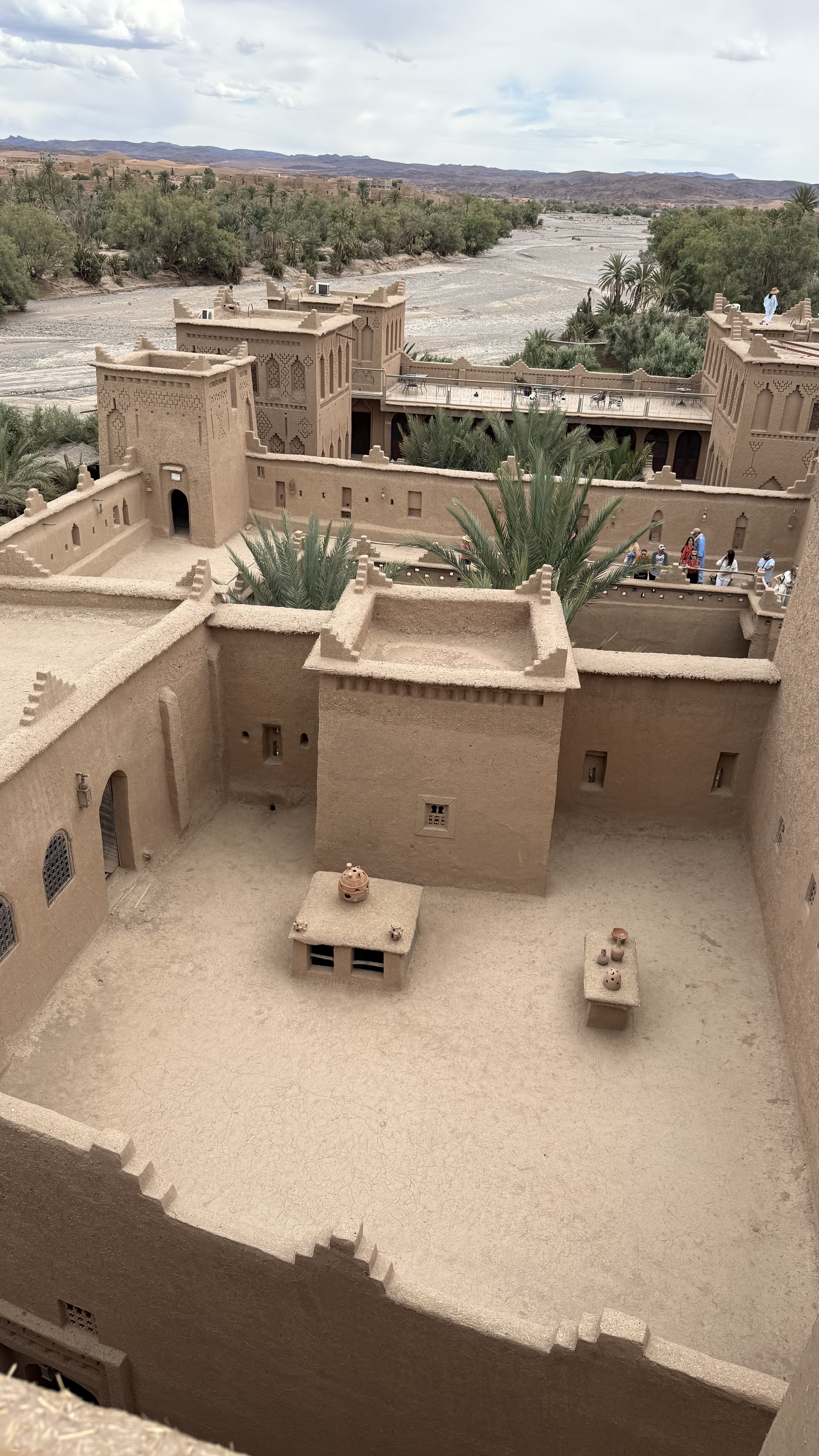
This was quite a tourist destination especially for walkers. We were headed in the direction of Marrakech and stopped at a restored kasbah at Skoura Ah El Oust. This was built in the 17th Century and was a fortification against other tribes. We saw how the building was divided up for cooking, living and sleeping and where they kept the animals! If you were female then the reality is that due to danger of kidnap you would live your life inside.
Next we drove on to a nice hotel in Ouarzazate where we had some time in its spacious grounds before dinner. The guide introduced some of our dining destinations usually by first advising that we could use a credit card! It really was a step back from what we now experienced as a cashless society in the West. Despite this opportunity the dining itself at a local restaurant in Ouarzazate was disappointing. We both steered around our old friends the tagines and skewers: the staple offer and plumped for a Salad Niçoise. We both knew the fish would be out of a tin but it was something different. Frankly we only got a spoonful of tuna each! On every trip I always pack a packet of McVitie’s Digestive biscuits and so this supplemented our diet on our return to the hotel room.
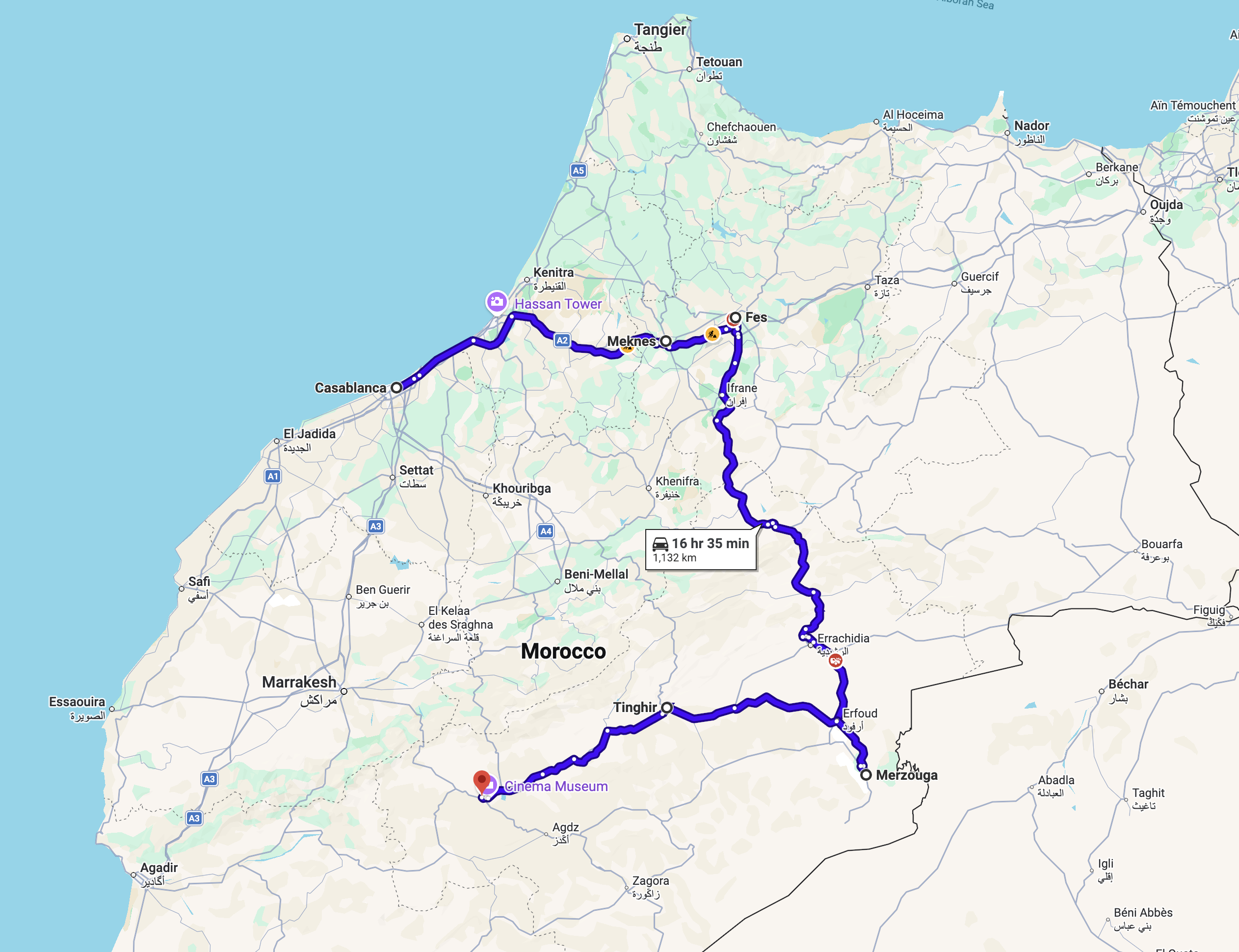
Our trusty busThe route so far
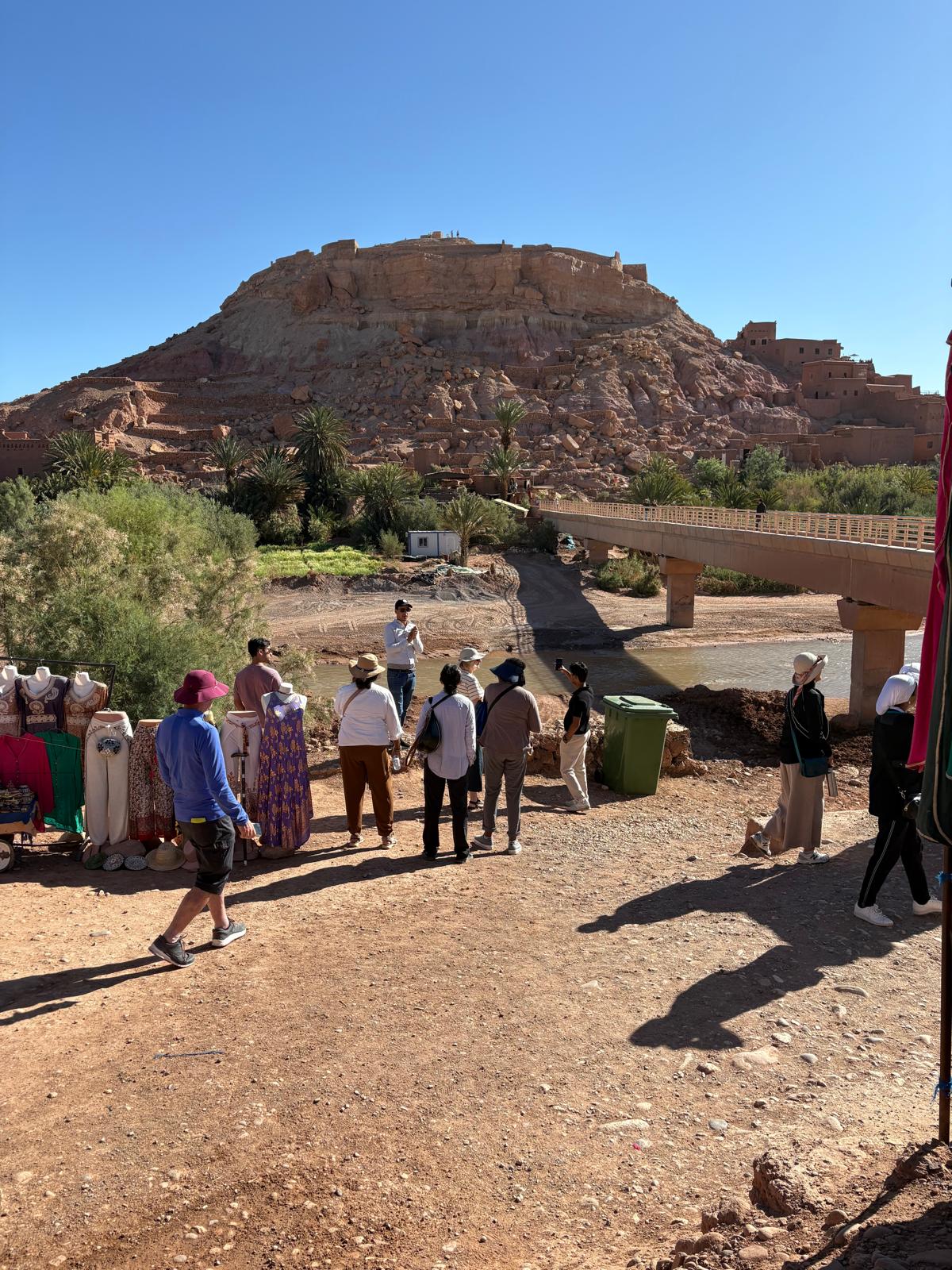
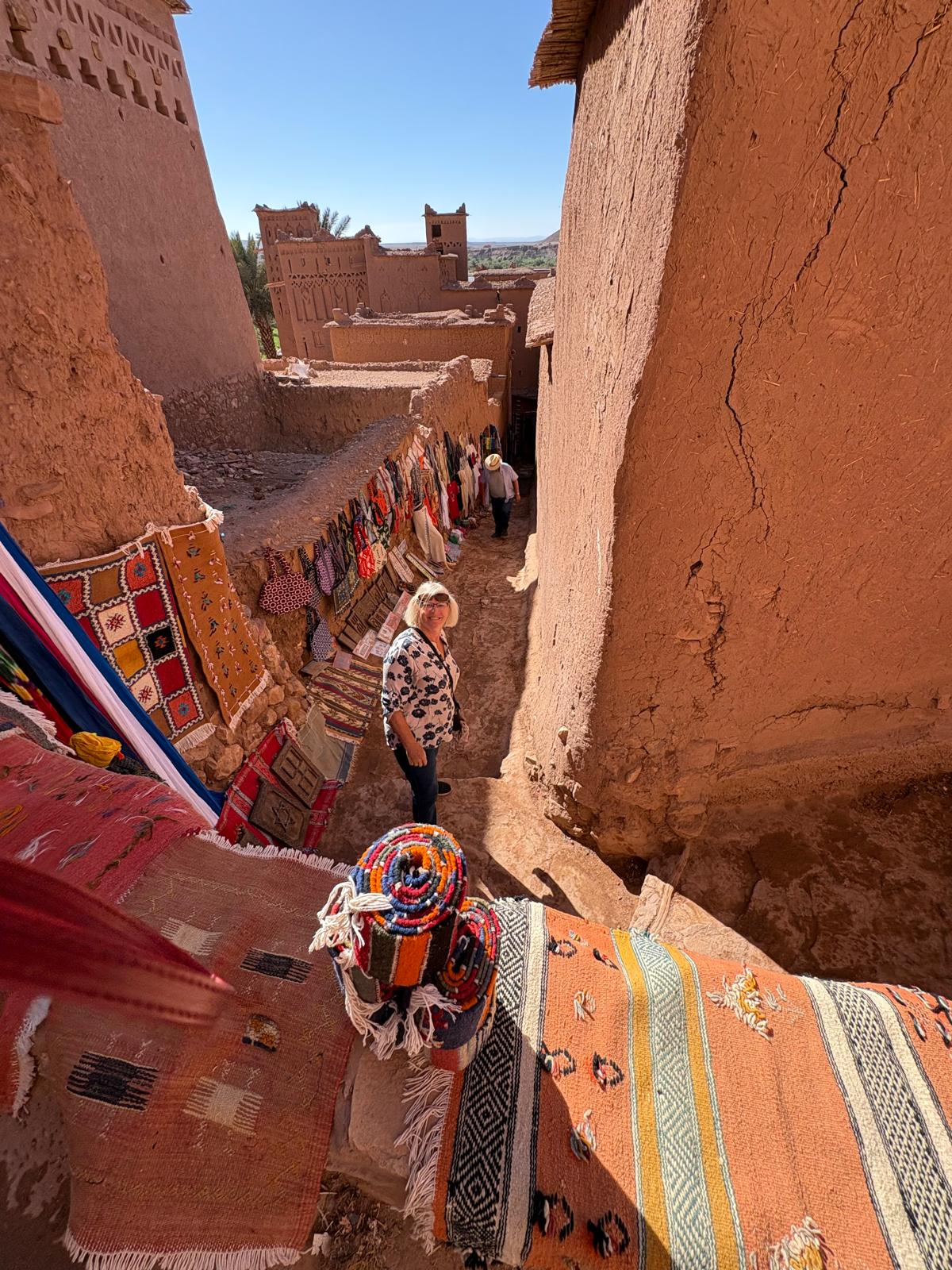
The next morning meant another kasbah and an important one as it was on the route for the camel caravans between Timbuktu in Mali and Marrakesh. This was Ait Ben Haddou. Climbing up to the top was a good workout not least with all the steps usually of different heights and often with rubble across the path! Again despite looking ancient and obviously the rock having been here forever then a lot of the construction took place in the 17th century.
Yup, it was that big rock over the river!The route of our ascent
Forgive the plastic drum!
After taking in the view we descended and were ushered into a rug/carpet shop for the next retail opportunity and, yes folks, people bought stuff! Marrakech next.
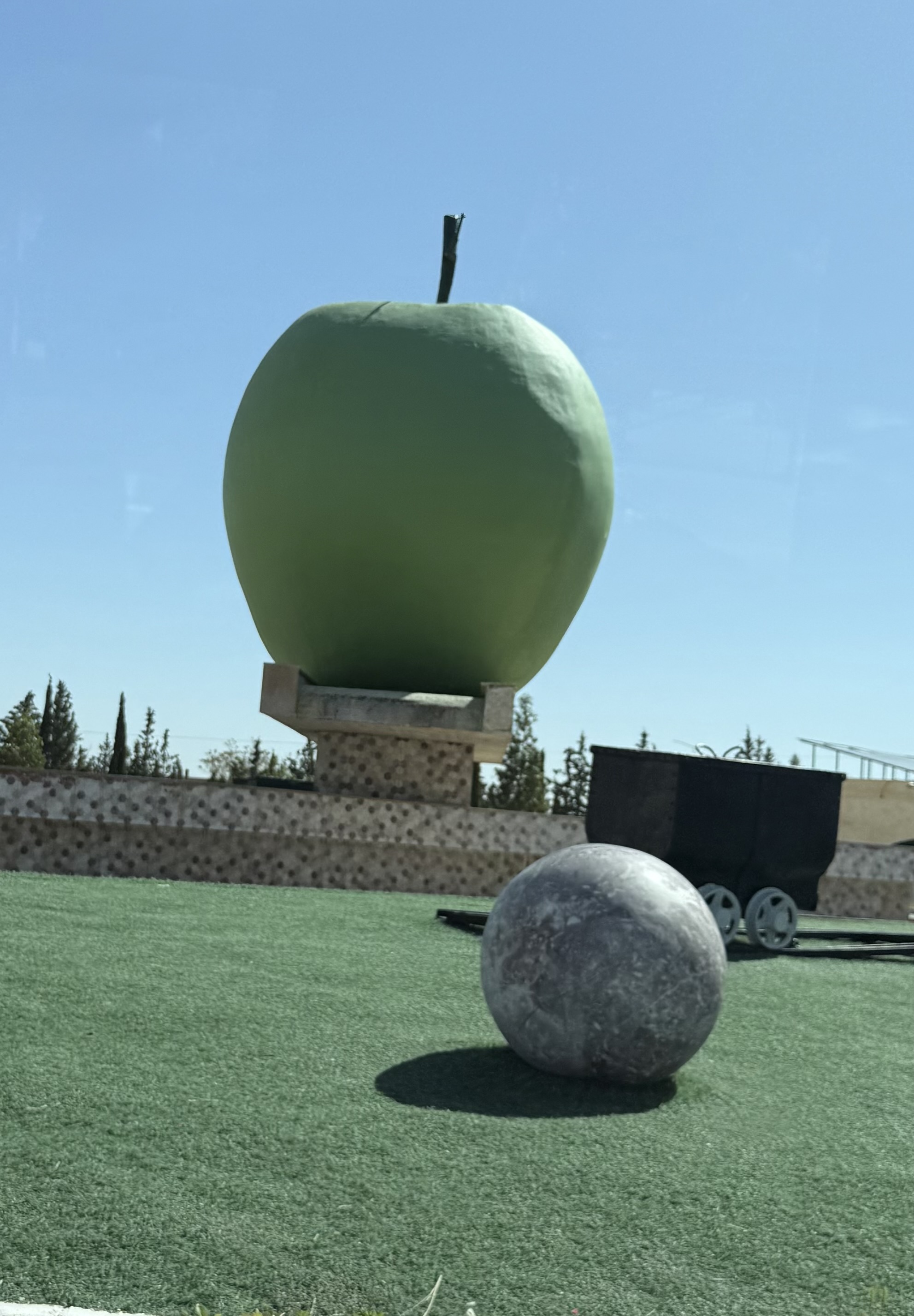
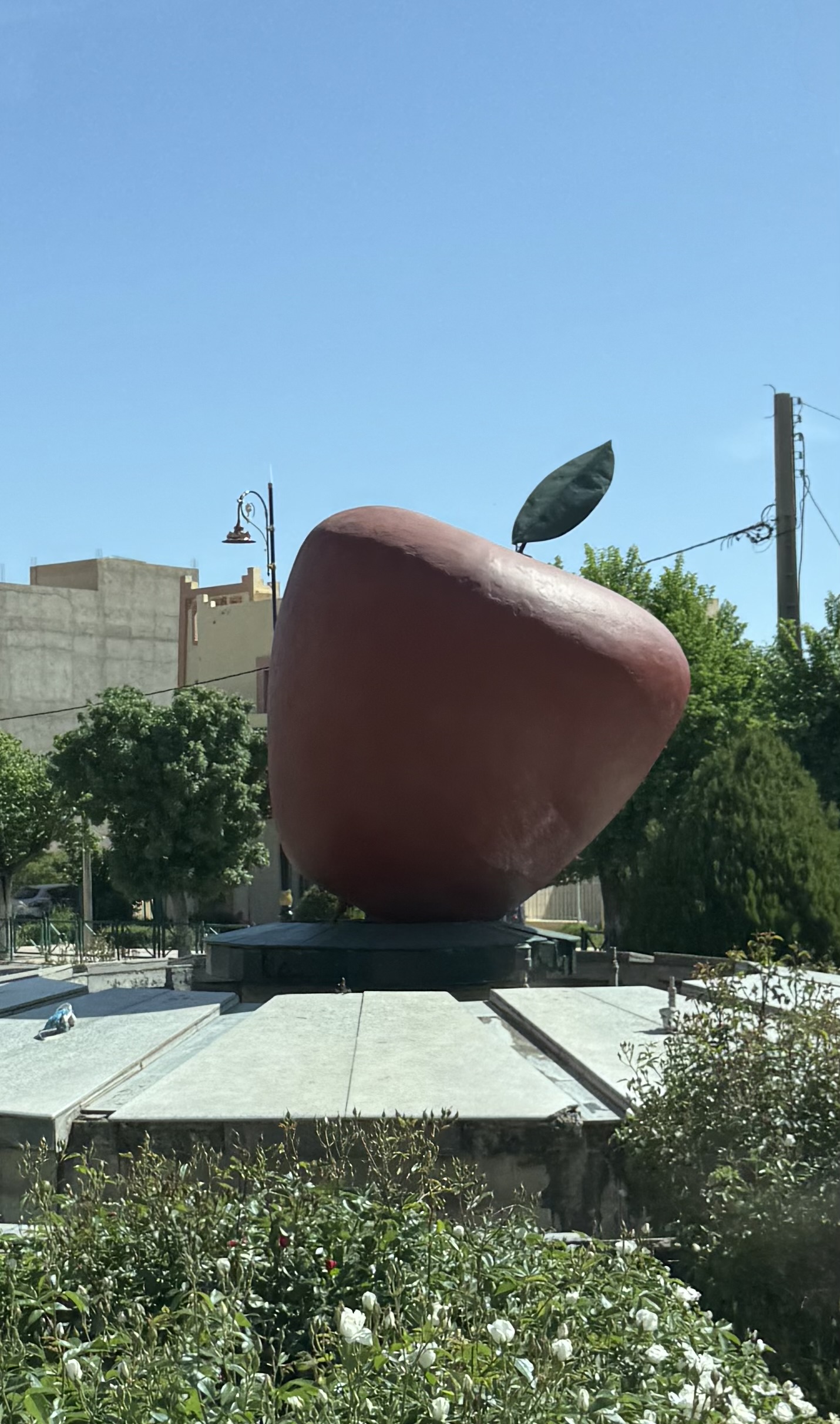
Driving up through the mountains we reached the centre of Moroccan apple growing, whether green or red! I must admit I wasn’t sure if any of these apples made it to the UK but it was a big activity although, as the guide pointed out, it wasn’t an indigenous fruit.
On the centre of a roundabout in Ait Izdeg
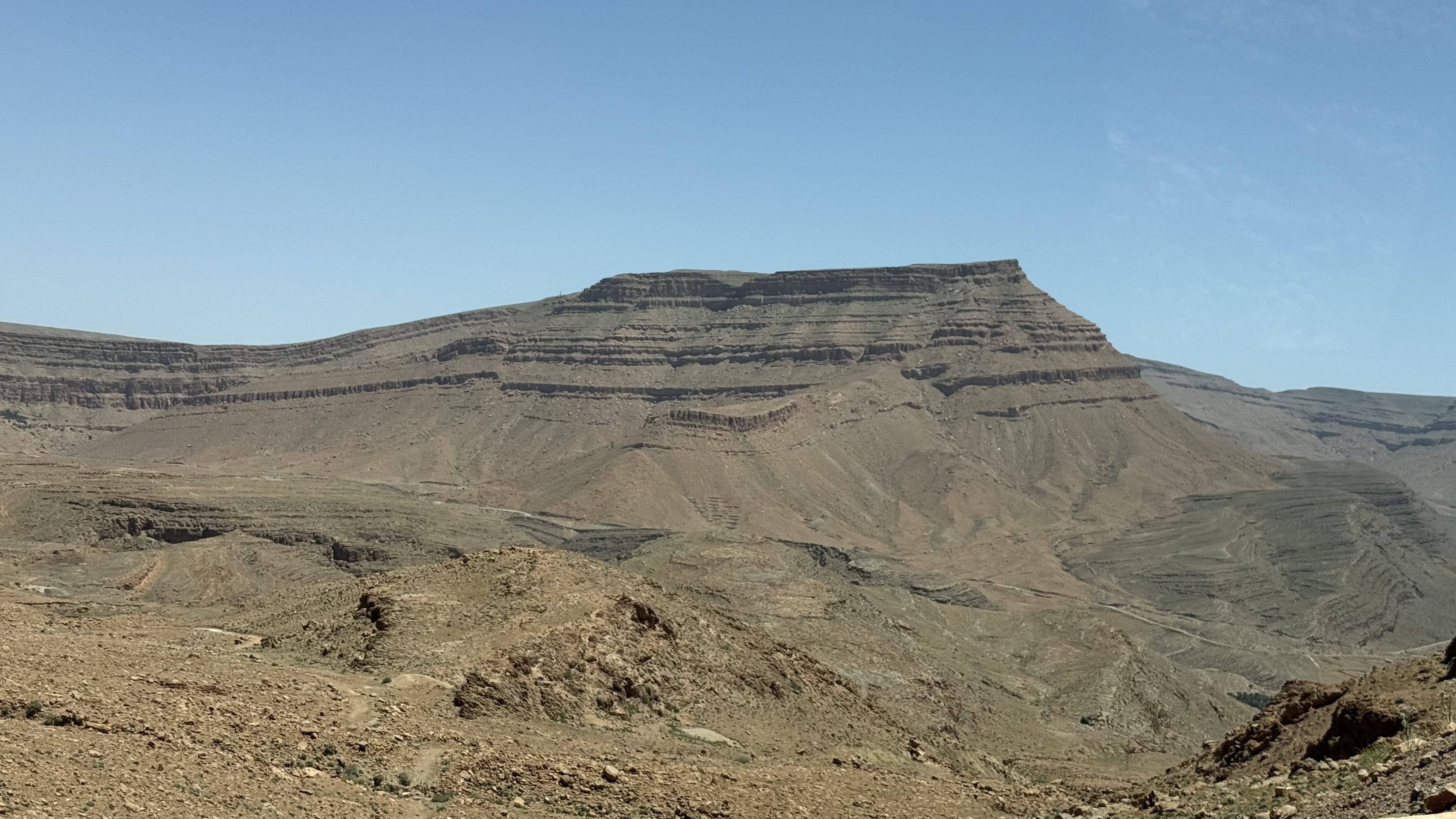
The landscape continued to be dramatic as we headed east toward to the Algerian border.
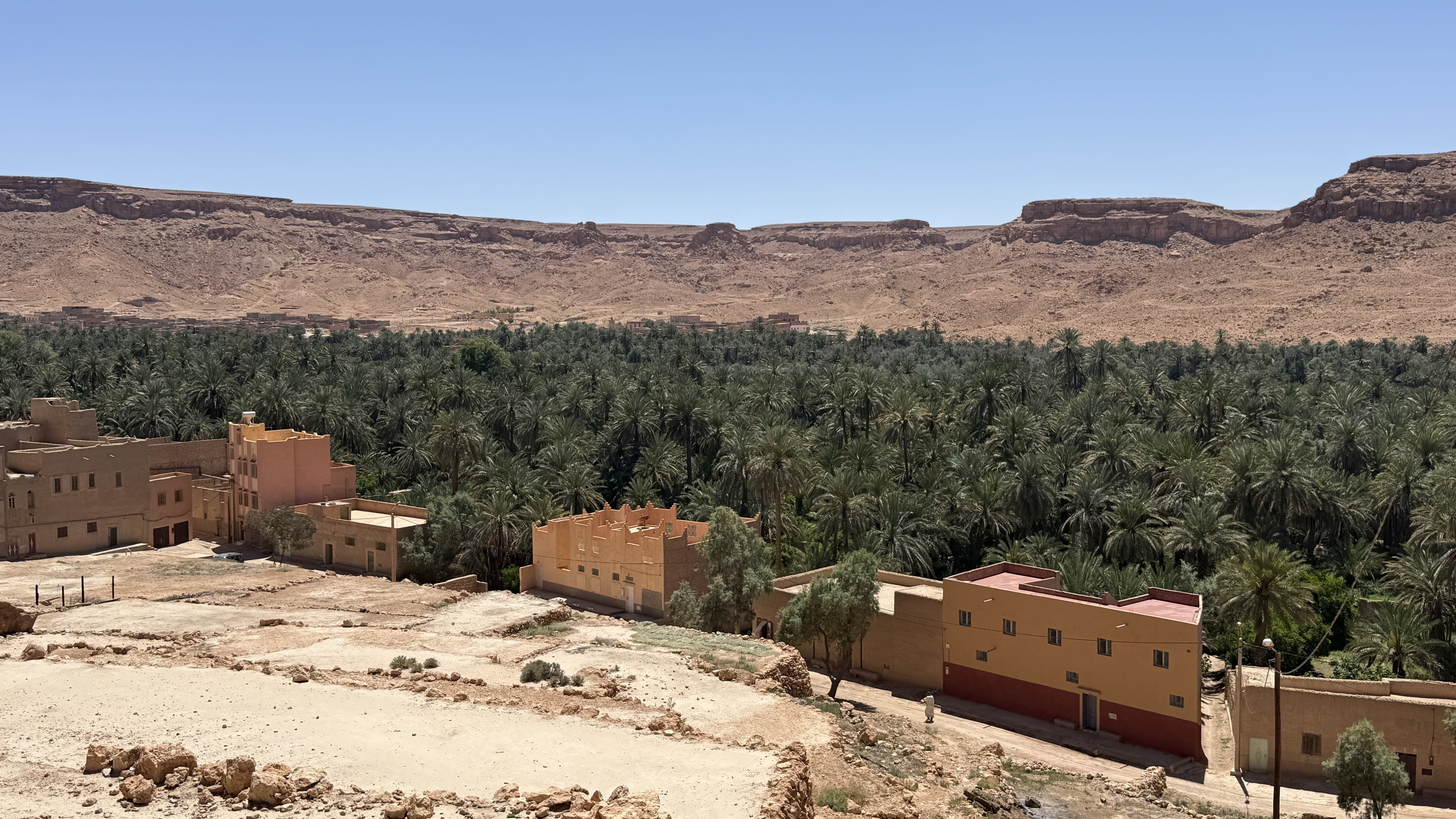
Apparently Morocco and Algeria have their issues and don’t enjoy cordial relations but we wouldn’t be wouldn’t be causing any increase in tensions during our brief visit to Merzouga. Before that we drove through some valleys that were irrigated from underground wells to grow dates. The contrast between the valley floor and the rest of the landscape was eye catching.
We were soon in a flat arid landscape where nomads and kasbahs (fortresses) abounded along with camels, motorbikes and dune buggies. The latter transportation was common as this was a tourist area which attracted the adventurous foreign tourists to ride the dunes.
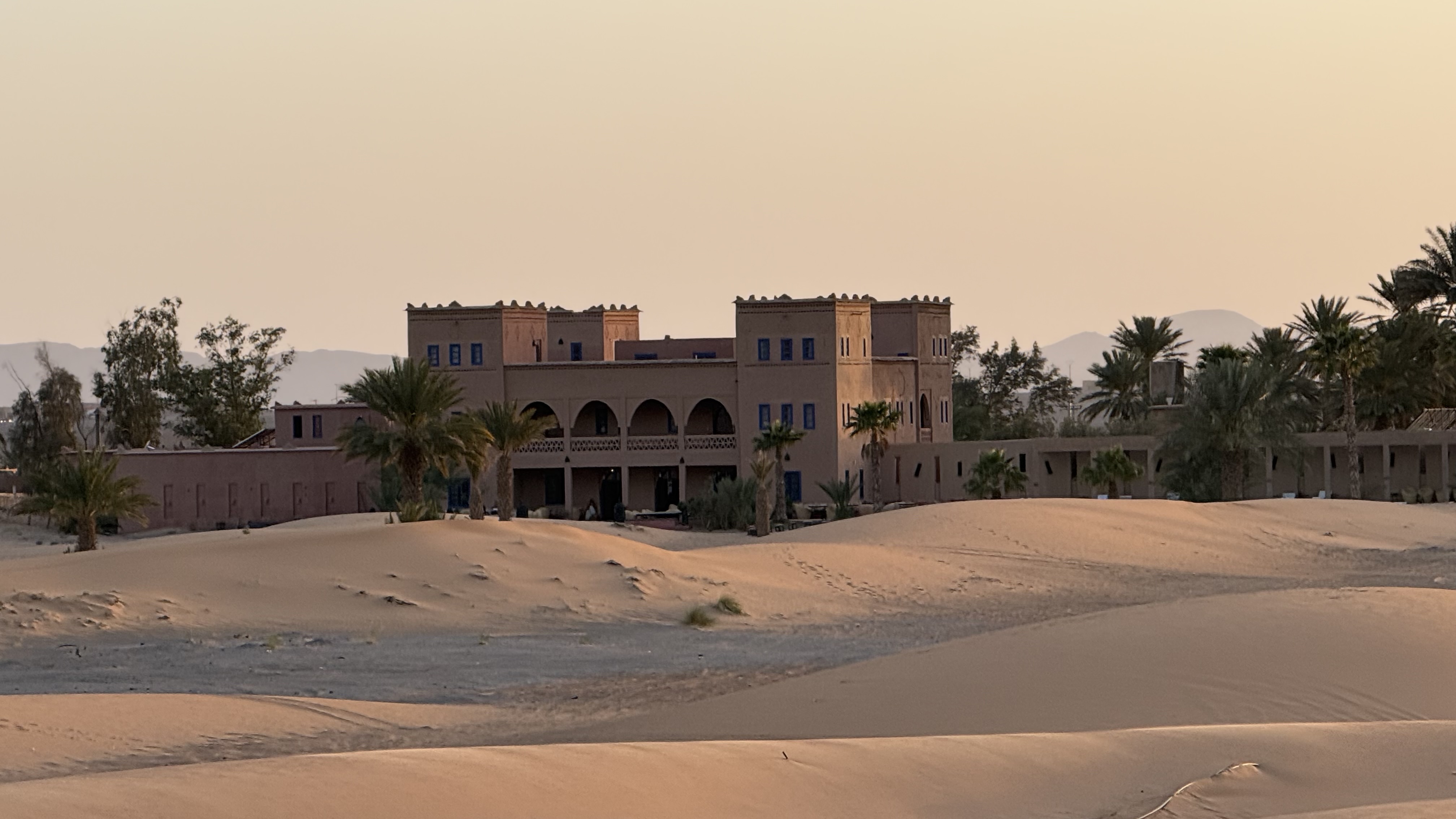
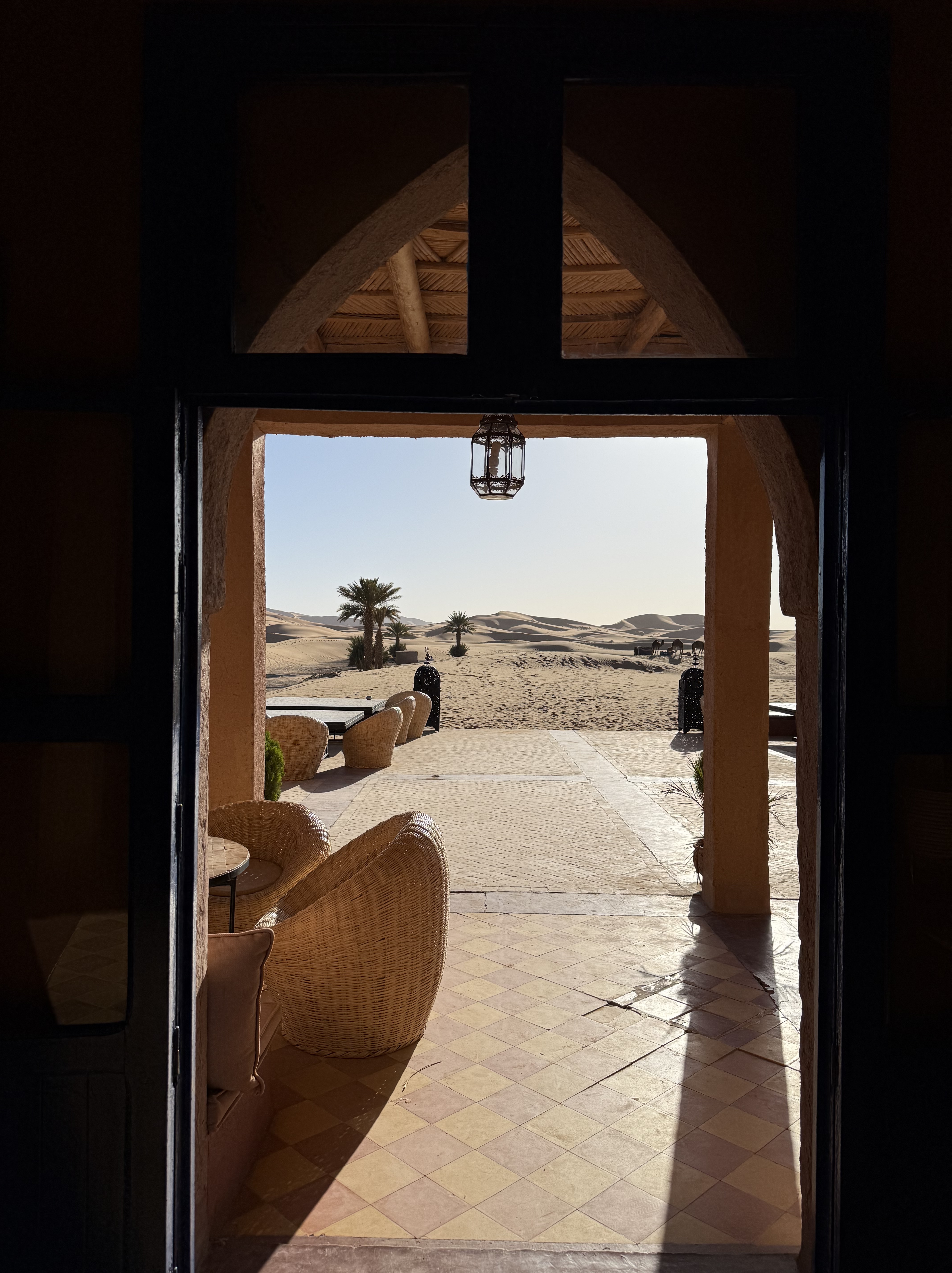
Our hotel was idyllic. The construction was classic with large mud and straw external walls built around stones. Inevitably this meant a lifetime of wall maintenance after hard weather as mud doesn’t like rain especially! Despite its construction the Reception opened onto a sensational view.
Our gaff for the nightA view from the hotel patio
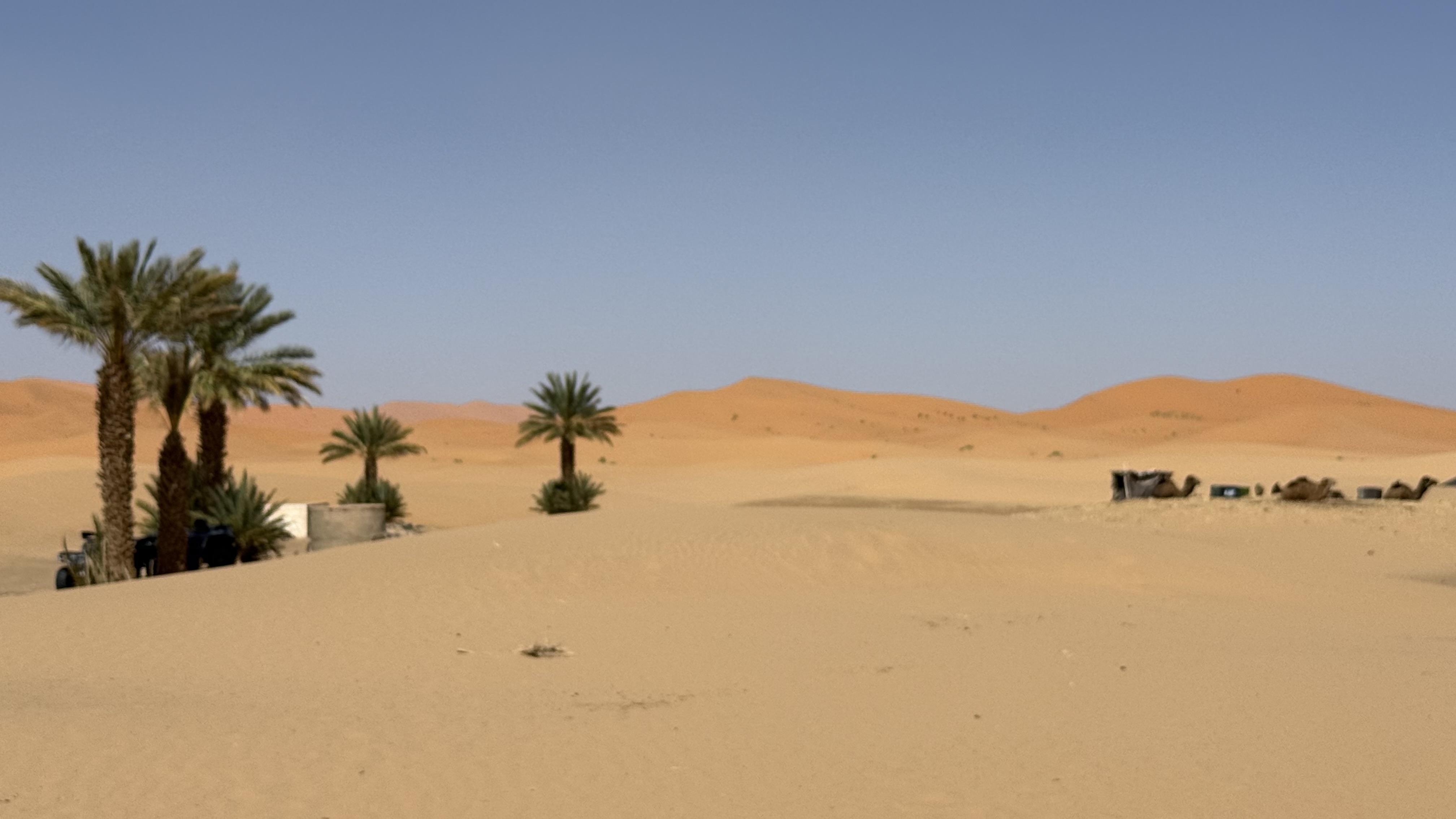
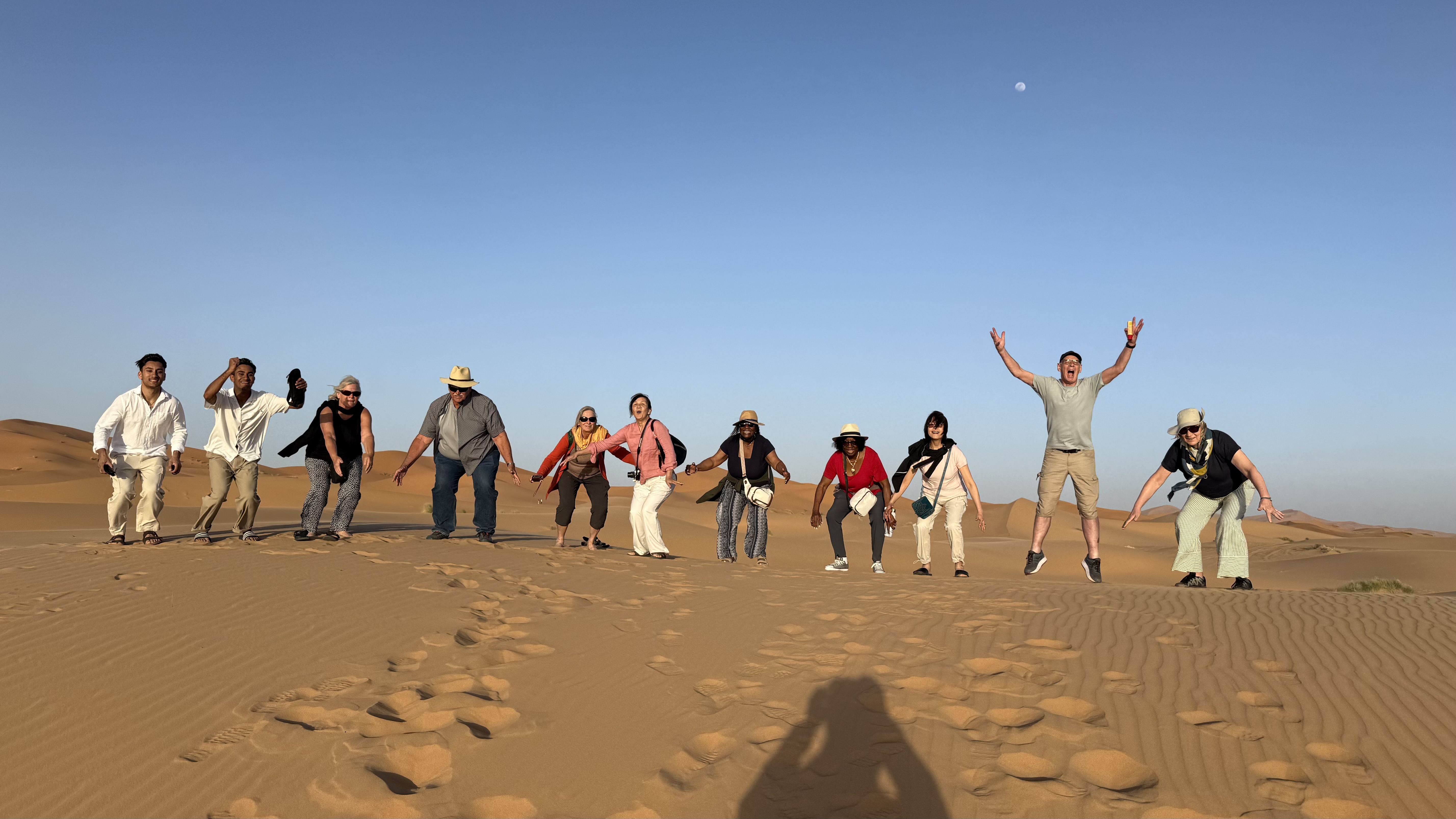
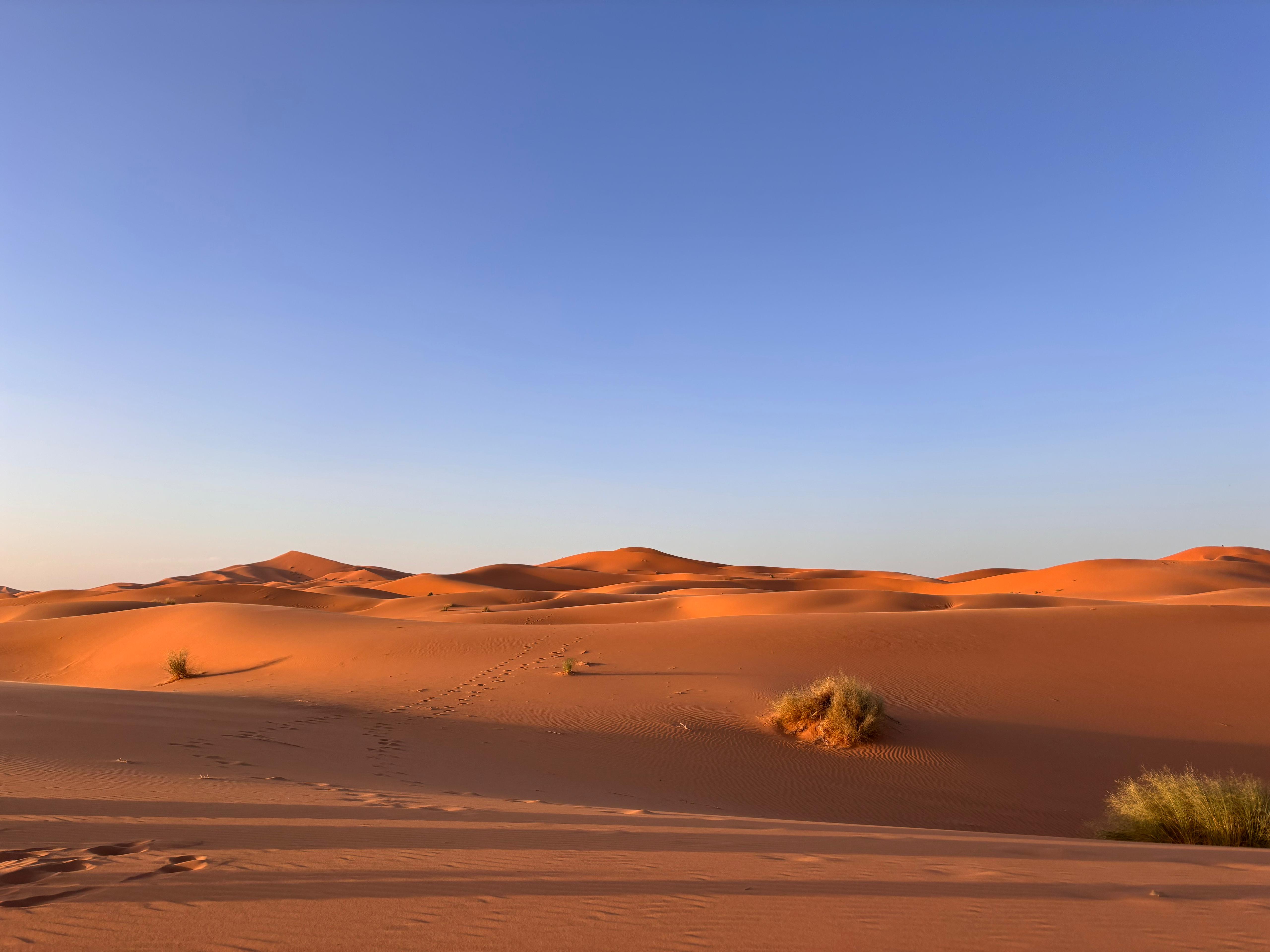
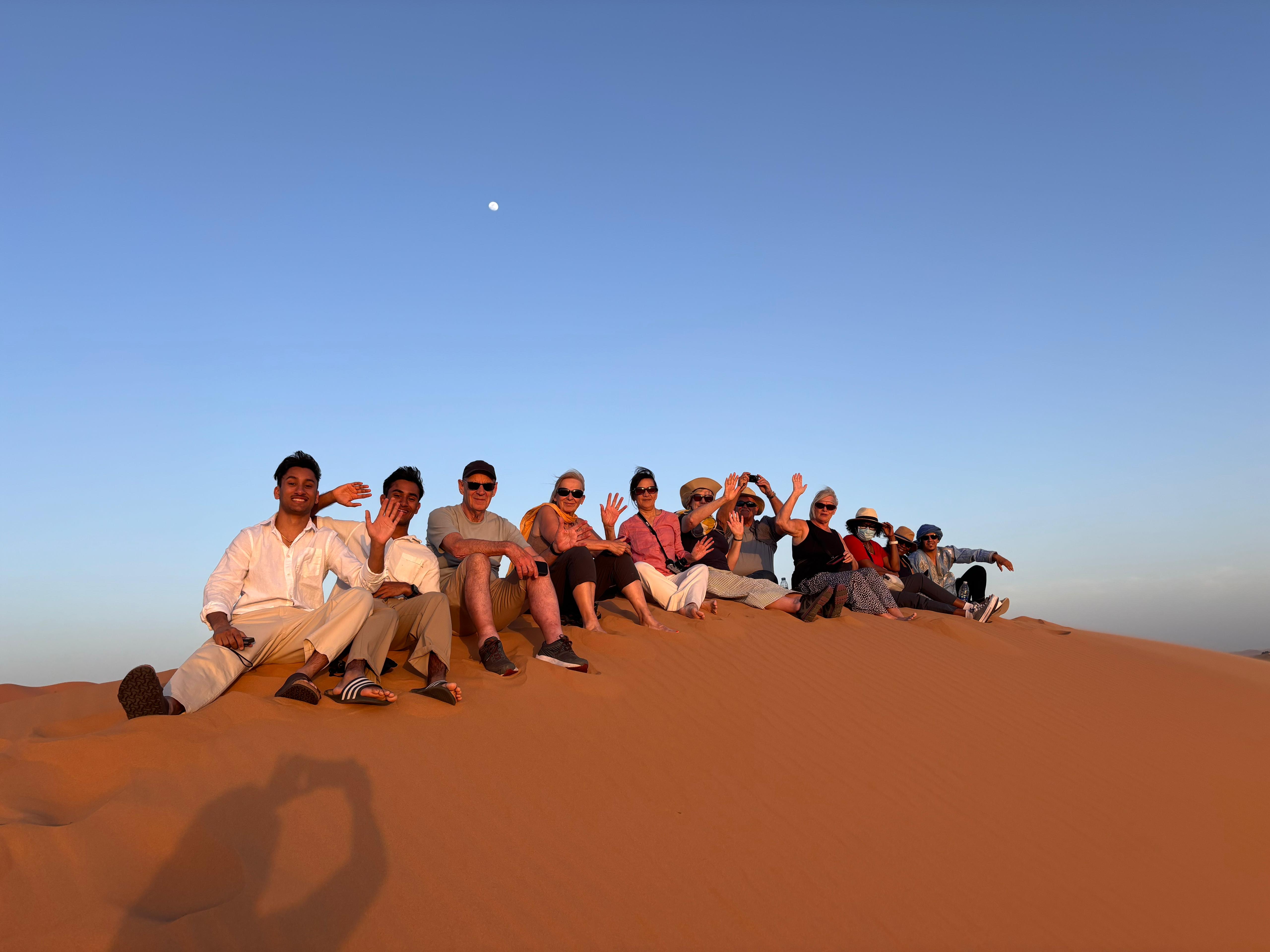
Before dinner we all walked out in the dunes to watch the sun set. Getting up and down the dunes required a special technique. Dig your toes in on the way up and heels in on the way down. I had never been in such a setting and it was like something from a movie.
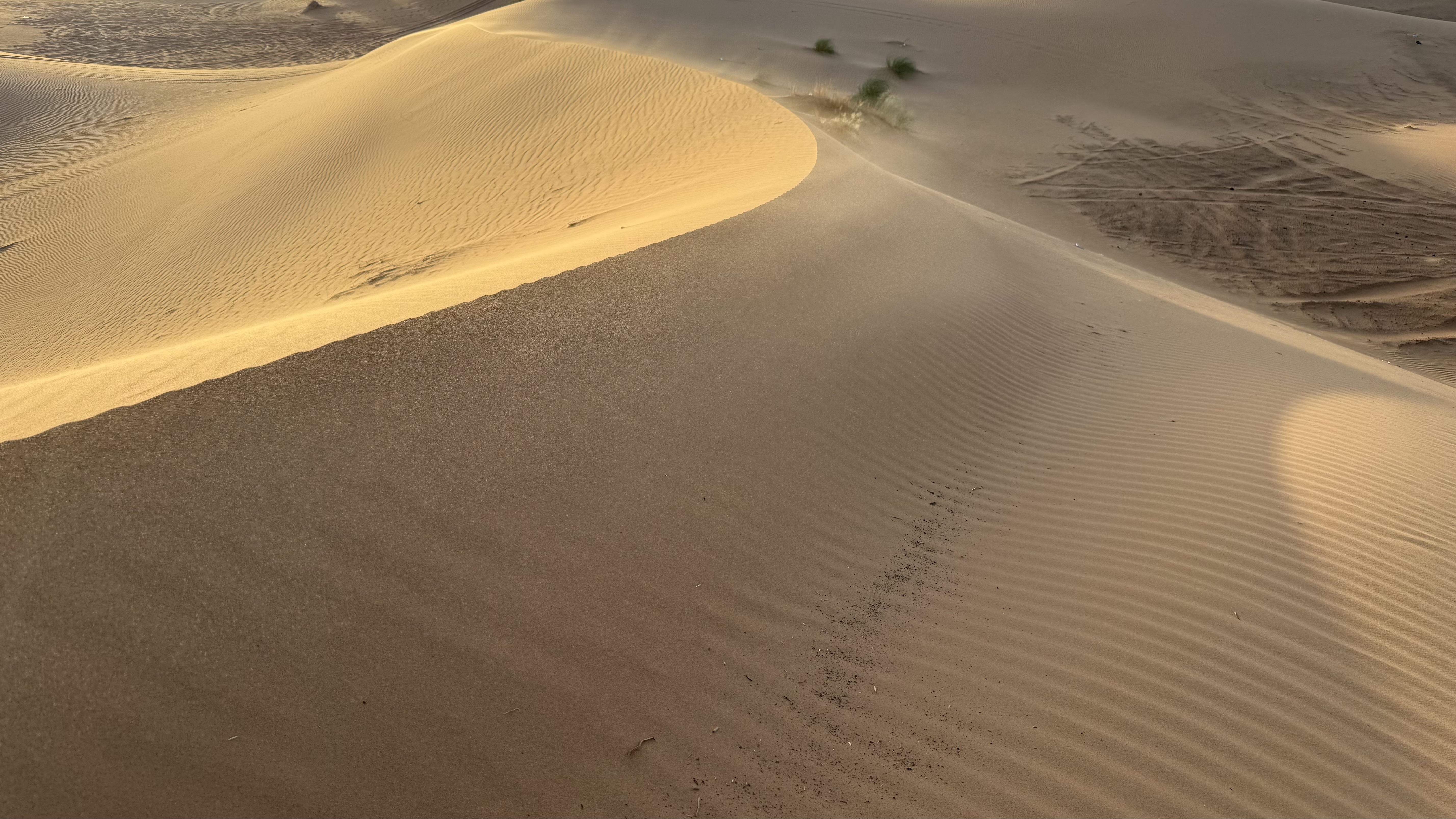
All as fine as the sand you’d get in a children’s sand boxThe party doing as they were told… ‘Leap up and down’
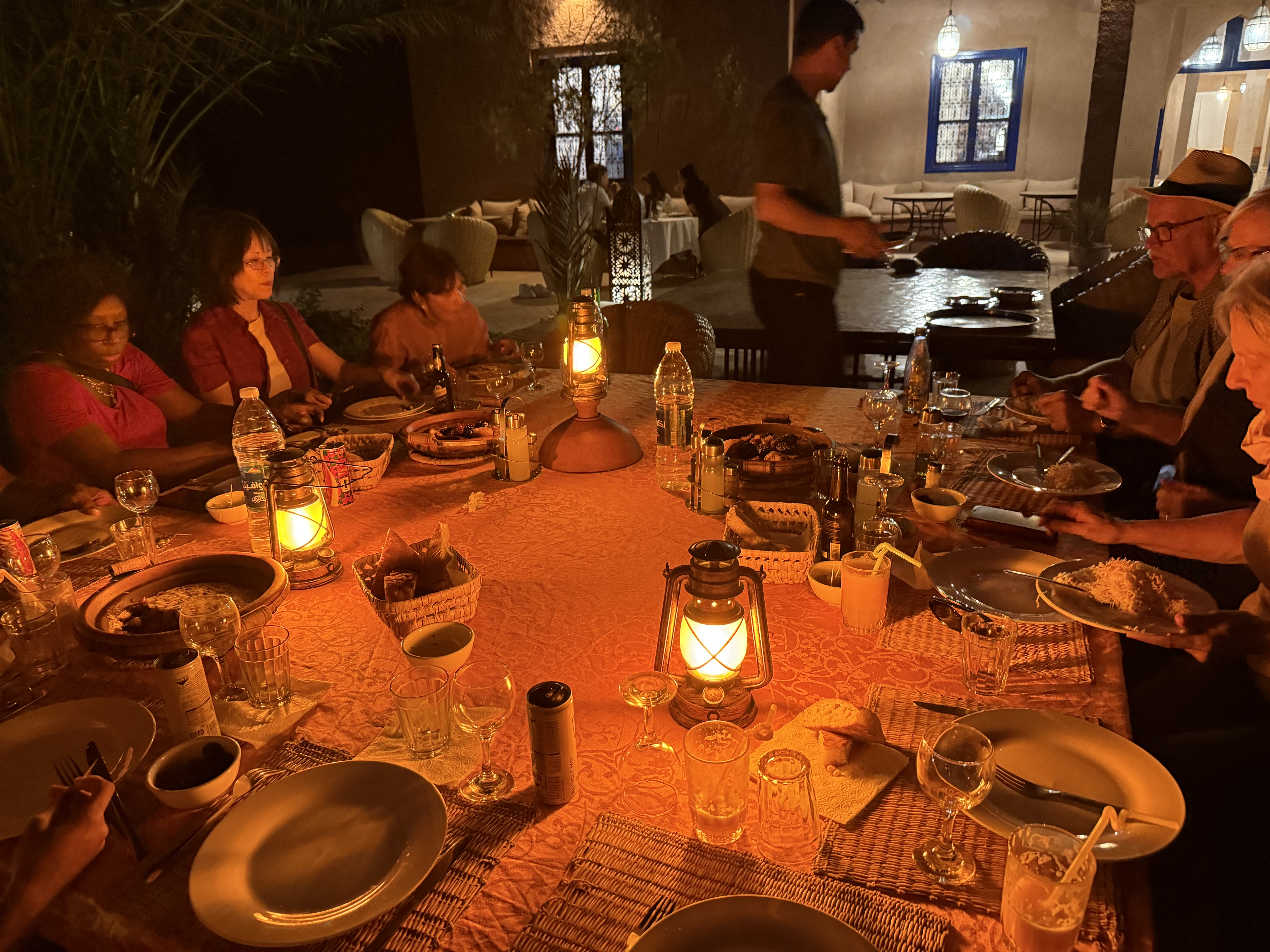
Dinner was served on the patio. Quite a perfect setting.
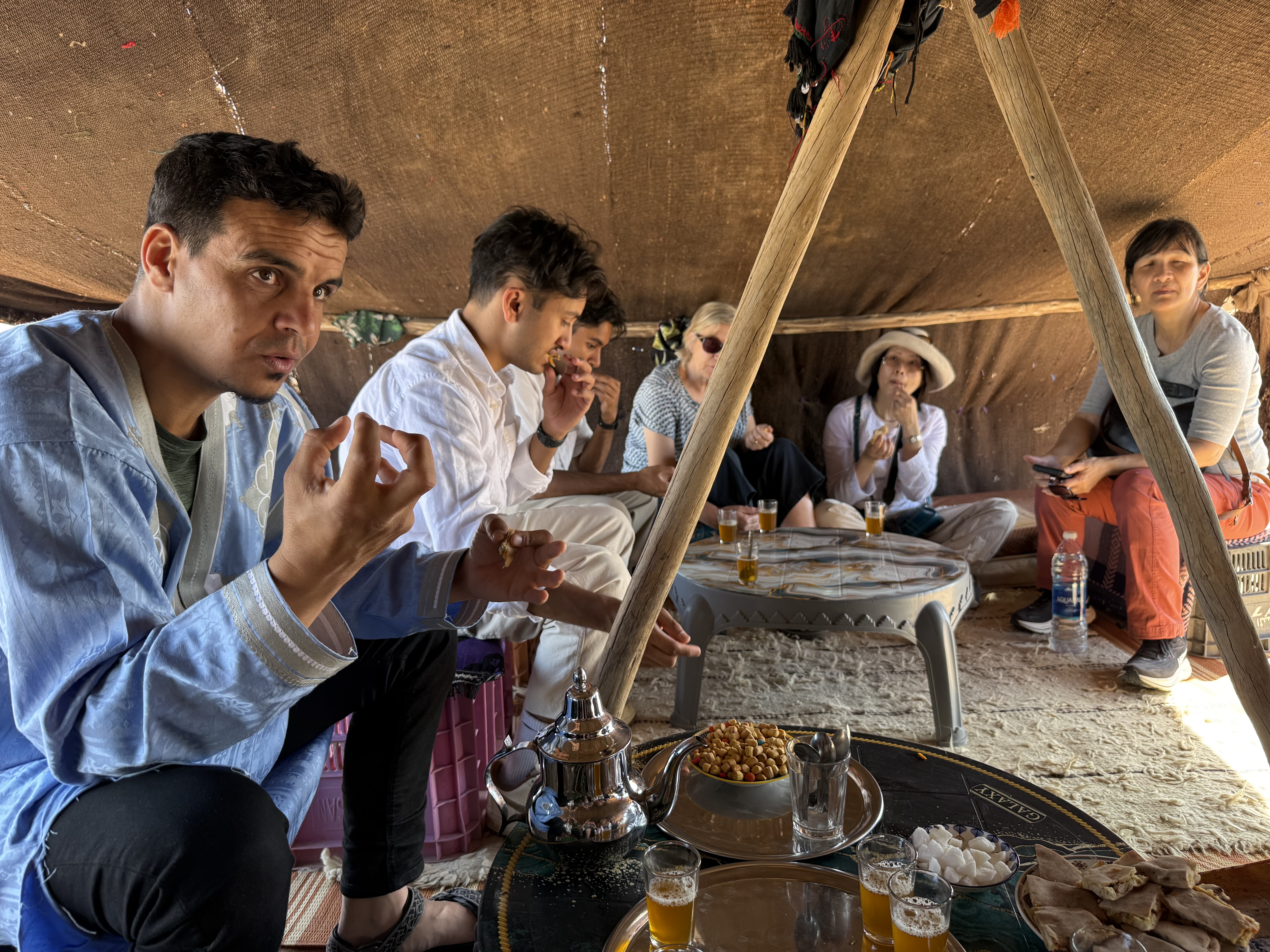
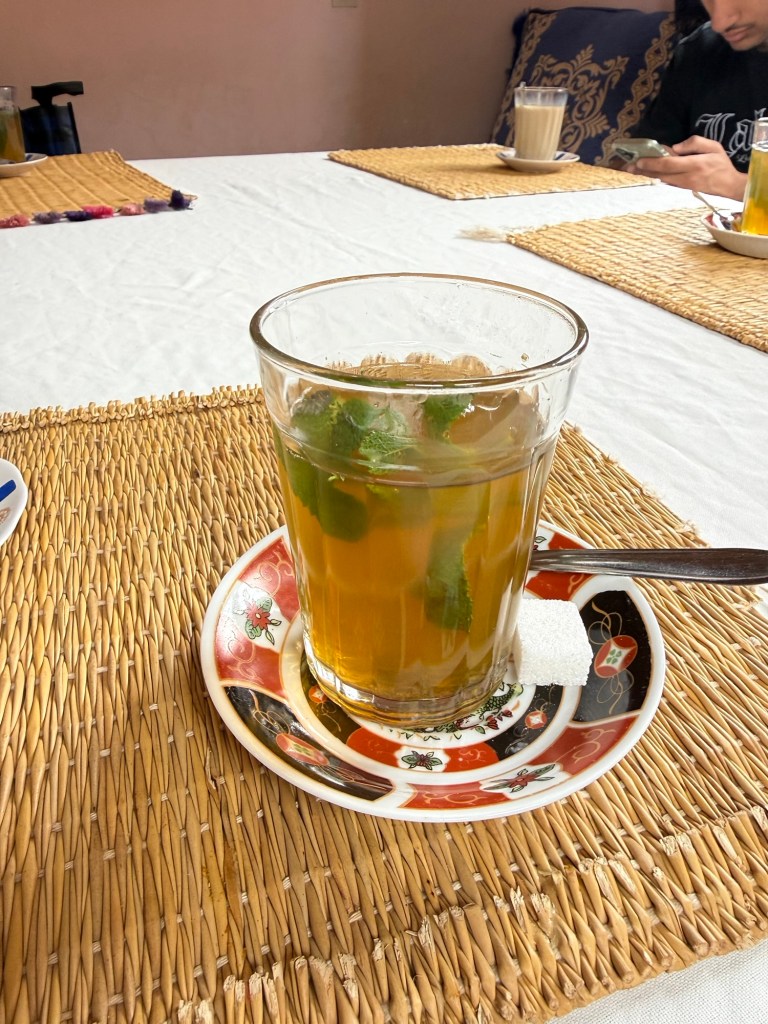
The following morning we were put in 4×4 Toyota Land Cruisers and driven in to the dunes, now that was fun! Our journey ended at a Berber camp where we were served mint or green tea and some of their nomadic lifestyle explained.
Back toward Merzouga we were shephered into a building to hear some music. I wasn’t tempted to dance!
The party gets down
In fact as the day before Redouane had explained some of the musical tradition and I surprised him with my knowledge of a band that’s had some exposure and popularity in the west – Tinawaren. I had a CD from way back then. At this point the bus music system was commandeered to play their songs. I enjoyed it if the rest of the bus didn’t!
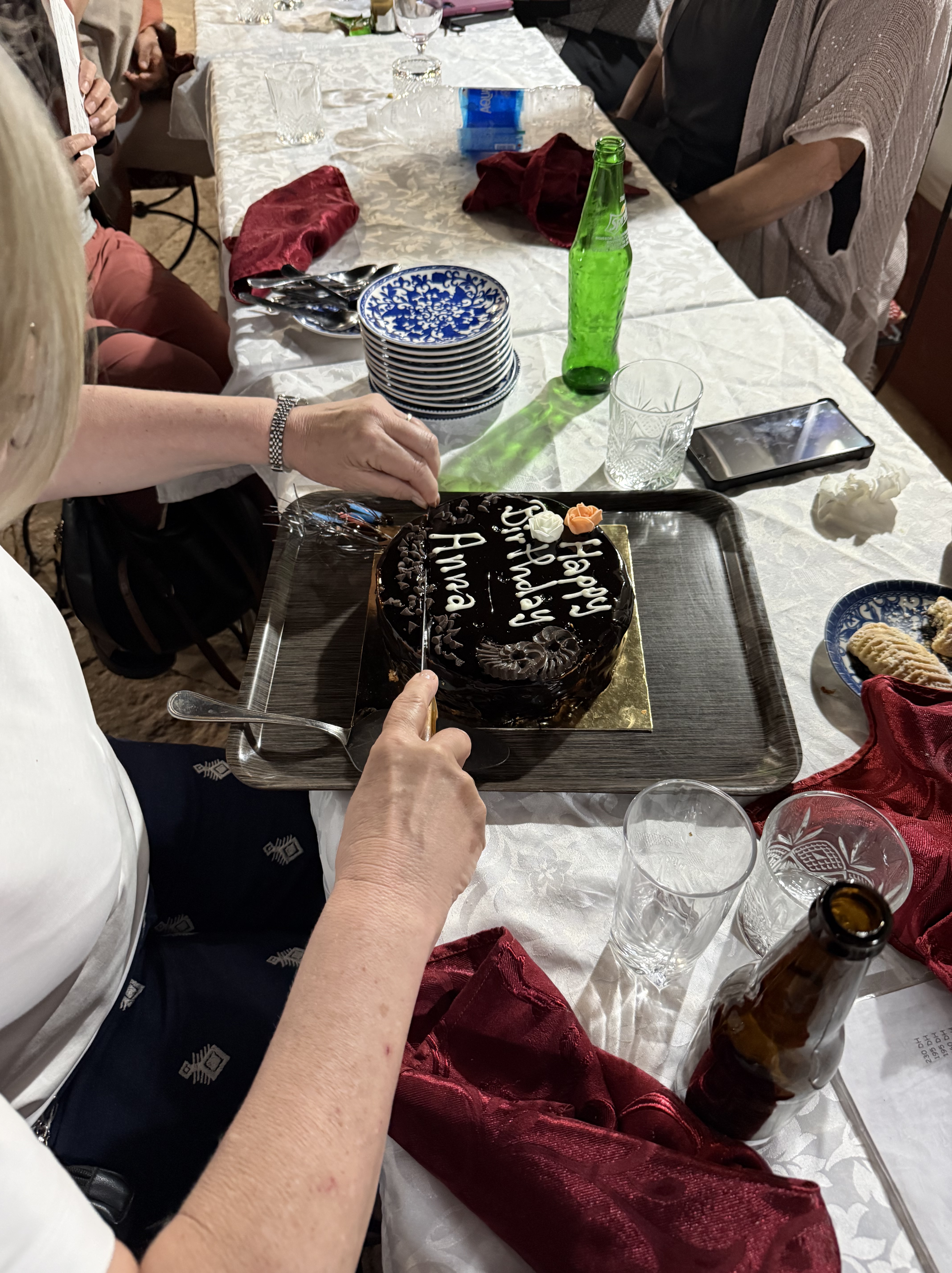
From here we were back in the bus heading toward Tinghir. Our hotel for the night was a former kasbah and the external wall were a very fragile mud and straw. Up at the top of the fortress on the terrace the walls were quite fragile. However the dinner was downstairs in a courtyard where Anna was surprised and delighted when a birthday cake was produced. A group of motorcyclists followed our ‘Happy Birthday’ with their serenade in Portuguese.
Tinghir was quite an urban spread with developments on the outskirts. In the centre, where we stayed it was older, and housing was close to the street. On a post dinner constitutional walk we found the shops open and young and old alike were sat outside shooting the breeze.
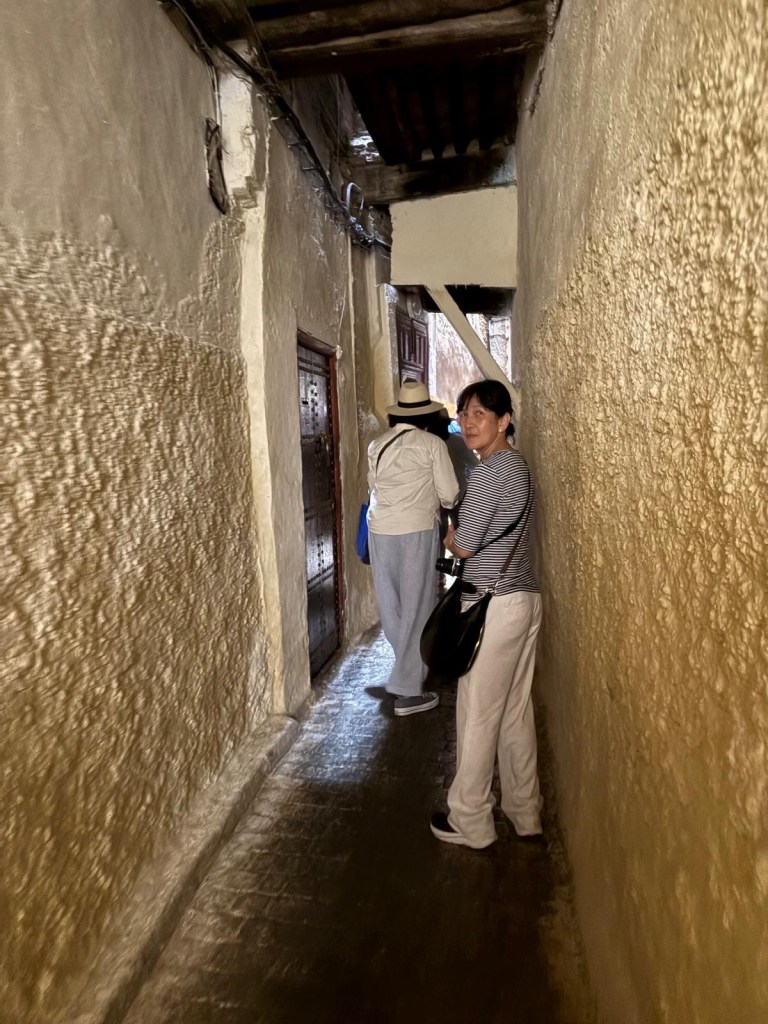
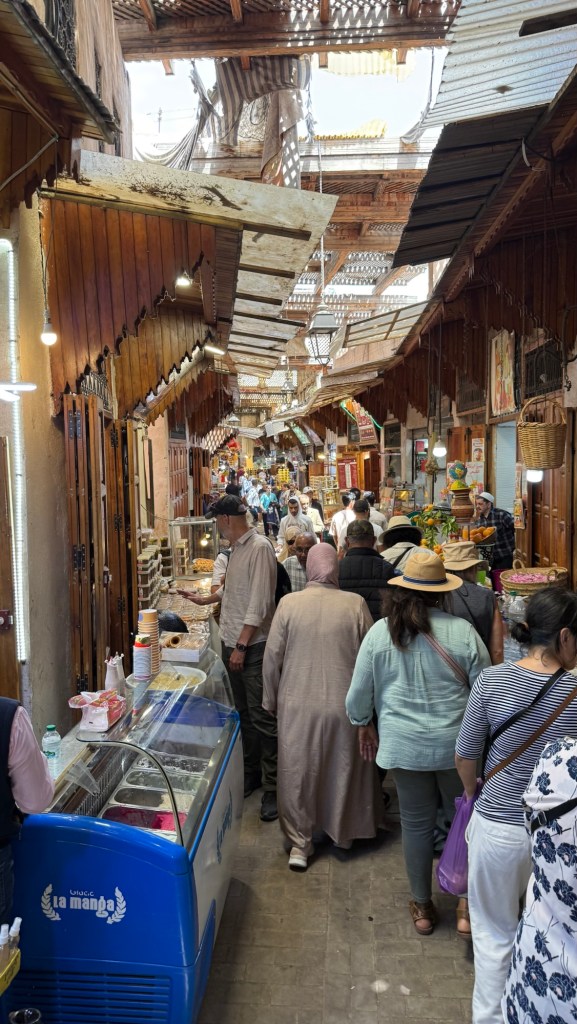
Morocco originally placed its capital in Fes until the French eventually moved it to Rabat, where it stayed. However it illustrates the importance of this city in north of the country. The city had an old part that was known as the medina: a warren of small alleys often linked by covered passages that variously house shops, residential housing, restaurants and some manufacturing such as leather tanneries and textile production.
Our morning started with meeting up with a new local guide – Hafeed who had excellent English and a sense of humour. He led us for the day around the medina and initially the mellah. The latter is where the Jews lived until their departure to Israel. After wandering through this selection of streets he did comment they’d all gone long ago! Going back to the Middle Ages Judaism was a more popular religion than Islam but at some point many converted to Islam. Frankly, the chance of that happening today seems unconscionable.
Passages
Beside the old town was a new settlement built by the French and it was here that our hotel was located. It’s worth now adding that whilst G Adventures curated a historic tour it was a shopper’s dream with many opportunities to browse and procure. All transactions in these shops were in cash. Also you couldn’t buy dirhams outside of Morocco. Inevitably all this enforced money changing meant all sort of little currency bureaus making a nice ‘drink’ on converting cash. You could use plastic in more upmarket establishments such as some bigger city hotels but it meant we and the rest of the party were spending time changing money. I mentioned the uncertainty of knowing whether the prices were value for money as you haggled but restaurants and cafes were ordinarily at tourist prices. These prices may be cheaper than the UK or North America but not by much. Also, frankly, the food was mediocre and the choice limited throughout. I sympathise with G Adventures selecting more expensive restaurants as they wanted guaranteed hygiene levels and inevitably many restaurants were near tourist attractions or en route. However, as in all purchases if you pay over the odds and it’s of good quality you don’t care but otherwise you do and whilst it is a small complaint I did develop the view that we were ‘there for the taking’ as you entered establishments. I would add that the average salary in Morocco was $9,500 pa. Frankly, if that’s the mean average then the mode ie. most widely received salary would be far less, so which Moroccan would pay $15 for a tagine? (The minimum hourly rate in Morocco is $1.80.)
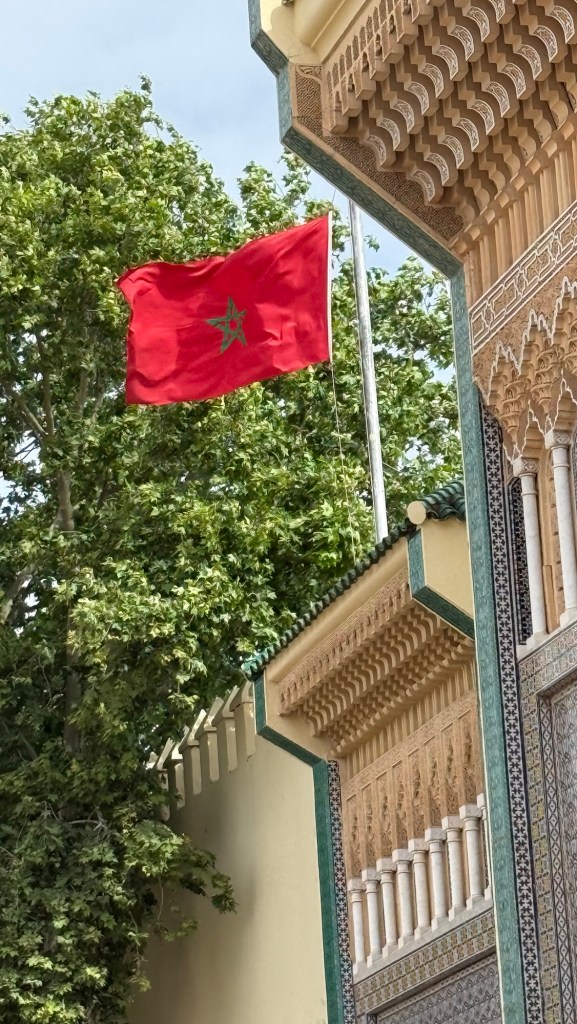
The national flag
We had a busy programme and I’ll let the photos tell a story:
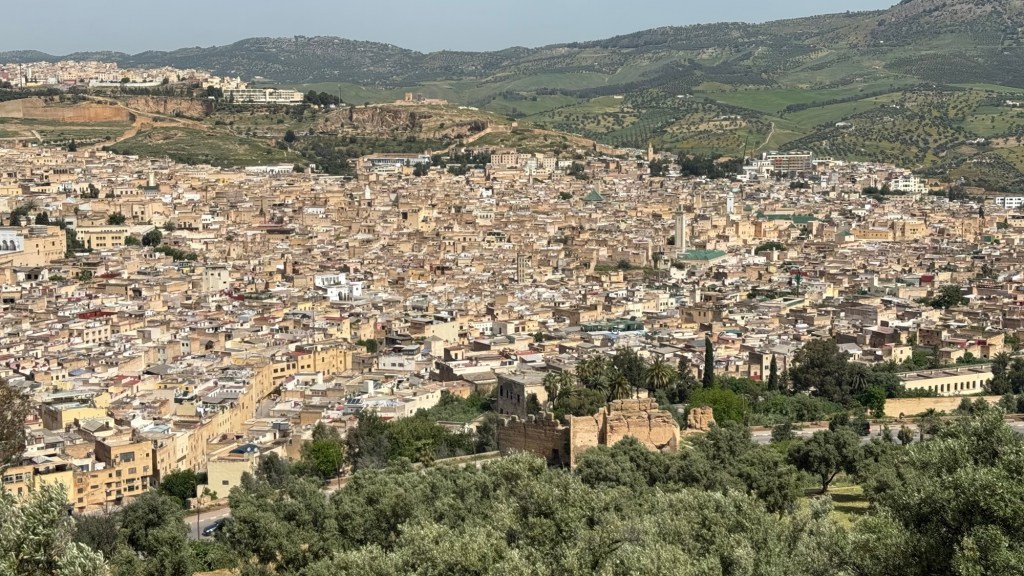
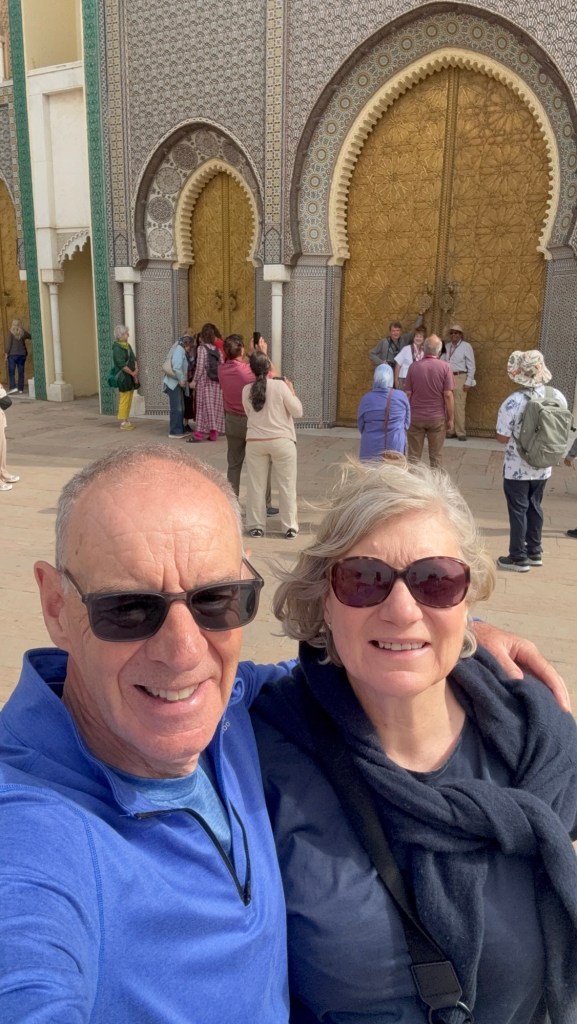
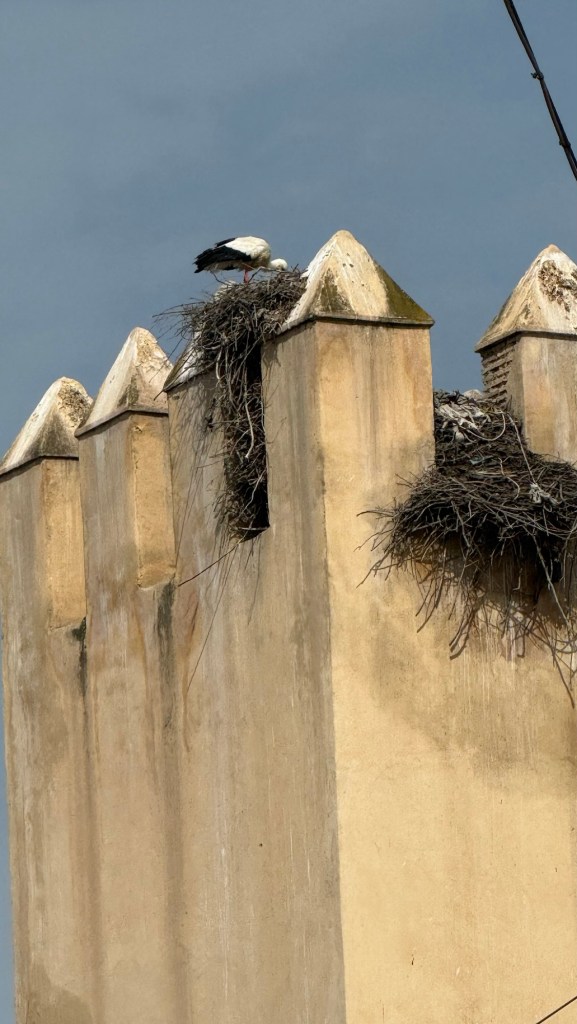
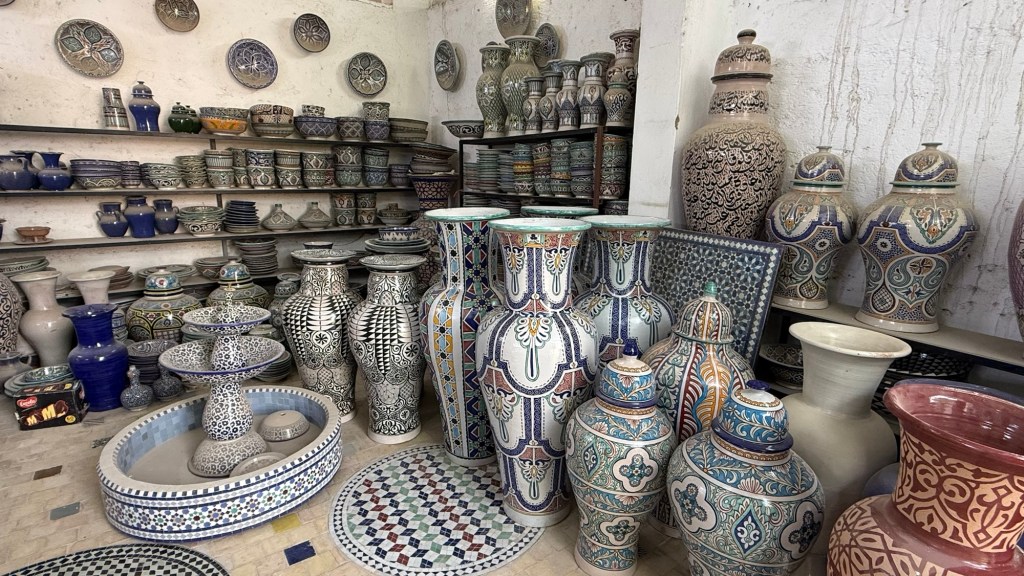
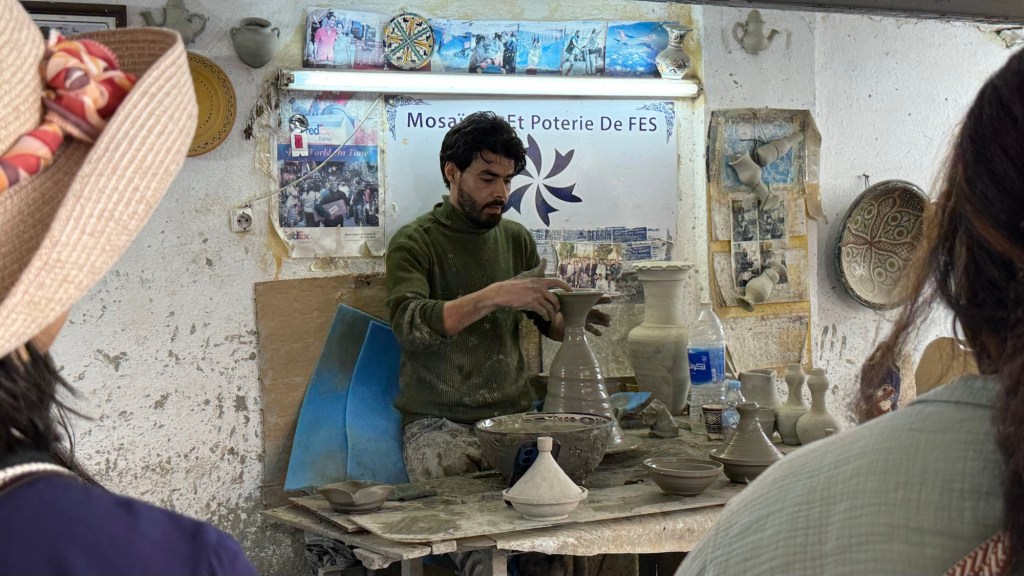
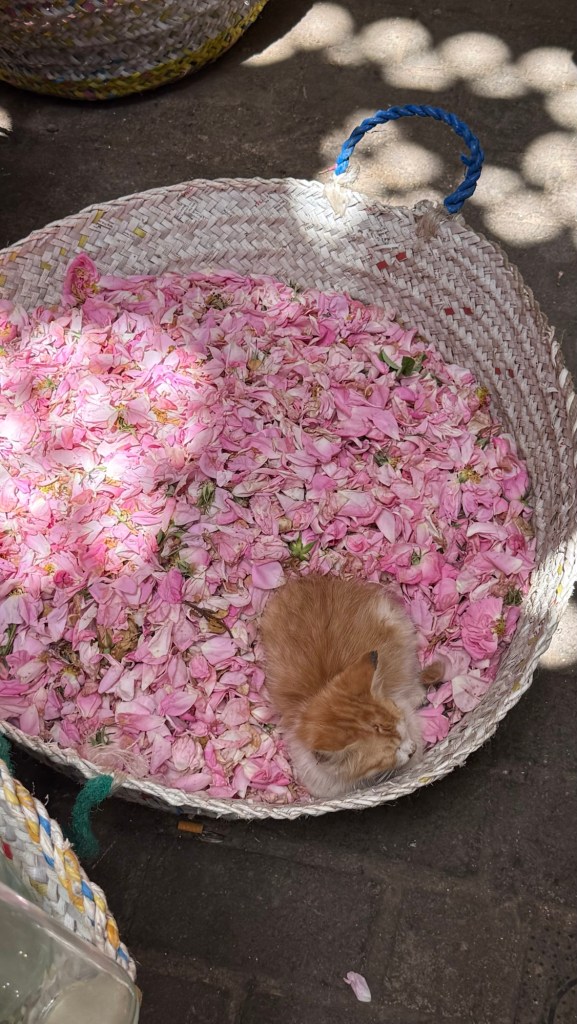
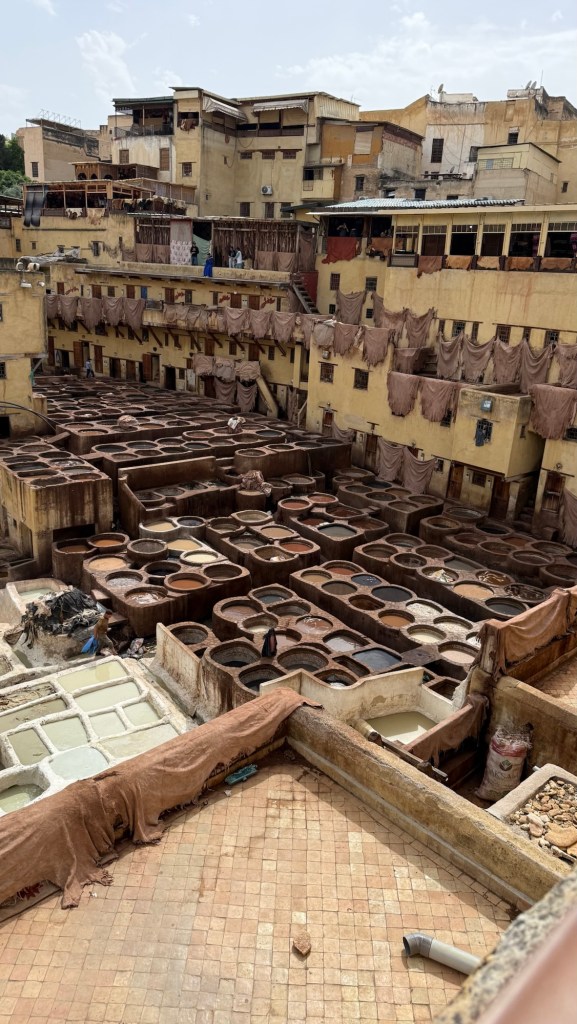
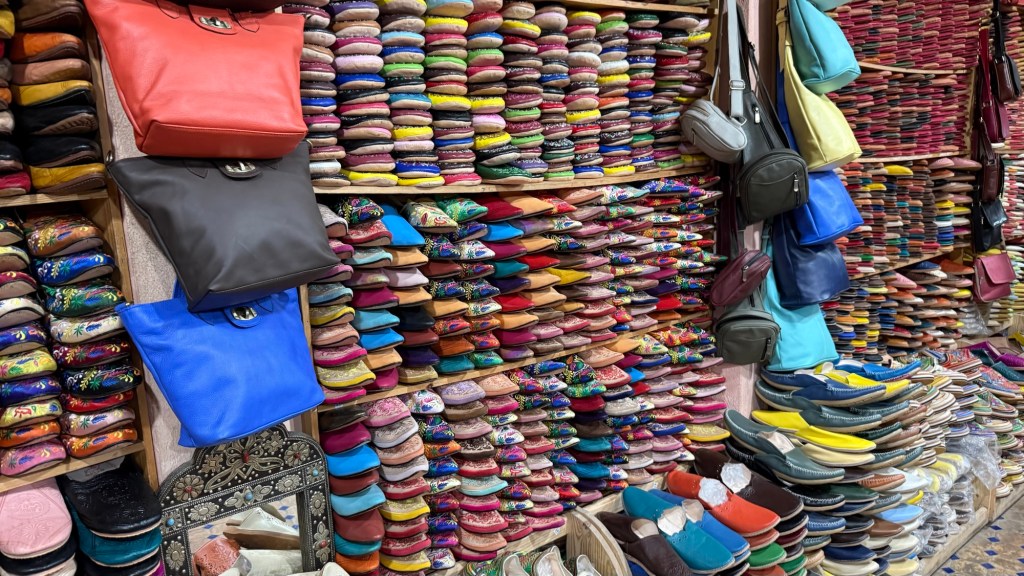
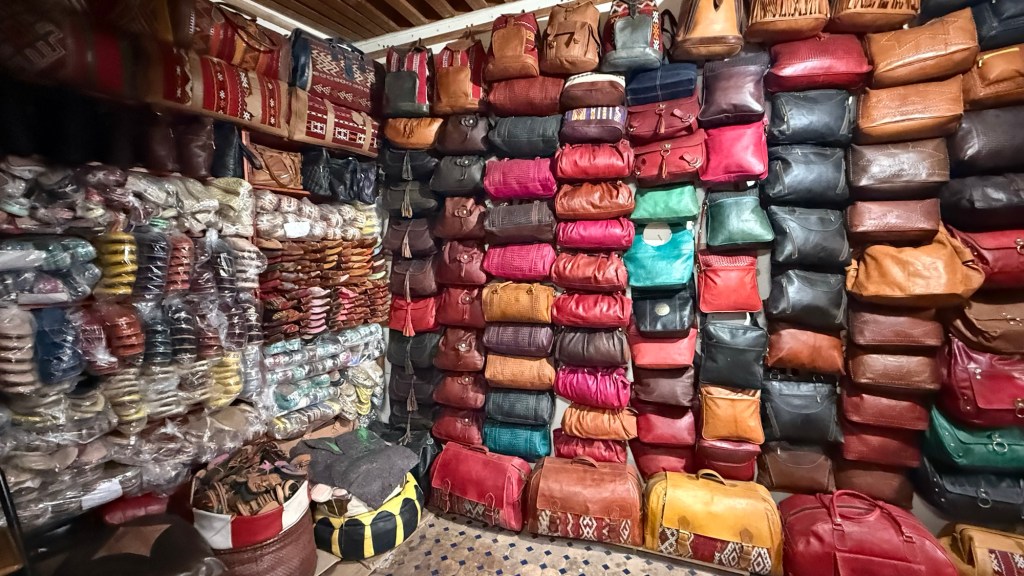
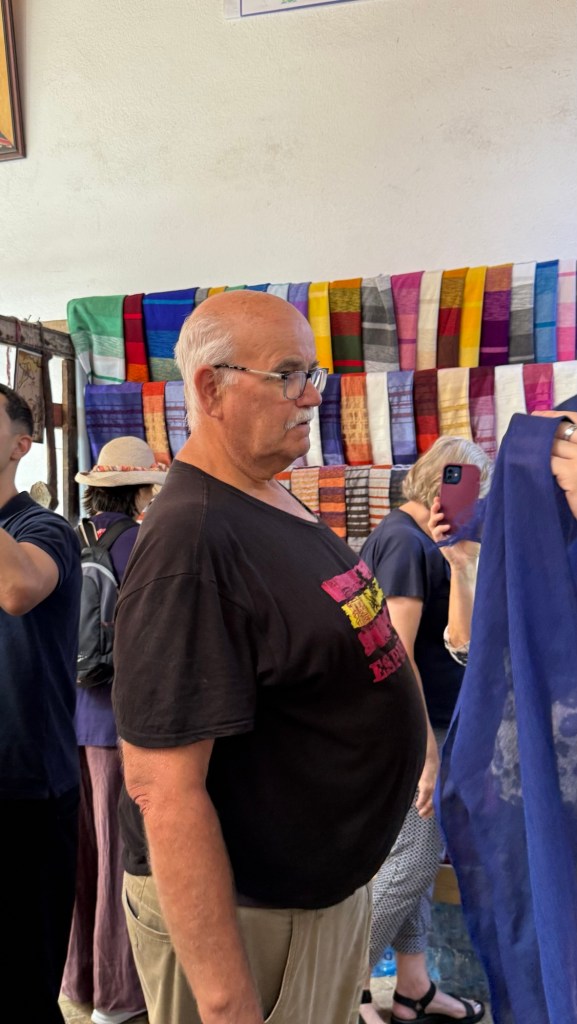
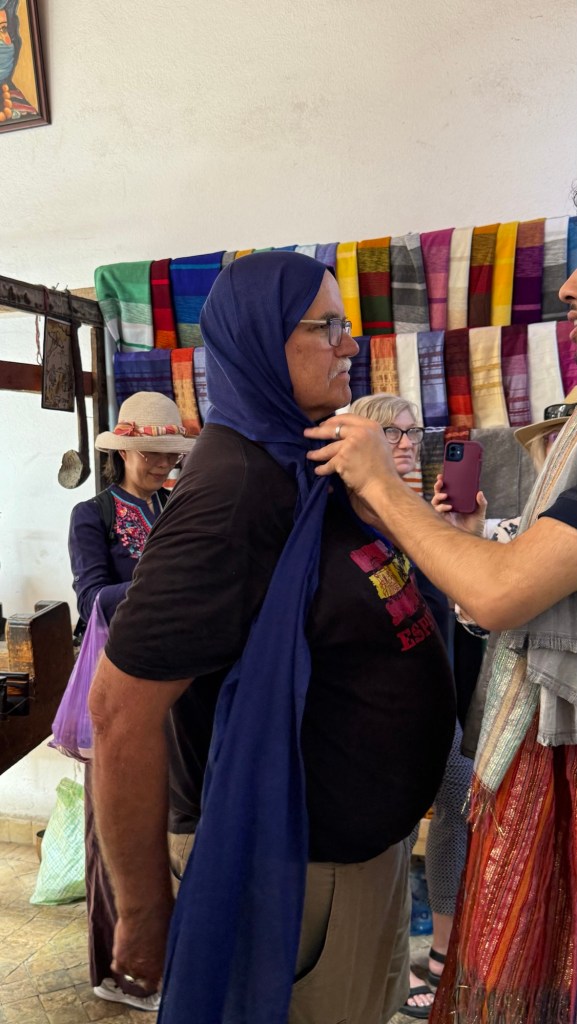
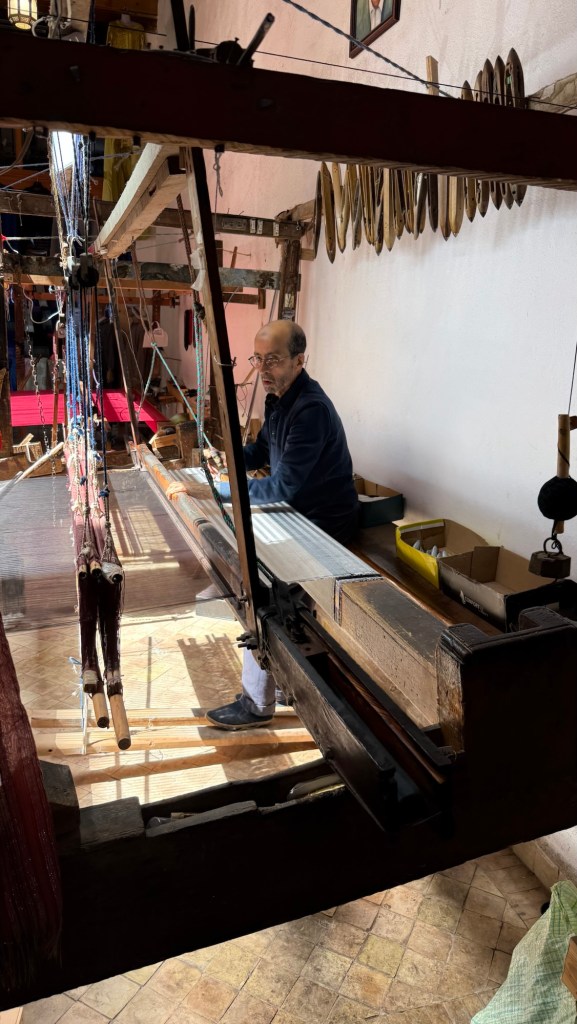
Old town from on highStork nestDentistA visit to a potteryPatrick Swayze impersonatorInto the medinaLots of cats everywhere!RestaurantLunch. Shock, horror, probe… It’s not a tagine!Tannery pools for dyeing leather. The smell would also make you die.SlippersBags. These two photos are a small sample of their wares. I suspect the annual stocktake may have inaccuracies.Mike from Edmonton about to model a male head dress scarfLoom for weaving textiles in wool or aloe thread (yes, the cactus). Seems a 19th century invention.
The medina in Fes was vibrant, colourful, busy and interesting. A key observation was how do these traders make a living with such small businesses and, in many cases, how did they ever shift all this stock? a lot of the product looked well made and by now the prolific shoppers in our party were hitting their stride with the purchase of table cloths, leather bags, leather coats, scarves, ornaments and the like.
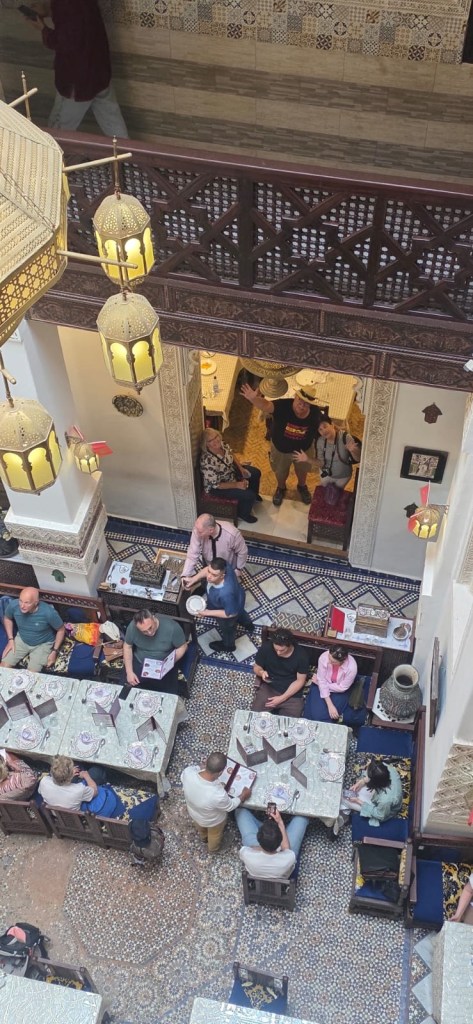
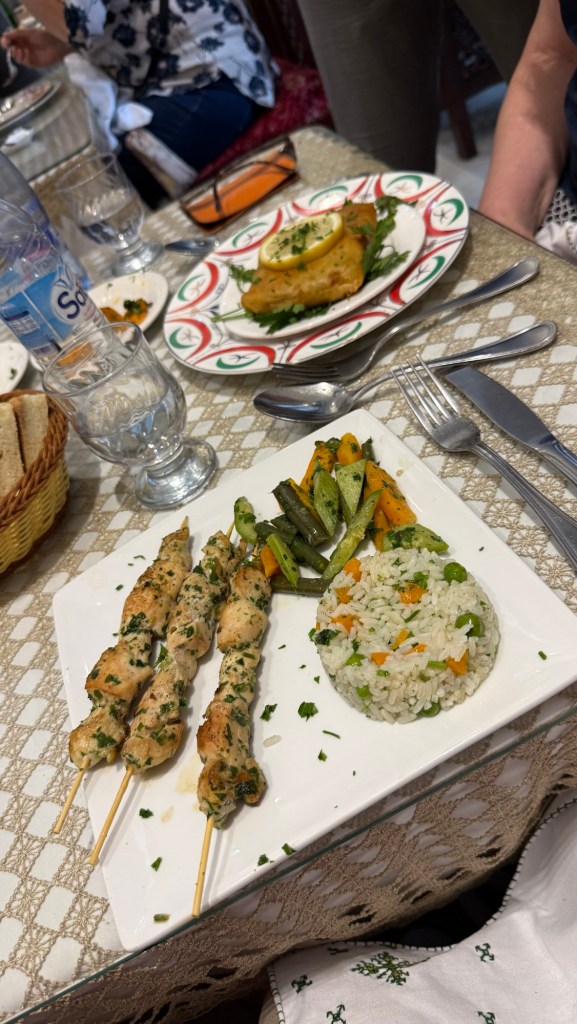
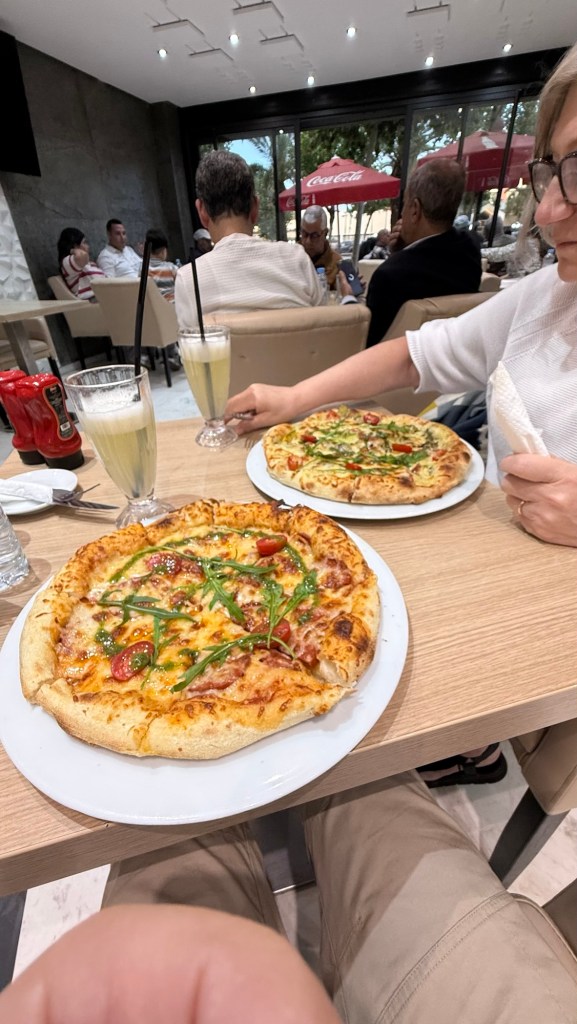
Exhausted by the heat, culture and emporiums we were deposited back at the hotel with the party left to make their own dining arrangements. We were getting tagine’d out and fancied a pizza. A restaurant was found, a seat was taken and a pepperoni pizza duly placed before me. Error. Pork isn’t eaten by Muslims because they don’t eat animals that eat other animals and pigs eat anything… apparently? So I have no idea what the salami substitute was in my pizza but it was awful and I picked it out and shoved it to the side of my plate. Anna and I had slipped off from the party, which made us feel a little mean. Whilst they were a good bunch I was working on making ‘absence make the heart grow fonder’ as 9 hours, from an early morning start until drop off, with them absorbed my full pleasure quota.
Not pepperoni!
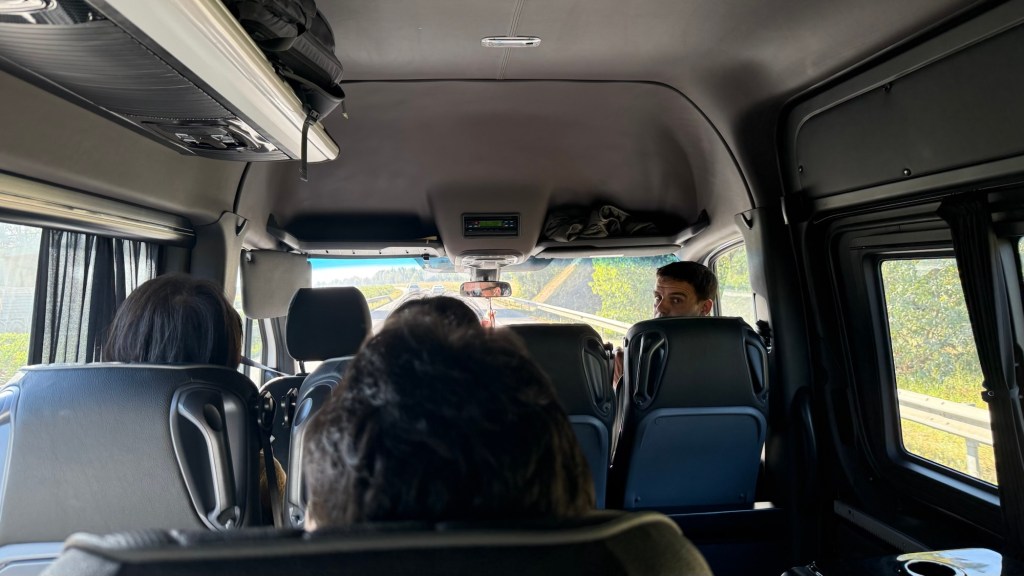
The tour necessitated long distances to be covered in the bus to get to the next hotel or interesting site. The bus was comfortable, well driven and the stops were frequent for comfort breaks and refreshment. Often a toilet would have a female attendant maintaining the facility sat outside. She needed tipping. That was only an issue in finding the necessary small coins to pay. If you didn’t have any change you felt underhand slipping in and out! This brings us to the manning of most hospitality venues: there always lots of staff. They must have all been paid little as I think the businesses couldn’t stretch to serious wages. The guide always emphasised that tourists were helping to support these people by their generosity.
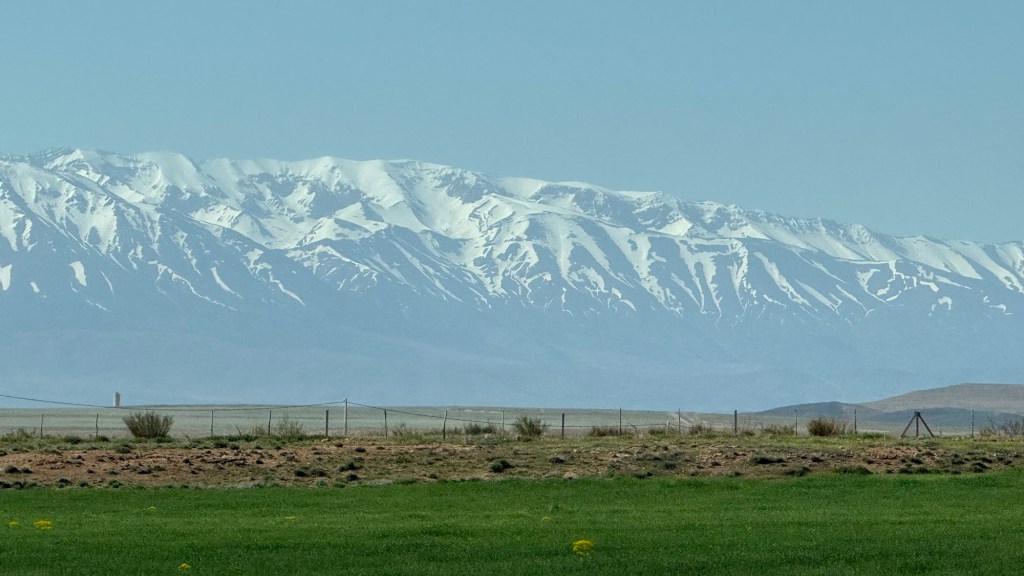
As we entered the Atlas Mountains the poorer the people appeared. Free education was now available but as a child got older and possibly more helpful to the family it wasn’t certain they would stay in school. Healthcare has improved over the decades but was still inadequate. Our guide, Ridouane, a man with a couple of degrees and fluent in three or four languages had been one of 12 children. He was a Berber and said his home was in the mountains. Horrifically his parents’ first six children died as infants. He reflected that some would have survived today with the current availability of Moroccan healthcare. All this emphasised that Morocco was on a steep trajectory as a developing nation with much achieved but a long way to go.
Atlas mountain range
After seeing and hearing about this struggle it made me muse that the illegal immigrants, often from countries to the south of Morocco who entered Europe didn’t stop in Morocco because they were unwelcome/not allowed but passed through to cross the Mediterranean. Northern Europe must seem like Eldorado with its personal freedoms including free legal assistance to remain, free subsistence money, free welfare, free healthcare, free shelter and their preceding countrymen to join. The comparison with their own countries would be unrecognisable. Clearly Europe was struggling today with the sheer numbers, welfare costs, cultural incompatibility, fear of violence and growing national rejection of the movement of these peoples that had political consequences for governments. It may even be the most highly debated issue throughout Europe now.
The landscape of Morocco can be coastal, attractive arable or grazing lands, forests, barren plains and mountains of enormous height and beauty. It was on occasion ravishing. It’s little surprise that Sir Winston Churchill took time during WW2 to paint these mountains from Marrakech.
Our stopping point for the night was to be Merzouga close to the Algerian border. This was a tour highlight for us all.
The present Mrs Ives was desirous of a trip to Morocco and booked a week with G Adventures. We’ve done two previous bus tours with this Canadian operator: Sri Lanka and New Zealand and this time chose their National Geographic option. Their position in the market is entry level pricing but a focus on the local culture, peoples and terrain. In a country like Morocco even though the price was relatively low it still meant excellent hotels. Also, for us, a major attraction was the usual absence of Brits in the guest party. This tour was no exception; amongst the 11 were a selection of Canadians (their birth countries included the Philippines, Jamaica, India and China.) Our ages spread between 21 and 75. I was not the oldest, thank you very much!
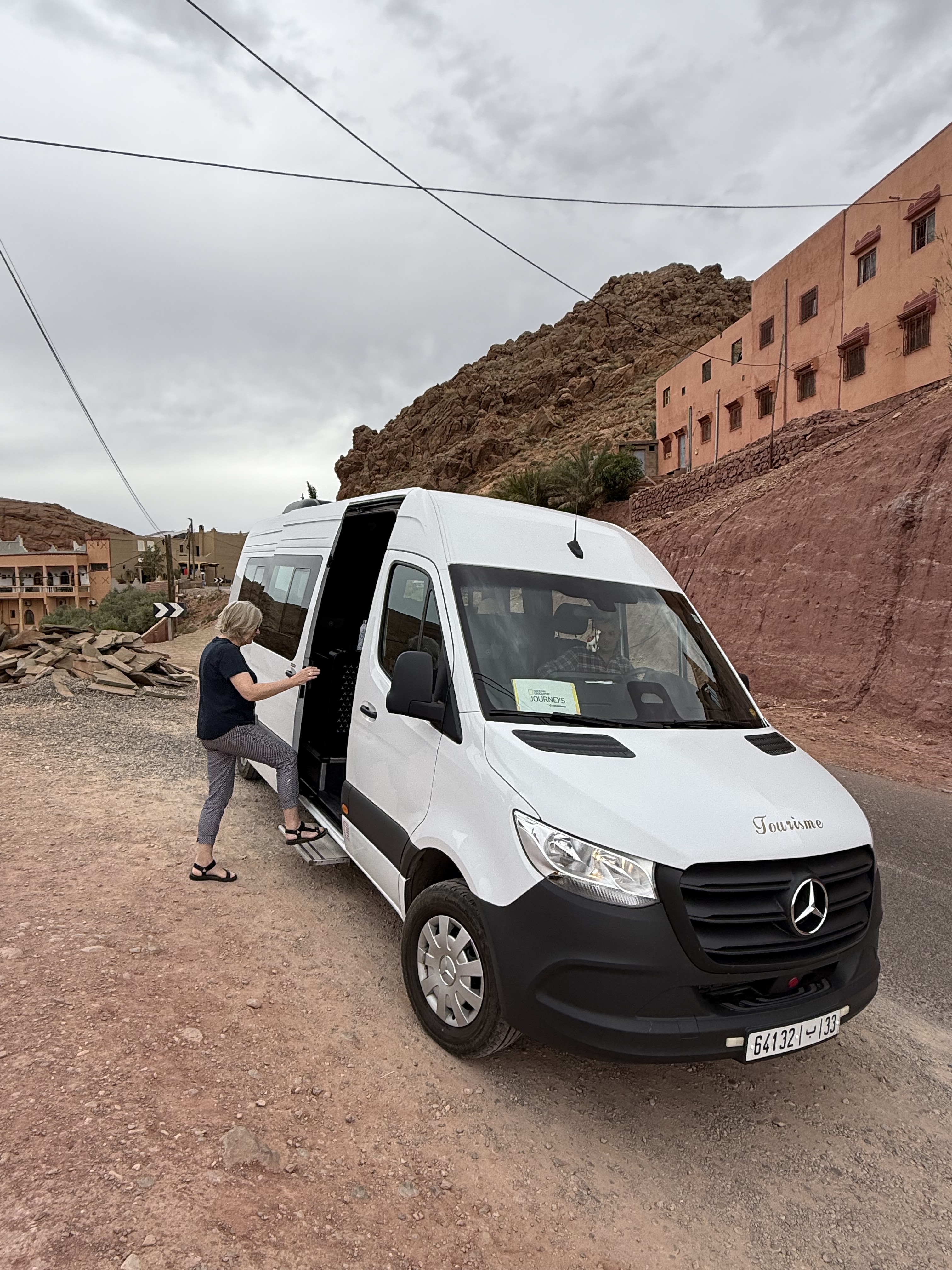
The spacious and nearly new Mercedes bus was fab
Frankly, my curiosity of North Africa was up there with wreath making and the laws of lacrosse but I gamely tagged along with an open mind and absolutely no idea of the itinerary apart from a vague idea of where we were going. My own curated foreign trips are an intense collation of arrangements, research and planning. It was a nice break to sit back and see what unfolded. Anna scolded me for my laid back approach! First up was a flight from Manchester to Lisbon and then onto Casablanca to meet up with the leader and other guests. These were my seventh and eighth flights this year and it was only April! We got to the hotel five minutes before the ‘welcome introduction’ and then followed a group dinner at a local restaurant for our first tagine. A tagine is a dish that’s cooked on a ceramic plate that requires a ceramic conical lid. The food can be partially cooked before going on to be fully cooked in an oven using the inevitable steam to cook the contents.
TagineNo alcohol and so lots of ‘Moroccan Whiskey’ was imbibed – delicious fresh mint tea
The first night and walk brought home that we were in a Muslim country. Women in hijabs, mainly men in ‘front facing’ jobs such as waiters, drivers, guides etc., lots of laws and rules that derived from the Koran and demonstrations of the faith in buildings, flags, pictures of the King and explanations of the history of the country. Our wonderful guide, Ridouane, was also very much a practising Muslim with no doubt discrete absences from the party to fit in his five prayers a day. Personally I never shook off my concern that a heavy underpinning religious belief is no way to run a country in the 21st century during our week but I did gain a bit more of an insight into the faith.
One repetitive theme of Ridouane’s explanations was that Morocco had a Jewish population and that Morocco was more tolerant than other Muslim countries. Yes, but according to Wikipedia only 1% of the current population of Morocco is Jewish. I imagine they are more tolerant but without taking up too much space here then with the creation of Israel in 1948 and the end of French colonialism, when the country gained independence in 1956 and the Jews presumably lost France’s influence and protection, a mass migration took place to Israel.
We breezed out of Casablanca the next morning and the first thing that is obvious is the investment in infrastructure in the main cities. Our road was first class and progress was swift. In Casablanca, the night before, our taxi had made a Herculean effort to make progress on busy streets where seemingly there were no rules other than you were either ‘quick or dead’. Later in Fez and then in Marrakech the Russian roulette danger of crossing the road on foot was unnerving. There were zebra crossings but it seemed to serve as a trigger for motorists and motorbikes to accelerate should you be stupid enough to step onto one! Despite the quality of bigger roads there were occasional check points where the bus would be halted by policemen for some reason. This smacked of third world bureaucracy. We never had any problems clearing these stops but a man halting your bus clutching a semi automatic rifle seemed unnecessary despite the obvious clear and present danger of your occupants being Canadian.
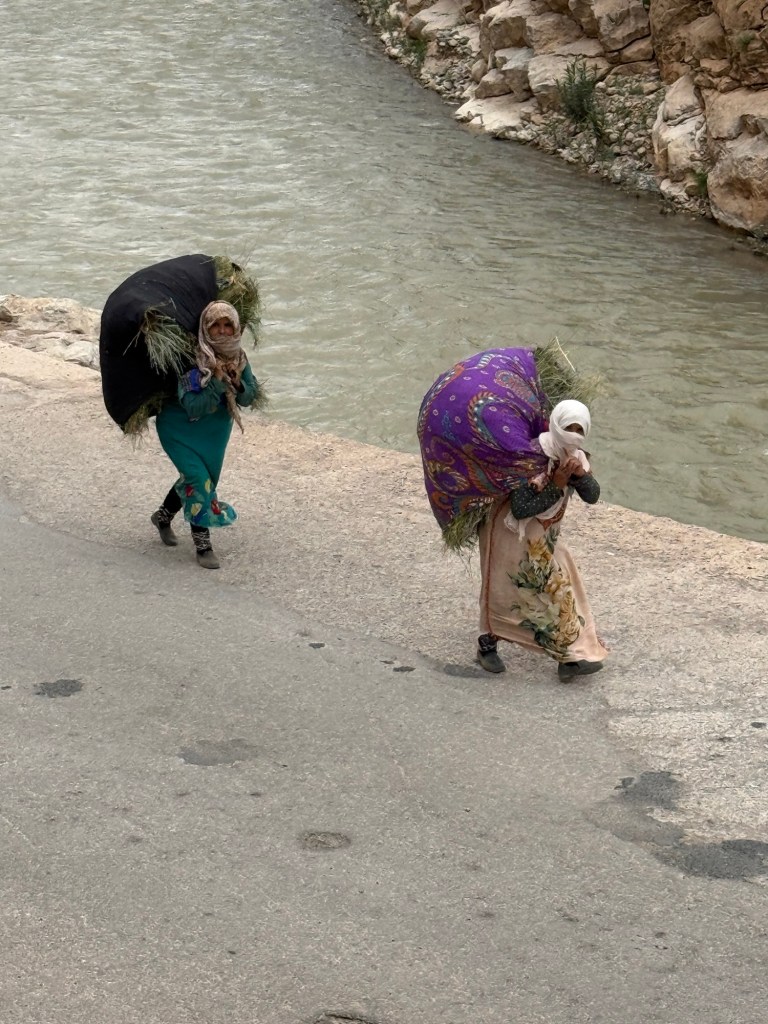
The large cities were in stark contrast to the rural areas. The populations in the cities were better educated, more wealthy, probably less religious, younger and occupying more Western contemporary jobs eg. automotive assembly, finance and mining (phosphates mainly.) However, 45 percent of the population is employed in agriculture; much of it seemed subsistence as we drove past laden donkeys and folk bent double with hand held implements although a cursory glance at your UK supermarket labels will denote vegetables grown in Morocco. This produce must be grown in intense environments to hit pricing levels making these items attractive to major overseas markets.
Nomads moving straw/animal feed
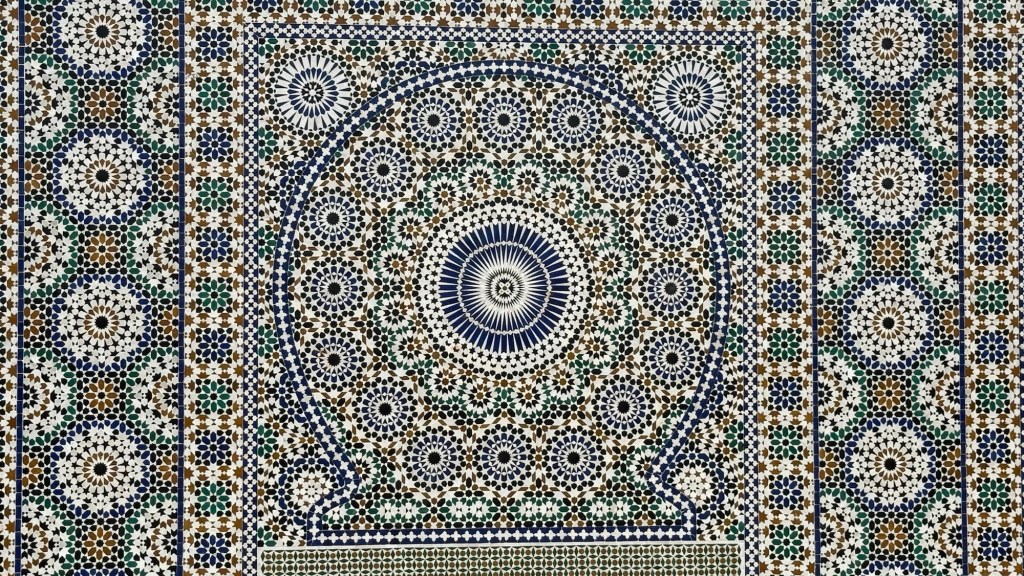
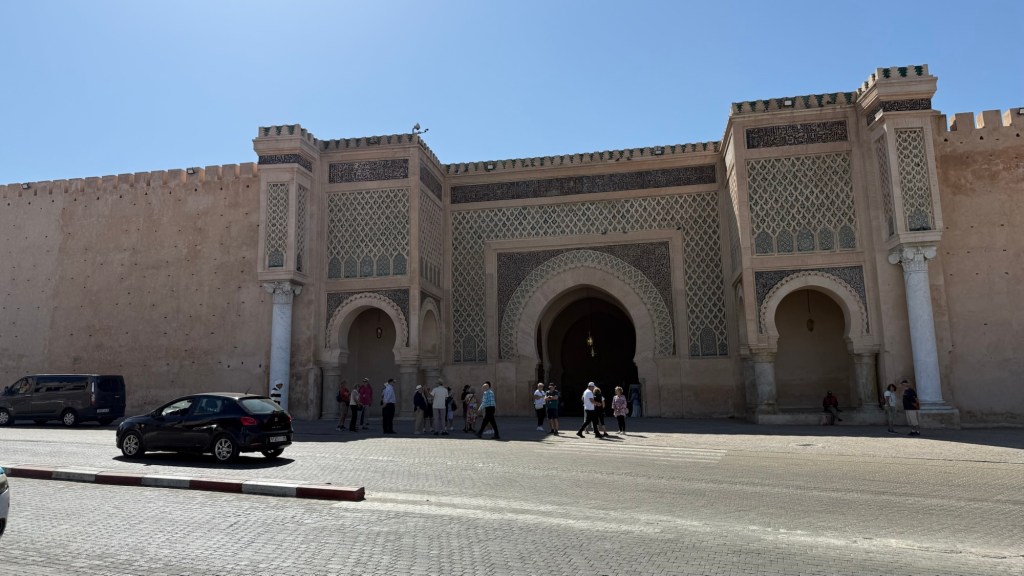
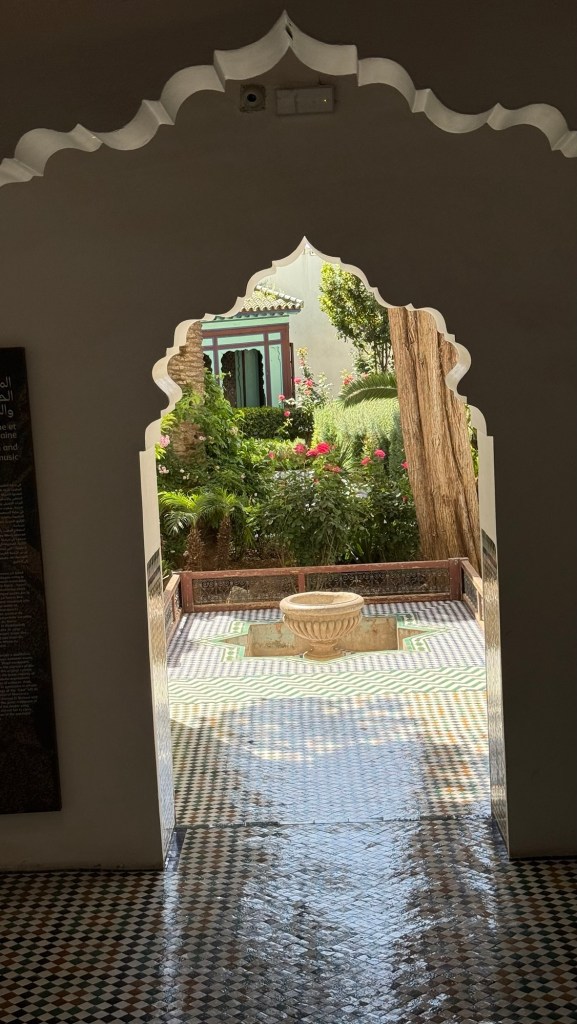
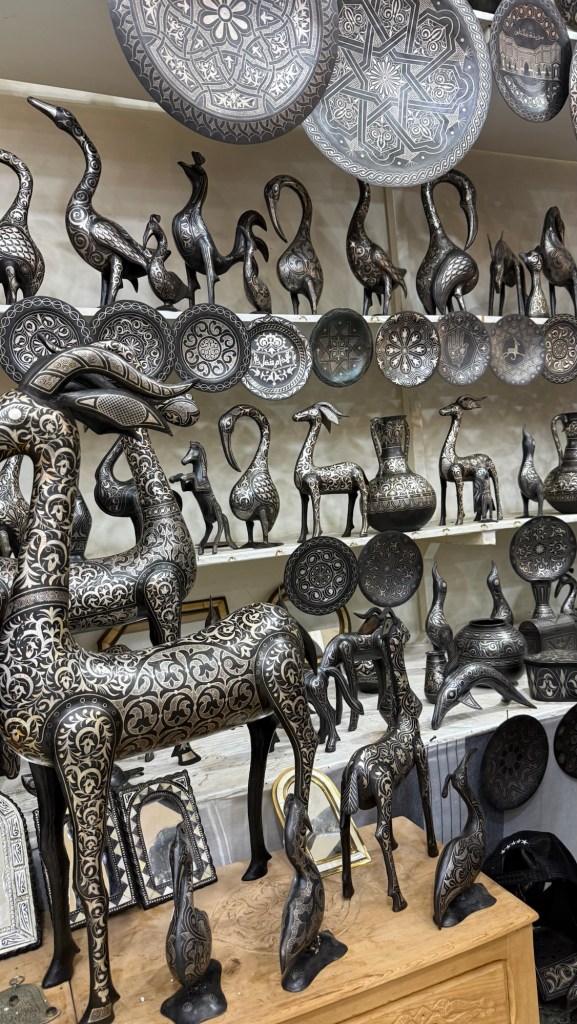
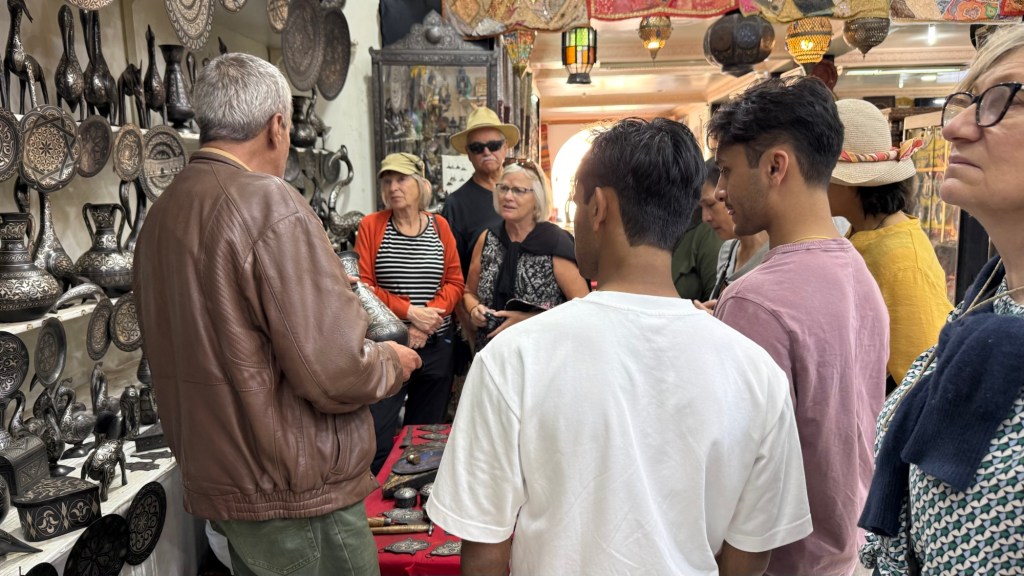
Past Casablanca we came to rest at Meknes where we visited a music museum, 17th century kasbah (fortress), mausoleum, shop with intricate metal jewellery and ornament making and royal palace. The beautiful weather was a fabulous backdrop for a Moroccan delight: the ceramic tiles. Always patterned and in primary colours.
Sumptuous mosaicsThe kasbah entrance in MeknesMuseum gardensHurry now whilst stocks lastParty gathered around a craftsman having his skill explained
The trip offered many opportunities for the shoppers in the party to indulge in retail therapy. I was generally staggered that at every stop someone would buy something! Labouring under a 10kg luggage airline allowance made our interest was limited. Of course as the party was ‘special’ the prices, often only obtained by enquiry, would enjoy a 10% discount! Haggling was the name of the game with various start and finish points. Personally I could have only ever been bothered to get into this wearying palaver if I’d genuinely wanted the item. The main challenge about the pricing was that you had little idea about what was the correct finishing point for the haggle. As I say if you really wanted it then the price mattered less. You can take the boy out of Yorkshire but you can’t take Yorkshire out of the boy…
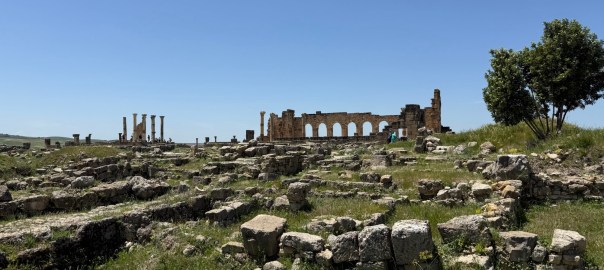
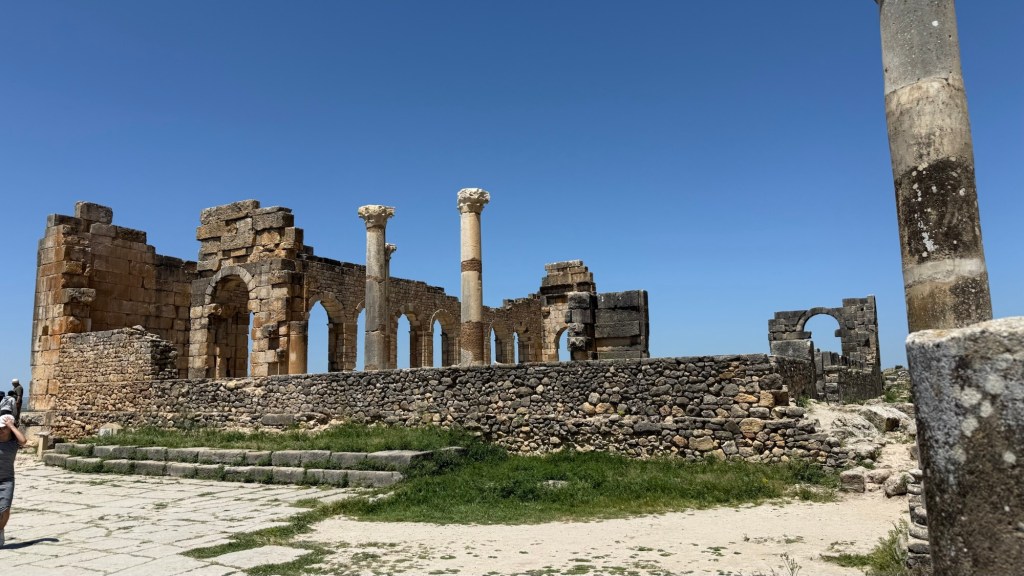
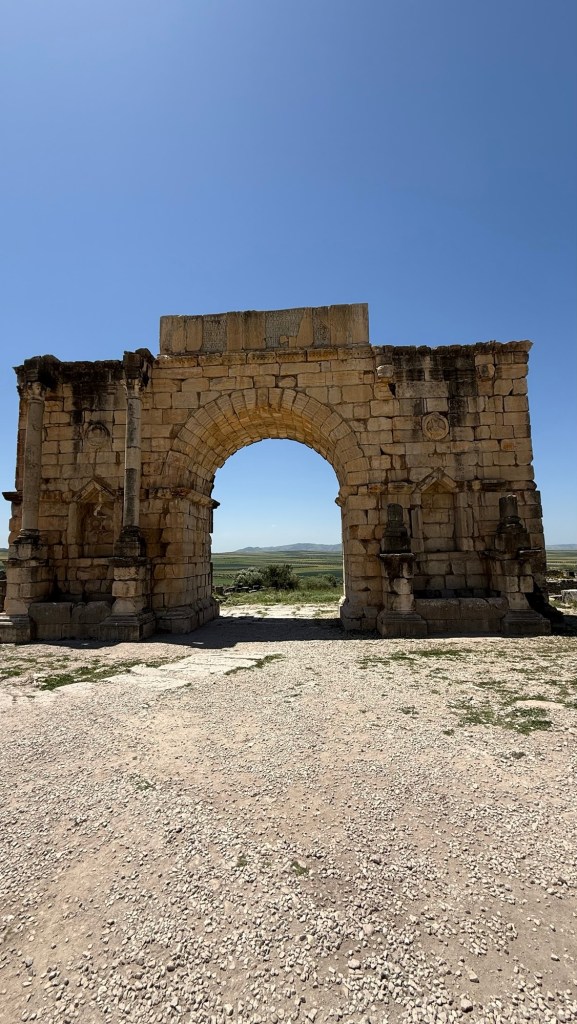
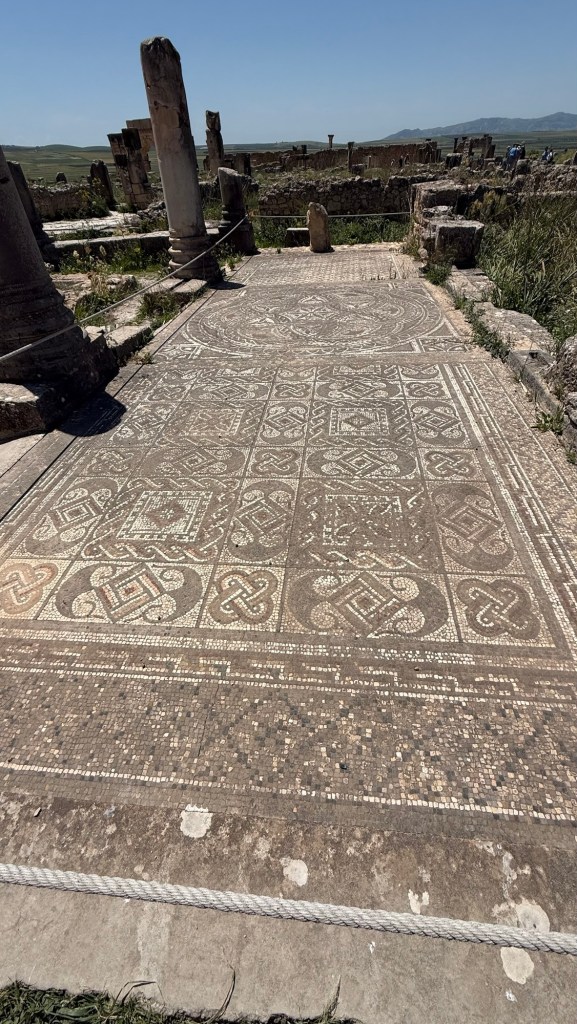
From here we visited a Roman site at Volubilis. This settlement was on the edge of the Roman Empire and had lain covered and untouched until the pesky colonialists, the French, had exposed much of it in the late 19th century. In doing so they had found some stunning mosaics that inexplicably the Moroccans had subsequently left exposed to the elements. At other Roman sites I visited in Europe such gems would be under cover and movement through the site less of an obstacle course of trip hazards.
VolubilisMosaics – of a scale and condition to generate awe
The site had no safe walkways and few explanatory graphics. It was a sad treatment of an exceptional historic treasure. Coupled to this was our poorest local guide of the trip who gabbled his explanations in heavily accented English to the extent that no one had much idea about the site afterwards. I looked at Wikipedia in the bus when we departed to gain any information.
Onward we had a meal at a women’s cooperative. Welfare is a thin thing in Morocco especially if you’ve achieved a divorce or are widowed. I say ‘achieved’ as Islam frowns on such a status especially if you’re a woman. The empowered women were often single mothers with few sources of meaningful income. The money raised went into ‘projects’ that included healthcare, education and training for mothers and children alike. This cooperative, comprehensively supported by G Adventures, provides some dosh to this kitchen and restaurant in M’Haya and other locations. Here we had our second tagine of the tour – chicken and lemon. It was heartening to learn of this charity initiative and we contributed via a donation over and above G Adventures paying them for the food. Afterwards we motored into Fez. Where we stayed in an upmarket hotel in the centre. We were here for two nights.
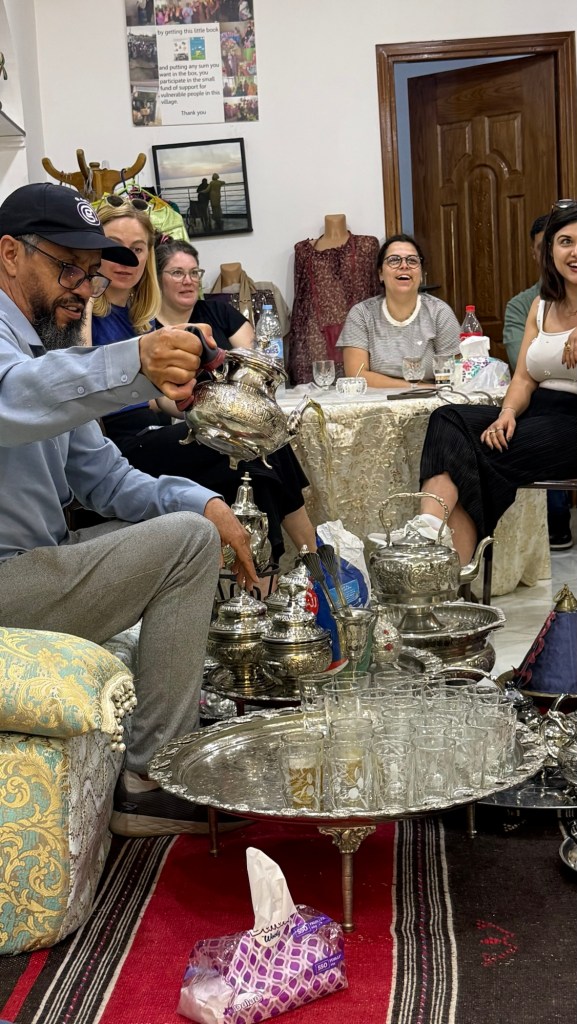
A guide from another G Adventures tour pouring tea from a height. I wonder if he needs to lift the lid up at home with this accuracy?
Generally the guide was quick to give advice on safety. We never felt any danger. At night on the dark streets, of all our stays, there were women and children unconcerned about their own safety around us. Of course we didn’t wear jewellery or fail to secure any money out of sight about our person but I must speak as we found. By ourselves in the cities the language spoken was Arabic but most spoke French and restaurants or shops usually spoke English.

 Tony Ives’ Blog