The present Mrs Ives was desirous of a trip to Morocco and booked a week with G Adventures. We’ve done two previous bus tours with this Canadian operator: Sri Lanka and New Zealand and this time chose their National Geographic option. Their position in the market is entry level pricing but a focus on the local culture, peoples and terrain. In a country like Morocco even though the price was relatively low it still meant excellent hotels. Also, for us, a major attraction was the usual absence of Brits in the guest party. This tour was no exception; amongst the 11 were a selection of Canadians (their birth countries included the Philippines, Jamaica, India and China.) Our ages spread between 21 and 75. I was not the oldest, thank you very much!
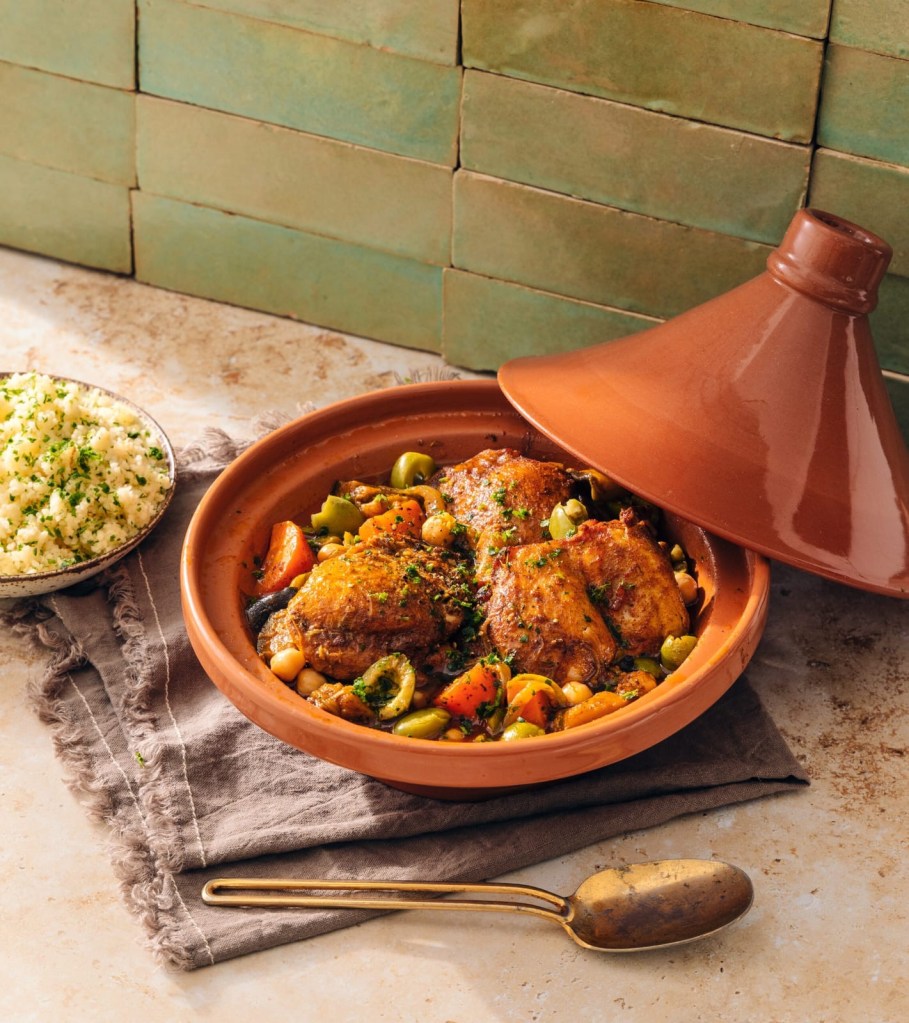
Frankly, my curiosity of North Africa was up there with wreath making and the laws of lacrosse but I gamely tagged along with an open mind and absolutely no idea of the itinerary apart from a vague idea of where we were going. My own curated foreign trips are an intense collation of arrangements, research and planning. It was a nice break to sit back and see what unfolded. Anna scolded me for my laid back approach! First up was a flight from Manchester to Lisbon and then onto Casablanca to meet up with the leader and other guests. These were my seventh and eighth flights this year and it was only April! We got to the hotel five minutes before the ‘welcome introduction’ and then followed a group dinner at a local restaurant for our first tagine. A tagine is a dish that’s cooked on a ceramic plate that requires a ceramic conical lid. The food can be partially cooked before going on to be fully cooked in an oven using the inevitable steam to cook the contents.
The first night and walk brought home that we were in a Muslim country. Women in hijabs, mainly men in ‘front facing’ jobs such as waiters, drivers, guides etc., lots of laws and rules that derived from the Koran and demonstrations of the faith in buildings, flags, pictures of the King and explanations of the history of the country. Our wonderful guide, Ridouane, was also very much a practising Muslim with no doubt discrete absences from the party to fit in his five prayers a day. Personally I never shook off my concern that a heavy underpinning religious belief is no way to run a country in the 21st century during our week but I did gain a bit more of an insight into the faith.
One repetitive theme of Ridouane’s explanations was that Morocco had a Jewish population and that Morocco was more tolerant than other Muslim countries. Yes, but according to Wikipedia only 1% of the current population of Morocco is Jewish. I imagine they are more tolerant but without taking up too much space here then with the creation of Israel in 1948 and the end of French colonialism, when the country gained independence in 1956 and the Jews presumably lost France’s influence and protection, a mass migration took place to Israel.
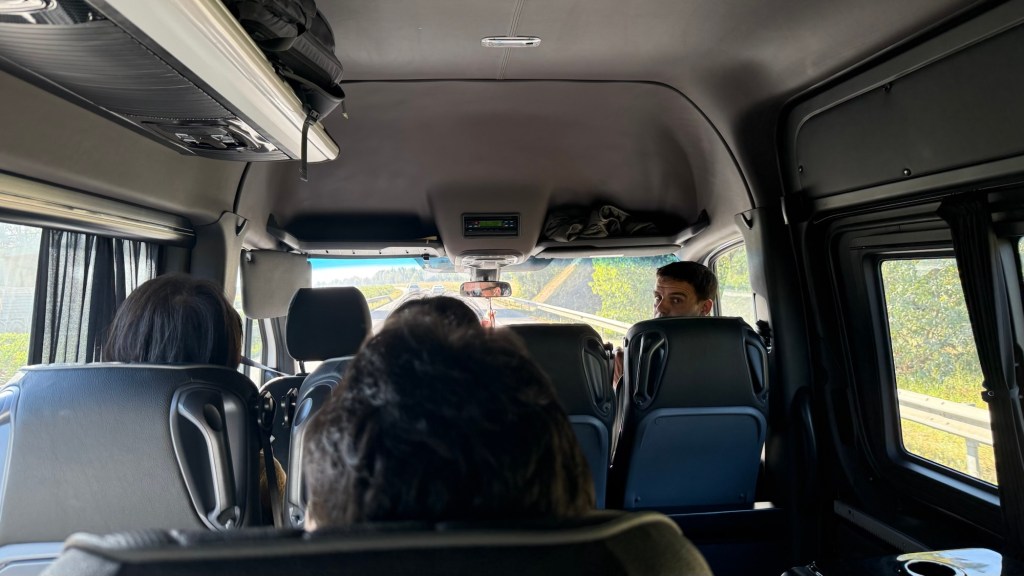
We breezed out of Casablanca the next morning and the first thing that is obvious is the investment in infrastructure in the main cities. Our road was first class and progress was swift. In Casablanca, the night before, our taxi had made a Herculean effort to make progress on busy streets where seemingly there were no rules other than you were either ‘quick or dead’. Later in Fez and then in Marrakech the Russian roulette danger of crossing the road on foot was unnerving. There were zebra crossings but it seemed to serve as a trigger for motorists and motorbikes to accelerate should you be stupid enough to step onto one! Despite the quality of bigger roads there were occasional check points where the bus would be halted by policemen for some reason. This smacked of third world bureaucracy. We never had any problems clearing these stops but a man halting your bus clutching a semi automatic rifle seemed unnecessary despite the obvious clear and present danger of your occupants being Canadian.
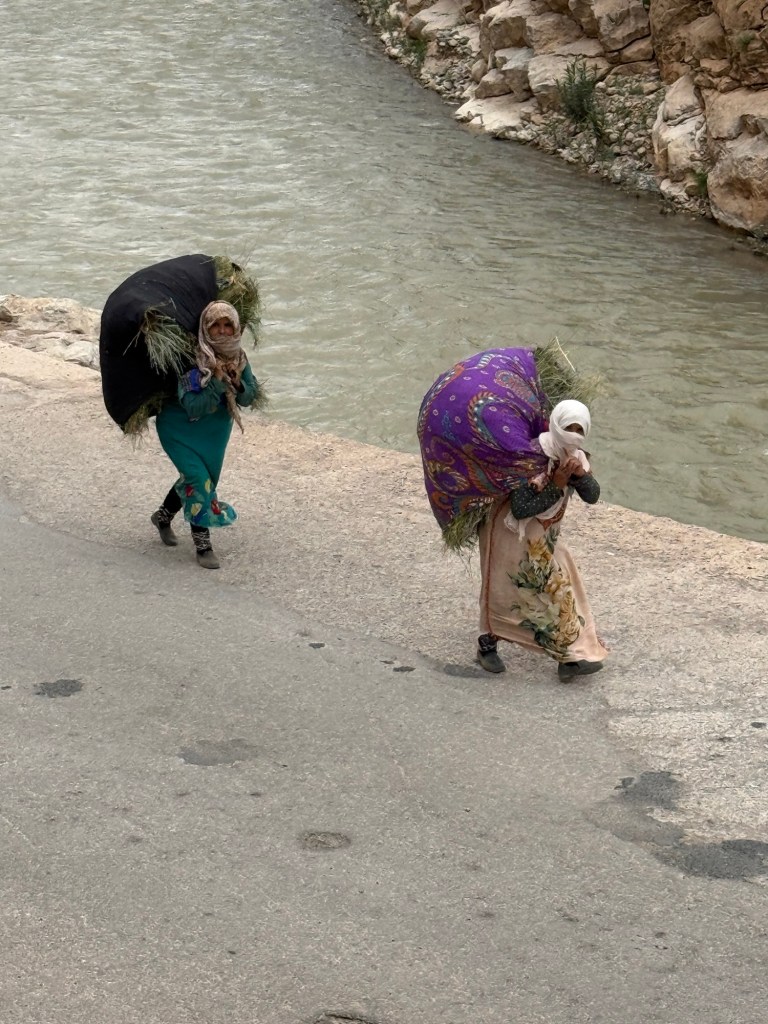
The large cities were in stark contrast to the rural areas. The populations in the cities were better educated, more wealthy, probably less religious, younger and occupying more Western contemporary jobs eg. automotive assembly, finance and mining (phosphates mainly.) However, 45 percent of the population is employed in agriculture; much of it seemed subsistence as we drove past laden donkeys and folk bent double with hand held implements although a cursory glance at your UK supermarket labels will denote vegetables grown in Morocco. This produce must be grown in intense environments to hit pricing levels making these items attractive to major overseas markets.
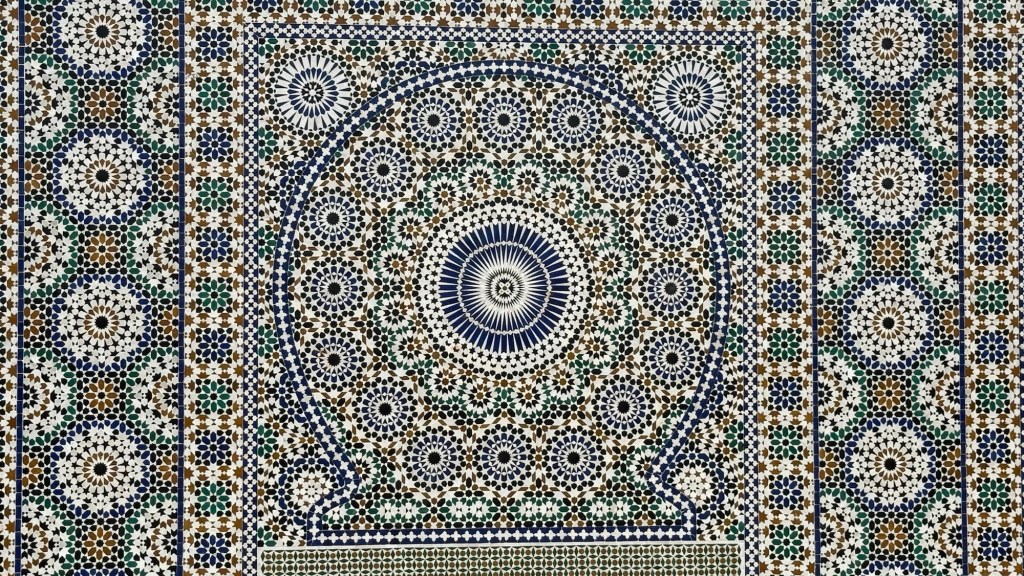
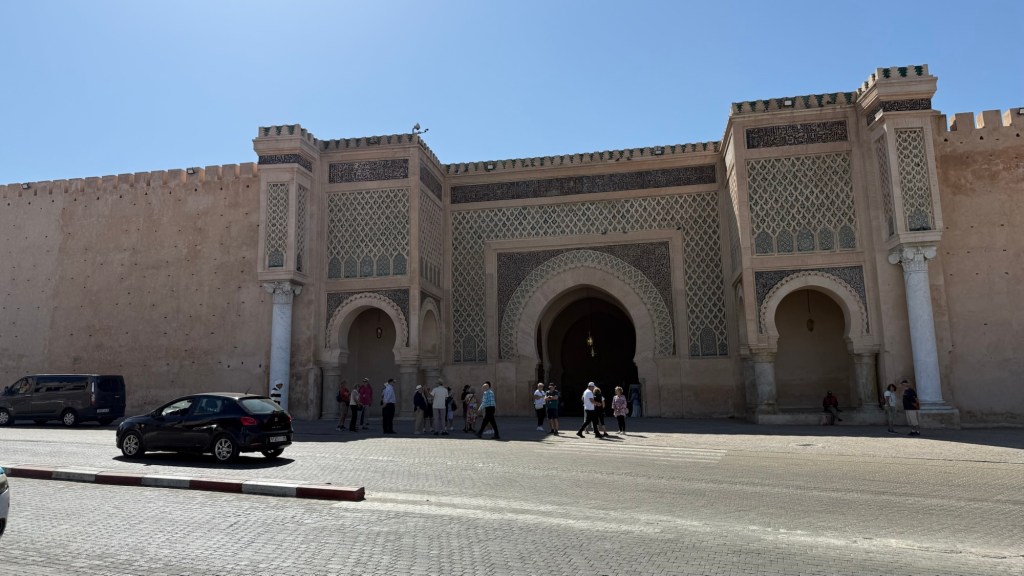
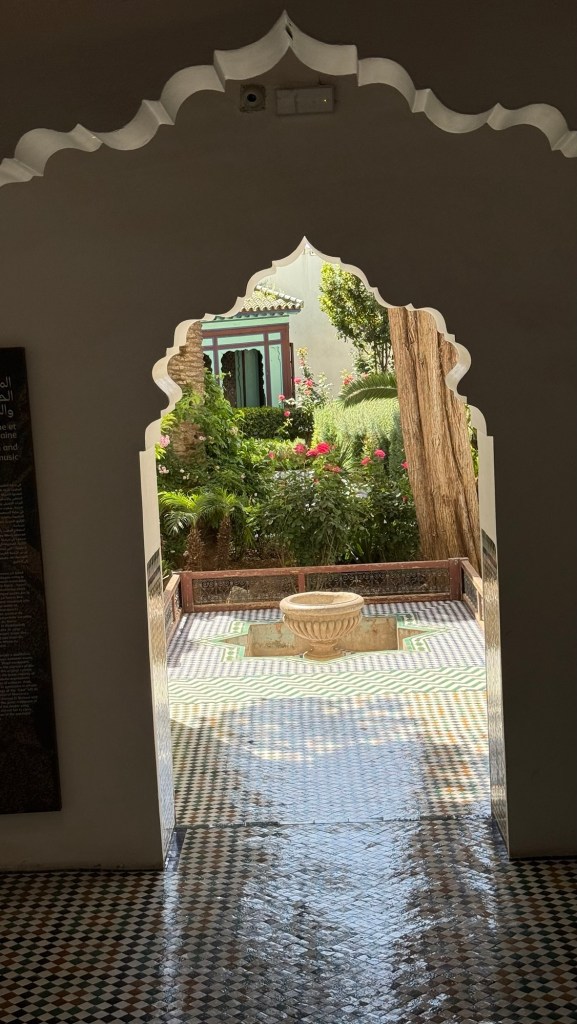
Past Casablanca we came to rest at Meknes where we visited a music museum, 17th century kasbah (fortress), mausoleum, shop with intricate metal jewellery and ornament making and royal palace. The beautiful weather was a fabulous backdrop for a Moroccan delight: the ceramic tiles. Always patterned and in primary colours.
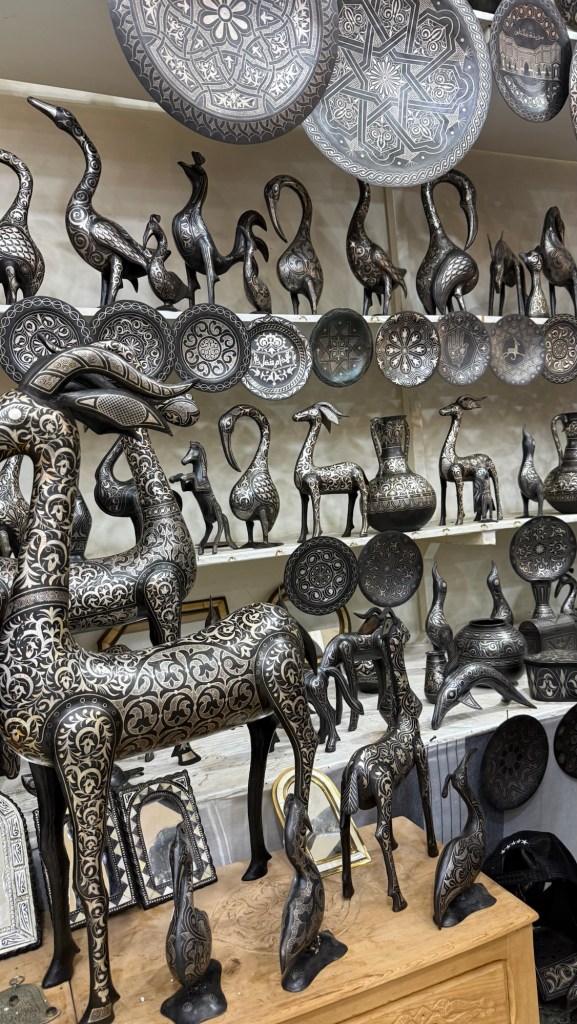
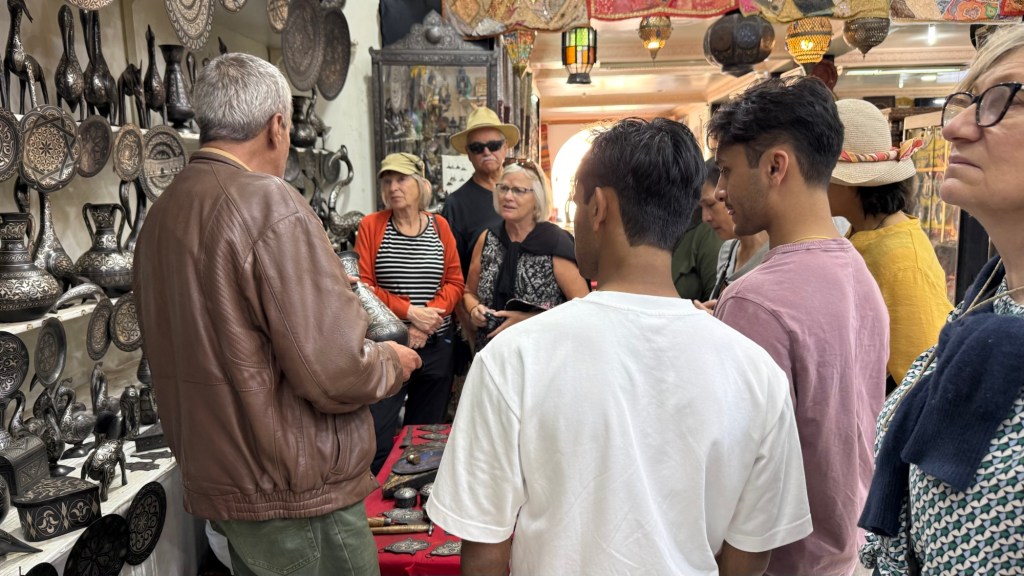
The trip offered many opportunities for the shoppers in the party to indulge in retail therapy. I was generally staggered that at every stop someone would buy something! Labouring under a 10kg luggage airline allowance made our interest was limited. Of course as the party was ‘special’ the prices, often only obtained by enquiry, would enjoy a 10% discount! Haggling was the name of the game with various start and finish points. Personally I could have only ever been bothered to get into this wearying palaver if I’d genuinely wanted the item. The main challenge about the pricing was that you had little idea about what was the correct finishing point for the haggle. As I say if you really wanted it then the price mattered less. You can take the boy out of Yorkshire but you can’t take Yorkshire out of the boy…
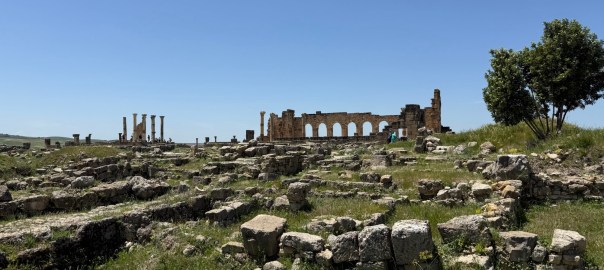
From here we visited a Roman site at Volubilis. This settlement was on the edge of the Roman Empire and had lain covered and untouched until the pesky colonialists, the French, had exposed much of it in the late 19th century. In doing so they had found some stunning mosaics that inexplicably the Moroccans had subsequently left exposed to the elements. At other Roman sites I visited in Europe such gems would be under cover and movement through the site less of an obstacle course of trip hazards.
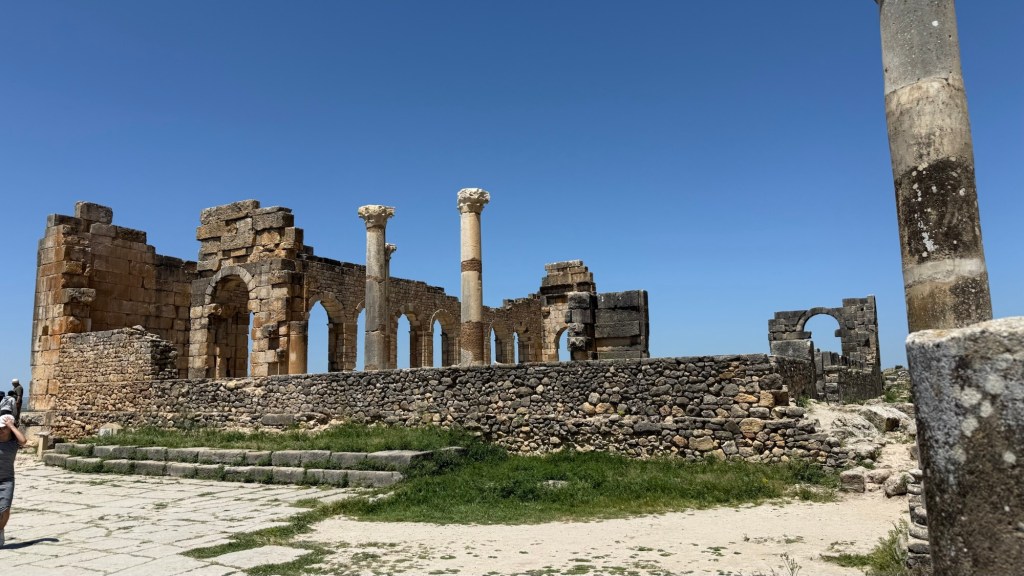
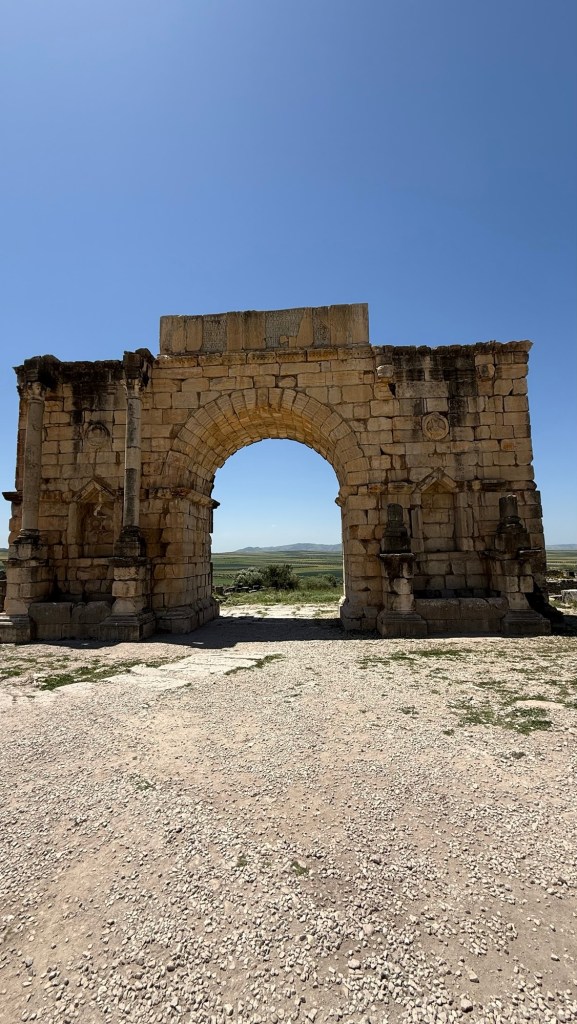
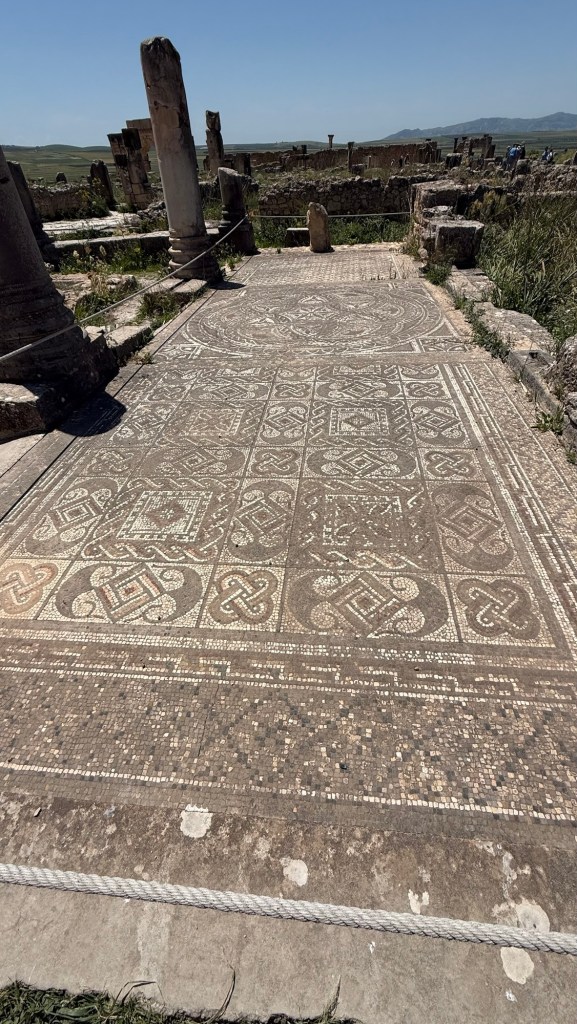
The site had no safe walkways and few explanatory graphics. It was a sad treatment of an exceptional historic treasure. Coupled to this was our poorest local guide of the trip who gabbled his explanations in heavily accented English to the extent that no one had much idea about the site afterwards. I looked at Wikipedia in the bus when we departed to gain any information.
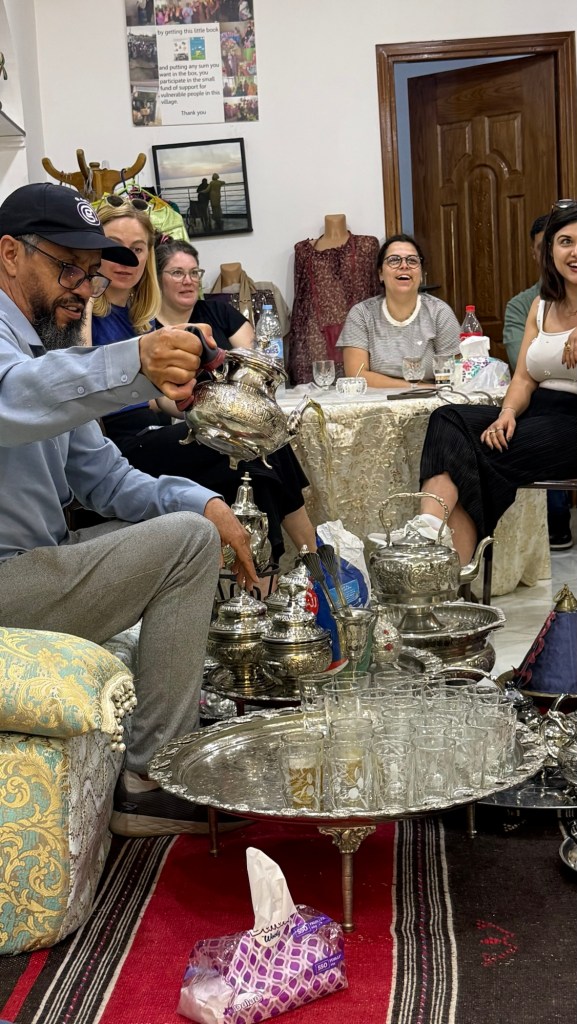
Onward we had a meal at a women’s cooperative. Welfare is a thin thing in Morocco especially if you’ve achieved a divorce or are widowed. I say ‘achieved’ as Islam frowns on such a status especially if you’re a woman. The empowered women were often single mothers with few sources of meaningful income. The money raised went into ‘projects’ that included healthcare, education and training for mothers and children alike. This cooperative, comprehensively supported by G Adventures, provides some dosh to this kitchen and restaurant in M’Haya and other locations. Here we had our second tagine of the tour – chicken and lemon. It was heartening to learn of this charity initiative and we contributed via a donation over and above G Adventures paying them for the food. Afterwards we motored into Fez. Where we stayed in an upmarket hotel in the centre. We were here for two nights.
Generally the guide was quick to give advice on safety. We never felt any danger. At night on the dark streets, of all our stays, there were women and children unconcerned about their own safety around us. Of course we didn’t wear jewellery or fail to secure any money out of sight about our person but I must speak as we found. By ourselves in the cities the language spoken was Arabic but most spoke French and restaurants or shops usually spoke English.

