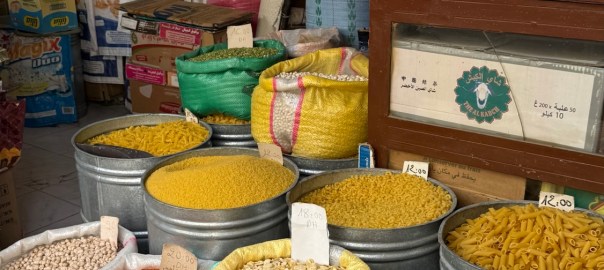
Morocco originally placed its capital in Fes until the French eventually moved it to Rabat, where it stayed. However it illustrates the importance of this city in north of the country. The city had an old part that was known as the medina: a warren of small alleys often linked by covered passages that variously house shops, residential housing, restaurants and some manufacturing such as leather tanneries and textile production.
Our morning started with meeting up with a new local guide – Hafeed who had excellent English and a sense of humour. He led us for the day around the medina and initially the mellah. The latter is where the Jews lived until their departure to Israel. After wandering through this selection of streets he did comment they’d all gone long ago! Going back to the Middle Ages Judaism was a more popular religion than Islam but at some point many converted to Islam. Frankly, the chance of that happening today seems unconscionable.
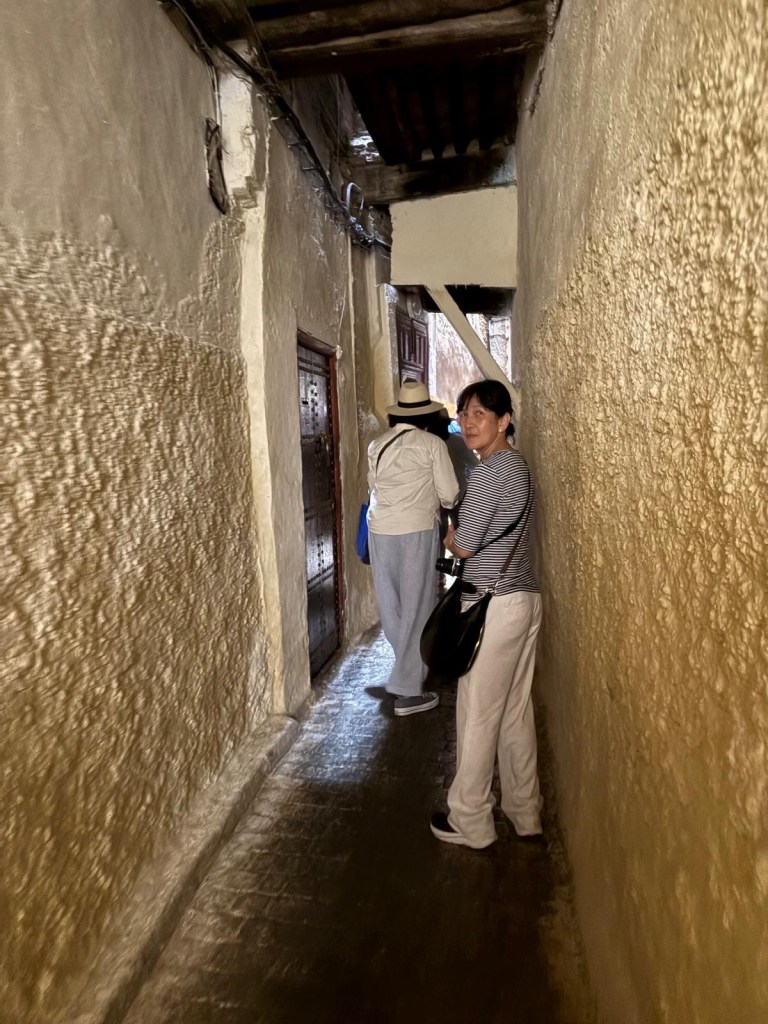
Beside the old town was a new settlement built by the French and it was here that our hotel was located. It’s worth now adding that whilst G Adventures curated a historic tour it was a shopper’s dream with many opportunities to browse and procure. All transactions in these shops were in cash. Also you couldn’t buy dirhams outside of Morocco. Inevitably all this enforced money changing meant all sort of little currency bureaus making a nice ‘drink’ on converting cash. You could use plastic in more upmarket establishments such as some bigger city hotels but it meant we and the rest of the party were spending time changing money. I mentioned the uncertainty of knowing whether the prices were value for money as you haggled but restaurants and cafes were ordinarily at tourist prices. These prices may be cheaper than the UK or North America but not by much. Also, frankly, the food was mediocre and the choice limited throughout. I sympathise with G Adventures selecting more expensive restaurants as they wanted guaranteed hygiene levels and inevitably many restaurants were near tourist attractions or en route. However, as in all purchases if you pay over the odds and it’s of good quality you don’t care but otherwise you do and whilst it is a small complaint I did develop the view that we were ‘there for the taking’ as you entered establishments. I would add that the average salary in Morocco was $9,500 pa. Frankly, if that’s the mean average then the mode ie. most widely received salary would be far less, so which Moroccan would pay $15 for a tagine? (The minimum hourly rate in Morocco is $1.80.)
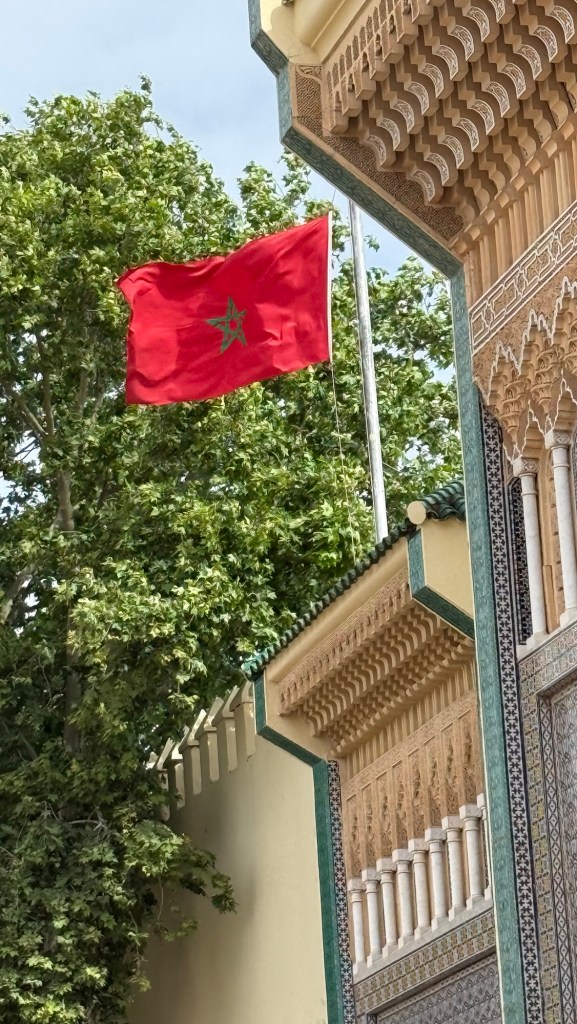
We had a busy programme and I’ll let the photos tell a story:
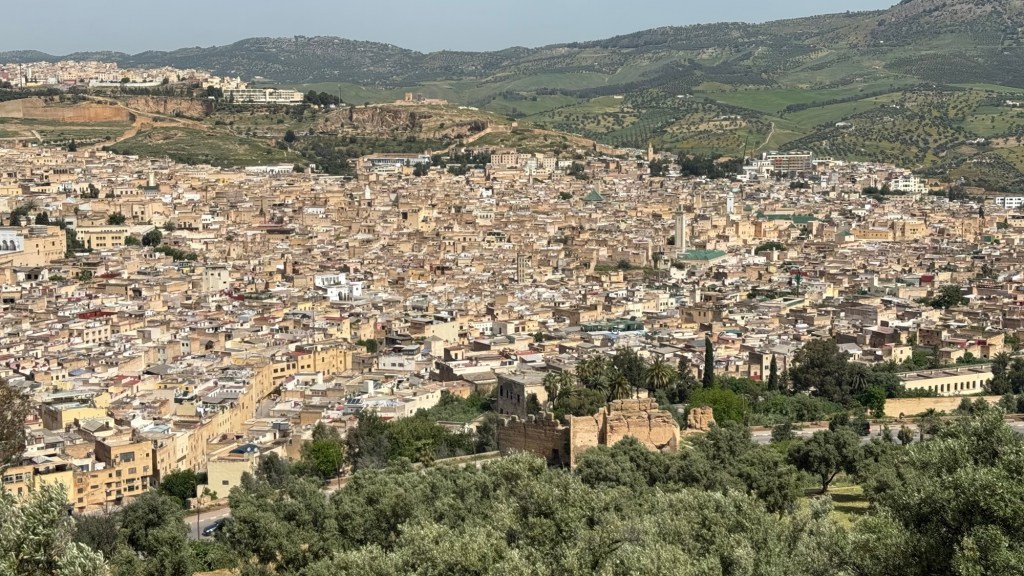
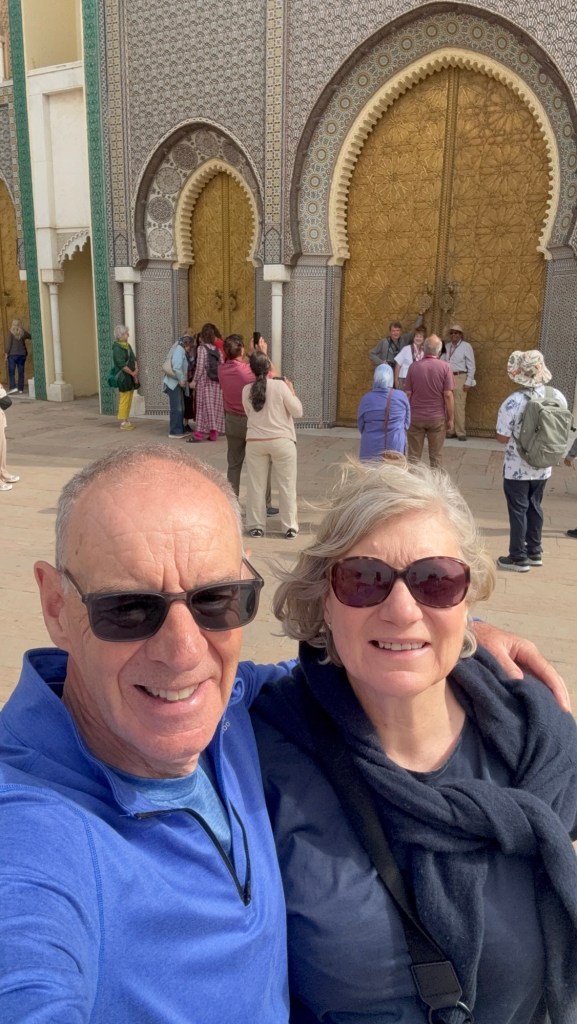
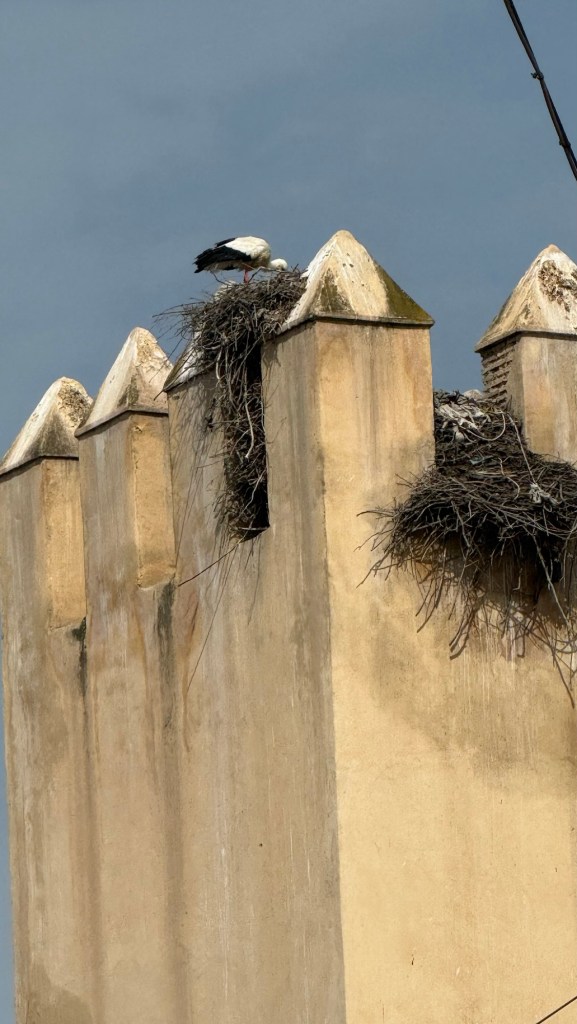

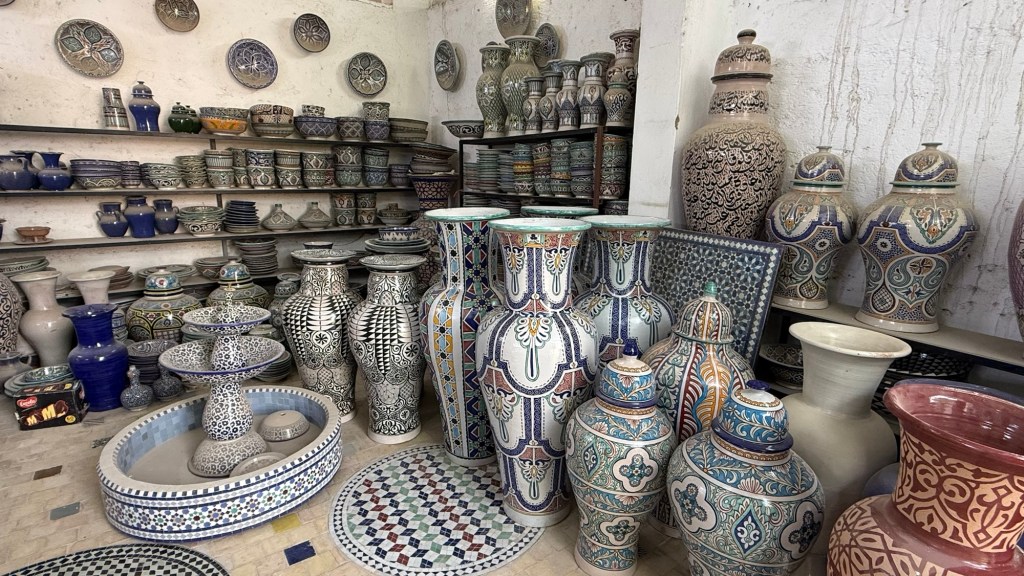
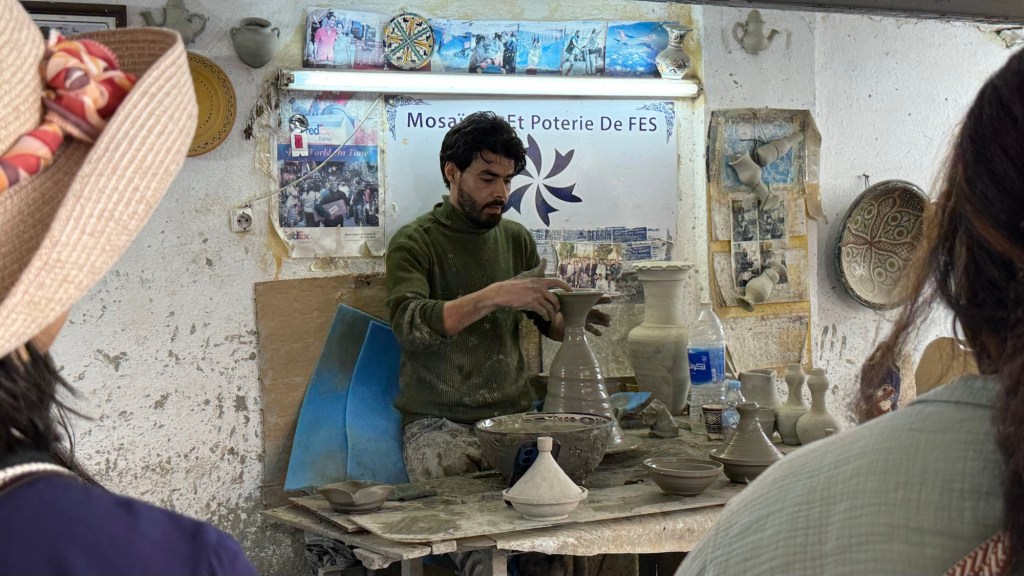
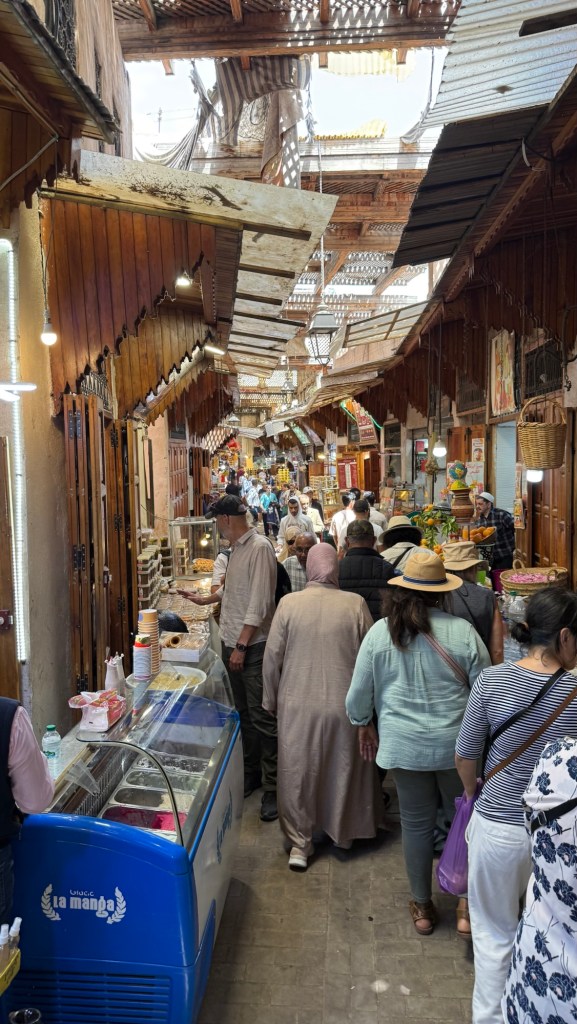
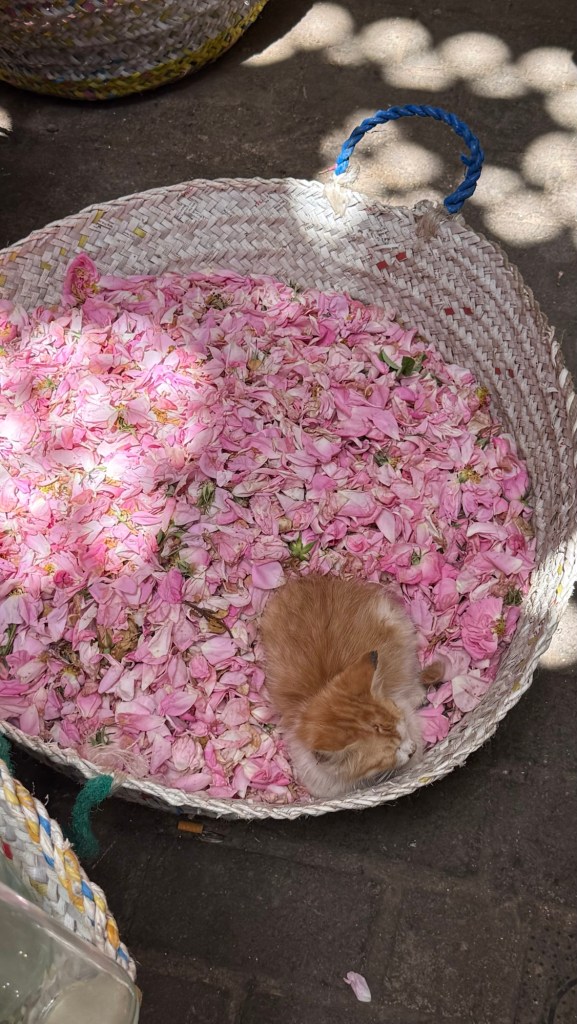
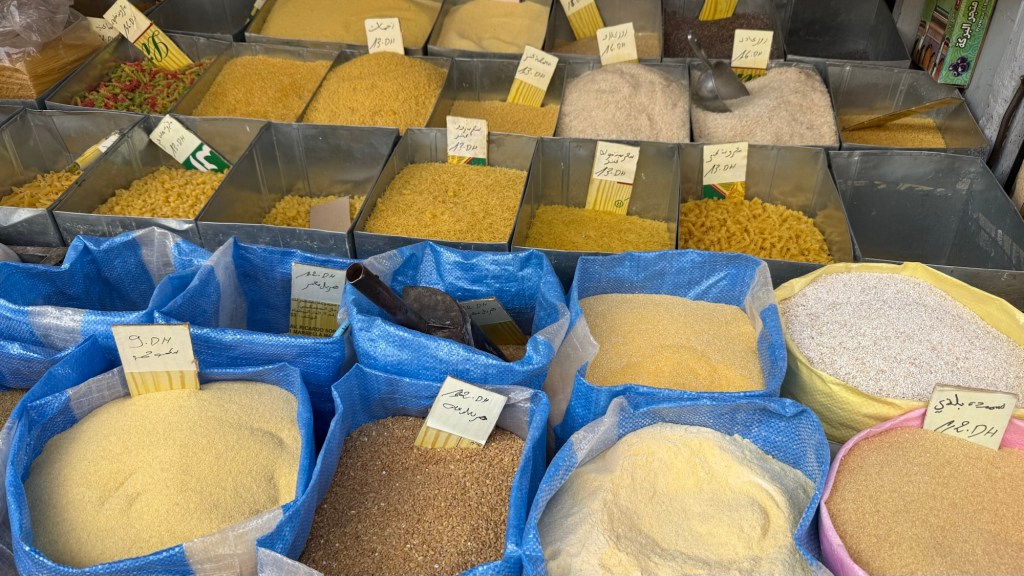
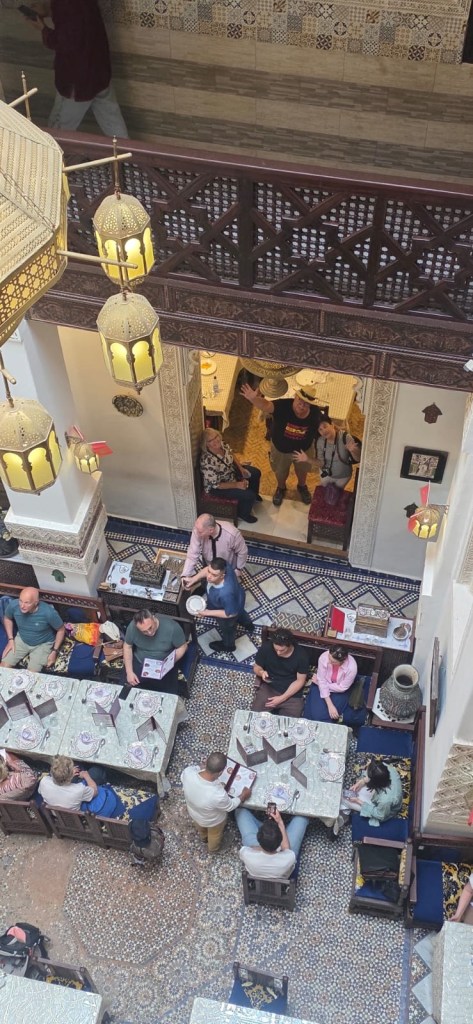
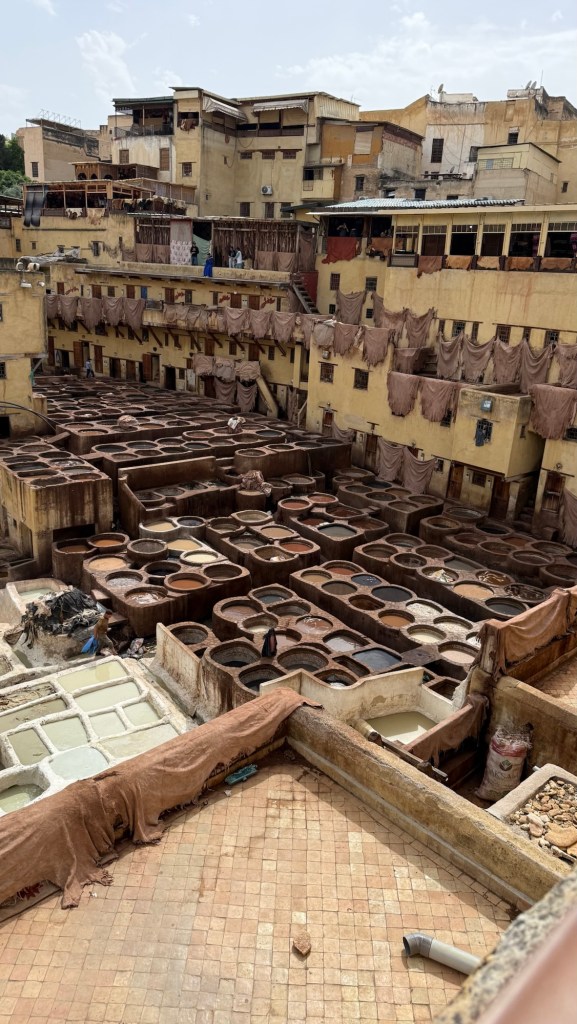
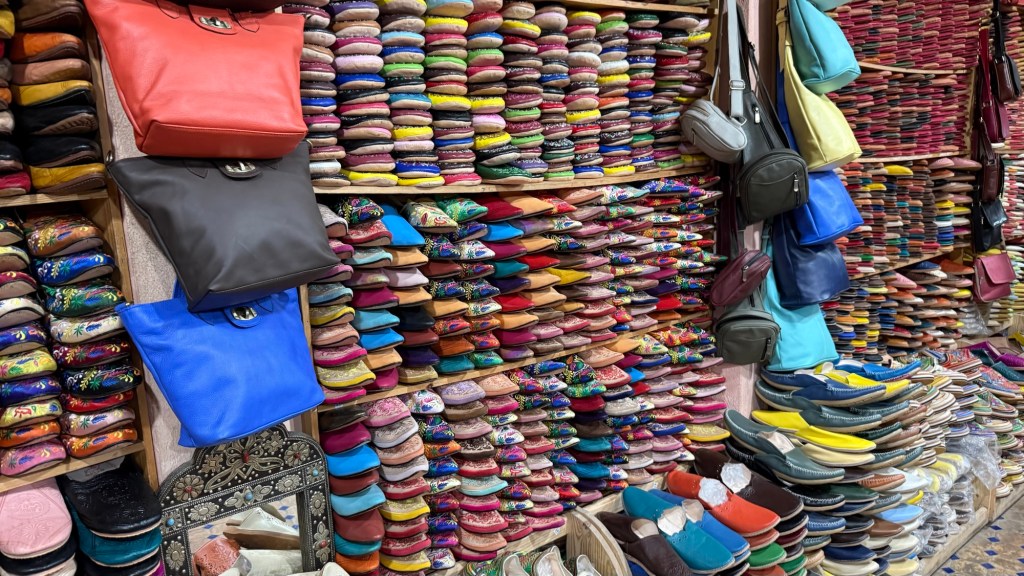
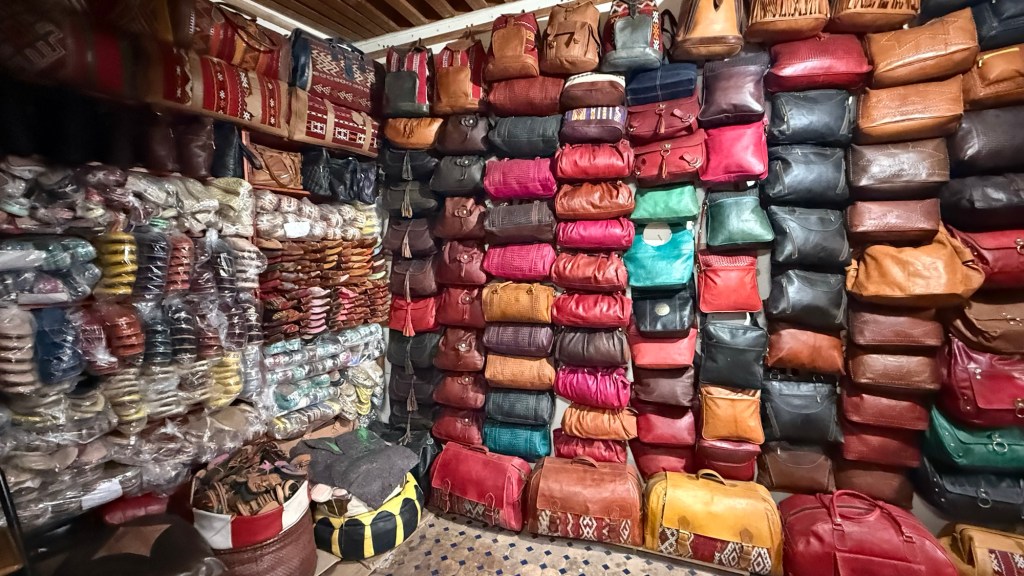
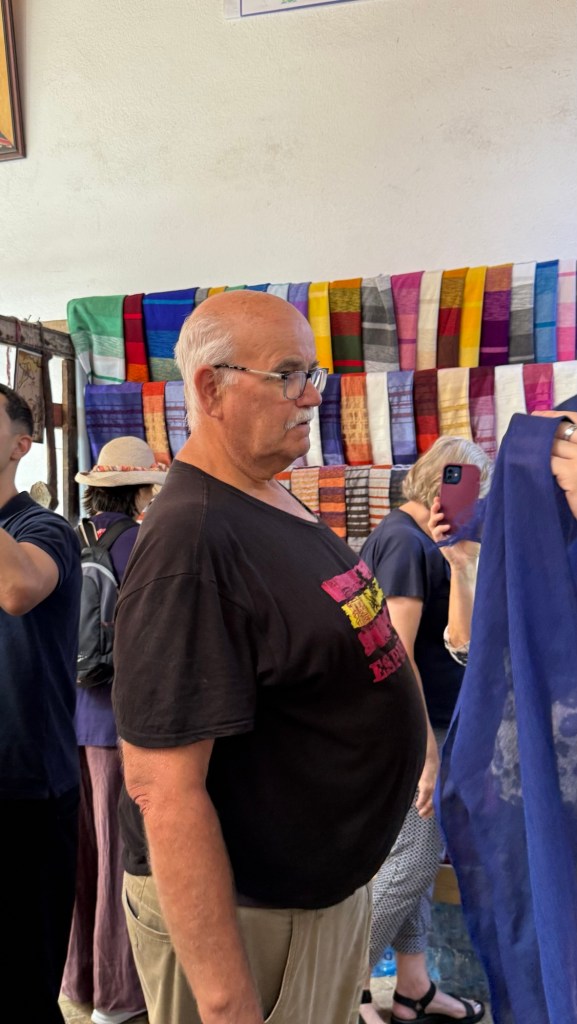
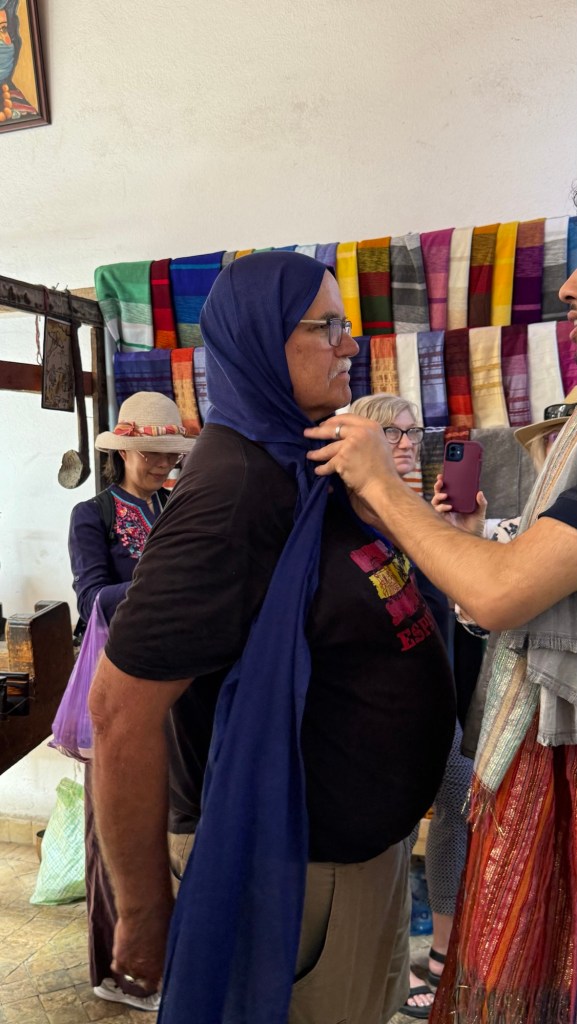
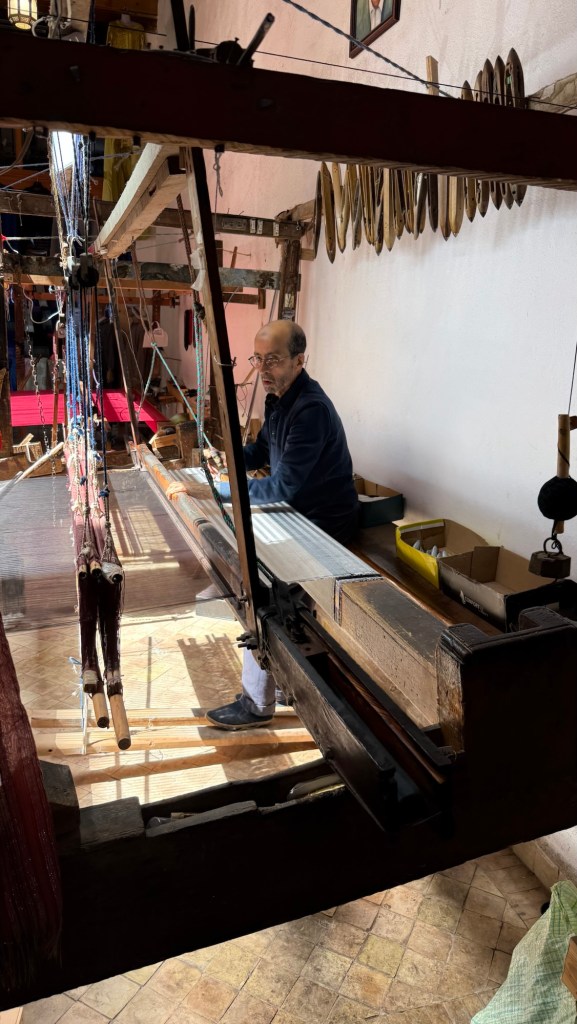
The medina in Fes was vibrant, colourful, busy and interesting. A key observation was how do these traders make a living with such small businesses and, in many cases, how did they ever shift all this stock? a lot of the product looked well made and by now the prolific shoppers in our party were hitting their stride with the purchase of table cloths, leather bags, leather coats, scarves, ornaments and the like.
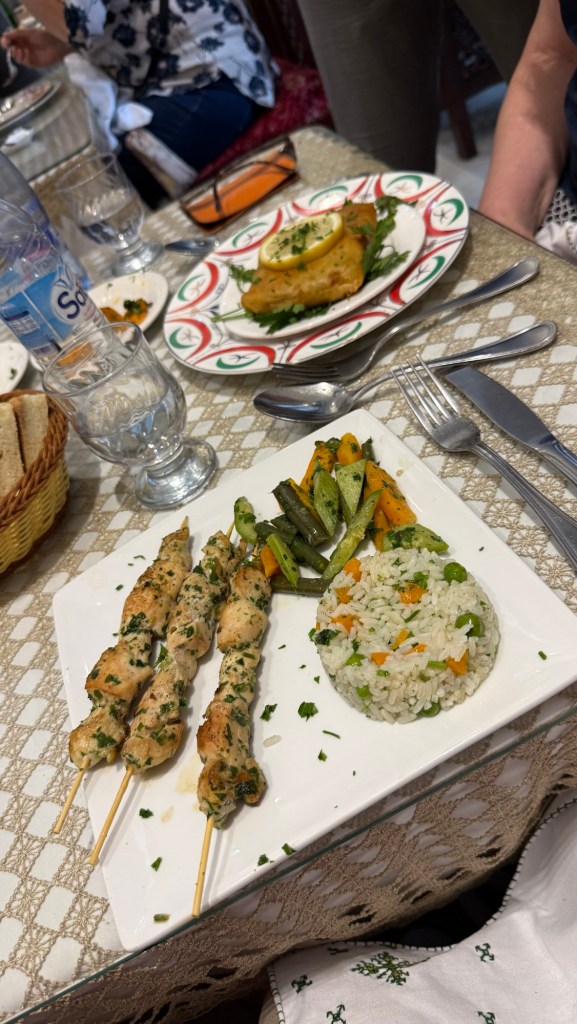
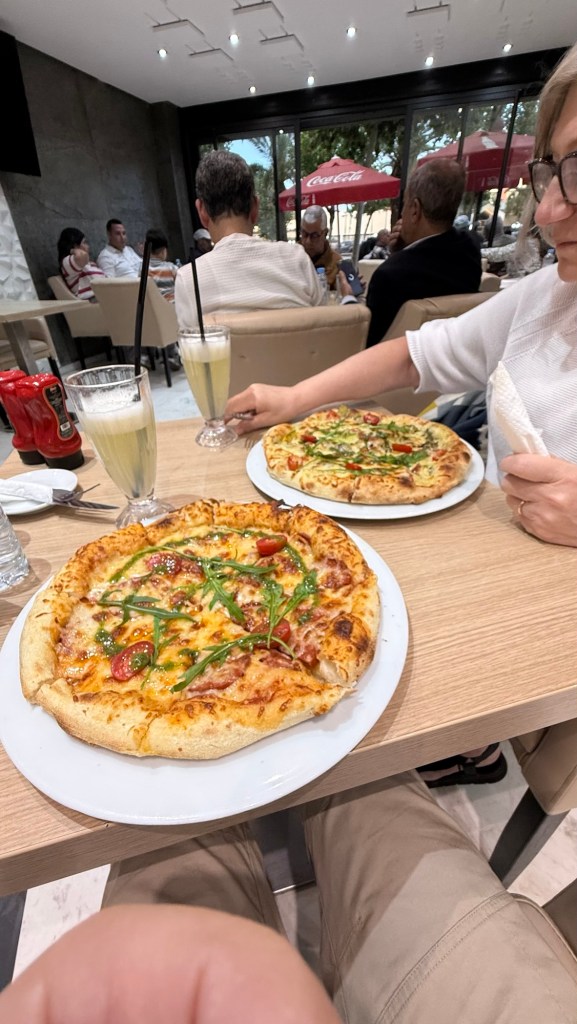
Exhausted by the heat, culture and emporiums we were deposited back at the hotel with the party left to make their own dining arrangements. We were getting tagine’d out and fancied a pizza. A restaurant was found, a seat was taken and a pepperoni pizza duly placed before me. Error. Pork isn’t eaten by Muslims because they don’t eat animals that eat other animals and pigs eat anything… apparently? So I have no idea what the salami substitute was in my pizza but it was awful and I picked it out and shoved it to the side of my plate. Anna and I had slipped off from the party, which made us feel a little mean. Whilst they were a good bunch I was working on making ‘absence make the heart grow fonder’ as 9 hours, from an early morning start until drop off, with them absorbed my full pleasure quota.
The tour necessitated long distances to be covered in the bus to get to the next hotel or interesting site. The bus was comfortable, well driven and the stops were frequent for comfort breaks and refreshment. Often a toilet would have a female attendant maintaining the facility sat outside. She needed tipping. That was only an issue in finding the necessary small coins to pay. If you didn’t have any change you felt underhand slipping in and out! This brings us to the manning of most hospitality venues: there always lots of staff. They must have all been paid little as I think the businesses couldn’t stretch to serious wages. The guide always emphasised that tourists were helping to support these people by their generosity.
As we entered the Atlas Mountains the poorer the people appeared. Free education was now available but as a child got older and possibly more helpful to the family it wasn’t certain they would stay in school. Healthcare has improved over the decades but was still inadequate. Our guide, Ridouane, a man with a couple of degrees and fluent in three or four languages had been one of 12 children. He was a Berber and said his home was in the mountains. Horrifically his parents’ first six children died as infants. He reflected that some would have survived today with the current availability of Moroccan healthcare. All this emphasised that Morocco was on a steep trajectory as a developing nation with much achieved but a long way to go.
After seeing and hearing about this struggle it made me muse that the illegal immigrants, often from countries to the south of Morocco who entered Europe didn’t stop in Morocco because they were unwelcome/not allowed but passed through to cross the Mediterranean. Northern Europe must seem like Eldorado with its personal freedoms including free legal assistance to remain, free subsistence money, free welfare, free healthcare, free shelter and their preceding countrymen to join. The comparison with their own countries would be unrecognisable. Clearly Europe was struggling today with the sheer numbers, welfare costs, cultural incompatibility, fear of violence and growing national rejection of the movement of these peoples that had political consequences for governments. It may even be the most highly debated issue throughout Europe now.
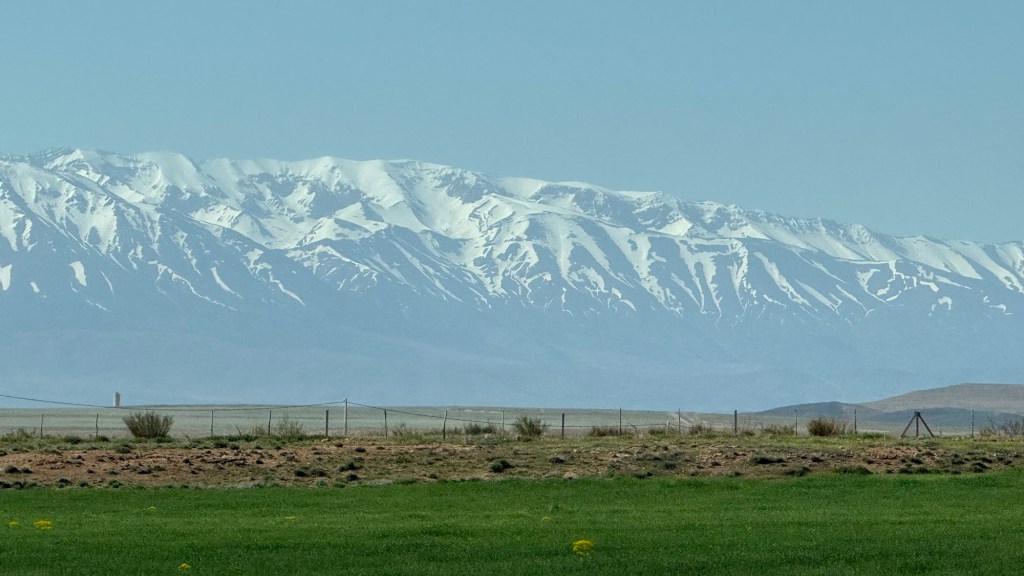
The landscape of Morocco can be coastal, attractive arable or grazing lands, forests, barren plains and mountains of enormous height and beauty. It was on occasion ravishing. It’s little surprise that Sir Winston Churchill took time during WW2 to paint these mountains from Marrakech.
Our stopping point for the night was to be Merzouga close to the Algerian border. This was a tour highlight for us all.
 Tony Ives’ Blog
Very interesting and entertaining, Tony! You two continue your adventurous travels and we thoroughly enjoy following along in the comfort of our home while we have a large peperoni pizza from Papa Murphy’s! Looking forward to the next few days of your travels! Bob
LikeLike