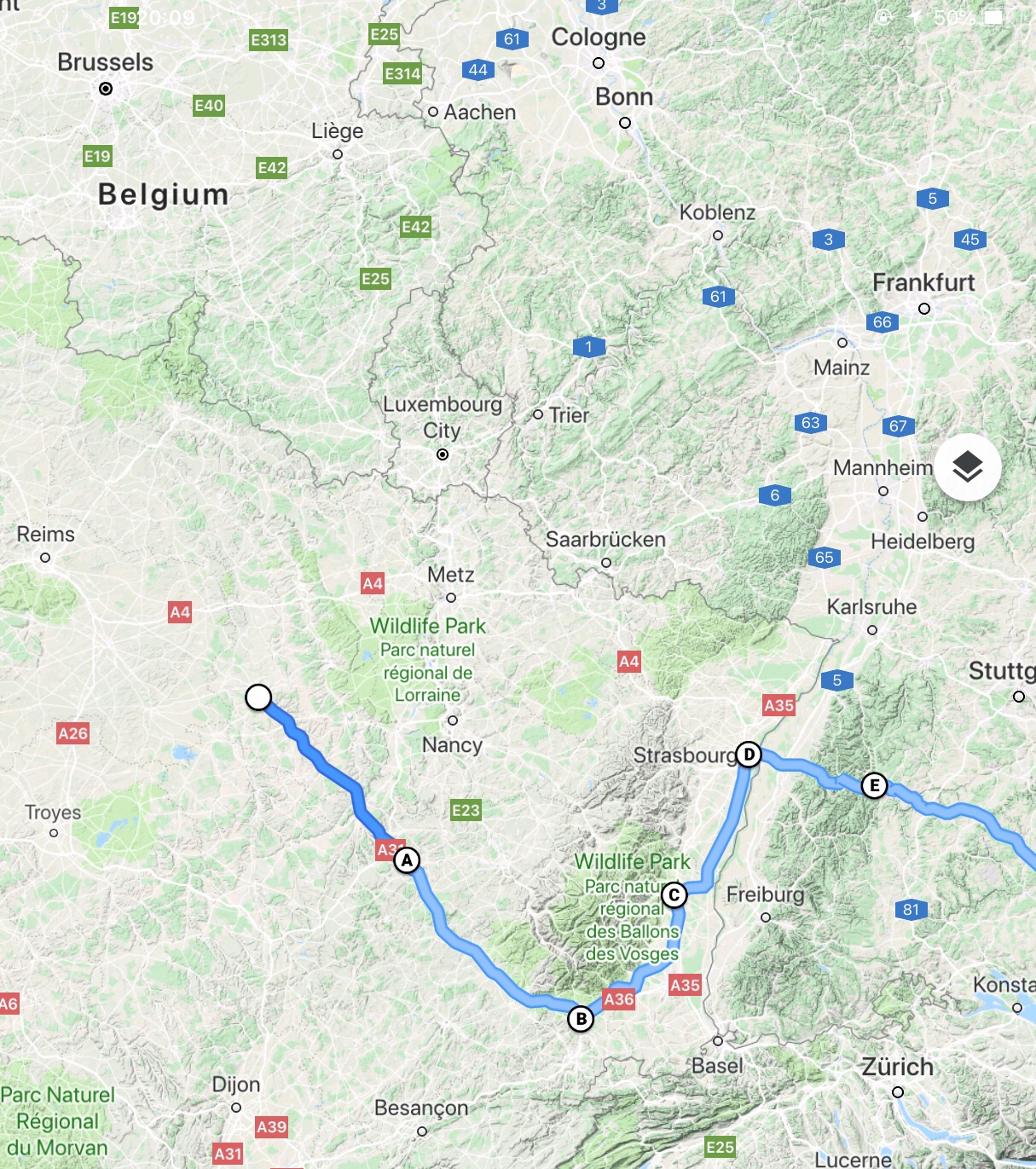
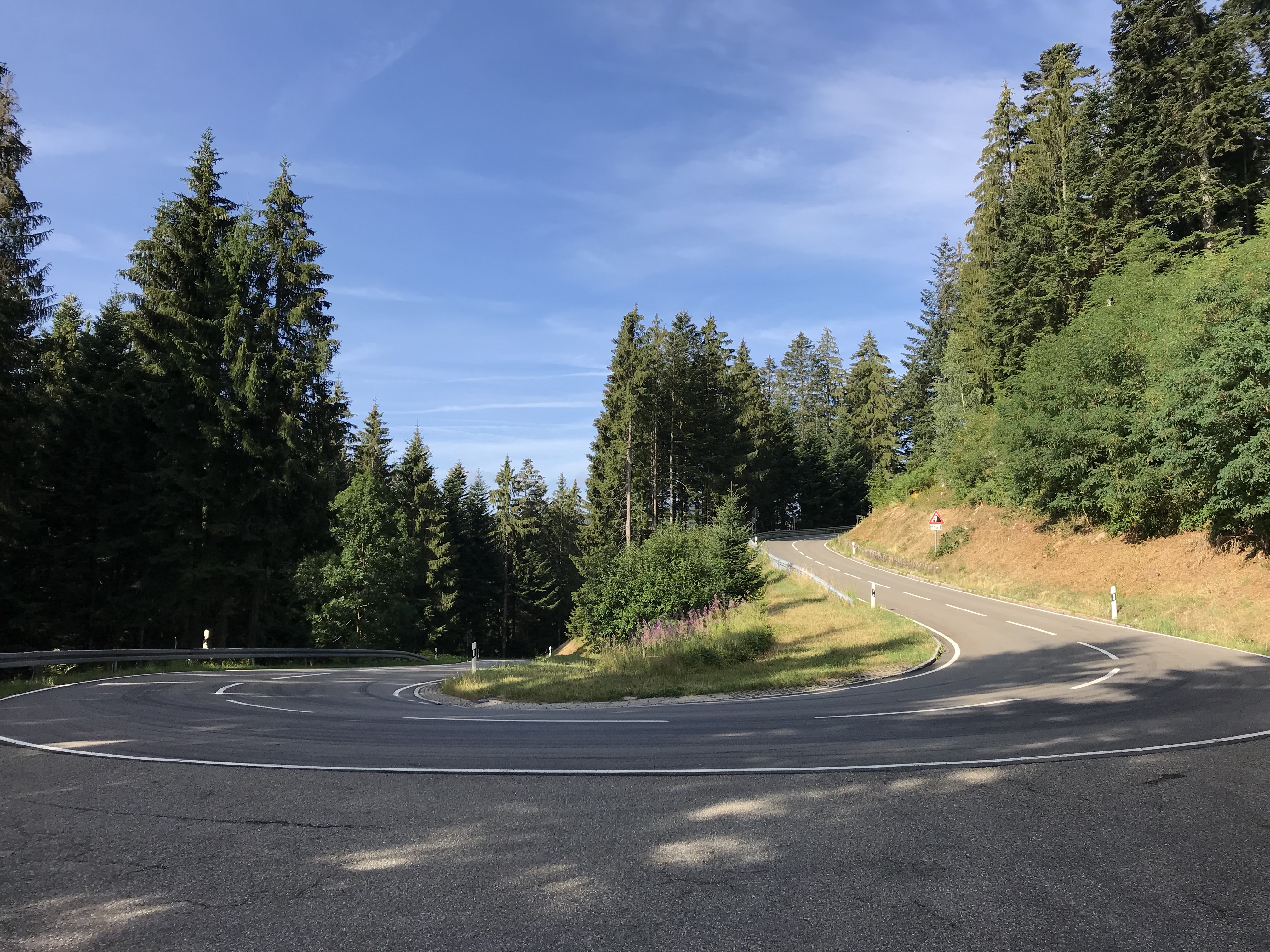
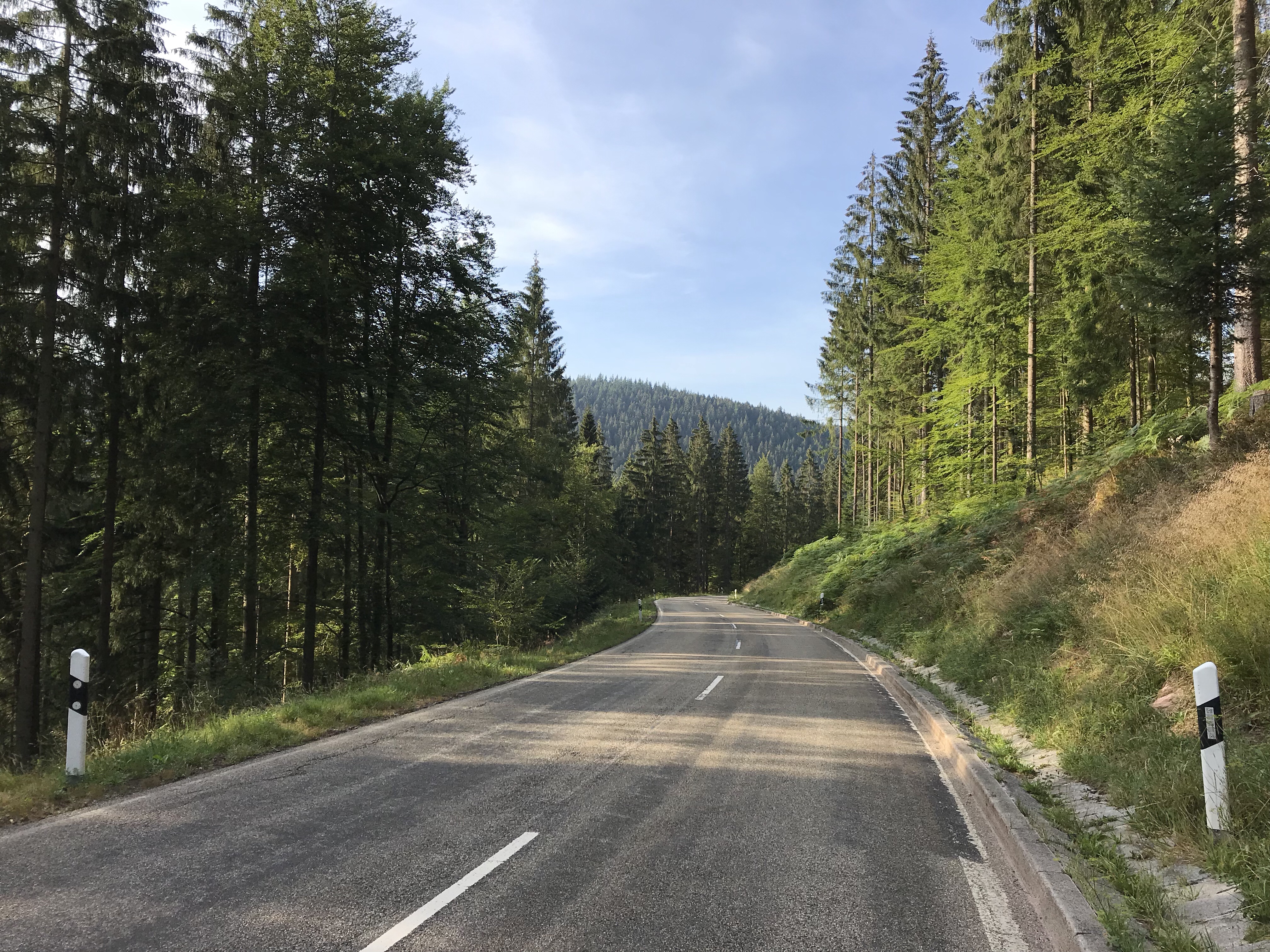
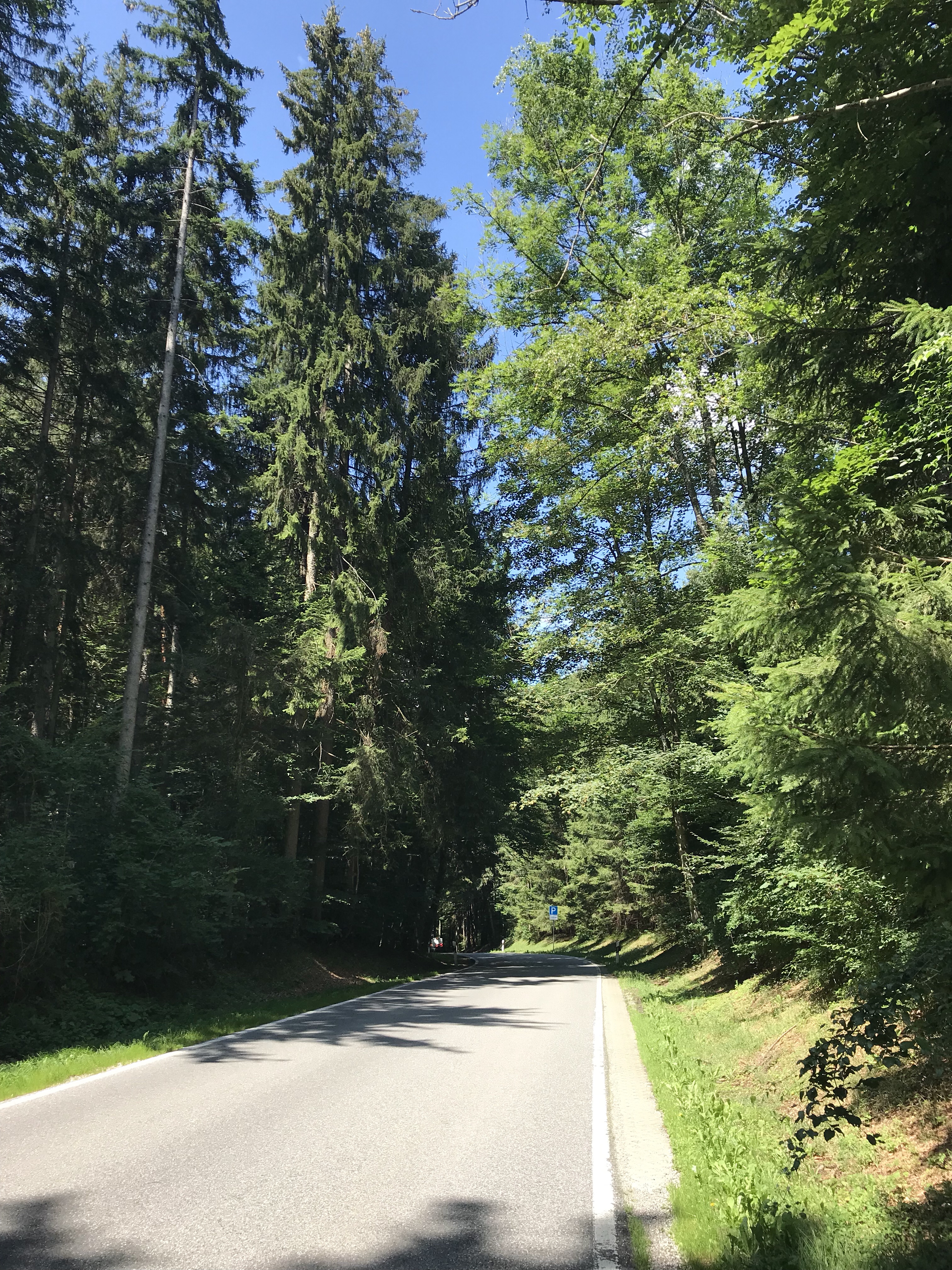
So it was simply a freewheel downhill to Strasbourg? I wish. I’d found a hotel just west of Freudenstadt in a spot called Zweiselberg. The next morning even though I was at the top of the mountain range it meant a steep and long descent before a long climb back to the top to find the road to the bottom. This required an hour’s worth of climbing up hairpins deep in the forest to get back to the freewheel scenario. It was slow and painful in the Sunday morning cool of the sheltered valley. I wasn’t alone though as Sunday morning is motorcycle time in the mountains. I must have seen over 100 bikes that morning as they zipped up and down the valleys. Apart from the noise, which must drive the locals mad, then another joy was the speedsters who raced each other up the hills.


I’m on a badly balanced bicycle descending at 35mph. I’m leaning into some very sharp lethal corners and always on the brakes: not that would solve much in a hurry. I’m picking a line nicely on one side of the road to allow overtaking from behind but also allowing me to take the bends. Next comes three screaming bikes around a bend racing each other up the mountain. They need all the road (both sides) as they lean virtually to the horizontal. I can do nothing but reflect on whether it’s too late for me to embrace Christianity.

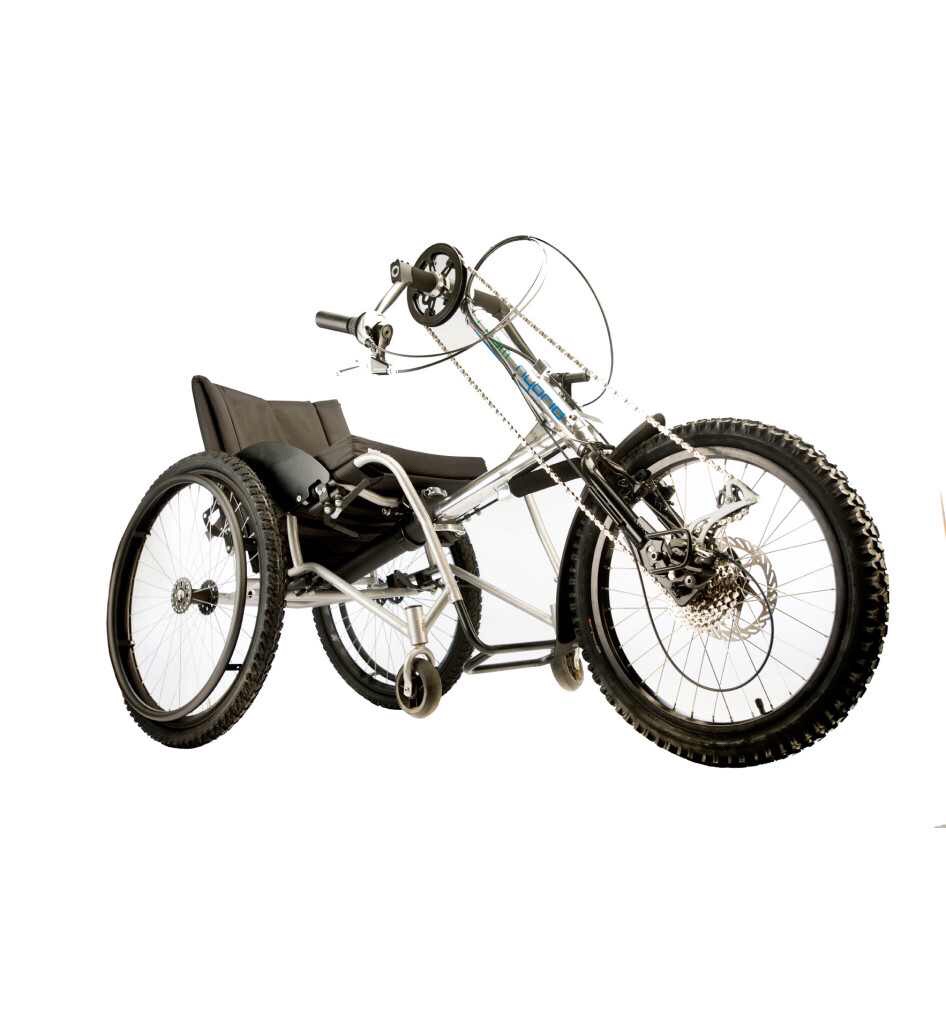
On the descent I find cycling strugglers climbing. I came across a number of disabled cyclists using their hands and arms to pedal. Even when assisted by an electric bike solution I loved the ambition and effort. I’ve posted an image of the type of bike they rode (minus the motor and battery).

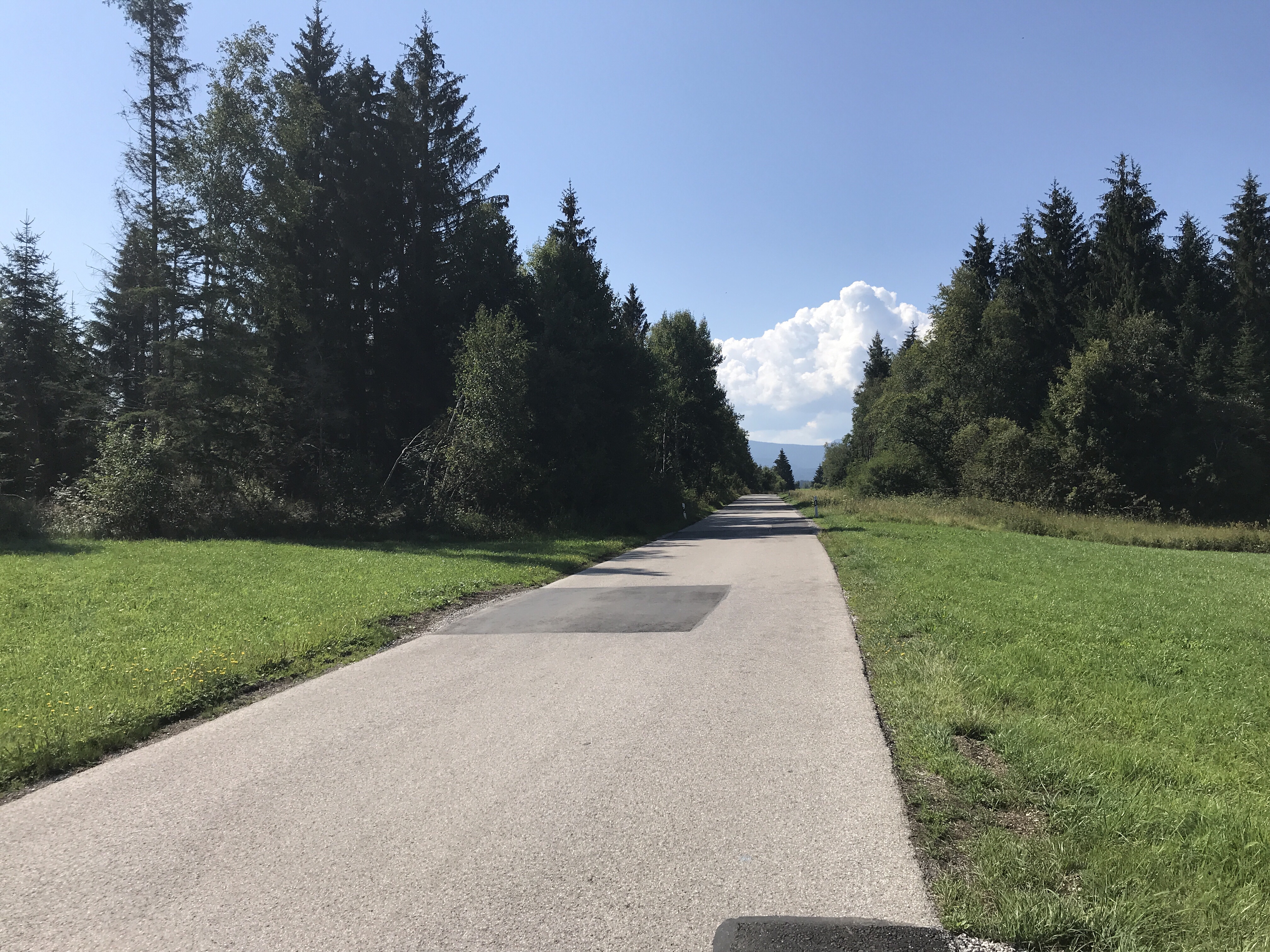
Eventually I am towards the valley floor and either maddenly twiddling around on gravel cycle paths or trying to use main roads where I am prohibited. I’m aiming for Kehl. This is the last German town before you cross the Rhine and enter France.
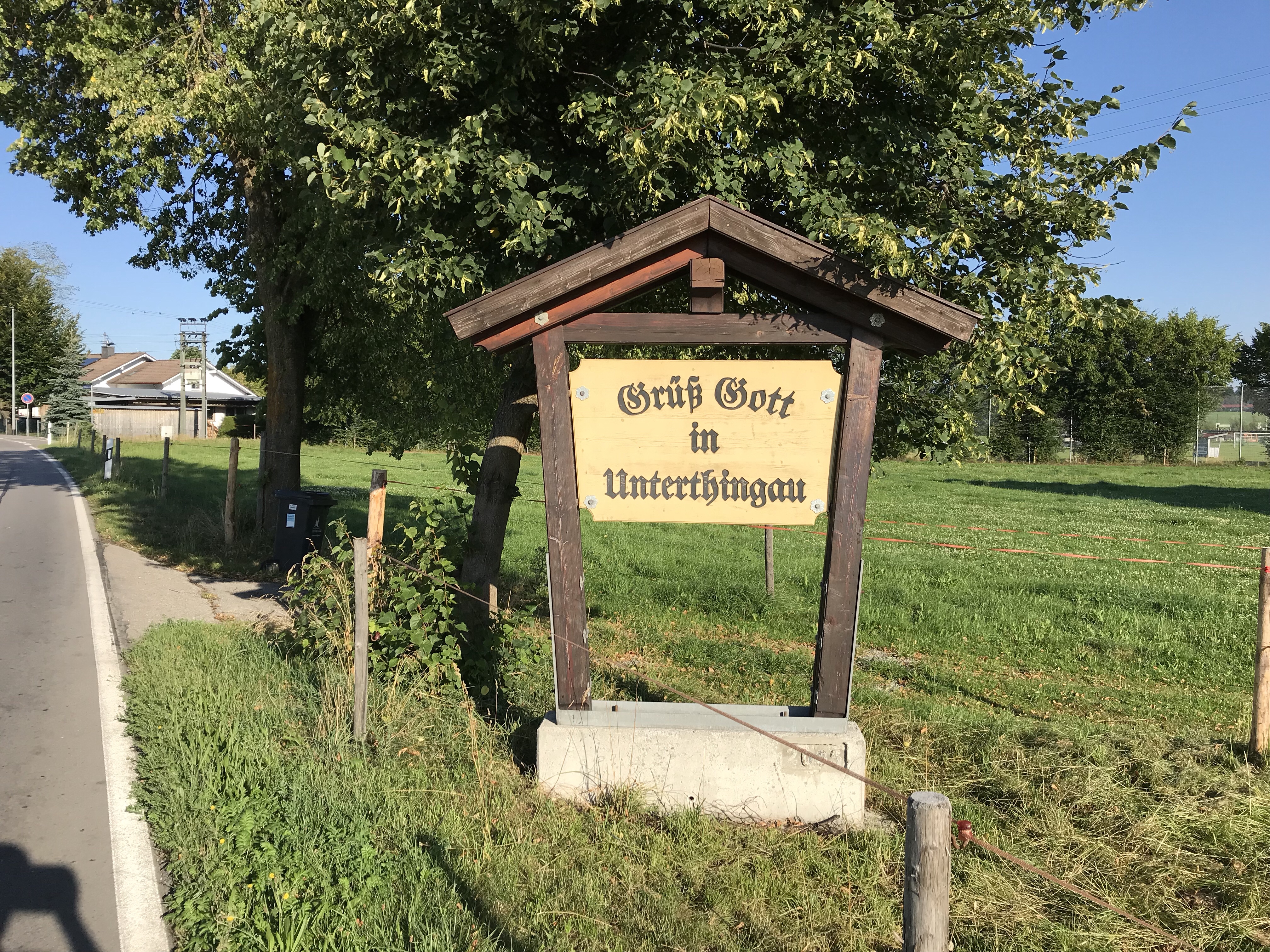
Entering France might be described as low key because whilst the river is the border then in reality there is no border. This was my sixth country of the ride. The Strasbourg tram runs from the centre of the the town and across the river into Germany. I know this because last year I was in Kehl staying at a campsite and took the tram.
Next mission is to find the hotel and my wife! The Okko Hotel is just west of the centre in a busy area with lots of restaurants. I just find this as my bride is wearily pulling her cabin bag toward the front door. Perfect timing! She’s had a big effort to get to Strasbourg using public transport from York to north of London where Stansted is located. Her tribulation with delays and under manning seem to make my ride seem a doddle.


The hotel is very chic and apart from a trendy room with a futuristic bathroom pod it also has ‘The Club’ where you can hang all day with free drinks and some snacks. After having spent all the preceding days thirsty then to have tins of soft drinks available in a large fridge free is like winning the lottery.
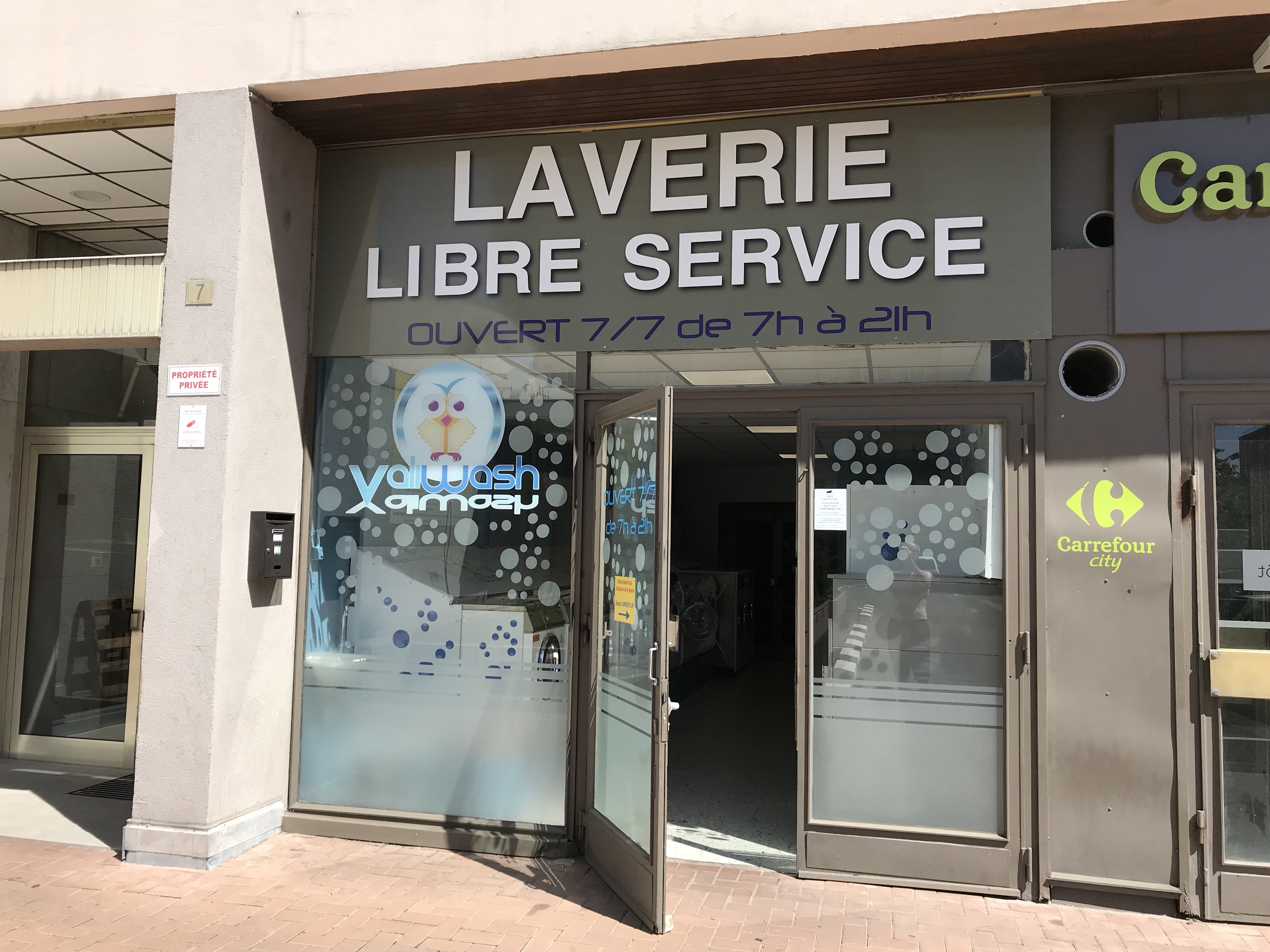
I’ve always known how to show a girl a good time and of course after showering then the first point of call is the launderette. Anna had done her research but I expect that the hotel staff, when quizzed, never expected to be answering these typical ‘cyclist on the road’ mundane questions! The present Mrs Ives was mollified by a McFlurry for allowing me to wash my smalls properly.

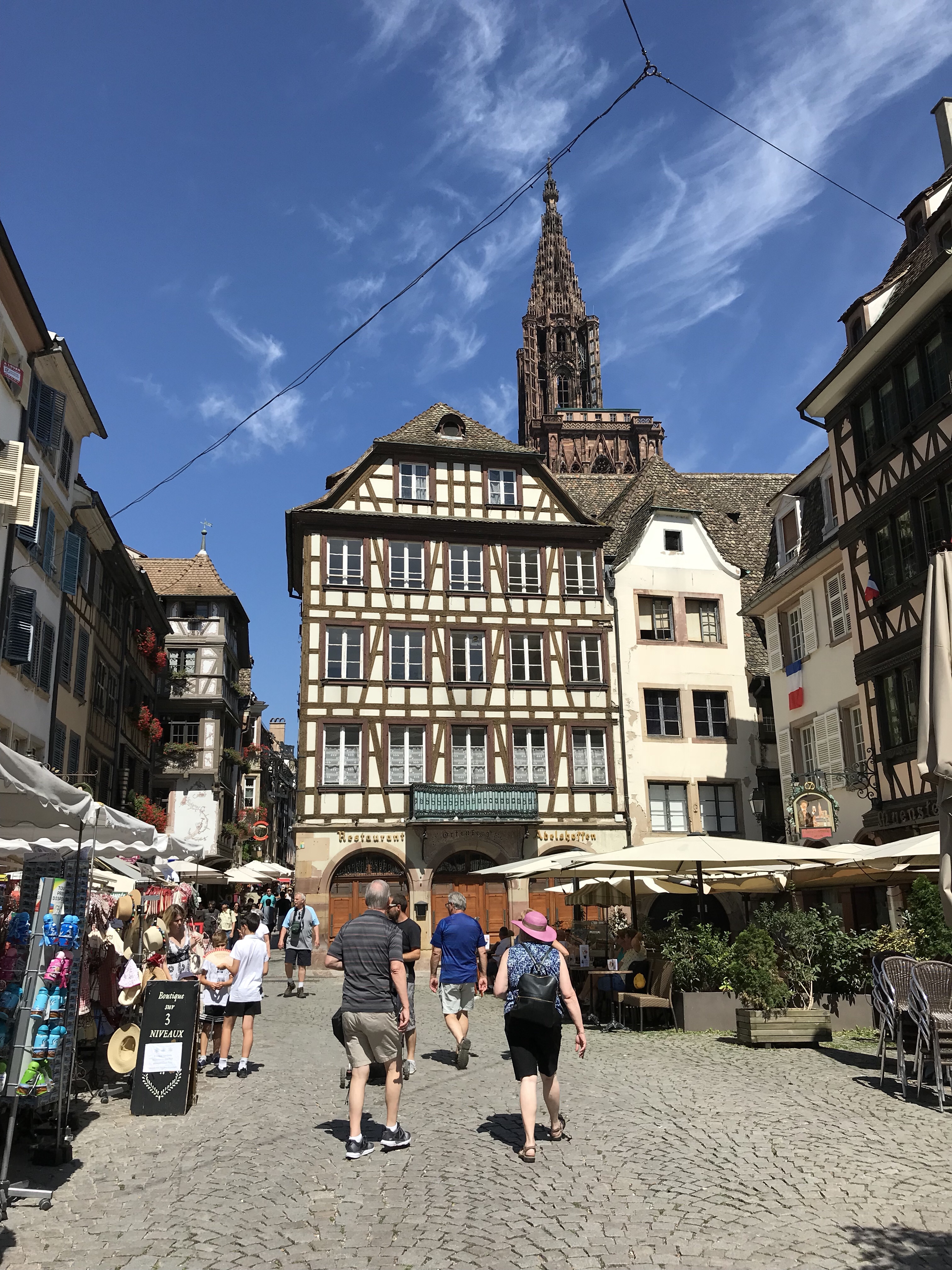
All sorted we sauntered into the beautiful town centre to have a look around and have a spot of very late lunch. Strasbourg has a history of having been either French or German over the last few centuries. It is also full of millennials and I worry that many have jobs associated with the European Union. The Commission and Parliament have premises here and for reasons that beautifully explain the whole nine yards of fudge that the EU is then the Parliament convenes here 12 times a year for 4 day sessions by way of ‘away days’ for the MEP’s. (I noted that a hotel in the centre, in the district called Petit France, had rooms at €550 per room. I wonder how many of those I’ve paid for over the years).


We went on a boat trip. Canals are to be found in the exquisite centre and we had a dreary history by pre-recorded audio. Interesting facts include the fact that once there was a gas works supporting 360 street lights and that quite a lot of the city was developed during the second to last German ownership at the end of the 19th Century. After this we wandered back to the hotel.

Day 2 of my rest days sees an expedition to Colmar, about 40 miles south. Another beautiful city that leans on that mix of German architecture and French style. We strolled around in the staggering heat. We had some lunch including exceptional cake and then made the trip back.


The French trains are sublime – air conditioned, spacious and new. A real pleasure to experience. That night we find some pasta for me and risotto for Anna. Also I have some delicious white wine – something that I haven’t had much of for a while. The next morning Anna’s steeling herself for Ryanair and I’m thinking of that long road home up through France.
We have some falafel at a Lebanese restaurant, kiss goodbye and I set off in the wrong direction as usual. That bloody Garmin!


Our accommodation for two nights had a wonderful view, balcony and a helpful landlady but for 1,925 Kuna (£230 or $304) we got a badly equipped studio with a fold out double bed from IKEA. Even your teenage daughter’s friends would have complained about spending two nights sleeping on this back breaker. Our host had a job near Augsburg in Bavaria in a dental practise. This we learned as she collected the rent before departing 600 miles north. However, we could contact her on her mobile if we needed anything. We did and dutifully a sister arrived with a kettle and ice tray for the freezer box! All was not lost if I tell you the highlights included finding a replacement for my broken soap box and a seafood risotto in a quiet restaurant way off the front whilst watching France vs Belgium. It will not make my ‘50 Places To Visit Before You Die’ list. We were happy to pack up and head north as soon as we could.

Towns were few and far between as we drove the 80 miles to Mostar. Interestingly there were minarets as well as churches dotted around. At one petrol station we stopped for a coffee to discover that unsurprisingly they didn’t seem comfortable taking Croatian Kuna rather than their own Bosnian Marks. Anna, however, persisted and did obtain two expresso coffees for some Kuna, the change was in Bosnian Marks! The reality was that we had no idea whether we’d got a bargain or been ripped off.After some fabulous scenery we got to a very small busy city. Our hotel was in the old town yet as the Sat Nav guided us there there was a man walking in the middle of the road directing us into some car park he was controlling. As I didn’t slow down he lost the game of ‘chicken’ and we got to the centre and a nearer car park.The Hotel Kriva Cuprija was service itself. We were sat down with a cold drink and our bags put in the room. (Now remember our bags included a heavy suitcase with my camping gear in it!) At this point we were told that the hotel didn’t take credit or debit cards but only cash and not even Kuna. Joy. This was an introduction to a lesser economy and emerging nation.However we were soon out and about on the famous ‘Stari Most’ bridge and perambulating along the narrow streets with their endless tourists trinkets, restaurants and numerous sightseers. 

Mostar is the capital of the south of the country: the Herzegovina bit. (The Bosnia part has Sarajevo as its capital as well as the country itself). The ‘old town’ is the tourist trap and the rest is an attractive re-built city with six bridges across the River Neretva that splits it. The Ottoman Empire occupied the area for four centuries before the Austrian Hapsburg’s acquired it in 1878. (Hence the introduction of Islam in the Balkans). At this point the Austrians built a further five bridges – up until this point then the ‘Stari Most ‘bridge was the only way to cross the bridge after paying a toll. It has subsequent become a protected UNESCO World Heritage Centre site. Sadly this didn’t stop the Croatians bombing and destroying it in late 1993. Those pesky Croatians eh?The town has a large Muslim population and this seemed to attract international Muslim tourists. You obviously know this by the women wearing hajibs or burkas. In fact there is a large Saudi Arabian Consulate in the town. Our Walking Tour Guide the next day pointed out that Marriott were building a large hotel near the old town to cater for Arab tourism. It seems that the numerous lodging scattered around the town are not plush enough for Middle Eastern tourists.So we wandered about, took photos and returned to the hotel for dinner. The setting was blissful.

After dinner we had another walk and by this time the old town was a sea of lights and restaurants doing excellent business. Being in the old town meant that we had a loud concert playing badly amplified Balkan Electronica (not a genre I recommend) until midnight. This seemed strange to have it punctuated by the ‘call to prayer’ from the local mosques. After 12 am we were allowed to sleep by revellers and worshippers.Next day after sorting out the local currency cash demands of the hotel we met the Walking Tour at The Spanish Square. So named and funded by the Spanish in memory of the 23 Spanish UN soldiers who died in the war. In the party were Americans, Australians, Danes, Pakistanis and us Yorkshire folk.
The recent history was that Bosnia declared independence like other former Yugoslav countries in 1992. The Serbs within Bosnia rejected this event as they felt more allied to the neighbouring country (Serbia) rather than the Bosniaks (Muslims) and Bosnian Croats. War developed and the Serbs were repelled. The Bosniaks and Croats then fell out and another war took place. All this left thousands dead and the city badly destroyed. I do marvel that despite all this that life and integration takes places today. I suspect there is still considerable tension but as they say the past is a ‘different country’.Many nations have subsequently contributed to the town’s rebuilding. There are still several bombed out buildings to this day. The guide advised that many nations contributed €11m to rebuild the old bridge but the British didn’t. He did wryly wonder why, therefore, Prince Charles re-opened it! 
The ambience of the city is a little looser than an organised European city and by being outside of the EU it doesn’t suffer all the rules. People rode motor scooters without helmets and H&S isn’t a concept worrying road construction workers yet. On the streets there were some child beggars being managed by, I presume, Romany adults. On our walking tour a very precocious child joined the group and worked her way unproductively around the group with her hand out. It really wasn’t a disincentive to visit the city but it is worth noting that it is an industry happening on the margins.Needless to say this small nation of less than 4 million people aspires to join the European Union with its various credit lines and cash. Not least for the young is the opportunity to move within the zone. I’m sure it is only a matter of time.
Consumption of early morning alcohol (6 am) still amazes me as I cannot think of a worse way to start a further 17 or 18 hours of being awake. Yes, I know, age either brings wisdom or a lack of adventure! Frankly there will come a time when they stop allowing this.
The bus was cheap and easy to find to the old town and about 15 minutes away. We had some lunch before a walking tour in the late afternoon. Dubrovnik old town is a gem, small and easy on the eye in the bright Adriatic sunshine. The guide explained that in its heyday it was an independent republic until being conquered by the French and then absorbed by the Austrians in the 19th Century. The 20th Century events led to many changes. Latterly the town came under brief Serbian mortar fire in 1991 and this necessitated much rebuilding. A result of all this was that many residents left the old town and the permanent population has dwindled to about 500 from 5,000. The city became a tourist hotspot and is now home to many holiday apartments, hotels, touristy shops and restaurants. 

The locals make a lot of money out of this beautiful spot but don’t live here. The old city had been a fortress with walls and a moat. It had its own government,laws and navy. A walk around is sumptuous with its polished limestone pavements and narrow streets shielding you from the midday heat and sun. You jostle with the other visitors; not least the six cruise ships that moored up and disgorged their passengers for excursions.
I always note on all these ‘history lessons’ what is included but also omitted. E.g. Croatia had an inglorious WW2 by becoming a Nazi client state. A fascist leader implemented anti-semitic policies, supporting the German efforts and fought a long running battle with the Partisans. This latter group, led by Tito, were supported by the Allies and Red Army and they eventually prevailed. At the end of the war they formed the new Government and transformed the politics to communism. They dealt with the inconvenient numbers of former Croation, Slovenian and Serbian fascists (who were repatriated after fleeing to Austria to surrender to the British) by shooting them and disposing of them in mass graves. A conservative estimate is that 70,000 but others calculate 200,000 perished this way.
Back in Lapad things were exclusively geared for tourism with lots of accommodation, restaurants and sun bathing. It was attractive, secluded, well serviced and expensive!